Candy canes rarely spoil. Sealed and stored cool and dry, they stay safe 1-2+ years, though texture and flavor fade.
Every January, someone in your house finds a half-eaten box of candy canes shoved behind the cereal. The peppermint smells fine. The stripes still look sharp. But the candy itself feels tacky, or worse, it’s fused into one giant red-and-white brick. So, do candy canes go bad, or is that sticky lump still safe to eat?
The short version: candy canes are about 99% sugar, and sugar is one of nature’s best preservatives. Bacteria and mold can’t grow in an environment with almost no water activity. That means candy canes don’t “go bad” the way bread or fruit does. What changes over time is texture, clarity, and flavor, not safety in most cases. But there are real exceptions, and a few storage mistakes that turn a perfectly good candy cane into a sticky, cloudy mess (or, rarely, an actual food-safety problem).
This guide breaks down exactly how long candy canes last, what actually happens to them as they age, how commercial manufacturers extend shelf life at scale, and how to tell the difference between “this candy cane just got old” and “throw this away.”
Candy canes have been a fixture of winter holidays for well over a century, and most of that history has been shaped by one practical question: how do you make a stick of pure sugar that survives weeks of shipping, shelf time, and tree-hanging without turning into a puddle? The answer baked into modern candy canes is decades of incremental food-science refinement, and it’s why the candy cane in your stocking today behaves very differently from a homemade batch cooked on a stovetop last weekend.
What Is a Candy Cane, and Why Does It Last So Long?
A candy cane is essentially boiled sugar syrup, cooked to a hard-crack stage, flavored, colored, twisted, and shaped before it cools into a rigid stick. That cooking process is the whole reason candy canes have such a long shelf life in the first place.
The Sugar Science Behind Candy Canes
When sugar syrup is heated past 300°F (roughly 149°C), most of the water boils off. What’s left is a supersaturated sugar matrix with a water activity level so low that microorganisms simply can’t establish themselves. According to Wikipedia’s overview of candy making, hard candies sit at the “hard crack” stage of sugar cooking, which produces exactly this kind of dense, glassy, low-moisture structure.
That’s why candy canes don’t behave like perishable food:
- No water, no microbial growth: bacteria, yeast, and mold need moisture to multiply, and a properly made candy cane has almost none.
- Glassy, amorphous sugar structure: the sugar molecules are locked in a disordered state rather than a neat crystal lattice, which is part of what gives candy canes their snap and shine.
- Flavor oils, not fresh ingredients: peppermint oil and food-grade dyes don’t spoil the way dairy or fruit purées would.
We’ve cut open candy canes that sat in a kitchen drawer for three Christmases, and the inside was still glassy and clear, just a little duller on the surface. That’s the sugar slowly absorbing ambient humidity, not decay.
Ingredients That Affect Shelf Life
Not every candy cane is built the same, and the ingredient list matters more than people assume. A traditional cane is almost pure sucrose with corn syrup, peppermint oil, and coloring. Some “natural” or artisanal candy canes swap in honey, fruit purées, or lower-sugar sweeteners, and those changes can shorten shelf life noticeably, because they reintroduce moisture or organic compounds that sugar alone doesn’t have.
| Ingredient profile | Typical shelf life (sealed, room temp) | Main risk over time |
|---|---|---|
| Standard sugar + corn syrup + peppermint oil | 18-24 months | Surface stickiness, dulling |
| Sugar-free (maltitol/isomalt based) | 12-18 months | Faster crystallization, graininess |
| Honey or fruit-purée blended | 6-9 months | Moisture migration, softening |
| Artisanal small-batch (hand-pulled) | 3-6 months | Higher humidity sensitivity, color bleed |
That table alone explains a lot of the confusion online. Someone asking “do candy canes go bad” after eating a two-year-old mass-produced cane from a sealed box is in a totally different situation than someone asking about a hand-pulled artisanal cane from a farmers market that’s been open for a month.
How Candy Canes Compare to Other Hard Candies
Candy canes aren’t unique in the hard candy world. They’re a striped, twisted version of the same basic chemistry behind lollipops, peppermint discs, and butterscotch drops. What sets candy canes apart, practically speaking, is shape and surface area. The curved hook and thin stick mean more of the candy is exposed near edges and corners, which are the first places stickiness shows up. A round peppermint disc with the same recipe will often feel “fresher” for longer simply because it has less edge relative to its volume.
This is also why candy canes are more prone to snapping or cracking with age than, say, a butterscotch drop. Repeated small temperature swings (a cold car, then a warm kitchen, then a cold car again) cause micro-stress fractures in the thin stick shape. The candy is still the same sugar matrix; it’s just developed tiny internal cracks that make it more brittle than it was on day one. None of this affects safety, but it’s part of why a candy cane that’s been through a few freeze-thaw cycles in transit might snap unexpectedly when you try to hook it on a mug.

How Long Do Candy Canes Actually Last? (Storage Conditions Compared)
Properly sealed candy canes last 1-2 years at room temperature; opened ones last weeks to months depending on humidity. The packaging, and what you do after you open it, matters more than the calendar date.
Sealed vs. Opened Candy Canes
A factory-sealed candy cane in its individual plastic wrapper is essentially in a tiny climate-controlled vault. As long as that wrapper stays intact, moisture from the air can’t reach the sugar. That’s why a box of unopened candy canes found in a holiday decoration bin from last year is almost always fine to eat, assuming the wrappers didn’t tear.
Once you open the wrapper, the clock starts. Sugar is hygroscopic, meaning it actively pulls moisture out of the air. Within days of being unwrapped in a humid kitchen, a candy cane’s surface can go from glassy to tacky. Leave it unwrapped for a few weeks and it may start to feel soft, sticky, or even slightly bendable.
How fast this happens depends heavily on your local climate. In a dry winter climate, say an indoor heating season with relative humidity sitting around 20-30%, an opened candy cane might stay reasonably glossy for two or three weeks. In a humid coastal kitchen running 60%+ relative humidity, the same candy cane could feel noticeably tacky within 48 hours. This is why two people can have completely different experiences with “the same” candy cane and both be right. The variable isn’t the candy, it’s the air around it.
Pantry vs. Fridge vs. Freezer
Counterintuitively, the fridge is usually the worst place to store candy canes. Refrigerators are humid environments, and condensation forms on cold surfaces when they’re exposed to warmer kitchen air, exactly the moisture exposure that ruins hard candy. The freezer has the same problem on top of the risk of cracking from thermal shock.
| Storage location | Effect on candy canes | Recommended? |
|---|---|---|
| Cool, dry pantry/cupboard (room temp, low humidity) | Maintains snap and shine for 1-2+ years | Yes, best option |
| Airtight container at room temp | Slows moisture absorption even after opening | Yes |
| Refrigerator | Condensation causes stickiness, clouding | No |
| Freezer | Cracking, moisture on thawing | No |
| Near oven, window, or radiator | Heat softens and warps shape | No |
Expert tip: If you’re storing opened candy canes, drop them into a zip-top bag with the air pressed out, then into an airtight container. The double layer cuts humidity exposure dramatically and can stretch “good texture” life by months.
Homemade vs. Commercial Candy Canes
Commercial candy canes go through a controlled cook, a precise sugar-to-corn-syrup ratio, and, critically, packaging in a low-humidity environment within minutes of cooling. Homemade candy canes, even when made with the exact same recipe, are usually cooled and wrapped in a normal kitchen, which has far more ambient moisture. That’s one reason homemade hard candy tends to get sticky faster than store-bought, even when the recipe is technically identical.
If you’ve ever wondered why a box of grocery-store candy canes seems to last forever compared to a batch you made at home, this is the answer: it’s not the recipe, it’s the production and packaging environment.
There’s also a timing issue with homemade candy canes that most recipes don’t mention: the window between “cooked enough to hold a shape” and “too hard to twist into stripes” is narrow, often less than a minute. Home cooks working without precise temperature probes tend to either pull the sugar off heat slightly early (leaving more residual moisture, which shortens shelf life) or work the candy a little too long in open air while shaping it (which lets it pick up ambient humidity before it’s even wrapped). Either way, a homemade candy cane usually starts its shelf-life clock already a few steps behind a factory-made one, not because the recipe is wrong, but because the cook-to-wrap window is so much harder to control by hand.
Industrial Applications: How Manufacturers Extend Candy Cane Shelf Life
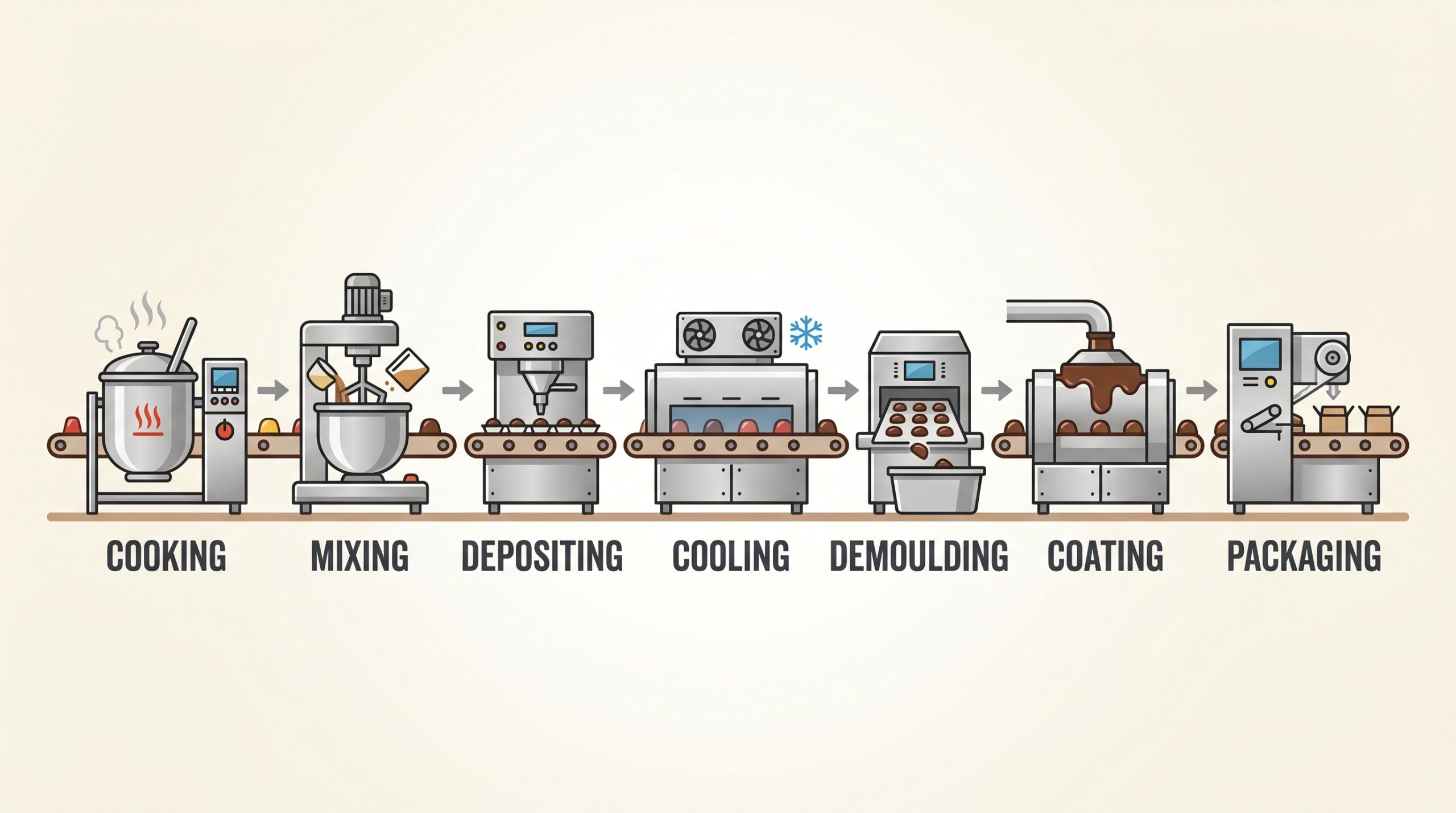
Manufacturers control humidity, cooking temperature, and packaging speed to push candy cane shelf life well past two years. This is where food-equipment design directly determines how long a product sits on a shelf before it degrades.
On a production line, candy cane shelf life is engineered, not left to chance. A few of the levers manufacturers pull:
- Precise cook temperature control. Hitting the hard-crack stage consistently (between roughly 300-310°F) ensures the sugar matrix is dense and low-moisture across every single batch, not just the ones an operator happens to watch closely.
- Rapid cooling on temperature-controlled lines. The faster a sugar mass moves from molten to solid, the less time it has to absorb ambient humidity or develop uneven crystallization. Equipment like a raising film continuous cooker is built specifically to manage this cook-and-cool transition at scale.
- Inline forming and twisting. The faster a candy mass is shaped, using rollers and formers such as a candy drop roller system, the less exposure it has to open air before wrapping.
- Individual wrapping immediately after cooling. This is arguably the single biggest shelf-life factor. A candy cane wrapped within minutes of forming, in a low-humidity packaging room, can realistically sit on a shelf for two years without meaningful texture loss.
- Controlled-humidity storage rooms. Many large confectionery plants maintain packaging and warehouse humidity below 40% RH specifically because sugar confections are so sensitive to ambient moisture, a point echoed in food-science literature on hard candy production and quality parameters.
In practice, we’ve seen plants where a five-minute delay between forming and wrapping, caused by a jam further down the line, produced a visibly different (slightly duller, tackier) batch compared to product that moved straight through. At industrial scale, those minutes are the entire difference between a two-year shelf life and a six-month one.
Quality Control Standards on a Candy Cane Production Line
Shelf life isn’t just set once at the recipe stage. It’s checked continuously. Most mid-to-large confectionery plants run several quality checks specifically aimed at predicting how a batch will age:
- Moisture content testing. Operators pull samples and test residual moisture against a target threshold, typically well under 3%. A batch that tests even slightly high gets flagged, because that extra moisture is exactly what shortens shelf life later.
- Color and gloss inspection under standardized lighting. Since dullness is the first visible sign of aging, plants benchmark “day one” gloss levels so quality teams can spot batches that start dull, a leading indicator of a shorter shelf life even before the candy leaves the factory.
- Accelerated shelf-life testing. Sample batches are stored in deliberately humid, warm conditions to simulate months of aging in days, giving quality teams an early read on how a given recipe or process change will hold up.
- Wrapper seal integrity checks. Since the wrapper is the primary moisture barrier, random samples get pulled and tested for seal strength. A weak seal anywhere along a production run can undercut all the upstream process control.
These checks matter because candy cane shelf life is really a chain: cook temperature, cooling speed, forming speed, and wrapping speed all have to line up. A weakness in any one link shows up later as a batch that goes sticky in eight months instead of eighteen.
How to Tell If a Candy Cane Has Gone Bad (and Common Mistakes)
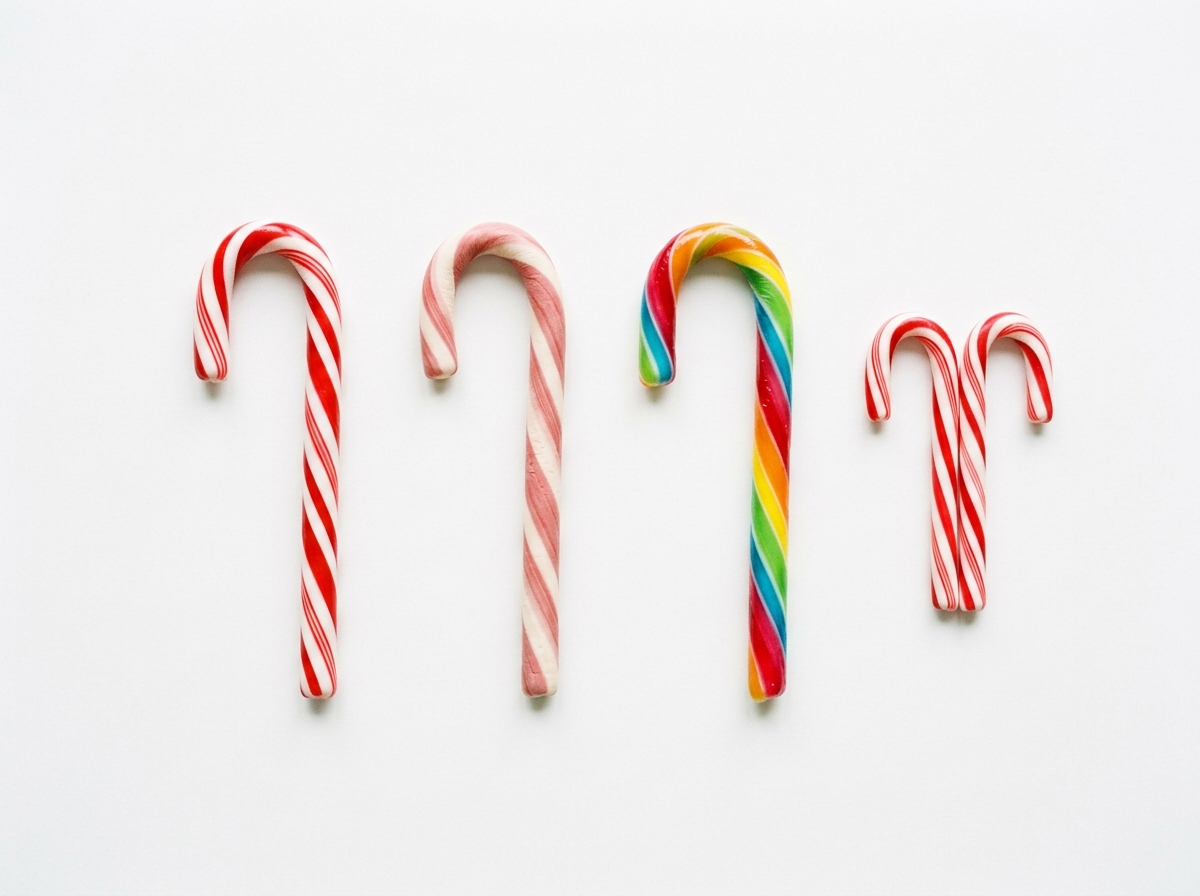
Most “old” candy canes are still safe. Look for mold, off smells, or packaging damage as the real red flags, not just dullness or stickiness. Texture changes are cosmetic; contamination signs are the actual deal-breakers.
Signs of Normal Aging vs. Actual Spoilage
It helps to separate “this candy cane is old” from “this candy cane is unsafe.” They’re not the same thing, and most people throw away perfectly fine candy because they conflate the two.
Normal aging (still safe to eat):
- Dull, cloudy, or matte surface instead of glossy
- Slight stickiness or tackiness to the touch
- Softer snap, or slightly bendable instead of brittle
- Faded color (red stripes turning pink/orange)
- Weaker peppermint smell and flavor
Actual spoilage (discard):
- Visible mold (fuzzy spots, usually green, white, or black; extremely rare on pure sugar candy, but possible if moisture got in and other ingredients like dairy flavoring were present)
- Off, sour, or chemical smell that wasn’t there originally
- Packaging that’s torn, punctured, or shows signs of pest activity
- Candy that’s fully liquefied or pooled, a sign of severe moisture contamination
According to a food-safety Q&A from Michigan State University Extension, hard candies are among the lowest-risk categories of holiday candy precisely because of their low water activity. That said, any candy showing mold, regardless of sugar content, should be discarded without a taste test.
Common Mistakes That Ruin Candy Canes Early
We see the same handful of mistakes over and over, and almost all of them come down to moisture management:
- Storing opened candy canes loose in a drawer. Without a wrapper or container, every humid day in the kitchen chips away at the surface.
- Putting candy canes in the fridge “to keep them fresh.” This backfires: condensation does more damage than room-temperature air ever would.
- Leaving candy canes on a tree or mantel near a heat source. Ovens, fireplaces, and sunny windows soften and warp them, sometimes causing the stick shape to droop entirely.
- Mixing old and new candy canes in the same container. Older, slightly tacky candy can transfer moisture to fresher pieces, accelerating the whole batch’s decline.
- Assuming a “best by” date is an expiration date. Per USDA guidance on food product dating, “best by” dates are about peak quality, not safety, and hard candy is one of the categories where that distinction matters most.
Expert tip: If a candy cane has gone slightly sticky but smells and tastes normal, you can often “rescue” it by leaving it unwrapped in a low-humidity room (or near, not inside, a dehumidifier) for a day. The surface moisture will partially re-evaporate and the gloss often returns.
It’s also worth separating cosmetic aging from taste aging, because they don’t always move together. A candy cane can look slightly duller after a year but taste almost identical, because the peppermint flavor oil is fairly stable in a sealed wrapper. On the other hand, a candy cane that’s been opened and exposed to air, even if it still looks glossy, can lose noticeable peppermint intensity within a couple of weeks, because flavor oils are more volatile than the sugar matrix itself. If your priority is flavor rather than appearance, an opened candy cane is “past its best” much sooner than a sealed one, even if it still looks fine on the shelf.
Future Trends in Candy Cane Production & Shelf-Life Tech (2026+)
Expect more sugar-alternative candy canes, smarter humidity-controlled packaging, and clearer “quality date” labeling through 2026 and beyond. The shelf-life conversation is shifting from “how long does it last” to “how do we make it last and taste better with less sugar.”
Sugar Alternatives and Their Shelf-Life Trade-offs
Sugar-free candy canes made with sugar alcohols like isomalt or maltitol have grown steadily, driven by consumer demand for lower-sugar holiday treats. The trade-off is real: these sweeteners are more prone to recrystallization over time, which can turn a glossy candy cane grainy or cloudy faster than a traditional sugar-based one. Manufacturers are addressing this with tighter cook-temperature tolerances and modified corn-syrup blends that slow crystallization. Even so, as of 2026, sugar-free candy canes still generally carry shorter “peak quality” windows than classic versions.
Smart Packaging and Moisture Indicators
A small but growing number of confectionery brands are experimenting with humidity-indicator packaging: small color-change dots on the wrapper that signal when internal moisture has crossed a threshold. It’s early-stage technology for hard candy specifically, but it’s already common in pharmaceuticals and some snack categories, and confectionery manufacturers are watching the cost curve closely.
| Trend | Status in 2026 | Shelf-life impact |
|---|---|---|
| Sugar-alcohol (sugar-free) candy canes | Growing market share | Slightly shorter peak-quality window |
| Humidity-indicator wrapper dots | Early pilot programs | Better consumer visibility into freshness |
| Tighter cook-temp automation on production lines | Increasingly standard | More consistent 18-24 month shelf life |
| Recyclable/compostable individual wrappers | Expanding, especially in EU markets | Neutral to slightly negative (less moisture barrier in some materials) |
Industry Applications Beyond the Holiday Aisle
Hard candy production technology, the same cookers, formers, and wrapping lines used for candy canes, increasingly serves adjacent categories: lollipops, hard-coated gummies, and even pharmaceutical lozenges that need the same low-moisture, long-shelf-life properties. A facility set up to run hard candy machinery for a holiday candy cane run can often pivot the same equipment to year-round SKUs, which is part of why hard candy remains one of the more capital-efficient categories in confectionery manufacturing.
There’s a seasonality angle here that’s easy to underestimate. Candy cane demand is brutally seasonal. The overwhelming majority of annual sales happen in a roughly two-month window around the winter holidays. That means the shelf life of the finished product has to comfortably bridge the gap between a late-summer or early-fall production run and a January clearance shelf, plus whatever time it sits in a consumer’s pantry afterward. A candy cane with only a six-month shelf life would be commercially impractical at that scale: it would need to be produced almost simultaneously with the holiday rush, which no large-scale operation can do. The 18-24 month shelf life that well-made candy canes achieve isn’t a nice-to-have; it’s a structural requirement of how the category is manufactured and distributed.
FAQ: Do Candy Canes Go Bad?
Most candy cane questions come down to “is it still safe” versus “will it still taste or look good.” Here are the most common ones answered directly.
Is it bad to eat expired candy canes?
No. Eating a candy cane past its “best by” date is generally safe. The sugar content prevents bacterial growth, so the main risk is a stale taste or sticky texture, not food poisoning.
Do candy canes go bad if unopened?
Rarely. An unopened, individually wrapped candy cane stored in a cool, dry place can stay glossy and fresh for 1-2 years, sometimes longer, because the wrapper blocks the humidity that causes most quality loss.
Do candy canes go bad in the fridge?
They can degrade faster in the fridge. Condensation forms when cold candy meets warmer air, introducing moisture that makes candy canes sticky or cloudy. A pantry shelf is better.
Can candy canes mold?
It’s extremely rare, since mold needs moisture and pure sugar candy has almost none. Mold is more likely if a wrapper is torn and the candy sits in a humid space for a long time.
How do I store candy canes to make them last longer?
Keep them in their original wrappers in a cool, dry pantry, away from heat sources. For opened candy, use an airtight container or a sealed zip-top bag.
Why did my candy cane turn sticky or cloudy?
Sugar absorbs moisture from the air over time, especially once a wrapper is opened. That surface moisture causes the stickiness and the loss of glossy shine. It’s a texture change, not spoilage.
Can old candy canes still be used for baking or crafts?
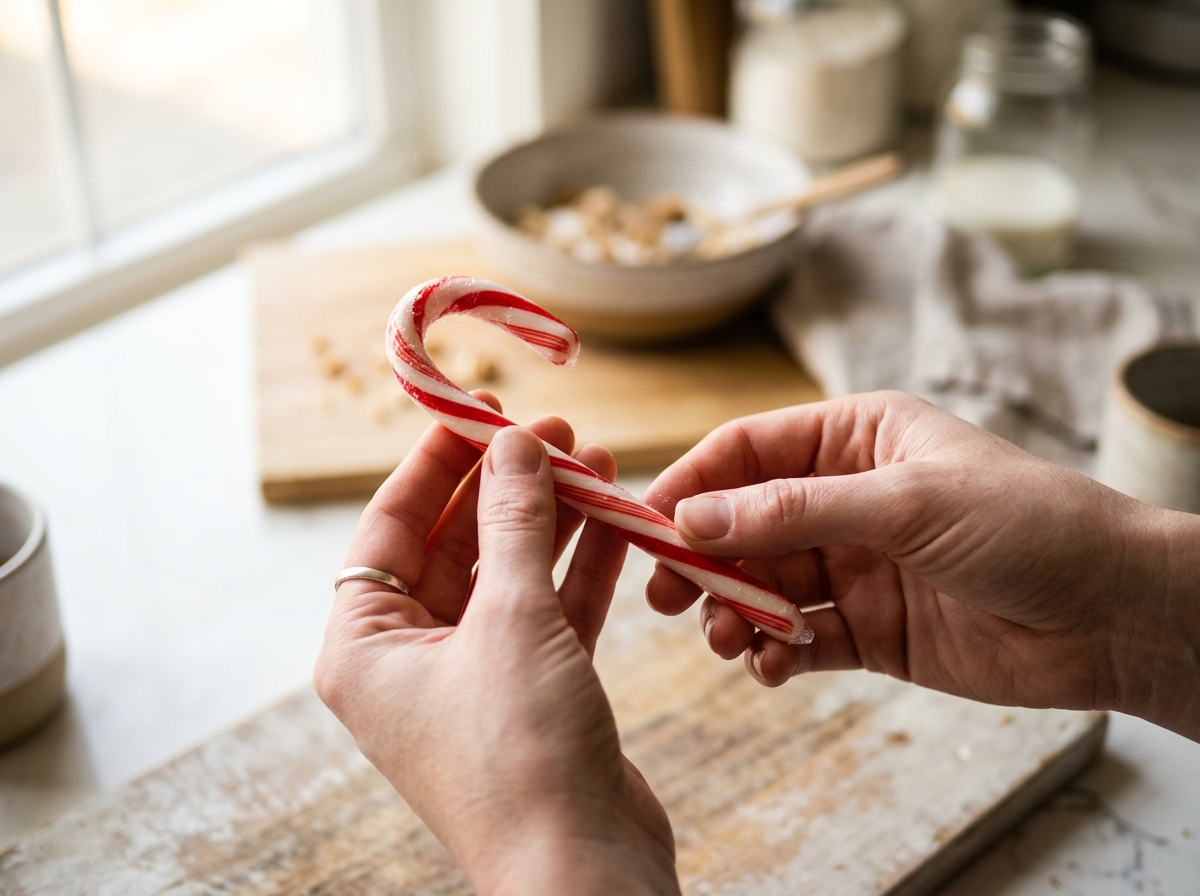
Yes, and this is actually a great use for slightly stale candy canes. Crushed candy cane works fine in cookies, bark, or hot chocolate rims even if it’s lost some gloss, since melting or crushing masks texture changes entirely.
Do candy canes expire the same way as chocolate?
No. Chocolate degrades through fat separation (“bloom”) and is more sensitive to temperature swings, while candy canes degrade through moisture absorption. A candy cane in a hot car will soften and warp; a chocolate bar in the same car will develop a white, waxy bloom. Different mechanisms, but both are cosmetic issues rather than safety ones in most cases.
Conclusion
So, do candy canes go bad? Not in the way milk or bread does. Thanks to their extremely low water content, candy canes resist bacterial growth almost entirely. What changes with time is texture, shine, and flavor intensity, not safety. A candy cane that’s gone dull or slightly sticky after a year in the pantry is still perfectly fine to eat; one that’s grown mold or smells off after a torn wrapper sat in a damp drawer is the real exception, and a rare one at that.
If you want candy canes that hold their snap and shine for the long haul, the fix is simple: keep them sealed, keep them dry, and keep them away from heat and humidity. And if a few do go sticky before you get to them, don’t toss them. Crush them into a topping and get one more use out of that holiday sugar rush.
Related Articles
Can Candy Expire? The Real Shelf-Life Truth Behind Every Wrapper
Sugar Plum Candy: History, Recipe & How It’s Made Today
Are Gummies Bad for You? The Complete Candy Truth (2026)
How Are Skittles Made? The Full Factory Process Explained (2026)
Digestive Biscuit Recipe: From Home Oven to Industrial Production Line (2026 Guide)