Candy can expire, but for almost every type on the shelf, “expired” means stale or dull. Not dangerous.
Here’s the scene: you’re digging through a kitchen drawer and find a half-bag of gummy bears from last Halloween. The date on the back is long gone. Do you toss it, or do you eat it anyway and hope for the best? Multiply that moment by every vending machine, candy jar, gift basket, and bulk bin in the country, and you’ve got a question that gets searched constantly and answered badly almost as often. This piece walks through what actually happens to candy over time, how long each major category really lasts, what role manufacturing and packaging play in that countdown, and how to make a smart call the next time you find a forgotten stash. By the end, you’ll be able to look at a bag of candy (any candy) and know whether it’s worth eating, worth tossing, or worth a second look.
What Does “Candy Expiration” Actually Mean?
A printed date on a candy wrapper is almost never a safety cutoff. It’s a manufacturer’s estimate of peak quality.
Walk down any candy aisle and you’ll see a jumble of phrases: “best by,” “best before,” “use by,” “sell by.” Shoppers tend to treat all of them as the same warning label, but they’re not. According to the USDA’s guidance on food product dating, except for infant formula, dates on packaged food are not federal safety indicators at all; they’re manufacturer estimates of how long a product stays at its best. That distinction matters enormously for candy, which is built almost entirely from sugar, fat, and a handful of stabilizers that are naturally hostile to the bacteria that spoil fresh food.
Best-By vs. Use-By vs. Sell-By Dates
These three labels look interchangeable, but they answer three different questions, and only one of them has anything to do with retail logistics rather than your kitchen.
- Best by / Best before: A quality marker only. The product is safe after this date; it may just taste flatter or feel different in texture.
- Use by: A freshness recommendation, more common on perishable items than on shelf-stable candy.
- Sell by: A stocking instruction for retailers, not a signal to shoppers at all.
Federal regulators have been pushing to standardize this language because the confusion drives a measurable amount of food waste, a point raised directly in a 2024 Federal Register notice on food date labeling that proposed clearer, more uniform terms across the industry. Until that lands, the safest assumption for candy is this: the date tells you when it’ll taste its best, not when it becomes unsafe.
Why Sugar-Based Products Rarely “Go Bad” the Way Fresh Food Does
Sugar is a preservative in its own right. At the concentrations found in most confections, it binds water tightly enough that bacteria and mold struggle to get a foothold, which is part of why jams, candies, and syrups have survived on pantry shelves for centuries without refrigeration. Add low moisture content, and you get a product that degrades in texture and flavor long before it becomes a health risk.
| Date label | What it actually signals | Does it mean “unsafe to eat”? |
|---|---|---|
| Best by / Best before | Peak flavor and texture window | No: quality marker only |
| Use by | Manufacturer’s freshness recommendation | Rarely, for shelf-stable candy |
| Sell by | Retailer restocking cue | No: not meant for consumers |
| No date present | Product falls outside dating requirements | Not inherently |
That table answers roughly 80% of the “is this still good?” questions that come up in a real kitchen. Worth bookmarking.
How Long Different Types of Candy Actually Last
Shelf life isn’t one number. It swings from a few months to several years depending on what the candy is made of and how it’s sealed.
Lumping “candy” into a single category is where most articles on this topic go wrong. A hard candy and a gummy bear are chemically nothing alike once you look past the sugar they share, and that difference shows up directly in how long each one survives in your pantry.
Hard Candy and Lollipops
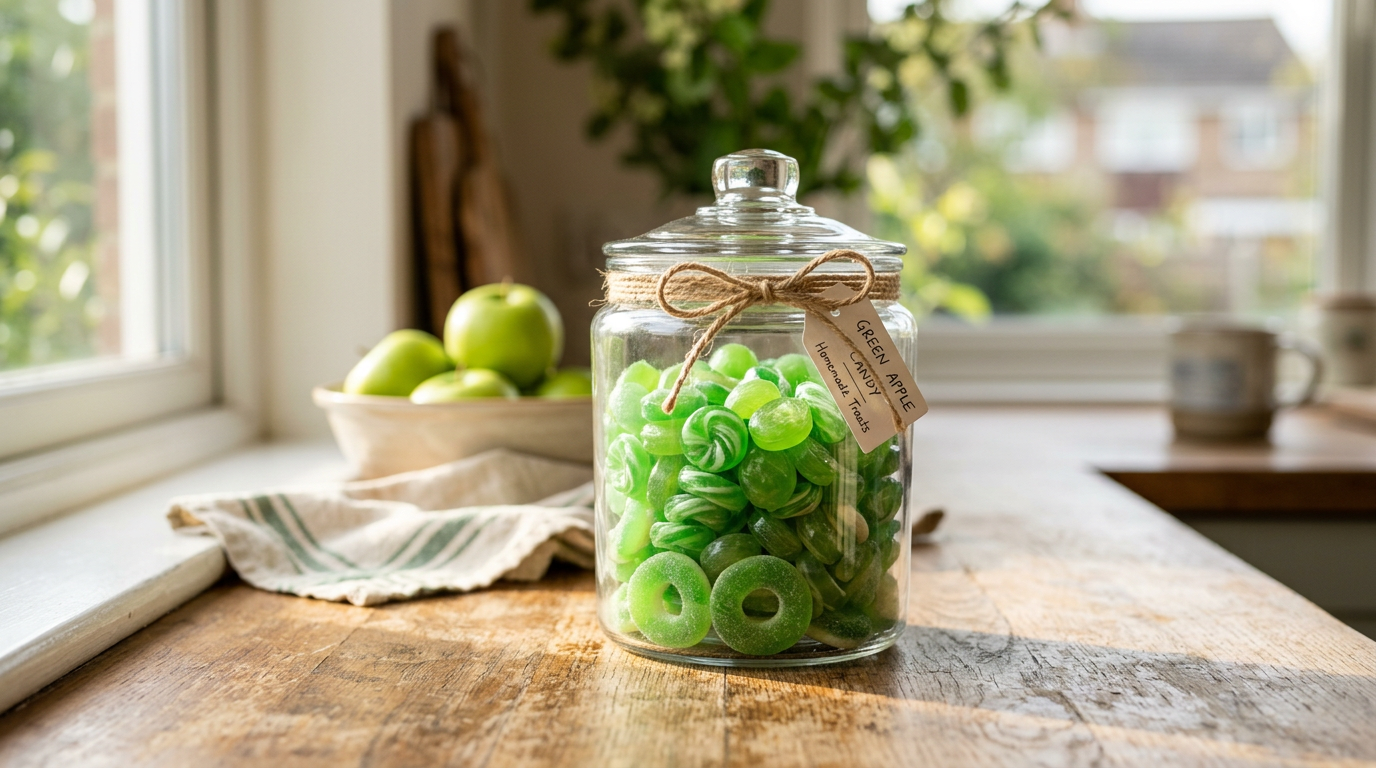
Hard candies are essentially boiled sugar syrups cooked down to a low-moisture glass. That structure makes them remarkably stable. Well-sealed hard candy can often last a year or more in a cool, dry spot. The main enemy isn’t time; it’s humidity. Hard candy is hygroscopic, meaning it pulls moisture from the air, which is why an open bag left in a damp kitchen turns sticky and cloudy within weeks while a sealed jar in a pantry barely changes after months.
Gummy and Chewy Candy
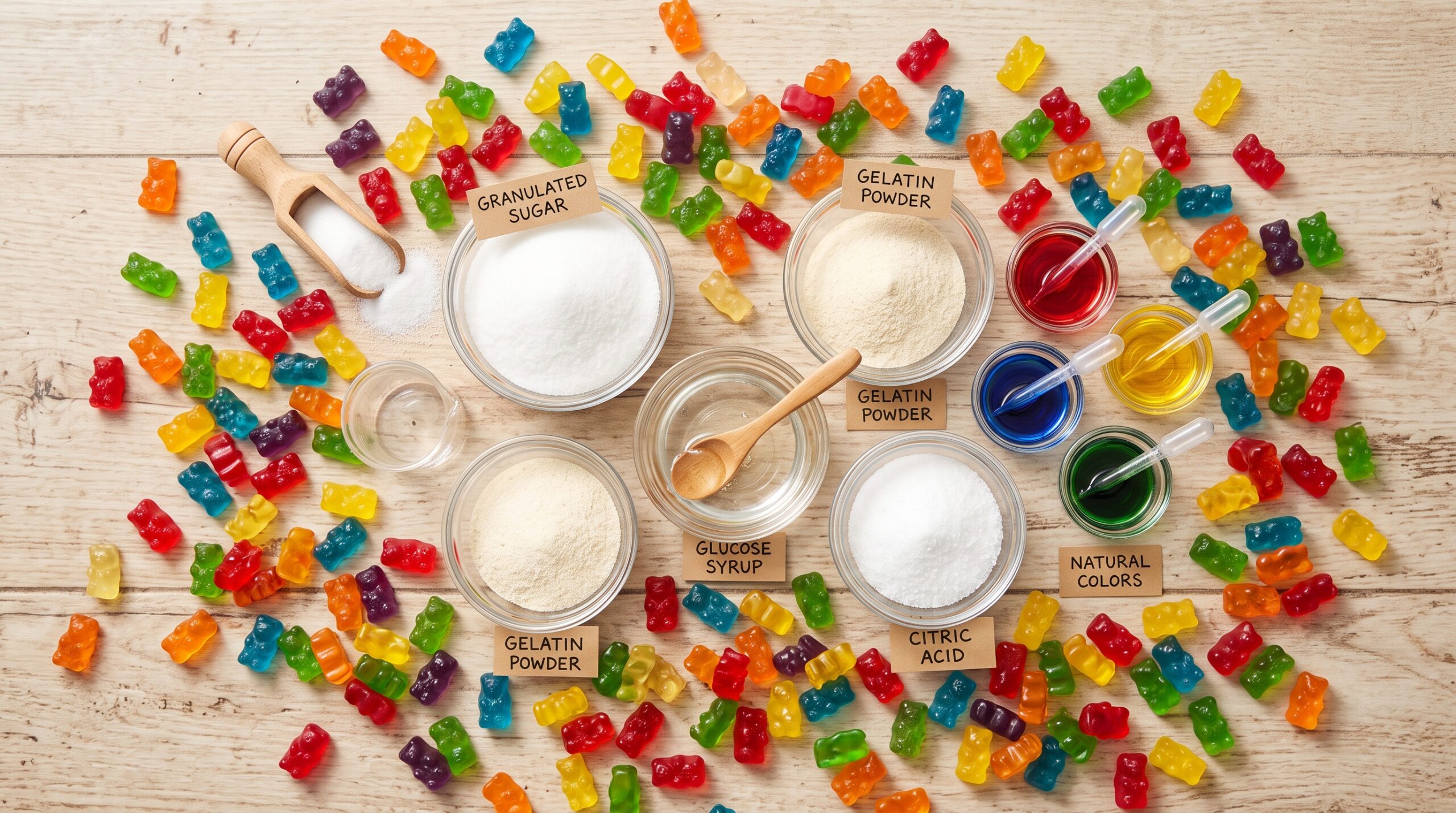
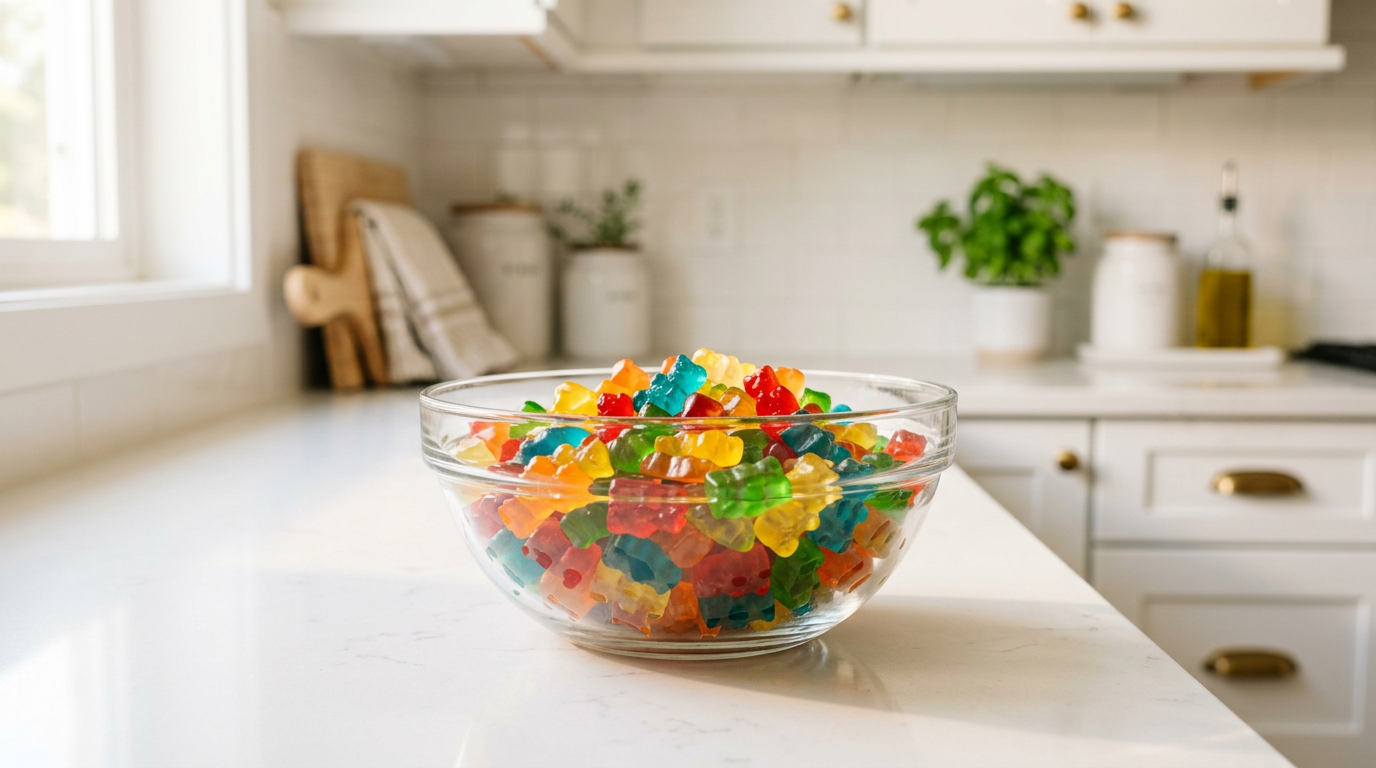
Gummies sit at the opposite end of the moisture spectrum, and that’s exactly why they’re trickier to keep at peak quality. They start out with more water locked into their gelatin or pectin structure, and that water is constantly trying to escape or redistribute. Leave a bag open, and gummies turn rock-hard as moisture evaporates; seal them in a humid environment, and they can turn sticky or even develop a sugary “bloom” on the surface as sucrose migrates outward. Most commercially produced gummies are formulated for a 9-12 month quality window when stored correctly, though that range depends heavily on the recipe’s water activity and the barrier properties of its packaging (more on that in the production section below).
Chocolate and Filled Chocolates
Chocolate is its own animal because of its fat content. Cocoa butter is prone to a phenomenon called fat bloom, where fat rises to the surface and recrystallizes into a dull, chalky-white film. It looks alarming, but according to Wikipedia’s overview of chocolate bloom, it’s a cosmetic and textural change caused by temperature swings, not spoilage in the bacterial sense, and not a health concern. A separate phenomenon, sugar bloom, happens when condensation dissolves surface sugar that later recrystallizes into a gritty coating; this is more common when chocolate is moved from a cold space into a warm, humid one. An Iowa State University Extension breakdown of chocolate shelf life, storage, and bloom notes that plain chocolate can stay good for well over a year in stable, cool conditions, while filled or layered chocolates (pralines, truffles, anything with cream, nuts, or fruit centers) have a much shorter window because those fillings carry their own moisture and fat profiles that age independently of the shell.
| Candy type | Typical quality window (sealed, cool & dry) | First sign it’s past its prime |
|---|---|---|
| Hard candy / lollipops | 12+ months | Sticky surface, cloudy appearance |
| Gummy / chewy candy | 9-12 months | Hardened texture or sugar crust |
| Plain chocolate | 12-24 months | Fat or sugar bloom (white film) |
| Filled chocolates / pralines | 2-4 months | Off smell, separated filling |
| Caramel & nougat | 6-12 months | Excessive hardening, graininess |
| Marshmallow | 6-9 months | Drying, shrinkage, loss of bounce |
If you’re stocking a pantry, a vending route, or a retail bin, that table is worth printing out. It’s the difference between rotating stock smartly and guessing.
Where Shelf Life Really Comes From: The Manufacturing and Packaging Side
A candy’s shelf life gets decided largely on the production line, long before it ever reaches a store shelf.
This is the part most consumer-facing articles skip entirely, and it’s where the most useful insight actually lives. The “best by” date stamped on a bag of gummies isn’t a guess pulled from thin air; it’s the output of formulation testing, packaging trials, and accelerated shelf-life studies run during product development. We’ve sat through enough of those production conversations to say with confidence: the equipment and process choices made months before launch quietly set the expiration ceiling for everything that follows.
Moisture Control During Production
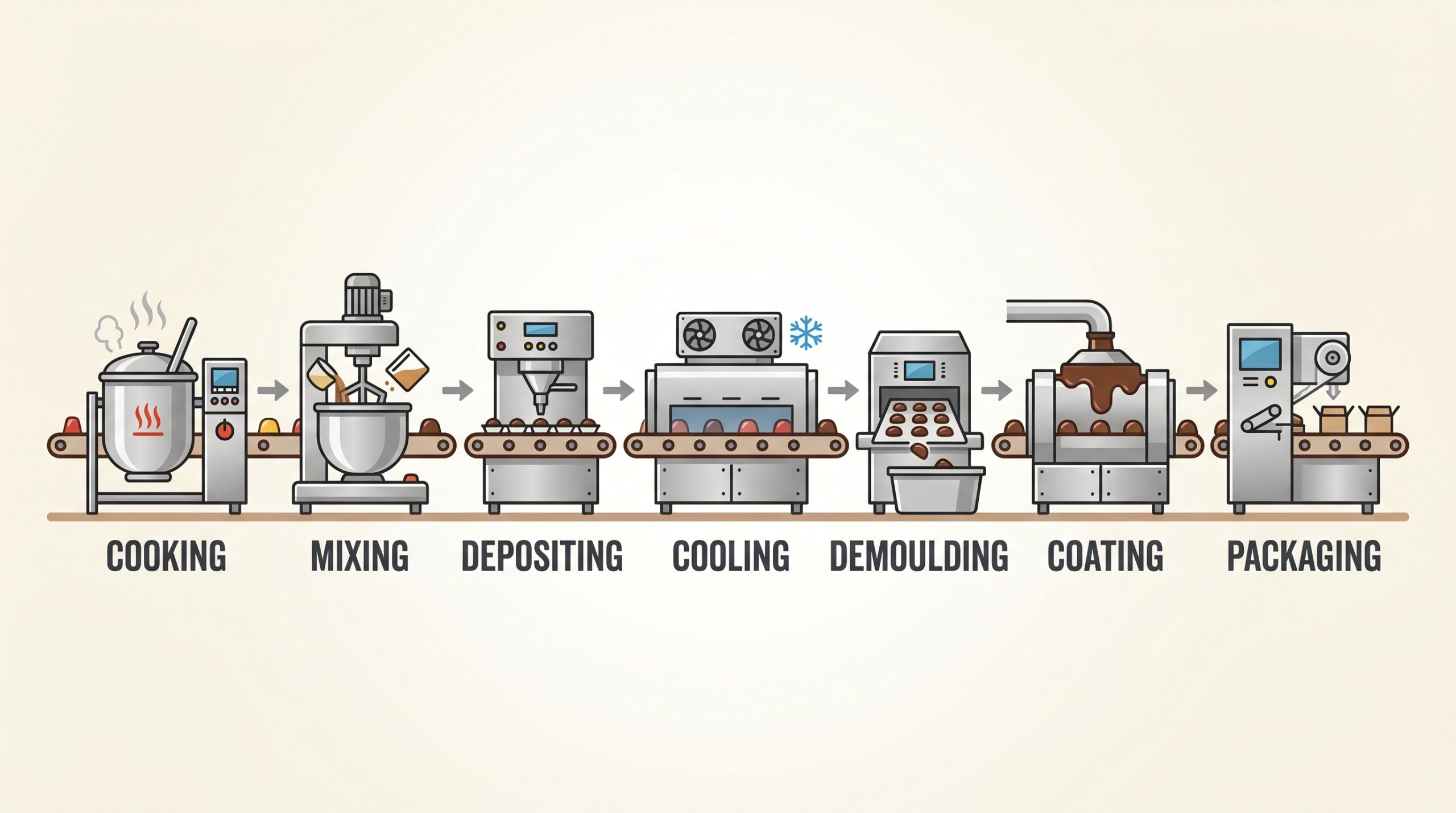
Water activity (not total moisture content, but how “available” that moisture is for microbial or chemical activity) is the single biggest lever in confectionery shelf life. Cooking temperatures, cooling rates, and depositing methods all change a recipe’s final water activity, which is why two gummies with nearly identical ingredient lists can have wildly different shelf lives depending on how they were made. Get the cook profile wrong, and you bake in a shorter shelf life no amount of clever packaging can fix later.
Packaging Materials and Barrier Properties
Once the candy itself is dialed in, packaging takes over as the second line of defense. Foil laminates, metallized films, and multi-layer barrier pouches each block moisture and oxygen at different rates, and the choice between them is a direct trade-off between cost and shelf life. A thin single-layer wrap might shave fractions of a cent off unit cost, but it can cut months off a product’s quality window in humid climates. That’s the kind of decision that looks small on a spec sheet and shows up later as a wave of customer complaints about stale stock.
How Equipment Choices on the Line Affect Final Shelf Life
This is the piece that almost never makes it into a “does candy expire” article, and it’s exactly where our experience equipping confectionery production lines comes in. Depositing accuracy, cooling tunnel length and airflow, and final-stage drying or enrobing all influence the finished product’s internal moisture distribution. Uneven distribution is one of the fastest routes to early texture problems, even when the recipe is sound. Manufacturers evaluating new lines for items like gummies or coated candies often underweight this stage, focusing on throughput numbers while glossing over how the cooling and drying sections will actually behave with their specific formulation. If you’re sourcing or upgrading a production line with shelf life in mind (not just output), it’s worth working from equipment built around that exact concern; our gummy production line systems are engineered with that moisture-and-cooling balance as a core design parameter, not an afterthought.
Production note: If you manufacture or distribute candy and keep getting “stale” complaints despite following the same recipe, look upstream before you look downstream. The fix is rarely in the warehouse. It’s usually three steps earlier, on the cooling or packaging line.
How to Tell If Your Candy Has Actually Gone Bad
Once you understand that the printed date is a quality estimate rather than a safety deadline, the real question becomes: how do you judge a specific bag in front of you, right now? The answer is a quick sensory check that takes less time than reading the label twice.
Visual and Texture Red Flags
- Surface discoloration: A dusty white film on chocolate (bloom) is cosmetic; greenish or fuzzy spots on anything are not, and that candy goes straight in the trash.
- Texture shifts: Hard candy gone sticky, gummies gone rock-hard, or marshmallows that have collapsed and dried out are all quality failures, not safety ones, but they’re a clear sign the product is past its best.
- Off smells: Sour, rancid, or chemical odors (especially in chocolate or anything with nut or dairy fillings) are the clearest red flag of actual spoilage and should not be ignored.
- Packaging damage: Torn seals, punctured wrappers, or signs of pest activity void any shelf-life estimate immediately, regardless of the printed date.
Storage Conditions That Speed Up Decline
Heat, humidity, and light accelerate candy’s decline faster than almost anything else. A car dashboard in summer, a sunlit windowsill, or a steamy kitchen near the stove can shave months off a product’s realistic shelf life, even if the printed date says it’s still fine. Cool, dry, dark storage (think pantry shelf, not countertop fruit bowl) is the simplest variable you control that has an outsized effect on how long candy actually stays enjoyable.
Step-by-Step: Checking a Questionable Batch
- Inspect the packaging first. Confirm the seal is intact and there’s no visible damage or pest activity.
- Look at the candy itself. Check for discoloration, bloom, melting, or structural collapse.
- Smell it. A sharp, sour, or chemical odor is your strongest single signal. Trust your nose over your eyes here.
- Touch-test the texture. Compare it mentally to how that candy type should feel fresh (refer back to the comparison table above).
- Taste a small piece if everything else checks out. Off flavors show up immediately, and a small sample limits any downside.
- When in doubt, don’t. If two or more red flags show up together, the smartest move is to toss it. A half-eaten bag costs nothing compared to a ruined afternoon.
A food-science expert interviewed in Michigan State University’s Halloween candy safety roundup put it plainly: candy that’s past its date is far more likely to disappoint your taste buds than to make you sick. A genuinely off smell or visible mold is where that general rule stops applying, and caution should take over.
Candy Shelf-Life Trends for 2026 and Beyond
The conversation around candy shelf life is shifting on a few fronts at once, and each one will change how this question gets answered a few years from now.
Clean-Label Preservation Methods Replacing Older Additives
Consumer pressure for “clean label” products is pushing manufacturers toward natural acids, sugars, and processing techniques that extend shelf life without relying on synthetic preservatives. That’s a genuine formulation challenge. Natural systems tend to be less forgiving of small process variations, which circles right back to why production precision matters more going forward, not less.
Smart Packaging and Date-Tracking Technology
Expect to see more freshness indicators, QR-coded batch tracking, and humidity-responsive packaging materials reach mainstream candy lines over the next few years. These tools won’t change the underlying chemistry, but they will make the gap between “printed date” and “actual quality” far easier for both retailers and shoppers to see in real time.
Standardized, Clearer Date Labeling
Momentum toward unifying those date labels (the same push referenced in the Federal Register proposal cited earlier) is likely to gain ground. A simplified system would cut consumer confusion and, by extension, reduce the amount of perfectly good candy that gets thrown out simply because someone misread a label.
| Trend | What’s driving it | Expected impact by 2026+ |
|---|---|---|
| Clean-label preservation | Consumer demand for recognizable ingredients | Shorter average shelf life offset by tighter production controls |
| Smart/active packaging | Retailer interest in reducing waste & returns | Better real-time freshness visibility |
| Standardized date labeling | Regulatory proposals to cut consumer confusion | Fewer “is this still good?” guesses at the shelf |
Frequently Asked Questions
Can candy expire if it’s never been opened?
Yes, but slowly. An unopened, properly sealed bag of candy can stay at peak quality well past its printed date (often by months), because the packaging is doing exactly the job it was designed for. The clock only really starts moving fast once that seal is broken.
How long can candy expire and still be okay to eat?
Usually far longer than the label suggests. Hard candy and chocolate can often be enjoyed safely a year or more past their date; gummies and filled chocolates have a shorter realistic window. Safety risk stays low across the board. Flavor and texture fade first.
Can expired candy actually make you sick?
It’s extremely unlikely for sugar-based candy. The low moisture and high sugar content that define most confections are naturally hostile to the bacteria that cause foodborne illness. The exceptions are items with dairy, nut, or fruit fillings, where mold is the real concern, not the date itself.
Does refrigerating candy make it last longer?
Sometimes, but it can backfire. Refrigeration slows chocolate bloom in hot climates, but it can also introduce condensation that triggers sugar bloom or makes gummies sticky once the candy returns to room temperature. For most candy, a cool pantry beats a fridge.
What happens if you eat candy past its expiration date?
Most likely, nothing more than a flatter taste. You may notice a duller flavor, a different texture, or, in chocolate, a chalky white surface. Genuine illness from expired candy is rare and almost always tied to visible mold or an off smell, not the date itself.
Can hard candy expire the same way soft candy does?
No. Hard candy ages very differently. Its low moisture content makes it one of the most stable candy types around; humidity, not time, is what eventually turns it sticky or cloudy.
How should I store candy to make it last as long as possible?
Cool, dry, dark, and sealed. Keep it away from stovetops, sunny windows, and humid rooms, and reseal opened bags tightly. That single habit does more for shelf life than any other variable you can control at home.
Conclusion
The short version: yes, candy can expire, but for almost every type that lands in a shopping cart, “expired” is a quality conversation, not a safety emergency. Hard candy and chocolate can often outlast their printed dates by months when stored well; gummies and filled chocolates are more sensitive and reward a closer look before you dig in. The date on the wrapper is a manufacturer’s best estimate of peak flavor, not a countdown to spoilage, and learning to read texture, smell, and appearance will tell you far more than that stamp ever will.
If there’s one habit worth taking away from all of this, it’s to stop treating the printed date as the final word and start treating your senses as the real test. Check the seal, look at the surface, give it a smell, and trust what you find. And if you’re on the production side of this conversation (formulating, packaging, or running a line that needs to hit a longer shelf-life target), the fix usually starts upstream, in the equipment and process decisions made long before the first bag ever gets sealed. That’s exactly the kind of problem we help confectionery producers solve every day.