Popping boba are juice-filled spheres added to bubble tea that burst when bitten, created via spherification — a process wrapping flavored liquid in a thin sodium alginate gel membrane. Unlike tapioca pearls, they need no cooking and deliver an intense fruity pop with every sip.
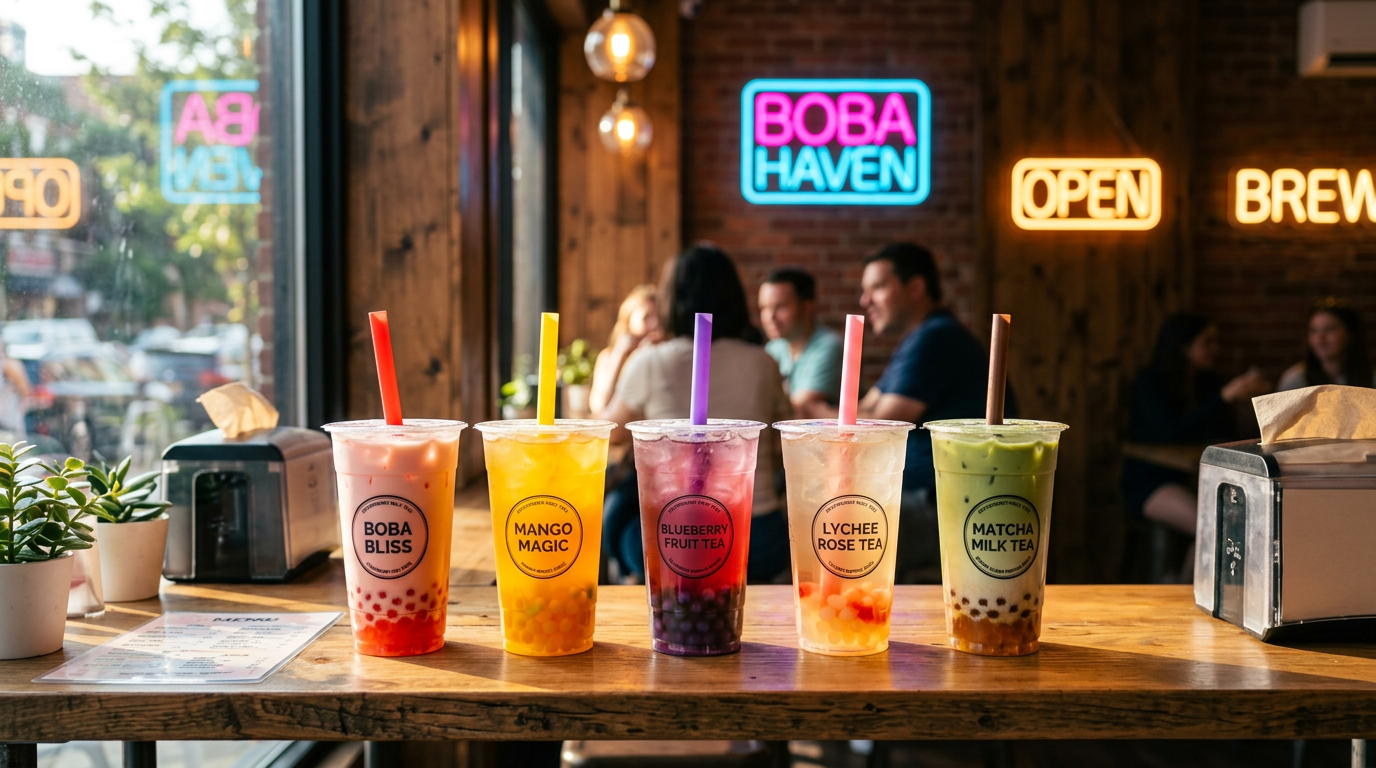
Walk into any bubble tea shop in 2026 and you’ll find them on the menu: those bright, jewel-like spheres that seem to explode with flavor the moment they touch your tongue. Bubble tea popping boba have transformed an already popular drink into a full sensory experience. But what exactly makes them burst? How are they manufactured at scale? And if you’re running a tea shop or evaluating confectionery equipment, what should you know before adding popping boba to your lineup?
This guide covers everything — the molecular science, the flavor landscape, the manufacturing process, and where the market is heading in 2026 and beyond.
What Is Bubble Tea Popping Boba?
Bubble tea popping boba are small, spherical pearls — typically 6–10 mm in diameter — with a thin gel skin that encases a liquid fruit juice or flavored syrup center. When you bite into one, that skin ruptures instantly, releasing a concentrated burst of flavor. That textural contrast — the subtle chew of the shell, then the sudden release of liquid — is what makes popping boba so addictive.
According to Wikipedia’s entry on popping boba, these spheres are made using a technique called spherification, a molecular gastronomy process that transforms liquid into gel spheres using a chemical reaction between sodium alginate and calcium chloride. The technique itself was pioneered by culinary innovator Ferran Adrià at elBulli restaurant in the early 2000s, but it was the bubble tea industry in Taiwan that scaled it into a mass-market product.
Popping Boba vs. Tapioca Boba: Key Differences
Most people who drink bubble tea have encountered both — tapioca pearls (the original) and popping boba (the newer variant). They look similar in a cup but behave completely differently on the palate and in production.
| Feature | Popping Boba | Tapioca Boba |
|---|---|---|
| Core material | Juice / flavored liquid | Starch (tapioca) |
| Shell material | Sodium alginate gel | Cooked starch |
| Texture | Thin skin, liquid burst | Chewy, dense throughout |
| Requires cooking | No | Yes — 20–30 min boiling |
| Shelf life (sealed) | 12–18 months | 6–12 months (dry), hours when cooked |
| Flavor intensity | High (concentrated juice) | Mild (plain or lightly sweetened) |
| Common colors | Vibrant, matches flavor | Brown, black, or colored variants |
| Production complexity | Spherification equipment | Simpler starch-cooking process |
Tapioca pearls win on chewiness and tradition. Popping boba wins on visual impact, flavor variety, and ease of production at scale (no cooking required). Many bubble tea shops now offer both and let customers choose — or stack both in the same cup for a mixed texture experience.
The Spherification Science Behind the Pop
The “magic” behind bubble tea popping boba is a controlled chemical reaction between two food-safe compounds: sodium alginate (extracted from brown seaweed) and calcium chloride or calcium lactate. Here’s what happens:
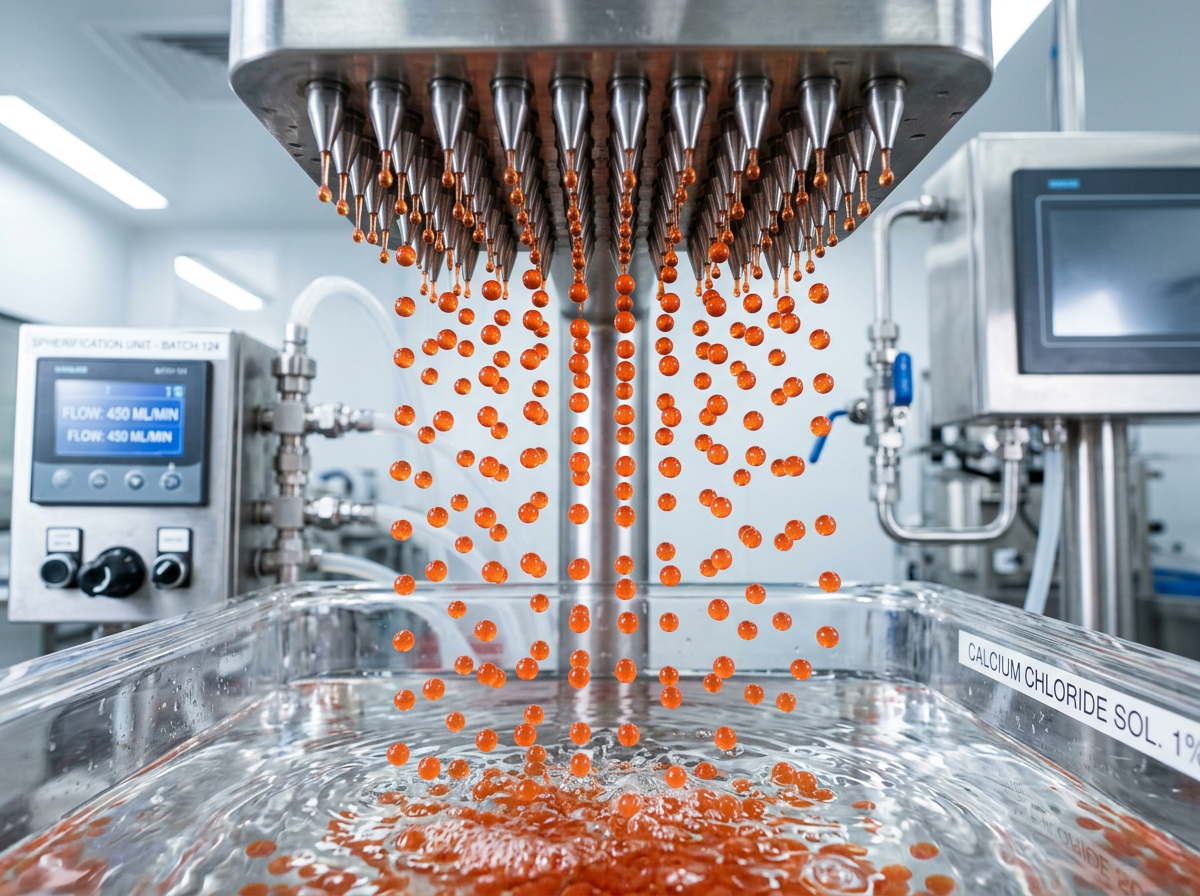
- A liquid mixture containing sodium alginate is dropped into a calcium chloride bath.
- The calcium ions immediately react with the sodium alginate at the droplet’s surface, forming a thin, insoluble calcium alginate gel membrane.
- The reaction stops at the skin — the interior stays liquid because no calcium has penetrated through.
- The sphere is rinsed, coated in a finishing syrup, and packaged.
This is called “basic spherification.” There’s also “reverse spherification,” where calcium is embedded in the flavor liquid and the sphere is dropped into an alginate bath — this creates a thicker shell with a longer shelf life, which is why most commercial popping boba uses reverse spherification. As Wikipedia explains on spherification, the reverse method produces more stable spheres that don’t continue gelling over time, making them suitable for extended shelf storage.
The wall thickness, burst force, and flavor retention all depend on the concentration ratios (typically 0.5–1% sodium alginate in the juice mixture, 0.5–1% calcium chloride in the bath), temperature, drop height, and dwell time in the bath. Commercial manufacturers dial these precisely for consistency.
Types and Flavors of Popping Boba
The flavor landscape for bubble tea popping boba has exploded since the early 2010s. What started as three or four basic fruit options has grown into a category with dozens of SKUs — and manufacturers are still innovating.
Classic Fruit Flavors
The backbone of any popping boba lineup is fruit. These flavors have proven commercial track records and pair reliably with most tea bases:
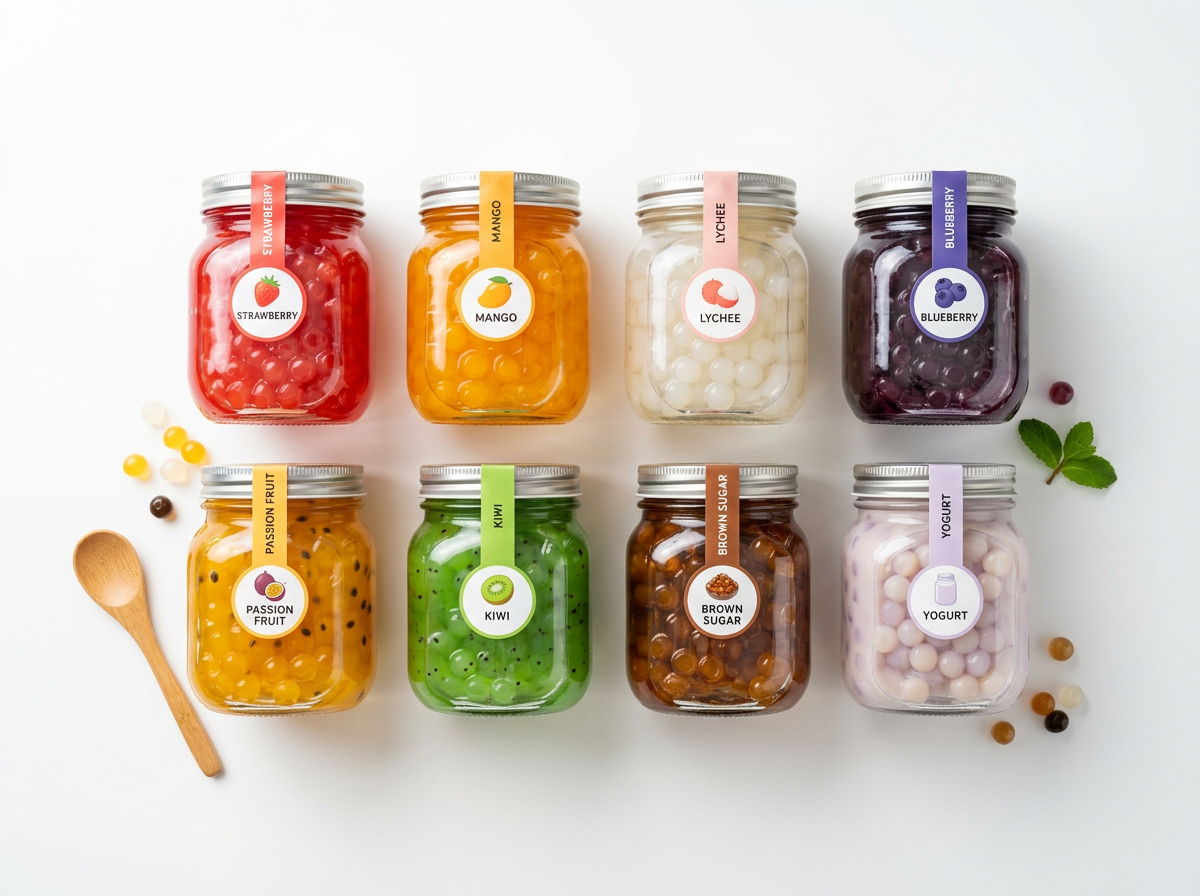
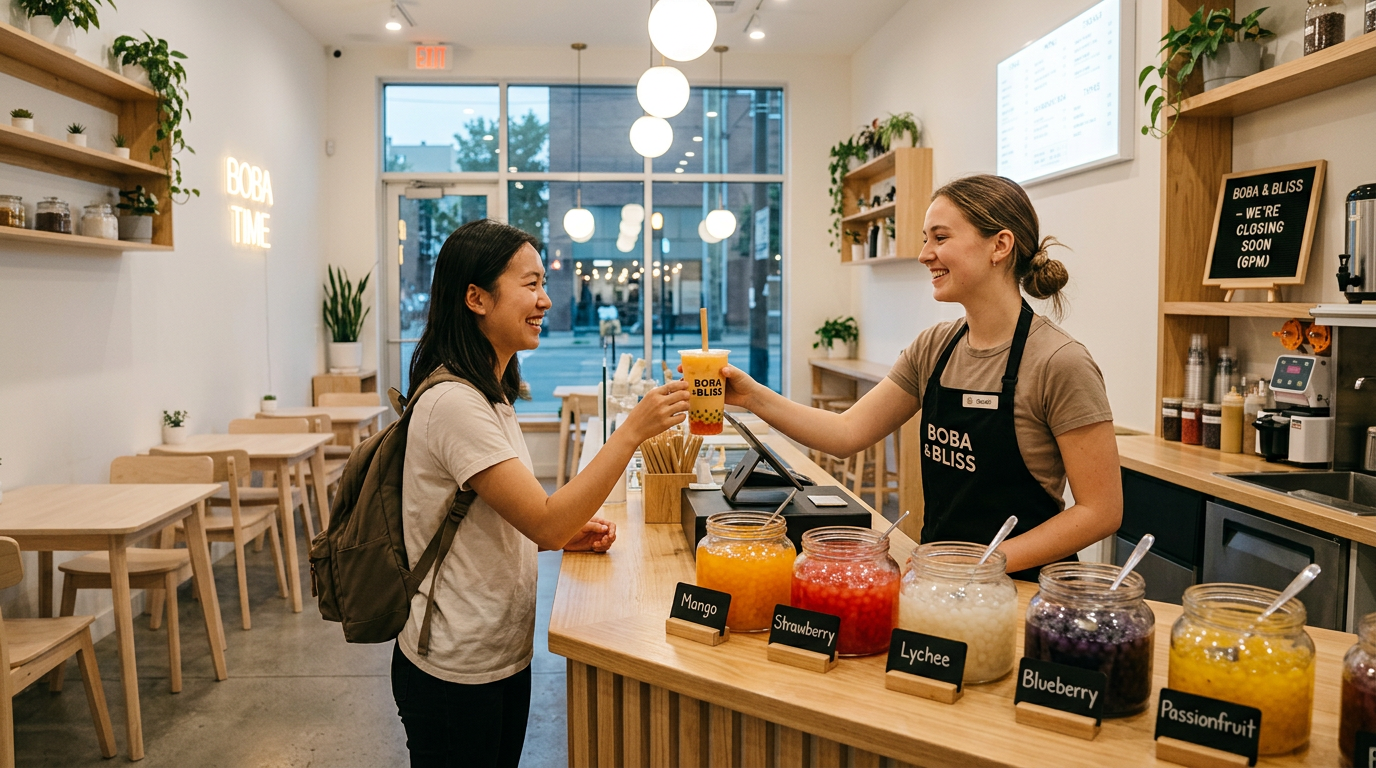
- Strawberry — the bestseller in most markets. Bright red color, sweet-tart profile, pairs with milk tea, green tea, or matcha.
- Mango — tropical, aromatic, works exceptionally well with mango milk tea or passion fruit bases.
- Lychee — delicate floral sweetness, one of the most iconic bubble tea flavors. Nearly colorless to pale pink.
- Blueberry — deep purple color, berry-forward, popular in yogurt-style bubble teas.
- Passion fruit — tart, complex, growing fast in North American and European markets.
- Peach — soft, mellow, beginner-friendly flavor that pairs with almost everything.
- Green apple — bright, acidic, a natural complement to jasmine or white tea bases.
- Pomegranate — rich red color, slightly tannic, appeals to wellness-oriented consumers.
Specialty, Sour, and Seasonal Variants
Beyond the classics, manufacturers have pushed into more adventurous territory:
- Sour popping boba — higher citric acid concentration creates a pronounced pucker. Hugely popular with Gen Z. Brands like BobaVida’s sour line report it’s one of their fastest-growing SKUs.
- Yuzu — the Japanese citrus that went mainstream. Pairs beautifully with green tea.
- Lemon lime — ICEE-branded popping boba has validated this flavor’s commercial potential in the US market.
- Coconut — creamy, tropical, used extensively in Southeast Asian bubble tea chains.
- Brown sugar — mirrors the brown sugar milk tea trend, with a caramel-like boba that turns the drink into a layered visual.
- Seasonal specials — cherry blossom (spring), pumpkin spice (fall), peppermint (winter). These limited editions drive repeat visits and social media content.
Caffeine-Infused and Functional Boba
The newest frontier: popping boba that does something beyond flavor. These are early-stage but gaining traction with health-forward tea shops:
- Matcha popping boba — encapsulates actual matcha concentrate, delivering a genuine caffeine kick alongside the pop. Used as both topping and primary boba in matcha tea drinks.
- Coffee popping boba — espresso-flavored shells, popular in hybrid coffee-bubble-tea concepts.
- Vitamin-infused variants — manufacturers are experimenting with encapsulating vitamin C, B12, or collagen peptides in the liquid center. The controlled-release delivery is actually more effective in a spherification shell than in a diluted drink.
- Probiotic boba — at pilot scale, combining live cultures with spherification chemistry is technically complex but several food-tech startups are pursuing it actively.
| Flavor Category | Best Tea Pairing | Color | Popularity Tier |
|---|---|---|---|
| Strawberry | Milk tea, green tea | Bright red | ⭐⭐⭐⭐⭐ |
| Mango | Mango milk tea, green tea | Orange-yellow | ⭐⭐⭐⭐⭐ |
| Lychee | Jasmine tea, oolong | Pale pink | ⭐⭐⭐⭐ |
| Passion fruit | Passion fruit tea, black tea | Yellow-orange | ⭐⭐⭐⭐ |
| Blueberry | Taro milk tea, yogurt drinks | Deep purple | ⭐⭐⭐⭐ |
| Sour (any) | Any, contrast pairing | Varies | ⭐⭐⭐⭐ |
| Yuzu | Green tea, white tea | Light yellow | ⭐⭐⭐ |
| Matcha (functional) | Matcha latte, milk tea | Olive green | ⭐⭐⭐ |
How Popping Boba Is Used in Bubble Tea
Walk the line between topping and ingredient and you’ll understand why bubble tea popping boba has become so versatile for shop operators. It’s not just what goes in the cup — it’s how the product shapes the customer experience from first glance to last sip.
As a Topping vs. Primary Boba
Most customers use popping boba as a topping — added at the base of the cup or layered on top of the drink after pouring. This allows visual appeal (the colorful spheres are immediately visible through transparent cups) and lets the customer control the boba-to-drink ratio.
Some shops, particularly in East Asia, feature popping boba as the primary pearl — replacing tapioca entirely. This works best for lighter tea bases where the juice flavors in the boba complement rather than fight the drink. A passion fruit green tea with passion fruit popping boba, for example, creates a unified flavor experience that a standard tapioca pearl can’t match.
The practical difference for shop operations: popping boba requires no preparation beyond portioning. Tapioca pearls need to be cooked, held at temperature, and used within 4–8 hours or they harden. Popping boba from a commercial jar or pouch goes straight into the cup with a spoon or portion scoop — zero prep, zero waste risk.
Pairing Flavors with Tea Bases
This is where most bubble tea training materials are frustratingly vague. In practice, we’ve found the pairing logic follows three rules:
Mirror pairing: Match the boba flavor to the tea base. Mango boba + mango tea creates intensity through repetition — the fruit note hits you three times (smell, boba burst, drink). Works best with bold, clear flavors.
Contrast pairing: Use boba to add a flavor the drink doesn’t have. A classic milk tea with lychee popping boba creates a floral counterpoint that elevates both elements. Taro milk tea with passion fruit boba delivers sweet-tart contrast that cuts through the starchiness.
Neutral base pairing: Plain milk tea or jasmine tea with any fruit boba — the boba becomes the primary flavor statement. The tea provides body and aroma without competing.
What doesn’t work: Heavy roasted oolong or pungent teas (like certain puerhs) tend to overwhelm delicate boba flavors. Save the bold teas for tapioca or pair them with stronger boba like pomegranate or sour varieties.
Presentation and Customer Experience
Bubble tea is a visual-first category. The fact that bubble tea popping boba is transparent, colorful, and sits at the bottom of a cup (or floats dramatically at the top with certain drink densities) is a major driver of the “cup photography” that fuels social media shares.
Shop operators who understand this design deliberately: a transparent cup, contrasting boba color against the drink, and a wide straw that can actually pick up the boba (minimum 12mm diameter straw) without requiring customers to “hunt” for each pearl.
In blind taste tests conducted by multiple bubble tea consulting groups, drinks with visible boba consistently rated higher on “anticipated enjoyment” before the first sip than identical drinks with boba hidden by milk or opaque cups. The visual promise of the burst is part of the product’s value.
How Popping Boba Is Made: The Manufacturing Process
For food manufacturers and equipment buyers, this is the section that matters most. Bubble tea popping boba production is a precision manufacturing process — not artisanal, not complex chemistry, but tight control of variables at scale.
Core Ingredients and Their Functions
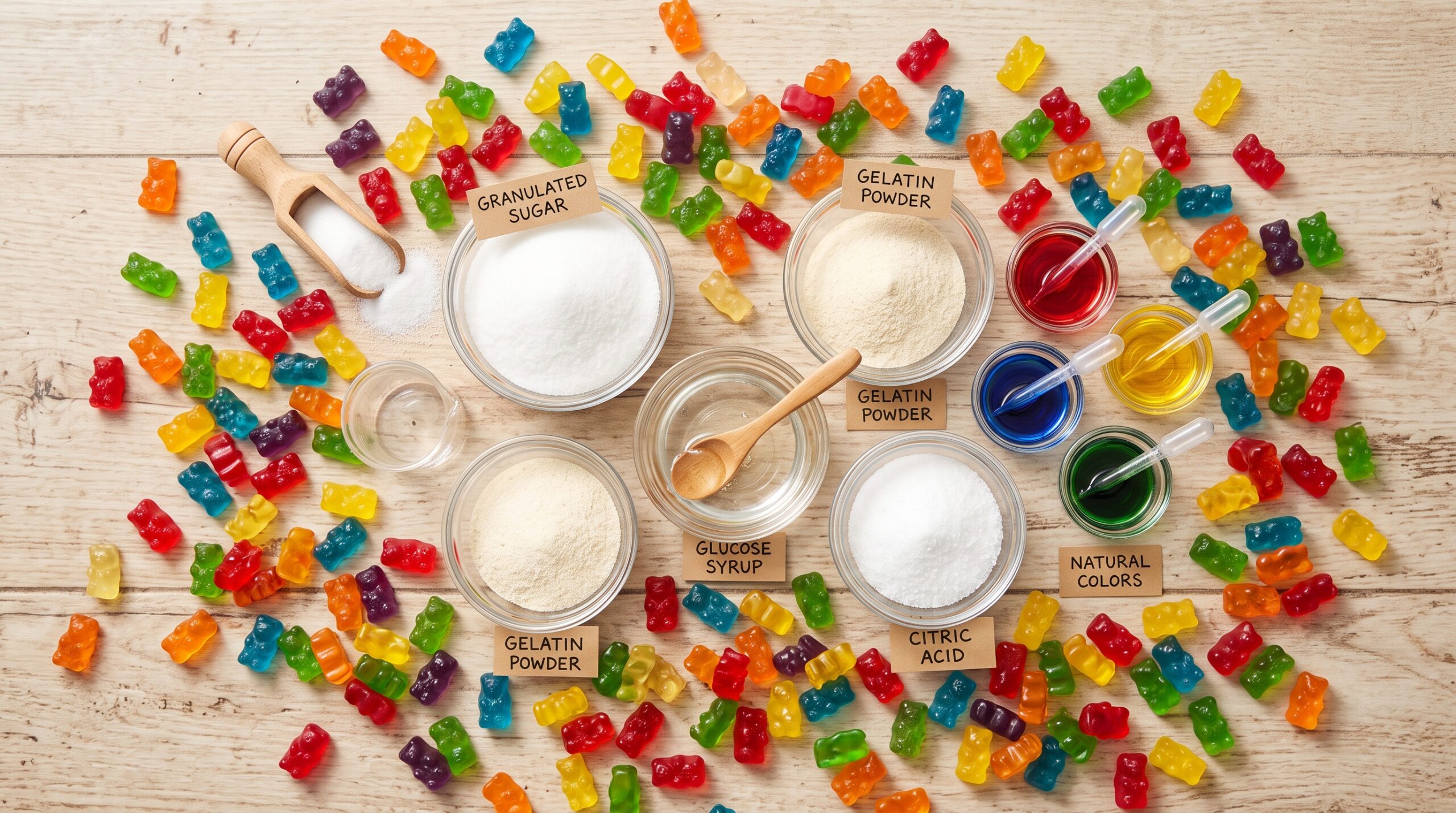
Every batch of commercial popping boba starts with four essential components:
1. Fruit juice or flavored syrup (the fill)
This is the interior liquid that carries flavor. Commercial manufacturers use either real fruit juice concentrate, artificial flavor compounds, or a blend. The liquid must be free of calcium (calcium inhibits the alginate from penetrating properly in reverse spherification) and within a specific Brix range (usually 20–30° Brix) for the right viscosity and burst mouthfeel.
2. Sodium alginate
A natural polysaccharide extracted from brown seaweed (Macrocystis pyrifera and related species). FDA-approved as a GRAS (Generally Recognized as Safe) food additive, it’s the structural backbone of the gel shell. Typical working concentration: 0.5–1.0% by weight in the fill solution. Higher concentration = thicker shell = less liquid burst. It’s a tradeoff manufacturers tune to product specifications.
3. Calcium salt (bath or fill)
In basic spherification, calcium chloride sits in the bath (0.5–1%). In reverse spherification (more common commercially), calcium lactate or calcium lactate gluconate is dissolved into the fill liquid before dropping into an alginate bath. The calcium salt choice affects shell clarity — calcium chloride produces slightly cloudier spheres; calcium lactate gives cleaner visual results.
4. Finishing syrup
After spherification, the spheres go through a water rinse (to remove excess calcium or alginate) and then into a finishing syrup — typically sugar syrup, glucose, or a flavor-matched coating liquid. This extends shelf life, prevents the spheres from sticking together, and adds a final flavor dimension to the shell surface.
Step-by-Step Commercial Spherification
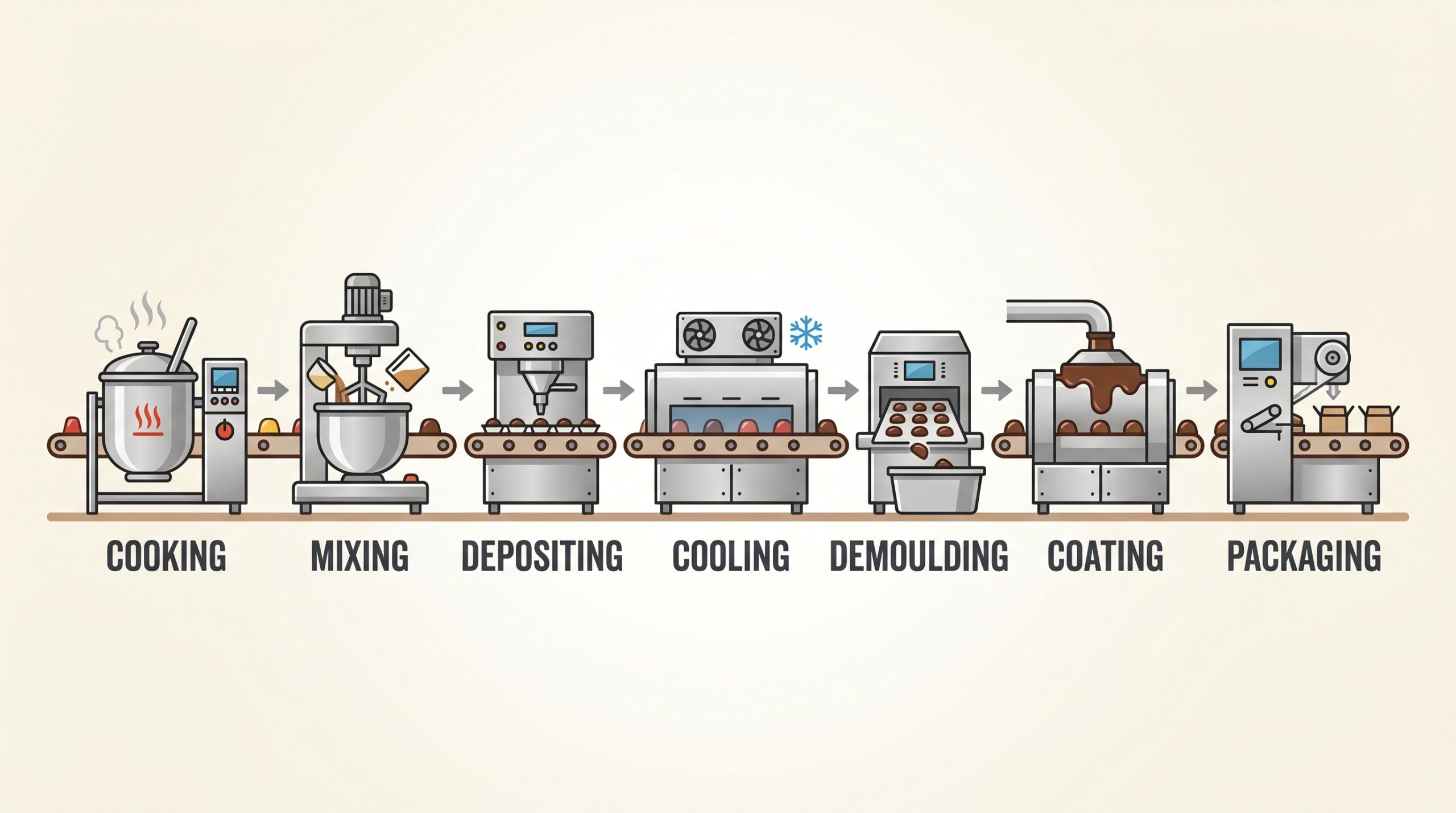
At industrial scale, the basic spherification line looks like this:
Mix preparation — Juice concentrate, sodium alginate, and any coloring/flavoring are blended and hydrated (alginate requires 30–60 minutes of hydration to fully dissolve without lumps). The batch is degassed to remove air bubbles that would cause inconsistent sphere formation.
Sphere formation — The alginate-juice mixture is fed through a multi-nozzle drip head (anywhere from 12 to 200+ nozzles for high-volume production) that drops calibrated droplets into the calcium bath below. Drop height, nozzle diameter, and liquid viscosity control sphere diameter and consistency. Well-tuned commercial equipment produces spheres within ±0.5mm variance across a batch.
Gelation dwell — Spheres sit in the calcium bath for a controlled time (typically 2–5 minutes) to build the gel shell to the target thickness. In reverse spherification, the sphere continues to gel until removed; in basic spherification, the reaction is self-limiting.
Rinse — Spheres pass through one or two rinse baths to remove surface calcium or alginate, which would otherwise cause off-flavors or continued shell thickening during storage.
Coating / finishing — Spheres move into the finishing syrup for 10–30 minutes. Commercial processors often add a small amount of citric acid or preservative at this stage to stabilize pH and extend shelf life.
Quality inspection and packaging — Automated optical sorters or manual inspection removes malformed spheres (irregular shape, broken shells, twins). The product is then portioned into jars, pouches, or bulk containers. Shelf life at ambient temperature is typically 12–18 months for properly packaged commercial popping boba.
Quality Control and Shelf Life
The variables that determine batch quality:
- Shell integrity — broken spheres lead to flavor leakage, staining, and customer complaints. Test: squeeze 10 random spheres between finger and thumb; all should burst cleanly without fragmenting.
- Diameter consistency — critical for customer experience and portioning. A ±1mm spread across a batch is acceptable for commercial use; ±2mm or more indicates nozzle wear or viscosity drift.
- Burst force — measured with a texture analyzer (TA.XT). Too low = spheres burst prematurely in transport; too high = customers find them rubbery rather than satisfying.
- pH stability — the finished product should hold pH 3.5–4.5 (most fruit flavors). Drifting pH indicates a preservative or packaging issue.
- Brix (dissolved solids) — finishing syrup Brix affects sweetness perception and moisture equilibrium between sphere and syrup. Mismatched Brix causes the sphere to shrink or bloat during storage.
Operators sourcing popping boba from manufacturers should request a Certificate of Analysis (CoA) covering these parameters, not just flavor and color specs.
Future Trends in Popping Boba (2026 & Beyond)
The bubble tea market is one of the fastest-growing segments in global foodservice. According to market analysis tracked by Bubble Tea Market reports via Statista, the global bubble tea market was valued at over $3 billion in 2026 and is projected to grow at approximately 8–9% CAGR through the end of the decade. Popping boba is growing faster than the overall category — driven by Gen Z’s preference for textural novelty and high-intensity flavor.
New Flavor Innovations and Functional Ingredients
The next wave of bubble tea popping boba development isn’t just new fruits — it’s function. Tea shops and CPG manufacturers are pursuing two main tracks:
Track 1: Flavor complexity over simplicity. Single-fruit popping boba is table stakes in 2026. The premium tier is moving toward complex blends — hibiscus-pomegranate, yuzu-ginger, lychee-rose — that tell a more sophisticated flavor story. These are harder to mass-produce (maintaining two or more volatile flavor notes through the spherification process is chemistry-intensive), which is why they command 30–50% higher wholesale prices than standard fruit boba.
Track 2: Functional ingredients. The convergence of beverage and supplement culture has put pressure on popping boba manufacturers to develop pearls that deliver meaningful functional benefits. Vitamin C is already widely available; collagen peptides, adaptogens (ashwagandha, lion’s mane), and probiotics are at different stages of commercial viability. The spherification encapsulation format is scientifically promising for controlled release — the thin gel shell can protect sensitive compounds through the drink’s acidic environment — but regulatory, shelf-life, and flavor-masking challenges remain significant hurdles.
Automation and Scale in Boba Production
On the manufacturing side, the shift from artisanal to fully automated spherification lines is accelerating. Early commercial setups required significant manual intervention at the sorting and finishing stages. Modern high-capacity popping boba production lines — the category jymachinetech.com’s confectionery equipment covers — use continuous conveyor systems with automated rinse staging, optical quality sorting, and closed-loop viscosity control that adjusts the alginate feed in real time.
This matters for tea shop operators because it means popping boba pricing has been dropping consistently as manufacturer efficiency improves. What cost $12–15/kg wholesale five years ago is now available at $5–8/kg from competitive manufacturers, bringing the cost of a popping boba serving to under $0.15 per drink for most operators.
The next equipment innovation: multi-flavor simultaneous production. Current single-nozzle-array setups produce one flavor per run, requiring batch changeovers between flavors. Manufacturers are developing parallel-lane spherification systems that produce 4–8 flavors simultaneously with automated sorting downstream.
| Trend | 2024 Status | 2026 Status | 2028 Projection |
|---|---|---|---|
| Complex flavor blends | Niche premium | Mainstream premium | Standard offering |
| Functional/vitamin boba | Early pilots | Commercial scale (Vit C, collagen) | Expanded (adaptogens, probiotics) |
| Automated multi-flavor lines | R&D stage | Limited commercial availability | Widely available |
| Natural coloring (no FD&C dyes) | Premium SKUs | ~40% of market | Majority of market |
| Plant-based alginate alternatives | Research only | Early pilots | Initial commercial use |
Frequently Asked Questions About Bubble Tea Popping Boba
What is the difference between popping boba and tapioca boba?
Tapioca boba are chewy, starch-based pearls cooked from dried cassava starch — they have a dense, uniform texture and mild flavor throughout. Popping boba are juice-filled spheres with a gel shell that bursts on contact. The key practical difference: tapioca must be cooked and used the same day; popping boba comes ready-to-use from a jar with a shelf life of over a year.
Where can I buy bubble tea popping boba?
For consumers: Asian grocery stores, boba specialty retailers, and online marketplaces (Amazon carries multiple brands including JUICII and BobaVida). For tea shops and food businesses: wholesale distributors carry brands like Tea Zone and other commercial suppliers. For manufacturers evaluating high-volume equipment: commercial spherification line suppliers are the starting point before sourcing ingredients.
How long does popping boba last once opened?
Commercially packaged popping boba lasts 12–18 months sealed. Once opened, keep refrigerated and use within 7–14 days. The finishing syrup helps preserve the spheres, but oxygen exposure and temperature change will gradually soften the shell and allow flavor migration. If spheres smell off, have collapsed, or have an unusual film, discard the batch.
Can I make popping boba at home?
Yes — the ingredients (sodium alginate, calcium lactate) are available through food-grade specialty suppliers and some online retailers. Home spherification kits exist. That said, home-made popping boba are best consumed immediately (the basic spherification shell continues to gel, eventually turning the interior to gel as well), and achieving consistent sphere size without proper equipment requires practice. Commercial-grade results require controlled nozzle systems and bath temperature management.
Is popping boba vegan?
Generally yes. Sodium alginate is seaweed-derived, calcium salts are mineral-derived, and the fruit juice or syrup fill is typically plant-based. However, some specialty variants use gelatin (an animal protein) in the shell instead of alginate for different texture profiles, and some finishing syrups use honey. Check the ingredient list if you need strict vegan compliance.
How many calories are in bubble tea popping boba?
A typical 30g serving (roughly 2–3 tablespoons, or the amount in one bubble tea) contains approximately 20–40 calories, primarily from the fruit juice fill and finishing syrup. This is lower than an equivalent serving of cooked tapioca pearls (which run 50–70 calories for the same volume due to starch content). Sour variants tend to be slightly lower in sugar; flavored variants with added cream or condensed milk coatings are higher.
What equipment do I need to produce popping boba commercially?
At minimum: a spherification drip head system with bath tanks and rinse conveyors, a mixing tank with a high-shear mixer for hydrating sodium alginate without lumps, and a filling/portioning line for finished packaging. Industrial-scale operations also need optical sorting systems for quality control and CIP (clean-in-place) cleaning systems between flavor changeovers. Capacity ranges from 50kg/hour for small commercial lines up to 2,000+ kg/hour for large-scale manufacturing.
Conclusion
Bubble tea popping boba occupy a fascinating intersection of food science, manufacturing precision, and consumer psychology. The spherification process itself is elegantly simple — two food-safe chemicals, a controlled drop, a brief bath — yet scaling it to millions of consistent spheres per hour requires serious engineering. That contrast between conceptual simplicity and operational complexity is why the category rewards manufacturers who invest in proper equipment and process control.
For tea shop operators, the key takeaway is that popping boba have permanently shifted customer expectations around texture variety and visual appeal. A shop that offers only tapioca pearls in 2026 is missing a significant segment of the market that came to the category specifically for the burst experience. The low prep burden makes adoption straightforward — the investment is in supplier selection and flavor pairing knowledge, not kitchen equipment.
For manufacturers and equipment buyers, the growth trajectory is clear. The global bubble tea market continues expanding into Southeast Asia, the Middle East, and Western markets, and popping boba’s growth rate within that market outpaces the category average. Whether you’re evaluating your first spherification line or scaling an existing operation, the technical fundamentals here — ingredient ratios, shell thickness parameters, quality metrics — are your starting point.