Quick answer: Gluten free gummy bears contain no wheat, barley, or rye derivatives and must test below 20 ppm gluten to meet FDA labeling requirements. Not every brand is certified, though, and shared production lines can still cause real contamination issues.
Most candy guides miss this: a gummy bear can carry a “gluten-free” label and still land a celiac patient in the hospital. The label tells you what’s in the recipe. It says nothing about the equipment used to make it, the factory where it runs, or whether the glucose syrup came from wheat before arriving on the production floor. If you’re shopping for gluten free gummy bears, or manufacturing them, those distinctions matter.
The consumer side: which brands are genuinely safe, what to check on the label, what to avoid. The production side: how gluten free gummy bears are made, what equipment choices affect allergen safety, and where the category is heading in 2026. Both sides covered here.

What are gluten free gummy bears?
Gluten free gummy bears are bear-shaped confections made without wheat, barley, rye, or their derivatives. Those are the grain families that trigger celiac disease and non-celiac gluten sensitivity.
The gummy bear was invented in 1922 by Hans Riegel of Haribo, and the original recipe revolved around gelatin, sugar, and fruit flavoring. None of those three base ingredients contain gluten. Most classic gummy bears are technically gluten-free by recipe. The complications come through additives, glucose syrup sourcing, and shared production lines.
The core ingredients in gummy bears
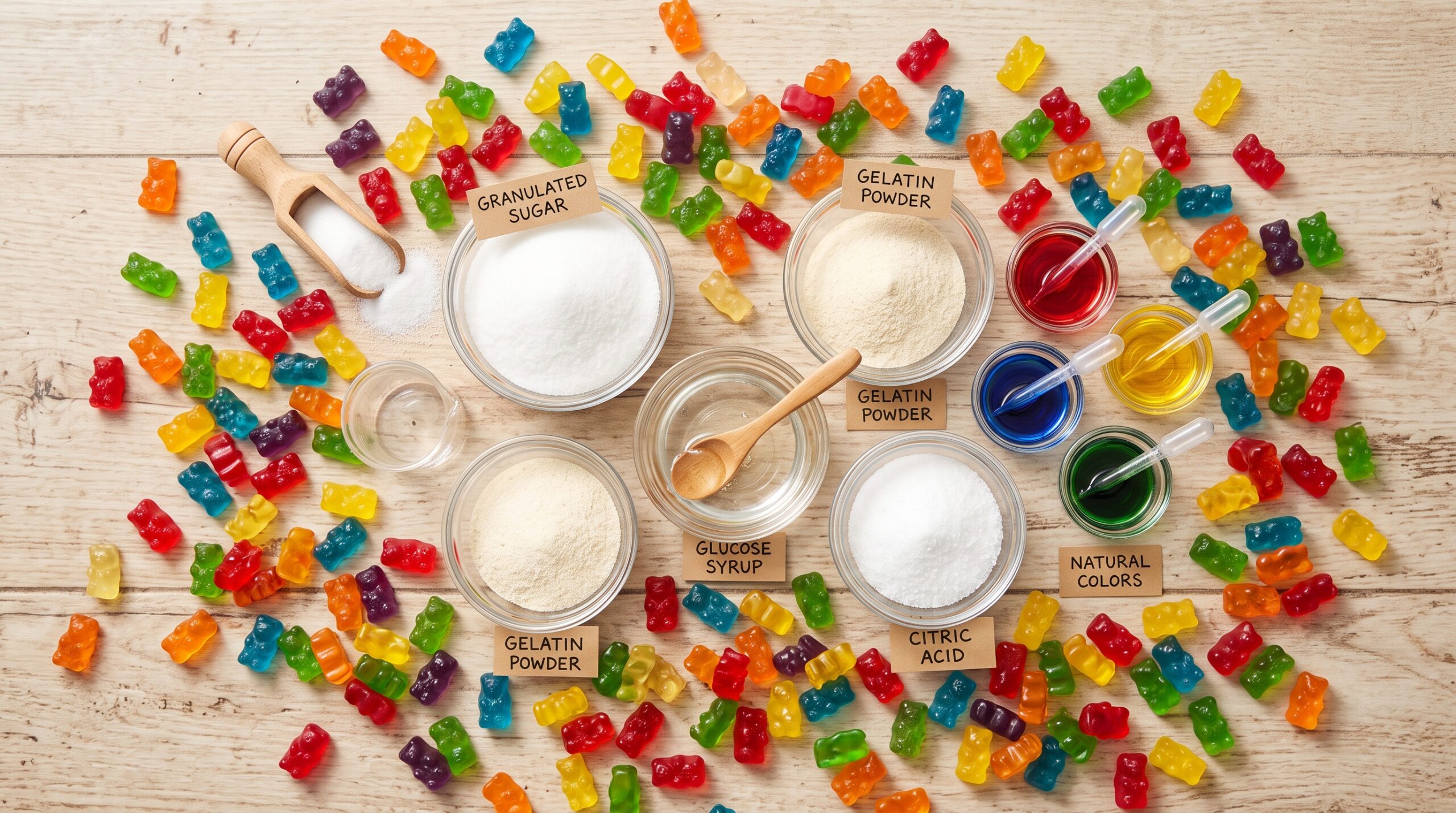
Standard gluten free gummy bears use four main ingredient categories:
- Gelling agent: usually gelatin (from animal collagen) or, in vegan and halal formulations, pectin (from fruit). Both are gluten-free.
- Sweetener: sugar plus glucose syrup. Glucose syrup in European markets is sometimes derived from wheat starch. The starch gets processed out, but wheat-derived glucose syrup still appears on ingredient lists under EU allergen law.
- Flavoring and coloring: fruit juice concentrates, natural flavors, citric acid, artificial dyes. Almost always gluten-free, though natural flavors occasionally include grain-derived carriers worth checking.
- Coating: beeswax or carnauba wax for the glossy finish. Both are gluten-free.
The variable that catches people is the glucose syrup. In the US, glucose syrup is virtually always corn-derived. In Europe, wheat starch is a common source. According to FDA gluten-free labeling guidance, highly refined wheat derivatives like glucose syrup are exempt from the 20 ppm threshold if the gluten protein has been removed. That regulatory nuance explains why Haribo’s European formulation lists “glucose syrup (from wheat)” but celiac organizations still generally consider it safe. The processing removes the protein fraction.
Gelatin vs. pectin
Gelatin is produced from animal bones, skin, and connective tissue. Gluten-free by nature, but off-limits for vegetarians, vegans, and consumers following halal or kosher diets. That’s pushed part of the market toward pectin, a natural polysaccharide pulled from fruit peels, usually citrus or apple.
Pectin gummies are softer and less elastic than gelatin gummies. They also set at different temperatures, which affects production line speeds. For allergen control purposes, pectin carries zero gluten risk, making it the cleaner choice for manufacturers setting up a dedicated gluten-free facility.
| Ingredient | Gluten risk | Notes |
|---|---|---|
| Gelatin | None | Animal-derived; gluten-free, not vegan |
| Pectin | None | Plant-derived; gluten-free and vegan |
| Corn glucose syrup | None | US standard |
| Wheat glucose syrup | Low (processed) | EU common; protein removed but label raises concern |
| Natural flavors | Rare | Check for grain-derived carriers |
| Starch dusting powder | High if wheat-based | Used in mogul process; must be corn or potato |
Which gluten free gummy bear brands are actually safe?
The safest gluten free gummy bears carry a third-party certification: a symbol from the GFCO, NSF, or Gluten-Free Certification Program. Not just a self-declared label.
There’s a real difference between a company that sends product to an independent lab and one that checked the ingredient deck and printed “gluten-free” on the bag. For celiac patients, the Celiac Disease Foundation recommends choosing products certified below 20 ppm by an accredited third party.
Certified and reliably gluten-free brands
Albanese Candy (Indiana, USA) is one of the cleaner options available. Their 12-flavor gummy bears are certified gluten-free, fat-free, and peanut-free. Albanese runs dedicated allergen controls and publishes its manufacturing practices. For a brand you can trust without rereading the label every time, Albanese is a reasonable default.
SmartSweets makes low-sugar gummy bears labeled gluten-free and manufactured in a dedicated facility. Their formulation uses chicory root fiber and stevia, which also works for diabetic consumers. Available at Whole Foods, Target, and online.
YumEarth uses organic fruit juice and carries USDA Organic and gluten-free certification. They test each production batch. Their bears are slightly smaller than Haribo format, but the allergen controls are among the tightest in the category.
Black Forest (Ferrara Candy Company) sells an Organic Gummy Bears line that is certified gluten-free and USDA Organic. They use organic tapioca syrup instead of wheat-derived glucose, which takes care of the cross-contamination risk at the ingredient level rather than relying entirely on process controls.
Brands with gluten-free labeling but no third-party certification
Haribo Gold Bears are probably the world’s most recognizable gummy bear and are labeled gluten-free in the US. Haribo switched to corn-derived glucose syrup in US production years ago. The company states that US Haribo Gold Bears contain no gluten ingredients and test below 20 ppm. Haribo does not carry independent third-party certification, and their facilities produce products that do contain wheat. For most gluten-sensitive consumers, US Haribo is fine. For celiac patients who react to traces below 20 ppm, the certification gap is worth knowing.
Trolli uses gelatin and corn syrup. Their standard gummy worms and bears are gluten-free by ingredient, but Trolli discloses they cannot guarantee against cross-contamination in facilities that also process wheat products.
Brands to check carefully
Some gummy products, particularly sour varieties or those with coatings, use wheat-based starch dust as a processing aid. Most common in private-label and budget brands. Any product listing “modified food starch” without a source should be treated as uncertain until you confirm it’s corn- or potato-based.
| Brand | Certified gluten-free | Manufacturing claim | Suitable for celiac |
|---|---|---|---|
| Albanese 12-Flavor | Yes | Dedicated allergen controls | Recommended |
| SmartSweets | Yes | Dedicated facility | Recommended |
| YumEarth Organic | Yes | Batch-tested | Recommended |
| Black Forest Organic | Yes | Organic + GF certified | Recommended |
| Haribo Gold Bears (US) | No cert | Self-declared below 20 ppm | Most, not all celiac |
| Trolli | No cert | Shared facility | Gluten-sensitive only |
| Generic/unbranded | No | Variable | Avoid |

How gluten free gummy bears are manufactured
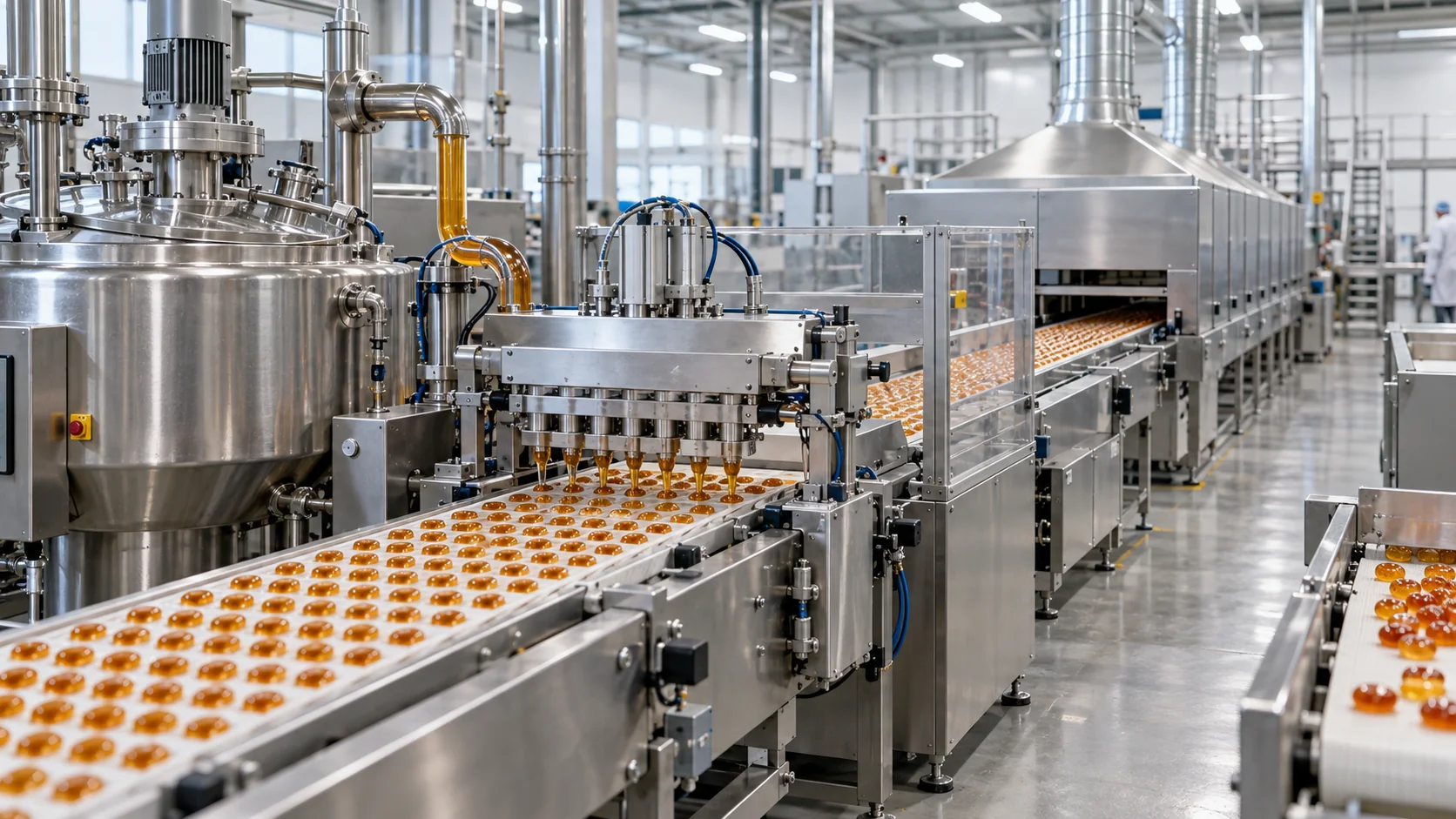
Gluten free gummy bears start as a cooked sugar-gelatin mass that gets deposited into molds, cooled to set, and then tumbled in a wax glaze. Allergen controls run at every ingredient and equipment touchpoint along the way.
The same equipment that runs wheat-containing gummy candy will contaminate a gluten-free batch if it isn’t cleaned and validated between runs. That’s not theoretical: it’s the most common failure mode in allergen management at shared facilities. Dedicated production lines, meaning equipment used only for gluten-free product, are the practical solution.
Depositing and molding
Modern gummy production uses either a starch-mold or a starchless process.
In the starch-mold system (also called mogul or Mogul starch), the gummy mass gets deposited into impressions pressed into trays filled with cornstarch or potato starch. The starch pulls moisture from the gummy, helps it set, and forms a dry skin on the surface. After 24 to 48 hours in a conditioning room at controlled temperature and humidity, the bears are knocked out of the starch, brushed clean, and glazed.
The gluten risk in starch molding is the starch itself. Facilities running both gluten-containing and gluten-free products sometimes share the same starch trays. Wheat starch is not safe for celiac patients even in trace quantities, and it shows up in older facilities more often than you’d expect. Any certified gluten-free mogul operation must use dedicated corn, potato, or tapioca starch, with supplier certificates to back it up.
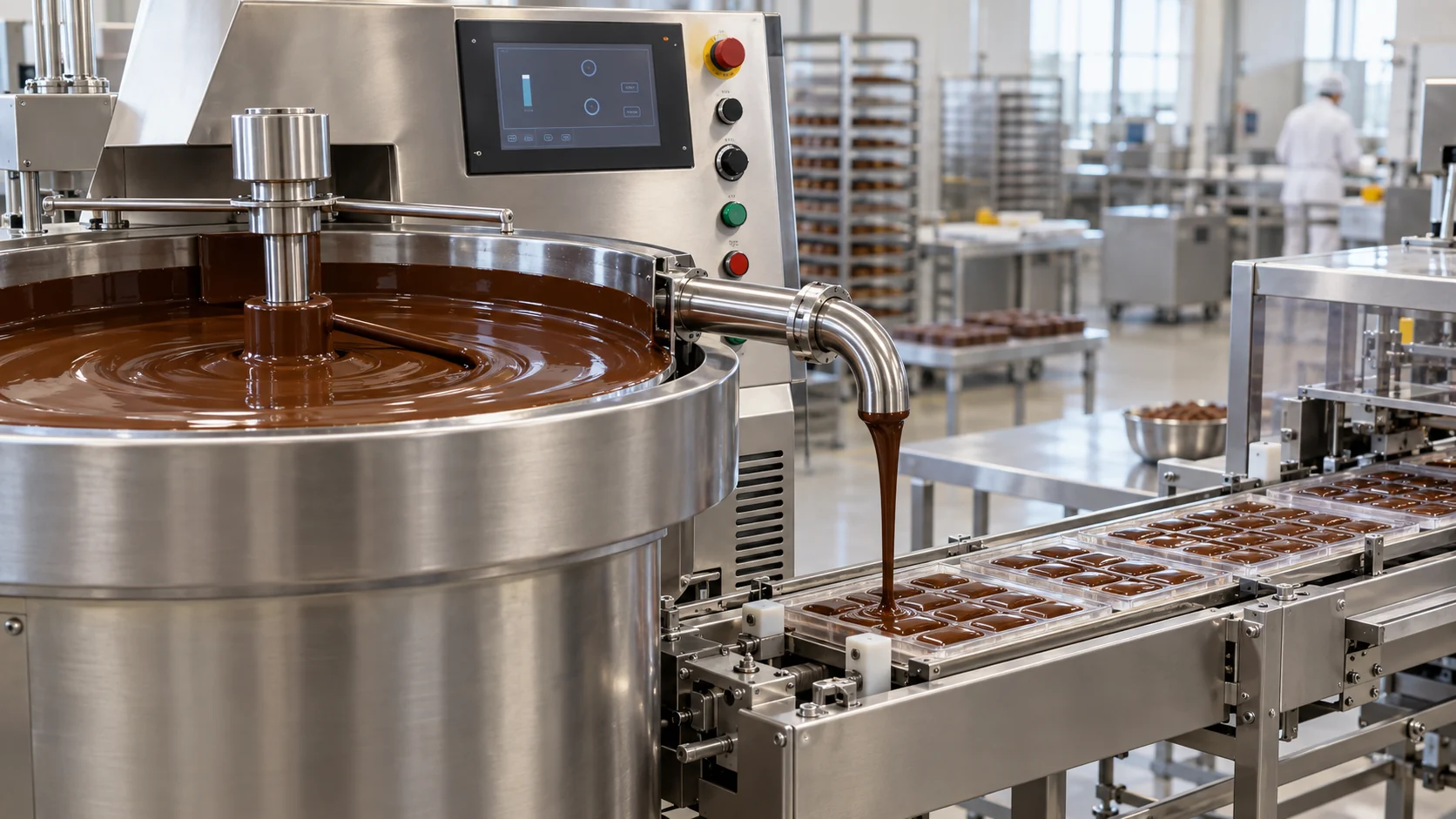
The starchless process uses silicone or metal molds and cuts starch from the molding step entirely. No starch tray means no starch cross-contamination pathway. The upfront equipment cost is higher, but for manufacturers building a gluten-free specialty line, the allergen profile is cleaner from the start.
Cooking and mass preparation
Before depositing, the gummy mass is cooked in a kettle. Gelatin or pectin gets hydrated and mixed with sweeteners, flavor, and color. Order of operations matters here: gelatin needs to be pre-soaked in water before it goes into the hot sugar solution. Pectin needs tighter pH control (around 3.0 to 3.5) than gelatin, and the acid addition sequence affects final texture and clarity.
For a gluten-free operation, the cooking kettle, pipelines, and depositor head all need stainless-steel construction (non-porous, easy to clean) and allergen-free validation at the start of each run. Even trace flour dust from an adjacent production line can settle into an open kettle. Positive-pressure room separation or physical barriers between production zones are standard practice in properly run allergen-controlled plants.
Quality control and allergen testing
Post-production allergen testing uses ELISA (Enzyme-Linked Immunosorbent Assay) kits calibrated for gliadin, the gluten protein from wheat. A validated test on finished product must read below 20 ppm to qualify for gluten-free labeling under FDA rules. Many manufacturers run three checkpoints: the cooking mass before depositing, swabs from cleaned equipment, and finished product at release.
FDA allergen labeling guidance requires wheat disclosure on US food labels, since wheat is one of the nine major food allergens. That requirement handles transparency; it doesn’t prevent contamination. Voluntary certification from the Gluten-Free Certification Organization (GFCO) requires product testing below 10 ppm, which is half the FDA threshold, plus facility audits and full ingredient documentation.

Cross-contamination: what celiac patients need to know
Cross-contamination at 5 to 10 ppm, well below the legal labeling threshold, can trigger intestinal damage in some celiac patients. The label tells you the recipe. Only the facility practices tell you about contamination.
This is not a hypothetical risk. Research in peer-reviewed gastroenterology journals has shown repeatedly that a subset of celiac patients react to gluten levels below 20 ppm. The FDA threshold was set to protect the majority, not every individual. That’s why Beyond Celiac and the Celiac Disease Foundation both advise more reactive individuals to seek certified products running stricter protocols.
Shared equipment risks
The most common contamination pathway in a gummy plant is the depositor head, specifically the nozzle area that delivers gummy mass into molds. When the same head runs across different product lines without validated cleaning, residual mass from a wheat-containing formulation can persist in seals and gaskets. Standard Clean-in-Place (CIP) cycles remove bulk product but don’t always reach mechanical dead zones in depositor heads.
Manufacturers who run dedicated allergen-separated lines don’t have this problem. In a shared-line facility, the standard approach is to run allergen-free product first in the production sequence (before any wheat-containing product), verify cleanliness with a swab test, and document it. That sequencing practice is called an allergen run order, and it’s an accepted risk-management tool in food manufacturing.
What “may contain wheat” means for gummies
The “may contain wheat” advisory on a gummy pack is voluntary. FDA doesn’t require it, unlike the actual ingredient declaration for allergens. Some manufacturers apply it as a liability disclaimer even when their contamination controls are solid. Others use it because the risk is real. As a consumer, you can’t reliably tell the difference without calling the company.
A better signal: does the company disclose its testing protocol? Albanese and YumEarth publish their allergen control practices. A brand that prints “may contain wheat” and offers nothing else is usually signaling that it shares equipment or facilities with wheat products and cannot guarantee otherwise.
How dedicated equipment eliminates contamination
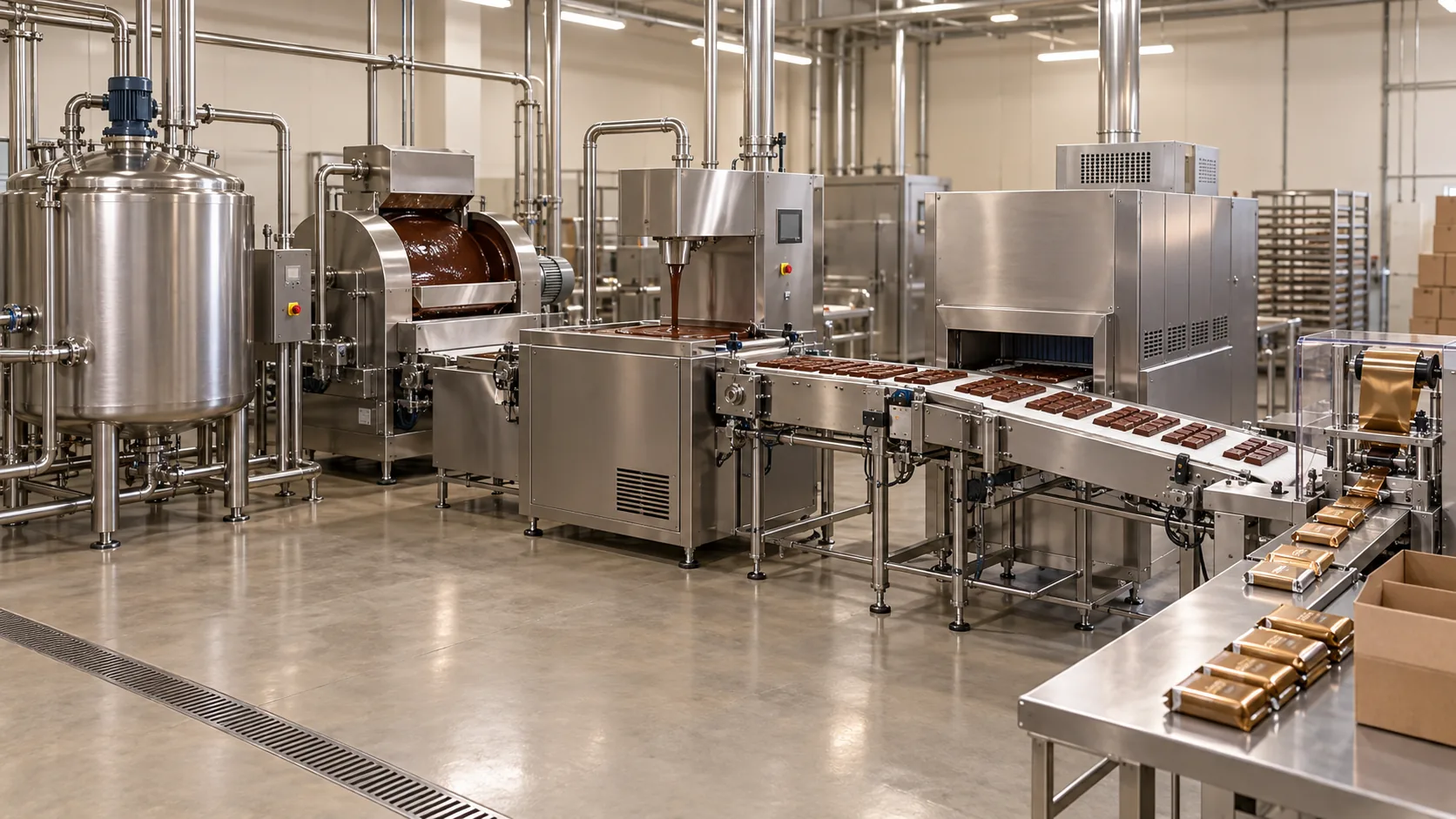
The cleanest approach, and the one used by manufacturers running serious gluten-free lines, is dedicated equipment that never processes wheat-containing products. That means the kettle, pipelines, depositor, starch handling system (if any), coating drum, and packaging line. Air handling for the production room should ideally be separated too, since flour dust travels.
Dedicated equipment costs more upfront. The operational return comes from lower allergen testing frequency (because the structural risk is gone, not just controlled), better certification eligibility, and access to a market segment that pays a premium for certified gluten-free candy. For manufacturers using modern confectionery production equipment with stainless-steel contact surfaces and fully cleanable depositor heads, setting up a dedicated gluten-free line is considerably more practical than doing it on older machinery with complicated product contact geometries.
Future trends in gluten-free gummy manufacturing (2026+)
The gluten-free confectionery market is growing at roughly 8 to 10% CAGR through the late 2020s. The drivers are celiac diagnosis rates, awareness of non-celiac gluten sensitivity, and the broader free-from food movement that spans allergen, sugar, and additive categories simultaneously.
Gummy bears fit this trend well. The base format uses gelatin or pectin and has no inherent need for wheat. That compatibility explains why so many new entrants to health-conscious candy, including SmartSweets, Behave, and No Sugar Company, are launching in gummy format rather than chocolate or hard candy.
Rising pectin and vegan gummy demand
Vegetarian and vegan shoppers are pushing manufacturers toward pectin in premium gummy products. By early 2026, pectin-based gummy bears carried a roughly 15 to 20% price premium over gelatin equivalents at retail. Consumers are paying for the vegan profile and for what they perceive as a cleaner ingredient list.
For manufacturers, pectin formulations need tighter process control. Pectin sets faster than gelatin, gel strength varies more with pH changes, and the final texture is noticeably softer. Switching from a gelatin to a pectin recipe means recalibrating depositor timing, mold cooling curves, and demolding parameters. Facilities with modern PLC-controlled depositing lines can store validated recipes for both formulation types and switch between them without starting from scratch. Older lines require manual adjustments on every changeover.
Smart manufacturing and real-time allergen monitoring
The next phase of gluten-free production isn’t just about ingredients. It’s about continuous process verification. Traditional ELISA allergen testing is batch-release based: results come back hours or days after the run. Near-infrared (NIR) spectroscopy and lateral-flow immunoassay strip technologies are changing that by providing real-time or near-real-time allergen readings directly at the line, catching contamination events before they become recalls.
Several European food equipment manufacturers have already integrated inline allergen detection into confectionery lines. US and Asian markets are catching up, particularly in contract manufacturing facilities that need to prove allergen control to multiple brand customers at once. For gummy bear producers targeting GFCO certification and premium retail placement, real-time monitoring is likely to shift from a differentiator to a baseline expectation over the next few years.
| Trend | Impact on gluten-free gummy production | Timeline |
|---|---|---|
| Pectin and vegan demand | Reformulation of top sellers; equipment recalibration | Ongoing through 2028 |
| Real-time allergen monitoring | Inline NIR and lateral-flow systems at depositing lines | 2026 to 2028 |
| GF certification consolidation | Retailers standardizing on GFCO or equivalent | 2026 to 2027 |
| Sugar-free + gluten-free | Stevia and erythritol gummies meeting dual free-from claims | Accelerating now |
| Micro-batch custom gummies | Small-run depositing lines for private-label GF brands | Growing in contract manufacturing |
Frequently asked questions
Which gummy bears are gluten-free?
Most major brands are gluten-free by ingredient. The safest options are certified: Albanese, SmartSweets, YumEarth, and Black Forest Organic. All four carry third-party gluten-free certification with documented allergen controls.
Are Haribo Gold Bears gluten-free?
US Haribo Gold Bears use no gluten-containing ingredients and the company states they test below 20 ppm. They are not third-party certified. Most gluten-sensitive consumers use them without problems. For celiac patients with high reactivity, a certified brand is a safer call.
Are Haribo gummy bears safe for celiacs?
Many celiac patients eat US Haribo Gold Bears without issue, but they’re not certified gluten-free. Haribo’s facilities process a range of products, including some that contain wheat, and the company does not guarantee the absence of cross-contamination. Highly sensitive celiac patients should choose a certified alternative.
Can people with celiac disease eat gummy bears?
Yes, from the right brands. Celiac patients should look for third-party certification. GFCO is the most stringent option in the US, requiring below 10 ppm. The Celiac Disease Foundation keeps updated lists of certified confectionery products for reference.
What ingredients in gummy bears contain gluten?
The two most common sources are wheat-derived glucose syrup (found in European formulations) and wheat starch used as a mold-release powder during production. “Modified food starch” without a source listed is a red flag. Confirm it’s corn or potato before eating.
Are sugar-free gummy bears gluten-free?
Most are. Sugar-free gummies typically use maltitol, sorbitol, xylitol, or erythritol, none of which contain gluten. That said, sugar-free gummy bears have a well-documented laxative effect in larger quantities because of the sugar alcohols. No gluten, but other digestive consequences at high servings.
How are gluten-free gummy bears tested?
Manufacturers use ELISA gliadin kits on gummy mass, equipment swabs, and finished product. FDA’s gluten-free threshold is below 20 ppm. GFCO requires below 10 ppm and adds facility audits and ingredient documentation to the product testing requirement.
Can I make gluten-free gummy bears at home?
Yes. Basic gummy bears need gelatin or pectin, juice, sugar, and a silicone bear mold. Home production is gluten-free by default if you use certified gluten-free gelatin and keep the workspace clean from other uses. The tricky part is temperature: gummy mass needs to be poured at the right point to fill molds without air bubbles and set with proper texture.

Conclusion
Gluten free gummy bears sit in a relatively forgiving corner of the free-from food world. The base recipe doesn’t require wheat, the category has a solid set of certified brands, and the allergen science is well established. The catch is that “naturally compatible” doesn’t mean risk-free. Equipment contamination, shared facilities, and wheat-derived glucose syrup in some formulations mean label reading and brand selection still matter, especially for celiac patients.
On the production side, dedicated lines, starchless depositing systems, and real-time allergen verification are gradually becoming standard for manufacturers who want to own the certified gluten-free segment rather than just adjacent to it. The confectionery equipment guides on this site cover depositor selection, starch-free mold systems, and the specific line configurations that work best for allergen-controlled gummy production.