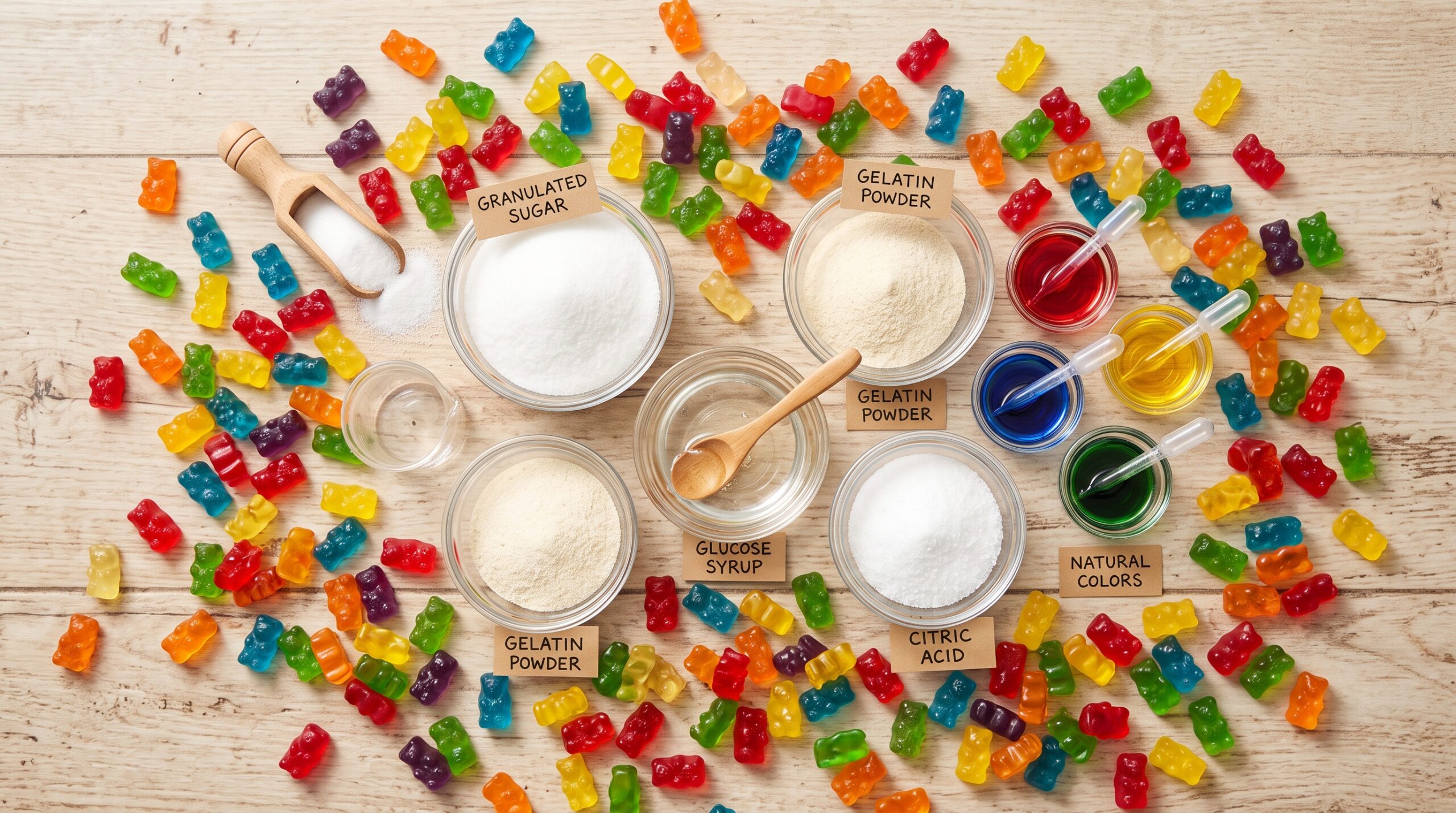
Skittles are made through a multi-stage process: cooking a sugar-corn syrup-starch center mixture, forming pieces in starch molds, building sugar shells through pan-coating, adding flavors and colors in layers, then polishing with carnauba wax.
Few candies inspire as much curiosity about their manufacturing as Skittles. The combination of that firm, slightly crackly outer shell, the distinctive chewy interior, and the individually tuned fruit flavors — all packed into a 10-gram piece of candy — represents a serious feat of confectionery engineering. This guide walks through the complete skittles manufacturing process, from raw ingredients to packaged product, drawing on what’s publicly known about Mars Wrigley’s production methods and the broader principles of chewy candy manufacturing.
The Skittles Formula: What Goes In
This article is part of our complete guide on are Skittles gluten free — covering every US and UK variety, celiac safety standards, and the full ingredient analysis for 2026.
Before understanding the process, it’s essential to understand the raw materials. According to Skittles’ product information on Wikipedia, the candy was originally created in 1974 in the UK and acquired by Mars Wrigley, which now manufactures it in facilities across North America and Europe.
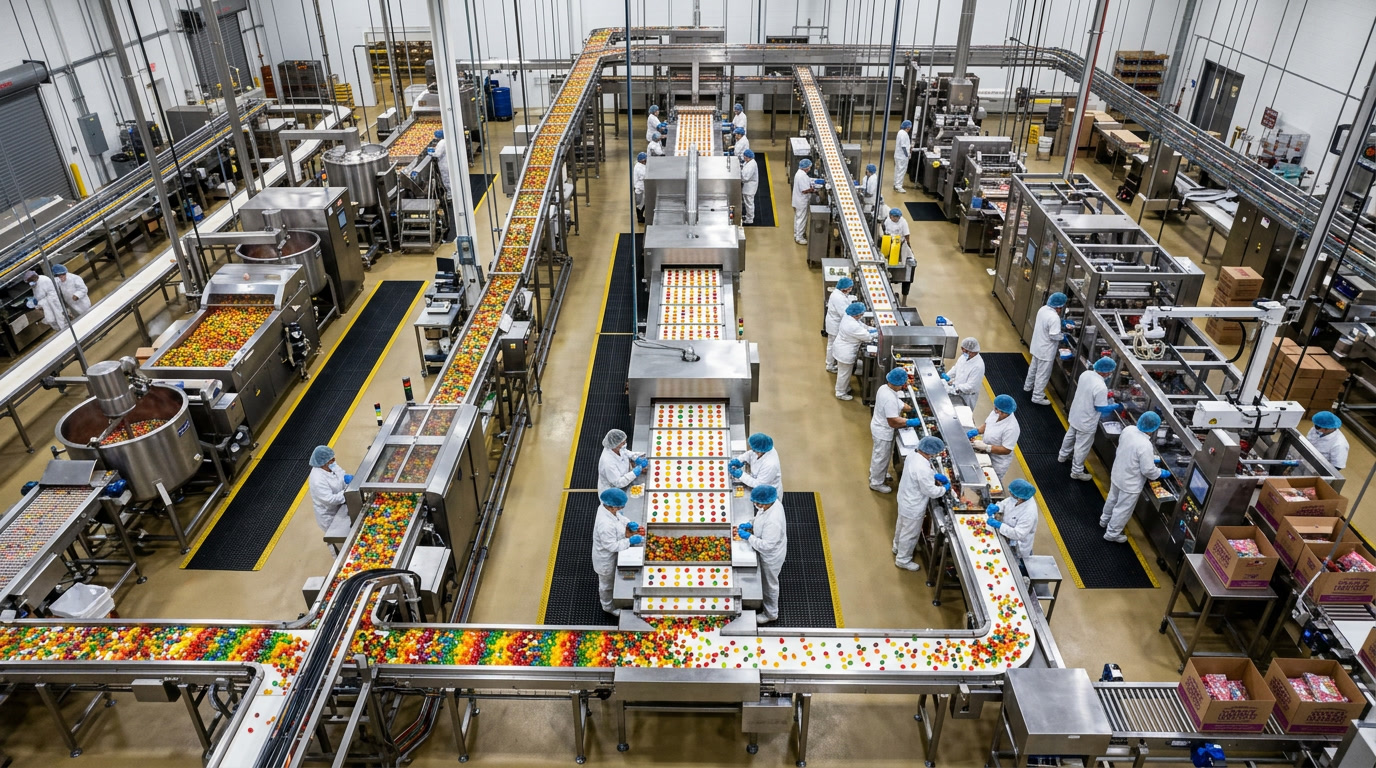
The US Skittles formula consists of:
– Sugar (sucrose) — the primary structural carbohydrate
– Corn Syrup (glucose syrup) — provides plasticity and prevents sugar crystallization
– Hydrogenated Palm Kernel Oil — plant fat contributing to chew texture and mouthfeel
– Apple Juice from Concentrate — adds flavor depth and organic acids
– Citric Acid — tartness balance
– Dextrin (corn-derived) — a partially hydrolyzed starch that improves coating adhesion
– Modified Corn Starch — the primary texturizer providing cohesive chew
– Natural and Artificial Flavors — the source of the individual fruit flavor identities
– Synthetic Colorings (Red 40, Yellow 5, Yellow 6, Blue 1, Blue 2)
– Sodium Citrate — pH buffer and flavor modifier
– Carnauba Wax — the final outer coating
Each of these ingredients serves a specific function in the manufacturing process. Understanding the role of each helps explain why the process is structured the way it is.
Stage 1: Cooking the Center Mass
The Skittles manufacturing process begins with producing the chewy center — the soft, slightly elastic interior that distinguishes Skittles from hard candy.
Mixing the Base
The sugar, corn syrup, and water are combined in large vacuum cookers — industrial vessels that can handle hundreds of kilograms per batch. The mixture is heated to a precisely controlled temperature, typically in the range of 115–125°C (239–257°F) depending on the target moisture content and texture specification.
Temperature control at this stage is critical. Cooking sugar solutions to specific temperatures determines the final candy texture:
– Soft ball stage (~112–116°C): produces soft, pliable candy
– Firm ball stage (~118–120°C): produces firmer chew
– Hard ball stage (~121–130°C): produces chewy-but-firm candy that holds its shape
Skittles target a texture in the firm-to-hard ball range to achieve the characteristic combination of initial resistance (the “snap” of the shell is added later, but the center needs structural integrity) and then sustained chew.
Adding Fats and Starches
After the sugar system reaches the target temperature, the hydrogenated palm kernel oil and modified corn starch are incorporated. The fat system softens the candy and contributes to the mouthfeel — it’s what makes Skittles feel smooth on the tongue rather than gummy. The starch provides elastic network structure that gives the chew its sustainable resistance.
At this stage, the center mass resembles a thick, hot, amber-colored paste. No color, no flavor yet — those come later.
Flavoring
Once the mass cools slightly (to preserve volatile flavor compounds that would evaporate at high temperatures), the natural and artificial flavors are added. Each Skittles variety requires a different flavor premix. For Original Skittles, five separate flavor batches are prepared: Strawberry, Lemon, Lime (or historically, Green Apple), Orange, and Grape. These are prepared in separate batches to prevent flavor cross-contamination.
The flavor compounds are high-potency mixtures — typically used at 0.1–0.5% of the candy mass, achieving intense flavor from tiny quantities.
Stage 2: Forming the Centers
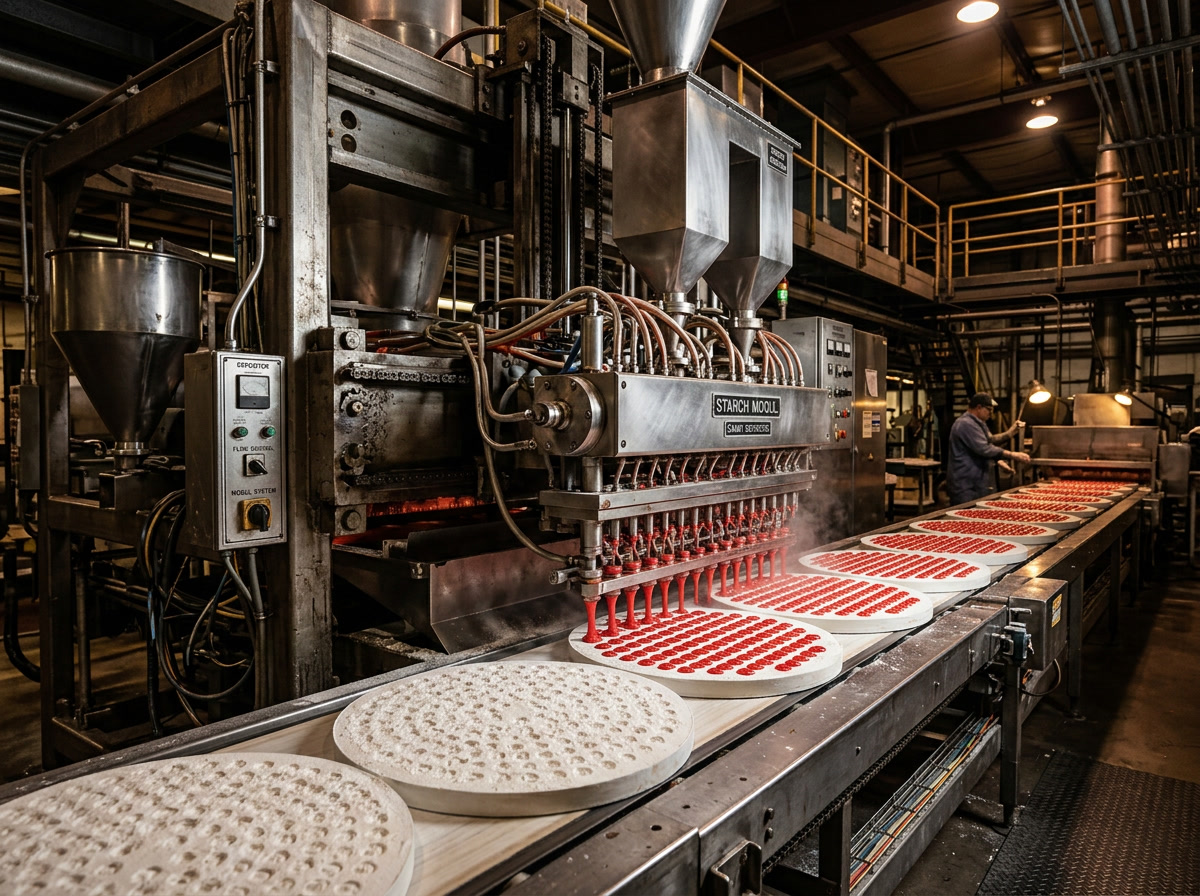
The flavored candy mass needs to be formed into uniform, individual pieces. Skittles use a starch mogul system — the dominant forming technology in the chewy candy industry.
The Starch Mogul
A starch mogul (also called a depositor system) works as follows:
- Large trays are filled with cornstarch powder to a depth of several centimeters
- A mold board (studded with the desired candy shape — for Skittles, the characteristic lens shape) presses into the starch, creating impressions
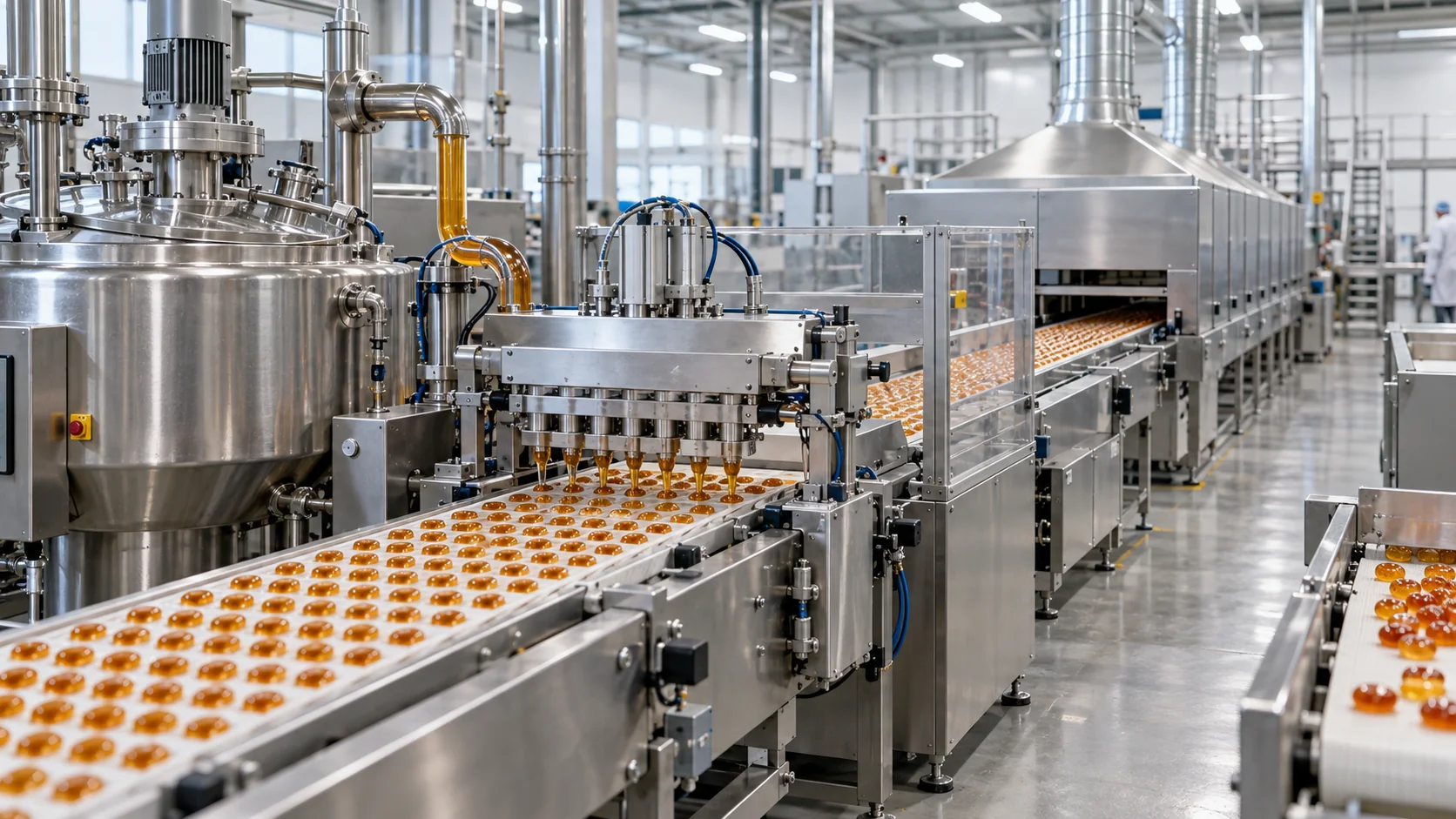
- The depositor — a multi-nozzle precision pump — fills each impression with exactly the right volume of hot candy mass
- The trays are stacked and sent to a conditioning room (also called a stove room) where they rest at controlled temperature and humidity for 24–48 hours
- During conditioning, the candy centers solidify, release moisture into the starch, and develop their final texture
- After conditioning, the trays are processed through a mogul extraction unit that turns the trays over, separates the candy pieces from the starch, and recycles the starch for the next batch
The starch mogul system is what gives Skittles their consistent size and shape. Modern high-speed mogul machines can produce tens of thousands of pieces per hour, with precise depositing volumes controlled by servo-driven piston pumps.
Weight precision is a critical quality parameter at this stage. High-quality gummy and chewy candy production targets piece weights within ±3–5% of specification. For reference, a standard Skittle piece weighs approximately 1.1–1.3 grams.
Quality Control at the Centers Stage
After extraction from the mogul, candy centers pass through:
– Visual inspection systems — cameras and AI vision systems reject misformed, discolored, or clustered pieces
– Metal detection — standard food safety protocol
– Weight sampling — periodic sampling to verify depositing accuracy
Rejected pieces are recycled back into the cooking system at an appropriate stage.
Stage 3: Building the Shell — Pan Coating
The pan-coating stage is what transforms the soft candy center into the distinctive Skittles piece with its firm, glossy outer shell. This is the most technically complex stage of the Skittles manufacturing process.
Pan coating uses large rotating pans — horizontal or angled drums, typically 1–2 meters in diameter — that tumble the candy centers continuously while a series of coating layers is applied.
The Coating Sequence
Layer 1 — Engrossing (sugar coating):
A concentrated sugar solution (with dextrin as an adhesion promoter) is sprayed onto the tumbling centers. Hot air blown through the pan evaporates the water, leaving a thin, hard sugar layer. This process is repeated 15–30 times to build up the characteristic hard shell thickness.
The engrossing stage must balance:
– Application rate (too fast = clumping; too slow = inefficient production)
– Drying air temperature and flow (affects crystalline structure of the shell)
– Pan speed (affects tumbling dynamics and uniform coverage)
Layer 2 — Color coating:
After the engrossing layers establish the base shell, the flavor-specific color is applied. For each Skittles variety, a specific colored syrup (sugar + color pigment dissolved in water) is sprayed onto the pieces. This is where Red 40, Yellow 5, and other colorings are applied to the outer surface.
Layer 3 — Finishing:
A final clear sugar glaze is applied to lock in the color and provide a smooth surface for the wax polishing step.
The S Logo Printing
The “S” logo printed on each Skittle is applied during the coating process using food-safe edible ink through an inline printing system. The ink — a sugar-based food coloring — is applied after the color coat but before the final polishing.
Stage 4: Polishing with Carnauba Wax
The final coating step is polishing — applying the carnauba wax that gives Skittles their characteristic glossy finish and smooth, non-sticky surface.
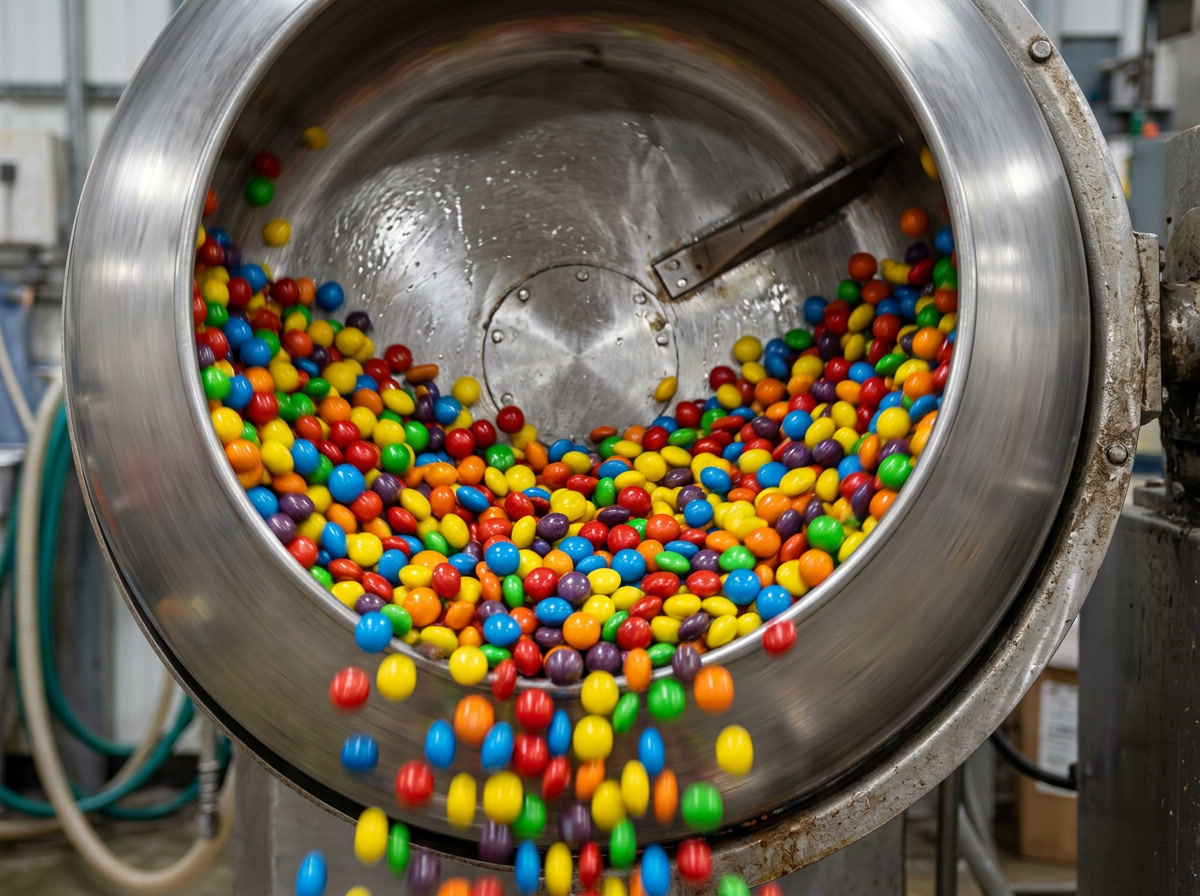
Carnauba wax is applied by:
1. Adding a small quantity of carnauba wax solution (wax dissolved in a food-safe solvent) to the rotating pan of finished pieces
2. Tumbling continues as the solvent evaporates, depositing the wax on the candy surface
3. The friction of the pieces tumbling against each other — and against the pan surface — polishes the wax to a high gloss
The carnauba wax layer serves multiple functions:
– Appearance — high gloss finish recognizable as the Skittles aesthetic
– Moisture barrier — prevents the hygroscopic sugar shell from absorbing atmospheric moisture, which would make Skittles sticky
– Anti-sticking — prevents pieces from clumping together in the bag
– Shelf life extension — the wax barrier reduces moisture exchange with the environment
Carnauba wax is derived from the leaves of the Copernicia prunifera palm in Brazil. It has one of the highest melting points among natural waxes (~82–86°C), making it durable at ambient and moderate temperatures.
Stage 5: Weighing, Packaging, and Quality Assurance
After polishing, Skittles pass through a final quality gate before packaging:
- Final inspection — color cameras check for uniform color, missing S logos, and any surface defects
- Metal detection — second-stage metal detection
- Weighing — multi-head weighers precisely measure the target fill weight for each bag size
- Packaging — a vertical form-fill-seal (VFFS) machine forms the plastic film into bags, fills them with the weighed candy, and heat-seals them
- Checkweighers — filled bags are weighed again to verify the fill weight meets specification (a regulatory and consumer expectation requirement)
- Printing — batch codes, best-before dates, and barcode data are printed on each pack
The complete production line — from cooking to packaged product — moves at speeds of hundreds of kilograms per hour on modern commercial lines. A single production run can produce hundreds of thousands of bags of Skittles.
How Skittles Manufacturing Differs from Gummy Candy Production
Understanding Skittles manufacturing is more interesting in context. How does it compare to other popular candy formats?
| Production Feature | Skittles | Gummy Bears | Lollipops | Hard Candy |
|---|---|---|---|---|
| Forming method | Starch mogul | Starch mogul (gelatin-based) | Stick insertion depositing | Rope/die cutting |
| Key texturizer | Modified corn starch | Gelatin | None (hard) | None (hard) |
| Shell | Pan-coated sugar | None (soft throughout) | None | The whole candy |
| Wax coating | Carnauba wax | Sometimes beeswax or carnauba | Wax coating (some) | Wax coating (some) |
| Conditioning time | 24–48 hours (starch) | 24–48 hours (setting) | Immediate | Immediate |
| Gluten status | ✅ GF | ✅ GF (without starch mogul wheat) | ✅ GF | ✅ GF |
The starch mogul system is central to both Skittles (chewy, pan-coated) and gummy bears (gelatin-based, uncoated). The distinction between the two formats comes down primarily to the texturizer: corn starch system for Skittles, gelatin for gummies.
The Equipment That Makes Skittles Possible
Large-scale Skittles production requires specialized confectionery equipment:
- Vacuum cookers / batch cookers — 100–500 kg capacity per batch, temperature-controlled
- Starch mogul systems — continuous starch tray circulation with depositing stations; major manufacturers include Baker Perkins (UK), Winkler+Dünnebier (Germany), and Chocotech (Germany)
- Conditioning rooms/stoves — climate-controlled rooms maintaining specific temperature and relative humidity for piece setting
- Pan-coating drums — rotating drums (horizontal or angled) for shell building; made by companies like Driam (Germany), GS Technologies, and Makro Engineering
- Polishing drums — similar to coating pans but designed for the final wax application step
- Multi-head weighers — high-speed combination scales from manufacturers like Ishida and Yamato
- VFFS packaging machines — vertical form-fill-seal packagers from companies like Bosch, Ishida, and Multivac
Understanding this equipment landscape is valuable for food manufacturers, confectionery consultants, and equipment purchasers evaluating production line investment for chewy candy formats.
Skittles Production Scale
Mars Wrigley is one of the world’s largest confectionery manufacturers. While exact Skittles production volumes are not publicly disclosed, Mars Wrigley’s Waco, Texas facility — one of several Skittles production sites — is reported to produce millions of Skittles per day. The brand generates approximately $1 billion in annual US retail sales.
For context on scale: a single 2-oz (56.7g) bag of Skittles contains approximately 41–45 individual Skittles pieces. A factory producing 1 million pieces per hour — realistic for a multi-line modern facility — produces roughly 22,000–24,000 bags of standard size per hour of production.
Frequently Asked Questions
how are skittles made step by step?
Skittles are made in five main stages: (1) Cooking a sugar-corn syrup-starch candy mass, (2) forming centers using a starch mogul depositing system, (3) building the hard shell through 15–30 layers of sugar coating in rotating pans, (4) applying flavor-specific colors, and (5) polishing with carnauba wax for the glossy finish.
What are Skittles made of?
Skittles are made primarily from sugar, corn syrup, modified corn starch, and hydrogenated palm kernel oil (for the center), with synthetic food colorings and natural/artificial flavors applied during the coating process, and carnauba wax as the final outer coating.
Are Skittles made from bugs?
No. Current US Skittles are not made from bugs. Carnauba wax (the outer coating) is plant-derived. Some UK/EU batches historically used carmine (from cochineal insects) as a red coloring, but this has been largely replaced with plant-based or synthetic colorings in reformulated versions.
Where are Skittles made?
Skittles are manufactured by Mars Wrigley in multiple facilities globally. Major US production sites include Waco, Texas. European production occurs at Mars facilities in the Netherlands and other locations.
What gives Skittles their hard outer shell?
The hard shell is built through pan-coating — a process of repeatedly applying sugar syrup in a rotating drum, with each layer dried to a hard glaze before the next is added. 15–30 coating cycles build up the characteristic shell thickness and crunchiness.
What is the shiny coating on Skittles made from?
The glossy finish on Skittles comes from carnauba wax — a plant-derived wax extracted from the leaves of the Copernicia prunifera palm tree in Brazil.
How long does it take to make a Skittle?
From start to finish, the complete production cycle for a Skittle takes approximately 48–72 hours. The longest single stage is the conditioning time in the starch mogul system (24–48 hours), during which the centers set and release moisture.
Conclusion
Making a Skittle is a precise, multi-stage industrial process that combines food chemistry, mechanical engineering, and quality control into a product that has remained essentially consistent since Mars Wrigley perfected the formula. The cooking stage builds the sugar matrix; the starch mogul system forms consistent centers; the pan-coating process layers a hard, colorful shell; and carnauba wax delivers the iconic polish. Each stage requires precise temperature, timing, and ingredient control.
For anyone curious about how candy manufacturing works at scale — whether as a consumer, a food scientist, or a confectionery equipment professional — the Skittles process represents one of the most complete examples of modern chewy candy production. The formula has no secrets that aren’t explained by basic food science; the magic is in the precision with which those scientific principles are executed, batch after batch, at millions of pieces per hour.
Related Articles
- Skittles Manufacturing Process: Inside the Factory 2026
- Original Skittles Gluten Free: Full Ingredient & Celiac Guide 2026
- Unveiling the Process: How Boba Bubbles Are Made in a Factory
- Juice Ball Manufacture Process: How Is a Juice Ball Made in The Factory?
- Gummy Candy Production Line
- Are Skittles Gluten Free? Complete Guide 2026
References & Sources
- Skittles (confectionery) — History & Production — Wikipedia
- Confectionery — Manufacturing Methods — Wikipedia
- Overview of Food Ingredients, Additives & Colors — U.S. Food & Drug Administration
- USDA FoodData Central — U.S. Department of Agriculture
- Skittles Brand — Made by Mars — Mars, Incorporated