Sour candy is sour because of food-grade organic acids — citric, malic, tartaric, and fumaric acid — that release hydrogen ions when they contact saliva, directly activating the sour taste receptors embedded in your tongue.
You’ve felt it: the sharp, face-twisting bite when a Warhead lands on your tongue. The slow, building burn from a Sour Patch Kid before the sweetness takes over. That sensation is not random, and it’s not just “acid” in some vague sense. Behind every pucker-producing piece of sour candy is a precise chemistry decision — which acids to use, at what concentration, and how to apply them. This guide breaks all of it down, from the molecular biology of taste buds to the industrial coating processes that make consistent sourness possible at scale. Whether you’re a consumer who wants to understand why Warheads feel different from Sour Skittles, or a confectionery professional thinking about production formulations, the answer to what makes sour candy sour is both simple and surprisingly nuanced.
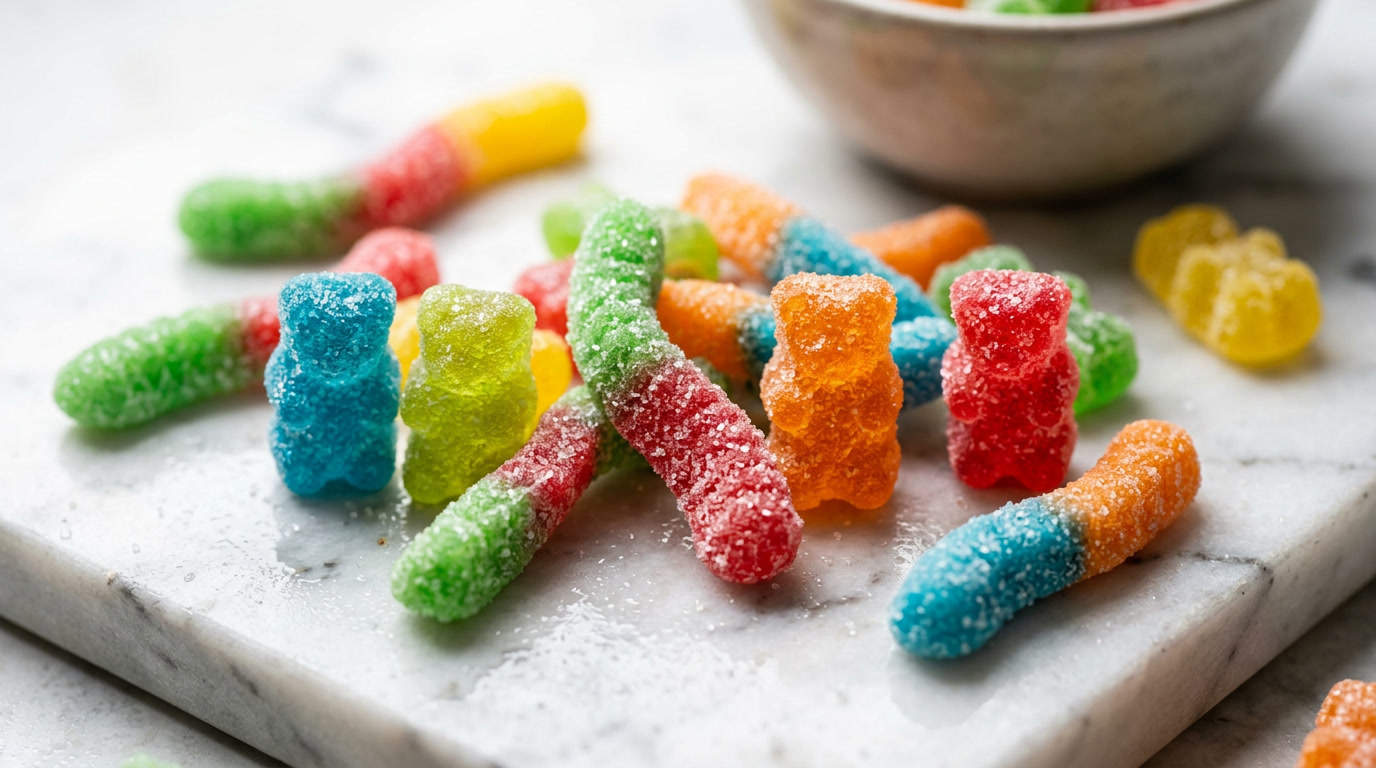
What Is Sour Candy and How Does Sourness Work?
Sourness is your tongue detecting hydrogen ions (H⁺) released by acidic compounds — the more H⁺ ions present, the more intensely sour something tastes.
Most people understand that sour candy contains acid. What’s less understood is that different acids produce different sourness profiles — one can be sharp and fleeting, another smooth and sustained — even at identical pH levels. The type of acid, its concentration, its physical form (coating vs. body inclusion), and how quickly it dissolves in saliva all combine to produce the specific sourness experience of any given candy. Understanding what makes sour candy sour means understanding each of those variables.
The Science of Sour Taste Receptors
For decades, scientists knew that sourness was tied to hydrogen ions but couldn’t pinpoint the exact receptor. In 2019, researchers at the University of Southern California identified OTOP1 — the primary sour taste receptor in mammals. OTOP1 is a proton channel protein embedded in the membranes of taste receptor cells on the tongue. When acids dissolve in saliva and release H⁺ ions, those protons flow through OTOP1 channels, triggering a nerve signal that the brain registers as “sour.”
This is why sourness feels immediate and sharp. Unlike sweetness — which requires a structural fit between a sugar molecule and its receptor — sourness is a direct chemical response to ion concentration. More H⁺ ions in contact with more OTOP1 channels equals a more intense sour signal. The surface pH of sour candy at initial contact ranges from about 1.8 (extreme sour, like Warheads) to 3.5 (mildly sour), compared to neutral water at pH 7 and lemon juice at roughly 2.2–2.5. What makes sour candy sour is fundamentally a matter of controlled hydrogen ion delivery to those taste receptor cells.
How Acids Create the Sour Signal
Here’s where it gets nuanced. Different food-grade acids behave differently even at the same pH, and that variation is what separates a candy that’s sharp and brief from one that burns for 30 seconds.
The key variables are:
- Dissociation rate — how quickly the acid releases H⁺ ions when it contacts saliva. Citric acid dissociates fast: intense sourness that peaks in 2–4 seconds and fades. Fumaric acid dissociates slowly: a lower, more persistent sourness that lingers for 10–15 seconds after initial contact.
- Water solubility — affects how the acid interacts with the saliva-wet surface of the tongue. High solubility means fast, concentrated contact; low solubility means gradual release.
- Molecular weight — lighter acid molecules reach taste receptors faster.
- Placement — surface coating delivers sourness immediately on contact; acid baked into the candy body delivers a background note that builds gradually as the candy dissolves.
| Acid | pH at 0.5% solution | Sourness onset | Taste profile |
|---|---|---|---|
| Citric acid | ~2.8 | Fast (2–4 sec) | Sharp, clean, brief |
| Malic acid | ~2.6 | Medium (4–8 sec) | Smooth, sustained, apple-like |
| Tartaric acid | ~2.4 | Fast | Harsh, intense, grape-like |
| Fumaric acid | ~2.5 | Slow (8–15 sec) | Prolonged, background sourness |
| Ascorbic acid | ~3.0 | Medium | Mild, slightly vitamin-like |
The clearest takeaway from this table: what makes sour candy sour is not just “acid” but the specific acid blend chosen to match the target sourness profile for that product. A candy engineered for a quick shocking punch uses different acids than one designed for a slow, sustained burn.
The Four Key Acids That Make Candy Sour
The commercial workhorses of sour candy production are citric, malic, tartaric, and fumaric acid — each with a distinct chemistry that creates a different mouthfeel, intensity, and duration of sourness.
Professional candy formulators rarely use a single acid in isolation. What makes sour candy sour in most commercial products is a precisely tuned blend of two or three acids, calibrated by a food scientist to deliver the right sourness hit at the right moment. Here’s how each acid contributes.
Citric Acid — The Most Common Souring Agent
Citric acid is the acid naturally present in lemons, limes, and oranges at concentrations of 5–8%. In candy manufacturing, it’s used at 0.5–3% of candy weight, and it dominates the sour candy market because it’s inexpensive, widely available, and produces a clean, recognizable sourness that consumers immediately associate with “sour.”
According to Wikipedia’s entry on sour sanding, citric acid is the most common component in sour sanding formulations — the crystalline acid-sugar coating applied to the outside of sour candy. Applied as a surface coating, citric acid hits immediately on contact with the tongue’s moisture and dissipates within seconds, which is why citric-acid-coated products taste intensely sour at first bite, then quickly give way to sweetness.
One practical limit: above roughly 2.5% concentration in the coating, additional citric acid stops adding sourness and starts contributing bitterness. This is one reason extreme-sour products don’t rely on citric acid alone. For very high sourness intensity, manufacturers turn to the next acid.
Malic Acid — The Secret Behind Extreme Sourness
Malic acid is the reason Warheads feel fundamentally different from Sour Patch Kids. While citric acid peaks and fades, malic acid produces a slower, smoother, more prolonged sourness. Named after Malus (the apple genus — apples are its most prominent natural source), malic acid is approximately 20% more sour per gram than citric acid, and its medium-slow dissociation rate sustains the sour signal long after initial contact.
That sustained burn you feel in the back of your mouth after the initial hit — that’s malic acid continuing to release H⁺ ions. Extreme-sour and “challenge” candies use malic acid as the dominant coating acid, sometimes at concentrations up to 3.5%, pushing surface pH below 2.0 at initial contact. At those levels, extended enamel contact becomes a legitimate concern.
Malic acid is also more hygroscopic than citric acid — it absorbs moisture from the air at a faster rate. Production consequence: candies coated with high-malic-acid blends need packaging with better moisture barriers. Without adequate sealing, the coating absorbs humidity, dissolves partially, and the candy arrives at the consumer with a sticky, reduced-sourness surface.
Tartaric and Fumaric Acid — The Precision Tools
Tartaric acid, found naturally in grapes and tamarind, is the most intensely sour of the four on a gram-for-gram basis — roughly 1.3 times more sour than citric acid. It’s rarely used as the primary acid in sour candy because its flavor at high concentrations is harsh and astringent rather than clean. Instead, tartaric acid shows up as a minor component (10–20% of the acid blend) to add sharpness and brightness to the initial sourness hit. You’ll find it in Sour Skittles alongside citric acid.
Fumaric acid plays a completely different role. It has very poor water solubility, which means it dissolves slowly and keeps releasing low-level sourness long after the other acids have faded. You’ll find fumaric acid primarily in sour chewing gum and some chewy sour candies where the goal is a persistent background sourness through the whole chew, not a front-loaded shock. In hard sour candy, fumaric acid in the candy body creates a sourness that builds gradually as the candy dissolves — a fundamentally different experience from a coated candy.
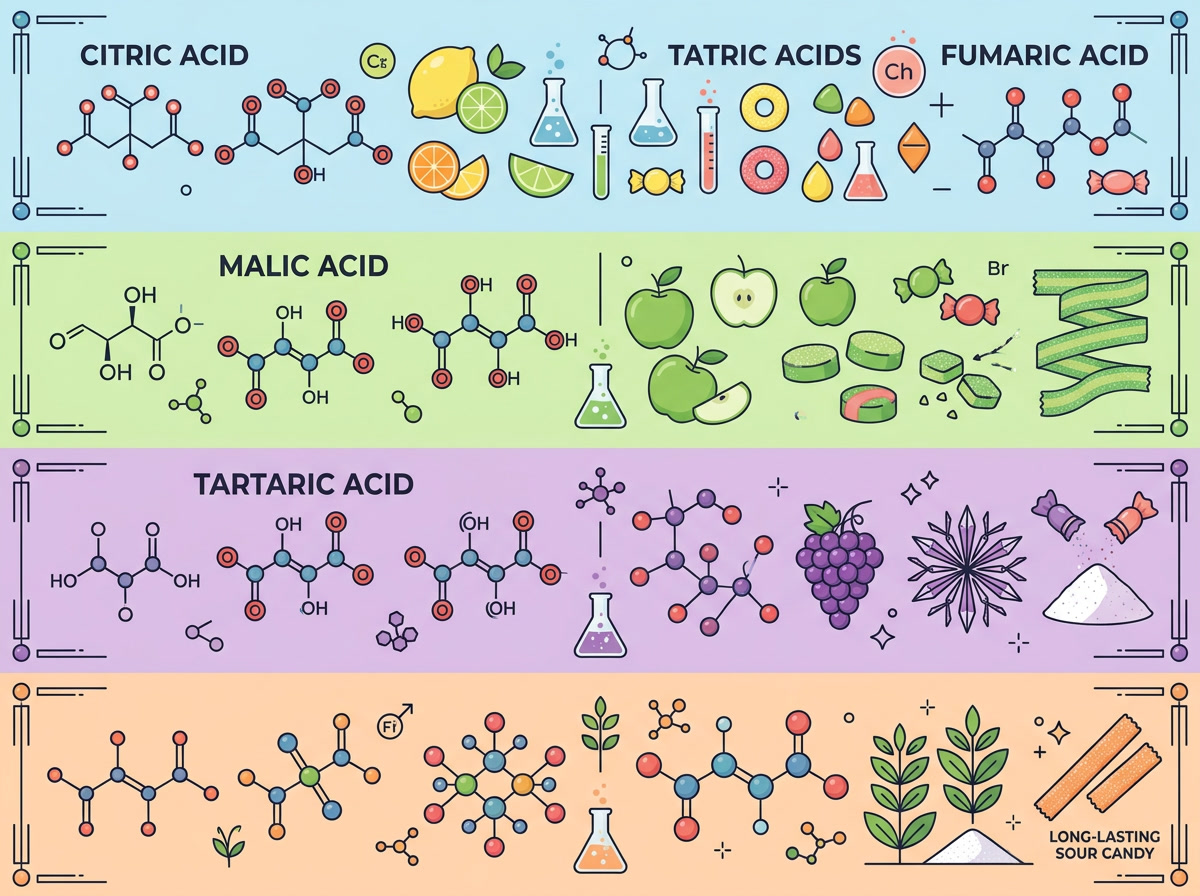
| Acid | Natural source | Relative sourness | Best application | Notable product |
|---|---|---|---|---|
| Citric acid | Citrus fruits | Baseline (1×) | Surface coating, gummies | Sour Patch Kids |
| Malic acid | Apples | ~1.2× | Extreme sour coating | Warheads, Toxic Waste |
| Tartaric acid | Grapes, tamarind | ~1.3× | Blend brightener | Sour Skittles |
| Fumaric acid | Synthetic | ~0.8× (sustained) | Candy body, chewing gum | Airheads Xtremes |
| Ascorbic acid | Vitamin C | ~0.5× | Health-positioned candy | Various wellness brands |
Sour Sanding — How the Coating Actually Works
Sour sanding is a dry mixture of sugar crystals and acid crystals applied to the candy surface; it is responsible for the intense immediate sourness that hits the moment sour candy touches your tongue.
Knowing which acids make sour candy sour is only half the story. The other half is where those acids are placed and how they’re applied. Most of the sourness intensity in commercially produced sour candy comes not from inside the candy body but from the outer sour sanding coat. Understanding this process is essential for anyone thinking about sour candy at a production scale.
What Is Sour Sanding?
Sour sanding — also called sour sugar — is a physical mixture of fine granulated sugar and acid crystals. It’s not a chemical compound; at room temperature, the sugar and acid don’t react with each other. They simply coexist in crystalline form. When saliva dissolves the coating, the acid crystals rapidly release H⁺ ions directly at the tongue surface, creating the intense immediate sourness.
The standard commercial ratio is 80–90% sugar to 10–20% acid by weight. Crystal fineness matters: finer crystals dissolve faster and deliver sourness more sharply; coarser crystals provide a slightly gritty mouthfeel and a marginally delayed release. Manufacturers vary crystal size between formulations to dial in both the sensory texture and the timing of the sourness hit. This is one of those variables that separates a thoughtfully engineered sour candy from one that’s just “candy with acid dumped on it.”
The Manufacturing Process Behind Sour Coatings
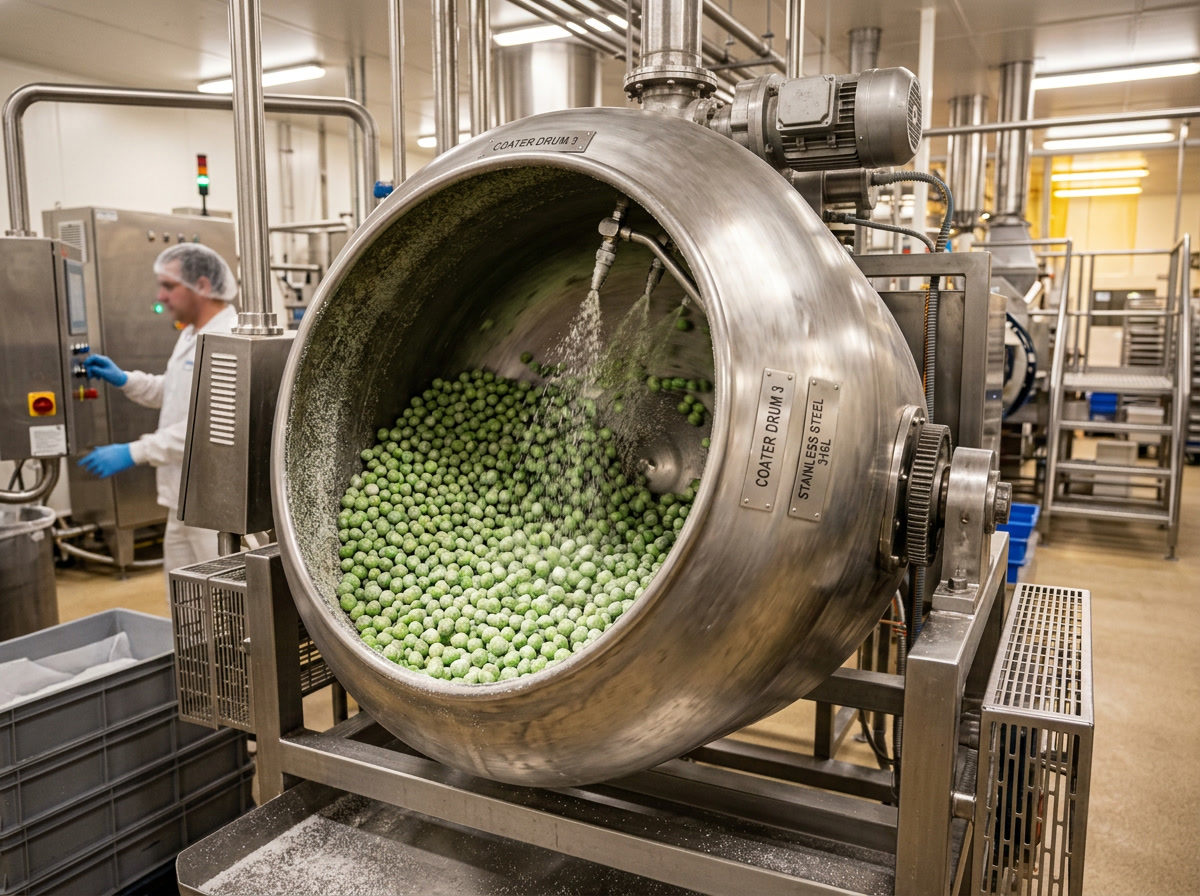
At industrial scale, applying sour sanding involves rotating coating drums or enrober-style spray coating systems. Already-formed candy centers — gummies, hard candies, chews — are loaded into a rotating drum. A fine mist of binding agent (typically a food-grade adhesive like gum arabic solution, glucose syrup solution, or shellac-based coating) is sprayed onto the tumbling candy surface. Once the surface has a uniform tacky coat, the dry sour sanding mixture is introduced and tumbles with the candy, adhering to the sticky surface layer.
Temperature control during coating is critical and non-negotiable. Malic acid in particular starts showing hygroscopic behavior above roughly 30°C (86°F) — at that point it begins absorbing ambient moisture and clumping before the coating has set. Industrial coating operations run at controlled temperatures, typically 18–22°C (64–72°F), with low-humidity conditioned airflow inside the drum. In summer or in tropical production environments, the HVAC requirements for coating rooms are more stringent than they might appear on a basic production plan.
After coating, candy passes through a drying tunnel or controlled-humidity room where residual moisture from the binding agent evaporates. Insufficient drying produces a candy that arrives at the packaging stage with a sticky, partially dissolved surface — the sourness is already reduced, and the packaging itself will fuse to the candy. Proper drying gives finished sour candy its characteristic dry, slightly chalky, intensely sour outer layer.
Why Sour Candy Goes Sweet After the Sour Fades
The flavor transition from intense sour to sweet is a deliberate engineering choice, not an accident. Here’s what’s happening: the sour sanding coat dissolves completely within 15–45 seconds depending on saliva production and whether the candy is sucked or chewed. Once the coating is gone, there’s no longer a concentrated source of H⁺ ions at the tongue surface. Residual mouth acidity drops quickly — saliva actively buffers toward neutral pH through bicarbonate chemistry.
The sweet candy center has been there the whole time, but its sugar content only dominates the flavor profile once the acid coat is depleted. The result is the whiplash effect: sharp sourness → fading burn → clean sweetness. This is one of the key reasons sour candy is more compelling than simply “sour flavor in a beverage” — the temporal evolution of the sourness experience is engineered into the product.
How to Choose Acids for Sour Candy Production
Matching the acid blend to the candy format and target experience is the single most consequential formulation decision in sour candy production — the right acid in the wrong application produces inconsistent or weak results.
Whether you’re developing a new sour candy product or troubleshooting existing production, the acid selection framework should always start with the candy format and the consumer experience target — not with acid availability or price.
Matching Acid Type to Your Candy Format
Hard candy (lollipops, drops): Citric acid blended into the candy body at 0.5–1.5%, optionally with a separate surface sour sanding coat. Because hard candy dissolves slowly over 5–15 minutes, the acid in the body contributes a prolonged sourness that builds as the candy shrinks. High malic acid content in the body can make hard candy uncomfortably sour toward the end when concentration increases as candy volume decreases — most formulators keep malic acid under 0.5% in hard candy bodies.
Gummies: Citric and malic acid blend as surface coating at 15–20% of the coating mixture by weight. The gummy body can also include a background acid level (0.2–0.5% citric acid) for sourness that persists after the coating fades. Fumaric acid at 0.1–0.2% in the gummy body is common for this sustained background effect.
Chewing gum: Microencapsulated acid beads — usually encapsulated citric or fumaric acid — are standard. The encapsulation releases acid when the bead is crushed by chewing force, producing sourness in bursts rather than all at once. This requires encapsulation equipment beyond standard candy coating capability but is the only practical way to deliver sourness in a gum product without the acid migrating into the gum base during storage.
Extreme sour candy: Malic acid as dominant coating acid at 2.5–3.5% of the coating, often blended with 0.5–1% tartaric acid for additional sharpness. Surface pH on these products reaches 1.8–2.0 at initial contact. This is why extreme sour products like Warheads include advisory text about dental and mouth irritation — not a liability hedge, but a real consumer safety note.
Common Mistakes in Sour Candy Formulation
Most failed sour candy formulations trace back to three recurring errors:
Underdosing citric acid in the coating. Below 1.5% total acid content in the coating mixture, most consumers don’t register the product as genuinely sour — it reads as “slightly tangy” or “flavored.” The minimum effective threshold for recognizable sourness is approximately 1.5–2% citric acid or 1–1.5% malic acid in the coating blend.
Applying sour sanding to a wet surface. If the candy center has any surface moisture — from condensation, an improperly dried binding coat, or a warm candy body fresh from the mold — acid crystals begin dissolving on contact before packaging. The candy arrives at consumers without sourness, with a sticky outer surface and visible crystal dissolution marks. Pre-coating candy temperature should be at or below ambient temperature before the adhesive layer is applied.
Ignoring moisture control in storage and shipping. Even perfectly coated candy loses sourness in storage if packaging doesn’t provide adequate moisture barrier. Foil-laminate packaging significantly outperforms plain polyethylene for maintaining sour coating integrity over shelf life. In markets with high ambient humidity (Southeast Asia, equatorial regions), moisture barrier specification is a critical design choice — not an optional upgrade.
Future Trends in Sour Candy Science (2026+)
The next generation of sour candy technology focuses on precision delivery, health-forward acid profiles, and stability at high temperatures — all driven by market demand for more intense experiences with fewer side effects.
The global sour candy market continues expanding in 2026, driven by younger consumers who actively seek extreme flavor experiences and the social media culture that has turned sour candy challenges into recurring viral content. Confectionery manufacturers are responding with investment in sour chemistry that wasn’t economically viable ten years ago.
Next-Generation Acid Delivery Systems
Microencapsulated acids are already commercial in sour gum and are moving into broader candy formats. Encapsulated acid beads are engineered to remain inert during storage — they don’t release H⁺ ions until the capsule is broken by chewing force, dissolved by saliva, or triggered by a specific moisture level. This allows candy manufacturers to create products that stay non-sticky and non-sour during shipping and shelf life, then activate fully on contact with the mouth.
Dual-pH layering is an emerging technique where a mildly alkaline base coating sits beneath an acid outer coating. The acid outer layer produces initial sourness; as it dissolves, it reacts with the alkaline layer to generate a secondary effervescent effect. Early commercial products using this system create a sour-then-fizzy experience that engages multiple taste pathways simultaneously — a more complex and memorable flavor profile than simple sour coating alone.
Temperature-stable encapsulated coatings are solving a longstanding problem for tropical-market sour candy. Standard citric and malic acid coatings become hygroscopic and sticky above approximately 30°C (86°F), which has historically made sour candy difficult to distribute in high-temperature markets without refrigerated supply chains. Encapsulated variants maintain stability up to 38–40°C (100–104°F), opening Southeast Asian and equatorial markets to full sour candy product lines.
Health-Conscious Sour Candy Formulations
Consumer concern about dental erosion is creating real demand for formulations that preserve sourness intensity while reducing enamel exposure. The primary innovation here is calcium buffer co-coating — applying a thin layer of calcium carbonate or tricalcium phosphate alongside the acid layer. The calcium compound reacts with the acid in saliva, partially neutralizing free H⁺ ions while the sourness signal is still being delivered. This can reduce the time mouth pH stays below 5.5 (the enamel erosion threshold) without significantly blunting sourness perception.
The YouTube video “What makes some candy so sour?” from a food science channel captures this tradeoff well — sourness requires acidic conditions, but buffering technology is narrowing the gap between “intensely sour” and “enamel-safe.”
There’s also growing commercial interest in fermentation-derived acids as sustainable alternatives to synthetically produced fumaric and malic acid. Bacterial and yeast fermentation can produce food-grade malic acid with a lower carbon footprint than petrochemical synthesis, and the resulting acid qualifies for “natural source” labeling in most markets — a premium that health-conscious candy brands actively pursue.
| Trend | Enabling technology | Market driver | Status in 2026 |
|---|---|---|---|
| Microencapsulated acids | Acid bead encapsulation | Shelf-stable extreme sourness | Commercial, expanding |
| Dual-pH layering | Reactive acid-base coating | Sour + effervescent experience | Early commercial |
| Calcium buffer co-coating | Mineral co-application | Dental safety positioning | Growing adoption |
| Fermentation-derived acids | Bio-fermentation (microbial) | “Natural” labeling premium | Emerging commercially |
| Temperature-stable coatings | Modified encapsulation shell | Tropical market distribution | Commercial |
FAQ
Q1: What’s the stuff that makes sour candy sour?
Food-grade organic acids — primarily citric acid and malic acid, often blended with tartaric or fumaric acid. These acids release hydrogen ions (H⁺) when they dissolve in saliva, directly activating sour taste receptor cells (OTOP1 proton channels) on your tongue. The visible “sour powder” coating on the outside of most sour candy is sour sanding — a dry mixture of sugar crystals and acid crystals applied to the candy surface. Bottom line: what makes sour candy sour is chemistry, not magic, and it starts with which specific acids are used.
Q2: What acid is in Sour Patch Kids?
Sour Patch Kids uses citric acid and tartaric acid as the primary souring agents, with citric acid dominant. The sour coating sits on the outer surface of the soft candy body. This is why the sourness is immediate and intense for the first 10–15 seconds, then fades completely when the coating dissolves, leaving the sweet gummy center. The whiplash from sour to sweet — the “first it’s sour, then it’s sweet” tagline — is a direct result of the acid being a surface coating rather than embedded in the candy body.
Q3: What makes Warheads so much more intense than other sour candy?
Warheads use malic acid as their primary souring agent rather than citric acid. Malic acid is approximately 20% more sour per gram than citric acid, and — critically — it releases H⁺ ions more slowly, sustaining the sour signal for longer after initial contact. The coating is also applied at a higher concentration than most standard sour candies, pushing surface pH close to or below 2.0 at initial tongue contact. The combination of higher-strength acid at higher concentration, with a sustained-release profile, is what makes Warheads feel categorically more intense than a standard sour candy.
Q4: Is sour candy bad for your teeth?
It can be, particularly with frequent consumption. The surface pH of extreme sour candy can reach 1.8–2.0, and dental enamel begins eroding at sustained pH below 5.5. The real risk factor isn’t how sour the candy is, but how long low-pH conditions are maintained at the tooth surface. Sucking hard sour candy slowly over 10–15 minutes is significantly more damaging than quickly eating chewy sour candy, because it keeps mouth pH suppressed for a longer continuous period. Rinsing with water after eating sour candy and waiting at least 30 minutes before brushing (brushing immediately after acid exposure can accelerate enamel wear) are the two most practical damage-reduction strategies.
Q5: What is the sourest acid used in candy?
By sourness intensity per gram, tartaric acid is the most intensely sour of the four standard sour candy acids — roughly 1.3 times more sour than citric acid. However, pure tartaric acid at high concentrations produces a harsh, astringent flavor that’s not pleasurable, which is why it’s typically used as a minor blend component (10–20%) rather than the dominant acid. In practice, malic acid is the preferred choice for maximum effective sourness because it combines high intensity with a sustained-release profile that delivers more perceived sourness over the total eating experience.
Q6: How do candy manufacturers apply the sour coating at scale?
At industrial scale, candy centers are loaded into rotating coating drums, where a binding agent — usually gum arabic solution or a thin glucose syrup — is sprayed onto the tumbling candy surface to create a uniform tacky layer. The dry sour sanding mixture (acid + sugar crystals) is then introduced into the drum, where it adheres to the sticky surface as the candy tumbles. The process runs at controlled temperatures (18–22°C) and low humidity to prevent the acid from dissolving before packaging. After coating, the candy passes through a drying tunnel to remove residual moisture from the binding agent. The equipment specifications — drum diameter, rotation speed, airflow parameters, drying temperature — directly determine sourness consistency across production batches.
Q7: Can you make sour candy at home?
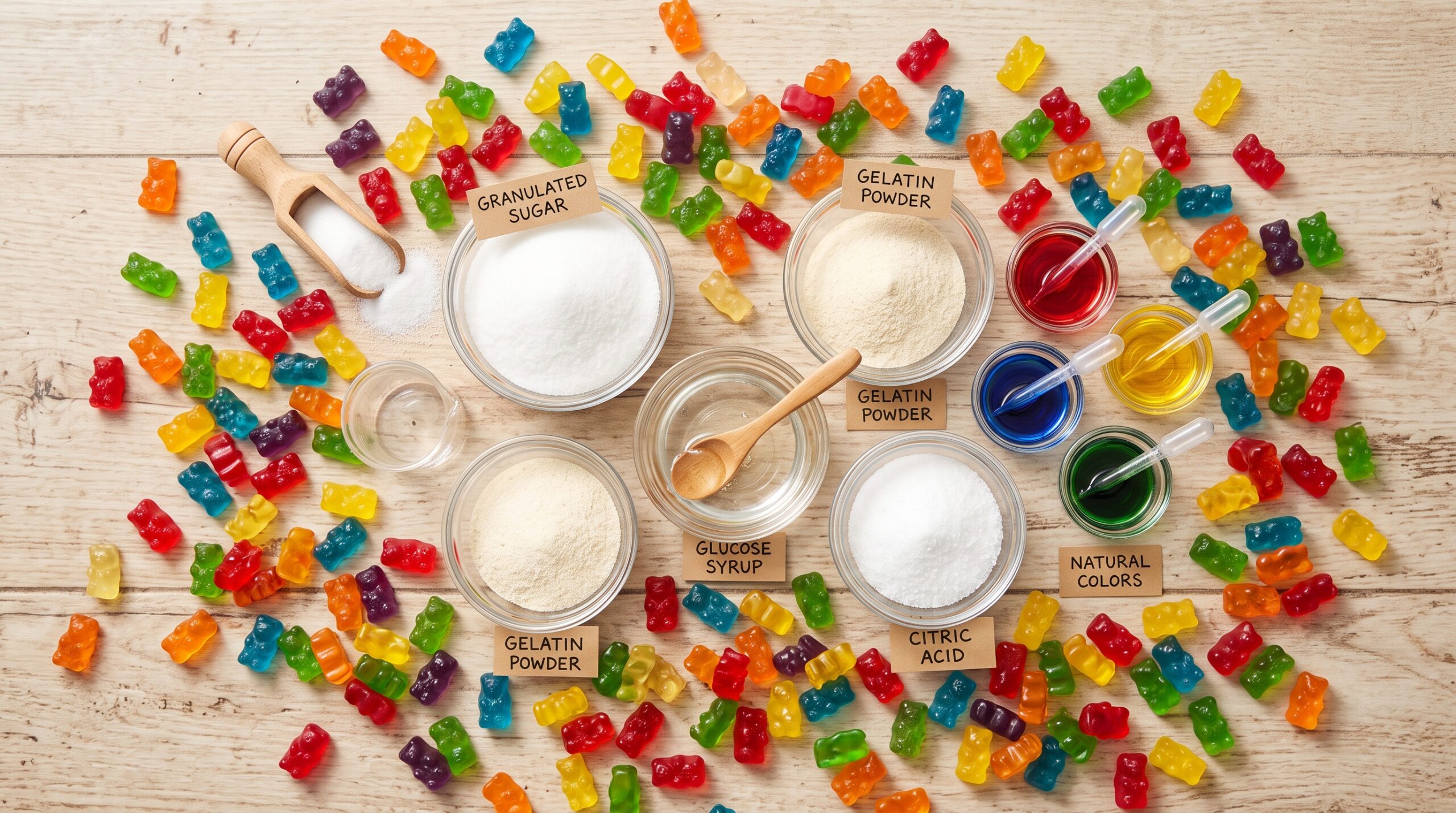
Yes, and it’s straightforward with food-grade citric or malic acid, both available at kitchen supply and online retailers. For homemade sour gummies, prepare the gummies first and let them cool fully, then dust with a mixture of 70% fine granulated sugar and 30% citric acid. For more intensity, replace 10–15% of the citric acid with food-grade malic acid. Apply the coating within a few hours of serving — the acid coating absorbs moisture from the gummy surface at room temperature and loses its dry, crystalline texture within 2–4 hours. Storing coated sour candy in an airtight container with a silica gel packet extends coating life significantly.
Conclusion
What makes sour candy sour comes down to one mechanism at the molecular level: hydrogen ions activating sour taste receptor channels on your tongue. But the craft of building a specific sourness experience — deciding between citric acid’s sharp immediacy and malic acid’s prolonged burn, choosing whether to coat the surface or blend into the body, calibrating crystal size and acid concentration to hit the right profile — is where the real complexity lives.
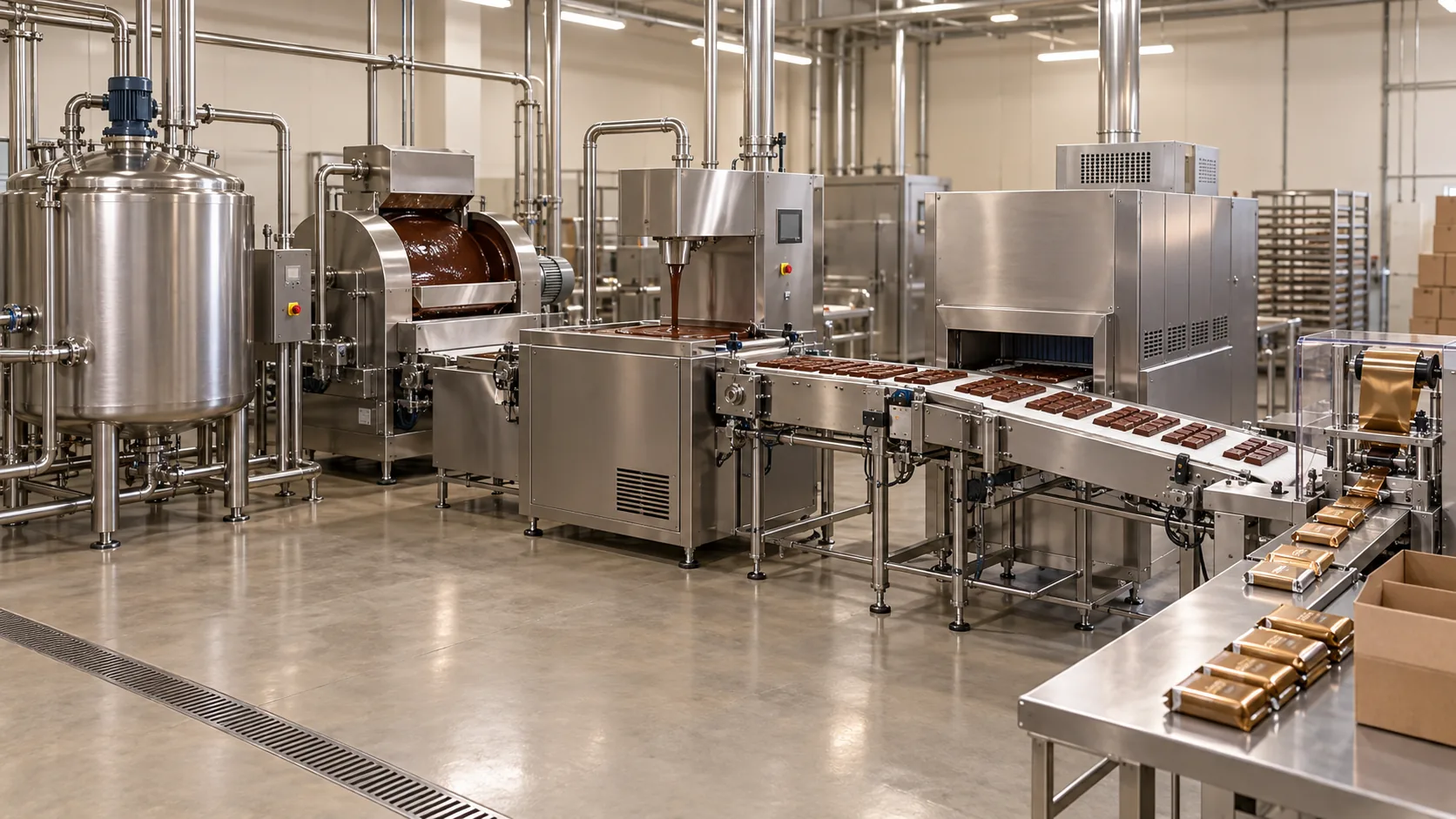
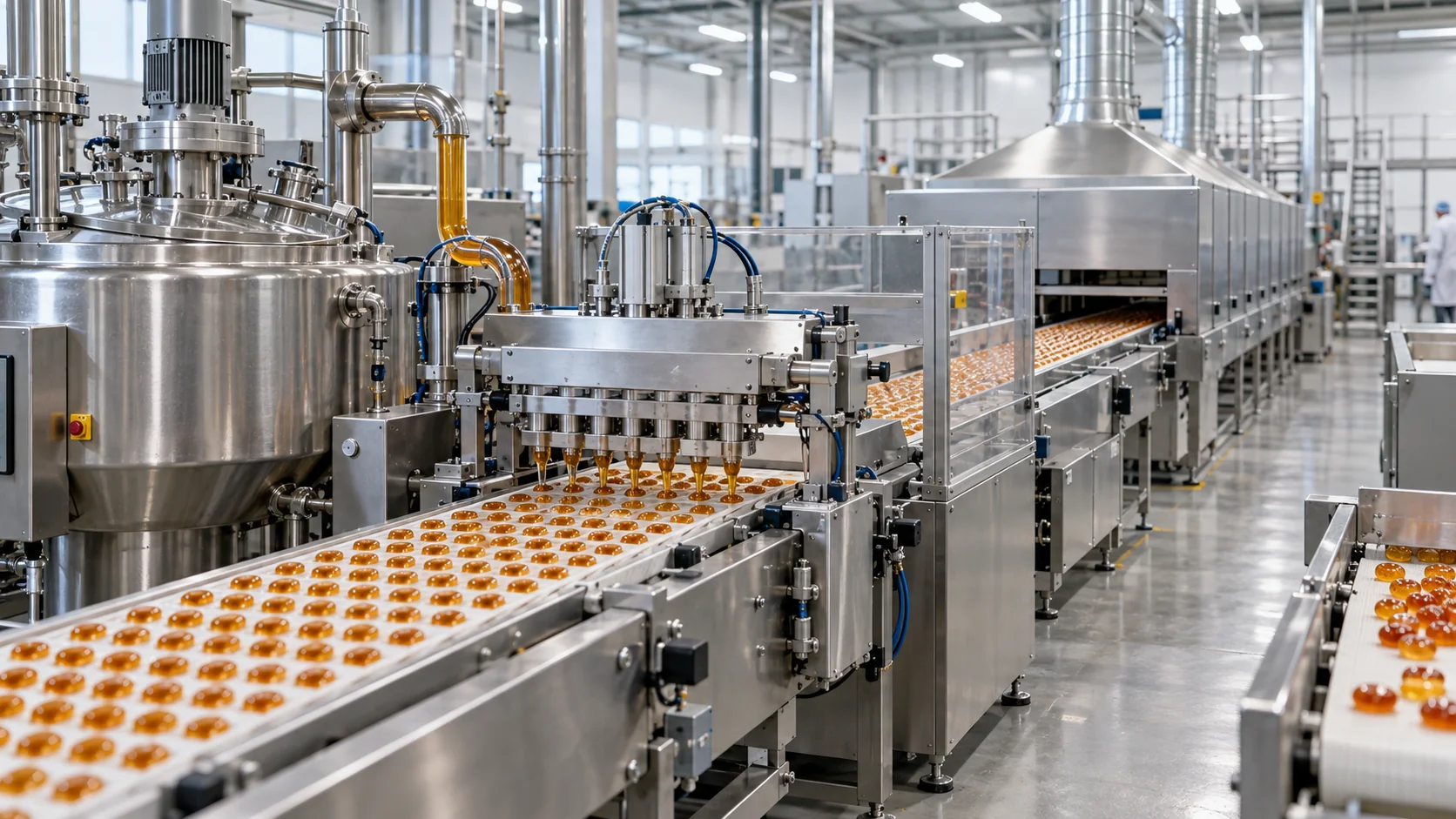
For candy manufacturers, getting these decisions right at production scale requires both precise formulations and equipment capable of applying coatings consistently across batches. Temperature control, moisture management, binding agent selection, and drying parameters all affect whether the consumer receives the sourness experience the formulation intended. A well-engineered sour coating on the wrong equipment, at the wrong temperature, in the wrong humidity, produces a sticky or weakly sour product regardless of how good the acid blend is on paper.
As the industry moves toward microencapsulated delivery systems, calcium buffer co-coatings for dental safety, and fermentation-derived acids for natural labeling, the underlying chemistry stays the same: a controlled, intense, safe delivery of hydrogen ions to taste receptor cells. Every pucker-inducing piece of sour candy is a small feat of applied food chemistry. And it all starts with one deceptively simple question — and a surprisingly deep answer.
Related Articles
- A Practical Guide to Sour Tube Candy Production: 5 Key Steps for 2026
- Sour Tube Candy: What It Is, Flavors, How It’s Made & Why You Can’t Stop
- Peelable Gummy Candy: Types, Ingredients, and Production Guide
- Sour Spaghetti Candy: The Complete Guide to This Tangy Gummy Treat
- Gummy Candy Production Line
- Food Packaging Machine
- Skittles Manufacturing Process: Inside the Factory