Sour Spaghetti Candy: The Complete Guide to This Tangy Gummy Treat
Sour spaghetti is a long, strand-shaped gummy candy coated with a blend of citric and tartaric acids, delivering an intense tart burst followed by a fruity sweet finish.
If you’ve ever bitten into a strand of sour spaghetti candy and felt your whole face pucker up before melting into sweetness, you already know the appeal. This quirky, noodle-shaped gummy has carved out a devoted following among sour candy fans worldwide — and for good reason. It sits at the perfect intersection of texture, flavor, and novelty. But what exactly makes sour spaghetti tick? How is it made, why does it taste the way it does, and where did it come from?
This guide covers everything — from the food science behind the sourness to how commercial sour spaghetti candy is manufactured on an industrial scale, and what to look for when choosing between products.
What Is Sour Spaghetti Candy?
Sour spaghetti is a long, flexible gummy candy shaped like strands of pasta — typically 8 to 12 inches in length — coated in sour sanding sugar. The sour sanding is a mixture of granulated sugar combined with food-grade acids (primarily citric acid and tartaric acid) that creates the signature electric-tart hit consumers love.
The defining characteristics:
- Shape: Thin, noodle-like strands (hence the “spaghetti” name)
- Texture: Soft, chewy gummy base with a slightly granular exterior coating
- Flavor profile: Sharp initial sourness that fades rapidly into fruit-forward sweetness
- Colors: Usually multi-colored or dual-toned, with each color representing a different fruit flavor (strawberry, apple, cola, raspberry)
The candy is most commonly associated with Haribo’s S’ghetti line (marketed as “Sour S’ghetti” in North America), but dozens of manufacturers worldwide produce their own versions. The format is especially popular in European confectionery markets and has seen growing demand in Southeast Asia and Latin America.
According to Wikipedia’s entry on sour sanding, sour sugar — the coating that defines this candy — is made by combining granulated sugar with citric acid, tartaric acid, and malic acid, which together deliver a sustained sour sensation that granulated sugar alone cannot achieve.
The Spaghetti Shape: More Than a Gimmick
The noodle shape isn’t just novelty. The high surface-area-to-volume ratio of a thin strand means more sour coating per bite than a traditional bear or worm shape would deliver. More coating means more immediate acid contact with taste receptors — which is precisely why sour spaghetti hits harder and faster than a standard gummy square.
There’s also a behavioral element: people bite off pieces, tie strands into knots, or eat them whole like real pasta. That playful interaction is part of why the candy resonates beyond childhood.
Common Varieties
| Variety | Shape | Flavor Count | Notable Feature |
|---|---|---|---|
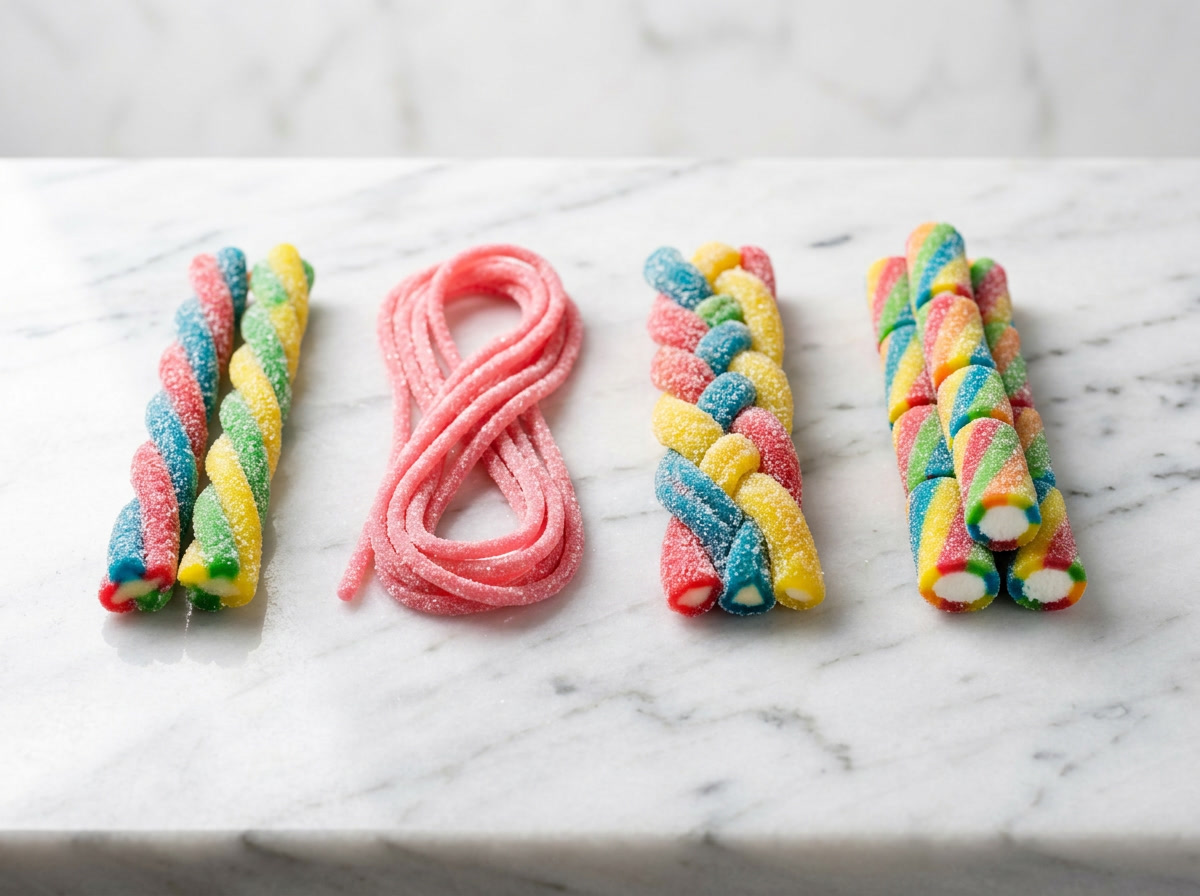
| Dual-twist (two-tone) | Two colors twisted together | 2 per piece | Sweet + sour separated by color |
| Single strand | Uniform color | 1 per piece | Cleaner flavor, heavier acid load |
| Braided | Three strands interlocked | 3 per piece | Chewy texture, visual appeal |
| Filled strand | Hollow center with liquid fill | 1 | Bursting effect inside |
Types and Varieties of Sour Spaghetti Candy
The sour spaghetti category has expanded well beyond Haribo’s original offering. Today, confectionery manufacturers produce at least four distinct product architectures within this format, each targeting different consumer preferences.
1. Classic Sour-Coated Strands
This is the baseline product. A gelatin-based gummy strand is extruded at scale, cut to length, and tumbled with sour sanding sugar. Haribo’s Sour S’ghetti is the best-known example. The acid coating is visible — a fine white or translucent dusting on the strand exterior. Shelf life is typically 12–18 months when sealed.
2. Dual-Flavor Twisted Strands
Two separate gummy strands in different colors (and flavors) are co-extruded or twisted together post-extrusion. Each strand has its own flavor profile, and the combination creates a layered taste experience. Strawberry-apple or raspberry-cola pairings are common. These sell well as “shareable” formats because consumers can separate them.
3. Pectin-Based (Vegan) Sour Spaghetti
Driven by the growth in plant-based diets, several manufacturers now produce sour spaghetti using pectin or carrageenan instead of animal-derived gelatin. The texture is slightly firmer and less elastic than gelatin-based versions, but the sour coating experience is identical. This segment is growing fastest in Western European markets.
4. Filled / Burst-Center Spaghetti
A niche but high-value format: a hollow gummy tube filled with a liquid or gel fruit center. When bitten through, the center releases a concentrated burst of flavor. Production complexity is higher (requires co-extrusion with a separate fill pump), but retail margins are typically 30–40% above standard strands.
Regional Flavor Profiles
Flavor preferences vary significantly by market:
- North America: Strawberry, watermelon, blue raspberry, cherry
- Europe: Cola, apple, raspberry, blackcurrant
- Asia: Lychee, mango, passion fruit, yuzu
- Latin America: Tamarind, chili-lime, passion fruit
Understanding regional preferences is critical for manufacturers choosing which flavor sets to run on a given sour spaghetti production line.
The Science Behind Sour Spaghetti’s Tangy Flavor
Sour spaghetti doesn’t just taste sour by accident. The tartness is the result of precision food chemistry, and getting it right separates a mediocre product from one that generates repeat purchases.
The three primary acidulants used in sour spaghetti coatings are:
Citric acid — derived from citrus fermentation, citric acid delivers a clean, bright sourness with a relatively short persistence. It’s the most widely used acidulant in confectionery. Citric acid activates sour taste receptors (primarily the OTOP1 proton channel on Type III taste cells) almost instantly upon contact with saliva.
Tartaric acid — stronger and sharper than citric acid, tartaric acid contributes a more sustained sour note. As noted in ScienceDirect’s overview of tartaric acid, it is commonly used in grape- and lime-flavored confections. In sour spaghetti, it extends the acid “window” so the sour sensation doesn’t disappear the moment saliva neutralizes the citric acid.
Malic acid — found naturally in apples, malic acid has a slightly bitter edge that adds depth to the sour profile. It’s used at lower concentrations than citric and tartaric.
Why the Pucker Fades Into Sweetness
The transition from sour to sweet isn’t random — it’s engineered. The acid coating dissolves completely within 10–15 seconds of chewing, at which point the gelatin body (which carries all the sweeteners and fruit flavors) takes over. This two-act structure is what makes sour spaghetti so compelling: it’s a flavor journey, not a single note.
Formulators control how long the sour phase lasts by:
- Adjusting the coating weight (grams of sour sugar per strand)
- Changing the acid blend ratio (more tartaric = longer sour persistence)
- Modifying the gummy body’s sweetener composition (higher glucose syrup makes the sweet phase richer)
Why Does Sour Candy Sometimes Hurt?
Several people-also-ask queries about sour spaghetti relate to stomach discomfort. The cause is straightforward: high concentrations of organic acids can irritate the esophagus and stomach lining, especially when consumed in large quantities. This is more common with children, who tend to consume sour candy faster and in greater volume than adults. For most people, moderate consumption causes no issues.
How Sour Spaghetti Candy Is Manufactured
This is where it gets genuinely interesting — and where the machinery matters as much as the recipe.

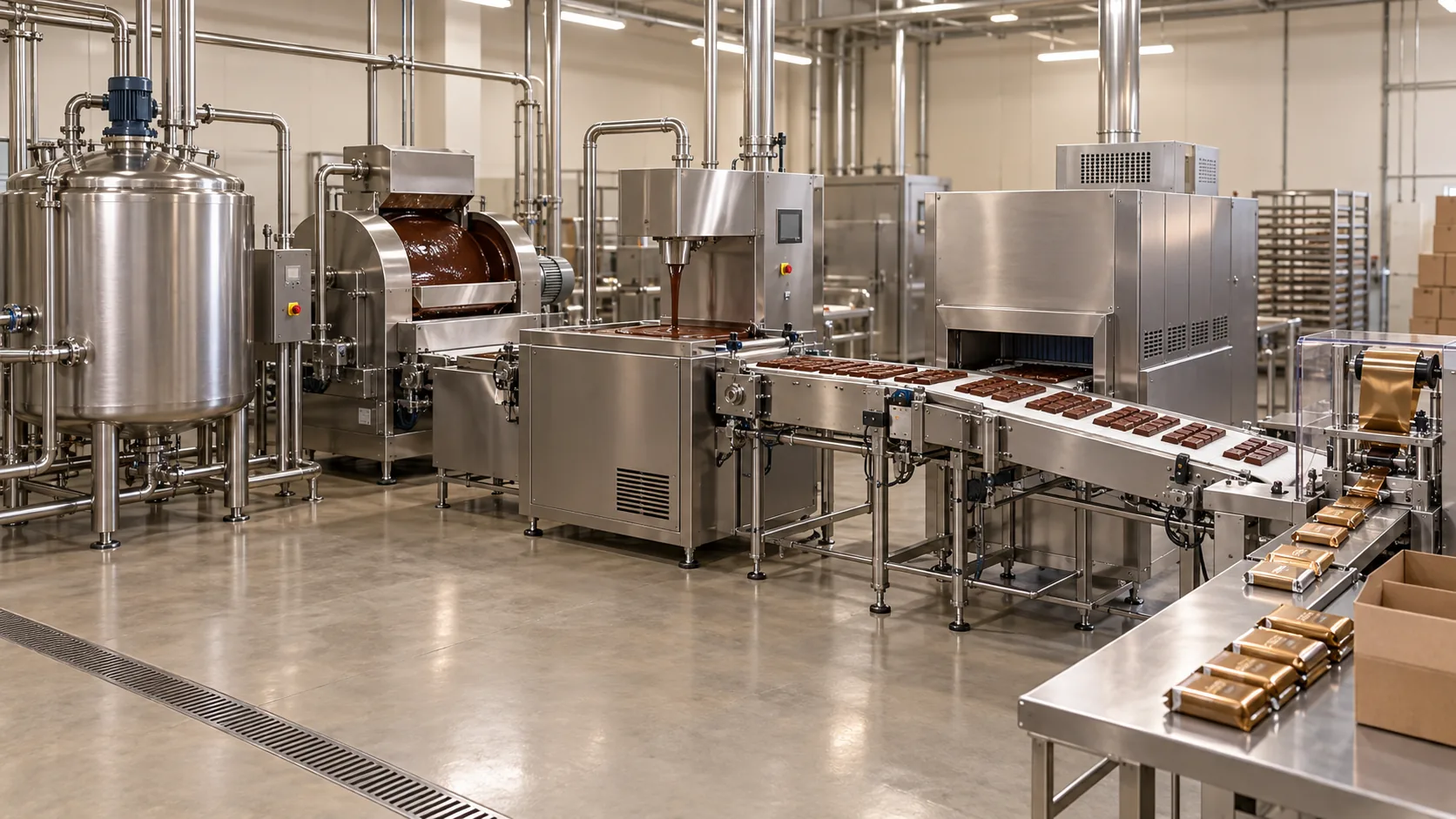
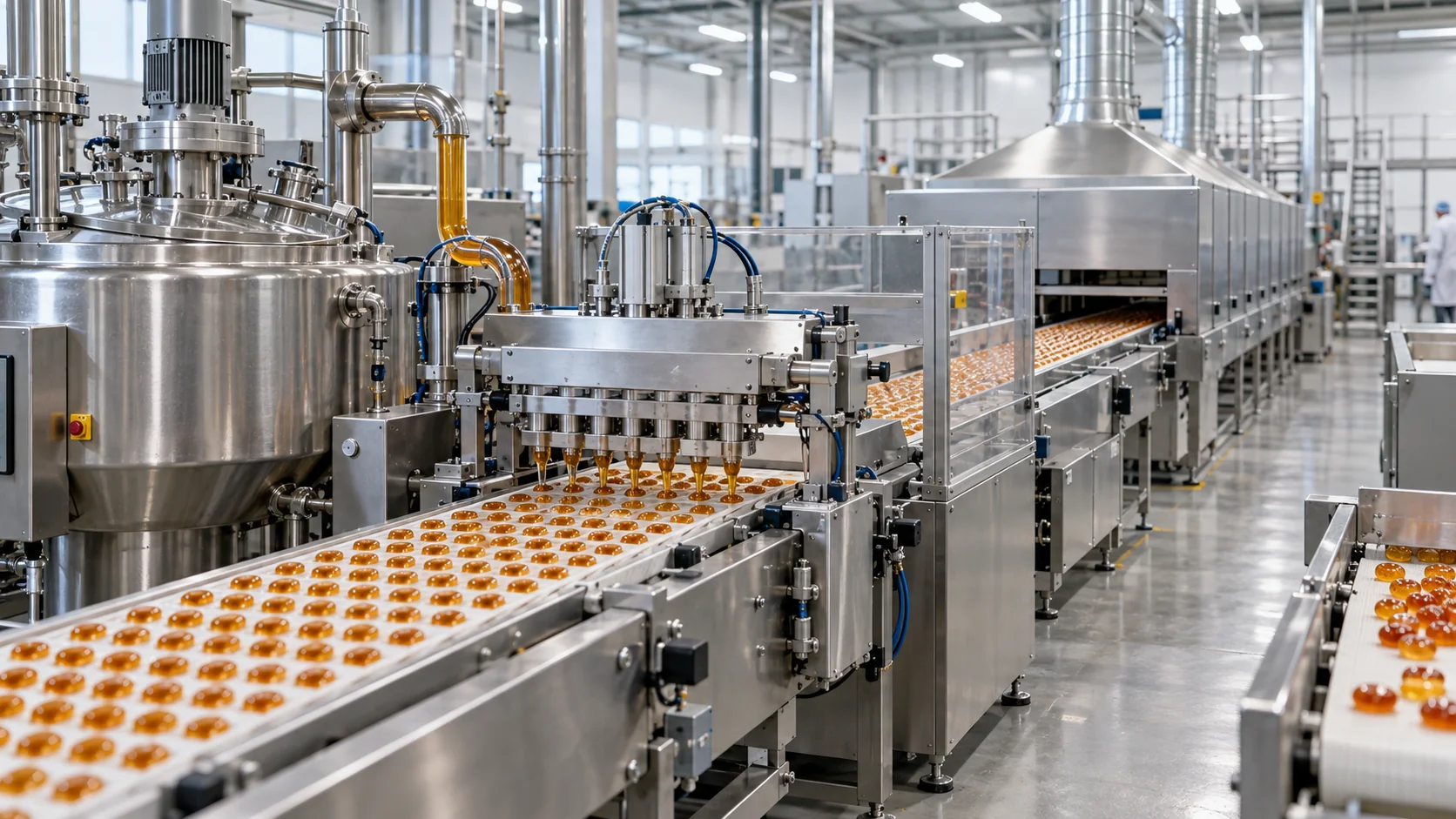
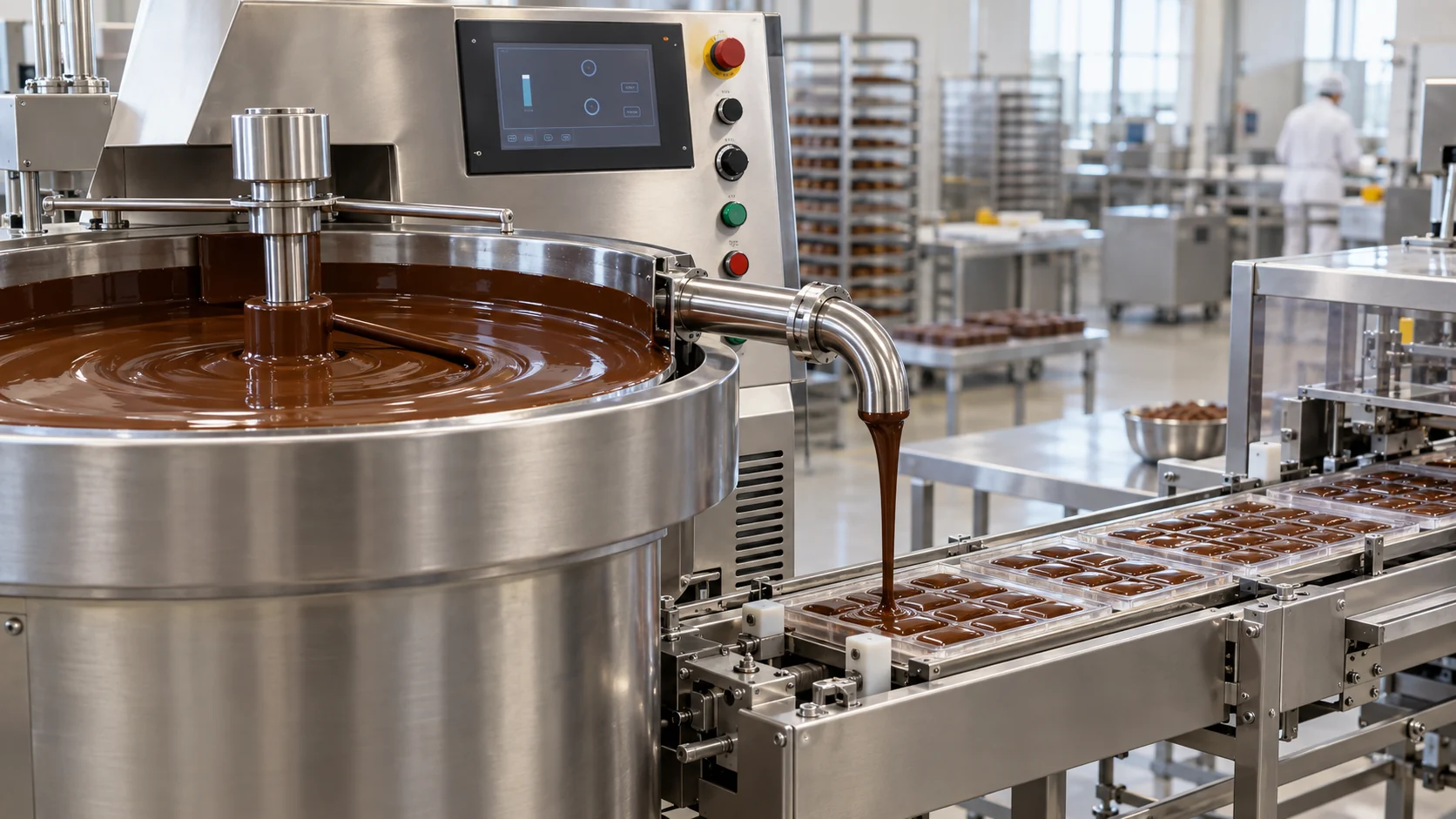
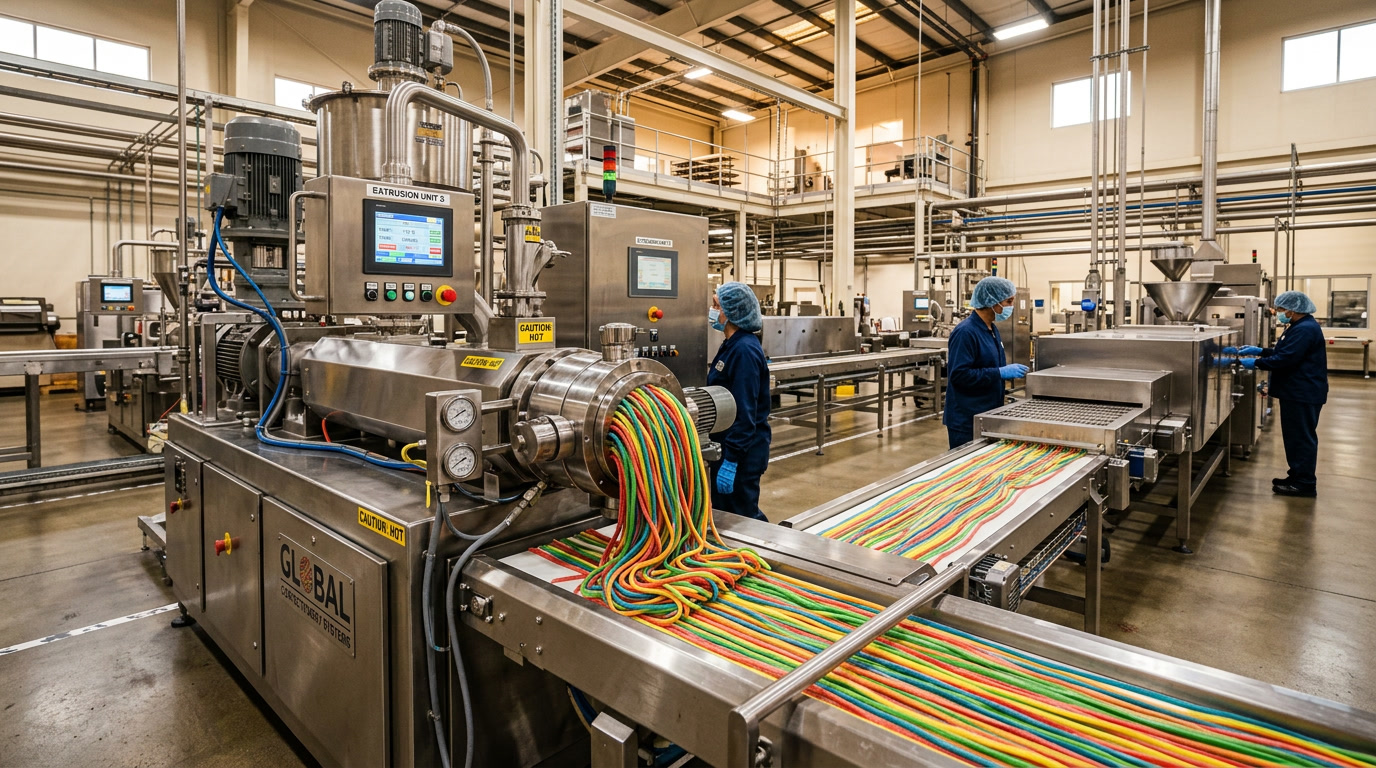
Sour spaghetti is produced on continuous extrusion lines rather than the depositing lines used for bear- or worm-shaped gummies. Here’s how a modern production run works:
Step 1: Ingredient Preparation
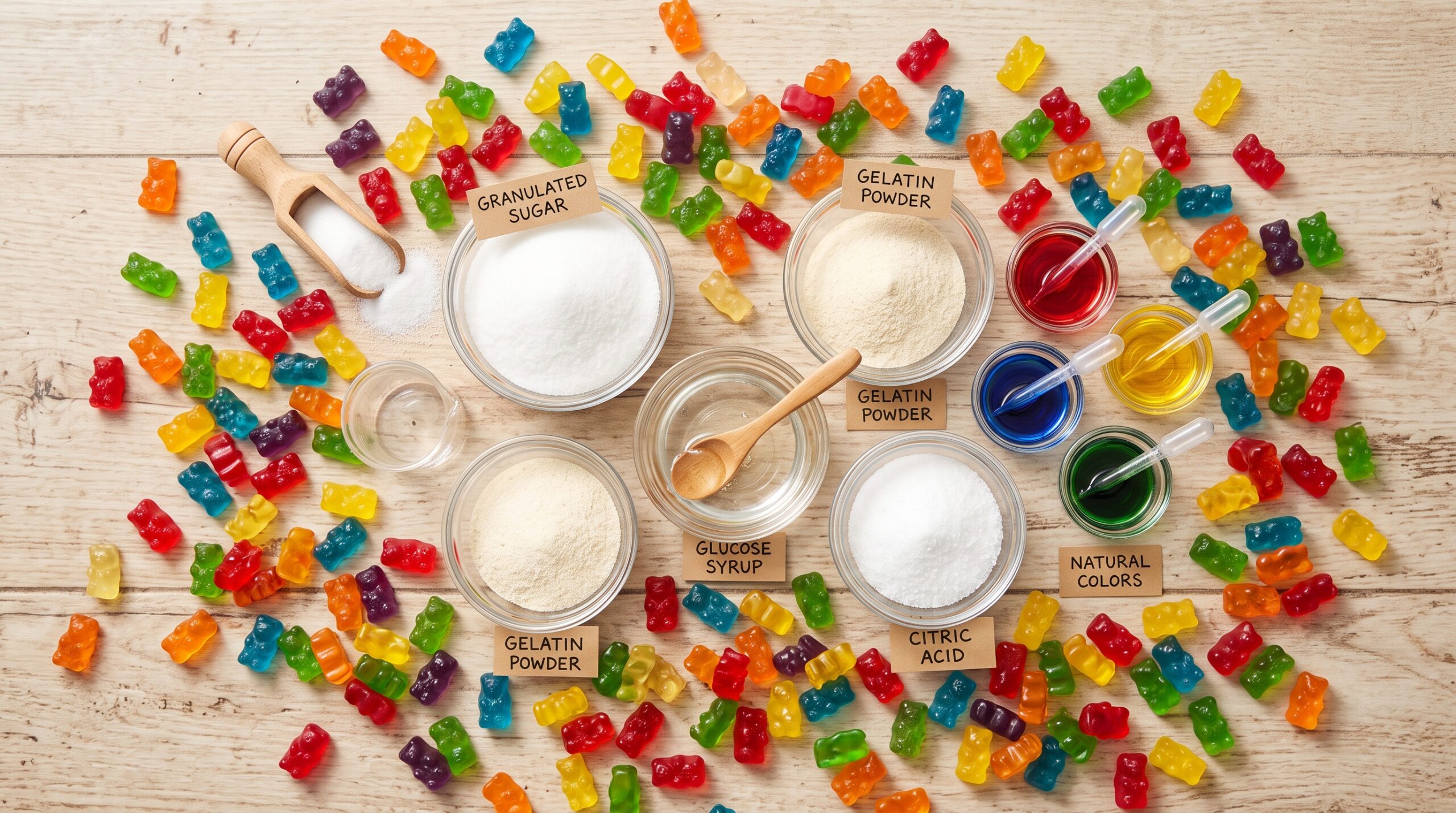
Raw materials — gelatin (or pectin), glucose syrup, sucrose, citric acid for the gummy body, natural colors, and fruit concentrates — are weighed and pre-mixed in a jacketed dissolving tank. Gelatin must be pre-hydrated (“bloomed”) before cooking. The cooking temperature is typically 105–115°C depending on the moisture target.
Step 2: Cooking and Vacuum Degassing
The dissolved mass is cooked under controlled temperature to reach the target Brix (usually 75–82°). Vacuum degassing removes air bubbles that would create voids in the extruded strand. Bubble-free mass is essential for a smooth, consistent strand with uniform sour coating adhesion.
Step 3: Extrusion
The cooked gummy mass is fed into a gummy extruder — a machine that forces the material through a die with one or more strand-shaped apertures. For dual-color twisted spaghetti, two separate batches (in different colors and flavors) are fed into a co-extrusion die simultaneously. The strands emerge continuously and are laid onto a conveyor.
According to the manufacturing guide on Madehow.com, industrial gummy candy extrusion can produce continuous strands at speeds exceeding 50 meters per minute, with die arrays capable of running 20–30 strands simultaneously.
Step 4: Cooling and Setting
Extruded strands pass through a cooling tunnel (chilled to 10–15°C) where gelatin crystallizes and the gummy body firms up. This typically takes 20–40 minutes depending on strand diameter and tunnel length.
Step 5: Cutting
A rotary cutter or guillotine-style blade trims continuous strands to the target length (8–12 inches for standard retail packaging). Cut precision matters — inconsistent lengths create packaging-line jams and consumer complaints.
Step 6: Sour Coating (Sanding)
Cut strands enter a coating drum — a rotating horizontal cylinder — where they tumble continuously. Sour sanding sugar (the acid-sugar blend) is added and the drum’s rotation ensures even coverage. Oil may be applied first as an adhesive layer. Some production lines apply sour coating in two stages to achieve heavier acid loading without surface clumping.
Step 7: Packaging
Coated strands are conveyed to multi-head weighers that portion them into target weights (typically 80g, 150g, 200g bags). Flow-wrap or stand-up pouch lines seal each portion. Nitrogen flushing is common to extend shelf life by displacing oxygen.
| Process Stage | Key Equipment | Quality Parameter |
|---|---|---|
| Cooking | Vacuum cooker / continuous cooker | Brix, moisture content |
| Extrusion | Single/co-extrusion die | Strand diameter, color consistency |
| Cooling | Tunnel cooler | Set time, texture firmness |
| Cutting | Rotary/guillotine cutter | Length tolerance ±5mm |
| Sanding | Coating drum | Coating weight g/100g |
| Packaging | Multi-head weigher + flow wrapper | Fill weight accuracy ±2% |
For confectionery factories looking to add sour spaghetti to their production range, the key equipment investment is typically the extrusion system and the coating drum. Lines can be configured for sour spaghetti, sour worms, and sour belts with die changeouts, making them versatile across the sour gummy category.
Popular Sour Spaghetti Brands and Products
The sour spaghetti format is dominated by a handful of legacy brands, but the private-label and artisan segments are growing fast.
Haribo S’ghetti — the category creator in many markets. The “sour” variant (Sour S’ghetti) is the one most associated with the “sour spaghetti” search term. Available in 5 oz retail bags and 12-count display boxes. Known for its clean gelatin texture and well-balanced acid coat.
Trolli Sour Brite Crawlers — while technically a “worm” format, Trolli’s sour gummy line competes directly for the same consumer and shares the same manufacturing process. Their neon-color coding has influenced sour spaghetti visual design industry-wide.
Fini Sour Spaghetti — Spanish confectionery giant Fini produces a popular European version with a softer texture and stronger fruit concentration. Widely available across EU markets.
Albanese Candy — the Indiana-based manufacturer known for exceptionally soft gummies produces a sour strand format with a proprietary gelatin blend that gives a more melt-in-mouth texture than competitors.
Private label / house brand — as production equipment becomes more accessible, major retailers (grocery chains, convenience stores) have entered the sour spaghetti segment with their own house-brand products. These typically run on the same industrial extrusion lines as branded products.
Nutritional Profile and Dietary Considerations
Sour spaghetti is candy, not a health food — but understanding the nutritional profile helps manufacturers make informed formulation decisions and helps consumers make informed choices.
Typical per-100g nutritional profile (gelatin-based, standard formulation):
| Nutrient | Amount per 100g |
|---|---|
| Energy | 330–350 kcal |
| Carbohydrates | 77–82g |
| Sugars | 55–65g |
| Protein | 5–7g (from gelatin) |
| Fat | 0–0.5g |
| Sodium | 30–50mg |
The gelatin base contributes a small but meaningful protein content — something marketers have started positioning more actively, though the amino acid profile of hydrolyzed gelatin is incomplete as a protein source and shouldn’t be overstated.
Allergen considerations:
- Standard gelatin-based sour spaghetti is gluten-free (gelatin is derived from collagen, not grain)
- Not vegan (contains animal-derived gelatin)
- Not halal unless gelatin source is certified (pork gelatin is common in commodity products)
- Tree-nut and peanut free in most formulations
For manufacturers targeting halal or vegan markets, pectin- or carrageenan-based alternatives address both restrictions simultaneously.
Future Trends in Sour Spaghetti Candy (2026 and Beyond)
The sour candy category has consistently outpaced overall confectionery growth for the past decade, and sour spaghetti is well-positioned to benefit from several converging trends.
1. Extreme sour intensity — consumer demand for progressively more intense sour experiences has driven formulators to push acid loading well beyond historical norms. Products like “nuclear sour” variants and competitive “sour challenges” on social media are normalizing very high citric acid concentrations. This trend favors manufacturers with advanced coating drum technology capable of applying heavier acid loads without clumping.
2. Plant-based formulation growth — the vegan confectionery segment is growing at roughly 8–10% annually across Western Europe and North America, according to market analysis from industry observers. Pectin-based sour spaghetti already exists; the next phase will be optimizing texture to match the gelatin standard that consumers expect.
3. Functional additions — some manufacturers are testing vitamin C fortification (citric acid is already present, so co-delivering ascorbic acid at meaningful doses is technically feasible) and CBD-infused sour gummies in markets where regulations permit. The sour spaghetti strand format lends itself to portion-controlled functional delivery.
4. Reduced-sugar and sugar-free variants — stevia, allulose, and erythritol-based reformulations are reaching production viability. The challenge is that the sour sanding coating already contains sucrose as its carrier, so a fully sugar-free sour spaghetti requires reformulating both the gummy body and the coating simultaneously — a significant but solvable R&D challenge.
5. Regional flavor innovation — the global expansion of Southeast Asian and Latin American flavors (tamarind, chili-mango, yuzu) into Western markets is creating new product development opportunities. Private-label manufacturers who can rapidly switch flavor profiles on existing extrusion lines have a time-to-market advantage.
Frequently Asked Questions About Sour Spaghetti
What is sour spaghetti candy?
Sour spaghetti is a long, strand-shaped gummy candy coated in acid sugar — usually citric and tartaric acid mixed with granulated sugar — that delivers a sharp sour hit followed by a sweet fruity finish. It is most commonly associated with Haribo’s S’ghetti brand but is made by dozens of confectionery manufacturers globally.
Is sour spaghetti the same as sour worms?
Not exactly. Both are sour-coated gummy candies, but sour spaghetti strands are significantly longer and thinner than gummy worms. Sour worms typically run 3–4 inches long and have a cylindrical cross-section; sour spaghetti strands are 8–12 inches long and much thinner, closer in diameter to actual pasta. The texture and eating experience differ accordingly.
What makes sour spaghetti sour?
The sourness comes from the sour sanding coating — a mixture of granulated sugar with citric acid, tartaric acid, and sometimes malic acid. These food-grade organic acids activate sour taste receptors immediately on contact. The sour sensation typically fades within 10–15 seconds as the coating dissolves and the sweet gummy body takes over.
Is Haribo Sour S’ghetti discontinued?
Haribo’s Sour S’ghetti has been subject to periodic distribution changes and market-by-market availability shifts, which has led to “discontinued” rumors. As of 2026, the product remains available in many markets, though specific sizes and variants have come and gone. If you can’t find it locally, multiple alternatives from other brands fill the same format.
Is sour spaghetti gluten-free?
Standard gelatin-based sour spaghetti is inherently gluten-free, as neither gelatin nor the common sweeteners and acids used in formulation contain gluten. That said, always check the packaging label, as cross-contamination in production facilities is possible for products manufactured alongside wheat-containing items.
Is sour spaghetti vegan?
Most sour spaghetti candy is not vegan because it uses animal-derived gelatin as the gummy base. However, vegan variants using pectin or carrageenan are increasingly available, particularly in European markets. Look for explicit “vegan” labeling or check whether gelatin appears in the ingredients list.
Why does my stomach hurt after eating sour candy?
High concentrations of organic acids (citric, tartaric, malic) can irritate the mucous membranes of the esophagus and stomach lining when consumed in large quantities. This effect is dose-dependent — moderate consumption rarely causes issues for most adults. Children are more susceptible due to smaller body mass and often faster consumption rates. If you experience persistent discomfort, reducing portion size is the practical fix.
Conclusion
Sour spaghetti candy is a genuinely well-engineered product. The strand format maximizes surface area for sour coating contact. The acid blend is calibrated to create a two-phase flavor journey. And the manufacturing process — continuous extrusion, precision cutting, tumble coating — reflects decades of confectionery process innovation.
Whether you’re a consumer trying to understand why your face does that thing it does, or a confectionery manufacturer evaluating whether to add sour spaghetti to your product range, the fundamentals are the same: it’s a format where chemistry, texture, and process engineering all have to work in concert. Get any one of them wrong and the product either doesn’t taste right, has shelf-life issues, or costs too much to make at scale.
For manufacturers specifically: the sour spaghetti category’s relatively low barrier to entry (standard extrusion lines can produce it with die changes) combined with strong and growing consumer demand makes it one of the more attractive additions a gummy production facility can make. The key investments are in coating drum capacity and formulation expertise — everything else maps to equipment most candy factories already own.
Internal links: related: gummy candy production line | related: sour candy manufacturing equipment
Related Articles
- What Makes Sour Candy Sour? The Acids, Chemistry, and Production Secrets
- Sour Tube Candy: What It Is, Flavors, How It’s Made & Why You Can’t Stop
- Peelable Gummy Candy: Types, Ingredients, and Production Guide
- Top Gummy Candy Brands in 2026: The Complete Guide for Confectionery Professionals
- Gummy Candy Production Line
- Starch-Free Gummy Depositing Machine
- Are Skittles Gluten Free? Complete Guide 2026