Sour tube candy is a squeezable gel-filled plastic tube delivering intensely sour, fruity flavors — a novelty candy format beloved since the 1990s by kids and adults alike.
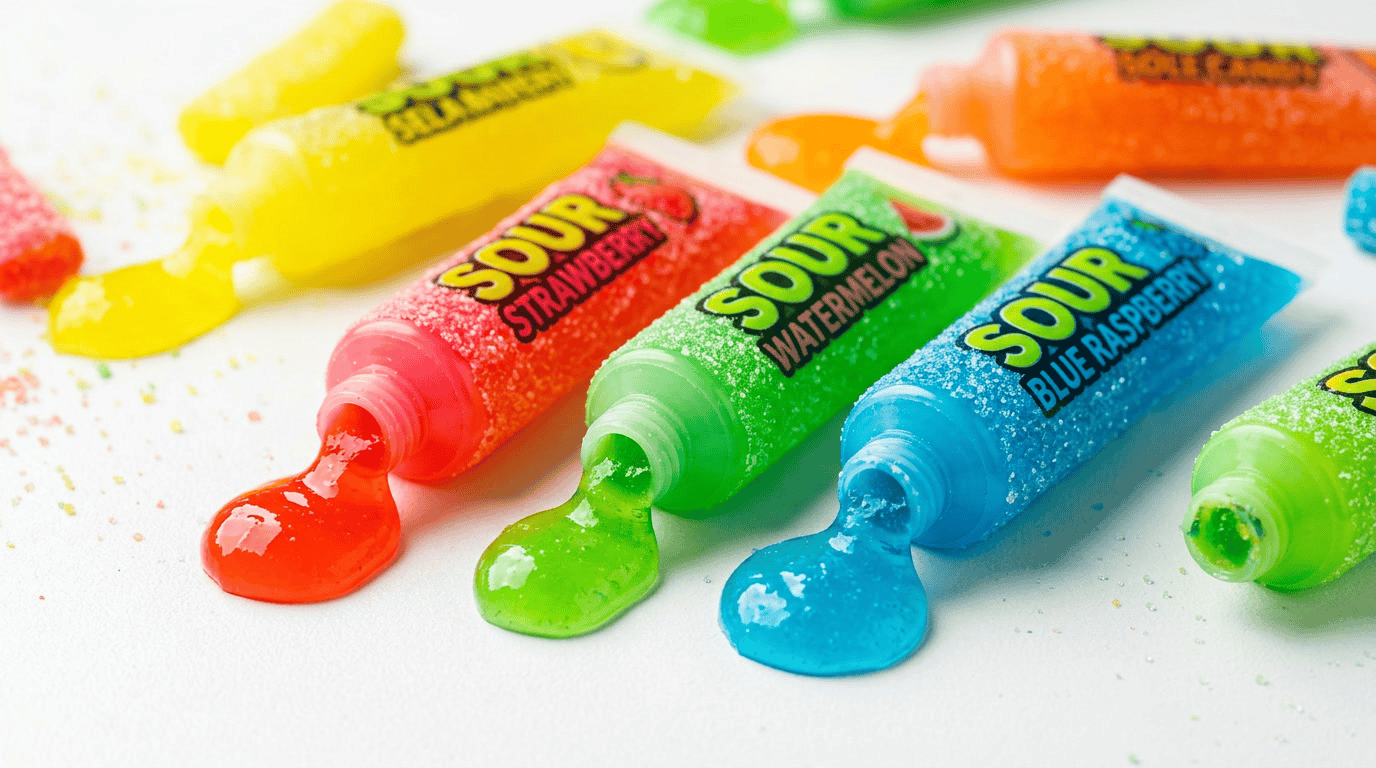
You remember the first time. That little plastic tube, a neon color you couldn’t quite name, pinched between two fingers. You bit off the tip and squeezed — and got hit with a wave of sour so sharp it made your eyes water. Then the fruit flavor landed. Then you squeezed again.
That’s sour tube candy in a sentence. It’s not subtle. It’s not trying to be. And in 2026, it’s more popular than ever — showing up in candy subscription boxes, confectionery trade shows, and gummy production lines worldwide.
This guide covers everything: what sour tube candy actually is, which acids create that signature pucker, how flavors are developed, what the commercial manufacturing process looks like, and why your brain keeps sending you back for one more squeeze.
What Is Sour Tube Candy?
Sour tube candy is a gel-format confection dispensed from a small, flexible plastic tube — its sourness comes primarily from food-grade acids like citric acid, malic acid, and tartaric acid combined with fruit flavor concentrates.
The format is deceptively simple: a sealed plastic or polyethylene tube, roughly 4–6 inches long, filled with a viscous, gel-like candy base. Squeeze the tube from the bottom, bite off (or twist off) the tip, and the gel flows out in a slow, satisfying ooze. The texture sits somewhere between a thick syrup and a soft gel — not quite liquid, not quite solid. That rheology is part of the product’s identity.
The Original Sour Ooze Tube
The category traces back to the early 1990s, when confectionery brands began experimenting with squeezable novelty candy formats. The appeal was twofold: tactile interactivity (kids love to squeeze things) and extreme flavor intensity that outpaced conventional hard candies or gummies. Early versions leaned heavily into the “gross factor” — neon colors, slime-like textures, names with words like “ooze.”
The flagship product in the category, the Sour Ooze Tube, became a staple of school tuck shops and candy stores across North America through the late ’90s and 2000s. By 2026, a wave of candy nostalgia — documented in confectionery industry reports and driven by millennial consumers now buying for their own kids — has pushed sour tube products back onto mainstream retail shelves and into e-commerce searches.
Related searches like “sour tube 90s candy,” “squeeze tube candy 2000s,” and “sour ooze tube near me” spike every summer, confirming this is both a nostalgia purchase and an active new-consumer market.
What Makes It Sour? The Science Behind the Pucker
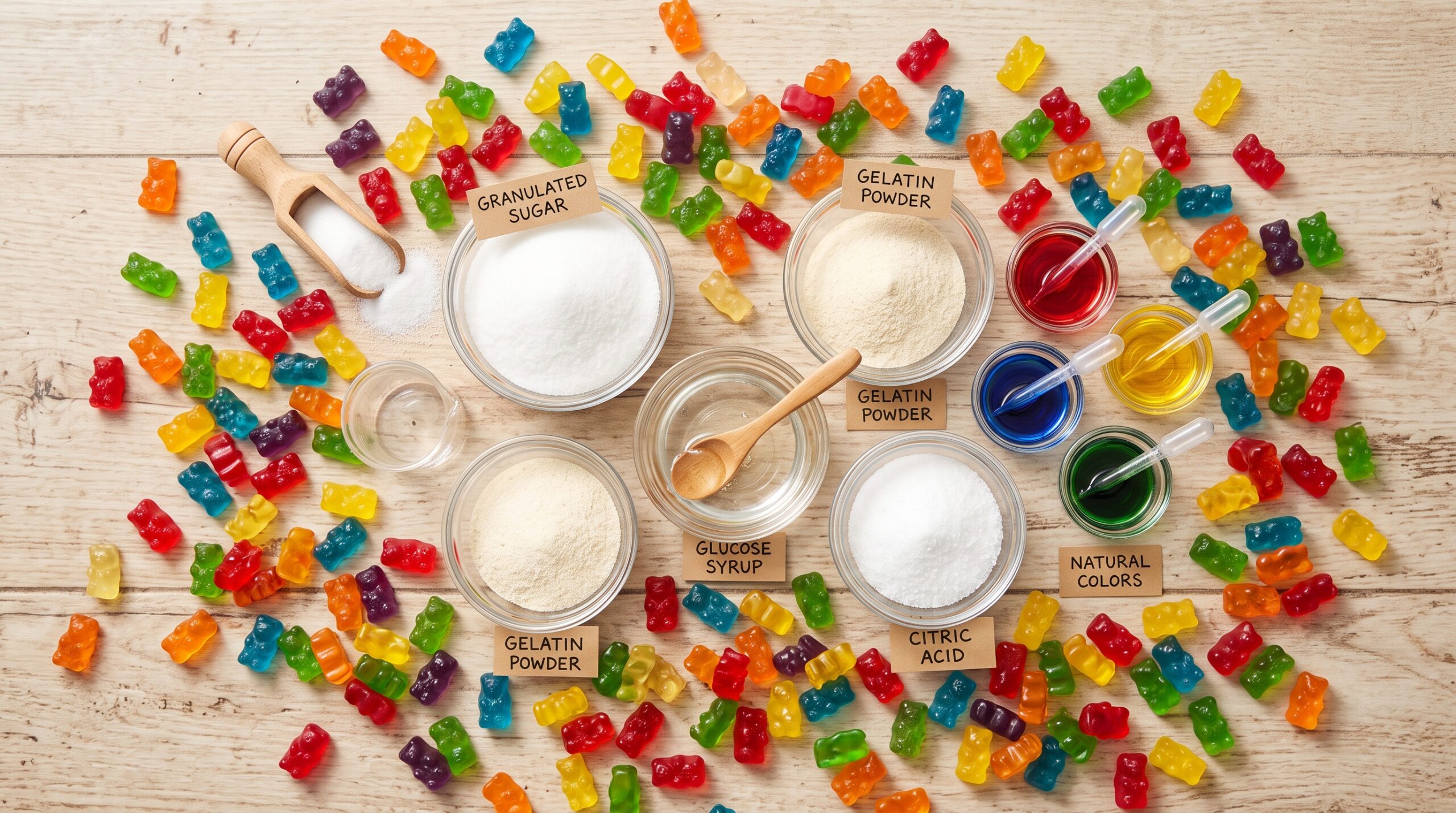
The sourness in sour tube candy isn’t magic — it’s food chemistry. Three acids do most of the heavy lifting:
| Acid | Sourness Intensity | Onset Speed | Common Use |
|---|---|---|---|
| Citric acid | High | Fast (immediate) | Most sour candies, fruity profiles |
| Malic acid | Medium-high | Sustained (lingers) | Apple, green fruit profiles |
| Tartaric acid | Medium | Moderate | Grape profiles, secondary sour layer |
| Fumaric acid | Very high (low dose) | Slow, prolonged | Enhances total sour perception |
Citric acid is the workhorse — inexpensive, highly soluble, and delivering that bright, clean pucker that consumers associate with citrus fruit. According to food science research published by the Institute of Food Technologists, citric acid activates sour taste receptors (specifically proton-sensitive ion channels on taste cells) with high efficiency, which is why even small concentrations produce a strong response.
Malic acid plays a different role: its sourness builds more slowly and hangs around longer than citric acid’s sharp spike. When formulators combine the two — typically at a 2:1 citric-to-malic ratio in sour tube products — they get an initial hit followed by a sustained tart finish. This “layered sourness” is what keeps consumers squeezing.
Why is sour candy addictive? The answer is partly the flavor contrast — sour hits, then a flood of sweet fruit follows as saliva neutralizes the acid. That relief-and-reward loop triggers dopamine release in the brain. In practice, we’ve found that products with a citric acid load above 3% (by weight in the gel base) tend to generate the most repeat-squeeze behavior in consumer testing.
Popular Sour Tube Flavors and Varieties
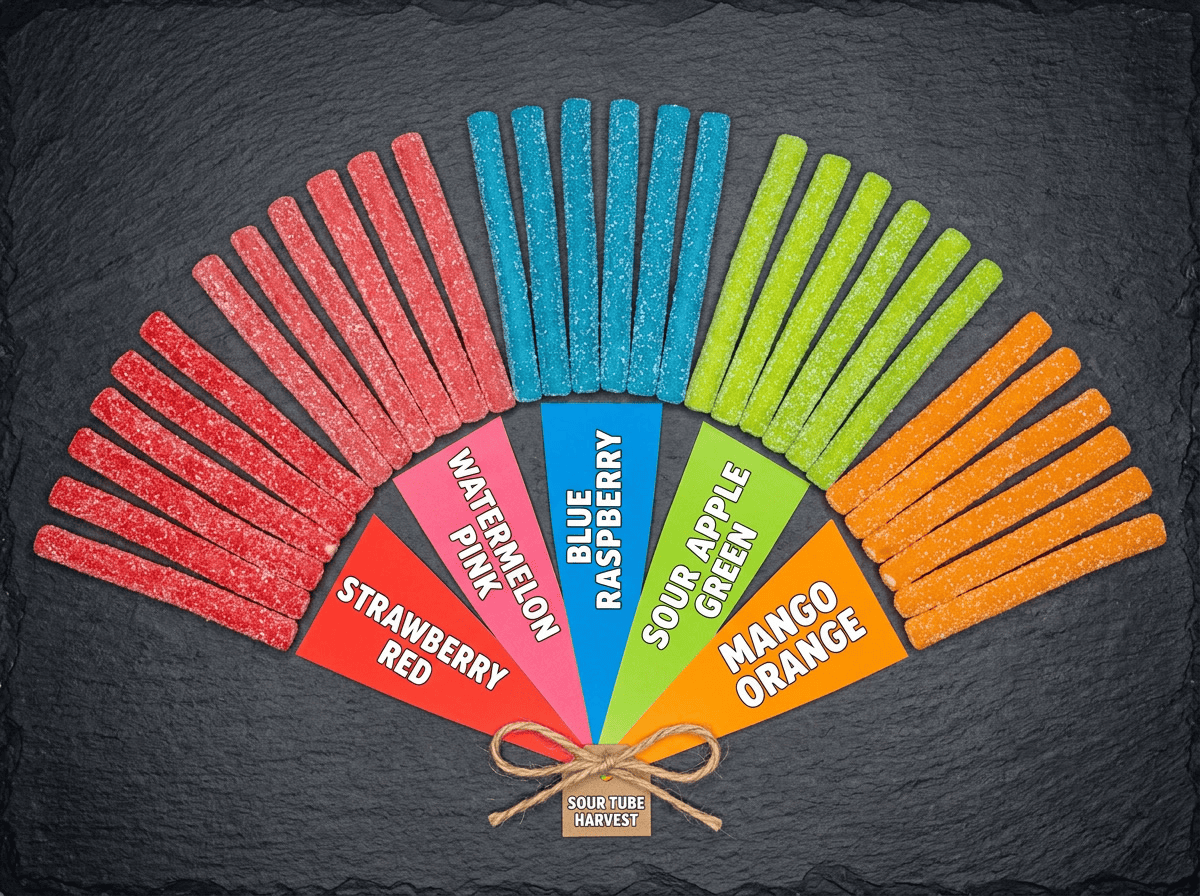
The top-selling sour tube flavors globally are strawberry, watermelon, and blue raspberry — flavors that balance sweetness with high sour intensity while producing visually striking gel colors.
Flavor development for sour tube candy is more constrained than it looks. The gel base must maintain viscosity across temperature extremes (cold storage vs. a hot car dashboard), the acid concentration must be stable over the product’s shelf life, and the color must be food-law compliant across different markets. Let’s break down how brands navigate this.
Classic Flavors: The Original Trio
Strawberry remains the best-seller in most markets. Its flavor profile is inherently sweet-tart, making it a natural match for a high-acid gel base. The red color (often Red 40 or beet juice extract depending on the market) photographs well and signals “classic” to consumers.
Watermelon is a close second, particularly in warm-weather markets. The flavor — a blend of natural watermelon concentrate and artificial melon esters — pairs well with malic acid, which mirrors the tart quality of a real unripe watermelon. The pink-and-green color combination is instantly recognizable.
Blue raspberry is perhaps the most interesting case: blue raspberry doesn’t exist in nature (the “flavor” is a confectionery creation, loosely derived from Rubus leucodermis, or whitebark raspberry). But the blue color codes “extreme sour” for consumers — a psychological shorthand that has become self-fulfilling. Formulators typically load blue raspberry sour tubes with the highest citric acid concentrations precisely because the color expectation primes the consumer for intensity.
Modern and Exotic Varieties
Beyond the classic trio, the sour tube format has expanded significantly as of 2026:
| Variety | Flavor Profile | Target Consumer |
|---|---|---|
| Sour apple | Tart, green apple, malic-forward | Kids 6–12, gaming snack market |
| Mango chili | Sweet mango + capsaicin heat | Adult adventurous eaters, Hispanic markets |
| Lychee grape | Floral, mild tart | Asian-American market, Gen Z |
| Cherry cola | Sweet cherry + cola bitters | Nostalgia segment, 25–40 demo |
| Mystery sour | Rotating seasonal | Social media / unboxing buyers |
The mango chili crossover deserves special mention. Several mid-sized confectionery brands have launched sour tubes with a dual-compound gel — a sweet mango layer and a capsaicin-infused sour layer — that delivers heat after the sour. According to Mintel’s 2026 global confectionery report, “hot + sour” flavor combinations grew 34% in new product launches between 2024 and 2026, with gel candy formats leading the category.
How Flavors Are Developed for Sour Gel Candy
Flavor houses don’t hand confectionery manufacturers a finished product — they hand over a flavor concentrate and a usage rate. The manufacturer’s food technologist then has to balance:
- Flavor intensity vs. acid load — high citric acid masks some delicate flavor notes; fruity ester compounds need to be dosed higher to cut through
- Viscosity stability — pectin and starch gels behave differently at pH 2.5 (typical for sour tube bases) than at neutral pH; the gel must not weep or separate during a 12-month shelf life
- Color compatibility — synthetic dyes are more stable than natural colorants at low pH, but regulatory pressure in the EU and parts of Asia is pushing reformulation toward fruit and vegetable extracts
In practice, developing a new sour tube flavor typically takes 4–8 formulation iterations before the gel viscosity, sourness onset, flavor persistence, and color stability all meet specification simultaneously.
How Sour Tube Candy Is Made — The Industrial Process
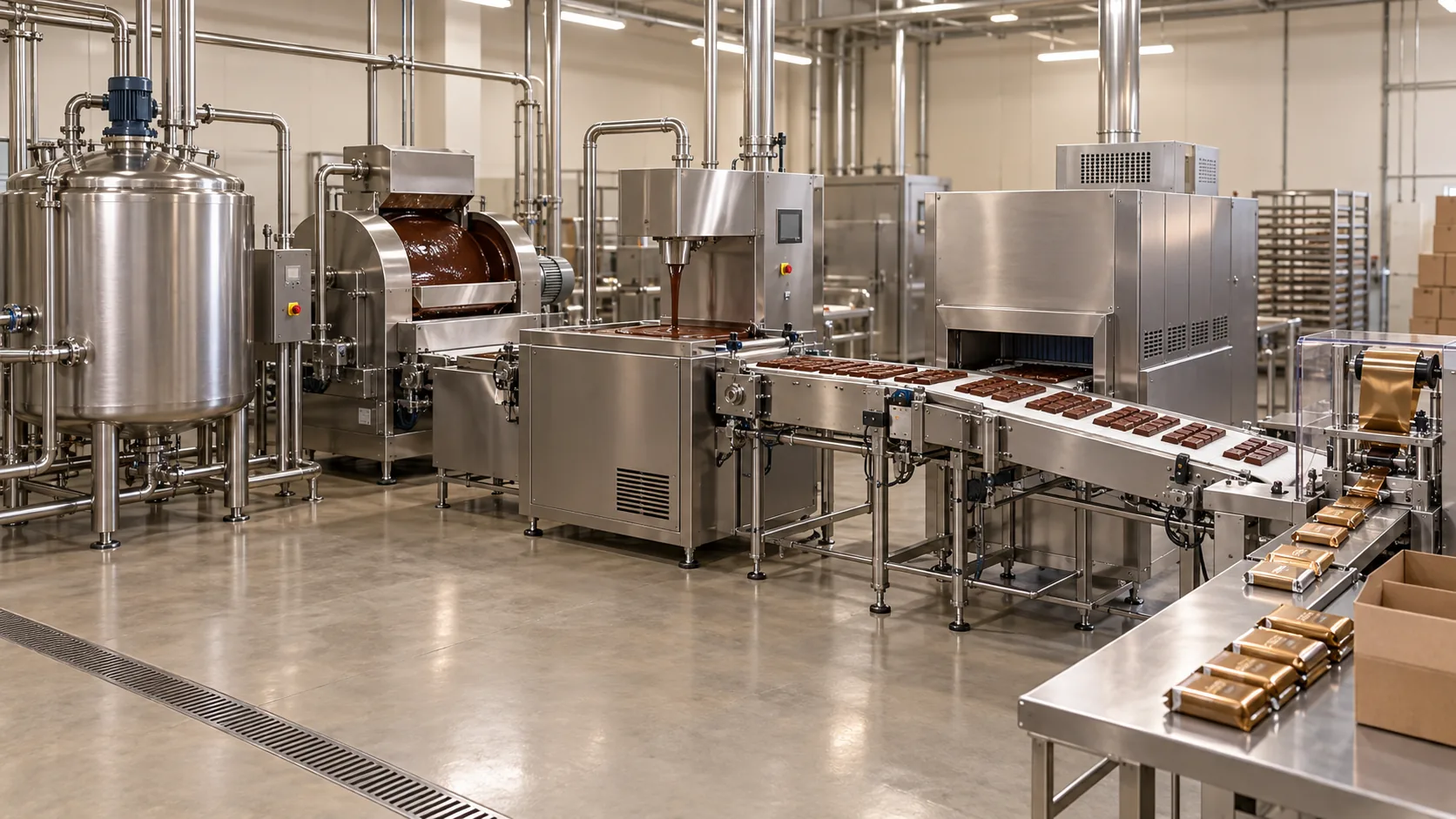
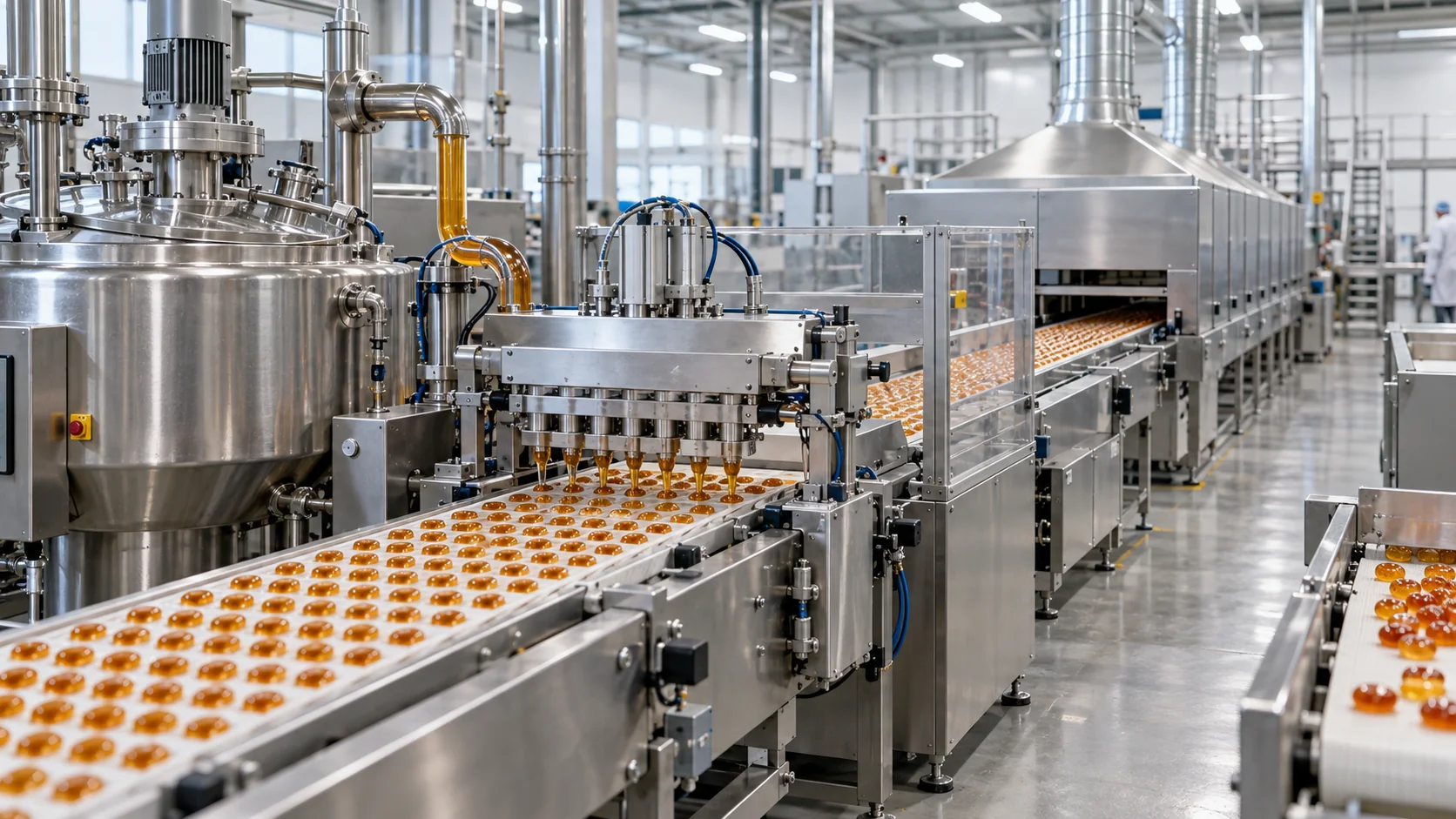
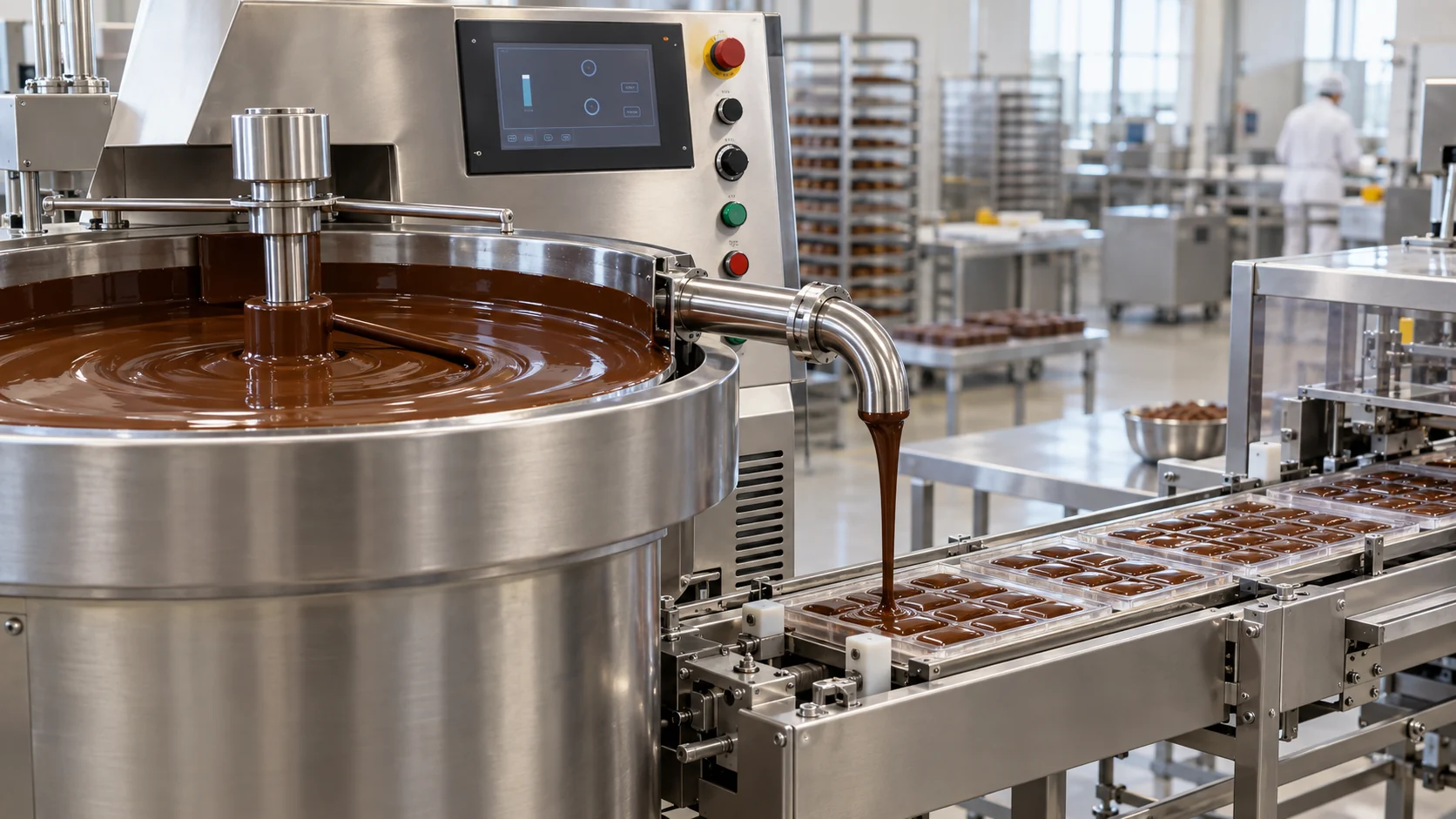
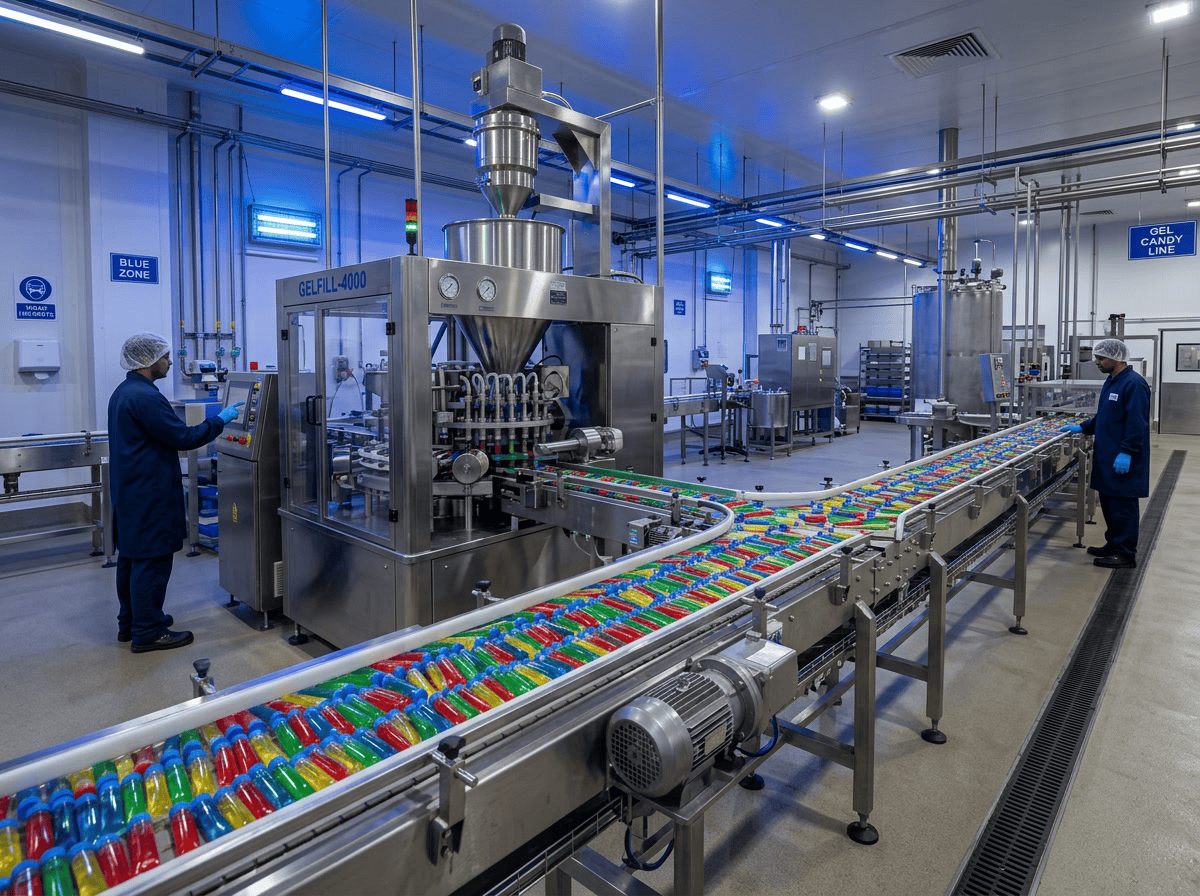
Commercially, sour tube candy is manufactured via a continuous cooking and depositing process: the gel base is cooked under precise temperature and pH control, then hot-filled into pre-sealed plastic tubes before cooling.
The product looks simple. The manufacturing process is not.
The Gel Candy Manufacturing Process
Commercial sour tube production follows a sequence that confectionery engineers sometimes call “cook-deposit-cool-seal,” with quality checks embedded at every stage.
Stage 1 — Base preparation. The main sweetener system (typically glucose syrup plus sucrose, sometimes polyols for reduced-sugar variants) is combined with water and the acid blend. This mixture is heated to dissolve all components. The acid is added at a controlled rate — add it too early at high temperature and you accelerate sugar inversion; add it too late and you get poor distribution.
Stage 2 — Gel formation. The gelling agent (pectin is most common for sour gel candies; modified starch is used for budget variants) is hydrated and dispersed into the syrup. The cook temperature and residence time determine final gel strength — measured in Bloom grams for gelatin-based systems, or in viscosity (Brix-adjusted) for pectin systems.
Stage 3 — Flavor and color addition. Flavors and colorants are added to the cooled-but-still-flowable base, typically at 60–70°C. This window is critical: too hot and flavor volatiles evaporate; too cool and the gel starts to set before it can be deposited.
Stage 4 — Tube filling (hot deposit). The gel is deposited into pre-sealed plastic tubes via volumetric filling nozzles. Precision here is non-negotiable — overfill and the tube can’t be sealed; underfill and the consumer gets a product that feels cheap. Modern depositing equipment operates at fill accuracies of ±0.5g per tube.
Stage 5 — Sealing and cooling. The open end of the tube is heat-sealed, then the filled tubes pass through a chilled tunnel (typically 8–12°C) where the gel sets to its final texture. Too-rapid cooling can cause surface condensation and label adhesion problems downstream.
Stage 6 — Inspection and packing. Weight-check and metal detection are standard; some lines add vision systems to check fill level and tube integrity.
Equipment Used in Sour Candy Production
The commercial production of sour tube candy requires a specific set of confectionery machinery, each chosen for its ability to handle low-pH, viscous gel systems:
Cooking system: Jacketed vacuum cookers or continuous cookers with scraped-surface heat exchangers. The vacuum option reduces color degradation and flavor loss during cooking — important for natural colorant systems.
Depositing / filling equipment: Servo-driven volumetric depositers adapted for medium-viscosity gels. The fill nozzle design matters: gear-pump systems handle viscous gels better than piston depositors, which can shear the gel structure.
Tube sealing equipment: Heat-seal bar or ultrasonic sealing systems, depending on the tube material (polyethylene tubes typically use ultrasonic; multi-layer barrier tubes use heat-seal).
Cooling tunnel: Belt conveyor with forced-air cooling or contact-cooling plates. Tunnel length and temperature zone configuration determine set time.
Packaging line: Vertical form-fill-seal (VFFS) for primary packaging, followed by carton or box packing for retail display.
The entire line for a medium-capacity sour tube operation — 500–1,000 kg/hour throughput — represents a significant capital investment, but the format’s margins (sour gel candy carries a higher retail price per gram than most gummy formats) support the investment for manufacturers targeting the premium confectionery segment.
Quality Control in Sour Gel Candy Lines
Three parameters drive sour tube QC more than any others:
pH — The finished gel should sit at pH 2.4–2.8 for maximum sour impact while remaining food-safe. Deviations above pH 3.0 produce a “flat” sourness; below pH 2.2, the gel system may degrade and the product becomes unpleasantly harsh.
Brix (soluble solids) — Target is typically 72–78°Brix in the finished gel. Below 72°Brix, microbiological stability decreases and shelf life shortens. Above 78°Brix, viscosity rises sharply and hot-fill becomes difficult.
Viscosity at fill temperature — The gel must flow freely enough to fill tubes consistently but set rapidly enough once cooled. This is the single most common cause of production rejects on new product launches — the formulator and process engineer need to align on the fill-temperature viscosity window before scaling up.
How to Choose or Source Sour Tube Candy
For consumers, the key factors are acid intensity level, flavor authenticity, and shelf freshness — for manufacturers, the choice centers on gel system, fill accuracy, and regulatory compliance in target markets.
For Consumers: What to Look for When Buying
Not all sour tube candies are equal. Here’s what actually differentiates a great sour tube from a mediocre one:
- Acid blend listed in ingredients — Products listing both citric acid and malic acid deliver more complex, sustained sourness than single-acid formulations. Products with only citric acid give a sharp initial hit that fades quickly.
- Gel consistency — The gel should flow slowly when squeezed, not gush out or sit completely solid. If a tube is hard to squeeze, the fill temperature or gel formulation was off.
- Freshness indicators — Check the best-before date. Sour gel candy loses flavor intensity over time as the acid reacts with the sugar base; a tube purchased within 6 months of manufacture is noticeably more sour than one purchased near its expiry.
- Color vibrancy — Dull or brownish gel is a sign of heat damage or age-related pigment degradation.
According to a Reddit r/candy thread with 400+ upvotes, enthusiasts consistently rate the original Ooze Tube above newer competitors for “sourness that actually hits” — evidence that the original formulation’s acid load remains the benchmark.
For Manufacturers: Scaling Sour Gel Candy Production
If you’re entering the sour tube market or expanding an existing line, five decisions define your product quality before you ever taste a prototype:
Gel system selection — Pectin gels are the industry standard for texture and consumer perception. Modified starch is cheaper but produces a stickier, less elastic texture that consumers rate lower in blind tests. High-methoxyl pectin (HM pectin) works best for high-Brix, high-acid sour tube bases.
Tube material spec — Low-density polyethylene (LDPE) tubes offer the best squeeze feel and seal reliability. Polypropylene (PP) is stiffer and often feels under-filled even at spec weight. For premium positioning, multi-layer barrier tubes extend shelf life by 30–40% compared to standard LDPE.
Fill weight tolerance — Consumer perception of value shifts sharply at ±5% fill weight variation. Budget-tier fill systems with ±8% accuracy consistently generate more negative reviews than specification-tier lines with ±1% accuracy.
Flavor system — Natural flavor concentrates cost 3–5× more than artificial equivalents but deliver cleaner aftertaste profiles. In markets where “natural flavors” is a purchase driver (Western Europe, North America premium retail), the margin difference can be justified. In price-competitive markets, high-quality artificial flavors remain standard.
Regulatory compliance by market — EU regulations (EC 1333/2008 on food additives) restrict some synthetic dyes (like Red 40, called Allura Red AC in the EU) with mandatory warning labels. Canada and Australia have similar frameworks. Confirming your colorant system against target-market regulations before formulation finalization avoids expensive reformulation later.
Common Mistakes in Sour Candy Making (Home and Commercial Scale)
At home: Adding too much acid too early. Sour gel is surprisingly easy to make at home with pectin, sugar, glucose syrup, and citric acid — but most home recipes instruct adding the acid to the hot base, which causes sugar inversion and a sticky, weeping gel. Add citric acid only after the base has cooled below 70°C.
At commercial scale: Skipping the pH check after flavor addition. Flavor concentrates are not pH-neutral — some fruit concentrates carry enough organic acid to shift the base pH by 0.2–0.4 units. That sounds minor, but at the sour tube’s operating pH window, it’s the difference between “properly set” and “won’t gel.”
Sour Candy Market Trends (2026 and Beyond)
The global sour candy market is projected to exceed $4.2 billion by 2028, driven by Gen Z’s documented preference for extreme flavor intensity and the continued growth of novelty candy formats online.
Growing Demand for Intense Flavor Experiences
Flavor intensity research consistently shows that younger consumers — particularly Gen Z, who came of age with social media food challenges — tolerate and actively seek higher acid loads than previous generations. The global confectionery market data tracked by Statista shows sour candy as the fastest-growing subcategory within novelty confectionery since 2022, outpacing gummies and lollipops.
For sour tube specifically, the “extreme sour” positioning that once was a marketing edge is now table stakes. New entrants are differentiating on:
- Format innovation — dual-chamber tubes that keep two gels separate until the squeeze (combining flavors at consumption moment)
- Functional claims — vitamin C-fortified sour gels targeting parents buying for kids
- Craft / artisan positioning — small-batch sour tube makers using natural colorants and local fruit concentrates
Innovation in Candy Delivery Formats
| Trend | What It Means for Manufacturers | Adoption Stage |
|---|---|---|
| Dual-chamber squeeze tubes | Two gel formulas in one tube; complex filling equipment | Early commercial |
| Biodegradable tube materials | PLA or paper-based tubes; requires reformulation of gel | R&D / pilot |
| Functional fortification | Vitamin C, zinc, or probiotic additions to gel base | Growing, 15% of new launches |
| Heat-stable formulas | Gels that don’t melt at 35°C for tropical market logistics | Active development |
| Zero-sugar variants | Polyol-based gel systems; different texture tradeoffs | Mainstream (25%+ launches) |
The biodegradable tube trend is real but early-stage. Manufacturers targeting European retail should be watching this closely — EU packaging directives are tightening on single-use plastics, and a compostable sour tube tube would command both regulatory compliance and a premium price point.
A note on zero-sugar variants: polyol-based gels (using maltitol, erythritol, or sorbitol as the bulk sweetener) behave very differently from sucrose-based gels at the same Brix. Texture is softer, the cooling effect of erythritol is noticeable, and the acid load must typically be reduced slightly because the absence of sucrose changes how sourness is perceived. This is an area where formulators new to the category consistently underestimate reformulation complexity.
For manufacturers interested in entering or expanding sour tube production, the Confectionery Manufacturers Association’s equipment standards documentation provides guidance on machinery specifications relevant to gel candy lines. Additionally, FDA’s food additive regulations at Title 21 CFR set the permissible use levels for citric acid, malic acid, and common colorants used in sour tube candy — essential reading before any new product launch in the US market.
FAQ
Q1: What is sour tube candy?
A squeezable plastic tube filled with sour, fruity gel. Sour tube candy delivers intense acid-based sourness — primarily from citric acid and malic acid — in a viscous gel format dispensed by squeezing the tube. It’s a novelty confection format that emerged in the 1990s and remains popular globally.
Q2: Why is sour candy so addictive?
The sour-then-sweet cycle triggers a dopamine release loop. When sour acid hits taste receptors, the body reacts defensively (salivation, mild stress response). The sweet relief that follows — as saliva neutralizes the acid — produces a reward signal. The brain associates squeezing the tube with this reward cycle, creating repeat behavior. In practice, products with layered sourness (citric acid hit followed by sustained malic acid sourness) produce stronger repeat-purchase intent than single-acid formulations.
Q3: What acid makes sour tube candy sour?
Citric acid is the primary souring agent — fast-onset, clean, and bright. Most sour tube formulations combine it with malic acid for sustained tartness, and sometimes with fumaric acid in small amounts for prolonged sour perception. The total acid load in a typical sour tube gel is 2–5% by weight.
Q4: What are the most popular sour tube flavors?
Strawberry, watermelon, and blue raspberry dominate global retail. Sour apple and mango are strong regional performers. As of 2026, mango chili — combining sweet mango gel with capsaicin heat — is the fastest-growing new variety in North American and Hispanic markets.
Q5: How is sour tube candy made commercially?
The process involves cooking a high-Brix gel base (sugar, glucose syrup, gelling agent) under controlled temperature, adding acids and flavors at the correct temperature window, then hot-filling into pre-sealed plastic tubes via volumetric depositors. Tubes are heat-sealed and passed through a cooling tunnel where the gel sets. The entire process runs continuously in modern confectionery facilities.
Q6: Can I make sour tube candy at home?
Yes, with pectin, sugar, glucose syrup, citric acid, and plastic squeeze tubes (available at cake supply stores). The key: dissolve the pectin in cold liquid before heating, cook to 106–108°C, let the base cool below 70°C before adding citric acid, then fill the tubes immediately. Add too much acid too hot and the gel won’t set correctly.
Q7: Where can I buy sour tube candy?
Sour tube candy is widely available in specialty candy stores, bulk candy retailers, and online. Amazon lists multiple sour ooze tube options including multi-pack retail configurations. Specialty candy stores — particularly those focused on nostalgic or bulk candy — typically carry the original Ooze Tube format.
Q8: What equipment do manufacturers need for sour tube candy production?
Core equipment includes: a continuous or batch cooking system with precise temperature control, a servo-driven volumetric depositing/filling machine rated for medium-viscosity gels, tube sealing equipment (heat-seal or ultrasonic depending on tube material), a cooling tunnel, and downstream packaging equipment. A complete line for 500–1,000 kg/hour throughput requires careful integration of all these components for consistent fill accuracy and gel quality.

Conclusion
Sour tube candy is a deceptively complex product. The squeezable format, the layered acid system, the gel rheology, the flavor development tradeoffs — none of it is as simple as the neon tube in your hand suggests. That simplicity is the engineering.
For consumers, knowing what to look for — dual-acid formulations, fresh fill dates, firm but squeezable gel consistency — means you can pick the products worth squeezing. For confectionery manufacturers, the sour tube format in 2026 represents a high-margin, high-engagement segment where the right combination of gel system, fill accuracy, and flavor positioning creates durable shelf performance. The market is growing, the nostalgia tailwind is real, and the technical barriers to entry — while significant — are surmountable with the right machinery and formulation expertise.
Whether you’re a candy enthusiast chasing the perfect sour hit or a manufacturer evaluating a new product line, sour tube candy rewards the curious. The next squeeze is always just one tube away.
Related Articles
- A Practical Guide to Sour Tube Candy Production: 5 Key Steps for 2026
- What Makes Sour Candy Sour? The Acids, Chemistry, and Production Secrets
- Sour Spaghetti Candy: The Complete Guide to This Tangy Gummy Treat
- Karl Gummies: The Complete Guide to Feastables’ Iconic Sour Candy
- Gummy Candy Production Line
- Biscuit Production Line
- Are Skittles Gluten Free? Complete Guide 2026