Karl Gummies are sour gummy candies produced by Feastables — the candy brand founded by MrBeast — created in collaboration with popular content creator Karl Jacobs, and sold in bold flavors like Sour Blue Raspberry and Sour Green Apple.
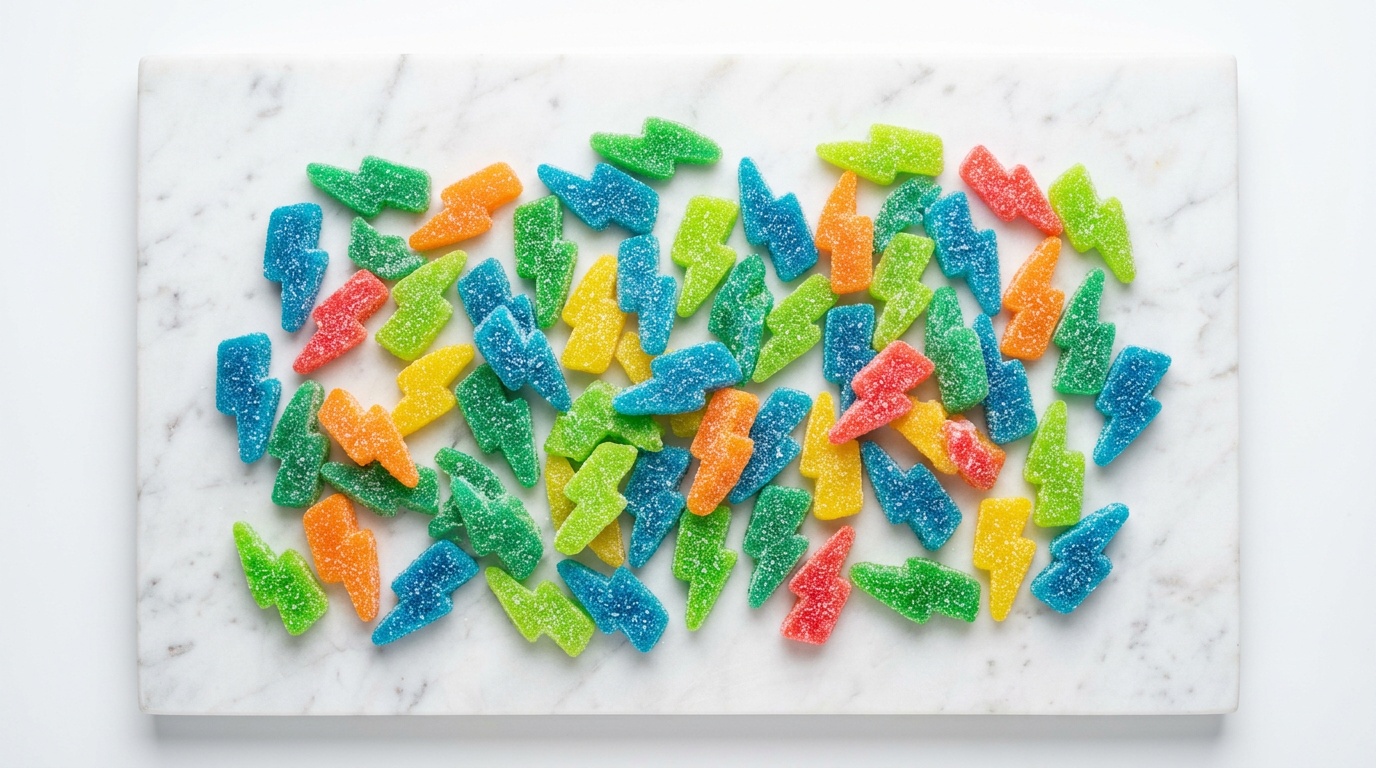
You’re browsing the snack aisle, scrolling TikTok, or checking out Walmart’s candy section, and you see them: a brightly colored bag with lightning bolt gummies inside. Karl Gummies have made a name for themselves in the crowded sour candy market, riding the wave of creator-led food brands and genuine flavor innovation. Whether you’re wondering what they taste like, whether they’re actually good for you, or where to track them down, this guide covers everything worth knowing — from the candy’s origins and ingredients to the manufacturing process that brings each gummy to life.
What Are Karl Gummies?
Karl Gummies are a line of sour gummy candy produced under the Feastables brand, co-created with Karl Jacobs — a content creator and longtime collaborator of Jimmy “MrBeast” Donaldson. They are sold in small resealable bags (typically 3.5 oz / 100g) and are shaped like lightning bolts, a nod to Karl’s on-screen energy and branding.
The candies sit squarely in the sour gummy category: a chewy base coated with a sour punch, built around fruit flavors that hit immediately and linger. What sets them apart from generic store-brand sour gummies is the deliberate ingredient formulation — Feastables marketed karl gummies as a cleaner-label option compared to legacy candy brands, using pectin instead of gelatin and leaning on naturally derived colorants like spirulina.
The Feastables Connection
Feastables launched in 2022 as MrBeast’s entry into the consumer food space, starting with chocolate bars before expanding into gummies. The expansion into the karl gummies line followed the brand’s pattern of collaborating with creators in MrBeast’s extended network — Karl Jacobs being one of the most recognizable faces in that orbit. By associating the product with Karl’s distinct personality, Feastables gave the gummies a built-in fanbase of millions of YouTube and Twitch viewers.
This creator-brand model isn’t unique to Feastables, but the execution here is notably tight. Karl Gummies aren’t a loose licensing deal — Karl Jacobs was involved in flavor development and promotion, which gave the product more authenticity than a typical influencer endorsement.
Product Format and Packaging
Each bag of karl gummies contains approximately 3.5 oz (100g) of candy and is resealable. The lightning bolt shape is consistent across all flavor variants, making the product instantly recognizable on shelves. Packaging uses bright, high-contrast colors that photograph well for social media — a deliberate choice in a marketing era where every unboxing is content.
Bottom line: Karl Gummies are a creator-backed sour gummy line from Feastables, positioned as a better-for-you alternative to conventional sour candy brands, with distinctive lightning bolt shapes and bold fruit flavors.
Flavors and Varieties of Karl Gummies
Karl Gummies launched with a small, focused flavor lineup rather than flooding the market with dozens of options.
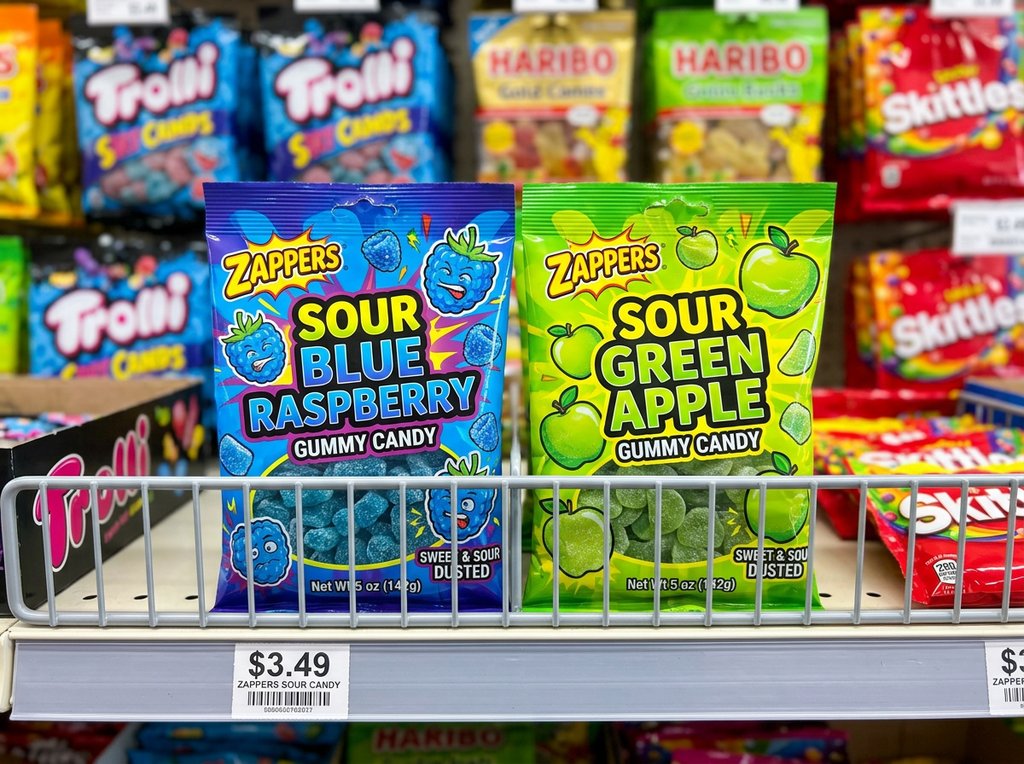
Sour Blue Raspberry
The flagship flavor. Sour Blue Raspberry karl gummies deliver a sharp citric acid punch on first bite that mellows into a classic blue raspberry sweetness. The blue raspberry profile is one of the most popular in American candy culture, and the karl gummies version holds up: tart, fruity, and intensely flavored without tipping into artificial-tasting territory.
The color of the gummy is a deep blue-purple, achieved without artificial dyes — spirulina extract provides the pigment, which is a meaningful distinction for parents reading ingredient labels.
Sour Green Apple
The second major flavor variant. Sour Green Apple karl gummies lean into the tart side of green apple — more sour than sweet, with a citrus-forward profile that fans of sour candy will appreciate. The flavor is distinct from the Blue Raspberry: less candy-sweet, more fruit-forward, making it a good option for people who find blue raspberry flavors cloying.
Limited and Seasonal Variants
Feastables has experimented with limited-edition karl gummies flavors tied to promotional events, Karl’s content drops, and platform-exclusive launches. These variants have shorter shelf lives and are often available only through Feastables’ direct-to-consumer website before appearing (if at all) in retail.
Tracking limited variants is easiest through Karl’s social channels and the Feastables newsletter, where new drops are typically announced 24–48 hours before going live.
| Flavor | Sourness Level | Color Source | Retail Availability |
|---|---|---|---|
| Sour Blue Raspberry | High | Spirulina extract | Walmart, Target, Amazon |
| Sour Green Apple | Very High | Natural plant-based dye | Walmart, Feastables.com |
| Limited Edition Variants | Varies | Varies | Feastables.com only |
Ingredients Breakdown: What’s Inside Karl Gummies?
This is where karl gummies genuinely differentiate from most sour gummy competitors. The ingredient list is unusually transparent and short for a commercial candy product.
Full Ingredients List
The Sour Blue Raspberry karl gummies ingredient panel reads:
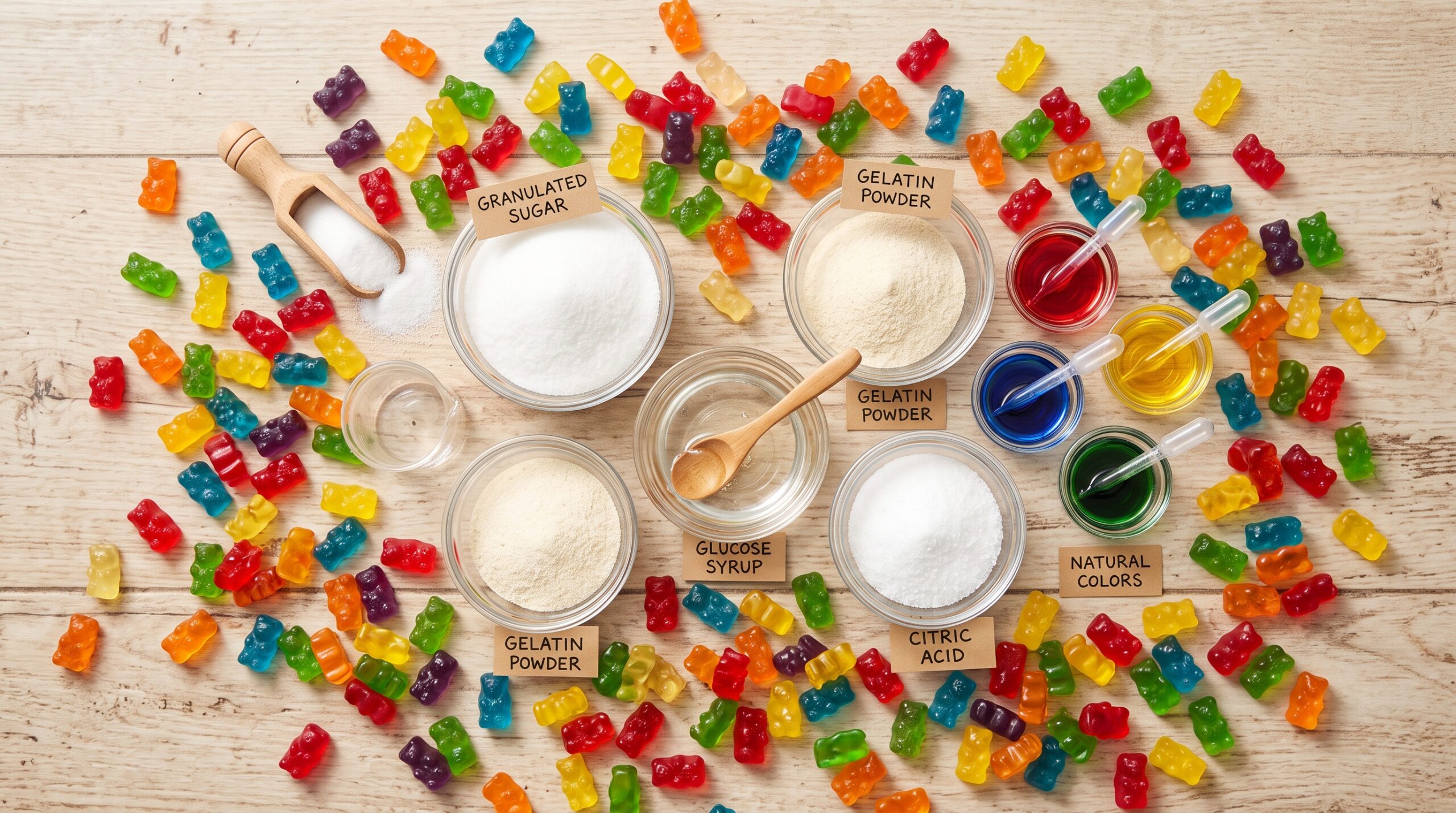
- Glucose — serves as the primary sweetener and softening agent
- Allulose — a naturally occurring low-calorie sweetener found in figs and wheat
- Water — binding agent; the brand literally labels it “just water LOL” on packaging
- Sugar — only 5g per serving, notably lower than most gummy competitors
- Pectin — the gelling agent, derived from citrus fruits and apples (makes them vegan-friendly; no gelatin)
- Citric Acid — the primary sour compound; named for citrus
- Sodium Citrate — enhances the sour note
- Natural Flavor — derived from natural sources (no artificial flavor compounds)
- Fumaric Acid — secondary souring agent
- Lactic Acid — tertiary souring agent plus flavor enhancer
- Color from Spirulina — blue-green pigment from algae, replacing artificial FD&C dyes
The absence of artificial flavors, artificial colors, and gelatin is notable. According to the FDA’s generally recognized as safe (GRAS) database, pectin has a long safety record and is commonly used in premium confectionery as a gelatin alternative.
Why Allulose Matters
Allulose is the most technically interesting ingredient in karl gummies. It’s a rare sugar that occurs naturally in small amounts in certain fruits — figs, raisins, jackfruit. Metabolically, it behaves differently from regular sugar: the body absorbs it in the small intestine but excretes most of it unchanged in urine, so it contributes only about 0.2–0.4 kcal/g compared to regular sugar’s 4 kcal/g. Despite this, allulose provides approximately 70% of the sweetness of sucrose, making it a genuinely effective sweetener at reduced caloric cost.
This is why Feastables can advertise low sugar content without resorting to artificial sweeteners like aspartame or sucralose, which carry their own consumer skepticism. Allulose also has functional baking and confectionery properties — it browns like regular sugar (Maillard reaction), maintains moisture in gummies, and doesn’t crystallize the way sugar can. In the context of karl gummies, allulose helps achieve the chewy, slightly glossy texture that consumers expect while keeping the nutritional profile cleaner.
The Pectin Difference
Most commercial gummy candy (think Haribo, Trolli, or Black Forest) uses gelatin — an animal-derived protein — as the gelling agent. Pectin is entirely plant-derived, which makes karl gummies suitable for vegetarian and many vegan diets. In candy manufacturing, pectin gummies require different processing temperatures and molding techniques compared to gelatin formulations, which adds complexity to production but results in a slightly firmer, more fruit-chew-like texture.
| Ingredient | Role | Notable Feature |
|---|---|---|
| Pectin | Gelling | Vegan; from citrus/apple |
| Allulose | Sweetening | Low caloric impact |
| Spirulina | Coloring | Natural; no FD&C dyes |
| Citric + Fumaric + Lactic Acid | Souring | Triple-acid sour system |
| Natural Flavors | Flavoring | No artificial compounds |
Are Karl Gummies Healthy? Nutritional Analysis
The honest answer: karl gummies are candy, and should be evaluated as candy. But compared to most sour gummy competitors, the nutritional profile is cleaner.
Nutritional Highlights
A standard serving of karl gummies (approximately 4 pieces / ~28g) contains roughly:
– Calories: 70–80 kcal
– Total Sugar: 5g (notably low for gummy candy)
– Added Sugar: ~4g
– Fat: 0g
– Sodium: 10–15mg
– Fiber: 0g
For reference, a standard Haribo Gold-Bears serving (17 pieces / ~30g) contains approximately 110 calories and 21g of sugar. Karl Gummies’ lower sugar count reflects the allulose substitution, which provides sweetness without the same glycemic load.
What Kids Can Eat
Can kids eat karl gummies? Yes, with the same common-sense limits that apply to any candy. The ingredients list has no stimulants, no alcohol derivatives, and no allergens beyond possible trace wheat (from the allulose processing chain — the brand should be contacted directly for celiac-level sensitivity concerns).
The sour acid system (citric + fumaric + lactic) is intense. Young children with sensitivity to very sour flavors may find them overwhelming. And like any sour candy eaten in large quantities, the acid content can contribute to dental enamel erosion if teeth aren’t brushed after consumption — this applies to all sour candies, not just karl gummies.
According to a 2023 study on sour candy and dental health published in research indexed by the National Institutes of Health (NIH), citric and fumaric acid combinations in high concentrations can lower oral pH below 5.5, the threshold at which enamel softening begins. Consuming sour candy with water and rinsing the mouth afterward significantly reduces this risk.
Comparing Karl Gummies to Similar Products
It’s worth contextualizing karl gummies against a few direct competitors in the sour gummy space:
- Trolli Sour Brite Crawlers (30g serving): 110 cal, 22g sugar, artificial colors, gelatin-based
- Haribo Sour Gold-Bears (30g serving): ~110 cal, 21g sugar, artificial colors, gelatin-based
- Black Forest Sour Bears (30g serving): ~100 cal, 18g sugar, no artificial flavors but uses gelatin
- Karl Gummies (28g serving): ~75 cal, 5g sugar, no artificial colors/flavors, pectin-based
The difference is substantial on sugar and significant on additives. For people tracking sugar intake or avoiding specific artificial ingredients, karl gummies are a genuine improvement, not just marketing copy.
The Verdict on Health
Karl Gummies score meaningfully better than most commercial gummy candy on:
– Sugar content (allulose substitution cuts it by ~75% vs. conventional gummies)
– Artificial additives (none)
– Coloring agents (spirulina vs. FD&C dyes)
– Gelatin use (none; suitable for vegetarians)
They score the same as any candy on: they’re still a high-acid, moderate-calorie treat with no dietary fiber or meaningful micronutrients. Eat them because they taste good, not as a health food.
Who Is Karl? The Creator Behind Karl Gummies
Karl Jacobs is an American content creator, streamer, and social media personality born in 2001. He’s best known as a recurring cast member and collaborator in MrBeast’s YouTube productions — appearing in challenge videos, philanthropy projects, and the broader MrBeast Productions ecosystem.
Karl’s Rise in Creator Culture
Karl gained his initial audience through Minecraft content on Twitch and YouTube before becoming closely associated with the MrBeast brand around 2020–2021. His on-camera persona — energetic, comedic, occasionally chaotic — translated well to the viral video format MrBeast perfected. By the time karl gummies launched, Karl had tens of millions of followers across platforms, with a particularly strong following among Gen Z viewers aged 13–24.
The key dynamic: Karl isn’t just a face on packaging. He’s part of the core creative community that Feastables draws on for product development and launch events. When karl gummies dropped, Karl promoted them through genuine content — taste tests, pranks, and challenge formats — rather than straight advertising, which resonated differently with his audience. Fans who watched Karl on screen felt a real ownership stake in the product’s success in a way that traditional celebrity endorsements rarely achieve.
This creator-authenticity dynamic is one reason karl gummies moved significant volume on launch day: not just pre-existing candy consumers picking a new product, but an entire fanbase treating the purchase as a form of participation in Karl’s world.
Are Karl Gummies Discontinued?
This is one of the most searched questions related to the product. As of the time of writing, karl gummies are not discontinued, though availability has been inconsistent across retail channels. The product has gone through inventory cycles where it was temporarily out of stock at major retailers (Walmart, Target), leading to “discontinued” rumors that spread on social media.
The best way to check current availability: Feastables.com and Amazon both show real-time inventory status. Retail stockouts are common for creator-branded candy during promotional windows and after social media spikes in demand.
Where to Buy Karl Gummies
Karl Gummies are available through several channels, each with different availability, pricing, and reliability.
Major Retailers
- Walmart — carries Sour Blue Raspberry and occasionally Sour Green Apple in the candy aisle; pricing around $2.98–$3.49 per bag
- Target — selected stores carry karl gummies; check Target’s online store locator for local availability
- Amazon — reliable stock for both core flavors; Prime shipping makes it a practical choice for bulk buying or for areas without retail coverage
Direct from Feastables
Feastables.com is the most reliable source for limited-edition karl gummies variants and for guaranteed availability of core flavors. Direct orders also sometimes include bundle deals or exclusive flavors not sold at retail.
Buying in Bulk
For consumers who enjoy karl gummies regularly, bulk purchasing through Amazon is the most cost-effective approach. Multi-bag bundles reduce per-ounce cost significantly compared to single-bag retail pricing. Wholesale quantities for small businesses (candy shops, subscription boxes, event planners) are typically handled through Feastables’ wholesale or distribution inquiry process directly.
Subscription-box candy services sometimes include karl gummies in their rotating selections. These boxes can be a good way to try limited-edition flavors without committing to a full bag at retail price — though availability depends on the box provider’s supply agreements.
Pricing Range
Current retail pricing for karl gummies:
– Individual bag (3.5 oz): $2.99–$3.99 at physical retail
– Amazon individual: ~$3.50–$4.50 depending on seller
– Amazon multi-pack (4–6 bags): ~$14–$20 (better per-bag economics)
– Feastables.com: Variable; often bundle deals with other Feastables products
Pricing has been relatively stable since launch, with occasional promotional pricing at Walmart during candy aisle resets or holiday seasons.
Regional Availability
Karl Gummies distribution is strongest in the continental United States. International availability is limited — some countries have Feastables products through import-focused confectionery retailers, but shipping costs make direct-from-Feastables international orders less practical. If you’re outside the US and searching for “karl gummies near me,” your best bet is specialty import candy shops or Amazon’s international shipping options. The UK, Canada, and Australia have seen the most consistent retail availability outside the US, driven by Feastables’ expansion into those markets.
How Karl Gummies Are Made: The Manufacturing Process
Understanding how gummy candy is manufactured helps explain what makes karl gummies distinct — and why pectin-based gummies behave differently from their gelatin counterparts.
Step 1: Cooking the Base
Gummy production starts with a cooked syrup: glucose, allulose, and sugar are dissolved in water and brought to a specific temperature — typically 110–115°C for pectin gummies. The temperature determines final texture. Too low and the gummies are too soft; too high and they become brittle.
Pectin gels at lower temperatures than gelatin and requires precise pH control (typically pH 3.0–3.5 for sour varieties). This is why the acid system in karl gummies — citric, fumaric, lactic — isn’t just flavor: it’s also functional chemistry needed to activate the pectin gel.
Step 2: Flavoring and Coloring
After cooking, natural flavors and spirulina extract are mixed into the base. Timing matters: spirulina degrades at very high temperatures, so it’s added after the syrup has cooled slightly. Natural flavors are volatile — adding them at controlled temperatures preserves aromatic integrity better than high-heat addition.
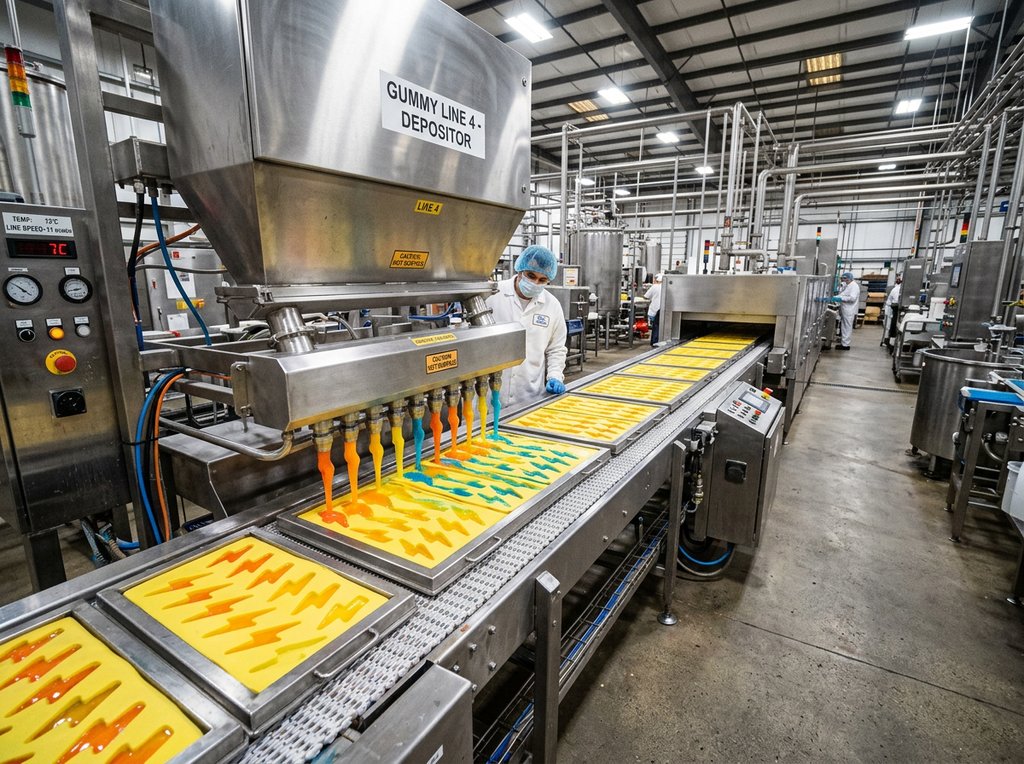
Step 3: Depositing into Molds
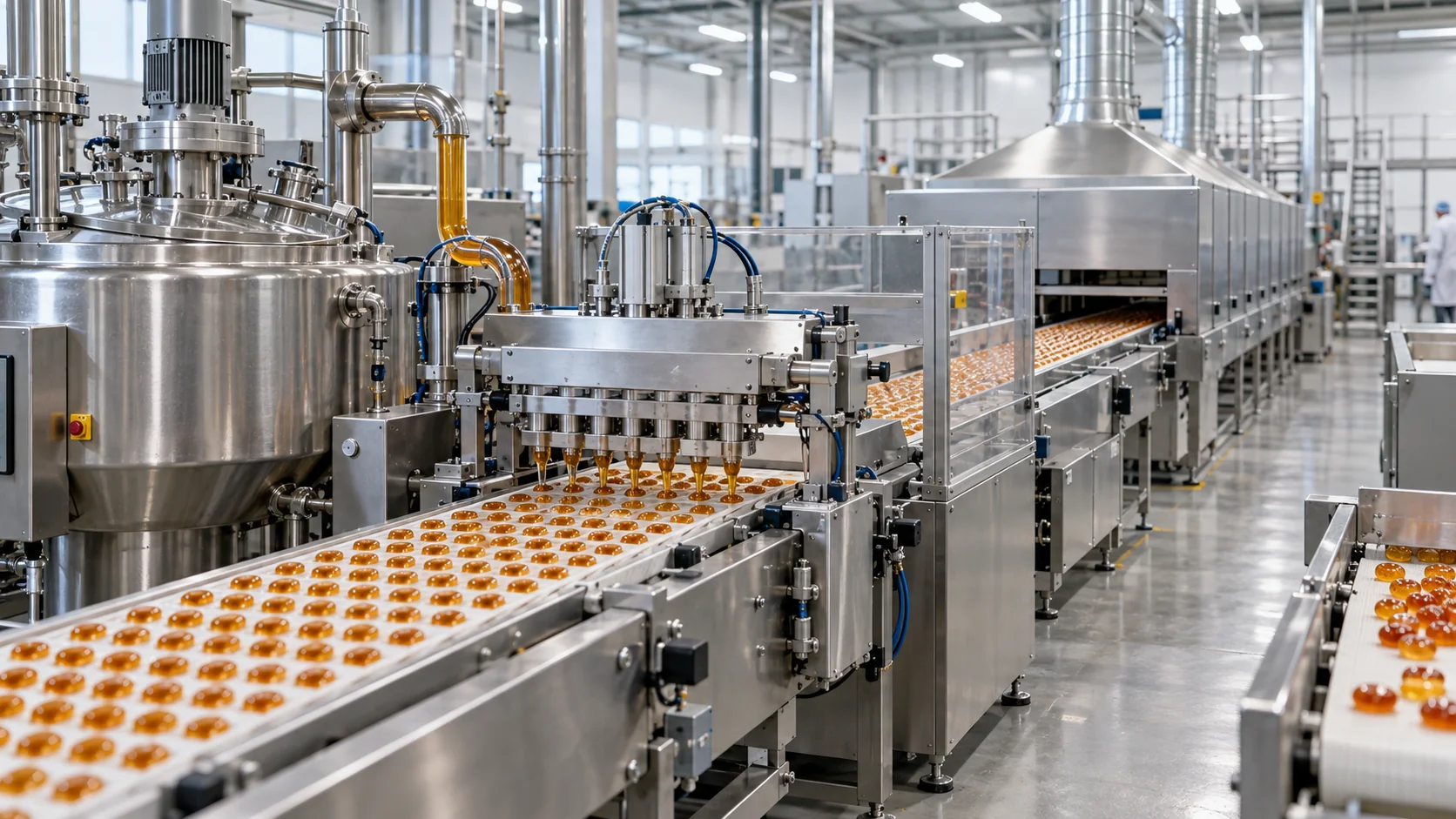
The liquid gummy mass is deposited into starch molds or silicone molds in the lightning bolt shape. High-volume gummy production uses continuous starch-mogul lines where starch trays are automatically filled, cooled, and demoulded. Pectin gummies require longer set times than gelatin gummies — typically 24–48 hours at controlled humidity.
Step 4: Drying and Tumbling
After demolding, the gummies go through a conditioning process to reach the target moisture content and texture. Too much moisture makes them sticky; too little makes them too firm. The sour coating — the dusting of citric acid, fumaric acid, and sugar on the outside — is applied during a tumbling step where the gummies are coated evenly in rotating drums.
Step 5: Packaging
Finished karl gummies are weighed, inspected, and sealed in the resealable bags. The nitrogen flush step (common in premium candy packaging) displaces oxygen to extend shelf life without preservatives.
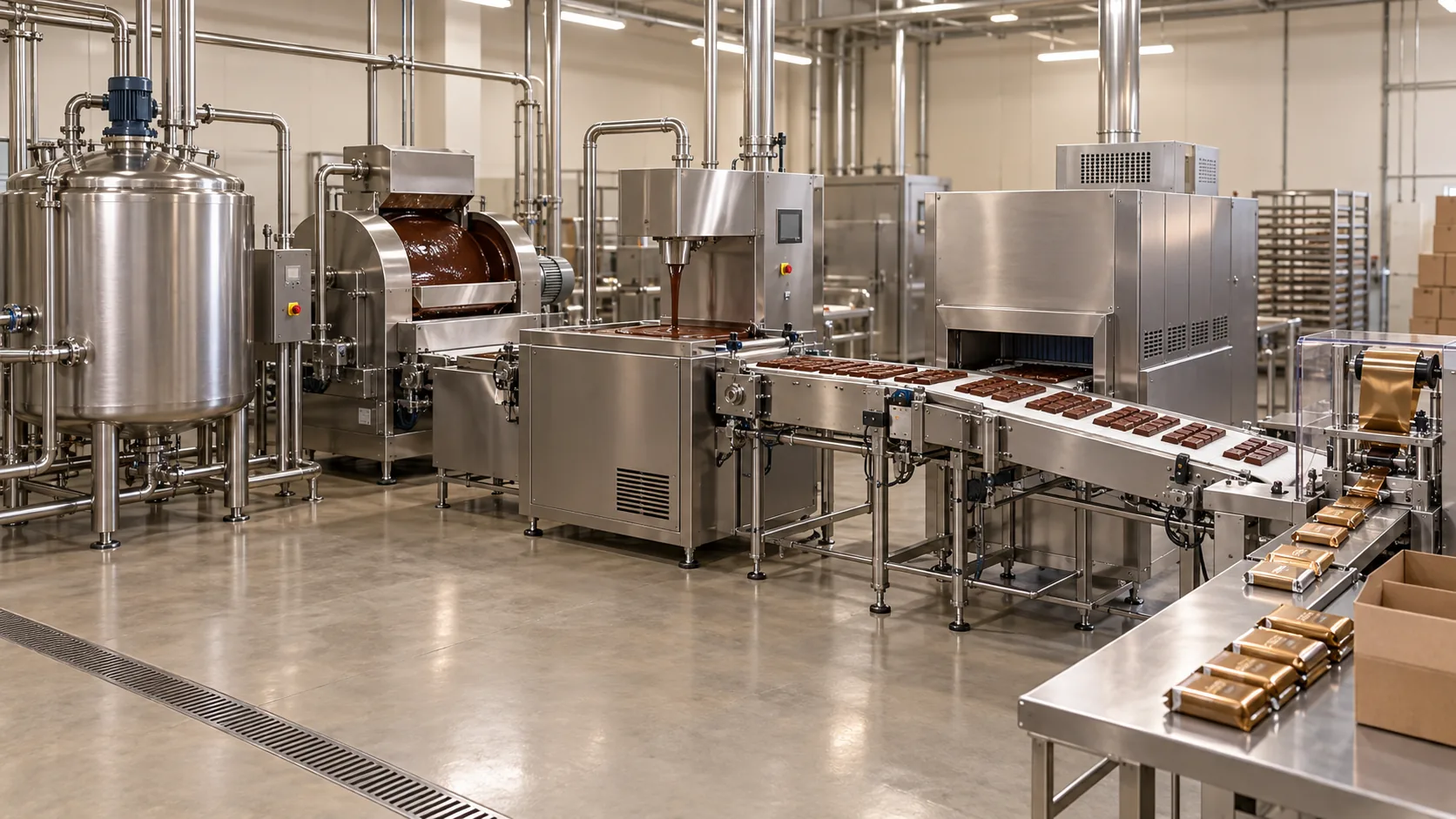
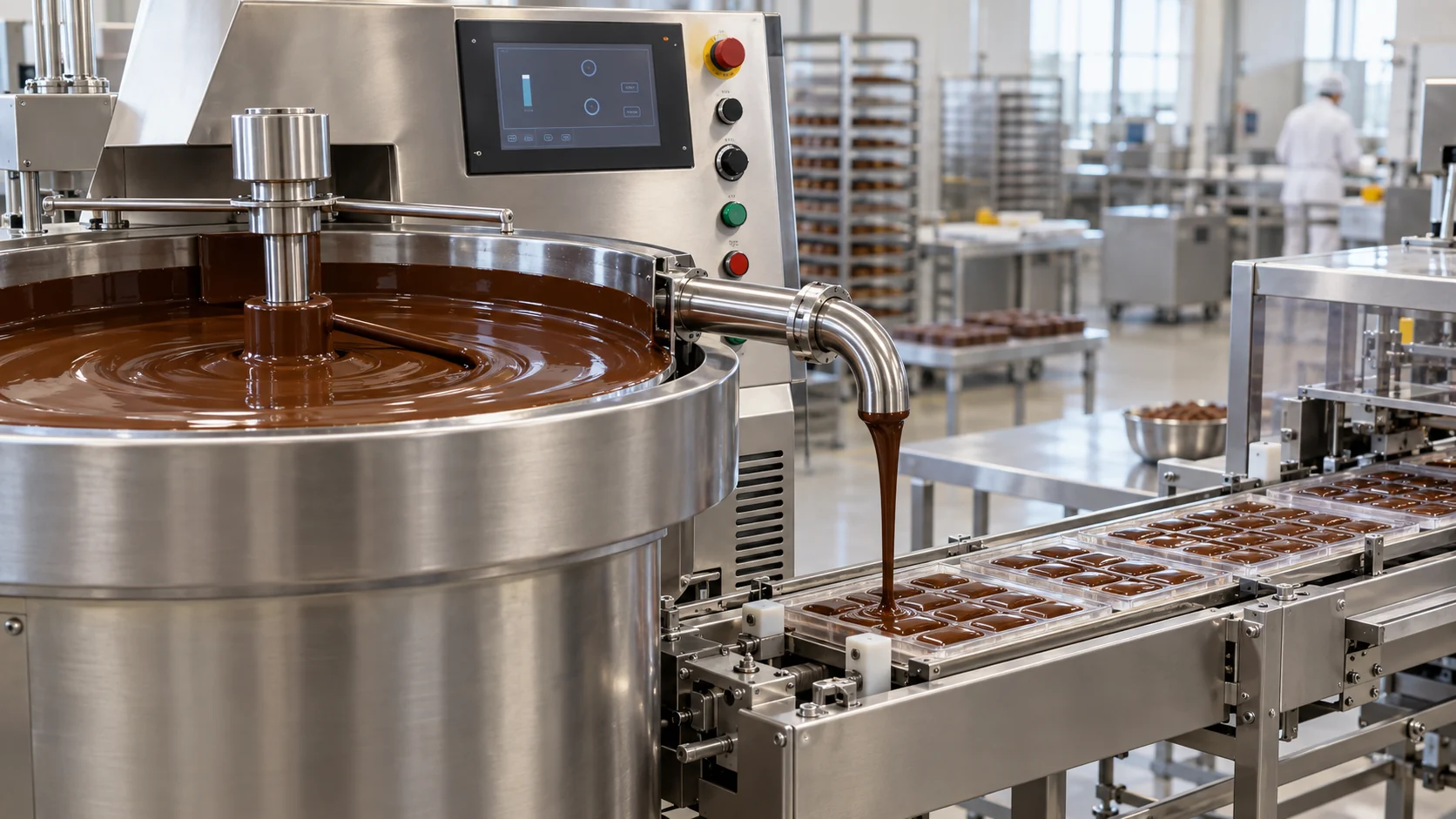
Equipment used in professional gummy lines — from depositors to cooling tunnels to coating drums — can be found through industrial confectionery equipment suppliers and is the same class of machinery used in large-scale confectionery manufacturing globally.
| Production Stage | Key Variable | Karl Gummies Specifics |
|---|---|---|
| Cooking | Temperature (110–115°C) | pH 3.0–3.5 for pectin activation |
| Coloring | Addition temperature | Spirulina added post-cool |
| Molding | Set time | 24–48 hrs (longer than gelatin) |
| Sour Coating | Tumbler uniformity | Triple acid blend (citric/fumaric/lactic) |
| Packaging | Atmosphere | Nitrogen flush, resealable bag |
Future Trends in Celebrity and Creator-Brand Gummy Candy
Karl Gummies exist at the intersection of two growing trends: creator-economy food brands and better-for-you confectionery.
The Creator-Brand Explosion
The 2020s have seen a proliferation of creator-founded or creator-endorsed food brands — from MrBeast Burger and Feastables to Prime Hydration (Logan Paul/KSI), Lunchly, and dozens of smaller influencer candy lines. This trend shows no signs of reversing. According to a YouTube Creators Academy overview of the creator economy, top creators now reach audiences that dwarf traditional broadcast media, making direct-to-consumer food brands a logical monetization path.
What separates lasting creator food brands from short-lived ones is product quality. Karl Gummies have benefited from Feastables’ real investment in formulation — the allulose-pectin approach wasn’t just a marketing angle; it’s a structurally different product from conventional sour gummies. Brands that rely purely on creator celebrity without product differentiation tend to fade after the initial hype cycle.
Clean-Label Confectionery
The broader trend in candy manufacturing is toward cleaner ingredient lists — fewer artificial dyes, less refined sugar, more plant-based gelling agents. Karl Gummies adopted this trend early, and we expect to see more sour gummy products follow with:
– Pectin or agar-agar replacing gelatin
– Natural colorants (spirulina, beet, turmeric) replacing FD&C dyes
– Low-glycemic sweeteners (allulose, monk fruit, erythritol) reducing sugar content
– Transparent ingredient labeling as a marketing tool
– QR codes linking to full supply chain sourcing information
By 2026–2027, clean-label gummy candy is projected to be the fastest-growing segment of the premium confectionery market, driven by Gen Z and millennial purchasing behavior that prioritizes ingredient transparency. For confectionery equipment manufacturers and candy producers, this shift means retooling production lines that were optimized for gelatin-based, high-sugar formulations toward pectin-compatible processing parameters — different temperatures, longer set times, and acid-activation steps that require more precise pH monitoring throughout the cooking stage.
Karl Gummies serve as a useful commercial proof-of-concept that clean-label sour gummies can achieve mainstream retail presence and strong consumer loyalty at the same time. The brand’s success has prompted several legacy candy companies to explore similar reformulations for their sour gummy lines.
Technology Innovation in Gummy Manufacturing
The candy machinery behind products like karl gummies has evolved significantly. Modern depositing systems can handle pectin formulations with the temperature sensitivity required for natural colorants. Automated pH monitoring during cooking, inline viscosity sensors, and precision sour-coating systems (to achieve even triple-acid coverage) are now standard in premium gummy production facilities. As demand for clean-label products grows, investment in this equipment category is accelerating globally.
Functional Additions
The next phase for brands like Feastables may be functional gummies — adding ingredients like vitamins, electrolytes, or adaptogens to the gummy format. The challenge: these additions complicate the flavor profile and require additional regulatory consideration. Karl Gummies in their current form are a consumer treat, not a supplement, and that positioning has served them well. Whether future versions add functional ingredients is an open question.
FAQ: Everything You Need to Know About Karl Gummies
Are Karl Gummies healthy?
They’re healthier than most sour gummy alternatives — lower sugar (5g/serving via allulose), no artificial colors or flavors, pectin-based instead of gelatin. But they’re still candy. Eat them as a treat, not a nutritional product.
Who is Karl from Karl Gummies?
Karl Jacobs — a content creator and MrBeast collaborator with tens of millions of followers across YouTube, Twitch, and other platforms. He co-created the gummies with Feastables as part of the brand’s creator-collaboration product line.
Can kids eat Karl Gummies?
Yes, with standard candy moderation. No allergens, stimulants, or artificial additives. The intense sour profile may be too strong for young children. Rinse teeth with water after eating, as with any sour candy, to protect enamel.
Are Karl Gummies discontinued?
No — as of the latest information, karl gummies are still in production and available at major retailers (Walmart, Target, Amazon) and via Feastables.com. Periodic out-of-stock situations have fueled discontinued rumors, but the product remains active.
Where can I buy Karl Gummies near me?
Walmart and Target carry them in physical stores across the US. Use each retailer’s store-locator/inventory tool online to confirm local availability. Amazon ships nationally. Feastables.com has the most reliable direct stock.
What flavor are Karl Gummies?
The two main flavors are Sour Blue Raspberry and Sour Green Apple. Both use a triple-acid sour system (citric, fumaric, lactic acid) for a layered sourness. Limited-edition flavors appear periodically through Feastables’ DTC channel.
Are Karl Gummies vegan?
Yes. The gelling agent is pectin (plant-derived from citrus and apples), not gelatin. Colorants are spirulina-based (algae). Natural flavors are from natural sources. No animal-derived ingredients are listed on the label.
Conclusion
Karl Gummies punch above their weight in a market full of ordinary sour candy. The combination of a cleaner ingredient profile (allulose, pectin, spirulina), a genuinely sour flavor system, and authentic creator backing has made karl gummies a standout in the Feastables lineup. Whether you’re a Karl Jacobs fan, a sour candy enthusiast, or just curious about what differentiates premium creator-brand candy from legacy alternatives, these gummies deliver on their core promise.
The formulation choices behind karl gummies — plant-based gelling, reduced-sugar sweetening with allulose, natural colorants — reflect a wider movement in confectionery that values both taste and ingredient transparency. Consumers increasingly read labels, and brands that make deliberate choices on every ingredient line are earning stronger loyalty as a result. Karl Gummies are a clear example of this dynamic playing out in the mainstream candy market, not just in premium health food channels.
For candy industry professionals and confectionery manufacturers interested in the formulation approaches behind products like karl gummies — pectin gelling, allulose sweetening, triple-acid sour systems — the underlying technology reflects broader industry shifts toward clean-label, plant-based gummy production that we’ll continue seeing across the confectionery sector through 2026 and beyond.
Try the Sour Blue Raspberry first. Then decide whether the Sour Green Apple is worth the debate.
Related Articles
- What Makes Sour Candy Sour? The Acids, Chemistry, and Production Secrets
- Sour Tube Candy: What It Is, Flavors, How It’s Made & Why You Can’t Stop
- Japanese Gummies: The Complete Guide to Japan’s World-Famous Chewy Candy
- Sour Spaghetti Candy: The Complete Guide to This Tangy Gummy Treat
- Gummy Candy Production Line
- Starch-Free Gummy Depositing Machine
- Are Skittles Gluten Free? Complete Guide 2026