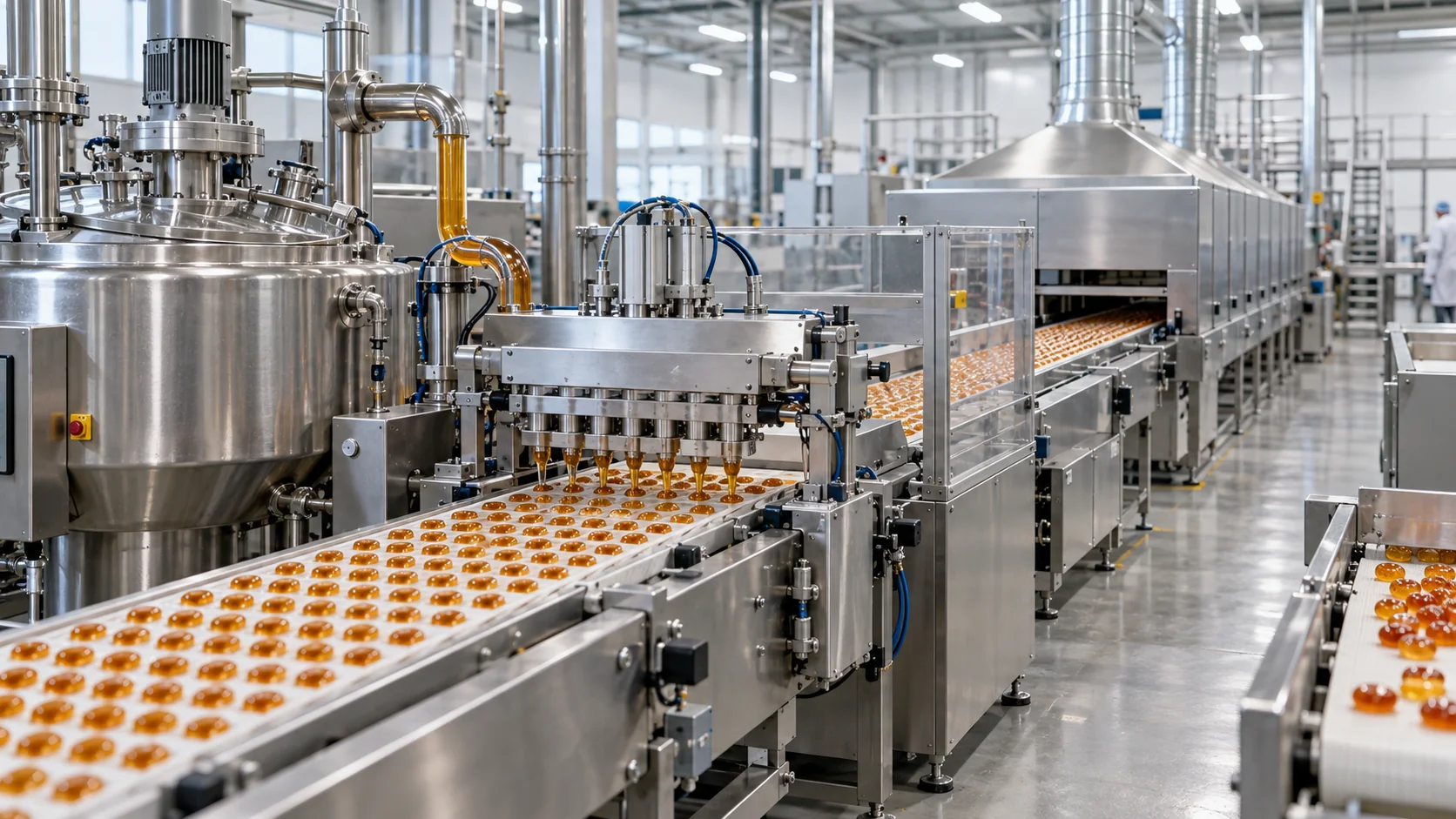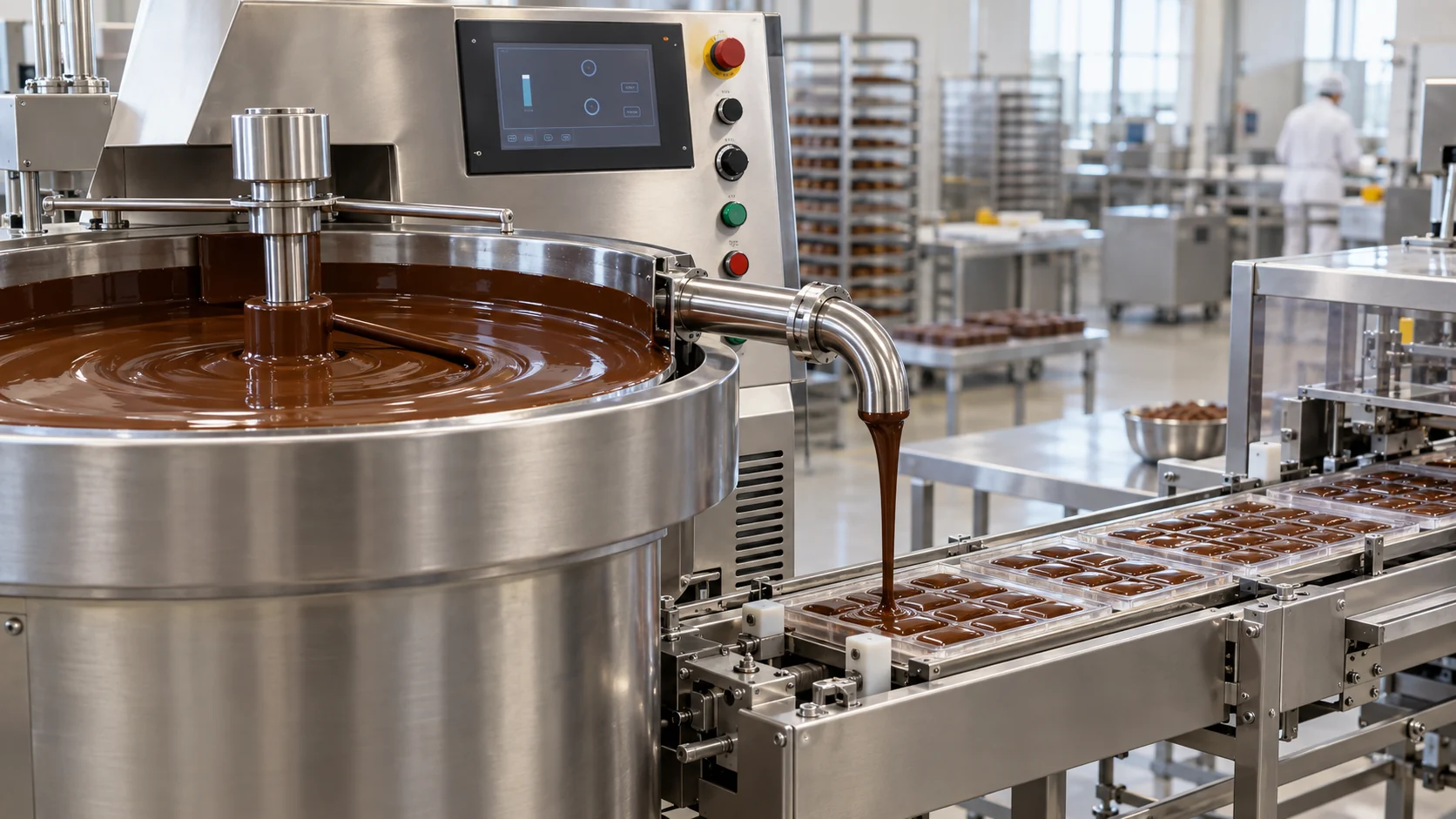
Short answer: A chocolate making machine usually means a connected set of equipment, not one universal machine. A commercial route may include melting and holding, refining or conching, tempering, molding or enrobing, cooling, inspection, and packing. The right configuration depends on the chocolate format, recipe behavior, target saleable output, piece dimensions, utilities, and downstream package.
This guide is for chocolate manufacturers, food-plant engineers, procurement teams, bakeries, confectionery start-ups, and OEM project managers comparing a chocolate making machine or a complete production line. It focuses on the information that makes supplier quotations comparable and keeps one stage from becoming the bottleneck for the next.
What is a chocolate making machine?
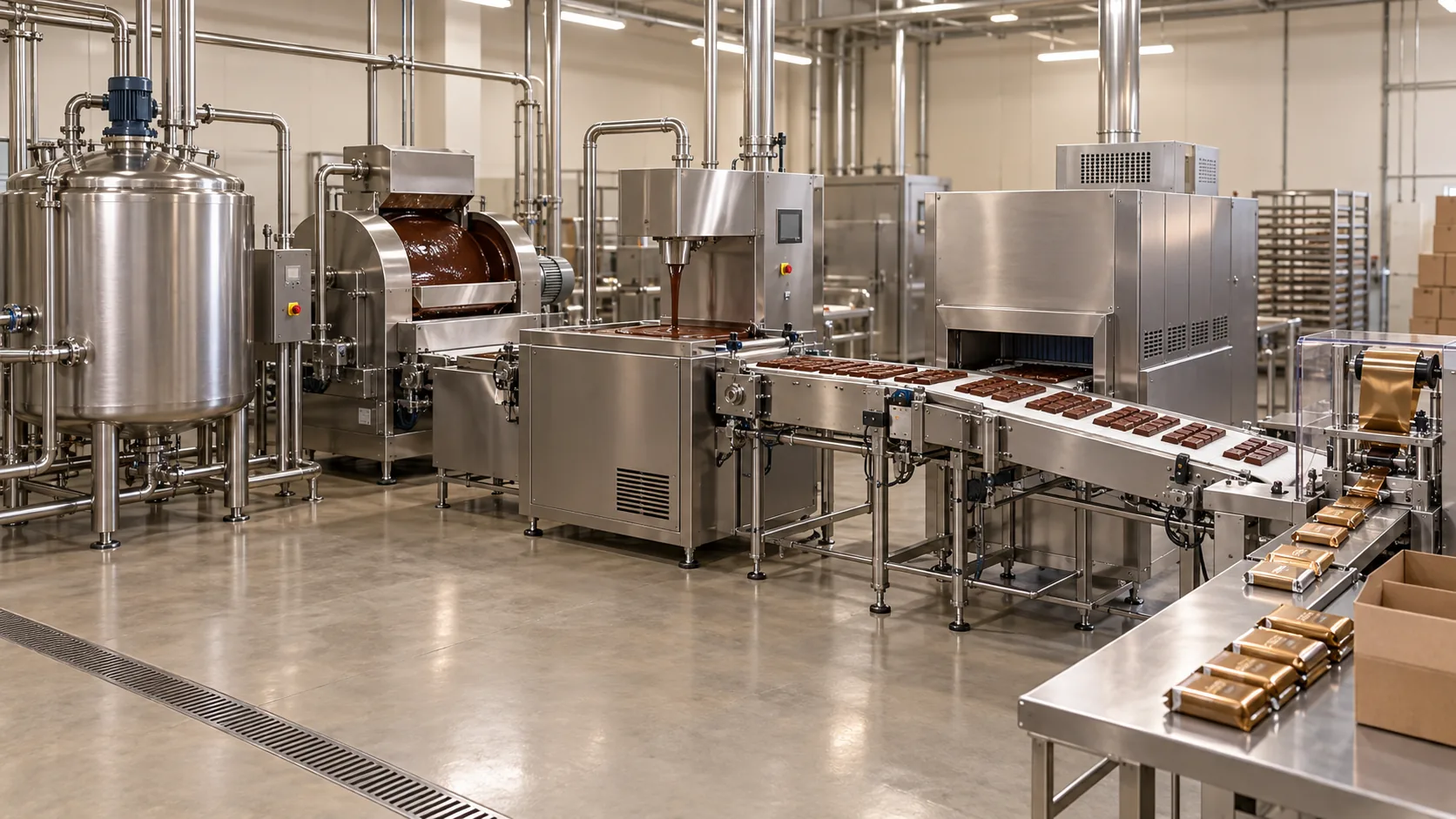
The phrase can describe a single chocolate machine, such as a tempering unit or molding machine, or a group of machines that turns a prepared chocolate mass into a saleable product. That distinction is important during purchasing. A machine may perform its own task correctly and still be a poor fit if the incoming temperature, viscosity, product spacing, transfer height, or belt speed does not match the following stage.
Start with the job of each stage. Then ask the supplier to state which equipment is included, which interfaces are excluded, and what test condition supports the quoted output.
| Process stage | Typical job | Buyer question |
|---|---|---|
| Melting and holding | Bring chocolate to a workable state and keep it moving at a controlled condition. | What temperature, viscosity, tank volume, and transfer method are required? |
| Refining or conching | Develop the required particle feel, flow behavior, and recipe uniformity where the formula needs it. | Does the recipe need refining, conching, or both, and what batch or feed pattern applies? |
| Tempering | Prepare the chocolate for stable forming, coating, gloss, and snap according to the product brief. | Is the process batch or continuous, and how will the working condition be monitored? |
| Forming | Deposit into molds, create a shell, coat a center, or form drops, chips, or another shape. | What piece weight, dimensions, cavity pattern, inclusions, and change parts are needed? |
| Cooling and conditioning | Set the product so it can be demolded, conveyed, inspected, and packed without distortion. | What cooling length, air condition, belt width, and residence time are needed? |
| Inspection and packing | Check the piece, remove rejects, wrap or bag the product, and move it into cases or bulk packs. | What spacing, film, pack count, orientation, and handoff condition does the packer require? |
Choose the machine by chocolate format
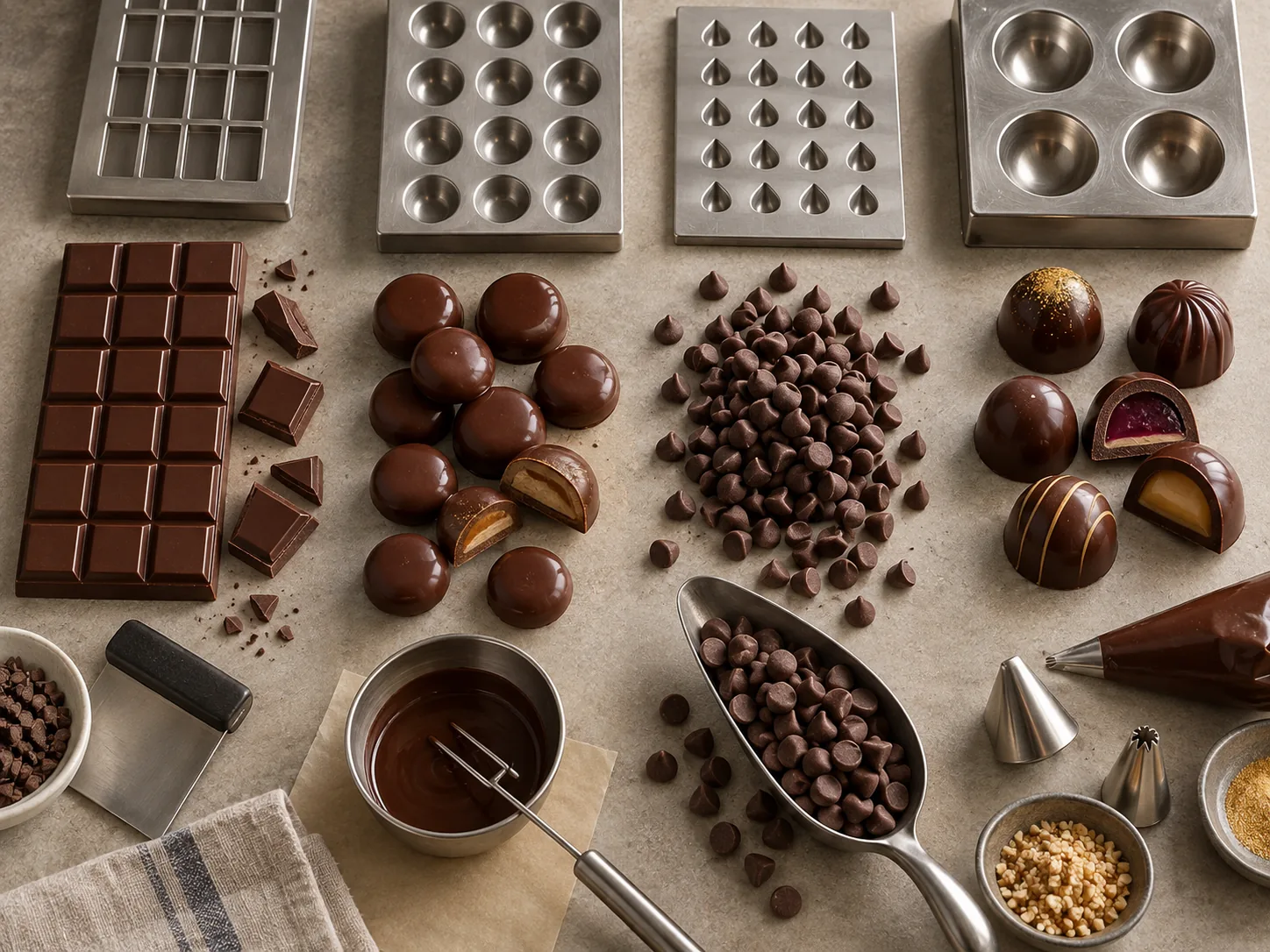
A reliable chocolate machine brief describes the finished product before it names the machine. Include a product drawing or sample when possible. The same upstream chocolate mass can become a bar, a shell, a coated center, a drop, or a filled piece, but each route needs different tooling, handling, and inspection decisions.
Molded bars and solid pieces
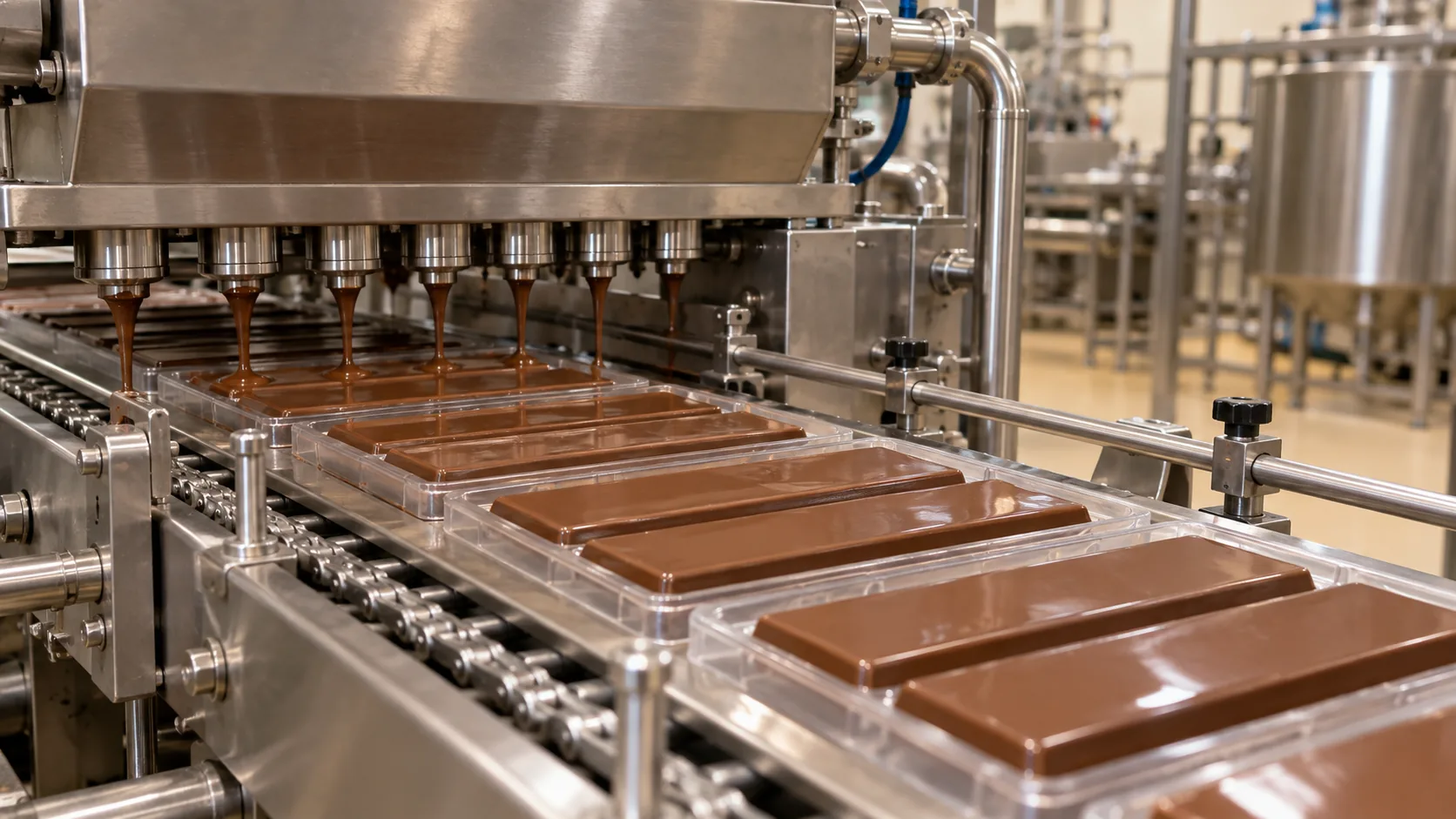
Molded bars and solid pieces generally need a controlled feed, a depositor or filling head, suitable molds, vibration or leveling where required, cooling, demolding, and a transfer to packing. Piece geometry affects cavity volume, mold spacing, belt width, and the time the product must remain stable before release.
For a bar project, specify the target piece weight, length, width, thickness, surface pattern, inclusion type, acceptable variation, and package. Ask whether the mold format, depositor, cooling section, and demolding method are part of one tested route.
Coated centers and enrobed products
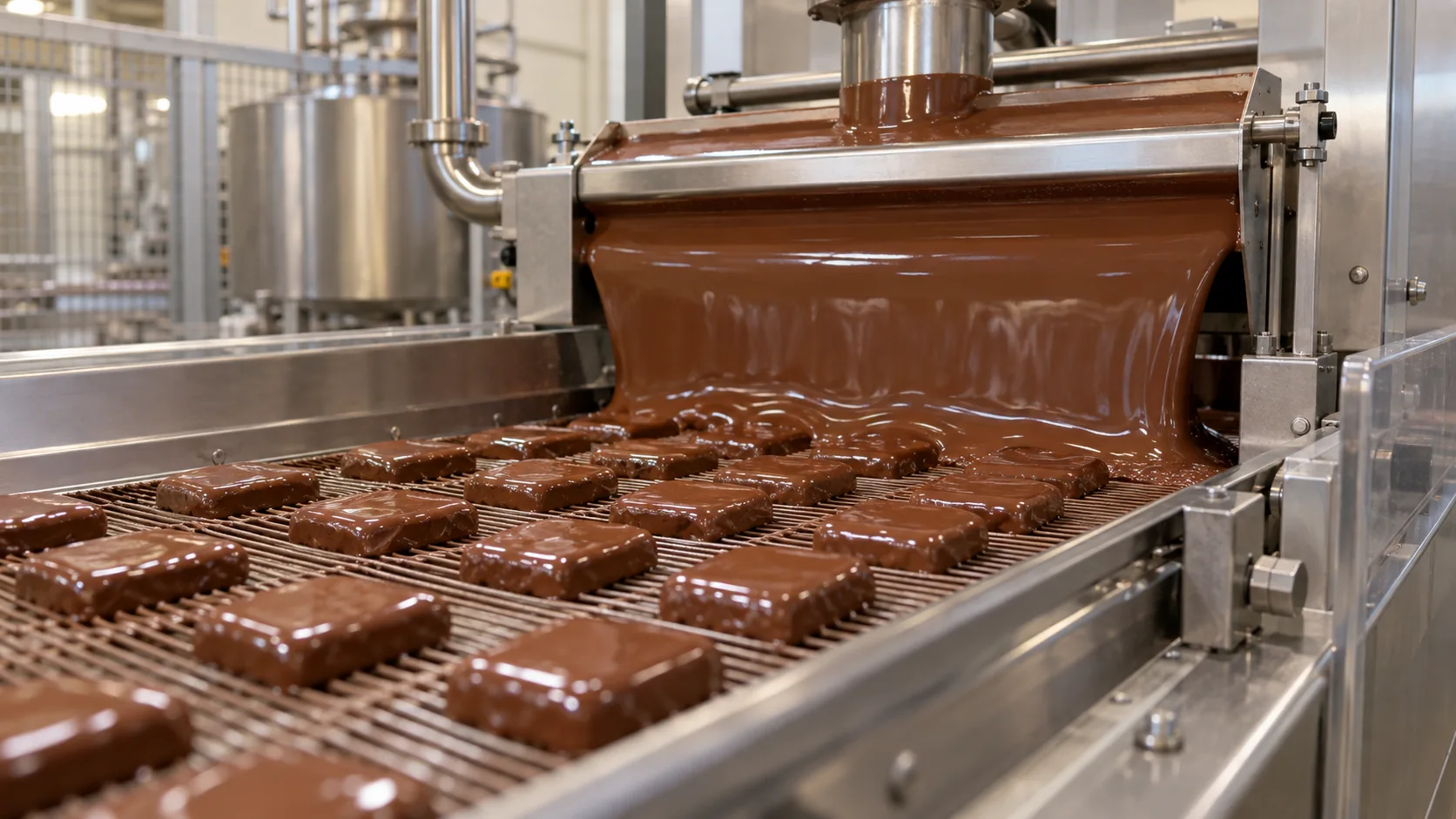
Enrobed products begin with a center that must arrive with a suitable shape, temperature, and spacing. The enrober then applies a controlled chocolate curtain or coating route before excess chocolate is removed and the product enters cooling. The center can be a biscuit, wafer, confectionery piece, or another food product; its moisture, surface, and dimensions affect coating behavior.
Describe the center, desired coating coverage, bottoming requirement, decoration, belt width, and package. A line that produces a good coating at the enrober inlet can still create rejects if the cooling tunnel, product spacing, or wrapper is not matched.
Chocolate chips and drops
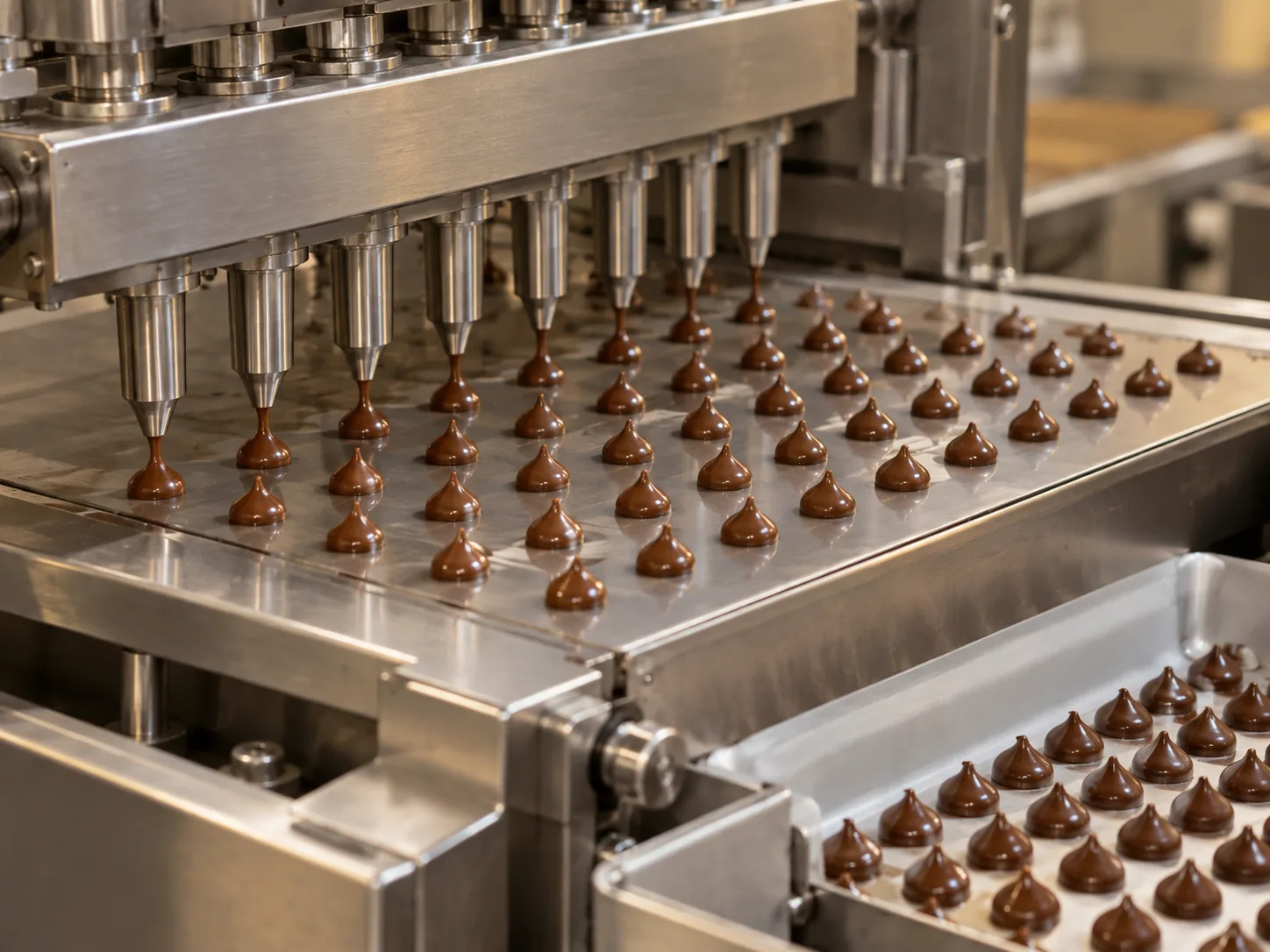
Chips and drops require repeatable depositing, clean separation, controlled cooling, and collection or packing. The nozzle pattern, drop size, belt condition, cooling surface, and collection method influence piece weight and shape. If the chips will be baked into another product, the required dimensions and melt behavior should be written into the brief.
Do not use a generic pieces-per-minute number without stating the drop weight and spacing. A faster depositor can create a downstream collection problem if the cooling surface cannot stabilize the pieces or if the package cannot accept the incoming rate.
Filled, layered, and decorated pieces
Filled or layered pieces add another dosing and timing problem. The shell, center, closing layer, decoration, and cooling stages must be synchronized. A recipe with nuts, crisp inclusions, fruit preparations, or a liquid center also changes the cleaning boundary and the selection of pumps, nozzles, seals, and contact parts.
Send the supplier the center type, target center percentage if known, shell thickness, piece dimensions, inclusion size, decoration method, and whether the product must be demolded or wrapped individually. Ask which parts are dedicated to the product and which are intended for changeover.
What are the main types of chocolate making machines?
A complete chocolate route is easier to purchase when the major machine types are treated as linked controls rather than isolated catalog items.
Melting and holding tanks
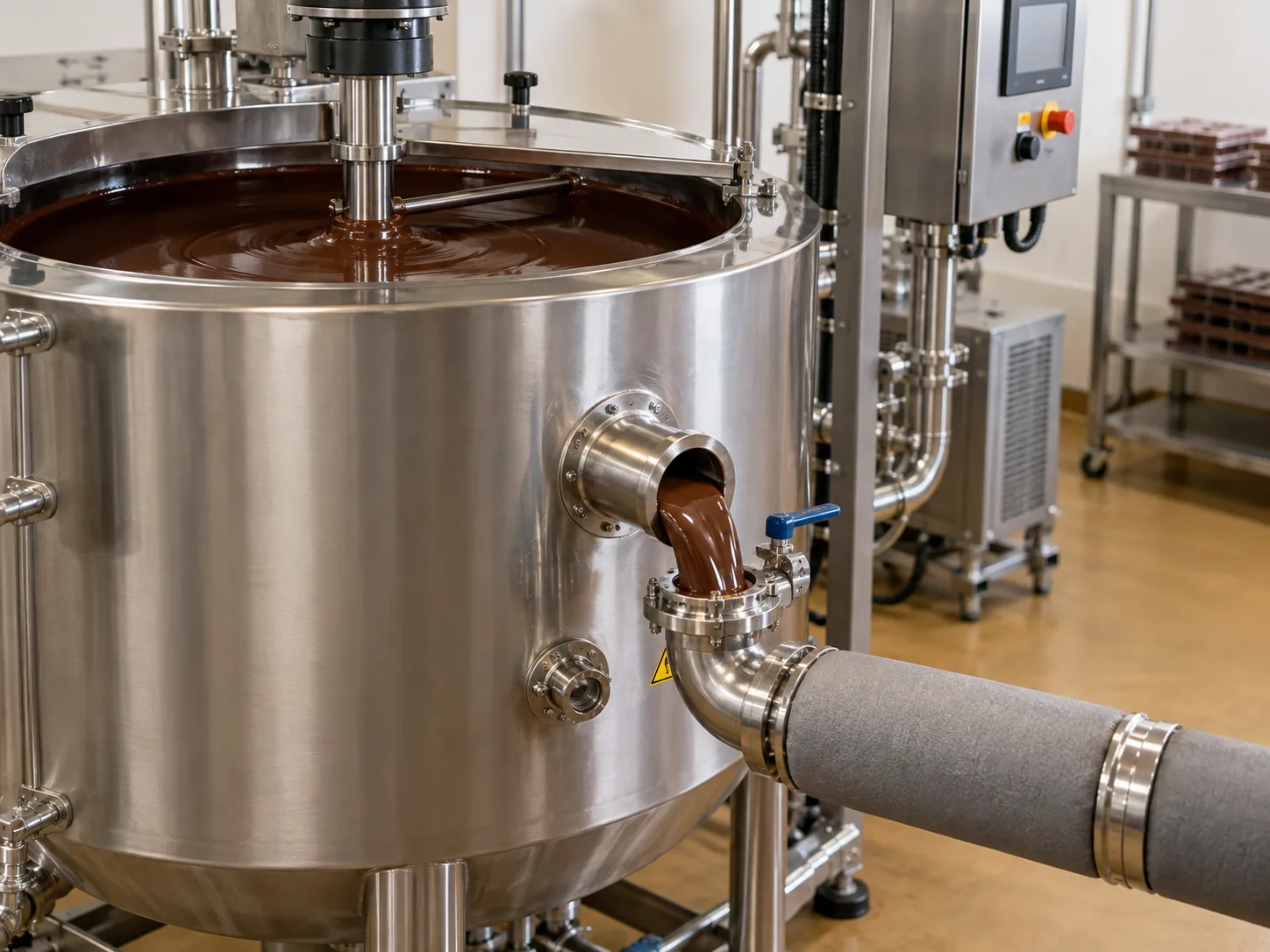
A melting and holding tank brings solid chocolate into a usable flow condition and keeps it available to the next stage. The specification should cover working volume, heating method, agitation, insulation, outlet arrangement, pump or transfer connection, cleanout access, and the working range required by the recipe.
Tank volume is not the same as hourly output. A tank can buffer a process, but the line still needs a matched feed rate and a transfer route that avoids unwanted cooling, air inclusion, or long residence time.
Refiners and conches
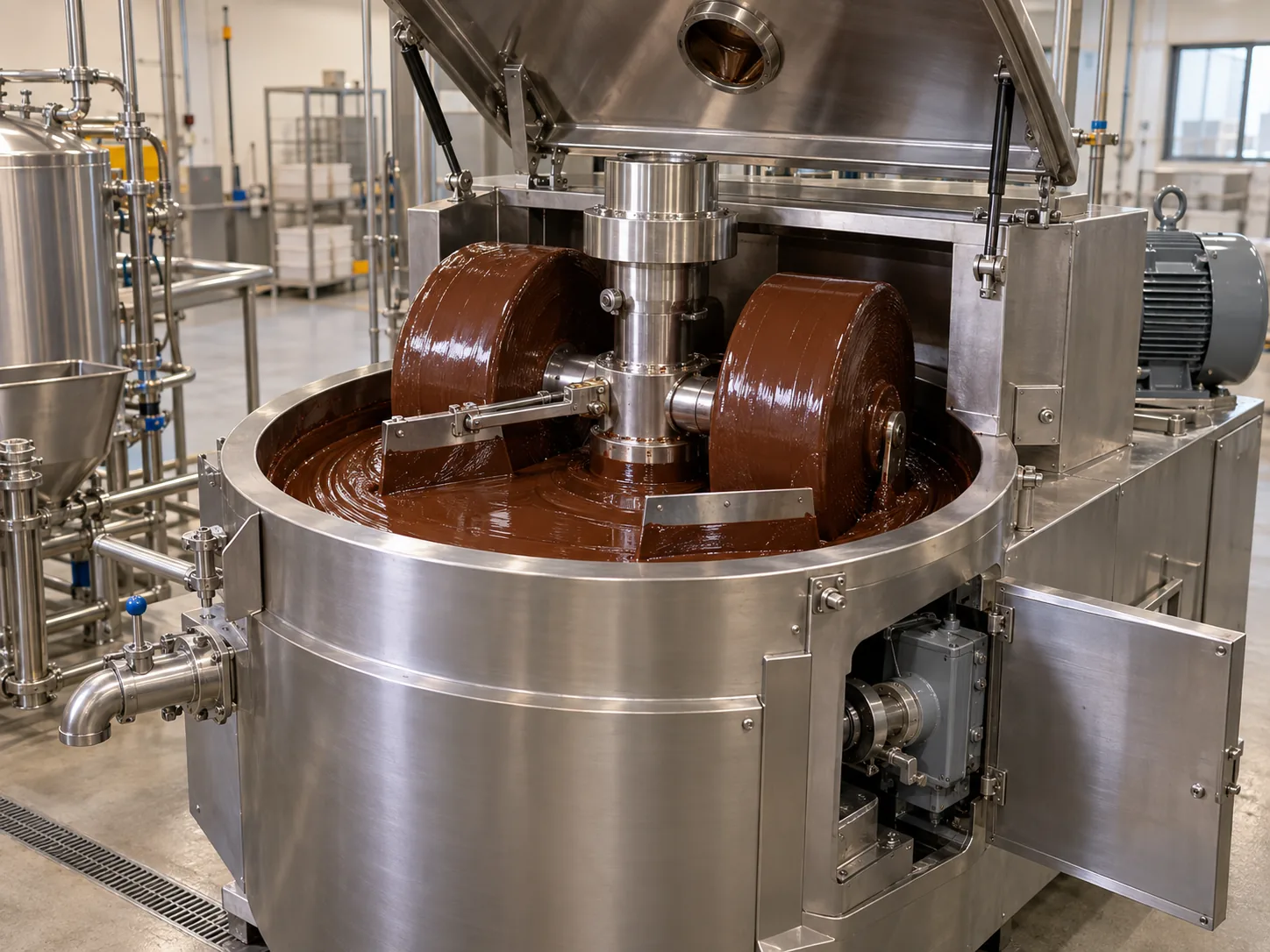
A refiner or conche may be used when the formula and target texture require a controlled treatment of the chocolate mass. The buyer should define the recipe, particle or texture objective, batch pattern, ingredient addition sequence, temperature control, discharge condition, and cleaning method.
Do not assume that every chocolate product needs the same refining or conching route. The existing bean-to-bar chocolate manufacturing guide provides process background, while this article uses the process to explain equipment decisions.
Tempering machines
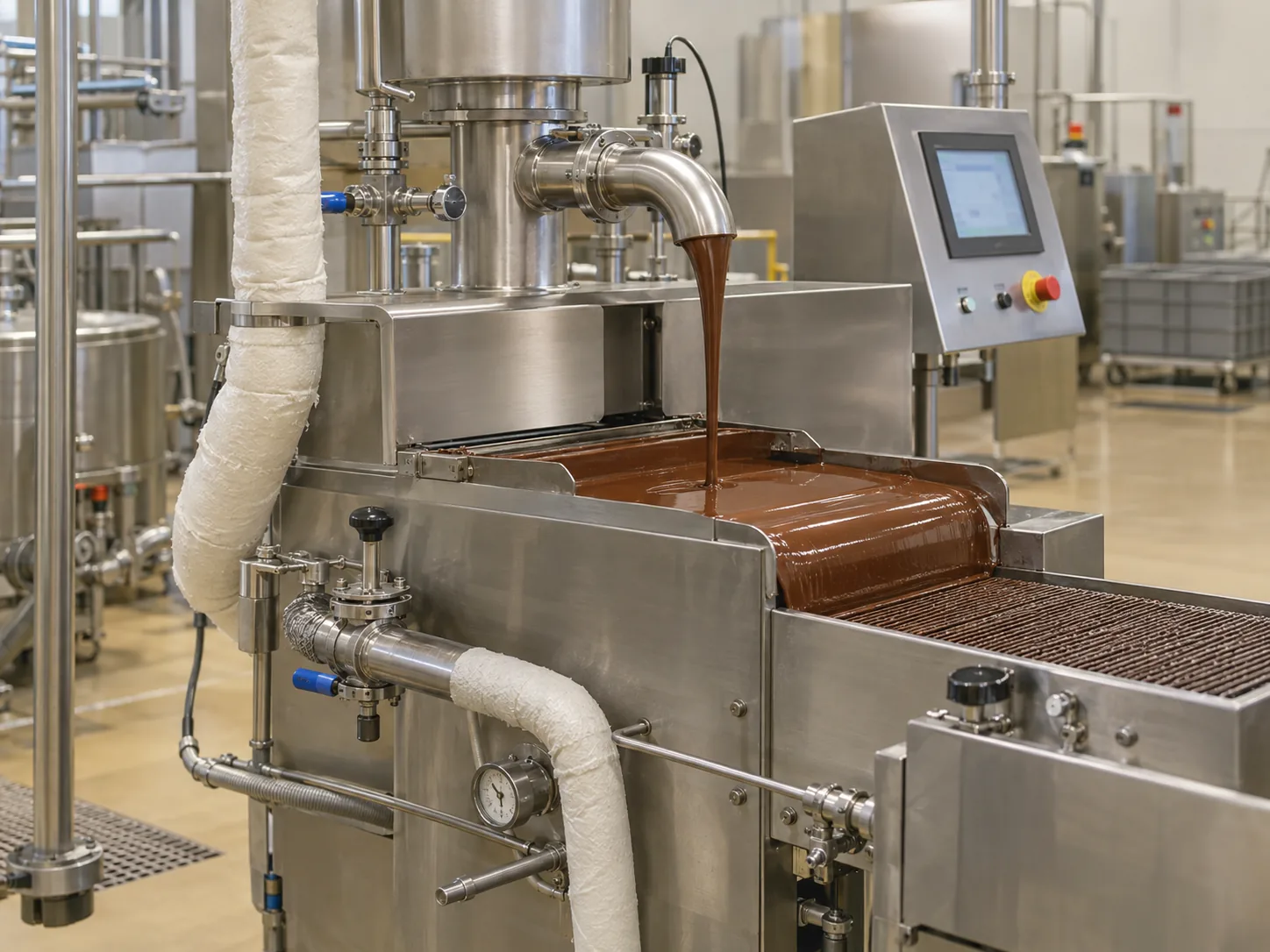
A tempering machine manages the working condition of chocolate before molding, enrobing, depositing, or dispensing. Temperature control, flow stability, agitation, residence time, product changeover, and monitoring are more useful comparison points than the word automatic alone.
Tempering is one stage of a chocolate making system. For detailed stage-specific mechanics and sizing questions, use the site’s chocolate tempering machine guide. When buying the complete route, also confirm the interface from the tempering outlet to the mold, enrober, or depositor.
Molding and depositing machines
Molding equipment creates a repeatable piece through a combination of depositor, nozzle or filling head, mold, vibration or leveling, conveyor timing, and cooling. A buyer should state the cavity layout, piece weight, fill accuracy, inclusions, mold material, release method, and changeover requirements.
Ask to see the complete mold and product-handling path. A machine that can fill a cavity is not automatically a machine that can release, cool, inspect, and pack that product at the required rate.
Enrobing machines
An enrober applies chocolate to a prepared center. The product feed, curtain or bottoming setup, excess removal, belt surface, decoration, cooling, and cleaning access must be reviewed together. Coating percentage, center dimensions, and product spacing are key inputs for a useful test.
Cooling tunnels
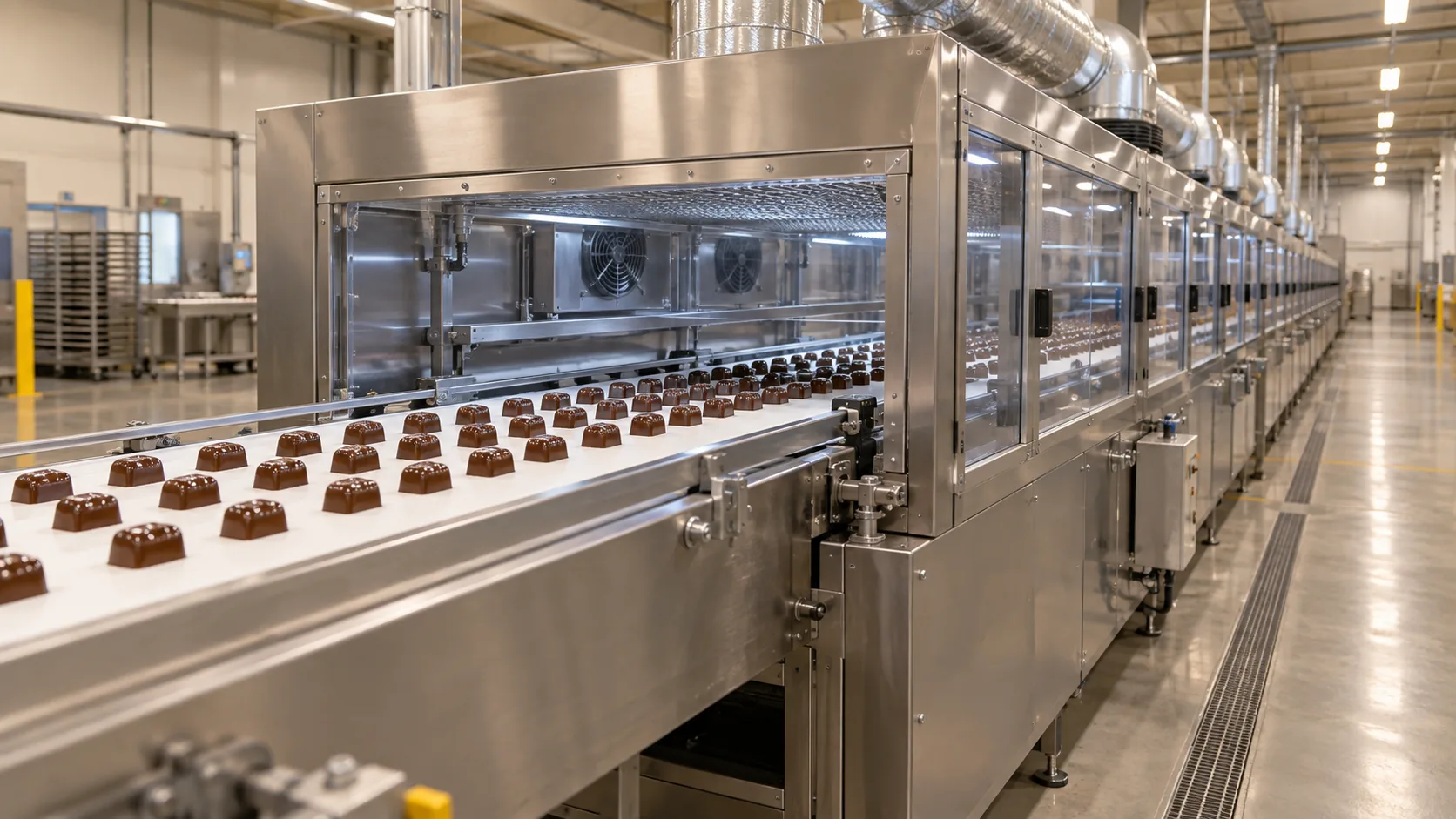
A cooling tunnel or controlled cooling section gives the product time to set before handling. Required length and air conditions depend on the product, coating thickness, mold, belt load, room conditions, and target line rate. Cooling is therefore a production constraint, not a decorative accessory added after the forming machine has been selected.
How does a chocolate making machine process work?
The exact recipe changes the settings and equipment boundaries, but a commercial chocolate route can be reviewed in this order:
- Define the product. Record the format, recipe family, target piece weight, dimensions, inclusions, finish, and package before selecting machinery.
- Prepare and melt the chocolate. Bring the chocolate and any required ingredients into a workable condition while controlling heat, agitation, and transfer.
- Refine or conche when the recipe requires it. Confirm the intended texture, flow, batch size, and discharge condition rather than assuming a standard treatment.
- Hold and temper. Keep the mass available and prepare it for the forming or coating operation. The transfer route should maintain the required condition from outlet to point of use.
- Form or coat the product. Deposit into molds, create filled layers, apply a coating, or form drops and chips with the correct tools and timing.
- Cool and condition. Set the piece so it can be demolded, conveyed, inspected, and packed without sticking, distortion, or avoidable surface defects.
- Inspect and pack. Check the finished piece, reject nonconforming units, and match product spacing and temperature to the wrapper, bagger, cartoner, or case-packing route.
Reading the line in this direction exposes interface questions early. If the cooling section is too short, the packer may become the apparent problem. If the transfer pipe is poorly matched, the forming machine may receive an unstable mass. The equipment should be tested as a route whenever the project has a meaningful production risk.
How should chocolate making machine capacity be sized?
Capacity may be expressed as kilograms per hour, pieces per minute, batches per shift, or mold cycles. These figures are only comparable when the product, piece weight, operating schedule, changeover, cooling time, inspection losses, and packing route are stated.
| Capacity measure | What it tells you | What to verify |
|---|---|---|
| Batch size | How much material enters a cycle. | Usable load, preparation time, discharge time, and number of cycles in the schedule. |
| Hourly mass rate | Approximate mass moved through a process section. | Recipe, piece weight, test condition, warm-up, stops, and whether the value is theoretical or demonstrated. |
| Pieces per minute | Forming or handling speed for a defined piece. | Cavity count, spacing, dimensions, reject rate, cooling, and wrapper compatibility. |
| Saleable output | Product that can actually be inspected, packed, and shipped. | Changeover, cleaning, rejects, line stops, packaging availability, and operator handling. |
A simple planning check is to multiply target piece weight by the required piece rate. Then add a realistic allowance for stops, cleaning, changeover, and product loss. Use the result to request a test condition and an expected saleable output. Do not treat a brochure maximum as a guaranteed result for an untested recipe.
What should buyers check before installing a chocolate machine?
Utilities and service clearance
Electrical load is only one part of the installation plan. Depending on the selected equipment, the project may also need heating, cooling, compressed air, water, drainage, ventilation, product transfer, control connections, and access for cleaning or maintenance. Request a layout that shows connection points, peak demand, service sides, walkway clearance, and the movement path for molds, trays, and cases.
Tooling and changeover
Product variation changes the practical value of a chocolate machine. List the molds, nozzles, scrapers, pumps, seals, belts, guides, and sensors that change between products. Ask how parts are removed, stored, cleaned, identified, and checked before the next run.
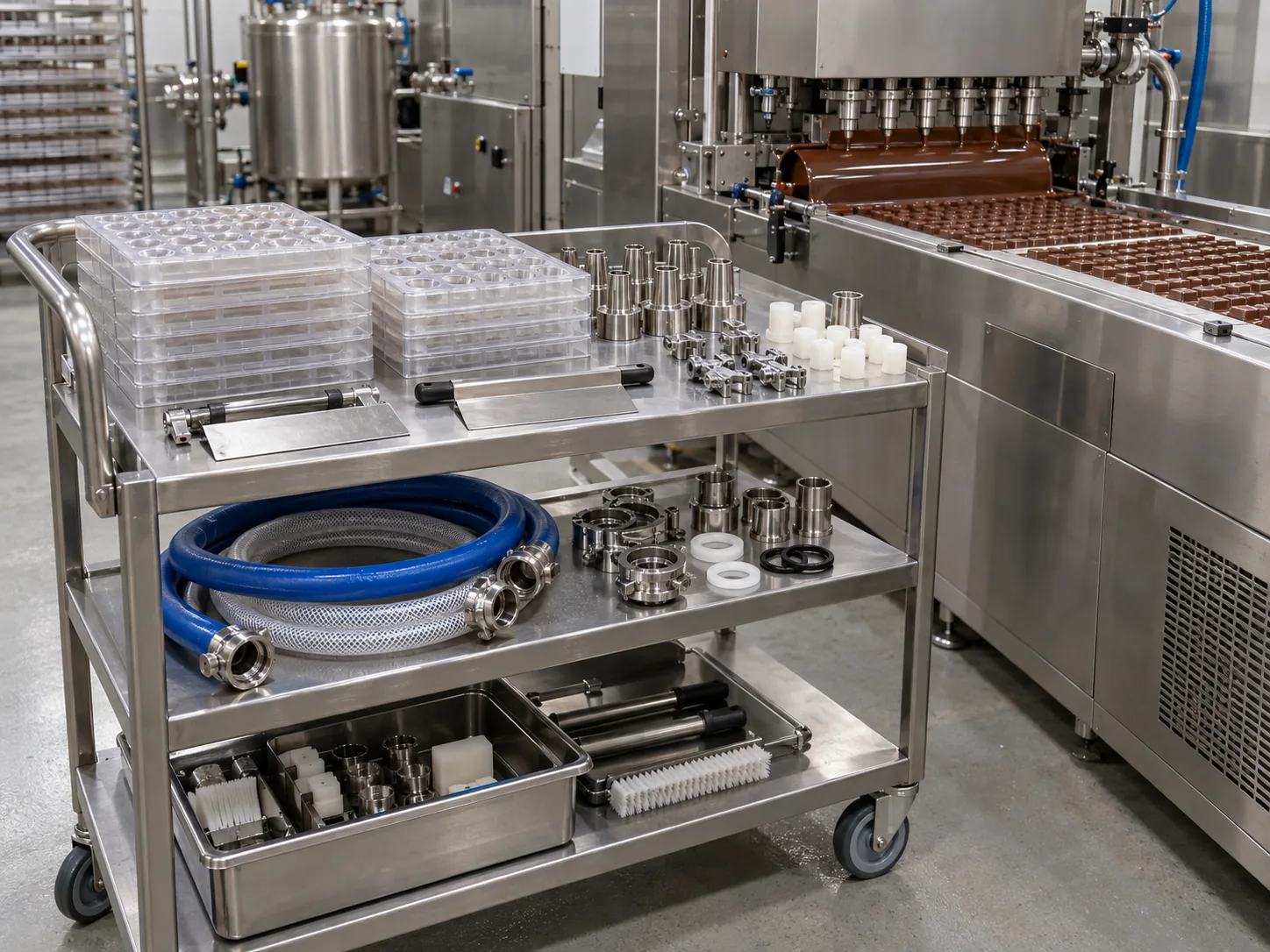
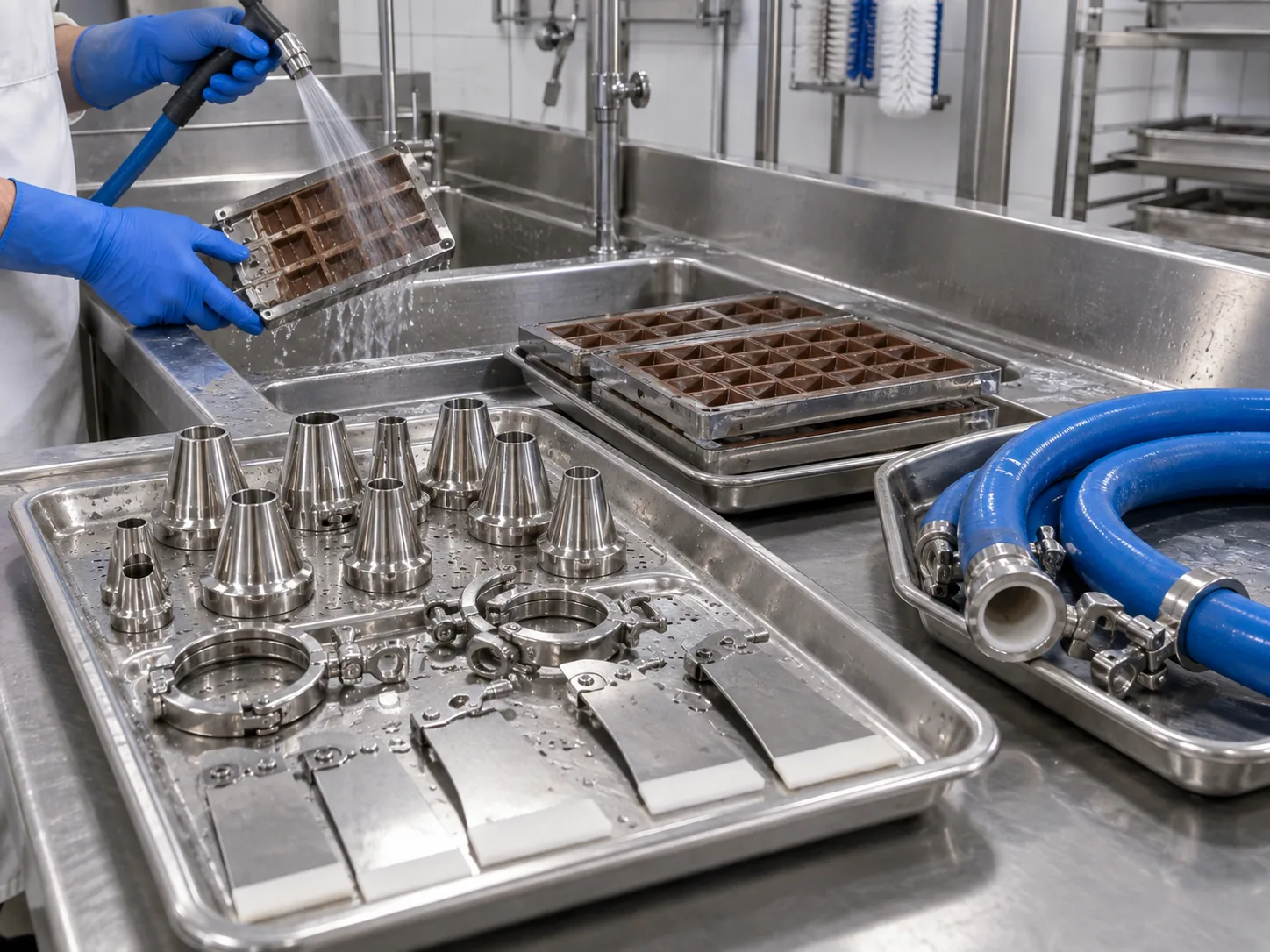
Cleaning and food-contact design
Cleaning is part of line capacity because every cleaning boundary removes time from production. Inspect the access points, removable contact parts, drainability, seals, dead-leg risk, surface finish, and the difference between dry cleaning and wet cleaning. As a US reference, the FDA Food Code describes food-contact equipment materials as safe, durable, corrosion-resistant, nonabsorbent, smooth, and easily cleanable; buyers must confirm the requirements that apply to their own facility and jurisdiction.
Ask for the cleaning method, chemical compatibility, disassembly instructions, inspection points, and any validation or sanitation documentation included in the supplier scope. A clean-looking machine photo is not a cleaning procedure.
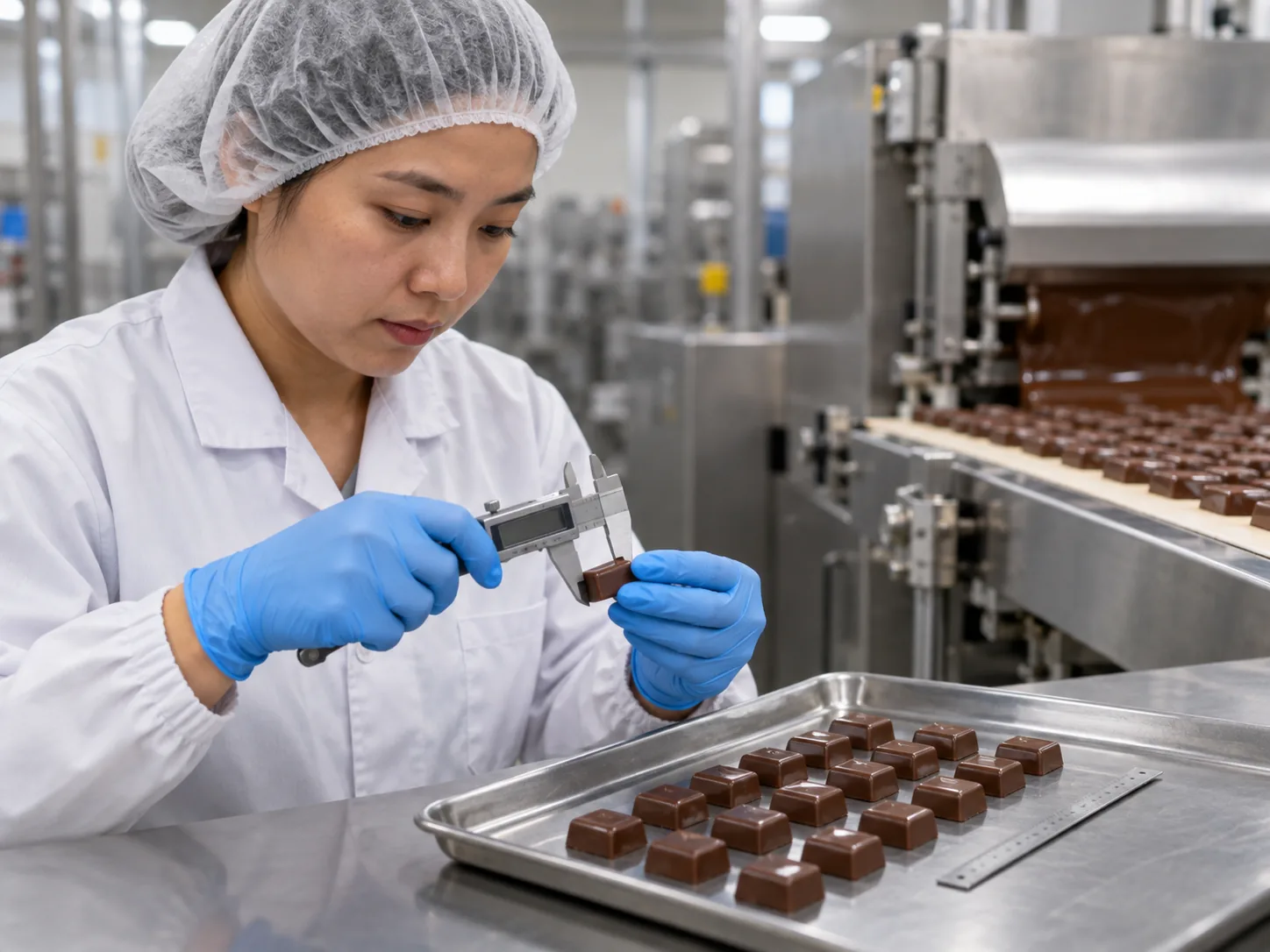
Inspection and quality checks
Define what a good piece looks like before the machine trial. Depending on the product, the check may include piece weight, dimensions, fill position, coating coverage, gloss, surface defects, mold release, breakage, and package seal. A quality plan should identify the measurement method, sampling frequency, reject handling, and who owns the decision when a line does not meet the agreed condition.
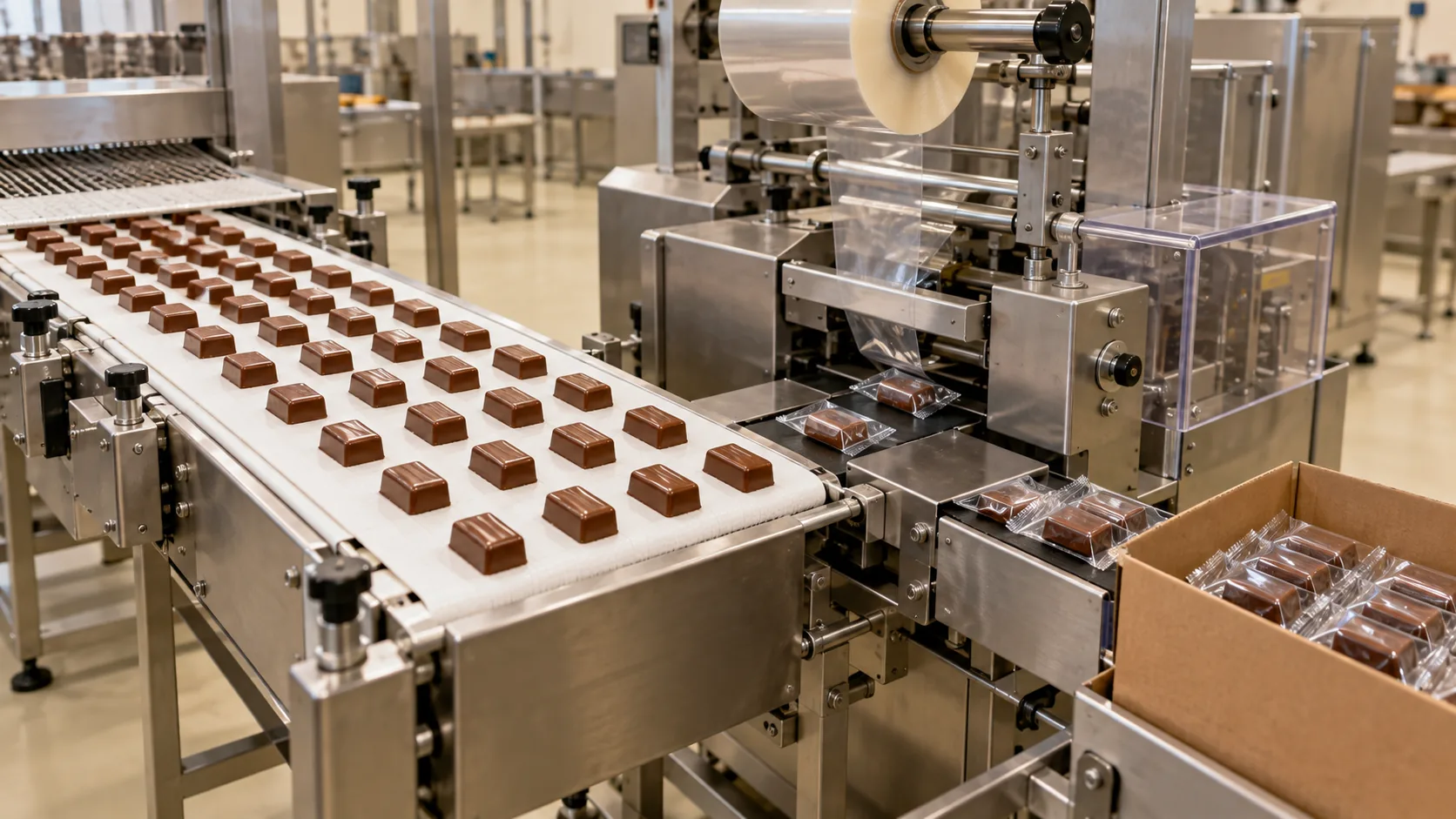
Packaging handoff
The package determines more than the final machine. Product spacing, surface temperature, orientation, film width, seal method, pack count, and case pattern all influence the handoff. Confirm whether the chocolate piece reaches the wrapper as a single lane, multiple lanes, a bulk flow, or a tray load. Include the intended package in the process trial where possible.
How to compare chocolate machine suppliers
A useful supplier comparison looks at the complete project boundary, not just the stainless cabinet or the highest quoted speed. Request the following in the same format from every candidate:
- Process scope: identify the included stages from melting through packing and list every interface between them.
- Test evidence: state the recipe, product dimensions, piece weight, output measure, operating condition, and acceptance criteria used for any performance number.
- Included tooling: list molds, nozzles, pumps, scrapers, guides, belts, sensors, spare parts, and changeover parts separately.
- Installation data: provide layout, dimensions, floor loading, utilities, service clearance, drainage, exhaust, and room-condition requirements.
- Hygiene and maintenance: describe contact materials, access, cleaning method, lubrication boundaries, inspection points, and recommended maintenance tasks.
- Documentation and support: identify manuals, electrical drawings, spare-parts list, training, commissioning, acceptance testing, and response boundaries.
- Commercial exclusions: separate packing machinery, building services, freight, installation, local compliance work, and other items that are not in the machine price.
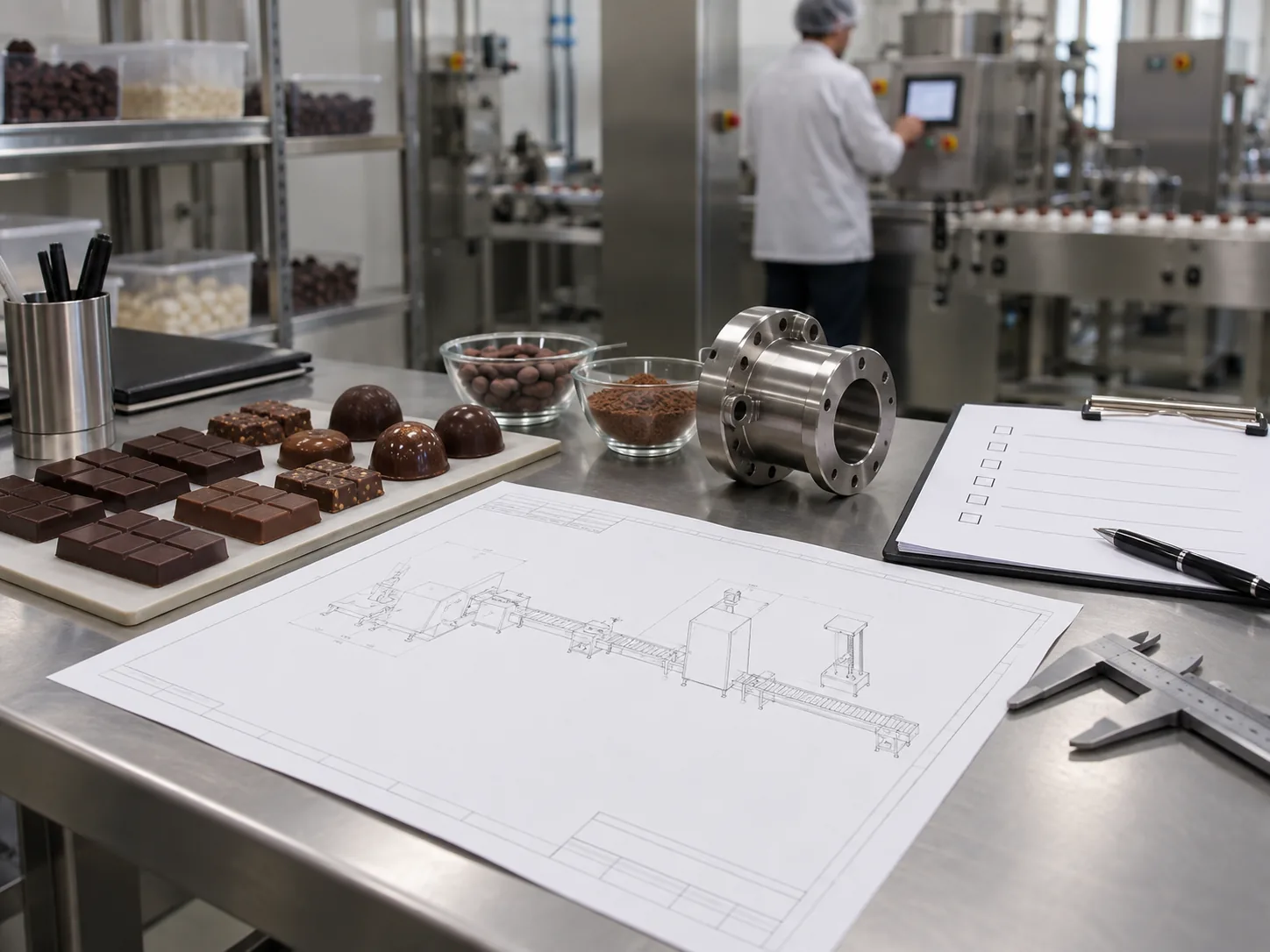
What information should be in a chocolate making machine RFQ?
Send as much of the following as possible so the supplier can propose a defined system instead of a generic machine:
- Product format: bar, bonbon, coated center, chip, drop, filled piece, spread, or another form.
- Recipe summary: chocolate type, fat or ingredient constraints, inclusions, center, layers, and any allergen or cross-contact boundary.
- Piece data: target weight, dimensions, tolerance, surface, decoration, mold pattern, and acceptable variation.
- Output: saleable kilograms per hour, pieces per minute, operating hours, shifts, peak demand, and planned product mix.
- Process route: melting, refining or conching, tempering, molding, enrobing, cooling, inspection, and packing stages required.
- Changeover: product count, change frequency, tooling, cleaning boundary, and acceptable downtime.
- Utilities and room: power, heating, chilled water or air, compressed air, drainage, ventilation, footprint, ceiling, doors, floor, and access.
- Package: wrapper, bag, tray, carton, case, bulk container, film, pack count, and required product orientation.
- Acceptance: sample quantity, test recipe, output definition, quality checks, documents, training, and commissioning responsibilities.
Request a chocolate machine recommendation: review the Chocolate Production Line equipment category, then send the product format, sample or drawing, target output, package, and available utilities for a configuration discussion. This information gives a technical team a clear starting point without assuming that one machine fits every chocolate product.
Chocolate Making Machine FAQ
What does a chocolate making machine do?
A chocolate making machine performs one or more controlled stages such as melting, holding, refining, conching, tempering, molding, enrobing, cooling, inspection, or packing. The phrase can describe one unit or a connected line, so the product format and process scope should be stated before equipment is compared.
Which machines are needed to make chocolate bars?
A molded bar route commonly needs melting and holding, a suitable tempering and depositing or molding stage, molds, cooling, demolding, inspection, and packing. Refining or conching may be required by the recipe. The final equipment list depends on the bar dimensions, inclusions, output, and package.
What is the difference between a chocolate tempering machine and a molding machine?
A tempering machine prepares the chocolate mass for a stable working condition. A molding machine deposits or fills that chocolate into a defined mold and then works with cooling and demolding. They solve different stages and normally need a matched transfer and control interface.
How do I choose chocolate making machine capacity?
Set capacity from the required saleable output, piece weight, piece rate, recipe, operating schedule, cooling time, changeover, rejects, and packaging rate. Ask whether each kilograms-per-hour or pieces-per-minute number is theoretical or demonstrated on the intended recipe and product.
Can one machine make bars, chips, and coated centers?
Some upstream equipment can be shared, but bars, chips, and coated centers normally need different forming tools, product handling, cooling, and packing arrangements. Confirm the change parts, cleaning boundary, recipe window, and test result for every product planned for the line.
What should I send for a chocolate making machine quote?
Send the product format, recipe summary, sample or drawing, piece weight and dimensions, target saleable output, changeover needs, utilities, available footprint, cooling route, package format, and destination requirements. Ask the supplier to state inclusions, exclusions, test conditions, layout, documentation, commissioning, and acceptance scope.
References and source notes
- Chocoma chocolate machinery overview, used for a neutral equipment-stage comparison of melting, tempering, enrobing, and cooling machinery.
- FDA Food Code, Chapter 4: Equipment, Utensils, and Linens, used as a US reference for cleanable food-contact equipment and installation questions. Confirm local requirements for the facility.
- FDA food-contact substances overview, used to remind buyers that processing equipment and packaging components require an appropriate compliance review.