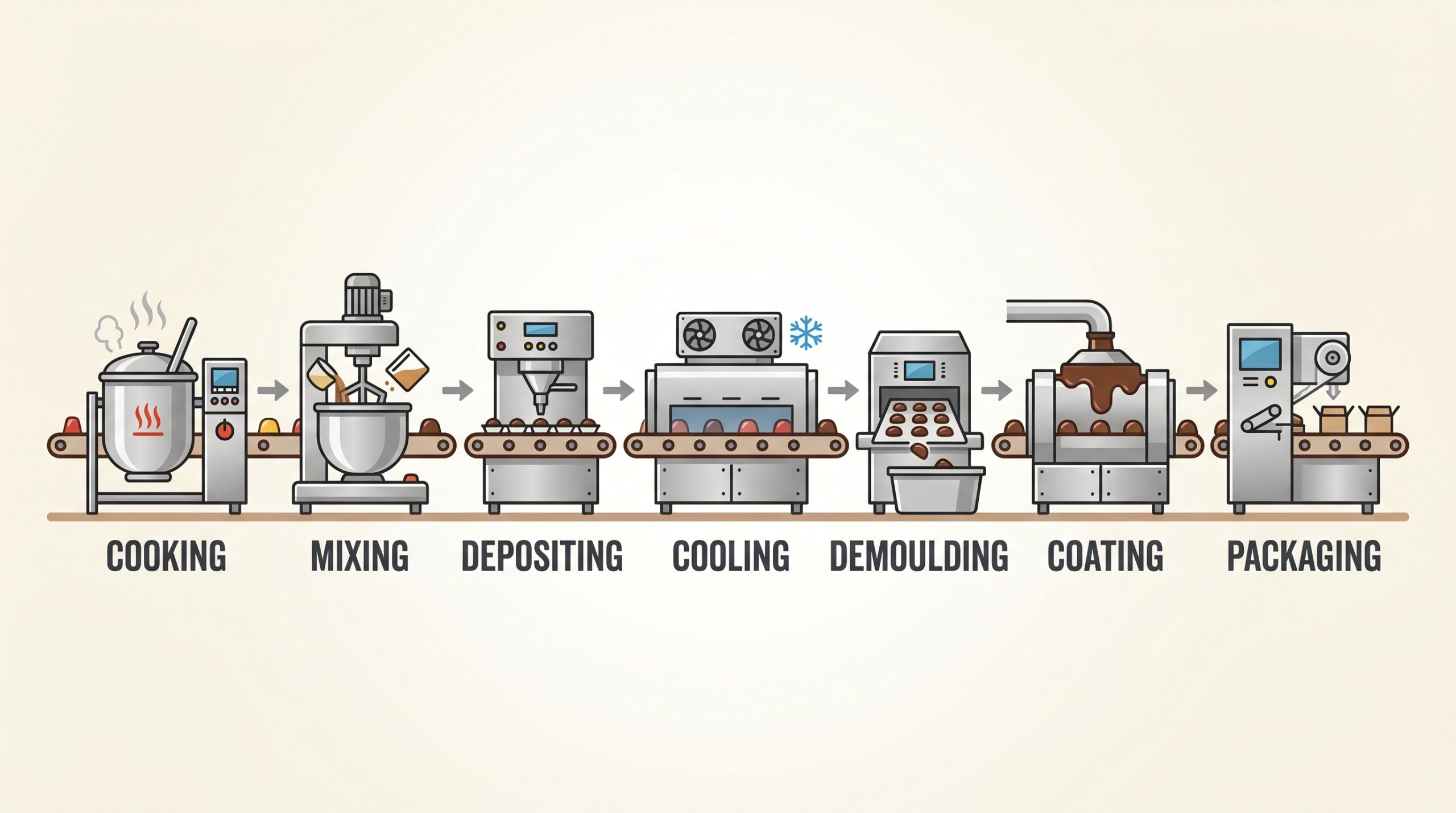
A chocolate tempering machine heats, cools, agitates, and holds chocolate so the cocoa butter develops a stable crystal structure before moulding, enrobing, depositing, or dispensing. For a commercial buyer, the important question is not simply whether a machine can melt chocolate. It is whether the system can keep the required working temperature, flow, output, hygiene routine, and downstream equipment synchronized.
This guide explains how a chocolate tempering machine works, where batch and continuous systems fit, how to compare tank capacity with hourly output, and which details to include in a quotation request. Temperature examples are reference points for a specific chocolate type, not universal settings for every recipe.
What is a chocolate tempering machine?
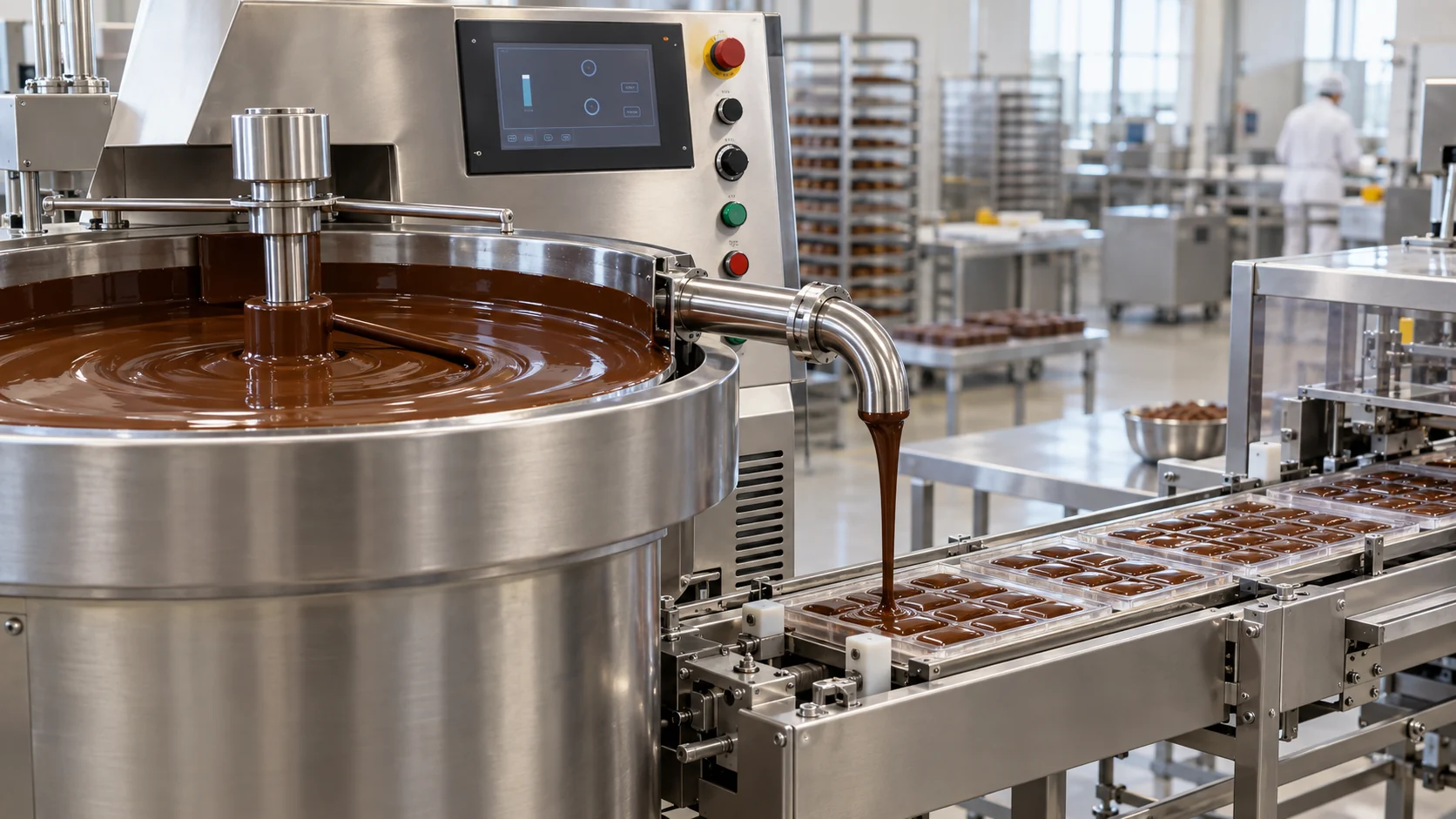
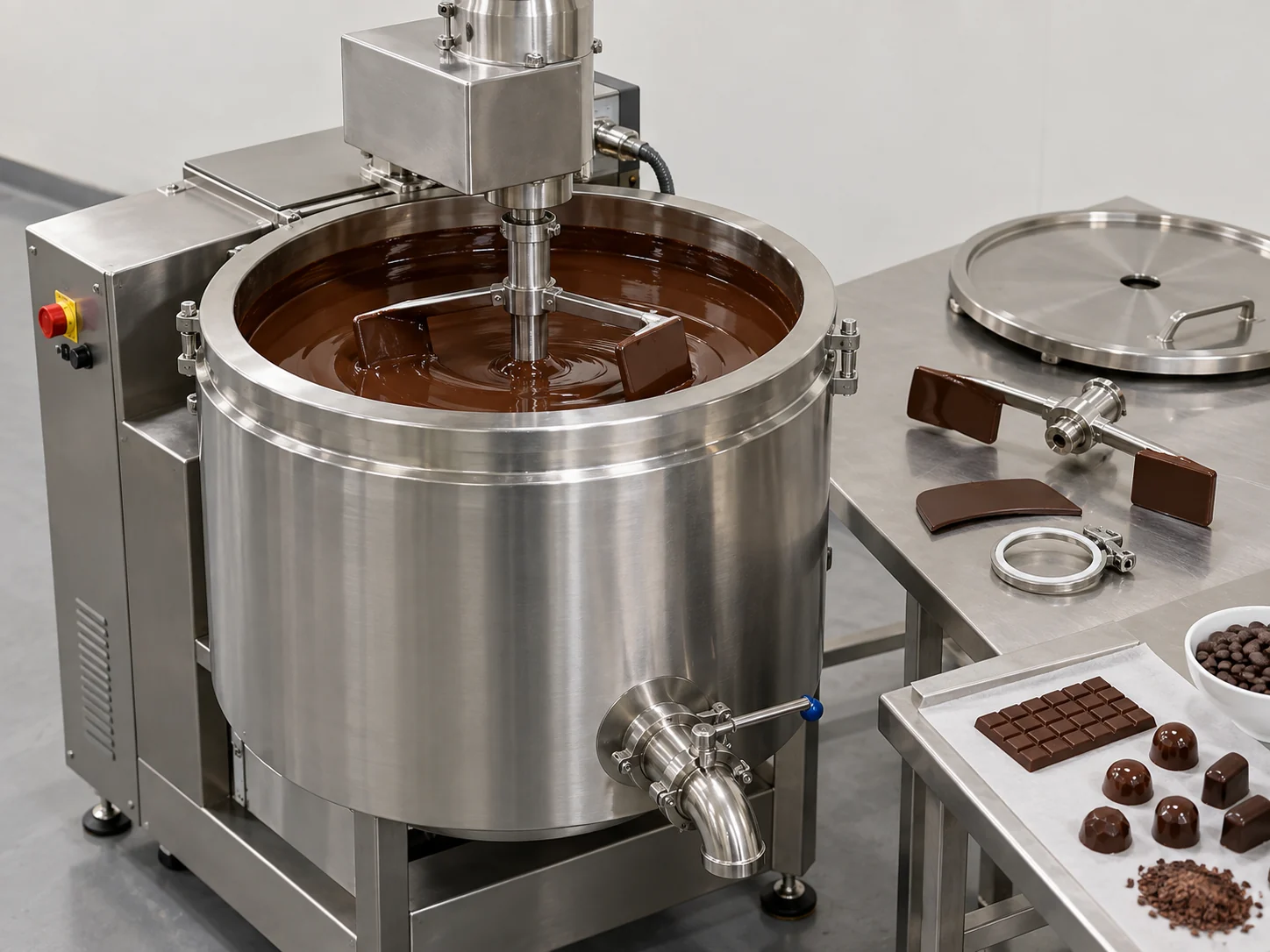
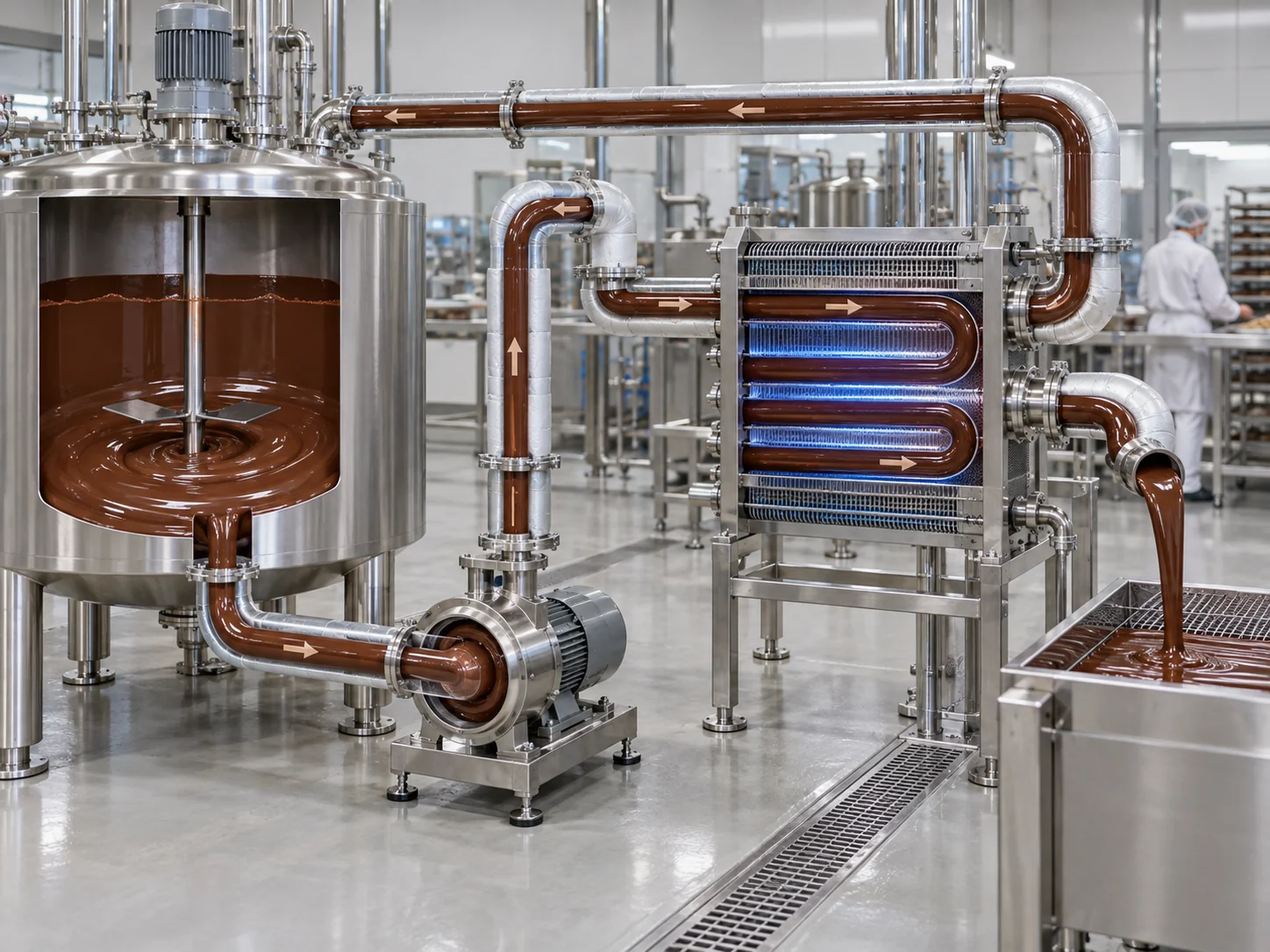
A chocolate tempering machine is a controlled heating and cooling system with mixing or agitation. It brings melted chocolate through a temperature profile that encourages a stable cocoa butter crystal structure, then keeps the chocolate within a working window while it is used. Depending on the design, the equipment may include a heated tank, cooling section, agitator, pump, recirculation circuit, insulated pipe, outlet, dispenser, or connection to an enrober and moulding line.
That function is different from a simple chocolate melter. A melter can keep chocolate liquid, but liquid chocolate can still set with a dull surface, weak snap, streaking, or poor release if its crystal structure is not controlled. Callebaut describes tempering as pre-crystallising cocoa butter and identifies time, temperature, and movement as the three operating principles. Its chocolate tempering machine tutorial explains the principle and an example working sequence.
Why does commercial chocolate need tempering?
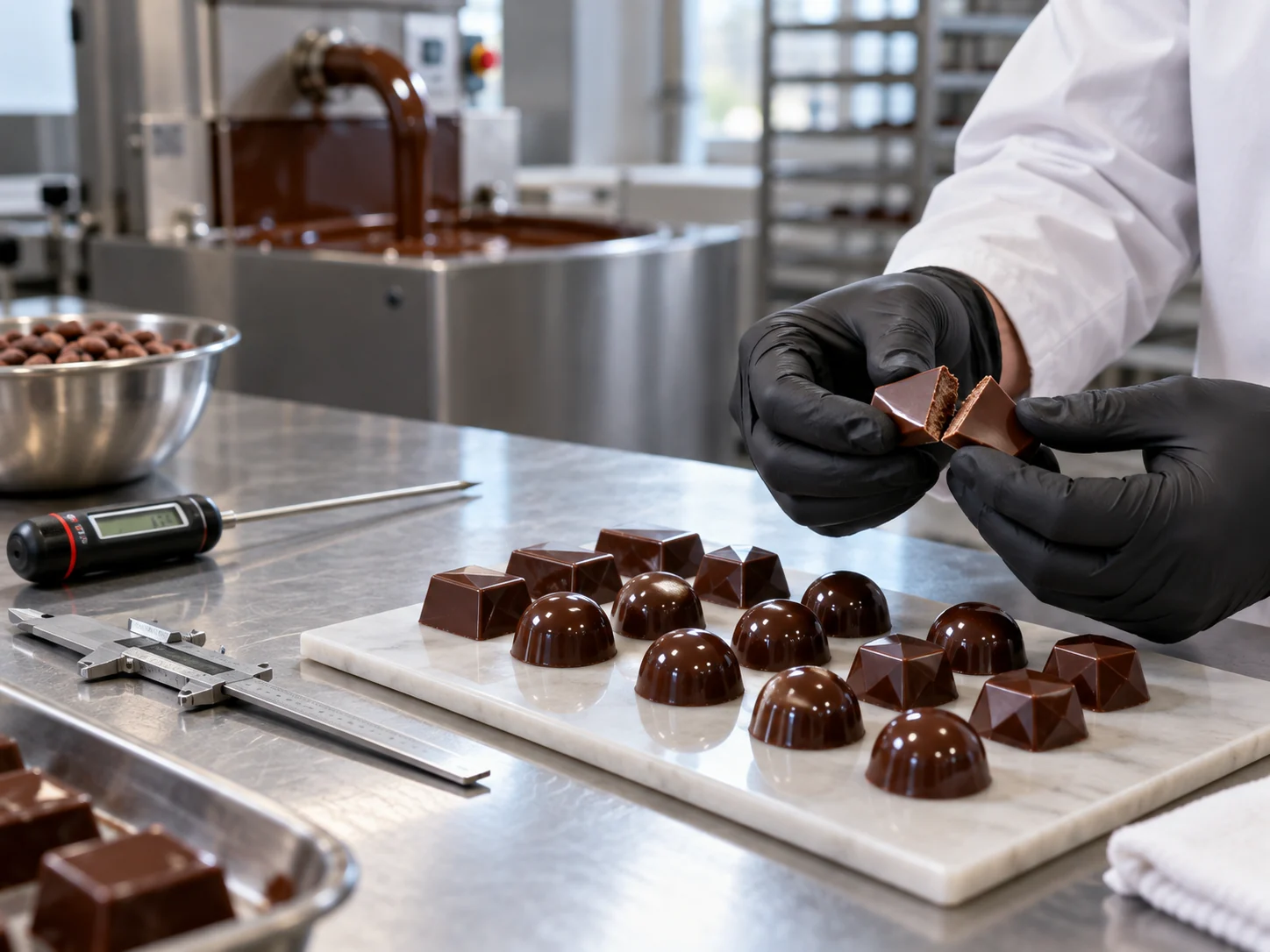
Tempering supports the physical qualities that a buyer can see and measure after cooling:
- Surface appearance: a well-controlled chocolate process can produce a more even, glossy finish rather than a grey or streaky surface.
- Break and bite: the crystal structure affects the snap and firmness expected from a bar, shell, moulded piece, or coated centre.
- Demoulding: properly crystallised chocolate contracts during cooling, which can make release from a mould easier when the mould and cooling profile are also suitable.
- Coating stability: a stable working flow helps an enrober form a more consistent shell, although viscosity, belt speed, curtain height, and product temperature still need trials.
- Repeatability: a controlled system reduces reliance on operator timing when the line runs multiple batches or long production shifts.
Tempering does not correct every chocolate defect. A formula with unsuitable viscosity, excess moisture, poor storage history, or incompatible inclusions can still produce problems. The machine should be tested with the actual chocolate, inclusions, mould, coating width, and cooling conditions planned for production.
How does a chocolate tempering machine work?
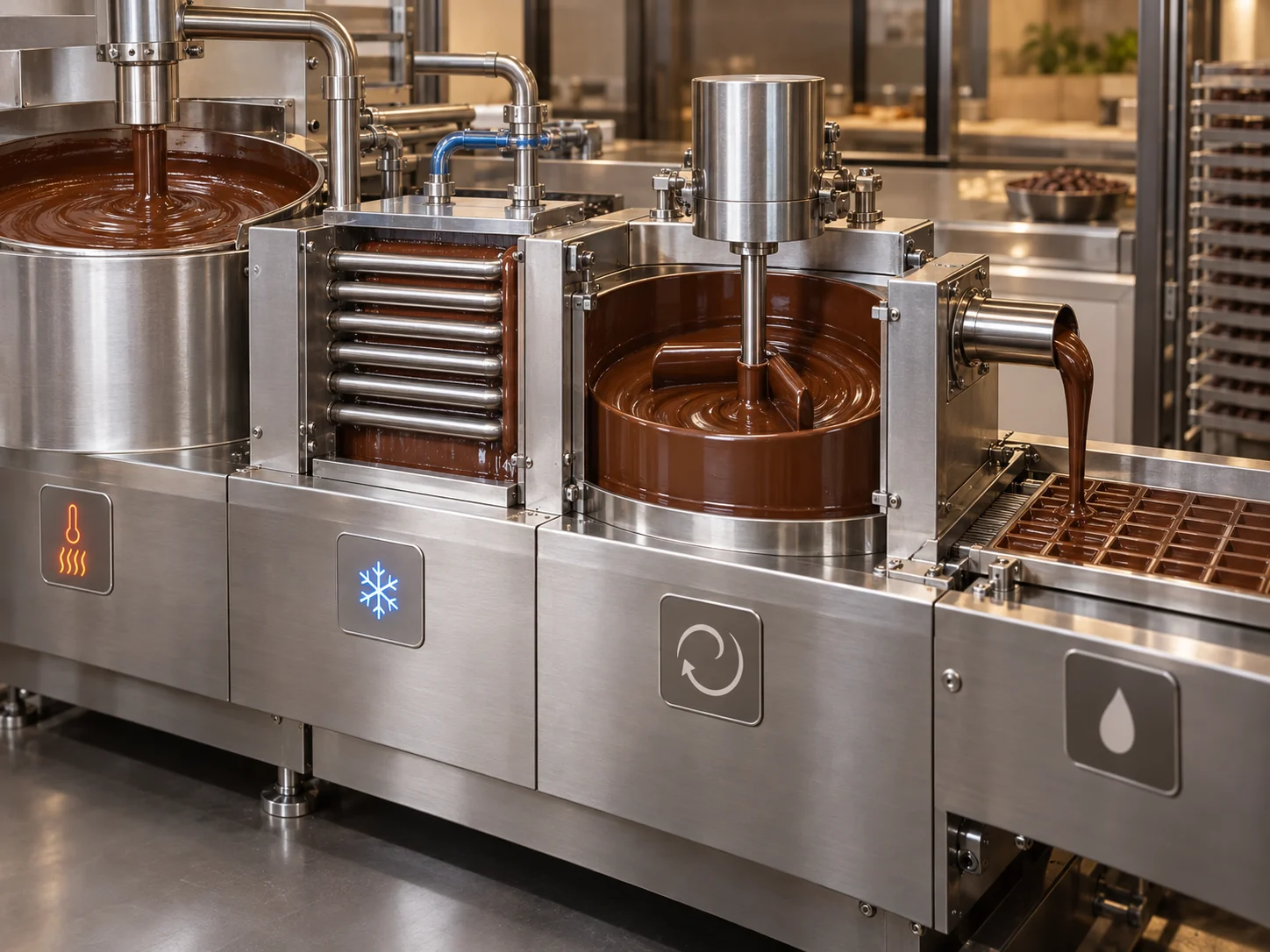
The exact mechanism varies by machine type, but a commercial tempering cycle usually contains five linked operations.
1. Melt the chocolate completely
Chocolate is first heated until the unwanted crystal history has been removed and the mass is fluid enough to circulate. Callebaut gives 45 °C as an example melt setting in one machine tutorial. That is a product-specific reference, not a specification that should be copied into every recipe. Milk, white, dark, coloured, compound, and inclusion-containing products can require different treatment.
2. Lower the mass into a working range
The system then removes heat through a jacket, cooling section, or controlled surface while the chocolate continues to move. A Callebaut example lowers dark chocolate to about 31 °C and milk or white chocolate to about 29 °C before use. The correct target should come from the chocolate supplier’s curve and a production trial, because working temperature affects viscosity, shell thickness, release, and surface finish.
3. Encourage stable crystal formation
Agitation distributes the developing crystals and keeps temperature uniform through the mass. Some systems use seed chocolate or another controlled crystallisation method. The goal is not to add air. Excessive shear, splashing, or poorly designed return flow can make the product harder to handle and may create bubbles that appear later in a mould or coating.
4. Hold the condition while chocolate is used
After the target condition is reached, the machine needs to maintain it as chocolate leaves the tank or recirculates. This is why the outlet pipe, pump, hose, valve, dispenser, and downstream equipment matter as much as the tank. A well-tempered tank connected to a cold uninsulated pipe can lose the process window before the chocolate reaches the product.
5. Deliver a repeatable flow
The final outlet may feed moulds, an enrober curtain, a depositor, a manual workstation, or a connected cooling and packaging route. The delivery method should match the product weight, shell thickness, mould layout, belt speed, and expected changeover. A machine advertised with a large tank may still be unsuitable if its useful outlet flow does not match the rest of the line.
What types of chocolate tempering machines are available?
Names vary between suppliers, so compare the process rather than the label. The following groups cover the most common buying decisions.
| System type | Typical fit | Questions to ask |
|---|---|---|
| Batch or tabletop temperer | Small runs, product development, seasonal SKUs, and plants that change chocolate types often. | What is the minimum working load, usable tank volume, batch time, and cleaning procedure? |
| Batch tank with pump and dispenser | Medium production where a tank feeds moulds, a manual station, or a short automated section. | Is the quoted capacity tank capacity or usable output? How is the pump protected from thick or inclusion-filled chocolate? |
| Continuous tempering system | Stable high-volume production with a regular recipe, long run, and matched downstream demand. | What is the stable hourly flow, return arrangement, start-up waste, changeover method, and utility requirement? |
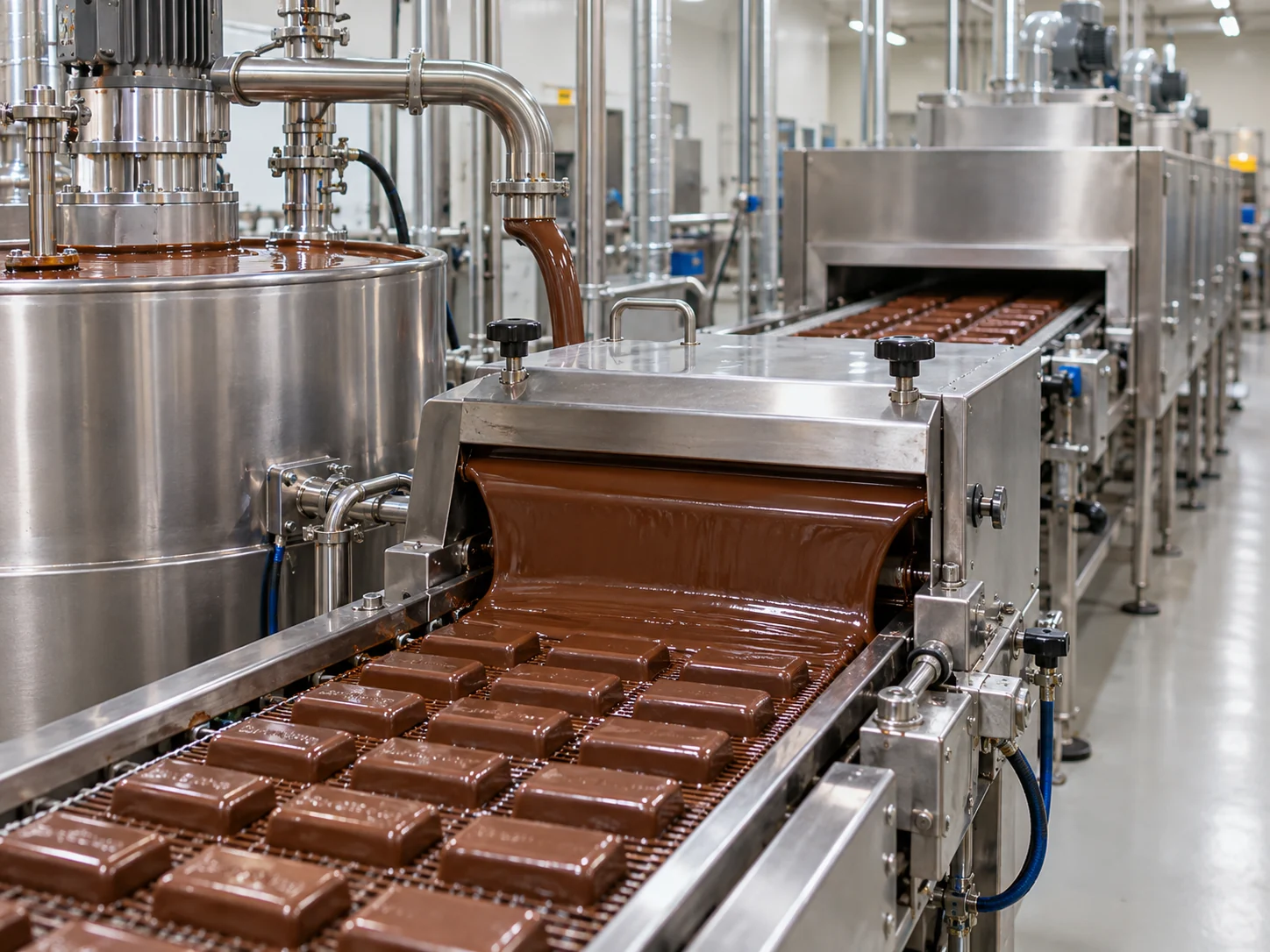
| Tempering system connected to an enrober | Bars, biscuits, centres, nuts, and other products that need a controlled chocolate curtain and cooling tunnel. | How are curtain width, belt speed, chocolate level, return flow, and cooling conditions synchronized? |
| Tempering plus moulding or depositing route | Solid bars, shells, filled pieces, pralines, hollow products, and repeatable mould formats. | What are the mould dimensions, deposit weight, vibration step, cooling time, release method, and change parts? |
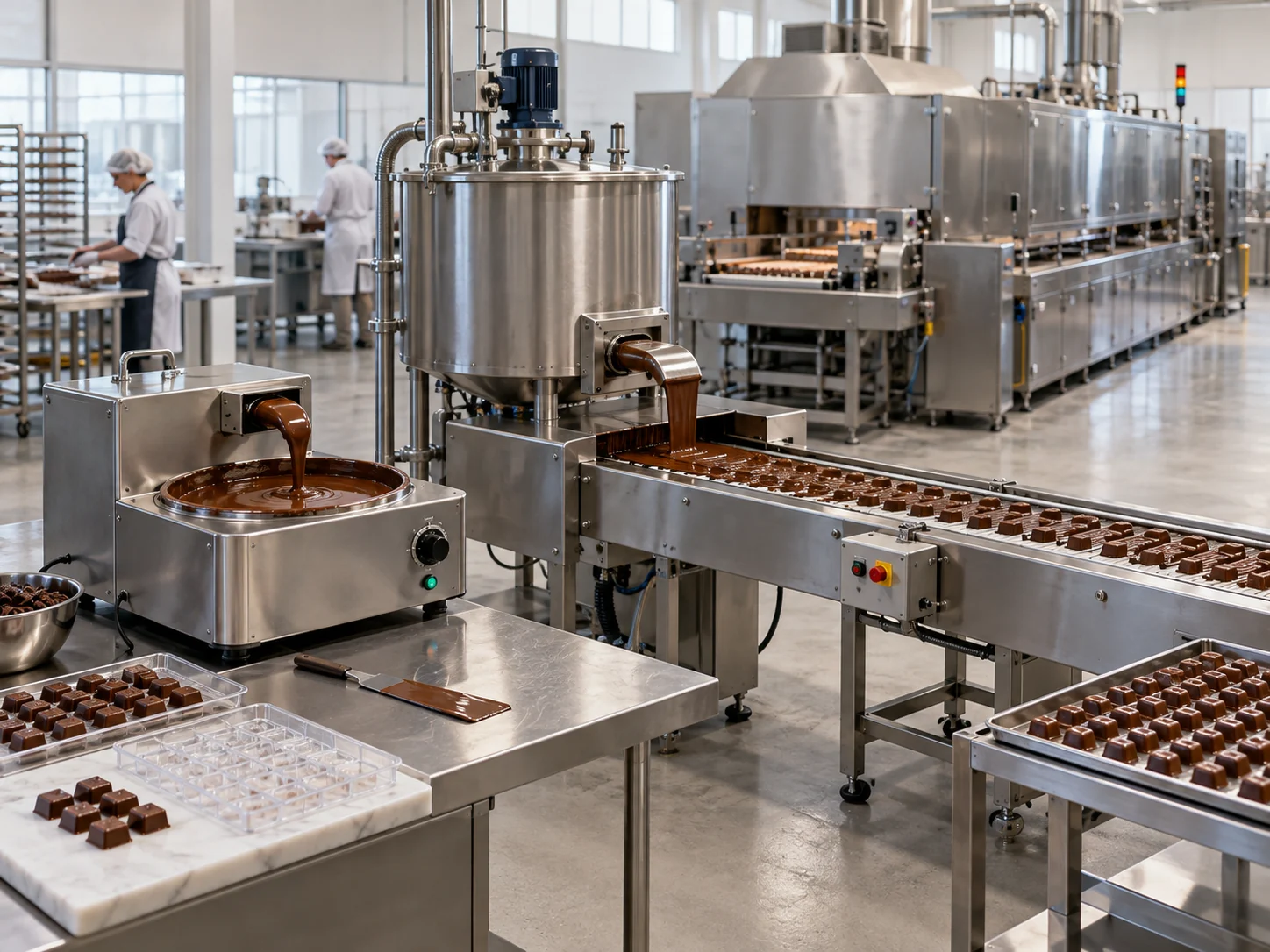
Some suppliers describe a complete line as a tempering machine even when the package also includes a melter, holding tank, depositor, moulding machine, or enrober. Ask for a process flow drawing that separates each function. This makes it easier to compare offers and identify which components are included, optional, or supplied by another vendor.
How should you size a chocolate tempering machine?
Start with the product demand at the point where tempered chocolate is consumed. Then work backward through the line. A practical sizing brief includes:
- target finished output in kg per hour and per shift;
- piece weight, mould count, shell thickness, coating width, or deposit weight;
- planned run time, start-up time, expected breaks, and changeover frequency;
- chocolate type, viscosity range, inclusion size, and whether more than one recipe shares the system;
- peak demand from the depositor, moulding line, enrober, or manual outlet;
- acceptable start-up waste and the amount of chocolate that must remain in the circuit;
- space, access, electrical supply, cooling capacity, compressed air, drainage, and ventilation where required.
Do not use tank capacity as a substitute for hourly output. A 30 kg working tank can support very different production rates depending on circulation, heating and cooling power, chocolate fluidity, outlet design, and whether the machine runs batch or continuous. Ask for both usable load and tested hourly output for the actual chocolate and product route.
Which specifications should buyers compare?
A supplier quotation becomes more useful when every offer answers the same questions. Use the following specification groups in a comparison sheet.
Temperature and process control
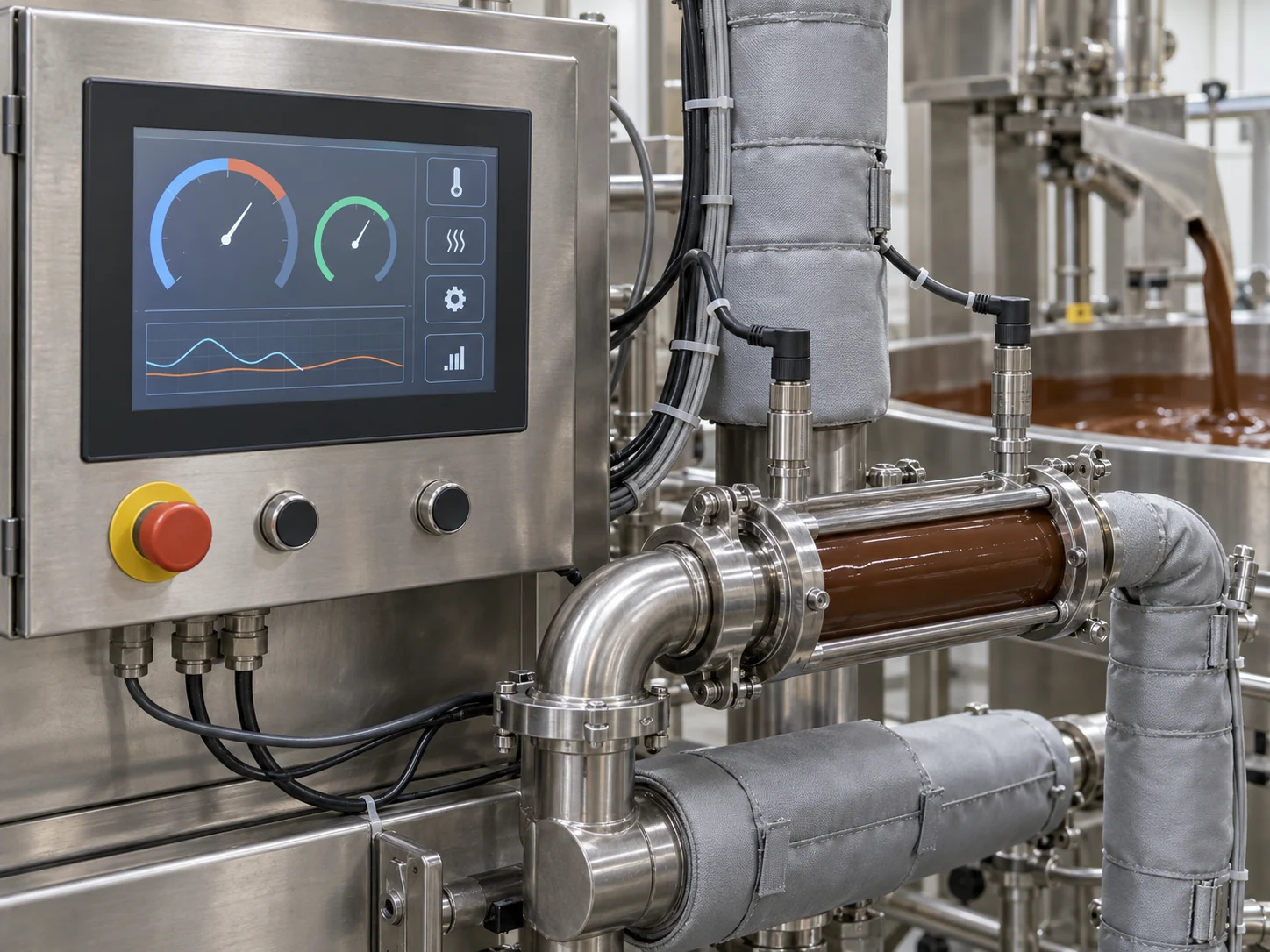
Ask how many temperature zones are controlled, where sensors are located, how the setpoint is adjusted, and how the machine behaves during start-up, idle, product change, and restart. Confirm whether the displayed temperature is tank temperature, product temperature, pipe temperature, or a calculated value. These readings are not interchangeable.
Agitation, pump, and flow
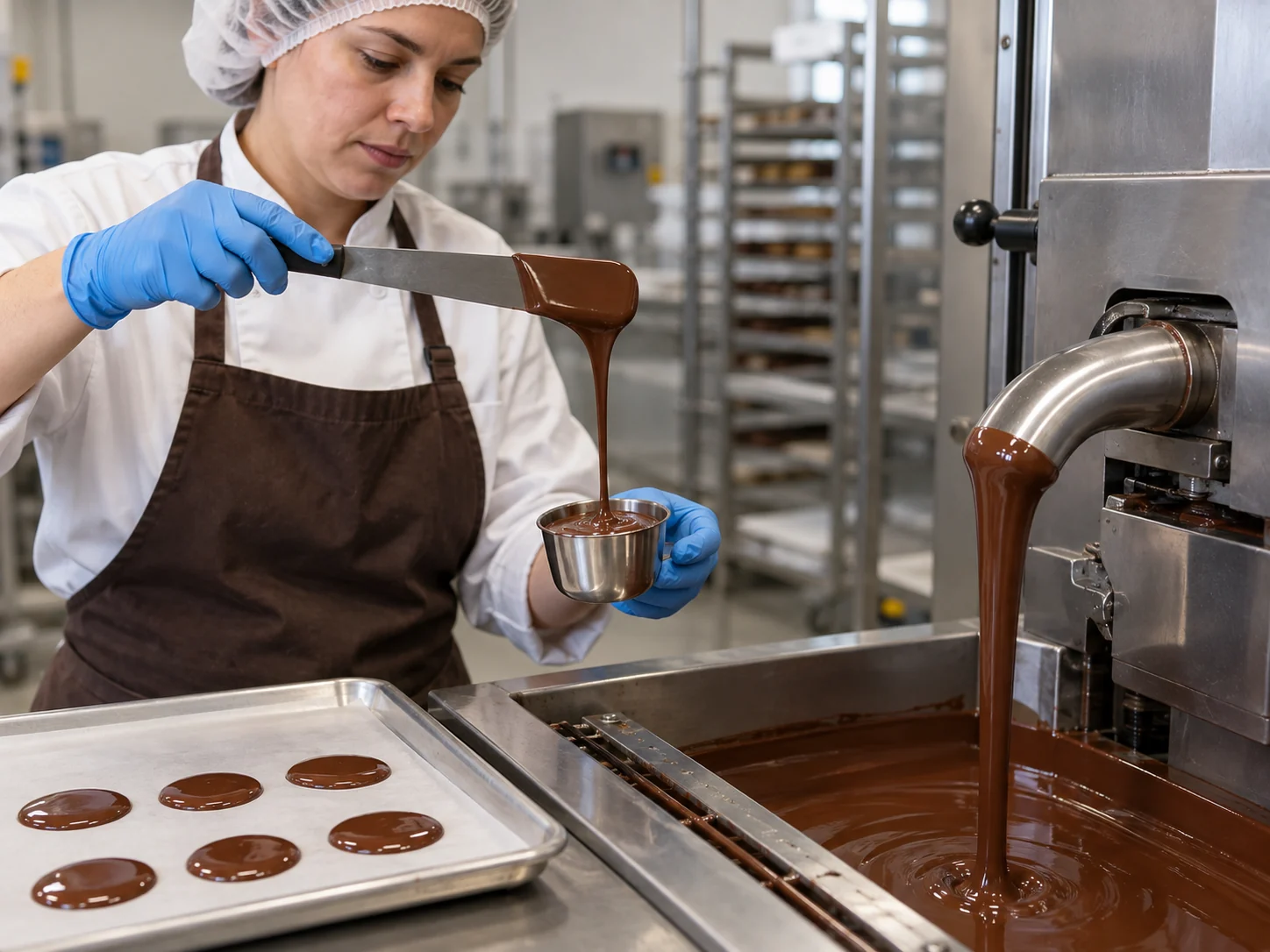
Request the agitator type, speed range, pump type, pipe diameter, valve arrangement, and the supported viscosity or flow range. If the recipe contains nuts, crisp pieces, fruit, or inclusions, ask how the system avoids blockage and protects the inclusion shape. If the product needs a thin shell, a stable low-flow setting may matter more than the maximum advertised rate.
Hygienic design and changeover
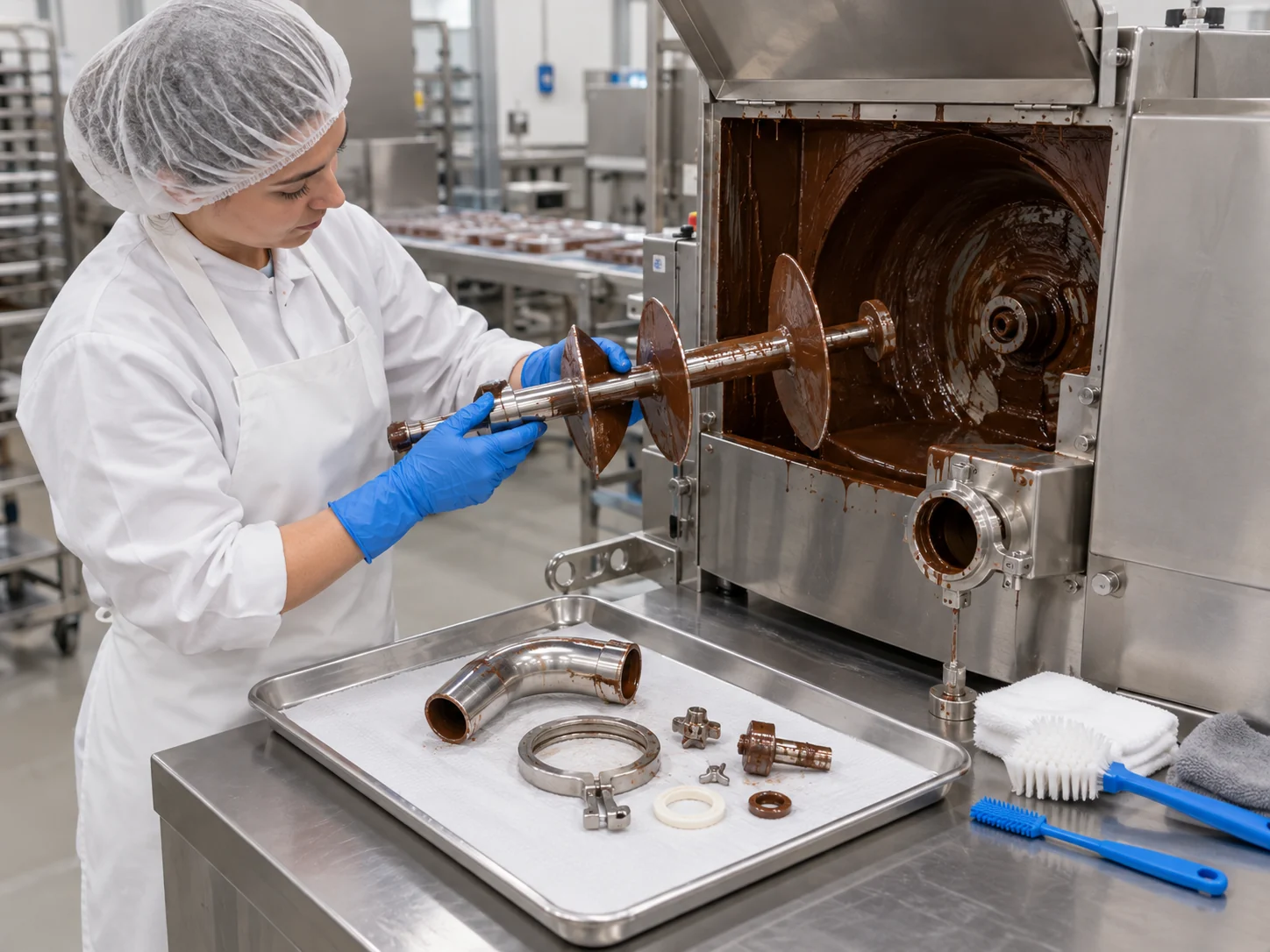
Ask which parts contact chocolate, how they are removed, whether seals and gaskets are accessible, and whether the pipe circuit can be drained without leaving a large hold-up volume. Confirm the cleaning method, drying time, tool requirements, and spare-part list. A fast changeover is only useful if the cleaning and inspection steps are practical for the plant team.
Integration and utilities
Review the electrical specification, phase, frequency, cooling method, compressed air requirement, floor loading, clearance, inlet height, outlet height, and communication interface if the machine will connect to a line controller. The equipment layout should show operator access, maintenance access, safe guarding, cleaning access, and the route for chocolate and return piping.
What is the difference between batch and continuous tempering?
Both system types can be useful. The better choice depends on the production pattern rather than on a general claim that one is always more efficient.
| Decision point | Batch system | Continuous system |
|---|---|---|
| Product range | Often easier to manage when recipes and colours change frequently. | Best evaluated when a stable recipe or a planned sequence runs for longer periods. |
| Start-up and shutdown | Can suit a defined batch with a clear beginning and end, but residual chocolate still needs a plan. | Can support a steady flow, but the start-up loop, return volume, and stop sequence need careful review. |
| Downstream match | Useful for moulds, manual workstations, and moderate or variable demand. | Works well when outlet demand, belt speed, and cooling capacity are continuously matched. |
| Changeover | May offer more flexibility, subject to tank and pipe cleaning time. | May require a stronger sequence, drain strategy, and sanitation plan between products. |
| Buying risk | Oversizing can leave unused chocolate in the tank or increase heat-up time. | Undersizing can create unstable flow, line starvation, or a bottleneck before cooling. |
How does a tempering machine connect to a chocolate production line?
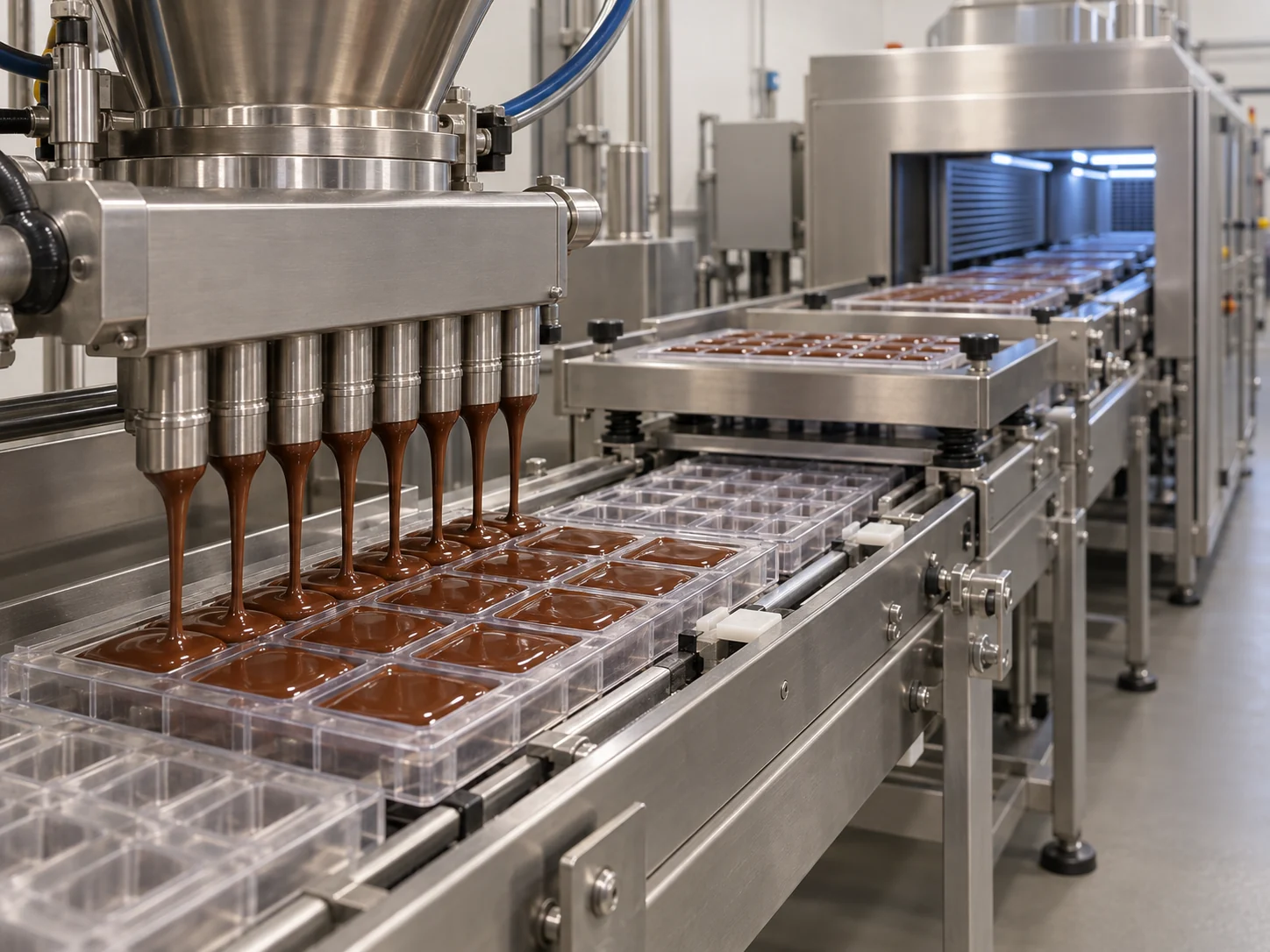
A typical route can be mapped as:
- Recipe preparation: weigh chocolate, cocoa ingredients, inclusions, and any approved additions according to the product brief.
- Melting or holding: bring the chocolate to a fluid condition without overheating or adding unwanted moisture.
- Tempering: control heat removal, agitation, and the working condition for the chocolate type.
- Delivery: pump or dispense through an outlet, pipe, dosing head, enrober curtain, or depositor.
- Forming: fill moulds, coat centres, create shells, or deposit a defined weight.
- Cooling and release: provide the cooling time, airflow, mould movement, and release conditions needed by the product.
- Inspection and packing: check appearance, weight, dimensions, surface defects, seal, coding, and traceability before distribution.
JY Machine’s chocolate machine category can be used as a starting point for discussing the wider process route. The relevant equipment may include moulding, conching, coating, cooling, and packing functions. The correct combination still depends on the product brief and should be confirmed in a technical discussion.
Which defects point to a tempering or line problem?
Use a defect log that records chocolate type, batch, temperature readings, agitation setting, flow rate, line speed, mould or centre condition, room condition, and cooling profile. The table below is a troubleshooting starting point, not a substitute for a controlled trial.
| Observed result | Possible process area | First checks |
|---|---|---|
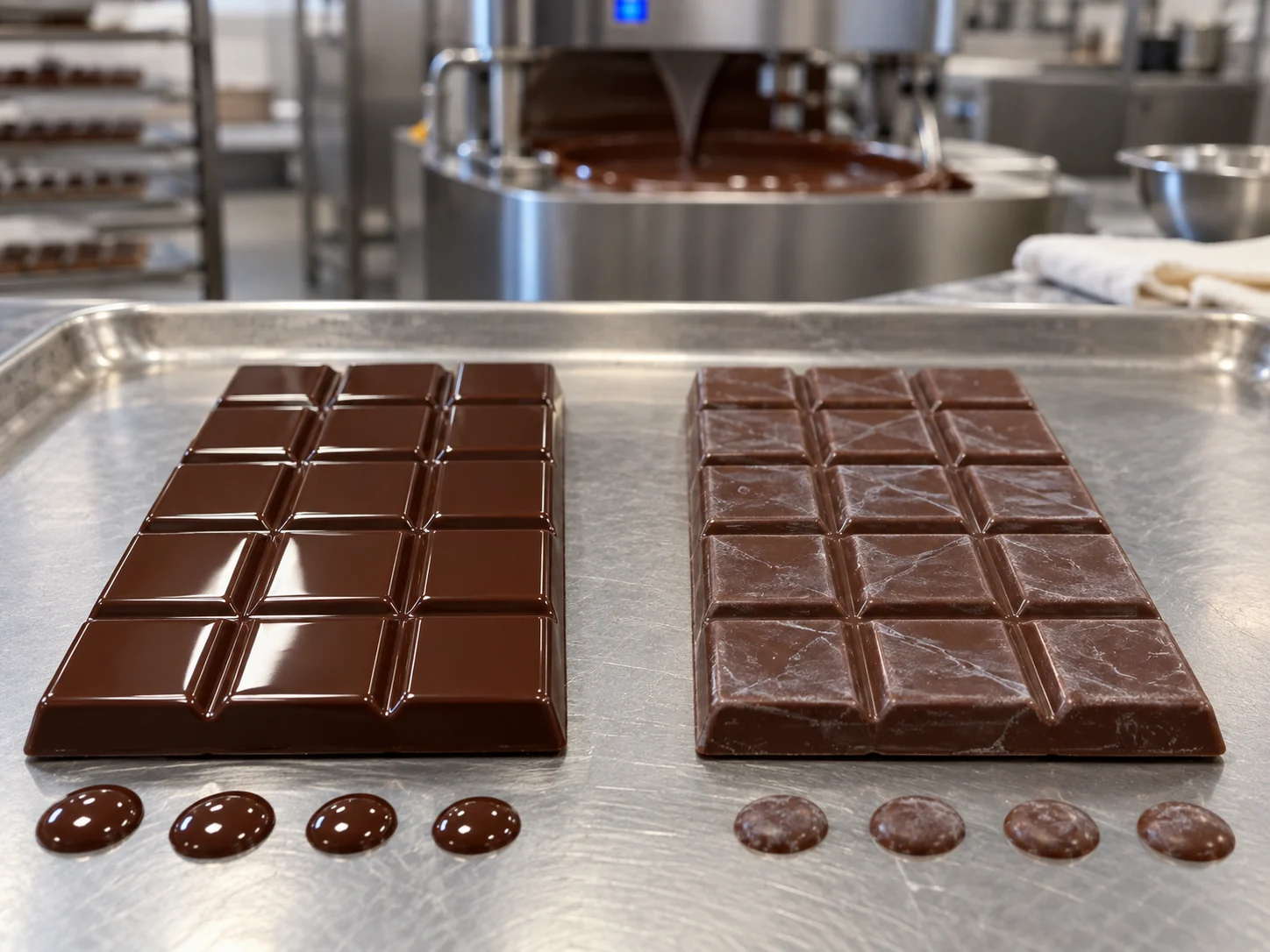
| Dull or grey surface | Crystal condition, temperature history, cooling, or storage. | Check the actual chocolate temperature at the outlet, agitation, cooling profile, and room humidity. |
| Streaks or uneven colour | Inconsistent crystallisation, mixed chocolate history, or poor flow distribution. | Check temperature stability, return flow, seed or crystallisation method, and whether the circuit was fully cleaned. |
| Shell is too thick or too thin | Viscosity, outlet flow, curtain height, belt speed, or product temperature. | Compare the chocolate curve, pump rate, nozzle or curtain setting, and line speed under the same recipe. |
| Piece does not release cleanly | Crystal condition, mould temperature, cooling, mould surface, or design. | Check tempering, cooling time, mould cleanliness, mould material, and shrinkage before changing the machine. |
| Flow changes during a run | Tank level, temperature drift, air in the circuit, viscosity change, or partial blockage. | Record tank and outlet temperatures, inspect return flow, check seals and valves, and verify the actual chocolate load. |
| Air bubbles in moulded pieces | Entrained air, splashing, high agitation, mould vibration, or poor venting. | Check loading method, agitator speed, pump suction, mould vibration, and the route used to return chocolate. |
How should a chocolate tempering machine be cleaned?
Cleaning is part of the equipment specification, not a task to decide after installation. Before placing an order, ask for the written cleaning and sanitation procedure for the exact machine, including:
- which food-contact parts are removable and how they are accessed;
- how chocolate is drained or recovered from the tank, pump, pipes, valves, and outlet;
- which temperatures and tools are permitted during cleaning;
- how seals, gaskets, hoses, and sensors are inspected and replaced;
- how the machine is dried before the next chocolate batch;
- how allergen or colour changeover is recorded;
- which spare parts and maintenance checks are included in the handover.
Do not confuse hygienic design with a certification claim. Food-contact materials, sanitation instructions, local requirements, and validation responsibilities should be confirmed in the contract and with the plant’s food-safety team. The final procedure should follow the machine supplier’s manual and the destination market’s applicable requirements.
What should be included in a chocolate tempering machine quotation request?
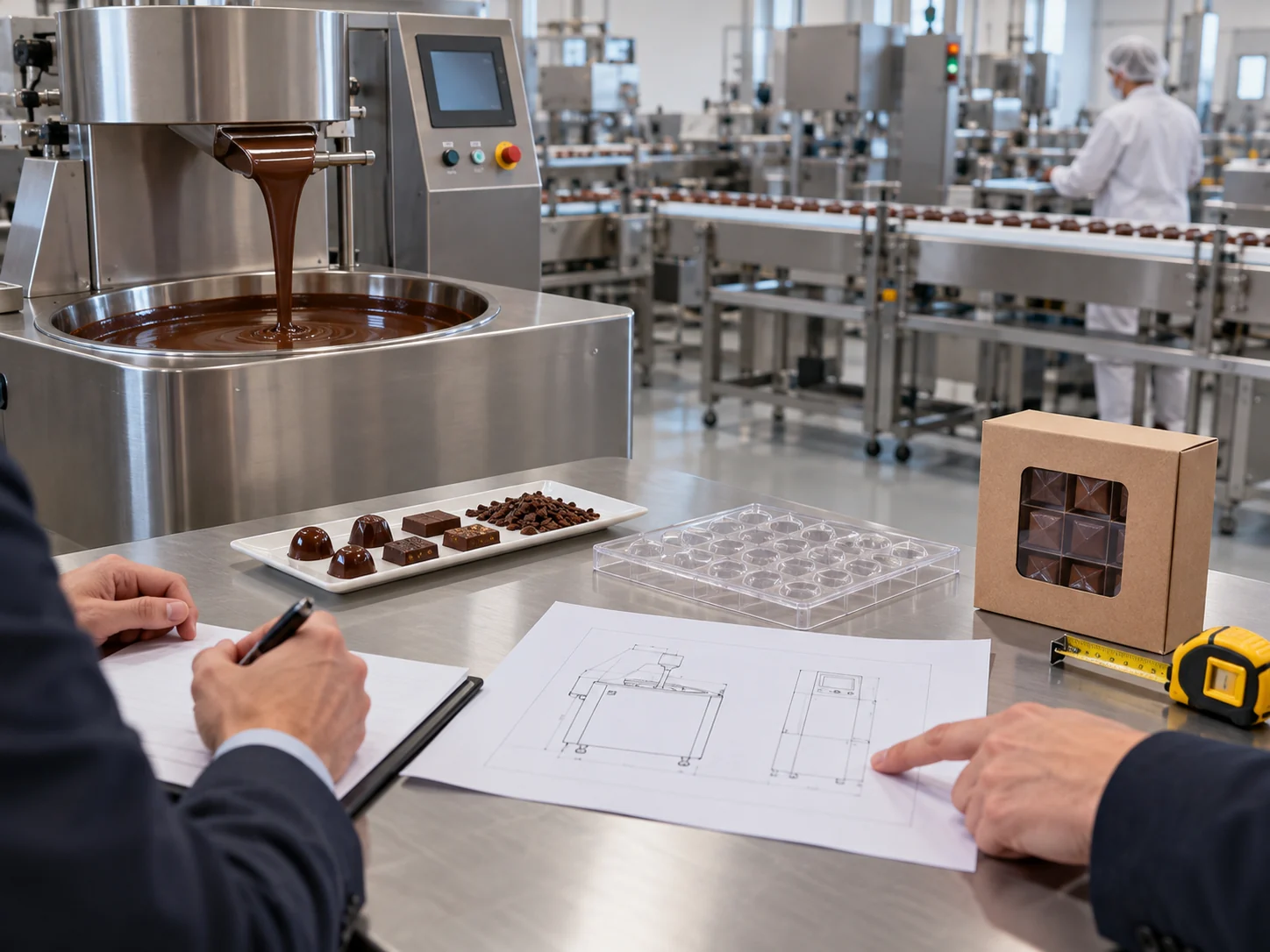
A short but complete inquiry helps a supplier recommend a machine instead of sending a generic catalogue. Include:
- product type: bar, praline, shell, enrobed centre, biscuit coating, hollow piece, or another format;
- chocolate type and recipe status, including whether the chocolate contains inclusions;
- target piece weight, dimensions, mould layout, shell thickness, or coating width;
- target output per hour, per shift, and at peak demand;
- batch or continuous preference, number of recipes, and expected changeover;
- downstream equipment already owned, such as a moulding line, enrober, cooling tunnel, or packaging machine;
- available power, cooling, compressed air, floor space, and operator access;
- destination market, delivery location, installation expectation, spare parts, training, and service response;
- sample availability and the test criteria for gloss, snap, release, flow, weight, and coating coverage.
Chocolate tempering machine FAQs
What is a chocolate tempering machine?
It is a controlled heating, cooling, agitation, and holding system that prepares chocolate for a stable working condition before moulding, enrobing, depositing, or dispensing.
What temperature is used in a chocolate tempering machine?
The setting depends on the chocolate formulation and supplier curve. As a reference, one Callebaut tutorial gives a 45 °C melt example, then about 31 °C for dark chocolate and 29 °C for milk or white chocolate. Confirm the actual curve with a trial.
What is the difference between a chocolate melter and a tempering machine?
A melter makes chocolate fluid and holds it warm. A tempering machine adds a controlled heating and cooling profile with movement so the chocolate reaches a suitable crystal condition for the finished product.
Is batch or continuous tempering better?
Batch tempering generally suits varied recipes and smaller or intermittent runs. Continuous tempering is worth evaluating for longer runs with stable recipes and matched downstream demand. The best choice depends on output, changeover, cleaning, and line integration.
How do I size a chocolate tempering machine?
Size it from the required hourly output, product format, chocolate viscosity, peak downstream demand, usable working load, changeover pattern, and utilities. Ask the supplier to state both usable load and tested output for the intended recipe.
Can a tempering machine connect to a moulding or enrobing line?
Yes, many systems are designed to feed a depositor, moulding route, or enrober. Confirm outlet flow, pipe temperature, return circuit, belt speed, cooling conditions, connection heights, and change parts as one process.
Technical references for chocolate tempering
These public technical references are useful for understanding the process and comparing supplier terminology. They describe their own methods or equipment, so their settings and capacities should not be copied as a universal JY Machine specification.
- Callebaut Chocolate Academy: using a chocolate tempering machine – tempering principles and an example working sequence.
- Selmi Group: professional chocolate tempering machines – examples of machine families, tank sizes, and line accessories.
- Selmi Group: bean-to-bar chocolate machinery – an example of how tempering sits within a wider chocolate processing route.
Plan the chocolate line around the finished product
The right chocolate tempering machine is the one that fits the recipe, working window, product format, output, downstream demand, cleaning routine, and plant utilities at the same time. If the project is still at concept stage, start with a sample or drawing and define the finish, snap, weight, and coating or moulding result that must be repeated.
For a complete equipment discussion, send the product type, chocolate type, target output, piece or coating dimensions, existing equipment, package format, destination market, and required delivery timing through the JY Machine contact page. This gives the technical team enough context to discuss a tempering, moulding, enrobing, cooling, and packing route without assuming that one standard machine fits every chocolate product.