Short answer: A candy making machine is usually a connected process system, not one universal appliance. The right setup depends on the candy format, recipe behavior, target output, forming method, cooling time, changeover pattern, and packing route. A cooker may prepare the syrup, but the depositor, moulds, cooling section, inspection point, and wrapper determine whether the finished line is usable.
This guide is written for manufacturers, engineers, and procurement teams comparing a candy making machine or a complete candy production line. It focuses on the decisions that should appear in an equipment brief before anyone compares a headline capacity or requests a quotation.
What a candy making machine actually includes
When buyers say ??andy making machine,??they may mean a single depositor, a hard-candy forming cell, or a full line. That difference matters. A machine can perform its own operation correctly and still fail to match the next step if the transfer height, temperature, belt speed, or product spacing is wrong.
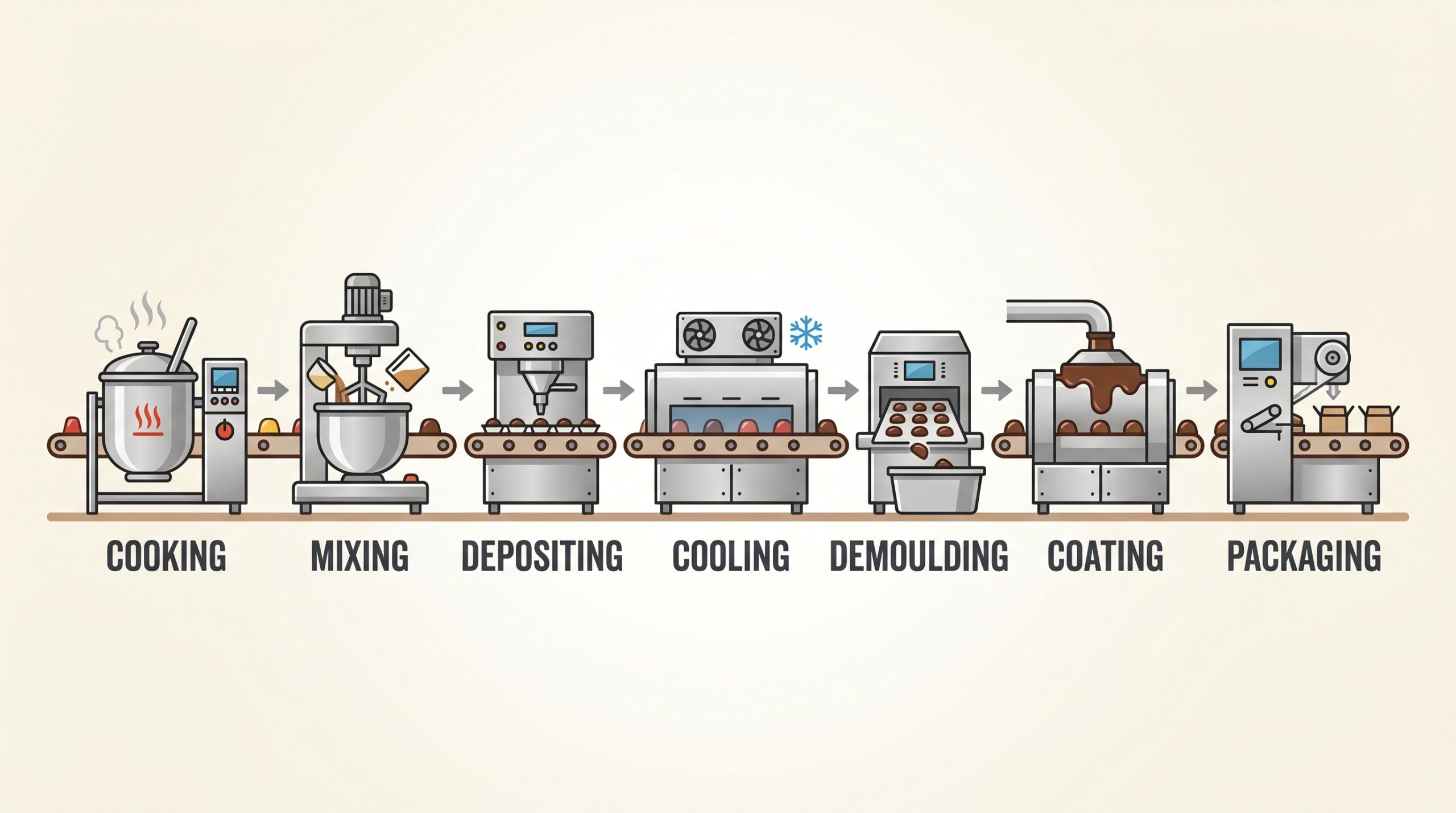
Start by naming the job of each process stage. This makes supplier quotations easier to compare and exposes missing equipment early.
| Process stage | Typical job | Buyer question |
|---|---|---|
| Ingredient preparation | Measure, dissolve, blend, or preheat the recipe | Which ingredients arrive as liquids, powders, inclusions, or premixes? |
| Cooking | Heat the syrup or candy mass to the required process condition | Is the recipe batch-based or continuous, and how is heat controlled? |
| Holding and transfer | Keep the mass workable while it moves to forming | What temperature, viscosity, and residence time must the transfer maintain? |
| Forming | Deposit, rope-size, cut, mould, fill, or insert a stick | Does the product need cavities, a rope route, a center, a stick, or a special shape? |
| Cooling and conditioning | Set the piece so it can be handled without distortion | What cooling length and product spacing are needed at the planned rate? |
| Inspection and packing | Check the piece, wrap it, and move it into cases or bulk packs | What pack format, film width, and handoff conditions apply? |
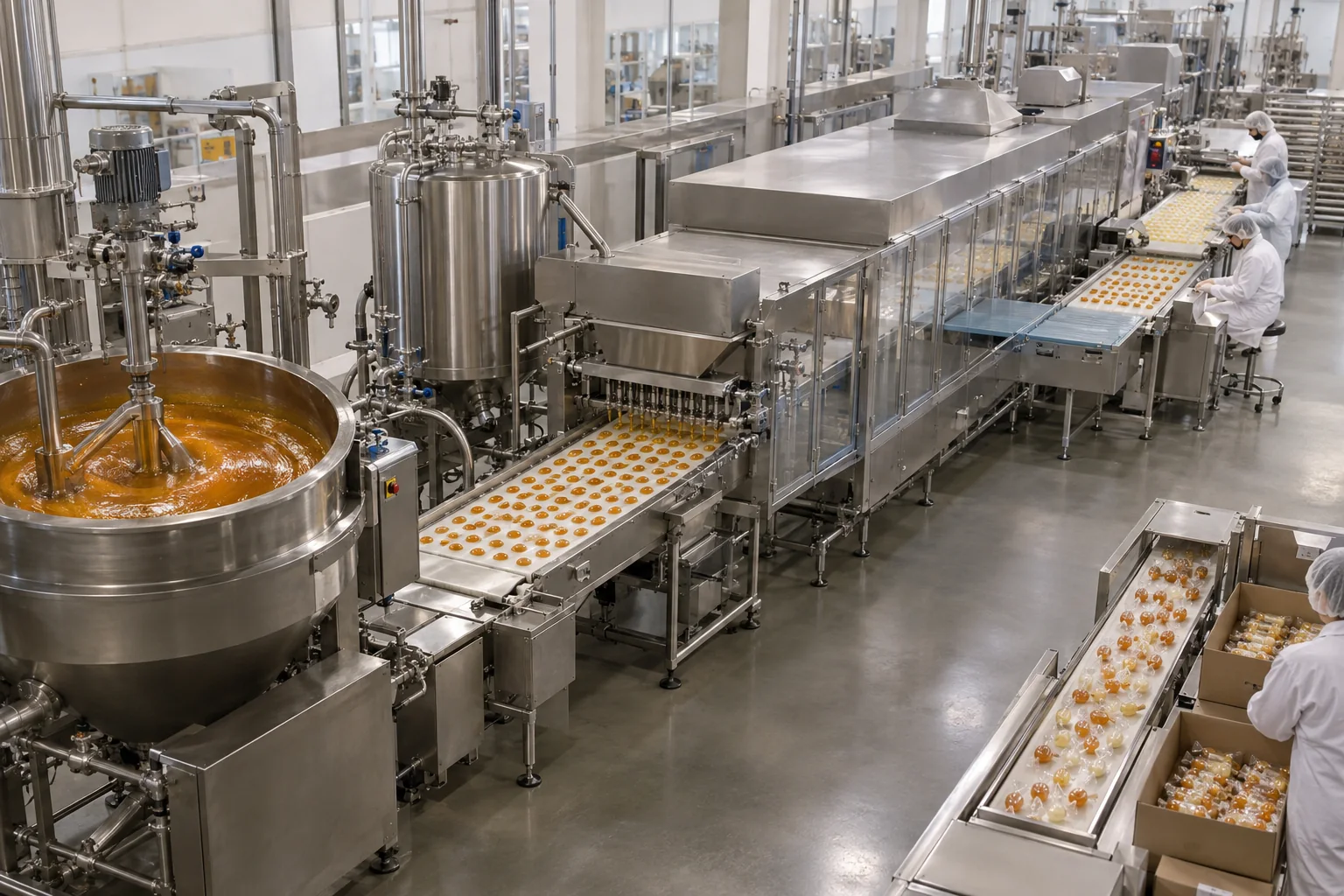
A cooker sets the starting conditions
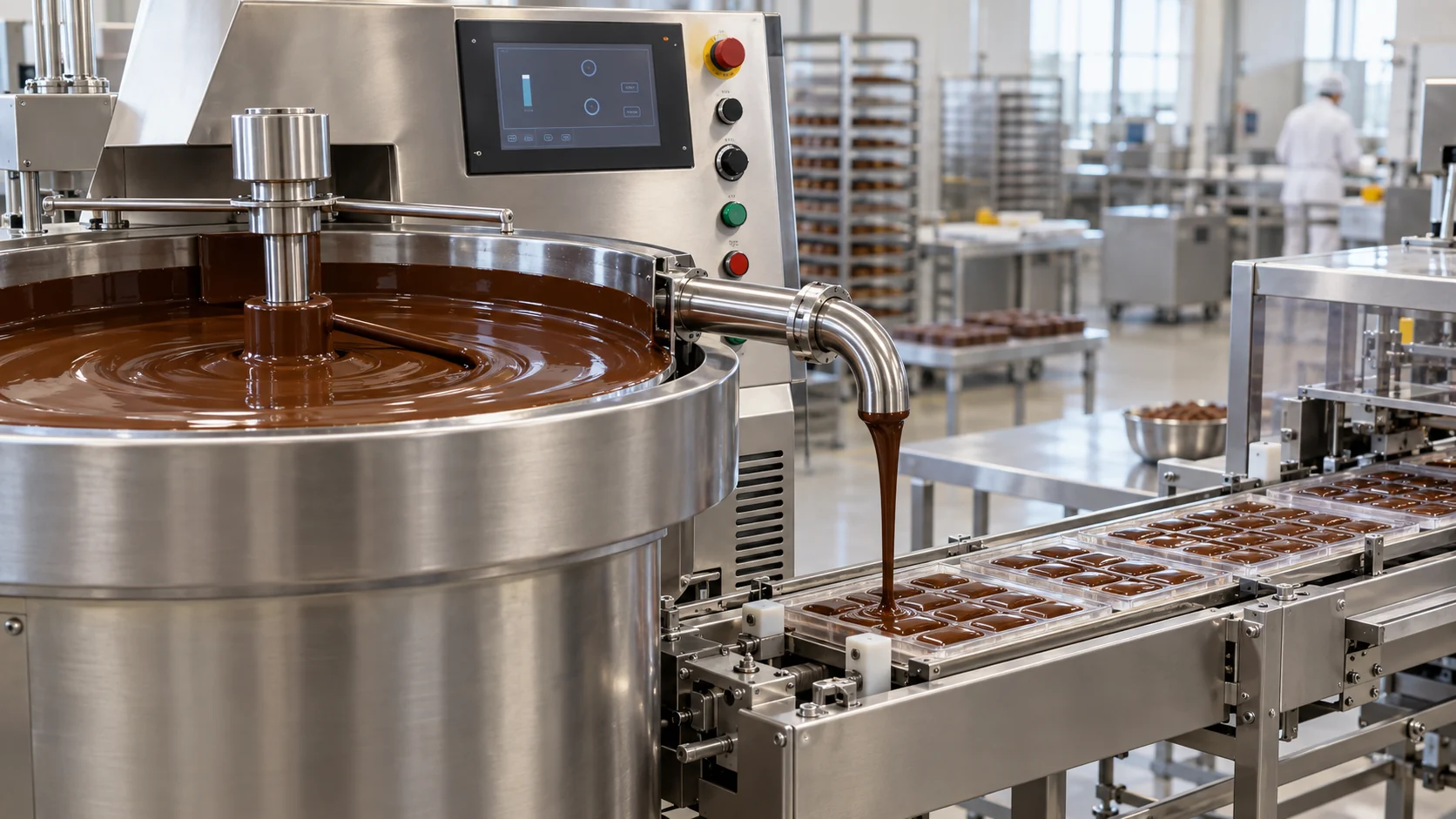
The cooker controls the first major transition in the process. The useful specification is not simply ??eating.??Buyers should document the recipe, batch size or feed rate, heating medium, agitation needs, transfer method, and the condition required at the outlet. A syrup that leaves too hot, too cool, too wet, or too viscous changes the workload for every machine after it.
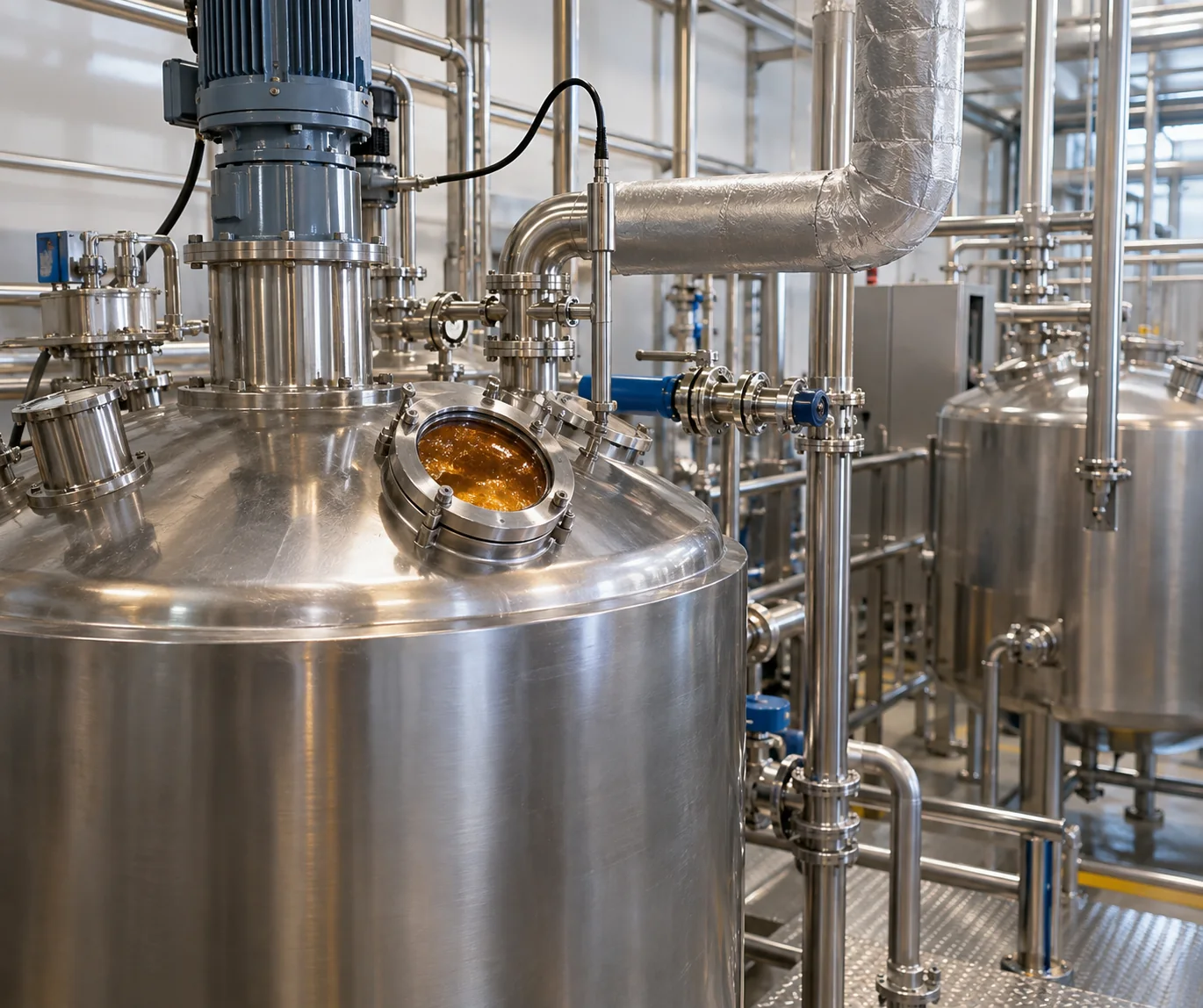
A stainless vessel with a jacket, agitator, sanitary valves, and a controlled transfer path may be part of the system. The final configuration still needs a recipe trial and a supplier confirmation because sugar systems behave differently from gummy or soft-candy masses.
A depositor controls piece-to-piece consistency
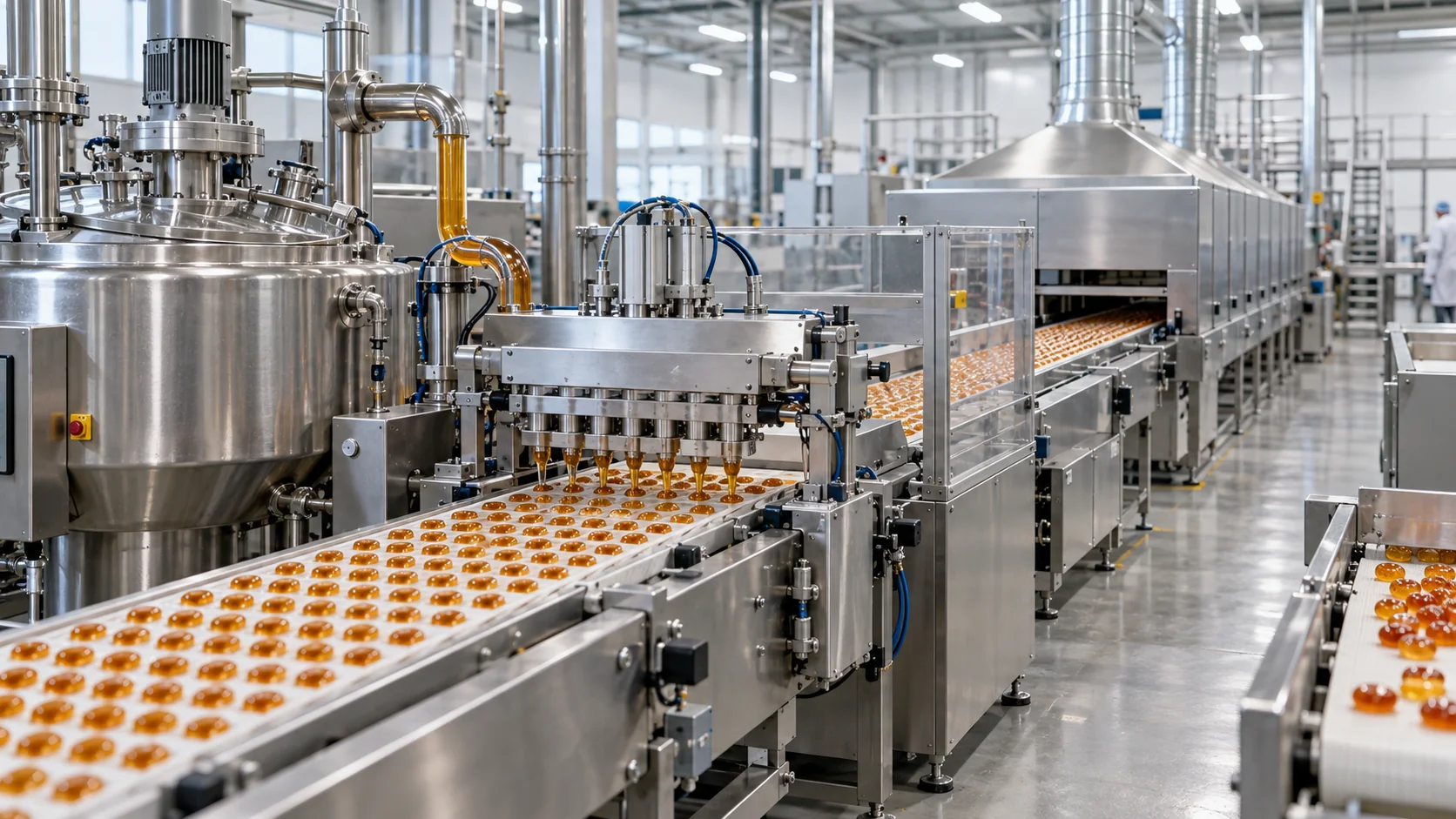
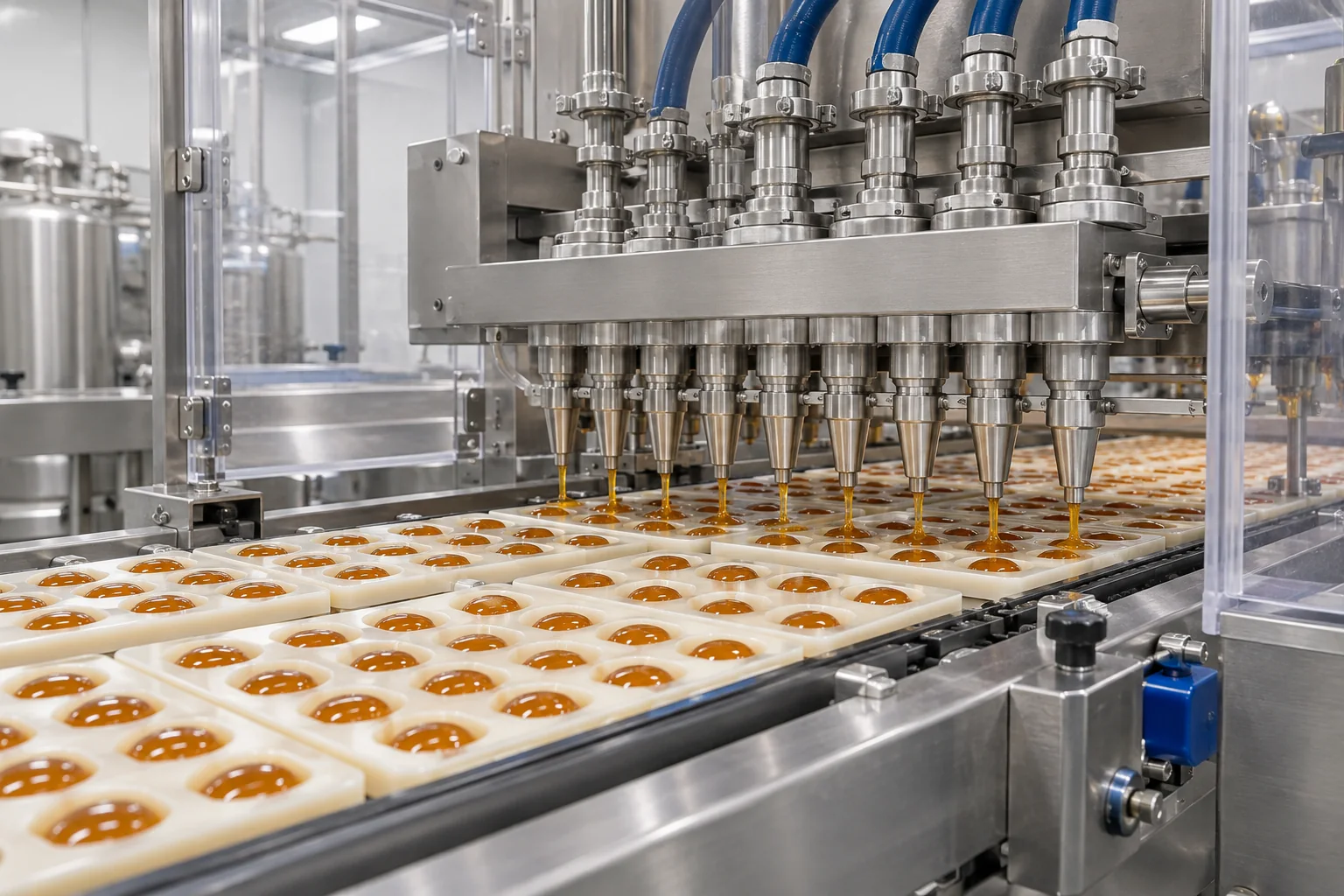
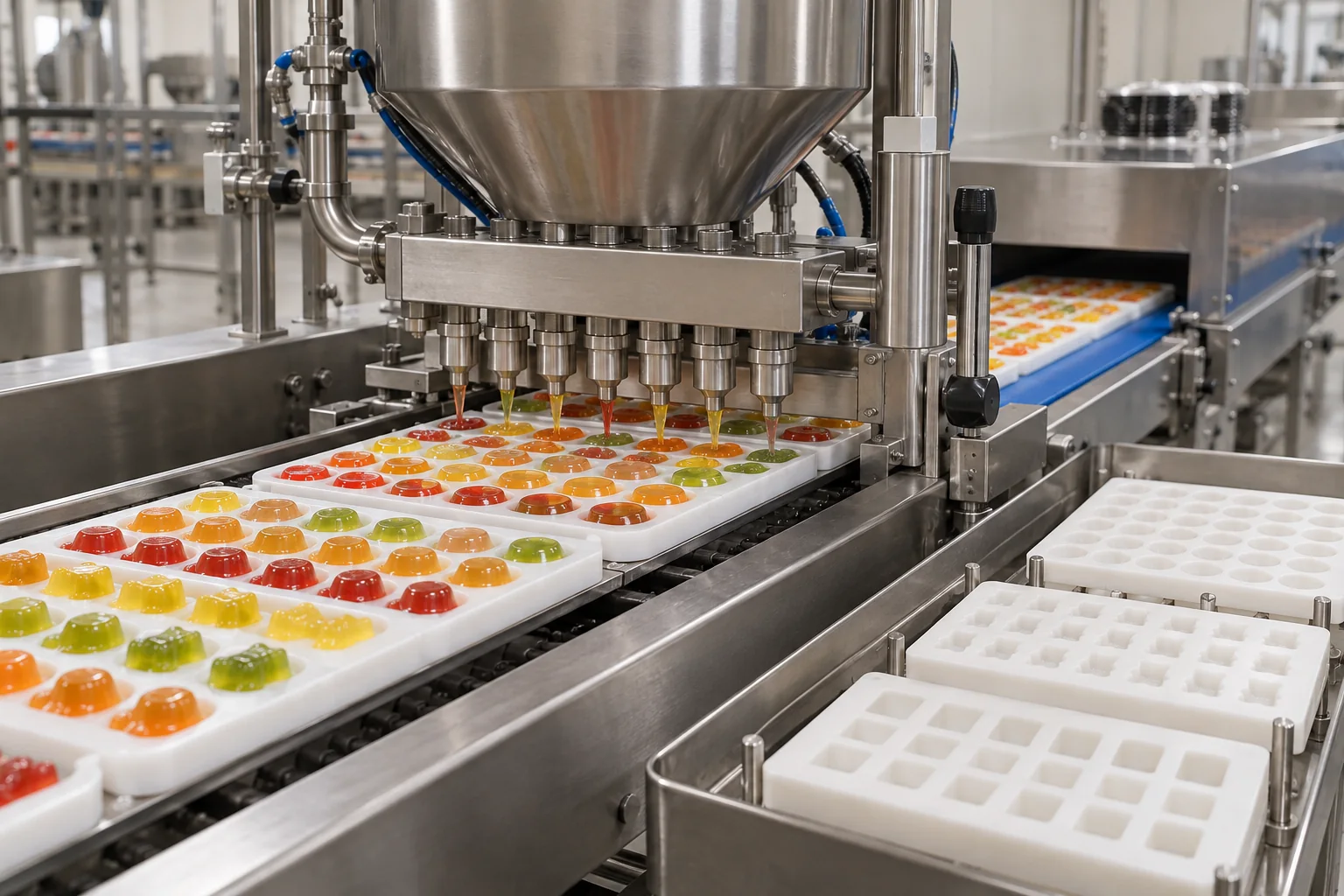
A depositor meters the candy mass into mould cavities or onto a forming surface. Nozzle count is only one part of the decision. The nozzle arrangement, cutoff behavior, product temperature, cavity layout, mould release, and conveyor timing all affect weight and shape.
If the product has multiple colors, layers, stripes, or a center, the request should describe that structure directly. Do not assume that a machine designed for plain pieces can be converted by changing a nozzle. Ask which contact parts and change parts are included, and how long a controlled changeover takes.
Choose the machine by candy format
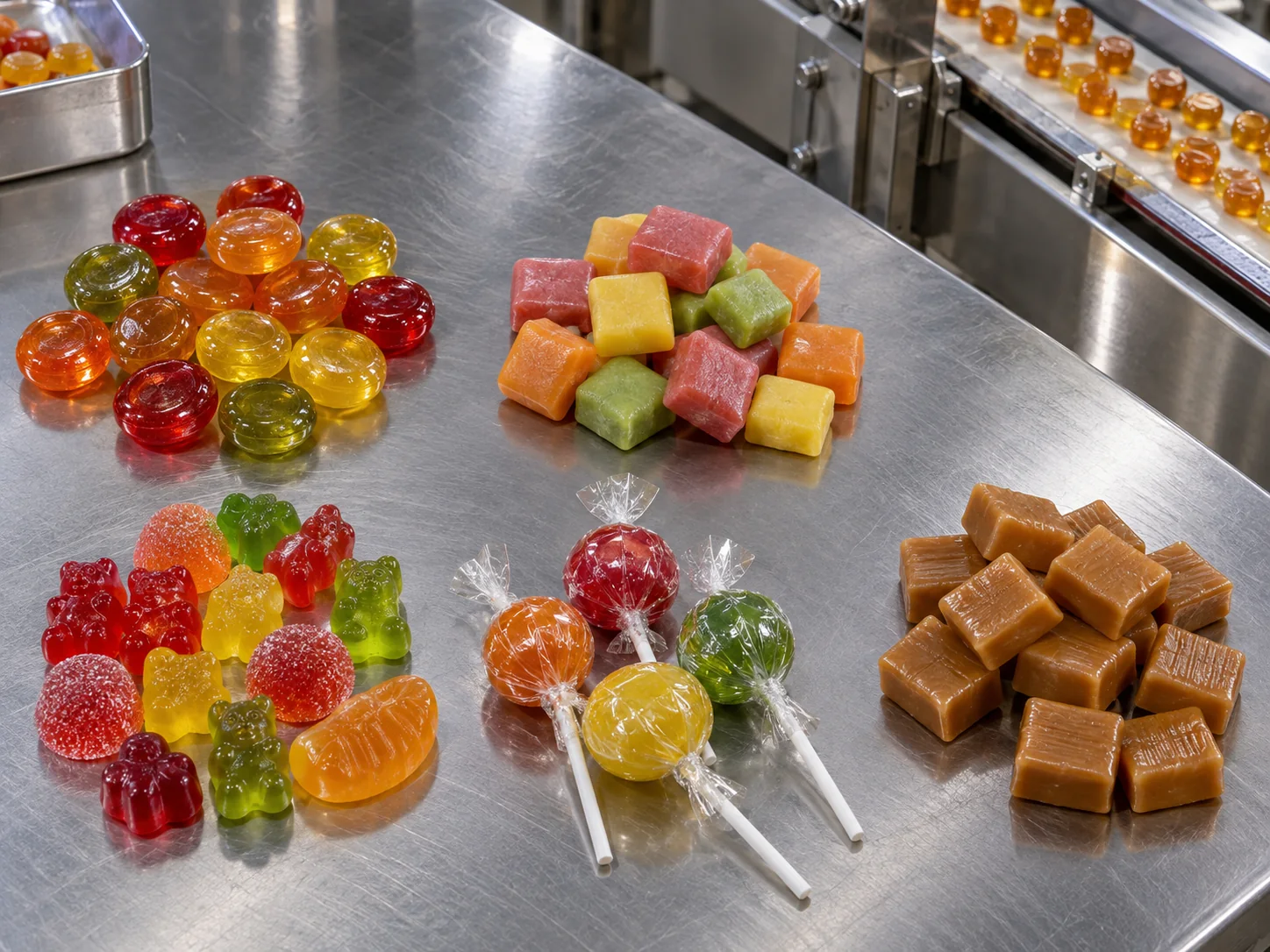
The product format is the first practical filter. A buyer who starts with a machine name can end up with an impressive-looking system that cannot make the intended piece at the required rate.
Hard candy
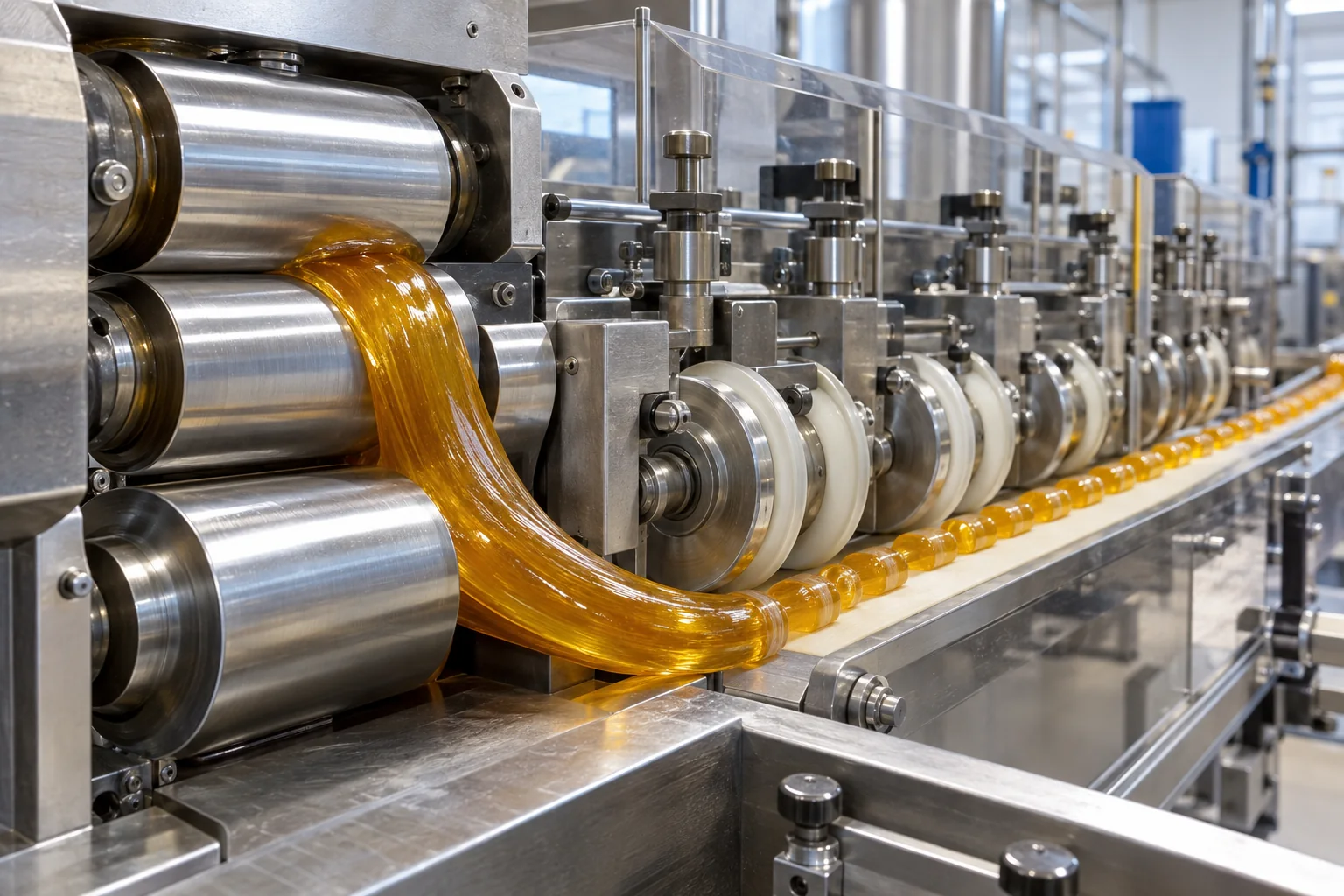
Hard candy lines often combine cooking with a rope, depositing, or moulding route. The machine choice depends on piece geometry, whether the product is filled, the required finish, and how the mass moves from the cooker into the forming section. A rope route may need sizing and cutting equipment. A deposited piece may need a mould conveyor and a controlled cooling path.
For a hard-candy project, compare the forming method before comparing speed. A high piece count is not useful if the product arrives at the wrapper warm, sticks to the mould, or loses its shape on the transfer.
Soft candy and gummy products
Soft candy and gummies usually put more attention on depositing, mould material, cavity release, setting time, and handling. The mass may need a different temperature window and flow behavior from a clear hard-candy syrup. Product size, shape detail, inclusions, and surface finish can also change the mould and cooling requirements.
Review the gummy and jelly candy making machine page as a same-site starting point, then send the supplier the actual recipe and sample shape. The page is a product destination, not a substitute for a product trial.
Starch-moulded products
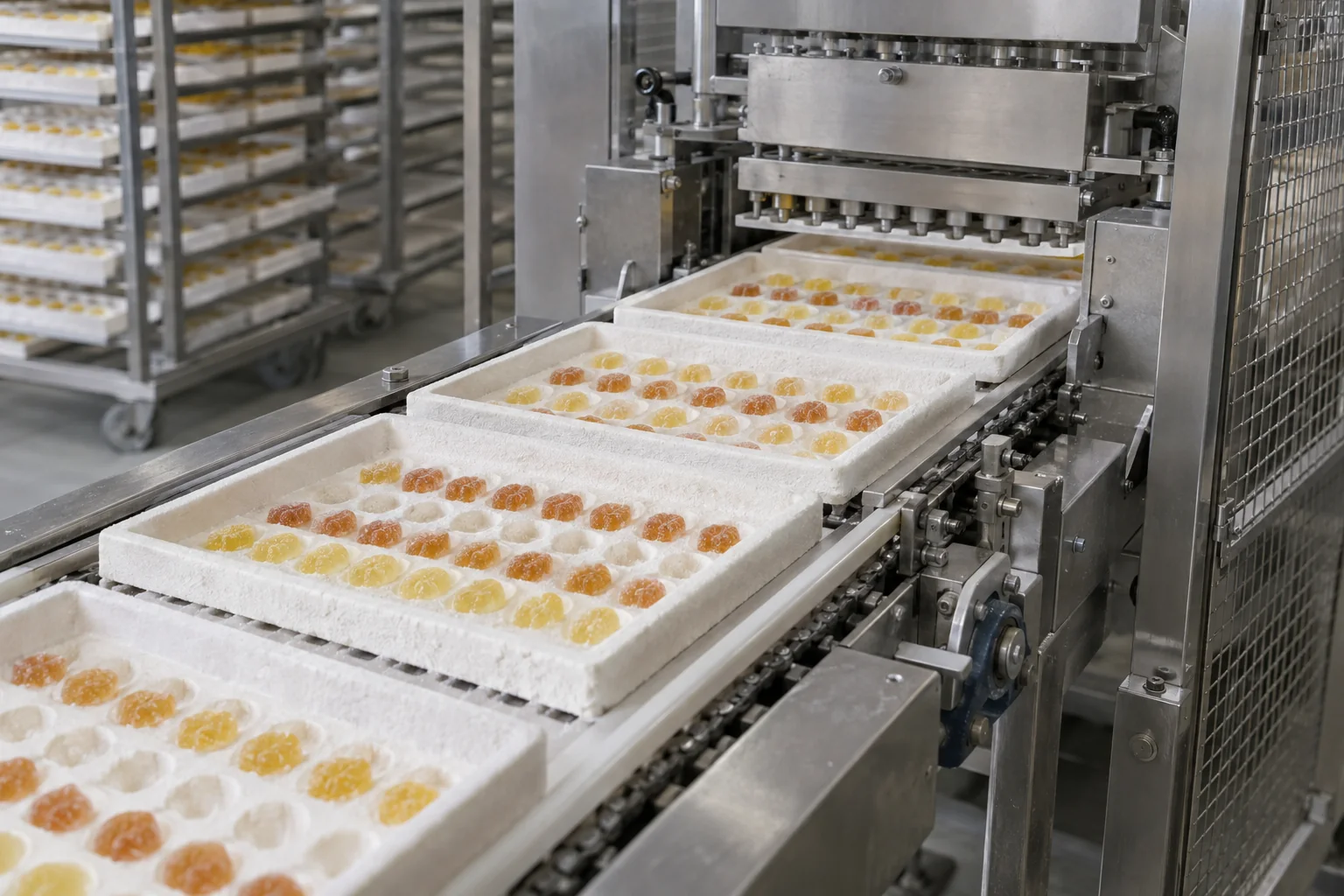
A starch moulding route uses trays and a forming system rather than relying only on a fixed polymer mould. The tray-handling method, starch condition, impression quality, dust control, and tray circulation become part of the equipment discussion. This route may suit a product that needs a particular setting or shape, but it creates its own cleaning and material-handling questions.
Lollipops and stick products
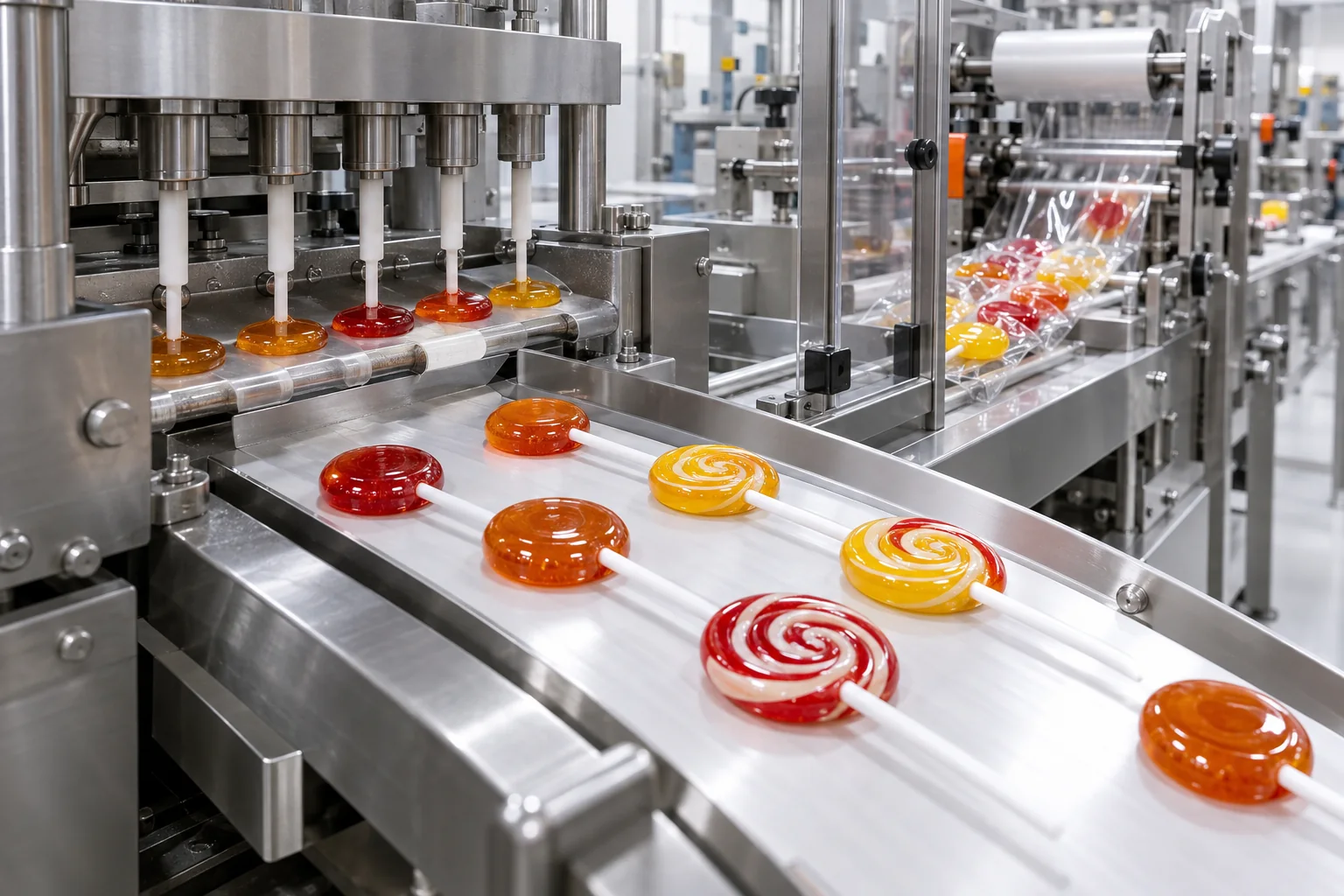
Lollipop production adds stick feeding, insertion or placement, piece orientation, and wrapping. The machine must keep the stick centered and the candy stable while the product moves through the downstream route. Stick length, candy diameter, spiral or plain shape, and the desired wrapper all belong in the first specification.
The lollipop making machine page can be used as a product reference when you prepare that brief. Ask for the exact forming sequence and the change parts for the proposed product rather than assuming all lollipop shapes use the same tooling.
Caramel, toffee, and specialty pieces
Caramel and toffee can need a different cooking, pulling, cutting, or depositing sequence from clear boiled candy. Fat content, inclusions, temperature sensitivity, and the desired bite affect the machinery. Specialty pieces may also need layered depositing, filling, embossing, or a mould made for a particular release pattern.
Describe the finished piece before naming a machine. Include a sample, drawing, or reference dimensions if available. A supplier can then confirm whether the line needs a cooker, depositor, rope former, mould, cooling tunnel, or a combination.
How the production process works
The exact recipe changes the settings, but the equipment logic is easier to understand when the line is read in order:
- Prepare the recipe. Weigh and combine the ingredients in the way the formula requires. Record solids, inclusions, color, flavor, and any material that changes flow.
- Cook or dissolve the mass. Apply controlled heat and agitation. The process target should include the outlet condition, not just a heater rating.
- Hold and transfer. Move the mass through a vessel, pump, pipe, or feed system without letting it set or separate. The transfer route should match the viscosity and temperature.
- Form the piece. Deposit into cavities, size and cut a rope, shape a lollipop, or use another forming method that fits the product.
- Cool and set. Give the piece enough time and controlled airflow or temperature to become stable for handling. A short cooling section can limit the whole line.
- Inspect and reject. Check shape, weight, surface, stick position, and visible defects before the product reaches the wrapper or case packer.
- Pack and discharge. Match product spacing, wrapper speed, film, and case handling to the rate of the forming equipment.
Capacity: look past the number on the brochure
Capacity can be stated as kilograms per hour, pieces per minute, batches per shift, or another measure. These numbers cannot be compared until the product, piece weight, cavity count, operating time, and downstream losses are clear.
For planning, separate the target saleable output from the machine’s theoretical rate. A line that runs quickly for a short test may not deliver the same output after warm-up, cleaning, mould changes, inspection rejects, wrapper stops, or recipe changes.
| Capacity term | What it tells you | What to verify |
|---|---|---|
| Batch size | How much product enters a batch cycle | Cook time, discharge time, usable load, and number of batches in the shift |
| Hourly mass rate | Approximate mass moved through the line | Recipe, moisture loss, piece weight, and whether the number is tested or theoretical |
| Pieces per minute | Forming and handling speed at a set piece size | Cavity count, spacing, reject rate, and wrapper compatibility |
| Saleable output | Product that can actually be packed and shipped | Warm-up, stoppages, changeover, cooling, inspection, and packing losses |
A simple planning check is to multiply the intended piece weight by the required piece rate. Then add a realistic allowance for stops and changeover. Use that result to ask for a test condition, not as a promise of final production output.
Batch or continuous candy production?
Batch and continuous systems solve different operating problems. Neither is automatically the better choice.
| Architecture | Often fits | Questions before selection |
|---|---|---|
| Batch cooking and forming | Several recipes, intermittent orders, or a line that changes products often | How are batches scheduled, emptied, cleaned, and kept within the forming window? |
| Continuous cooking and forming | Longer runs with a stable recipe and steady downstream demand | What happens during a wrapper stop, recipe change, or interruption in cooling? |
| Modular forming cell | Multiple products that share some upstream equipment | Which moulds, nozzles, belts, and controls can be changed without a long outage? |
| Integrated line | Projects that need matched handoffs from cooking to packing | Which supplier owns the interface, commissioning test, drawings, and line acceptance? |
In practice, many projects use a mixed architecture. The important point is to define the operating pattern first. A continuous section can create a bottleneck if the packing machine stops, while a batch section can create unnecessary labor if the same recipe runs all day.
Specifications to put in a candy machine RFQ
A clear request for quotation helps a supplier answer the real project rather than a generic keyword. Include as many of these fields as you can:
- Product: hard candy, gummy, jelly, soft candy, lollipop, caramel, toffee, or another format.
- Recipe: ingredient families, solids or moisture target, inclusions, layers, colors, flavors, and center filling if applicable.
- Piece data: target weight, dimensions, shape, tolerance, surface finish, stick details, and acceptable variation.
- Output: saleable kg per hour, pieces per minute, operating hours, shift pattern, and peak demand.
- Changeover: number of products, expected change frequency, cleaning method, and the parts that need to be removed.
- Utilities: electrical supply, heating medium, compressed air, cooling source, water, drainage, exhaust, and room conditions.
- Downstream route: cooling, inspection, wrapping, bagging, cartoning, case packing, or bulk handling.
- Factory constraints: available footprint, ceiling height, doorway, floor loading, sanitation zoning, and operator access.
- Documentation: layout, utility list, manuals, spare-parts list, training, commissioning, and acceptance-test method.
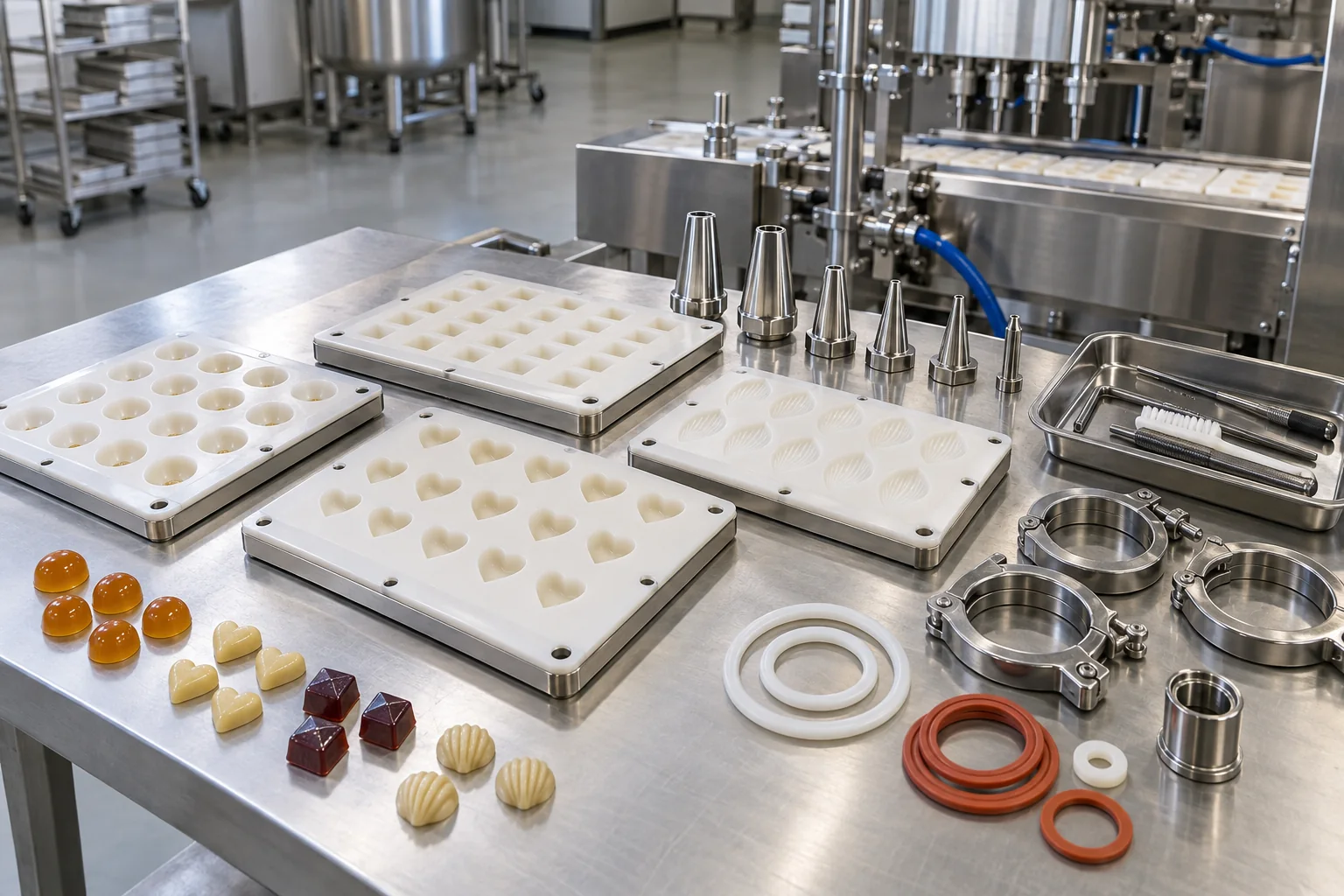
If you are comparing options from JY Machine, the small automatic candy depositing machine page is a useful example of why the forming stage should be named precisely. Send the intended product and output with the inquiry so the machine scope can be checked against the actual job.
Line integration: machines buyers often forget
The visible machine usually gets most of the attention. The handoffs cause more project surprises. Walk the product path from the cooker outlet to the shipping case and ask what happens at each change in temperature, speed, direction, and product spacing.
Cooling is a production constraint, not an accessory
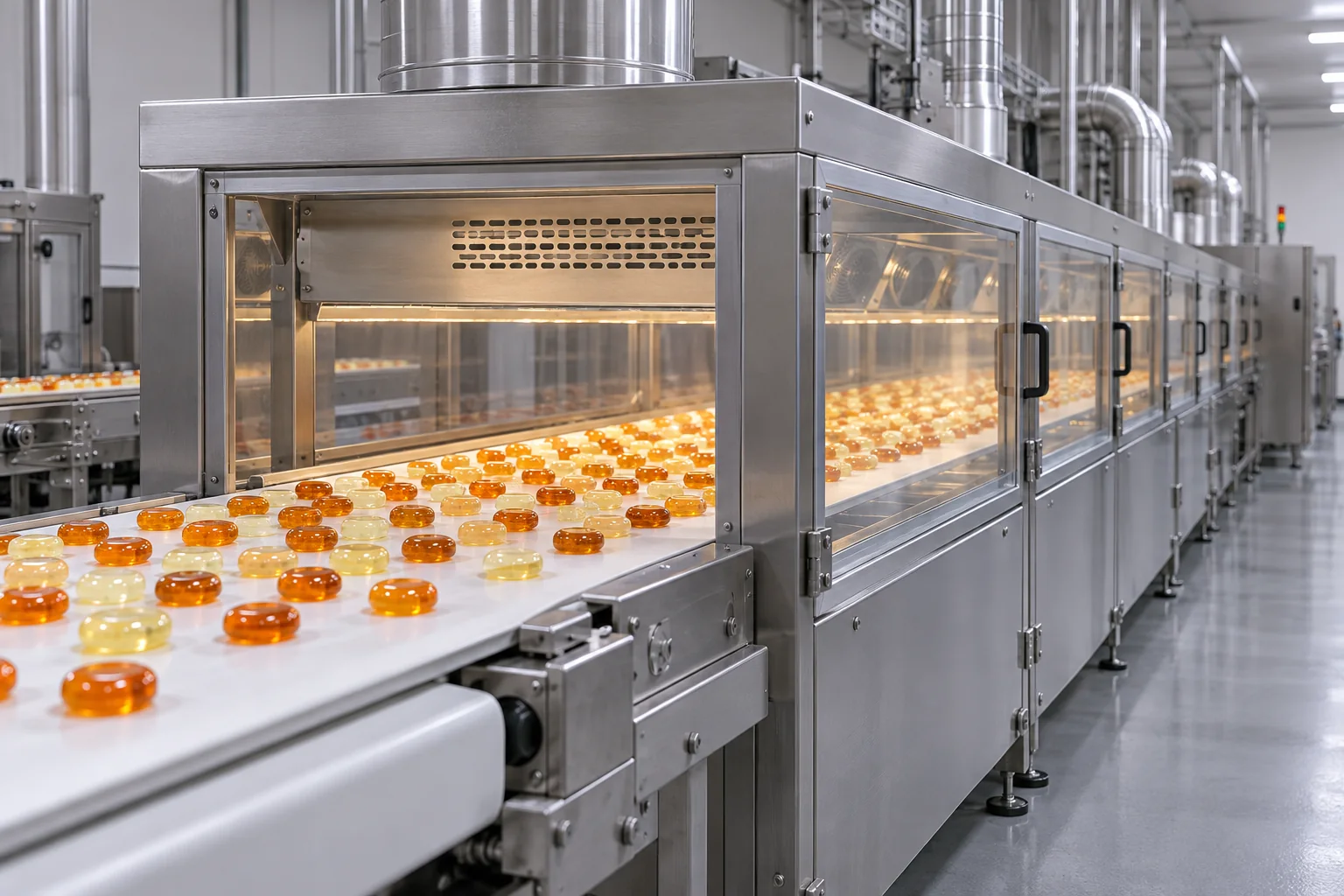
A cooling tunnel or controlled cooling section needs enough length, airflow, access, and belt width for the planned product. If the piece leaves the cooler tacky or too warm, the wrapper can create rejects. If the product cools unevenly, shape and surface can vary across the belt.
Utilities need a location and a duty
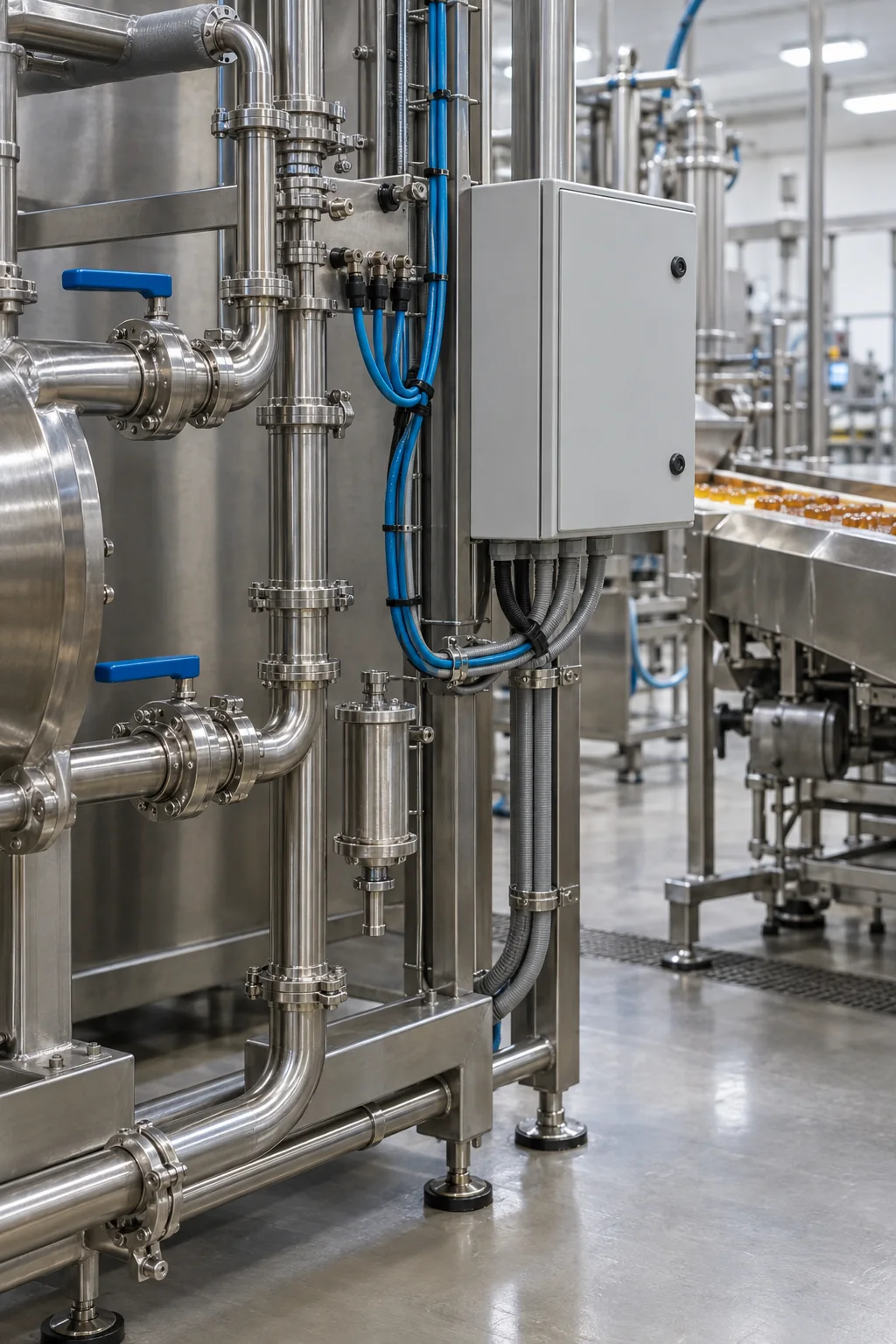
List utilities by machine and by operating condition. Electrical load alone does not describe a candy line. Heating, cooling, compressed air, water, drainage, ventilation, and control connections may all affect the layout. Ask for connection points, peak demand, and the conditions used for the supplier’s test.
Packing has to accept the product you actually make
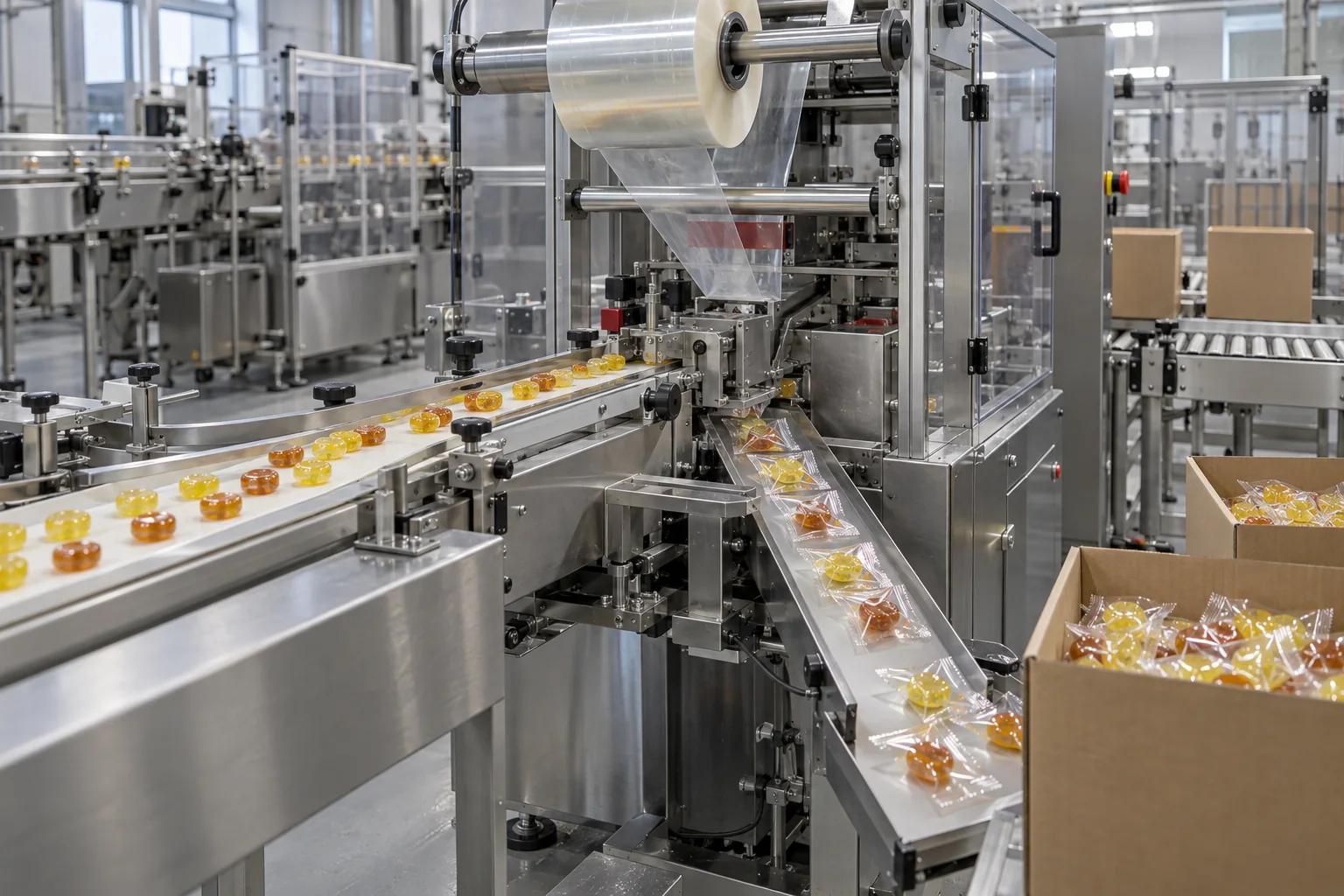
A wrapper sees product spacing, surface temperature, piece orientation, film behavior, and the rate of incoming pieces. Confirm the handoff instead of selecting the wrapper from a catalog photo. For a broader packaging discussion, the site’s candy and gummy cleaning system page is also relevant to the hygiene side of a candy-line layout, but it does not define the packing scope for every project.
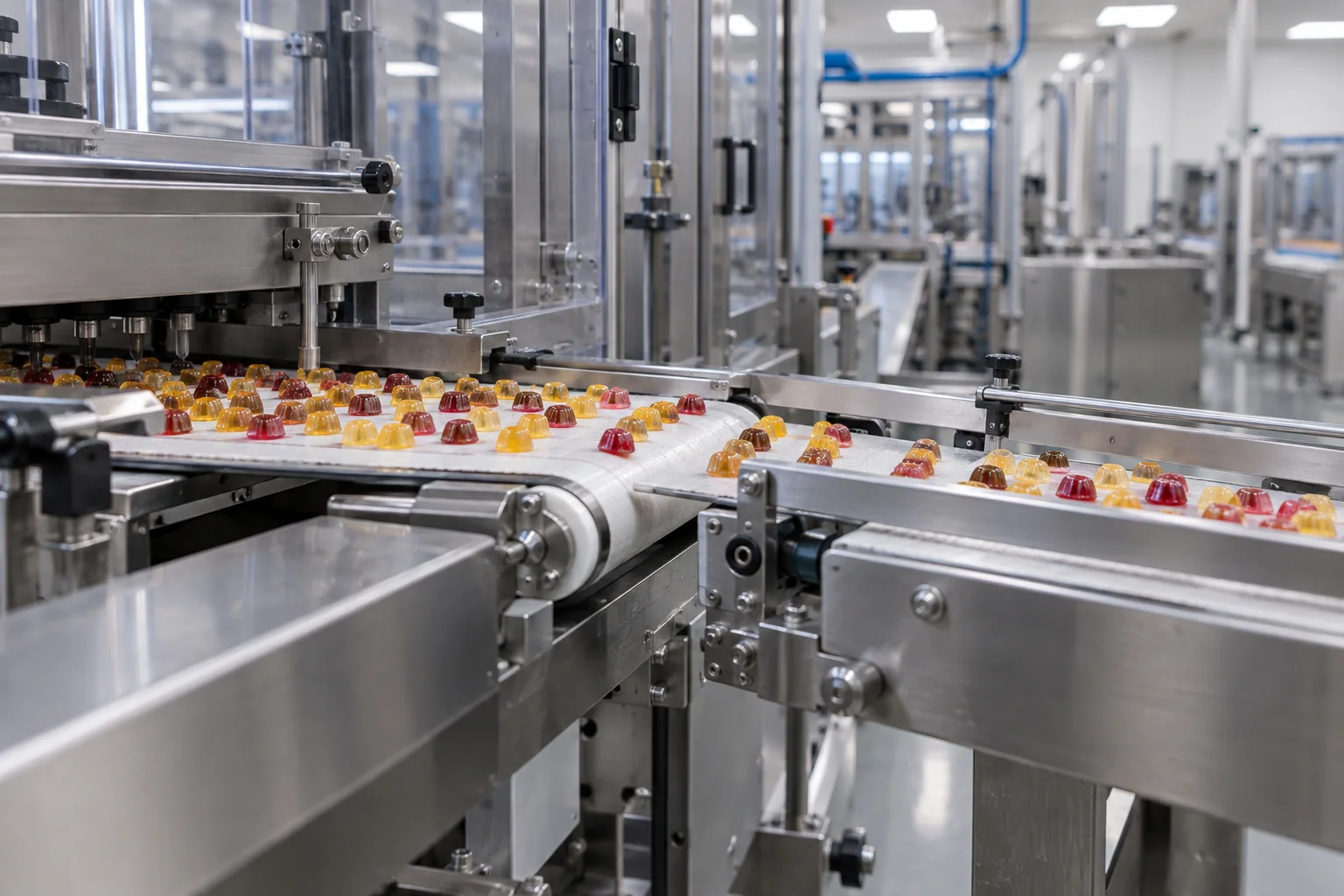
Transfers deserve their own drawing
Conveyor transfers look simple until a piece tips, sticks, bridges, or arrives at the wrong height. Include transfer plates, guide rails, belt widths, speeds, guarding, cleaning access, and reject handling in the layout review. A short transfer test can reveal a problem before the entire line is installed.
Cleaning, changeover, and operator access
A candy line is easier to run when the parts that touch product can be reached, removed, cleaned, and reinstalled without improvised work. Ask which parts are designed for routine cleaning, which require tools, and which must be protected from water or cleaning chemicals.
Changeover planning should include the time to drain or empty the process, remove moulds or nozzles, clean the contact surfaces, install the next set of parts, verify alignment, and bring the product back to specification. A line that runs quickly but takes too long to change may be the wrong fit for a mixed product schedule.
For a cleaning-focused discussion, see the candy and gummy kitchen CIP cleaning system. Treat the live product page as a starting point and ask for the cleaning boundaries, compatible chemistry, and actual project scope in writing.
How to compare candy machine suppliers
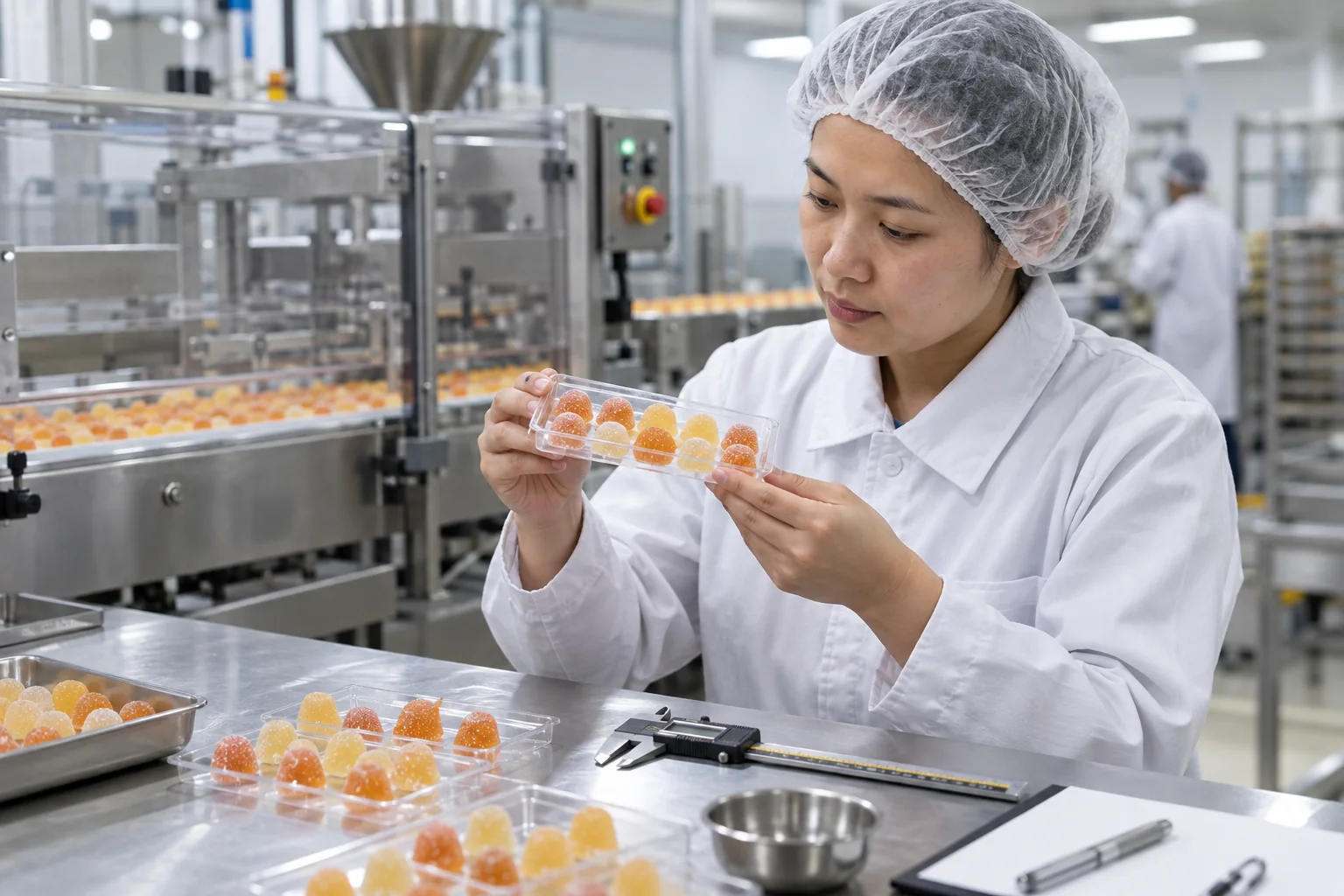
Ask each supplier to answer the same technical questions. This reduces the risk of comparing one complete line with another quotation that excludes moulds, cooling, controls, packing, or commissioning.
- What exact product, recipe, piece weight, and rate were used for the quoted capacity?
- Which equipment is included, and which upstream or downstream units are excluded?
- Which change parts are included for the proposed shapes, colors, sizes, and stick formats?
- What utilities, room conditions, floor loading, drainage, and access does the line need?
- How will a sample test, factory acceptance test, or site acceptance test be defined?
- Which drawings, manuals, spare parts, training, installation, and commissioning services are part of the offer?
- What happens when the product, wrapper, or cooling section stops?
Keep the result in a comparison sheet with one row per equipment item and one column for exclusions or assumptions. That simple record is usually more useful than a longer sales description.
Start with the product brief, not the machine name
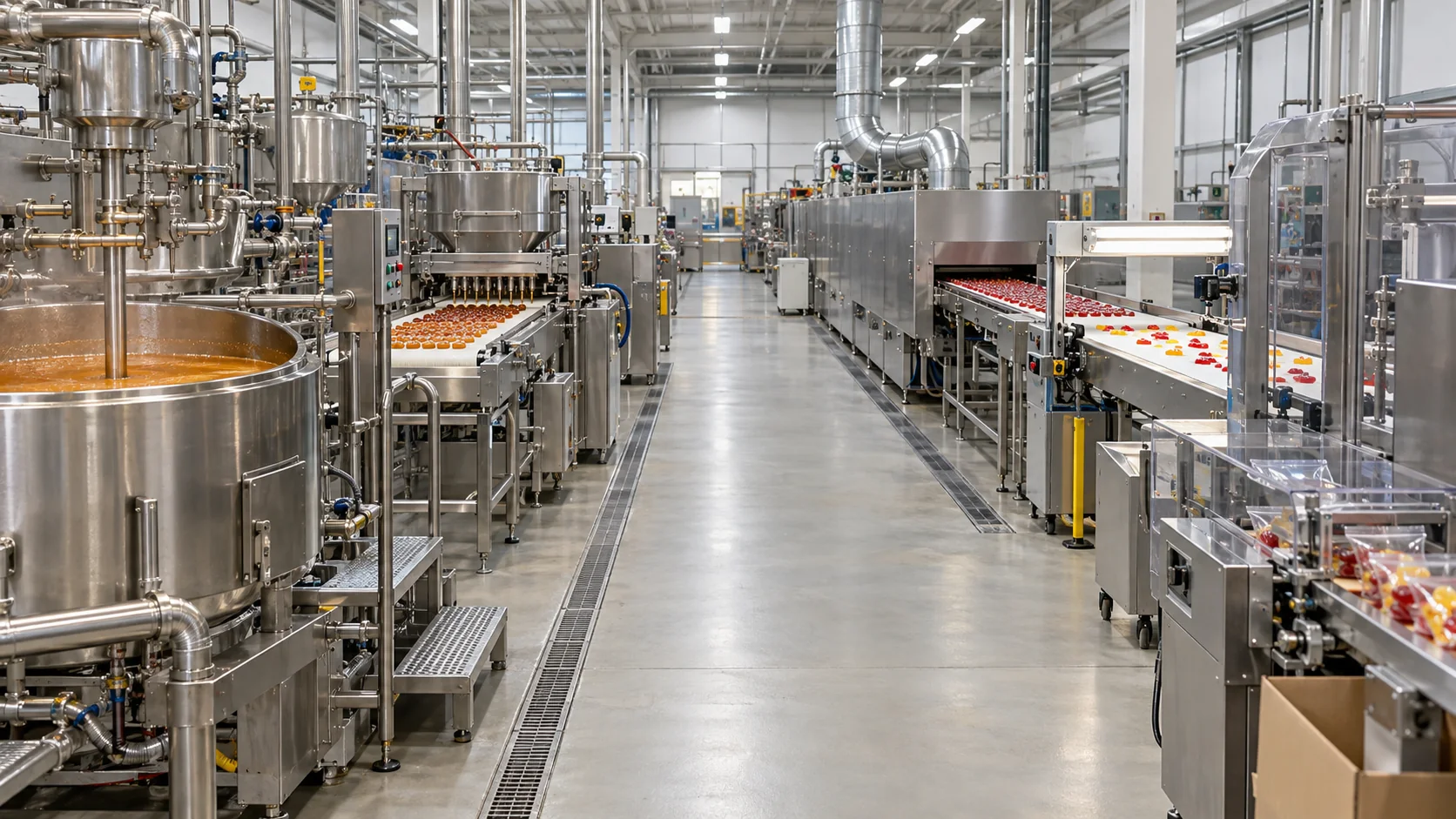
The strongest candy equipment request begins with the product. State the format, recipe behavior, piece data, target saleable output, shift pattern, changeover needs, utilities, factory constraints, cooling route, and packing format. Then ask the supplier to map those requirements to a cooker, depositor, forming system, cooling section, inspection point, and wrapper.
JY Machine publishes candy equipment destinations for hard candy, gummy and jelly products, lollipops, and related line components. If you need a tailored recommendation, send your candy product and capacity brief so the proposed scope can be discussed against your actual process.
Ready to scope a candy making machine?
Send the product format, recipe summary, target piece weight, required output, factory utilities, and packing method. Ask for a machine scope, layout, utility list, change-part list, and test conditions.
Frequently asked questions
What does a candy making machine do?
A candy making machine performs one or more controlled stages such as cooking, holding, depositing, forming, cooling, inspection, or packing. The phrase can describe a single machine or a connected production line, so the product and process scope must be stated before equipment is compared.
How do I choose a candy making machine?
Choose it from the candy format, recipe behavior, piece dimensions, target saleable output, forming method, cooling requirement, changeover pattern, utilities, and packing route. A supplier should confirm the proposed configuration against a sample or a defined test condition.
What is the difference between batch and continuous candy production?
Batch production prepares and moves a defined quantity through a cycle. Continuous production feeds a steady process route for longer runs. Batch systems can suit varied products, while continuous systems can suit stable recipes and steady demand, but the best choice depends on stops, cleaning, and changeover.
What capacity should a candy making machine have?
Set capacity from the required saleable output, piece weight, piece rate, shift pattern, cooling time, inspection losses, packing rate, and changeover. Ask whether a quoted kg-per-hour or pieces-per-minute number is theoretical or tested on the intended recipe and shape.
Can one machine make hard candy, gummies, and lollipops?
Some upstream equipment may be shared, but hard candy, gummies, soft candy, and lollipops can need different forming, mould, temperature, cooling, stick, and packing arrangements. Confirm the change parts, recipe window, cleaning boundary, and test result for every product you plan to run.
What should I send a supplier for a candy making machine quote?
Send the product format, recipe summary, piece weight and dimensions, target output, product photos or drawings, changeover needs, utilities, available footprint, cooling route, packing format, and destination requirements. Ask the supplier to state inclusions, exclusions, test conditions, layout, documentation, and commissioning scope.