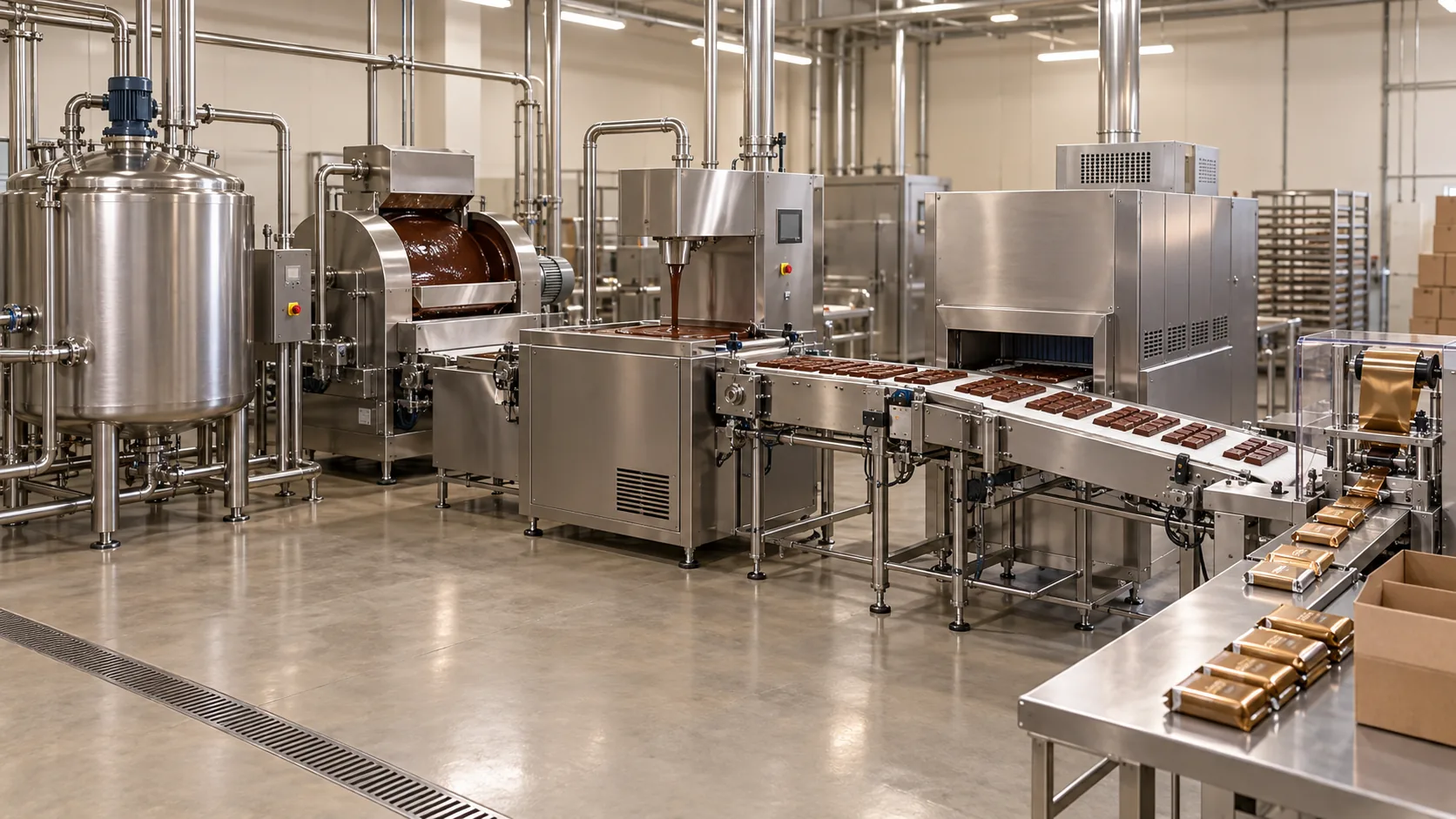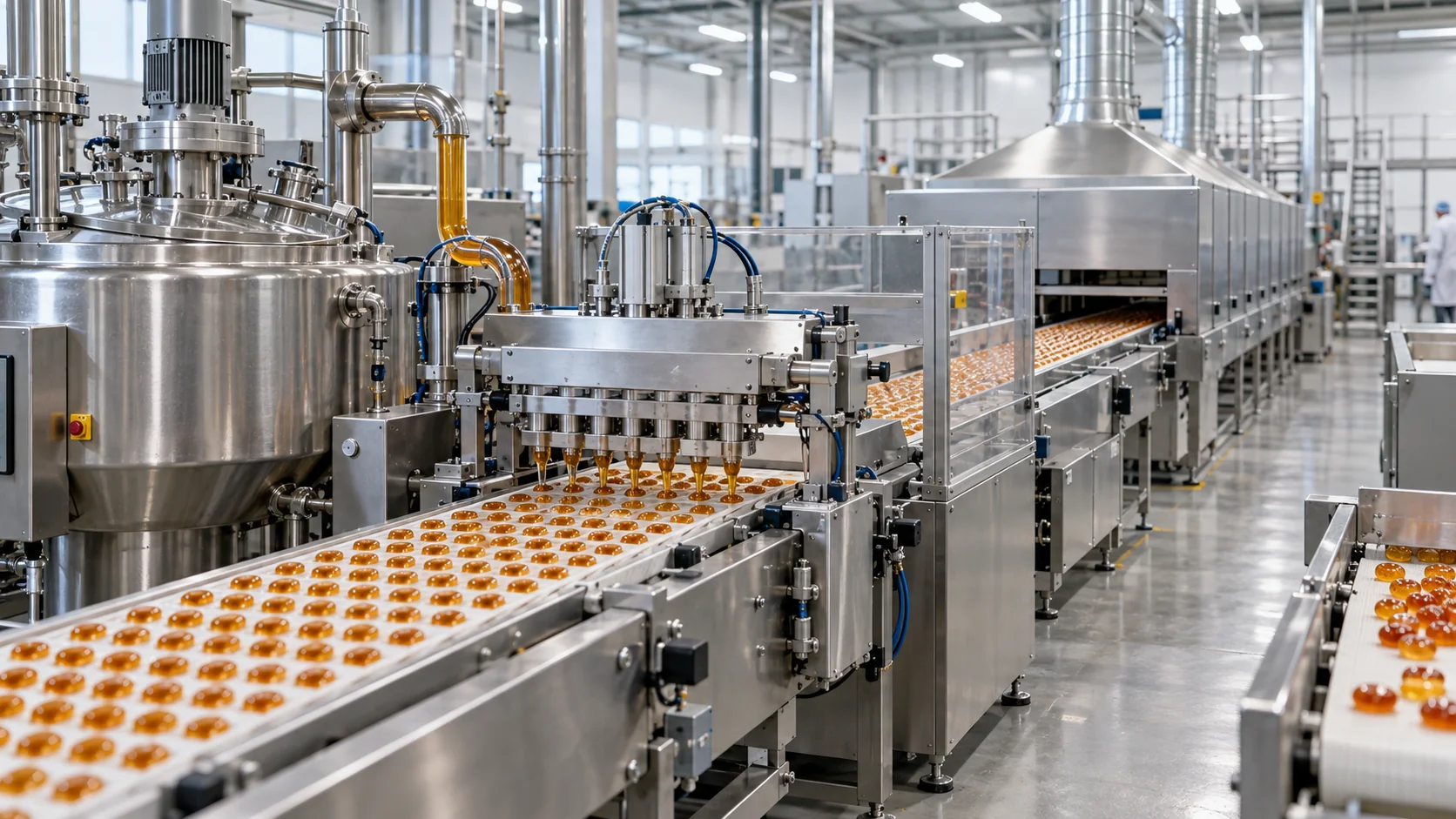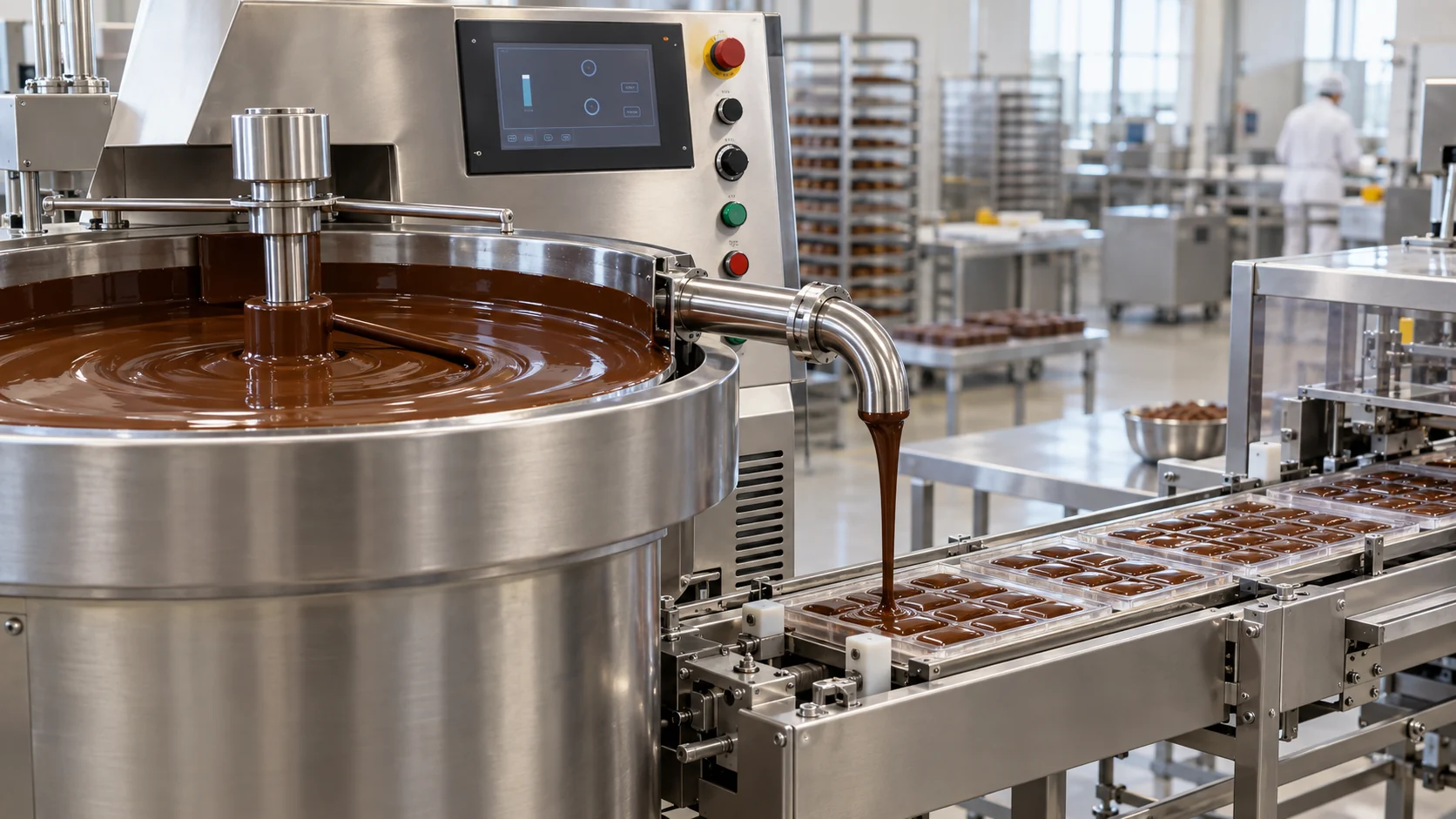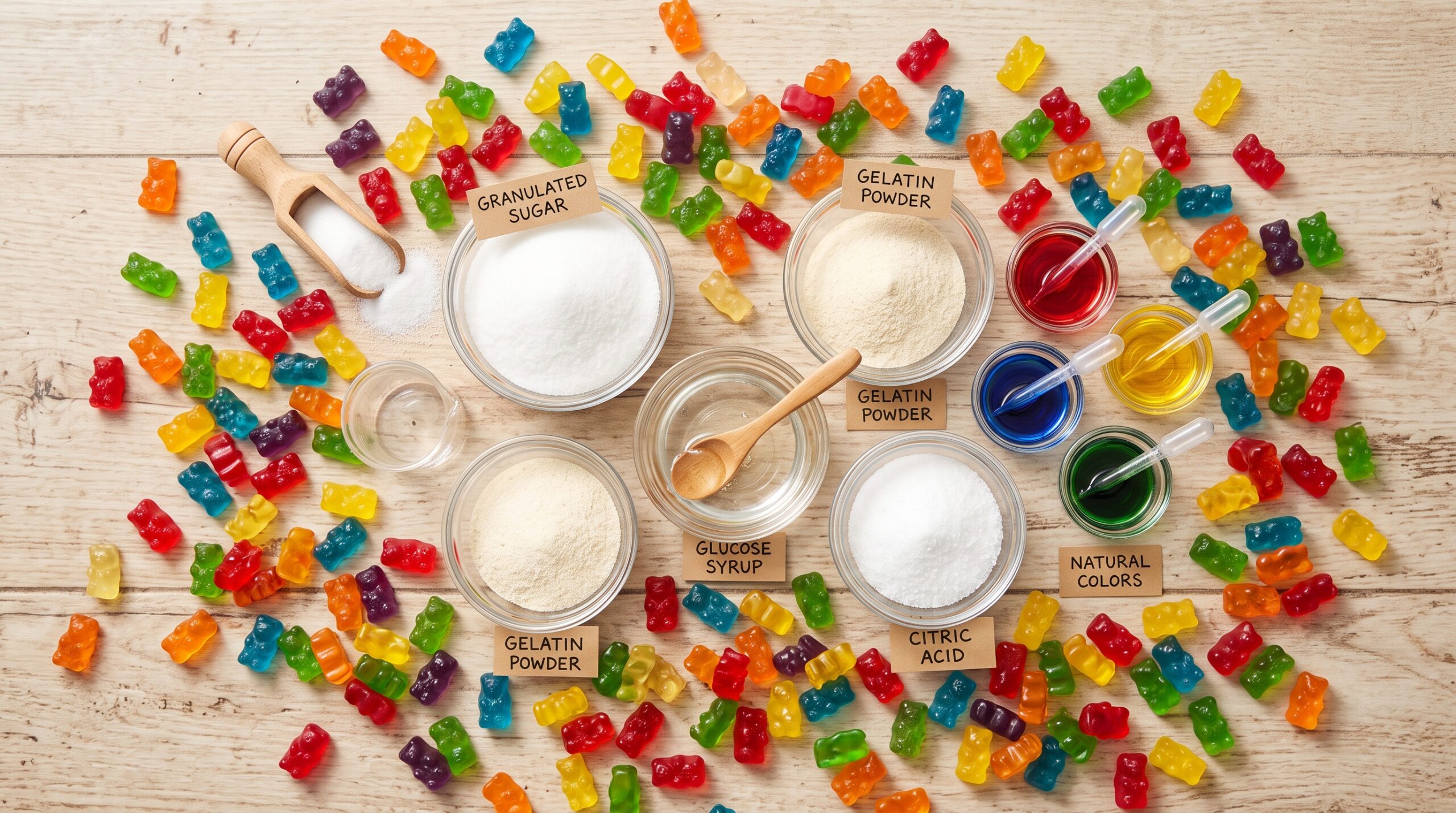
The skittles manufacturing process has six core stages: cooking the candy center mass, depositing in a starch mogul, conditioning the centers, pan-coating the shell in 15–30 layers, polishing with carnauba wax, and automated weighing and packaging.
The Skittles manufacturing process is a masterclass in confectionery engineering — a precise sequence of thermal, mechanical, and chemical steps that transforms raw sugar, corn syrup, and palm oil into billions of identical, glossy, chewy-shelled candy pieces per year. Whether you’re a food manufacturer evaluating production equipment, a food scientist studying chewy candy technology, or simply curious about how the rainbow gets made, this guide covers the full Skittles manufacturing process from raw material to retail shelf.
Overview: The Skittles Manufacturing Process Flow
This article is part of our complete guide on are Skittles gluten free — covering every US and UK variety, celiac safety standards, and the full ingredient analysis for 2026.
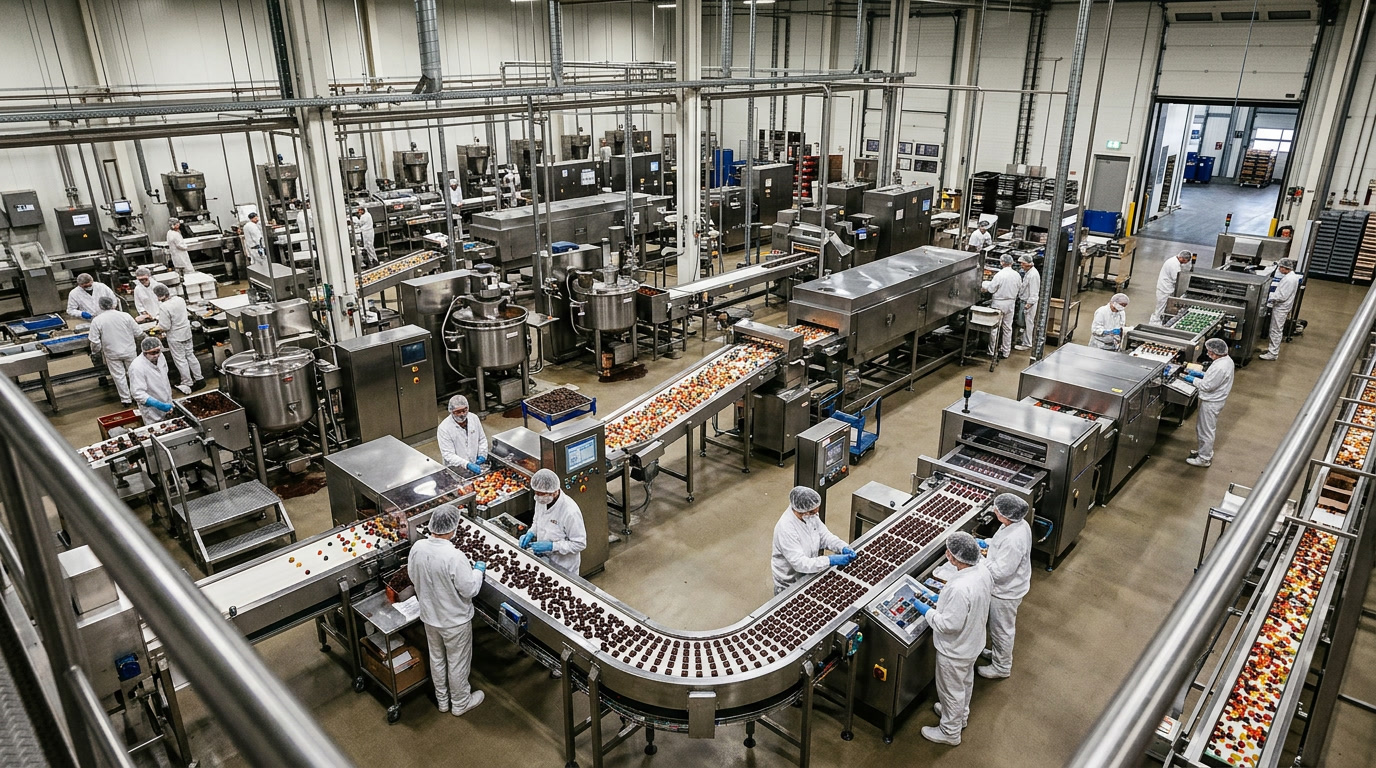
The complete Skittles manufacturing process follows a well-defined sequence. Each stage feeds into the next, with quality gates at critical transitions.
| Stage | Process | Key Equipment | Duration |
|---|---|---|---|
| 1 | Raw material preparation and mixing | Ingredient dosing systems, blenders | 30–60 min/batch |
| 2 | Cooking the candy mass | Vacuum batch cookers | 45–90 min/batch |
| 3 | Flavor addition and tempering | Mixing vessels, temperature-controlled tanks | 20–30 min/batch |
| 4 | Starch mogul depositing | Mogul machine, mold boards, depositors | Continuous |
| 5 | Conditioning (starch setting) | Conditioning rooms (stoves) | 24–48 hours |
| 6 | Starch separation and polishing | Mogul extraction units, sieving | 1–2 hours |
| 7 | Pan coating (shell building) | Rotating coating pans | 4–8 hours/batch |
| 8 | Color and flavor coating | Coating pans with spray systems | 1–2 hours |
| 9 | Logo printing | Inline printing systems | Continuous |
| 10 | Wax polishing | Polishing drums | 1–2 hours |
| 11 | Quality inspection | Vision systems, metal detectors | Continuous |
| 12 | Weighing and packaging | Multi-head weighers, VFFS machines | Continuous |
Total elapsed time from cooking to packaged product: approximately 48–72 hours, with the majority spent in the conditioning stage.
Stage 1 & 2: Raw Material Preparation and Cooking
Ingredient Sourcing and Preparation
Mars Wrigley’s Skittles production begins with food-grade raw materials arriving at the manufacturing facility. Key incoming quality checks:
– Sugar (granulated sucrose): moisture content, purity, and absence of foreign matter verified
– Corn syrup (glucose syrup): viscosity, DE (dextrose equivalent), and Brix concentration checked
– Hydrogenated palm kernel oil: melting point, iodine value, and peroxide value tested
– Flavoring systems: certificate of analysis from flavor supplier confirmed; batch codes logged
– Colorings: purity and concentration verified against specification
Cooking the Candy Mass
The sugar and corn syrup are dissolved in water and cooked in vacuum batch cookers — closed-vessel cookers operating at reduced pressure. Vacuum cooking lowers the boiling point of the sugar solution, allowing it to reach the target concentration with less heat input, which helps preserve volatile flavor compounds and reduces color development from caramelization.
The cooking process follows a precise temperature profile:
1. Dissolution phase: Sugar dissolves in water/syrup at moderate temperature
2. Evaporation phase: Water is driven off under vacuum to concentrate the sugar solution
3. Target temperature hold: The cooked mass reaches approximately 118–124°C (varies by product specification), establishing the target moisture content (~8–12% for Skittles-type chewy candy)
The cooked mass at this point has a moisture content that will deliver the correct final texture after the subsequent drying and conditioning steps.
Incorporation of Fat and Starch
After reaching target temperature, the hydrogenated palm kernel oil is added to the cooked mass with continuous mixing. The fat disperses throughout the sugar matrix, coating starch granules and sugar crystals to create the smooth, slightly greasy mouthfeel characteristic of Skittles.
Modified corn starch is added simultaneously or immediately after. The starch granules absorb water and swell slightly, contributing to the elastic, cohesive structure of the finished candy center. The fat-starch-sugar interaction is what makes Skittles chewy without being gummy — the starch provides network structure while the fat lubricates the matrix.
Stage 3: Flavor Addition and Tempering
After the fat and starch are incorporated, the hot candy mass is tempered — cooled to approximately 70–80°C before flavors are added. This critical step prevents the volatile aromatic compounds in the flavor system from evaporating (they would simply boil off at 120°C).
Flavor Systems for Skittles
Each Skittles variety requires separate flavor batch preparation. The Original five flavors each use distinct flavor compound blends:
| Flavor | Primary Flavor Compounds | Natural or Artificial? |
|---|---|---|
| Strawberry | Methyl anthranilate, ethyl acetate, strawberry ketone | Natural/artificial blend |
| Lemon | Citral, limonene, citrus oil | Natural/artificial blend |
| Lime | Citral, linalool, lime oil | Natural/artificial blend |
| Orange | d-Limonene, citral, decanal | Natural (from citrus) + artificial |
| Grape | Methyl anthranilate, ethyl acetate | Primarily artificial |
Flavors are added at 0.1–0.5% of the candy mass depending on flavor intensity. Thorough mixing ensures uniform flavor distribution throughout the batch before the mass is pumped to the depositing system.
Stage 4: Starch Mogul Depositing — Forming the Centers
The starch mogul is the heart of Skittles production — the system that gives every Skittle its consistent size, shape, and center composition.
How a Starch Mogul Works
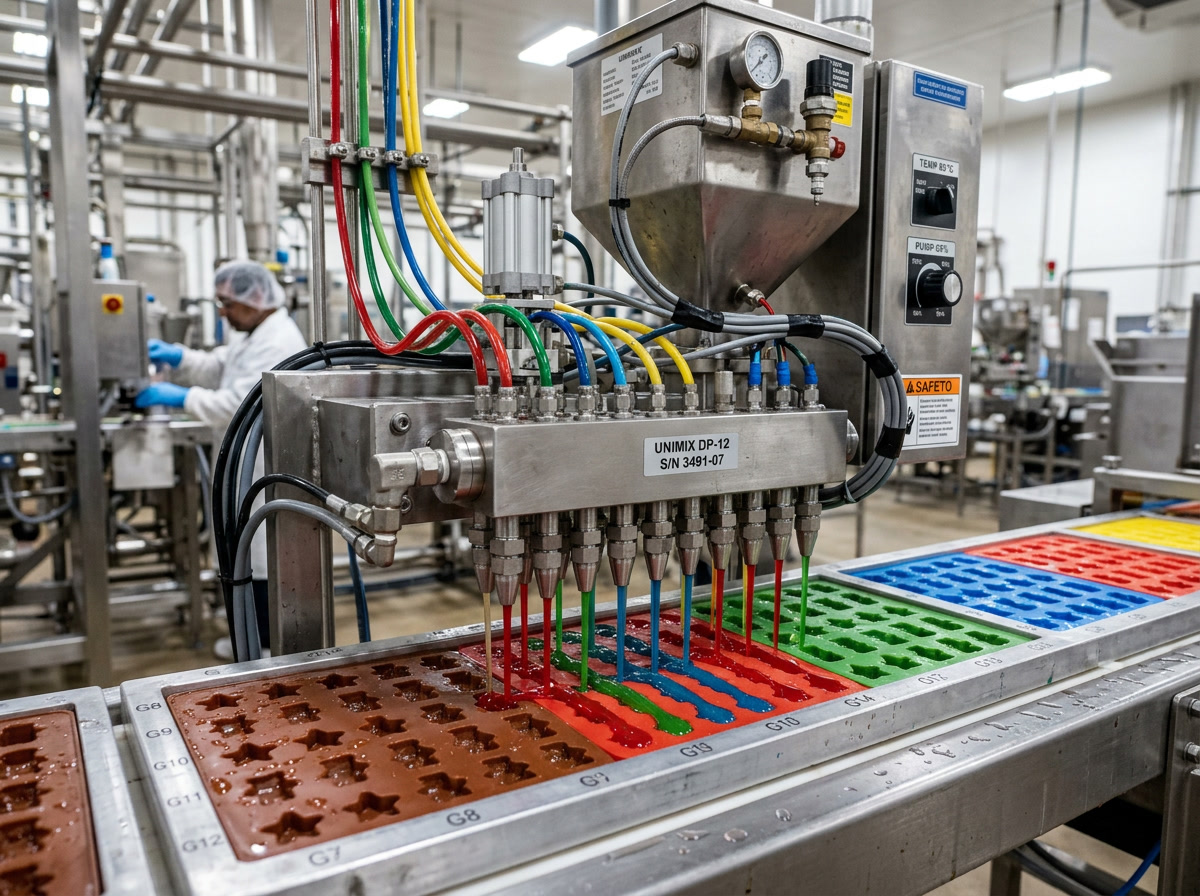
A starch mogul is a continuous tray-based depositing system:
- Empty starch trays (300mm × 500mm, approximately 50mm deep) enter the machine on a conveyor
- The leveler smooths the cornstarch surface to a uniform depth
- The mold press stamps the desired shape impressions into the starch — for Skittles, the characteristic oblate spheroid (lens shape), typically 14–16mm diameter
- The depositor — a servo-driven multi-nozzle pump — precisely fills each impression with a controlled volume of hot candy mass. Depositing temperature: approximately 70–80°C
- Filled trays are stacked on stove cars (wheeled rack systems) and moved to the conditioning room
- After conditioning, trays re-enter the mogul at the extraction end: the tray is inverted over a conveyor, candy pieces fall out into a sieve that separates them from starch, and the empty tray is refilled with starch for the next cycle
Key performance metrics for modern starch mogul systems:
– Depositing accuracy: ±1–2% of piece weight
– Operating speed: 20–40 tray strokes per minute (high-speed systems)
– Piece throughput: 50,000–200,000 pieces per hour per line, depending on mold layout
Major starch mogul equipment manufacturers include:
– Baker Perkins (UK) — LoafMoguler and ConfecMogul systems
– Winkler+Dünnebier (Germany) — WD mogul systems
– Chocotech (Germany) — specialized depositing solutions
– Robert Bosch / Syntegon — integrated candy lines
Conditioning: The Critical Setting Phase
After depositing, candy centers require 24–48 hours of conditioning in a climate-controlled room. Conditions typically maintained:
– Temperature: 50–60°C (warm enough to promote moisture migration but not enough to cause starch degradation)
– Relative humidity: 30–50% (dry enough to absorb moisture released by the candy)
During conditioning:
– The candy centers release moisture into the surrounding starch (from the initial ~10–12% moisture down to approximately 6–8% target moisture)
– The sugar matrix sets from an amorphous, plastic state into a firmer, more stable structure
– The starch granules in the candy complete their swelling and contribute to the final elastic texture
Under-conditioning (insufficient time or too-moist environment) produces soft, sticky centers that will deform or stick together during coating. Over-conditioning produces brittle centers that crack during the mechanical stress of pan coating. Getting conditioning right is essential to producing Skittles with the correct final texture.
Stages 7–9: Pan Coating — Building the Shell
Pan coating is what transforms a soft candy center into a Skittle. It’s the most time-consuming active processing stage, requiring precise equipment control and operator expertise.
The Pan Coating System
Industrial coating pans for Skittles production are large rotating stainless steel drums, typically 1,000–1,500mm in diameter, mounted at a slight angle (0–30°) to maintain the bed of candy rolling without allowing pieces to fall out. Modern coating pans include:
– Perforated drum walls — allow air to pass through the candy bed for faster drying
– Spray systems — multiple spray guns mounted inside the pan for precise syrup application
– Air handling systems — controlled temperature and humidity inlet air, with exhaust air extraction
– Inline moisture measurement — real-time monitoring of pan conditions
The Coating Sequence in Detail
Engrossing (shell building):
A warm sugar syrup (65–70 Brix — very concentrated) containing dextrin (for adhesion) is sprayed onto the tumbling candy centers in controlled doses (typically 200–400g per dose for a 50kg pan charge). After each dose:
1. The syrup spreads across all piece surfaces
2. Inlet air (40–60°C, controlled humidity) is blown through the pan to evaporate water
3. The dried sugar layer crystallizes onto the piece surface
4. The next dose is applied after the current layer is sufficiently dry (assessed by sound — experienced operators listen for the characteristic “shushing” sound of dry candy)
This cycle repeats 15–30 times to build the target shell thickness. The finished shell comprises approximately 35–45% of the total piece weight.
Color coating:
After the engrossing phase, pigmented sugar syrups are applied in the same spray-dose-dry cycle. Each Skittles color requires a matching color syrup. For Original Skittles:
– Red (Strawberry): Red 40-based syrup
– Yellow (Lemon): Yellow 5-based syrup
– Green (Lime): Yellow 5 + Blue 1 combination
– Orange (Orange): Yellow 6 + Red 40 combination
– Purple (Grape): Red 40 + Blue 1 + Blue 2 combination
The color coat requires approximately 3–5 additional cycles to achieve uniform, deep color.
Finishing glaze:
A final clear sugar glaze (no pigment) is applied over the color coat to lock in the color layer and prepare the surface for wax polishing.
Stage 9: Logo Printing
The “S” printed on each Skittle is applied using inkjet or pad printing technology integrated into the coating pan line. The food-safe edible ink system applies a precise dot pattern forming the “S” shape on each piece as it passes through the printer. The ink is a sugar-based, food-coloring solution that bonds to the sugar shell surface.
Printing accuracy on irregular, rolling candy pieces requires sophisticated imaging and print-head positioning systems. This is one of the technically more demanding steps in the Skittles manufacturing process.
Stage 10: Carnauba Wax Polishing
After coating and printing, the pieces go into a polishing drum — a smooth-walled rotating drum (similar to a coating pan but without the air handling system). A small quantity of carnauba wax solution is added:
– The wax dissolves in a food-safe solvent (sometimes confectionery grade vegetable oil or food-grade solvent)
– As the solvent evaporates, the wax deposits on the piece surfaces
– The tumbling action of piece-on-piece and piece-on-drum polishes the wax to high gloss
The final carnauba wax content of a finished Skittle is typically 0.1–0.3% by weight — a tiny amount that nonetheless provides the characteristic high-gloss finish.
Stage 11–12: Quality Control and Packaging
Automated Quality Inspection
Before packaging, Skittles pass through an inspection battery:
– Color vision systems — detect pieces with missing or incorrect color (a green piece in a red line, for example)
– Print inspection cameras — verify the “S” logo is present and correctly formed on each piece
– Metal detectors — two-stage detection (before and after packaging) per HACCP food safety requirements
– Foreign body detectors — X-ray systems for dense foreign materials
Rejected pieces are diverted to a waste stream and either recycled back into production at an appropriate stage or disposed of.
Weighing and Packaging
Approved pieces fall into multi-head combination weighers — sophisticated scales that simultaneously weigh multiple partial loads and combine combinations that hit the exact target fill weight. A 10-head weigher running at 60 weighments per minute can achieve ±0.5% fill weight accuracy while packaging thousands of bags per hour.
The packaging film is a multilayer laminated plastic (typically PET/PE or PET/foil/PE construction) that provides:
– Moisture barrier — critical for shelf life; protects the hygroscopic sugar shell
– Oxygen barrier — prevents fat oxidation in the palm kernel oil
– Mechanical protection — prevents crushing during handling
The vertical form-fill-seal (VFFS) machine forms the film into a tube, heat-seals the bottom, fills with the weighed charge, and heat-seals the top in one continuous cycle.
What Titanium Dioxide Removal Changed in the Process
Mars Wrigley removed titanium dioxide (E171) from the US Skittles formula in recent years, following a similar EU ban. Titanium dioxide was used in the engrossing stage — mixed into the sugar syrup to create an opaque white base layer in the shell, making the candy’s colors appear more vivid by reflecting light from below.
The removal of titanium dioxide required modifications to the color coating system to maintain color vibrancy without the white base layer. Mars Wrigley reformulated the color application sequence and pigment concentrations to compensate, maintaining the product’s visual appearance while eliminating the controversial whitening agent.
The Skittles Manufacturing Process vs. Other Candy Formats
| Candy Format | Center Forming | Shell | Texturizer | Conditioning | Coating Stages |
|---|---|---|---|---|---|
| Skittles (chewy) | Starch mogul | Pan-coated (15–30 layers) | Corn starch | 24–48 hours | Sugar + color + wax |
| Gummy bears | Starch mogul | None (soft) | Gelatin | 24–48 hours | Optional wax |
| M&Ms | Center casting | Chocolate coating + sugar shell | Chocolate | N/A | Chocolate + sugar |
| Jelly beans | Starch mogul | Pan-coated | Modified starch/pectin | 24–48 hours | Sugar + color + wax |
| Hard candy | Rope/die cut | None (hard throughout) | None | Minimal | Optional wax |
Skittles and jelly beans share the most similar production processes — both use starch mogul forming and pan coating. The key differences are the texturizer (corn starch for Skittles vs. starch/pectin for jelly beans) and the finished texture target.
Frequently Asked Questions
What chemical was removed from Skittles?
Mars Wrigley removed titanium dioxide (E171) from the US Skittles formula. Titanium dioxide was a whitening agent used in the candy shell. The EU banned E171 as a food additive in 2022, and Mars subsequently removed it from US Skittles as well. This change had no impact on the candy’s safety or taste.
Are there crushed beetles in Skittles?
Not in current US Skittles. The outer coating is carnauba wax (plant-derived). Some UK/EU Skittles batches historically used carmine (E120, from cochineal beetles) as a red coloring, but this has been largely replaced by plant-based colorings in reformulated UK versions. Check the current UK label for E120 if this matters to you.
Can you legally sell freeze-dried Skittles?
Freeze-dried Skittles exist in a legal gray area. Making them for personal consumption is uncontroversial. Selling them commercially raises two issues: (1) Mars Wrigley may have trademark concerns about reselling modified Skittles products, and (2) the process constitutes manufacturing a food product, triggering food safety registration requirements. Check local food business regulations before selling freeze-dried Skittles commercially.
How many Skittles are made per day?
Mars Wrigley does not publish production volume figures, but industry estimates suggest tens of millions of Skittles are produced daily across all facilities globally. The Waco, Texas facility is reported to be one of the world’s largest candy production sites.
How long does the Skittles manufacturing process take?
The complete production cycle from cooking to packaged product takes approximately 48–72 hours. The majority of this time is the conditioning stage (24–48 hours), where candy centers set in the starch trays.
What machinery is used to make Skittles?
The key equipment includes vacuum batch cookers, starch mogul depositing systems (Baker Perkins, Winkler+Dünnebier), conditioning rooms, rotating pan coating drums, inline logo printers, vision inspection systems, multi-head weighers, and VFFS packaging machines.
Why do Skittles stick together sometimes?
Sticking between pieces usually indicates moisture absorption by the hygroscopic sugar shell — caused by storage in humid conditions, a damaged bag allowing moisture ingress, or occasionally a polishing issue at the manufacturing stage. The carnauba wax coating is specifically designed to prevent this; sticking usually means the wax barrier has been compromised.
Conclusion
The Skittles manufacturing process is a sophisticated sequence of thermal, mechanical, and chemical operations that reflects decades of confectionery engineering refinement. From the precision cooking of the sugar-starch center mass, through the 24-48 hour conditioning window, to the 15–30-layer pan-coating that builds the iconic hard shell, every stage requires tight process control to produce a consistent product at industrial scale.
Understanding this process is valuable across multiple contexts: for consumers curious about what they’re eating, for food scientists studying chewy candy technology, for confectionery equipment professionals evaluating production line investments, and for manufacturers considering building similar candy production capabilities. The Skittles manufacturing process represents the current state of the art in chewy-shell candy production — a model that can be adapted to produce similar products at any scale with the right equipment and process knowledge.
Related Articles
- How Are Skittles Made? The Full Factory Process Explained (2026)
- The Sweet Science of Gummy Butterflies: Manufacturing Process 2025
- How do I choose the right gummy manufacturing machine for my business?
- The Magical Manufacturing Process of CBD Gummies in Factories
- Gummy Candy Production Line
- Food Packaging Machine
- Skittles Manufacturing Process: Inside the Factory
References & Sources
- Skittles (confectionery) — Wikipedia
- Confectionery — Industrial Production Processes — Wikipedia
- Overview of Food Ingredients, Additives & Colors — U.S. Food & Drug Administration
- Codex Alimentarius — Codes of Practice for Sugar Confectionery — FAO/WHO Codex Alimentarius Commission
- Carnauba Wax — Wikipedia