Sugar free Haribo gummy bears use lycasin (maltitol syrup) instead of sugar — a sugar alcohol that mimics sweetness nearly perfectly but causes severe digestive distress in large amounts, leading to their US discontinuation around 2014 and the internet’s most legendary product reviews.
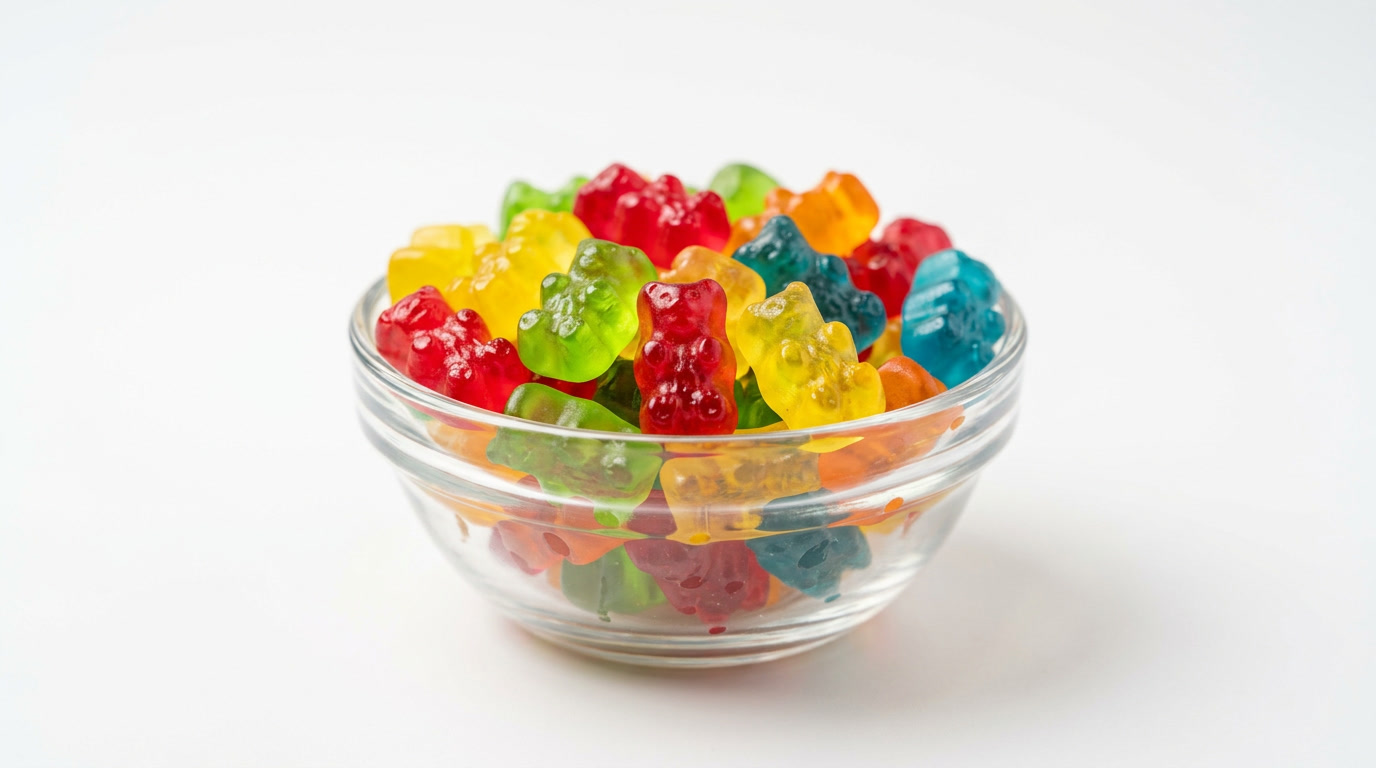
Some products become famous for being great. Sugar free Haribo gummy bears became famous for being genuinely dangerous — at least when you ate the whole bag. The five-pound Amazon listing accumulated thousands of reviews that read more like emergency room dispatches than candy critiques. People lost days. Some rethought their snacking habits permanently.
But underneath the humor is a real story about confectionery chemistry, sugar alcohol science, and what happens when a product designed for diabetics ends up in the hands of unsuspecting bulk buyers. This guide covers everything: what’s actually in sugar free Haribo gummy bears, why they work the way they do, the full history of the product, how sugar-free gummies are manufactured, and what alternatives exist now in 2026.
What Are Sugar Free Haribo Gummy Bears?
Sugar free Haribo gummy bears are a variant of Haribo’s iconic Goldbären (Gold Bears) line, formulated without sucrose or glucose syrup — the two sugars that give regular gummy bears their sweetness and body. Instead, the formula relies on lycasin, a trade name for maltitol syrup, as the primary sweetener and bulk agent.
On the surface, they look and taste almost identical to regular Gold Bears. Same five flavors (raspberry, lemon, orange, pineapple, strawberry), same jewel-like translucency, same firm-chewy bite. Haribo’s flavor formulation is good enough that most tasters in side-by-side comparisons cannot distinguish the sugar-free version from the original without reading the label.
The divergence is not in flavor — it’s in what happens after you swallow.
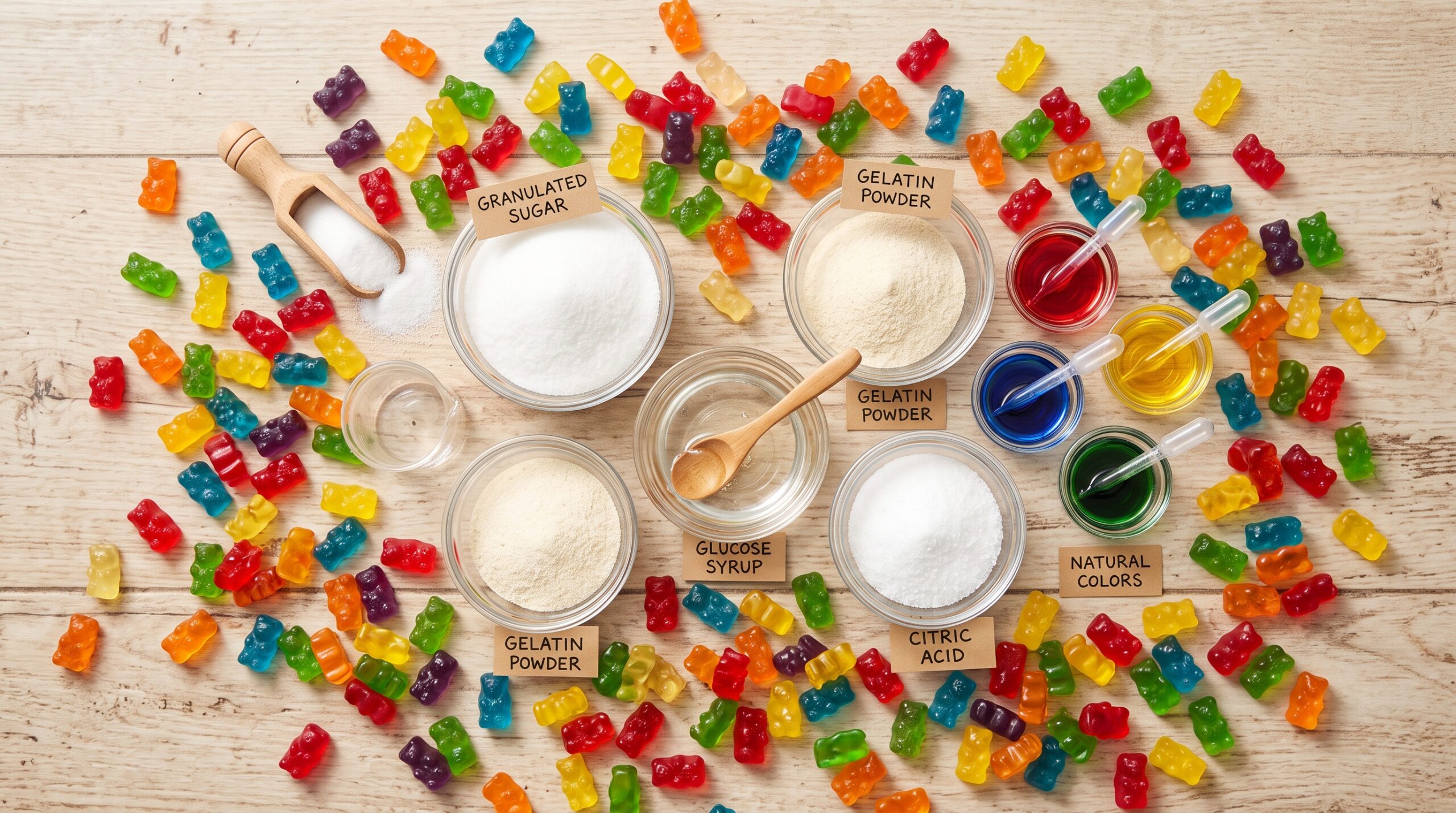
Ingredients: Regular vs. Sugar-Free Side by Side
The formula difference is starker than the taste suggests:
| Ingredient | Regular Haribo Gold Bears | Sugar-Free Haribo Gold Bears |
|---|---|---|
| Primary sweetener | Glucose syrup, sugar (sucrose) | Lycasin (maltitol syrup) |
| Gelling agent | Gelatin | Gelatin |
| Acidulant | Citric acid | Citric acid |
| Flavoring | Natural & artificial flavors | Natural & artificial flavors |
| Coloring | Fruit and plant concentrates | Fruit and plant concentrates |
| Calories per 100g | ~340 kcal | ~250 kcal |
| Glycemic index | ~65 | ~52 (maltitol) |
| Laxative warning | Not required | Required by FDA regulations |
The gelatin, citric acid, and flavoring are essentially identical. The entire functional difference comes from swapping one carbohydrate source for another. That swap has enormous downstream consequences.
Nutritional Profile
Regular gummy bears provide about 340 kcal per 100g, almost entirely from sugar. Sugar free Haribo gummy bears drop to roughly 250 kcal per 100g — a meaningful reduction. For people managing blood glucose, the lower glycemic index of ~52 (versus table sugar at ~65) is also genuinely useful in moderate amounts.
The catch, as millions of Amazon shoppers discovered, is the word “moderate.”
The Role of Lycasin and Maltitol in Sugar-Free Candy
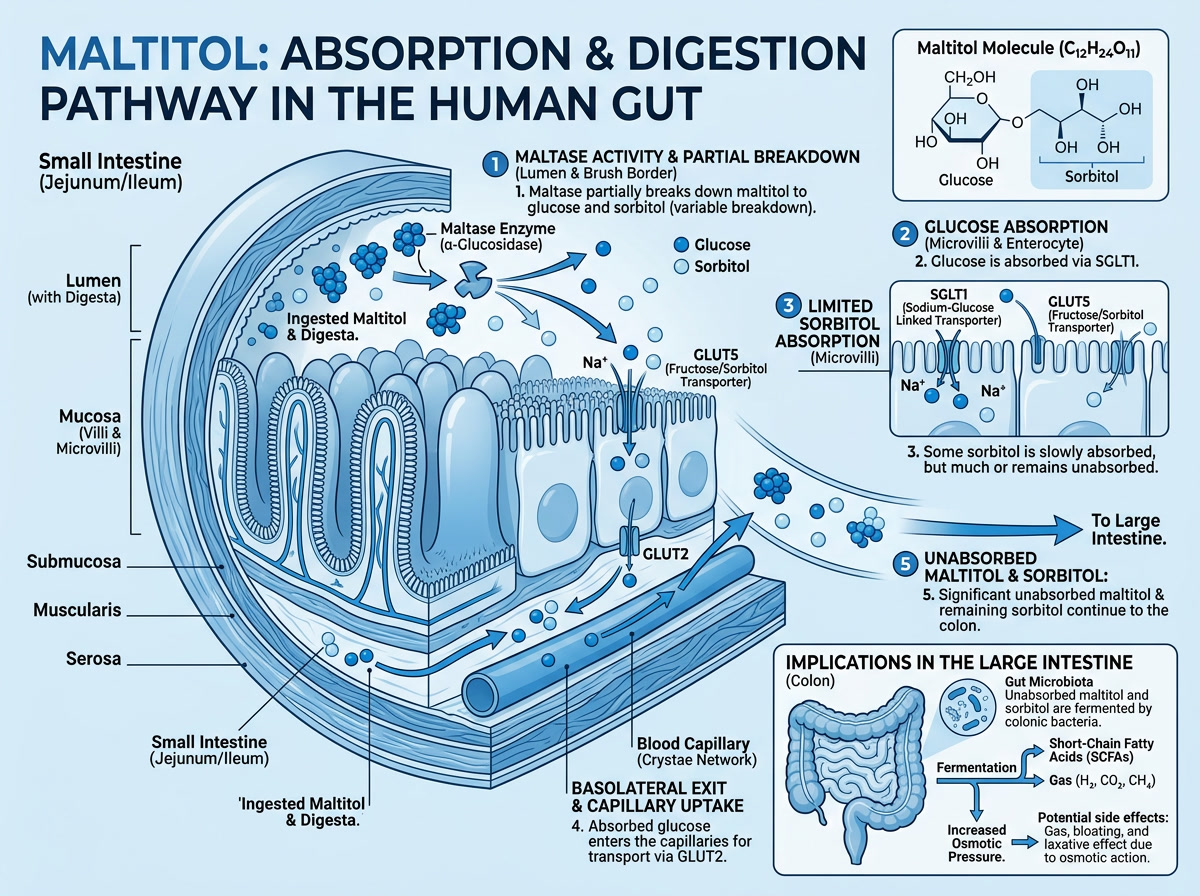
The entire sugar free Haribo gummy bears story hinges on one ingredient. Lycasin is the commercial name for maltitol syrup, a hydrogenated glucose syrup produced by the hydrogenation of maltose-rich starch hydrolysates. According to Wikipedia’s detailed entry on maltitol, it provides approximately 2.1 kcal per gram compared to sucrose’s 4 kcal per gram, and its sweetness is roughly 75–90% that of sugar.
Maltitol belongs to the sugar alcohol (polyol) family — a class of carbohydrates that are neither fully “sugar” nor fully “alcohol” in the conventional sense. They are partially absorbed by the small intestine, partially fermented by gut bacteria in the large intestine, and partially excreted unchanged.
What Makes Lycasin Different From Sugar
In regular candy manufacturing, glucose syrup and sucrose dissolve completely in the cooking process and are absorbed almost entirely in the small intestine. Your body treats them as standard carbohydrates: they spike blood sugar, deliver energy, move on.
Lycasin does not behave this way. As explained in comprehensive sugar alcohol research compiled by the National Center for Biotechnology Information, polyols like maltitol are absorbed slowly and incompletely. The portion that doesn’t get absorbed in the small intestine passes into the large intestine, where it:
- Draws water osmotically — the unabsorbed maltitol pulls water from the intestinal walls into the colon.
- Ferments with gut bacteria — producing gas (hydrogen, methane, CO₂) as a byproduct.
- Accelerates motility — the osmotic pressure speeds transit time dramatically.
The result is a combination of bloating, cramping, gas, and — at sufficient doses — rapid and complete evacuation of the digestive system.
Dose-Dependent Effects and the FDA’s Warning Threshold
This is where the math becomes important. The U.S. Food and Drug Administration’s guidance on labeling requirements mandates that products likely to deliver more than 50 grams of sorbitol per day must include a laxative effect warning. Haribo’s sugar-free label carries this warning for good reason — lycasin has similar, if slightly milder, dose-response characteristics.
In small amounts — say, 10–15 gummy bears — most people with a tolerant gut experience nothing unusual. At 40–50 bears, bloating becomes common. At a hundred or more, which is easily done when eating from a five-pound bag while watching a movie, the osmotic load overwhelms even robust digestive systems.
This is not a flaw unique to Haribo. It’s a property of the ingredient class. Haribo’s mistake was more about the five-pound bulk packaging and insufficient label prominence than the product formula itself.
The Famous Amazon Reviews: What Actually Happened
The viral moment for sugar free Haribo gummy bears came around 2012–2013, when the five-pound bag listing on Amazon.com accumulated hundreds of deeply personal, viscerally detailed reviews. The top-rated reviews ran to several hundred words. Some were written as epic poetry. Several went viral across early social media platforms.
The gist: people ordered a bulk bag, ate more than they intended, and spent the next six to twelve hours in circumstances they felt compelled to document for the public good.
Why the Reviews Went Viral
The reviews resonated for several reasons beyond pure scatological humor. They were specific. Reviewers described exact timelines, named family members who had been affected, offered tactical advice (don’t stray far from a bathroom, avoid eating on road trips), and frequently included star ratings of 5/5 because, in their words, the bears tasted fantastic and delivered exactly what the label promised.
The Reddit thread cataloging the reviews noted the community aspect — reviewers were clearly reading each other and building on the genre. By the time the listing had a few thousand reviews, it had become participatory folk humor. The product itself became secondary to the narrative around it.
The Science Behind the Digestive Effect
What those reviewers experienced was osmotic diarrhea — the same mechanism behind certain laxative medications like polyethylene glycol (MiraLax), which also works by drawing water into the colon. The difference is that MiraLax is taken intentionally in measured doses; lycasin arrives wrapped in something that tastes like regular candy.
Gut tolerance to maltitol varies significantly between individuals. People who consume polyols regularly — those on keto diets who eat a lot of sugar-free products, for instance — develop partial tolerance over time as their gut microbiome adapts. People who rarely eat sugar-free products have no adaptation and experience the full dose-response effect.
Are the Reviews Exaggerated?
Some, yes. The five-pound bags attracted buyers specifically because of the reviews, so there’s a selection effect — people who had mild experiences were less motivated to write. The severe cases are real, but they represent the upper end of the dose-response curve, typically involving consumption of several hundred grams of lycasin in a sitting.
For context: eating 15–20 sugar free Haribo gummy bears with a meal is unlikely to cause any notable effect for most adults. Eating 200 of them while bored on a Saturday afternoon is a different experiment.
Discontinuation: What Happened to Sugar Free Haribo Gummy Bears?
The US market story for sugar free Haribo gummy bears effectively ended around 2014–2015. Haribo did not issue a dramatic recall or press announcement — the product simply disappeared from major US distribution channels. The five-pound Amazon listing, which had been one of the best-reviewed items in the entire grocery category (if “best-reviewed” means “most reviewed”), was delisted or transitioned to third-party sellers moving remaining stock.
The discontinuation in the US was likely driven by a combination of factors:
- Reputational concern: The viral reviews were funny, but associating a flagship brand with mass digestive incidents is not a long-term marketing strategy.
- Regulatory environment: FDA labeling requirements for laxative effect warnings created packaging compliance complexity.
- Distribution economics: The bulk-bag format attracted buyers who were purchasing specifically for novelty or reviews, not repeat candy consumers.
Is the Product Still Available?
In European markets, particularly Germany, Haribo continues to sell Goldbären Zuckerfrei (sugar-free Gold Bears) in standard retail quantities — typically 100g or 200g packages rather than five-pound bulk bags. The portion-controlled format avoids the consumption volume that creates problems.
In the US, as of 2026, authentic Haribo sugar-free gummy bears are not widely available through standard retail. Some third-party Amazon sellers list items under the name, but these are often different products or remnant stock. Haribo’s official US website does not list a sugar-free Gold Bear variant in their current US product lineup.
Buyers looking for the experience can import European-market products, but the five-pound bulk format that made the reviews possible is genuinely gone.
How Sugar-Free Gummy Bears Are Actually Manufactured
This is the part the Amazon reviews never explained: making sugar free gummy bears at industrial scale is genuinely harder than making regular ones. The formulation challenges explain why the category remained niche for decades and why getting it right still requires specialized equipment.
The Standard Gummy Manufacturing Process
Regular gummy bear production follows a consistent process:
1. Glucose syrup and sucrose are dissolved in water and cooked to approximately 107°C (225°F).
2. Gelatin bloom (typically 200–250 bloom strength) is hydrated separately.
3. The sugar cook and gelatin are combined, and flavorings, acids, and colorings are added.
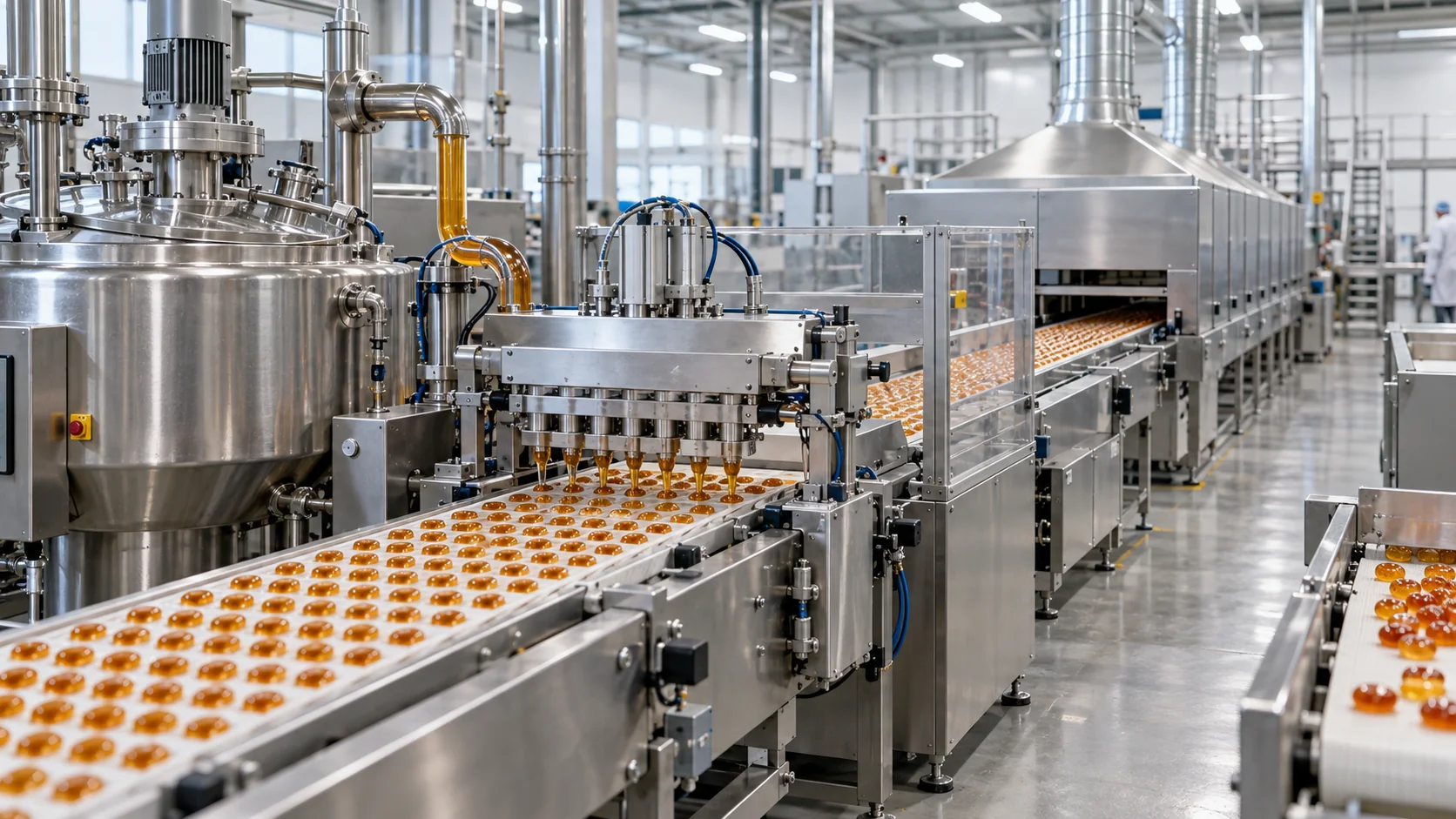
4. The liquid mass is deposited into starch mogul molds or silicone molds.
5. Pieces cool and set for 24–48 hours, then are demoulded, tumbled with oil or wax for gloss, and packaged.
Adapting the Process for Lycasin
Replacing sucrose and glucose syrup with lycasin requires meaningful process adjustments:
- Lower cooking temperature: Lycasin is sensitive to high heat and can develop off-flavors above 100°C. Cook temperatures typically drop to 95–100°C for sugar-free formulas.
- Higher gelatin concentration: Sugar-free gummies can be softer due to the different physical properties of maltitol syrup versus sucrose. Formulators often increase gelatin bloom or concentration by 10–15% to compensate.
- Extended setting time: Maltitol-based systems can take longer to demould cleanly — particularly relevant in high-throughput production lines where cycle time matters.
- Humidity control: Sugar alcohols are hygroscopic (they absorb moisture from the air). Sugar-free gummy bears will become sticky in humid environments faster than regular gummies, requiring tighter packaging and climate-controlled storage.
Equipment Considerations for Sugar-Free Production
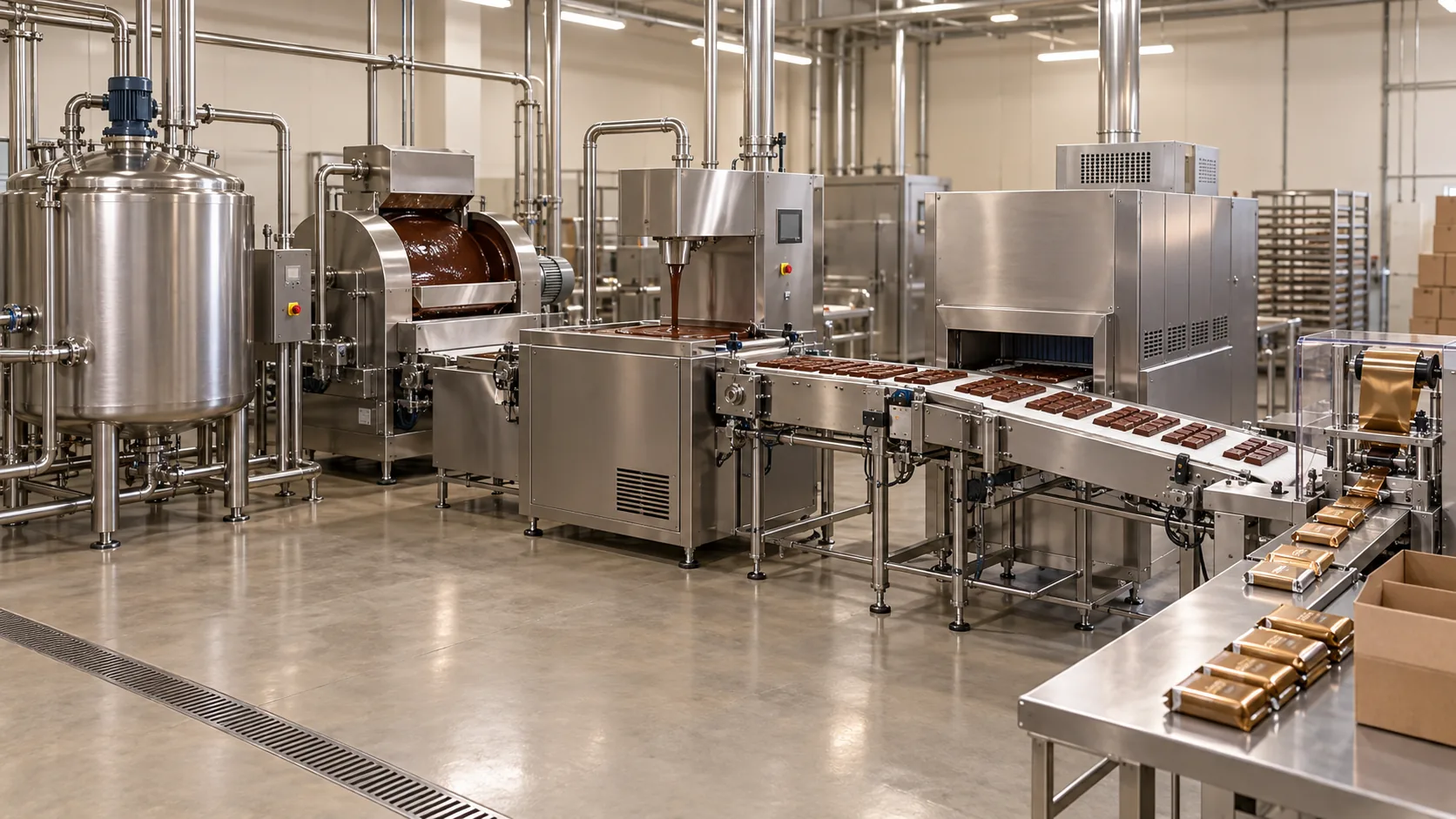
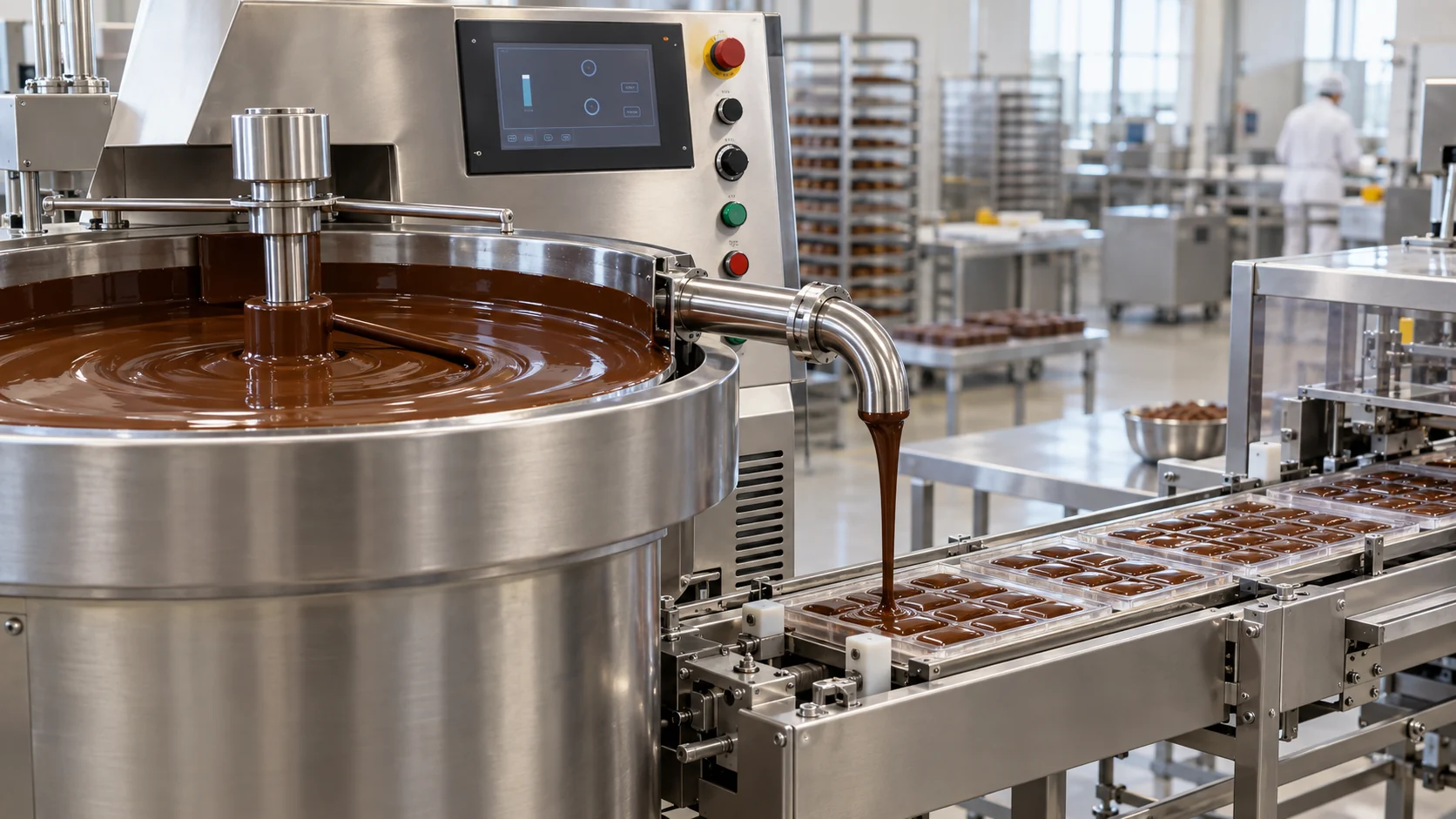
Candy manufacturers moving into sugar-free gummy production need to consider equipment capable of handling the altered process parameters. Key requirements include:
- Jacketed cooking vessels with precise temperature control (±1°C) to avoid overcooking lycasin
- High-shear mixing to fully incorporate gelatin into the denser maltitol matrix
- Continuous depositing systems with heated feed pipes to maintain appropriate viscosity during deposition
- Starch-free molding options (silicone molds) for cleaner demoulding of the softer sugar-free mass
- Climate-controlled packaging areas to prevent hygroscopic sticking before sealing
Manufacturers that already produce regular gummy bears can often adapt existing equipment lines for sugar-free production, though the temperature control and gelatin dissolution systems may need upgrading. Getting these parameters right is the difference between a consistent product and one that sticks to the mold, deforms on packaging, or develops condensation in the bag.
Sugar-Free Gummy Bear Alternatives in 2026
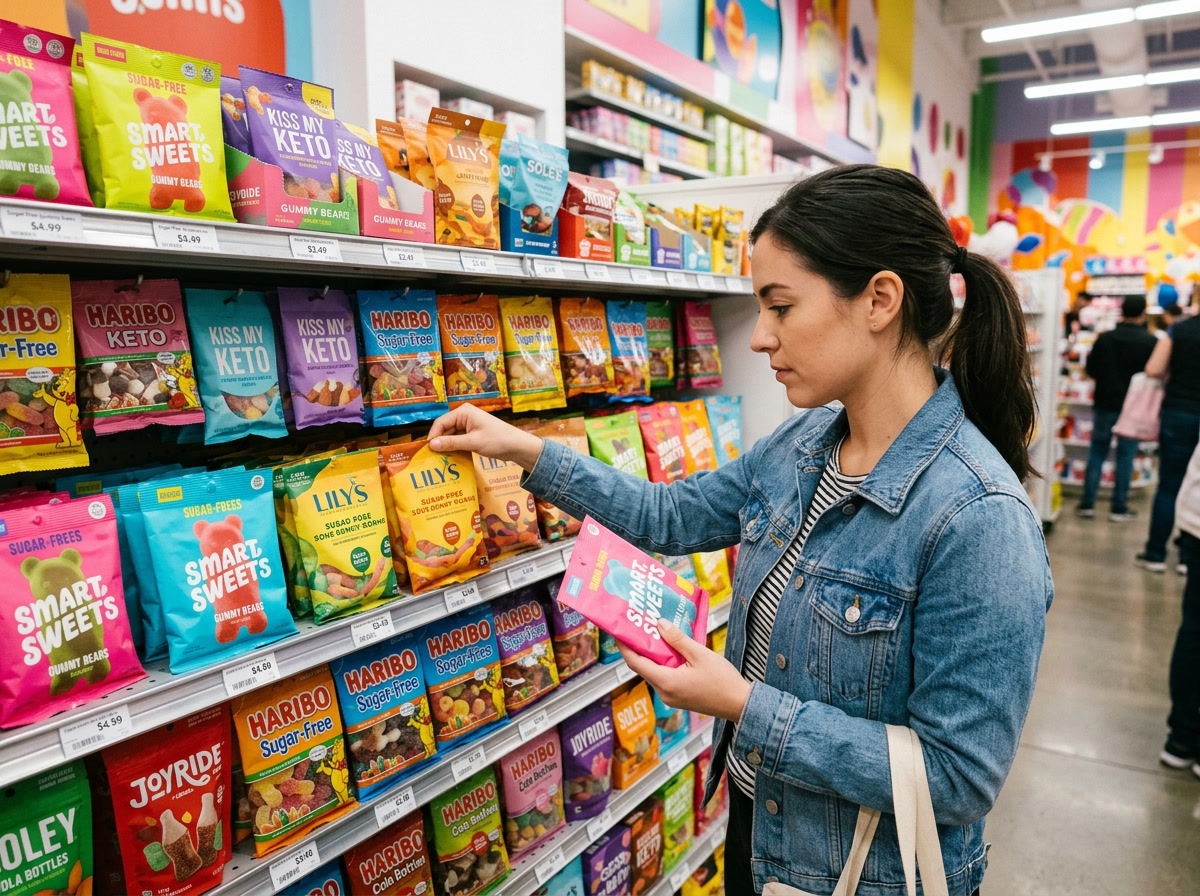
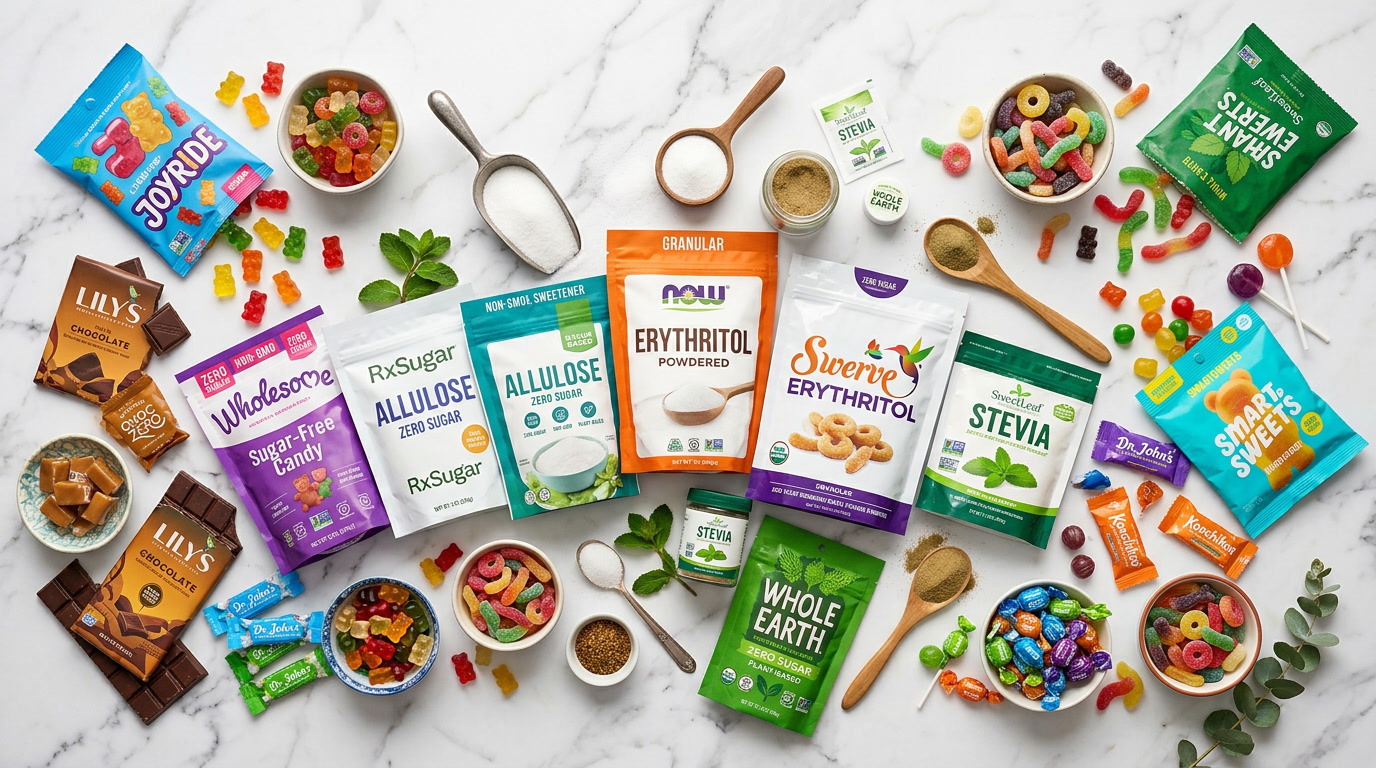
The market for sugar-free gummy bears has evolved considerably since Haribo’s five-pound viral moment. Several brands now offer better-formulated options using sweeteners with superior digestive tolerability profiles.
| Brand | Primary Sweetener | Calories/100g | GI | Digestive Tolerance | Notes |
|---|---|---|---|---|---|
| SmartSweets | Allulose + Stevia | ~100 kcal | ~0 | Excellent | Fiber-enriched; very well tolerated |
| Albanese Sugar-Free | Maltitol | ~250 kcal | ~52 | Moderate | Similar to Haribo formula |
| Surf Sweets | Organic cane juice (small) | ~320 kcal | ~55 | N/A | Lower sugar, not zero-sugar |
| YumEarth Sugar-Free | Xylitol blend | ~200 kcal | ~12 | Good | Can affect pets; xylitol toxic to dogs |
| Vitafusion / generic | Erythritol + Stevia | ~140 kcal | ~0 | Excellent | Erythritol almost entirely absorbed |
Sweetener Options Beyond Maltitol
The sugar alcohol category has matured significantly. Here’s how the key options compare:
| Sweetener | Relative Sweetness | Kcal/g | GI | Absorption Rate | Notes |
|---|---|---|---|---|---|
| Maltitol (lycasin) | 75–90% | 2.1 | 52 | Partial | Worst GI tolerance of common polyols |
| Sorbitol | 60% | 2.6 | 9 | Poor | High laxative risk at low doses |
| Erythritol | 70% | 0.2 | 0 | >90% | Best GI tolerance; passes through kidney |
| Xylitol | 100% | 2.4 | 12 | Moderate | Toxic to dogs; good dental benefits |
| Allulose | 70% | 0.4 | ~0 | ~90% | Nearly fully excreted; excellent tolerance |
| Isomalt | 50% | 2.0 | 9 | Poor | Common in sugar-free hard candy |
The shift toward allulose and erythritol in newer sugar-free gummy formulations represents real progress. SmartSweets, in particular, has built a substantial brand specifically by solving the digestive tolerability problem that made sugar free Haribo gummy bears infamous.
For candy manufacturers designing sugar-free gummy products, allulose offers a near-ideal profile: excellent browning behavior (unusual for a zero-calorie sweetener), good solubility, and almost no digestive side effects. The trade-off is cost — allulose remains more expensive than maltitol syrup, which is why cheaper products still lean on the lycasin formulas that follow in Haribo’s footsteps.
FAQ
What sweetener is in sugar free Haribo gummy bears?
Lycasin — a commercial form of maltitol syrup — is the primary sweetener in sugar free Haribo gummy bears. It replaces both the glucose syrup and sucrose of regular Gold Bears. Lycasin provides about 75–90% of sugar’s sweetness at roughly half the calories.
Why do sugar free Haribo gummy bears cause diarrhea?
Maltitol (lycasin) is only partially absorbed in the small intestine. The unabsorbed portion reaches the large intestine, where it draws water osmotically and ferments with gut bacteria, causing bloating, cramping, gas, and rapid bowel movements. The effect is dose-dependent — small amounts are usually tolerated; large amounts are not. Most of the famous Amazon reviews involved consumption of hundreds of bears in a single sitting.
Are sugar free Haribo gummy bears still available?
Not in the US market, as of 2026. Haribo discontinued US distribution of the sugar-free variant around 2014. The product remains available in some European markets in smaller portion sizes. Third-party sellers on Amazon may list items under the name, but these are typically different products or old stock.
Are sugar free gummy bears bad for you?
In moderate quantities, no. The maltitol in sugar free Haribo gummy bears is FDA-approved and considered safe. It does contain calories (about 250 kcal/100g) and has a glycemic index of ~52, which is lower than sugar but not zero. The “bad for you” label applies specifically to large-quantity consumption, which triggers the osmotic diarrhea effect. For diabetics or people managing blood sugar, small servings are a reasonable occasional treat.
What happened to Haribo’s sugar-free gummy bears?
Haribo’s US sugar-free Gold Bear line was quietly discontinued around 2014–2015, likely due to a combination of brand reputation management (the viral Amazon reviews associated Haribo with digestive disasters) and practical distribution economics. The product became known primarily as a prank gift rather than a genuine confection. In Europe, Goldbären Zuckerfrei continues in controlled portion sizes.
Can sugar free gummy bears affect dogs?
Some sugar-free gummy bears use xylitol, which is highly toxic to dogs. Sugar free Haribo gummy bears used lycasin (maltitol), which is not directly toxic to dogs in the same way — but the osmotic laxative effect applies to dogs as well, and large consumption would cause the same digestive problems. Any sugar-free candy should be kept away from pets.
What are the best sugar-free gummy bear alternatives?
SmartSweets currently leads the market for gummy bears with strong digestive tolerance, using allulose and stevia rather than maltitol. For people on strict keto diets, erythritol-based gummies offer essentially no glycemic impact and minimal digestive effects. Avoid products that list maltitol or sorbitol high in the ingredients if you know you’re sensitive to sugar alcohols.
Conclusion
Sugar free Haribo gummy bears were genuinely ahead of their time — a mass-market sugar-free confection before the category had the formulation science to execute well. Lycasin was the best available tool in the 1990s and early 2000s for replicating sugar’s role in gummy candy, and it mostly works at low doses. The problem was the five-pound bag, bulk pricing, and an audience that discovered the product through its side effects rather than its intended use case.
The science behind what made them infamous — osmotic diarrhea from unabsorbed sugar alcohols — is the same science that informs every sugar-free confectionery formulation today. Modern brands have moved on to allulose, erythritol, and stevia combinations that deliver the sweetness without the gastrointestinal drama. The legacy of sugar free Haribo gummy bears is a cleaner, better-understood sugar-free candy market, plus several thousand reviews that remain worth reading on a slow afternoon.
For candy manufacturers, the lesson is straightforward: ingredient selection in sugar-free formulation matters enormously, not just for taste and texture but for the consumer experience hours after consumption. Getting that right — from raw material sourcing through production line parameters to packaging and portion guidance — is what separates a successful sugar-free product from a viral cautionary tale. If you’re exploring sugar-free gummy production for your facility, reach out to our equipment team to discuss formulation-compatible line configurations.
Related Articles
- Haribo Sugar Free Gummy Bears Review: The Sweet Truth Behind the Internet’s Most Infamous Candy
- Haribo Gummy Bears Ingredients: Complete Breakdown & Manufacturing Guide
- Best Gummy Bears: A Complete Guide to Brands, Flavors, Ingredients, and What Actually Makes One Worth Eating
- Tropical Skittles Gluten Free: Ingredients, Safety & Complete Guide 2026
- Gummy Candy Production Line
- Starch-Free Gummy Depositing Machine
- Are Skittles Gluten Free? Complete Guide 2026