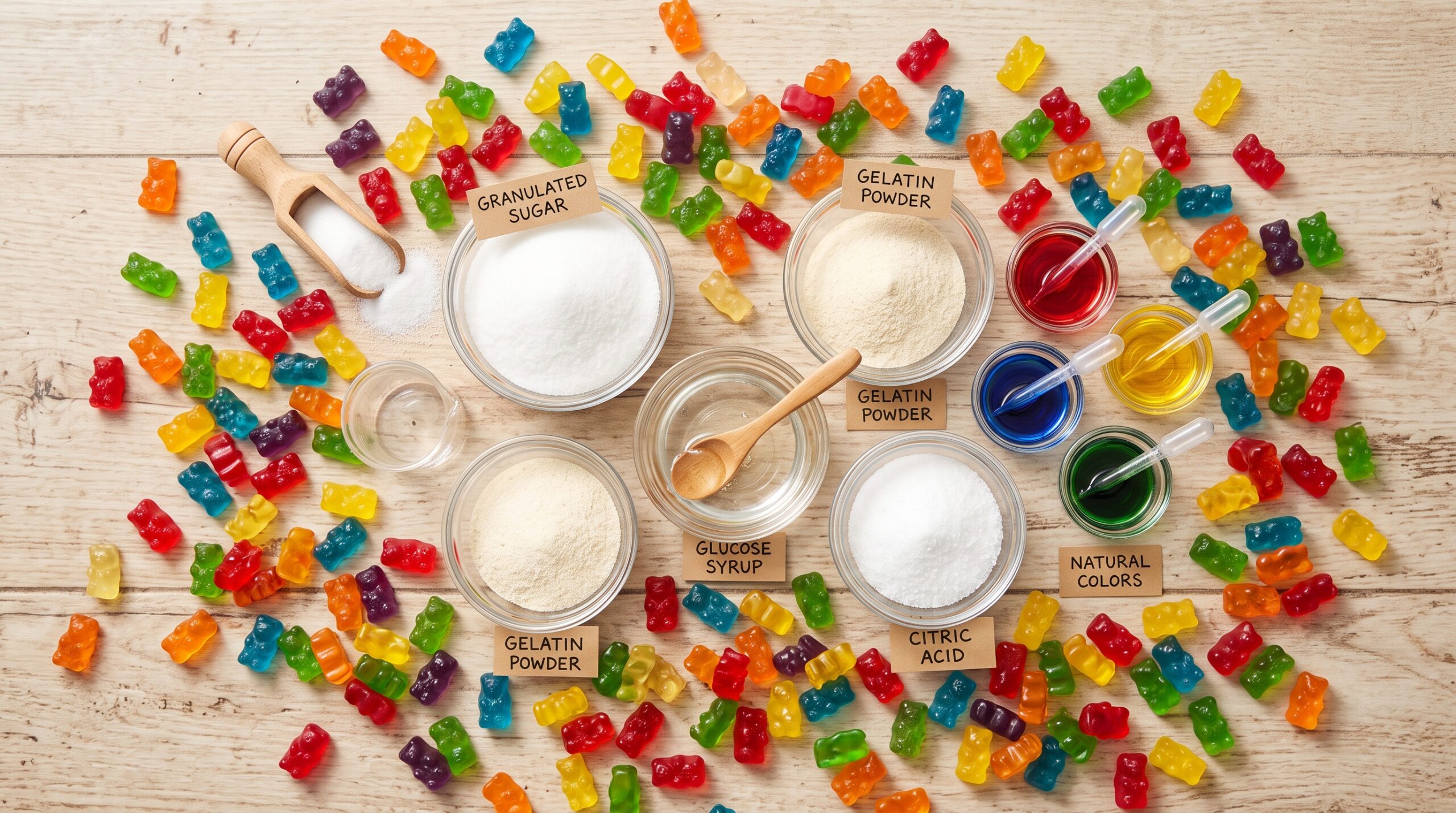
Haribo gummy bears contain glucose syrup, sugar, gelatin, dextrose, citric acid, natural and artificial flavors, and fruit juice concentrates for coloring — each ingredient serving a precise functional role in texture, flavor, and shelf stability.
Walk into any candy aisle worldwide and you’ll find those iconic gold bags. Haribo Goldbears have been in continuous production since 1922, and the formula has stayed remarkably consistent. But what exactly goes into each bear? And why does it matter for candy manufacturers who want to produce similar confections at scale?
This guide breaks down every Haribo gummy bears ingredient — what it does chemically, where it comes from, and how industrial confectionery equipment processes it. Whether you’re a curious consumer, a food scientist, or a candy producer evaluating gummy production lines, you’ll find the full picture here.
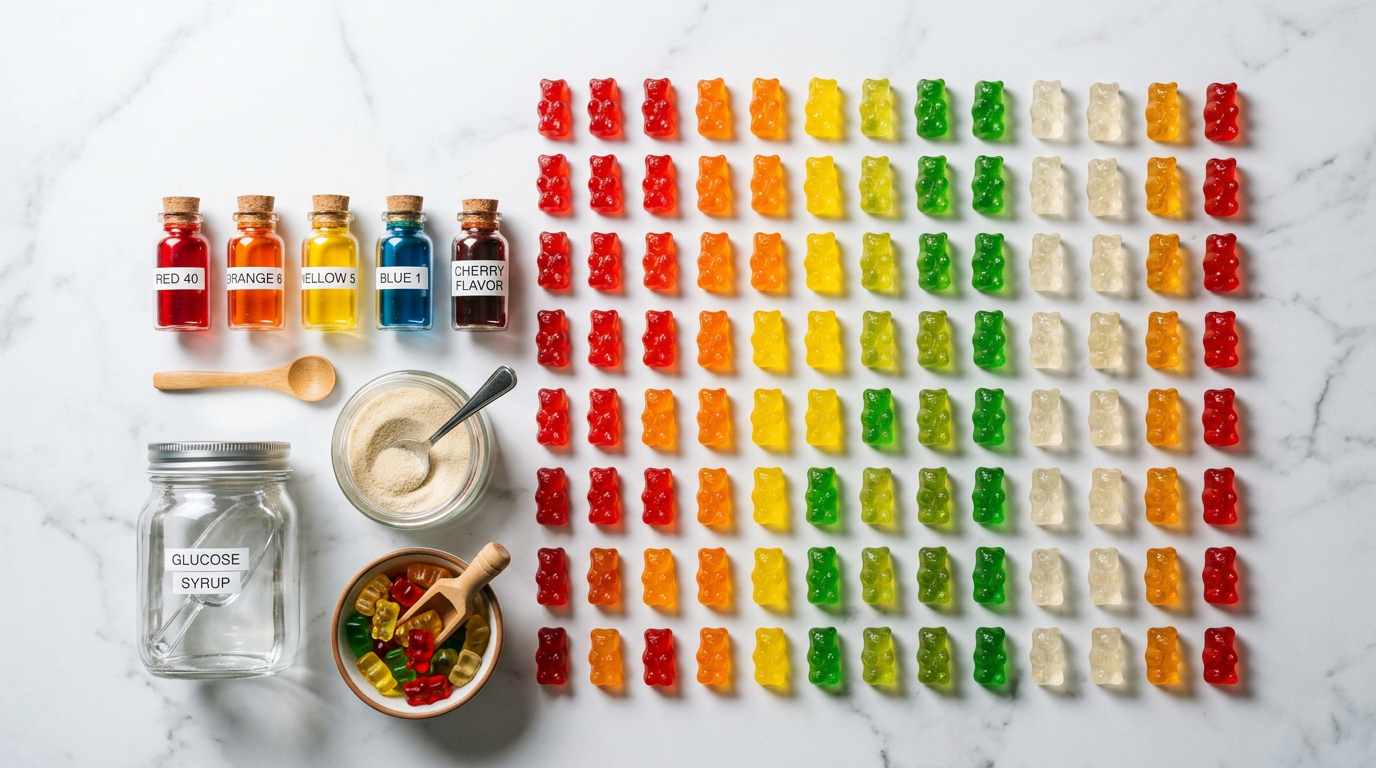
What Are the Main Haribo Gummy Bears Ingredients?
Haribo gummy bears are made primarily from glucose syrup, sugar, and gelatin — these three ingredients account for roughly 85% of the product by weight.
The official ingredient list printed on Haribo Goldbears bags (US formulation) reads:
Glucose Syrup, Sugar, Gelatin, Dextrose (from Wheat or Corn), Citric Acid, Corn Starch, Artificial and Natural Flavors, Palm Oil, Carnauba Wax, White Beeswax, Fruit Juice Concentrate (Apple, Strawberry, Raspberry, Orange, Lemon, Pineapple), Colors: Red 40, Yellow 5, Yellow 6, Blue 1.
Glucose Syrup — The Structural Foundation
Glucose syrup is the primary sweetener and texture builder in Haribo gummy bears. It is derived from starch (typically corn or wheat) through enzymatic hydrolysis, producing a viscous liquid with roughly 70-80% solids content and a dextrose equivalent (DE) of 40-65.
In gummy candy, glucose syrup performs three critical functions:
- Prevents crystallization by interfering with sucrose crystal formation
- Controls water activity (aw) to keep the bears chewy rather than brittle
- Provides body and elasticity that sugar alone cannot
Industrial gummy production lines typically use glucose syrup at concentrations between 35-45% of total formula weight. Continuous cookers process this syrup at 130-140 degrees C to achieve the right solids level before gelatin addition.
Sugar (Sucrose) — Sweetness and Crystallization Balance
Refined sucrose provides the primary sweetness profile. In Haribo gummy bears, sugar works alongside glucose syrup in a precise ratio — typically 1:1 to 1.2:1 (sugar:glucose). A key manufacturing consideration: sucrose solutions must reach specific Brix levels (78-82 Bx for most gummy formulas) before gelatin is dissolved in. Adding gelatin to a hot, high-Brix solution without proper temperature control causes premature gelatin degradation.
Gelatin — The Gummy Texture Agent
Gelatin is what makes gummy bears gummy. It is a protein derived from collagen — typically porcine (pig skin/bones) in Haribo’s standard formulation. Gelatin concentration in the finished product typically runs 6-8% by weight. Haribo uses high-bloom gelatin (200-250 bloom) to achieve that characteristic firm-but-yielding bite.
Gelatin must be:
- Pre-hydrated (bloomed) in cold water at 1:1.5 ratio before use
- Added to the cooked sugar/glucose base at temperatures below 80 degrees C to avoid protein denaturation
- Mixed under vacuum in industrial kettles to eliminate air bubbles
Manufacturing note: Gelatin solution temperature control is the single most critical variable in gummy production. Exceeding 90 degrees C causes irreversible gelatin breakdown — the resulting candy will be brittle, not elastic.
Dextrose — Texture Modifier and Cooling Effect
Dextrose (pure glucose monohydrate) appears in small amounts — typically 2-5% of formula. It has a negative heat of solution meaning it absorbs heat when it dissolves, creating a slight cooling sensation on the palate. This enhances flavor perception, making fruit flavors taste brighter and cleaner. At low concentrations, dextrose also contributes to the slightly matte finish characteristic of Haribo bears.
Citric Acid — Flavor Enhancer and pH Control
Citric acid is the sourness agent in Haribo gummy bears. In gummy formulation, citric acid lowers pH to 3.0-3.5, inhibiting microbial growth and extending shelf life. It brightens fruit flavor profiles and must be added after gelatin is dissolved, as acidic conditions at high temperatures hydrolyze gelatin peptide bonds.
According to FDA regulations on food additives, citric acid holds GRAS (Generally Recognized as Safe) status at levels used in confectionery.
Corn Starch — Demolding Agent
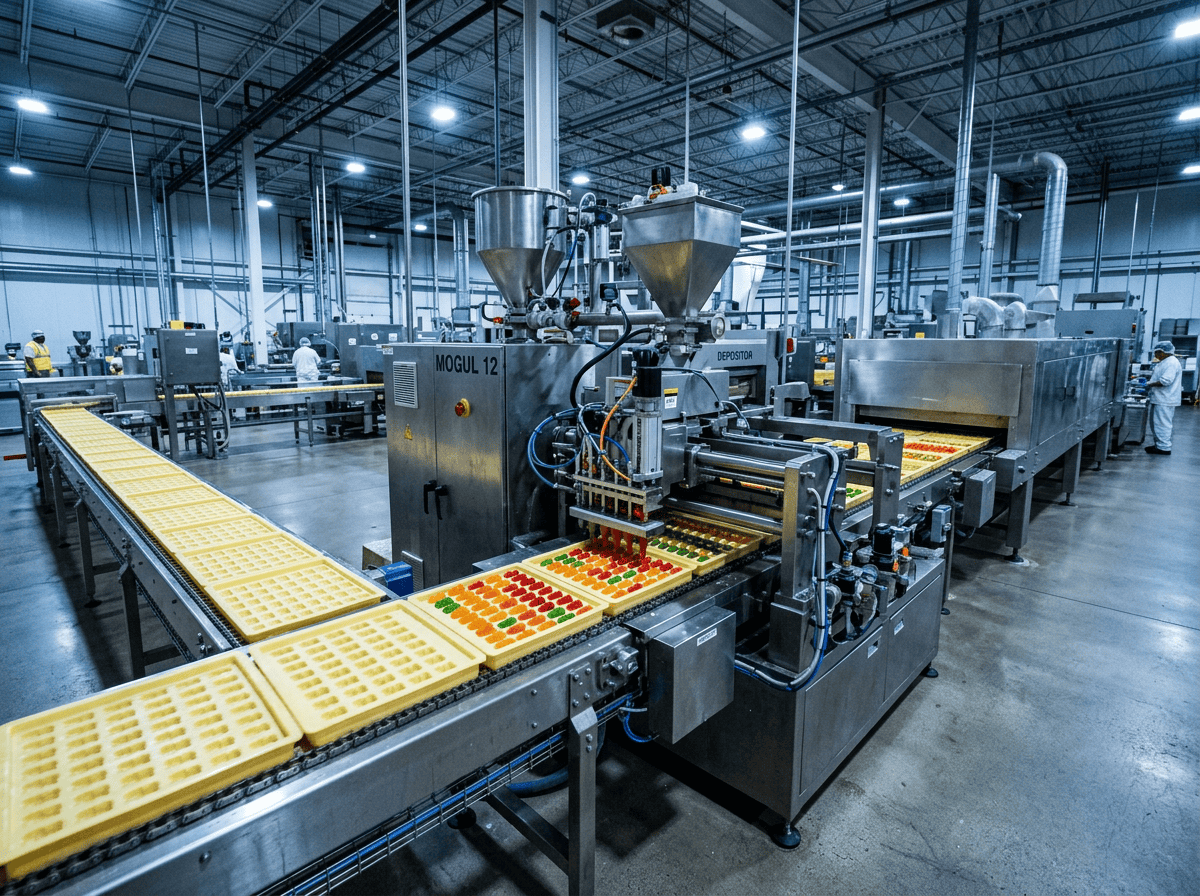
Corn starch in the ingredient list is the mogul starch used in the starch deposit process. Industrial gummy production uses starch mogul machines that fill trays with fine corn starch, press bear-shaped cavities, deposit liquid gummy mass into the cavities, and allow the starch to absorb moisture from the candy as it sets. Some starch inevitably remains in the finished product.
Natural and Artificial Flavors
Haribo uses a proprietary blend of flavor compounds for each of its five classic gummy bear colors: raspberry (red), orange (orange), strawberry (white/clear), lemon (yellow), and pineapple (green). These flavors are complex blends of esters, terpenes, and aldehydes. The “artificial” component typically refers to nature-identical molecules produced synthetically.
Palm Oil, Carnauba Wax, and White Beeswax — Surface Coating
These three ingredients form the polishing blend applied as a final surface coating in a revolving drum. According to Codex Alimentarius Commission specifications, food-grade carnauba wax must meet specific melting point and purity standards. Haribo applies these waxes in precise amounts — typically 0.1-0.3% by weight — using high-speed polishing drums.
Fruit Juice Concentrates — Natural Color Sources
Haribo Goldbears use both certified artificial dyes (Red 40, Yellow 5, Yellow 6, Blue 1) and fruit juice concentrates. The concentrates contribute natural color support and minor flavor nuance, while the synthetic dyes provide the vivid, stable coloration that survives high-temperature processing.
Gummy Bear Ingredient Variants: US vs European Formulations
Haribo gummy bears are not a single global formula — the ingredient list varies by market in ways that matter to food manufacturers.
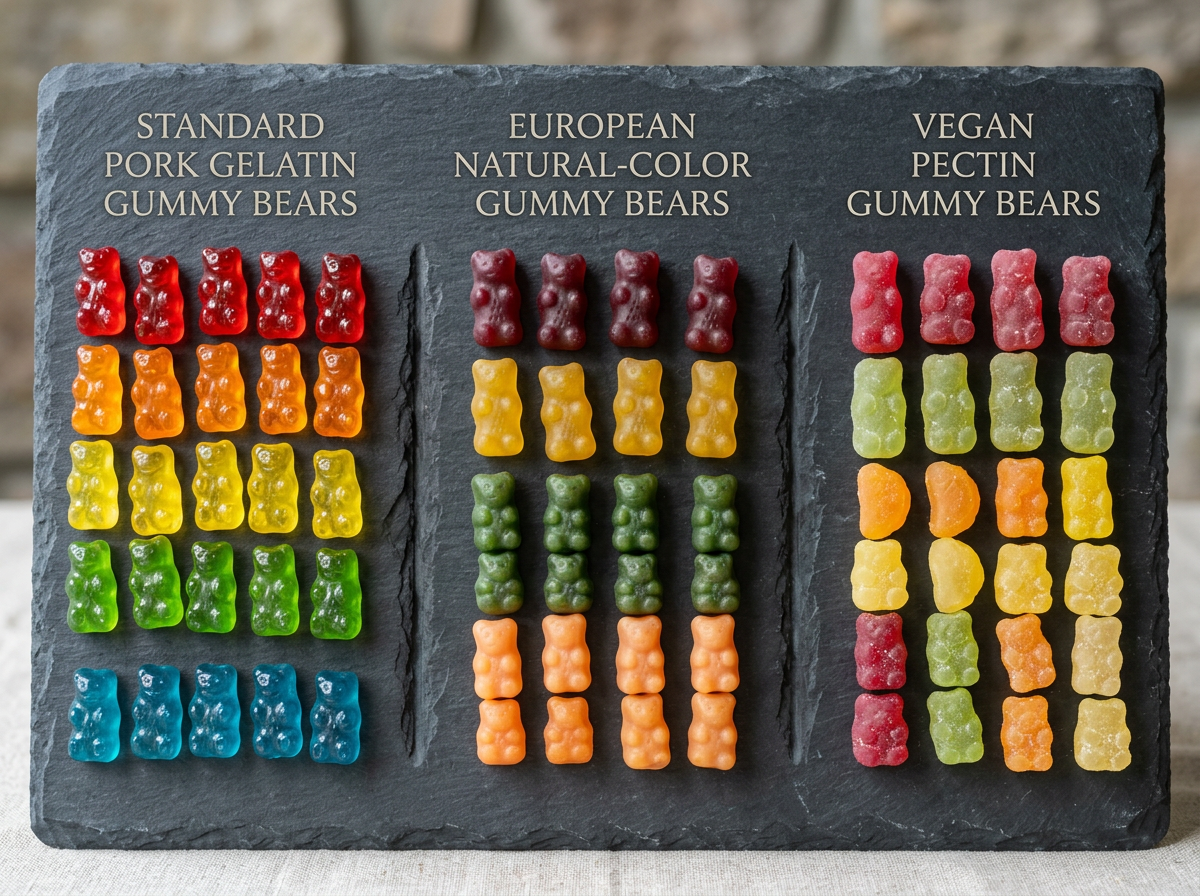
| Ingredient | US Goldbears | European Goldbaren | Vegan/Pectin Variant |
|---|---|---|---|
| Gelling agent | Porcine gelatin | Porcine gelatin | Pectin (apple/citrus) |
| Sweeteners | Glucose syrup + sucrose + dextrose | Glucose syrup + sucrose | Glucose syrup + sucrose |
| Colors | Red 40, Yellow 5, Yellow 6, Blue 1 | Annatto, carmine, plant extracts | Plant-based colorants |
| Surface treatment | Carnauba wax + beeswax + palm oil | Carnauba wax | Carnauba wax |
| Citric acid form | Anhydrous | Anhydrous | Anhydrous |
| Kosher/Halal | No | No | Certified variants available |
Key European Differences
European Goldbaren avoid some synthetic dyes due to EU Regulation (EC) No 1333/2008, which requires warning labels for products containing certain azo dyes. Haribo reformulated European products to use natural colorants including Carmine (E120) for red/pink, Annatto (E160b) for orange-yellow, Spirulina extract for blue/green, and black carrot concentrate for purple-red shades.
Vegan Gummy Bear Alternatives
Pectin-based gummy bears replace gelatin with pectin — a polysaccharide extracted from apple pomace or citrus peel. Pectin gummies require higher processing temperatures (pectin sets above 85 degrees C; gelatin sets below), different texturizer co-systems, and careful pH management: HM pectin requires pH 2.8-3.5 for proper gelation with sugar.
Industrial Applications: How These Ingredients Are Processed at Scale
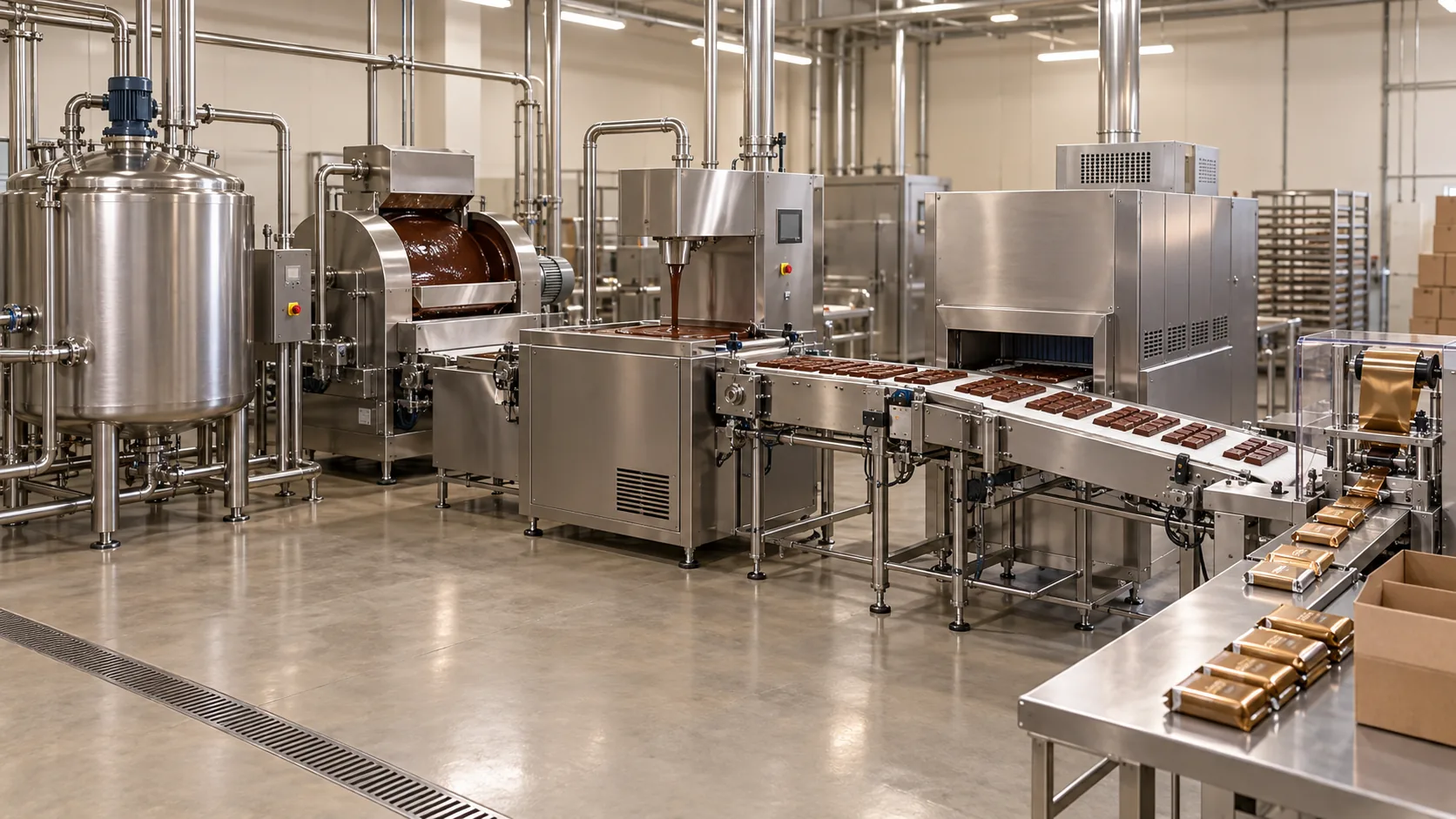
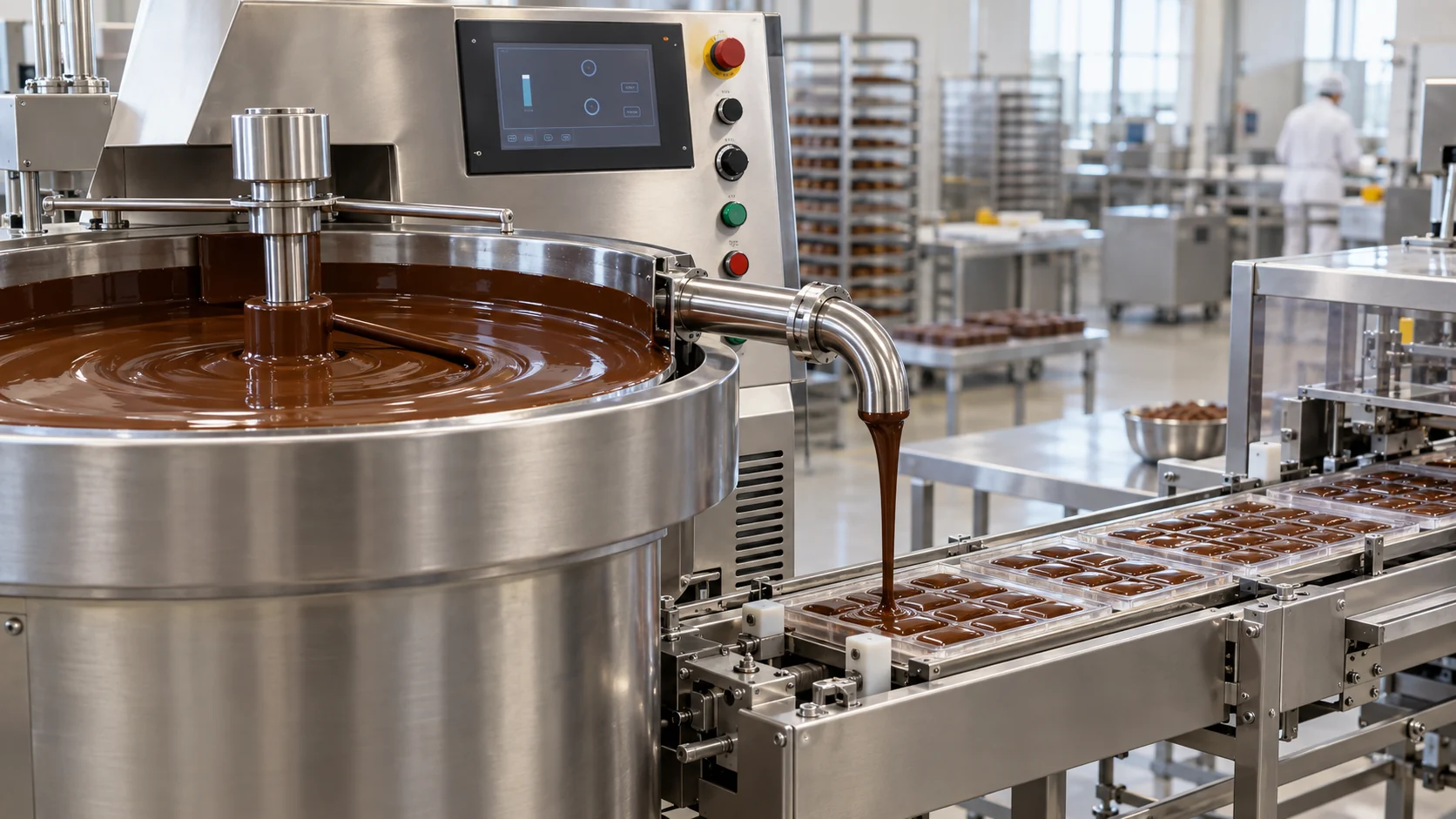
Understanding haribo gummy bears ingredients at a factory scale is essential for confectionery manufacturers evaluating production equipment. The process has five distinct stages where ingredient handling is critical.
Stage 1: Syrup Cooking
Glucose syrup and sucrose are dissolved in water and cooked in continuous cooker systems to target Brix of 78-82 Bx at 130-135 degrees C. Modern continuous cooking lines from specialized machinery manufacturers achieve output rates of 500-3,000 kg/hour with plus or minus 0.5 Bx accuracy.
Stage 2: Gelatin Dissolution and Blending
Gelatin solution (pre-bloomed at 30-35% concentration) is metered into the cooked syrup at a controlled temperature of 65-75 degrees C. Citric acid, flavor oils, and color solutions are then added sequentially under continuous agitation.
| Parameter | Target Range | Impact of Deviation |
|---|---|---|
| Temperature at gelatin addition | 65-75 degrees C | Above 80C: gelatin degradation; below 60C: premature gelling |
| Gelatin concentration | 6-8% final | Below 5%: soft/sticky bears; above 9%: hard, rubbery texture |
| pH after citric acid | 3.0-3.5 | Below 2.8: rapid gelatin hydrolysis; above 3.8: insufficient acidity |
| Mixing time | 15-25 min | Under-mixing: flavor streaks; over-mixing: air entrainment |
Stage 3: Starch Mogul Depositing
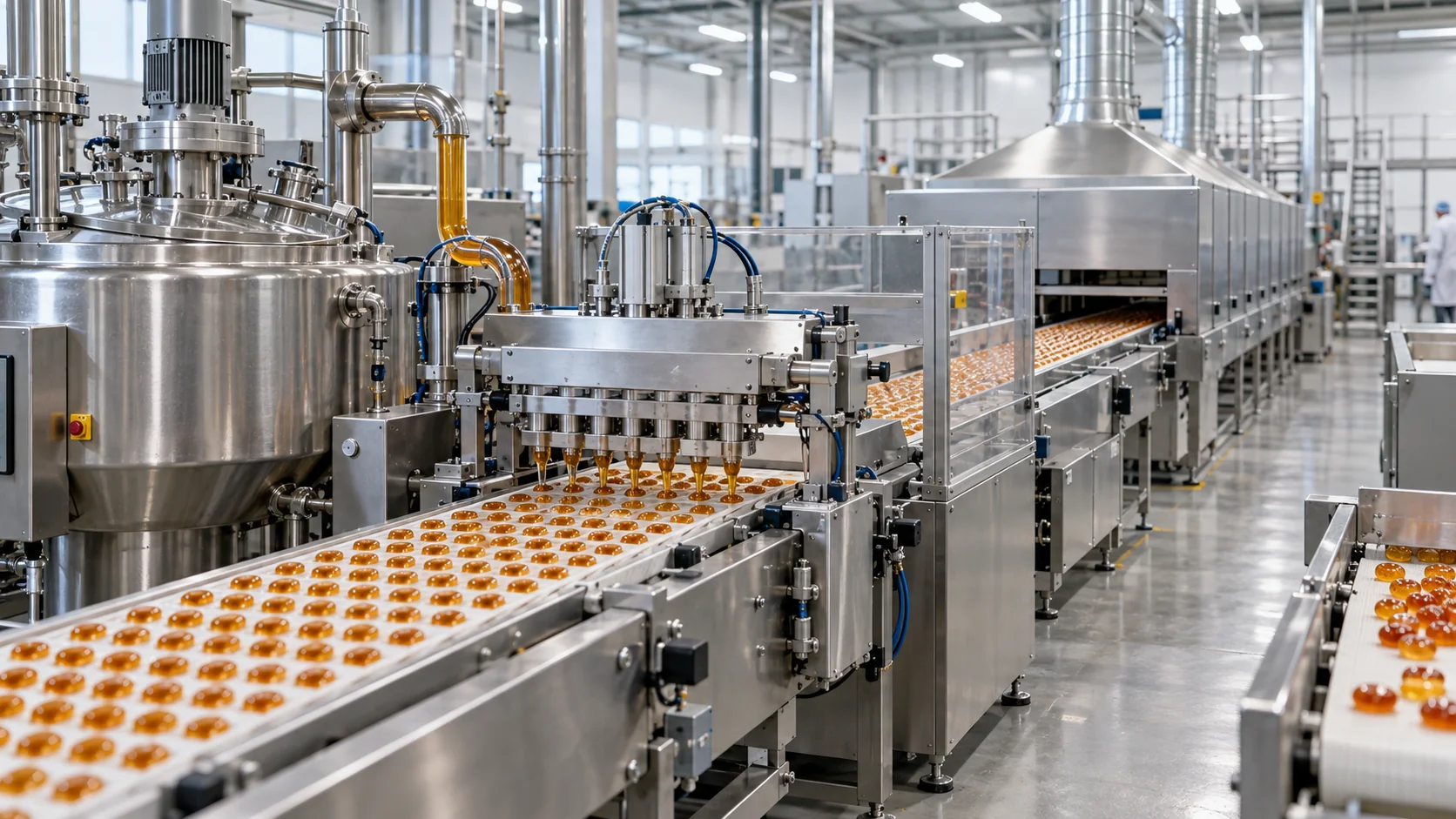
The liquid gummy mass (at 65-70 degrees C) is deposited into starch-filled trays via automated mogul lines. The trays are moved to a conditioning room held at 20-22 degrees C and 50-60% RH for 24-48 hours. During this time, moisture migrates from the gummy into the starch, and the gelatin network fully sets.
Stage 4: Demolding and Tumbling
After conditioning, an automated process releases the gummy bears from trays. A starch-brushing system removes residual starch. The bears pass through starch sieving and recycling systems, visual inspection systems, and final moisture measurement (target: 14-17% moisture for Haribo-style texture).
Stage 5: Polishing and Packaging
The final polishing stage applies the wax blend in a rotating drum for 15-30 minutes. Packaging is done immediately after polishing, as wax-treated gummies are more susceptible to picking up starch dust if left exposed.
How to Choose Gummy Production Equipment Based on Ingredient Needs
If you’re manufacturing gummy candy with Haribo-comparable ingredient specifications, equipment selection must account for each ingredient’s processing requirements.
Cooker Selection
For glucose/sugar-based formulations at the concentrations used in Haribo gummy bears ingredients, tubular cookers are best for high-capacity continuous production (above 1,000 kg/hr). Batch vacuum cookers are preferred for small runs, R&D, or multi-SKU operations needing frequent formula changes. Scraped-surface heat exchangers are necessary when the formula includes fruit purees or high-solids inclusions.
Mogul Line Specifications
For bear-shaped pieces at Haribo Goldbear size (2g per piece), nozzle size should be 4-6mm diameter for proper fill without stringing. Depositing speed runs 30-60 strokes/minute for standard production rates.
| Production Scale | Equipment Type | Output Rate |
|---|---|---|
| Artisan/Lab | Manual or semi-auto bench mogul | 10-50 kg/hr |
| Small commercial | Semi-continuous single-lane mogul | 50-200 kg/hr |
| Industrial | Fully continuous multi-lane mogul line | 500-3,000 kg/hr |
Future Trends in Gummy Bear Ingredients (2026 and Beyond)
The global gummy candy market is projected to reach $8.9 billion by 2030, driven by product innovation in ingredients and formulation. Several trends are reshaping what goes into gummy bears.
Clean-Label Reformulation
Consumer pressure for clean label is pushing manufacturers toward pectin over gelatin (vegan + halal appeal), natural colorants replacing FD&C dyes, and reduced sugar versions using erythritol, allulose, or isomalt as partial sucrose replacers. Natural colorants represent the most challenging reformulation target — as noted by research from the Institute of Food Technologists, natural pigments from spirulina, black carrot, and hibiscus lose significant color intensity during the 130 degree C cooking stage.
Functional Gummy Formats
The gummy delivery format has expanded into nutraceuticals — vitamins, CBD, collagen peptides, and probiotics. Vitamin C partially degrades above 70 degrees C, requiring post-cooling addition or encapsulation. Collagen peptides replace partial gelatin load at 2-4% concentration. Probiotic strains require processing temperatures below 50 degrees C, incompatible with standard gummy cooking.
Precision Fermentation Gelatin
Several startups are developing gelatin produced via precision fermentation — functionally identical to animal-derived gelatin but fully vegan. If commercially scaled, this would allow Haribo-style gelatin gummies to carry vegan certification without reformulating to pectin.
FAQ: Haribo Gummy Bears Ingredients
Q: What is the main ingredient in Haribo gummy bears?
Glucose syrup is the primary ingredient by weight, typically comprising 35-45% of the formula. It provides the characteristic gummy texture, prevents crystallization, and controls water activity for shelf stability.
Q: Do Haribo gummy bears contain pork gelatin?
Yes — standard Haribo Goldbears use porcine gelatin derived from pig skin and bones. This makes them unsuitable for vegetarians, vegans, Muslims, and many Jewish consumers. Haribo markets pectin-based vegan gummy bears in some European countries.
Q: Are Haribo gummy bears gluten-free?
The US formulation includes dextrose that may be derived from wheat. Haribo does not certify Goldbears as gluten-free in the US market. Consumers with celiac disease should contact Haribo directly or choose certified gluten-free products.
Q: What gives Haribo gummy bears their colors?
US Goldbears use certified synthetic dyes: Red 40 (red bears), Yellow 5 and Yellow 6 (orange and yellow bears), Blue 1 combined with Yellow 5 (green bears). Fruit juice concentrates supplement the color profile.
Q: Why do Haribo gummy bears have a different texture than other gummy candies?
Haribo uses high-bloom gelatin (200-250 bloom) at 6-8% concentration, which produces a firm, resilient texture. The specific glucose syrup-to-sugar ratio also contributes to the distinctive chew that competitors using lower-bloom gelatin cannot replicate.
Q: Can I make gummy bears with the same ingredients at home?
Yes, but achieving exact Haribo texture requires high-bloom gelatin (Knox or professional gelatin sheets) and glucose syrup. Home formulas typically use 2% gelatin in simple sugar syrup — softer and less stable than commercial product but captures the basic gummy character.
Q: What is the difference between Haribo gummy bears and sugar-free Haribo gummy bears?
Sugar-free Goldbears replace sucrose and glucose syrup with lycasin (maltitol syrup) and sorbitol — both sugar alcohols. They are lower-calorie but have a well-documented laxative effect in quantity due to incomplete gastrointestinal absorption of polyols. The texture is similar but slightly softer.

Conclusion
Haribo gummy bears ingredients represent a carefully balanced system where each component performs a specific functional role. Glucose syrup prevents crystallization and builds elasticity. Gelatin creates the iconic gummy texture at precise bloom strength. Citric acid controls pH for both flavor and preservation. Waxes prevent sticking and deliver surface finish.
For confectionery manufacturers, replicating or adapting this formula at scale requires equipment that matches each processing step’s temperature, pH, and shear requirements. The ingredient list is public — but translating it into consistent industrial output depends on process engineering as much as formulation chemistry. If you are evaluating production lines for gummy candy, boba pearls, or other gelatin or pectin-based confections, the right gummy manufacturing equipment makes the difference between a formula that works in the lab and one that runs reliably at 1,000 kg/hour.
Related Articles
- Sugar Free Haribo Gummy Bears: Ingredients, Effects, and What Actually Happened
- What Are Gummy Bears Made Of? The Full Ingredient Breakdown
- Best Gummy Bears: A Complete Guide to Brands, Flavors, Ingredients, and What Actually Makes One Worth Eating
- Haribo Sugar Free Gummy Bears Review: The Sweet Truth Behind the Internet’s Most Infamous Candy
- Gummy Candy Production Line
- Starch-Free Gummy Depositing Machine
- Are Skittles Gluten Free? Complete Guide 2026