Candy rarely becomes unsafe after its expiration date, but quality — flavor, texture, and appearance — declines over time depending on candy type and storage conditions.
You find an old bag of gummy bears at the back of your drawer. The “best by” date passed eight months ago. Is it still safe to eat — or is it a health risk? This is one of the most common questions candy lovers, parents, and even food manufacturers ask. The answer is more nuanced than a simple yes or no, and understanding it means knowing how different candies are made, what makes them degrade, and how storage conditions affect their longevity.
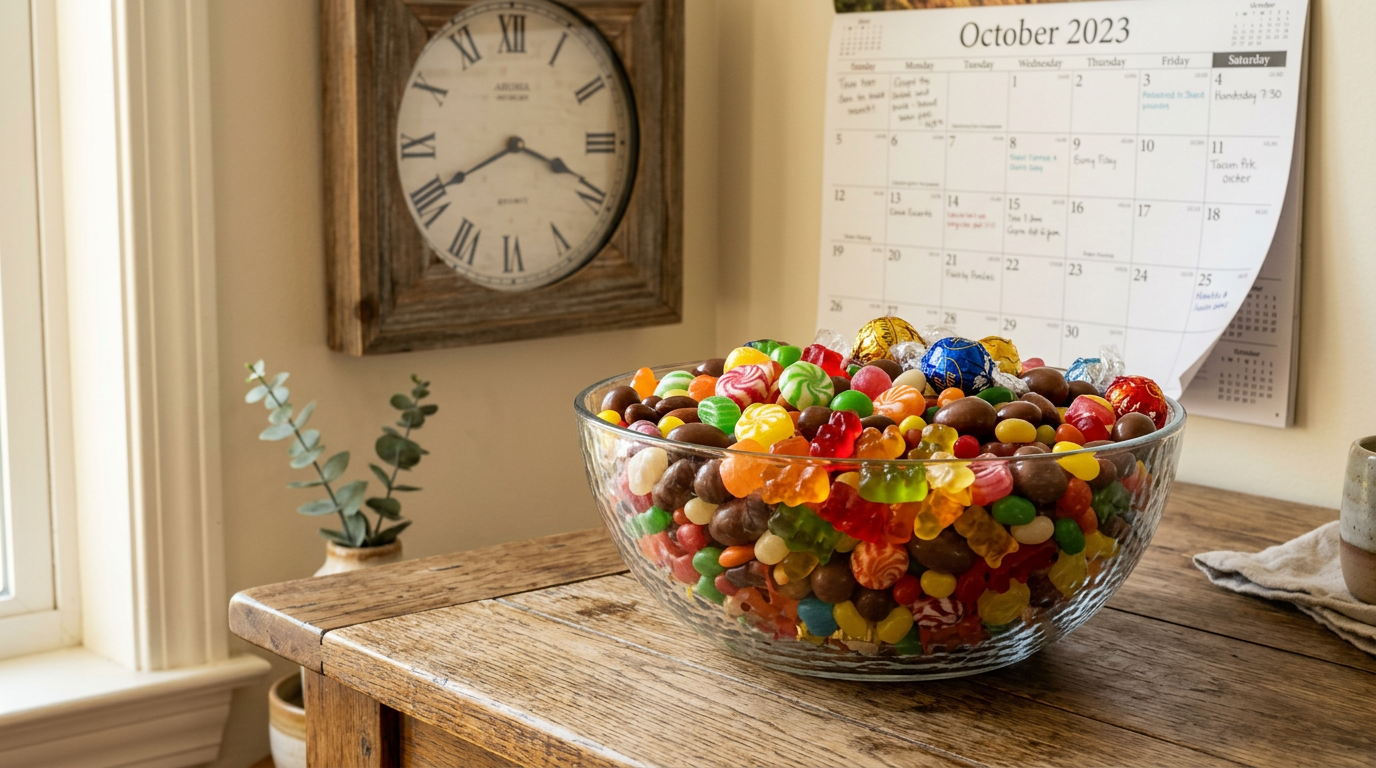
This guide breaks down candy expiration by type, explains the science behind sugar preservation, explores how modern candy manufacturing extends shelf life, and gives you practical rules for deciding when to toss — and when you’re totally fine to eat.
What Does “Expiration” Really Mean for Candy?
Most candy products don’t expire the way perishable foods like meat or dairy do. The date printed on candy packaging — often labeled “best by,” “best before,” or “sell by” — is a quality indicator, not a safety deadline.
According to the U.S. Food & Drug Administration’s guidance on food product dating, the terms “best by” and “best before” refer to peak quality, not safety. Manufacturers set these dates based on when the product is expected to taste, look, and feel its best — not when it becomes dangerous.
Sugar is one of the oldest preservatives known to humanity. It draws moisture out of microbial cells through osmosis, creating an environment where bacteria and mold cannot easily grow. This is why hard candy — essentially pure crystallized sugar — can last for years without becoming a food safety concern. Chocolate, gummies, and compound candies have shorter windows because they contain fats, proteins, and moisture that degrade independently of the sugar content.
The Difference Between “Expired” and “Gone Bad”
These two concepts are not the same for candy:
- Expired means the date on the package has passed. The manufacturer no longer guarantees peak flavor, color, or texture.
- Gone bad means the candy has developed off-flavors, mold, rancid fats, or structural changes that make it unpleasant or potentially harmful.
Most candy that has “expired” is simply past its best-by quality window. Most candy that has “gone bad” shows clear visible signs: color changes, white bloom on chocolate, sticky or hardened gummies, rancid smell, or visible mold.
Why Candy Manufacturers Use Expiration Dates
From a food production standpoint, expiration dates serve several purposes. They protect brand reputation by ensuring consumers experience the product at its intended quality. They also serve regulatory requirements — in some markets, date labeling is mandatory for all packaged foods. At the manufacturing level, producers calculate shelf life through accelerated aging tests and sensory panel evaluations. These tests simulate months or years of storage in weeks, identifying when key quality attributes fall below acceptable thresholds.
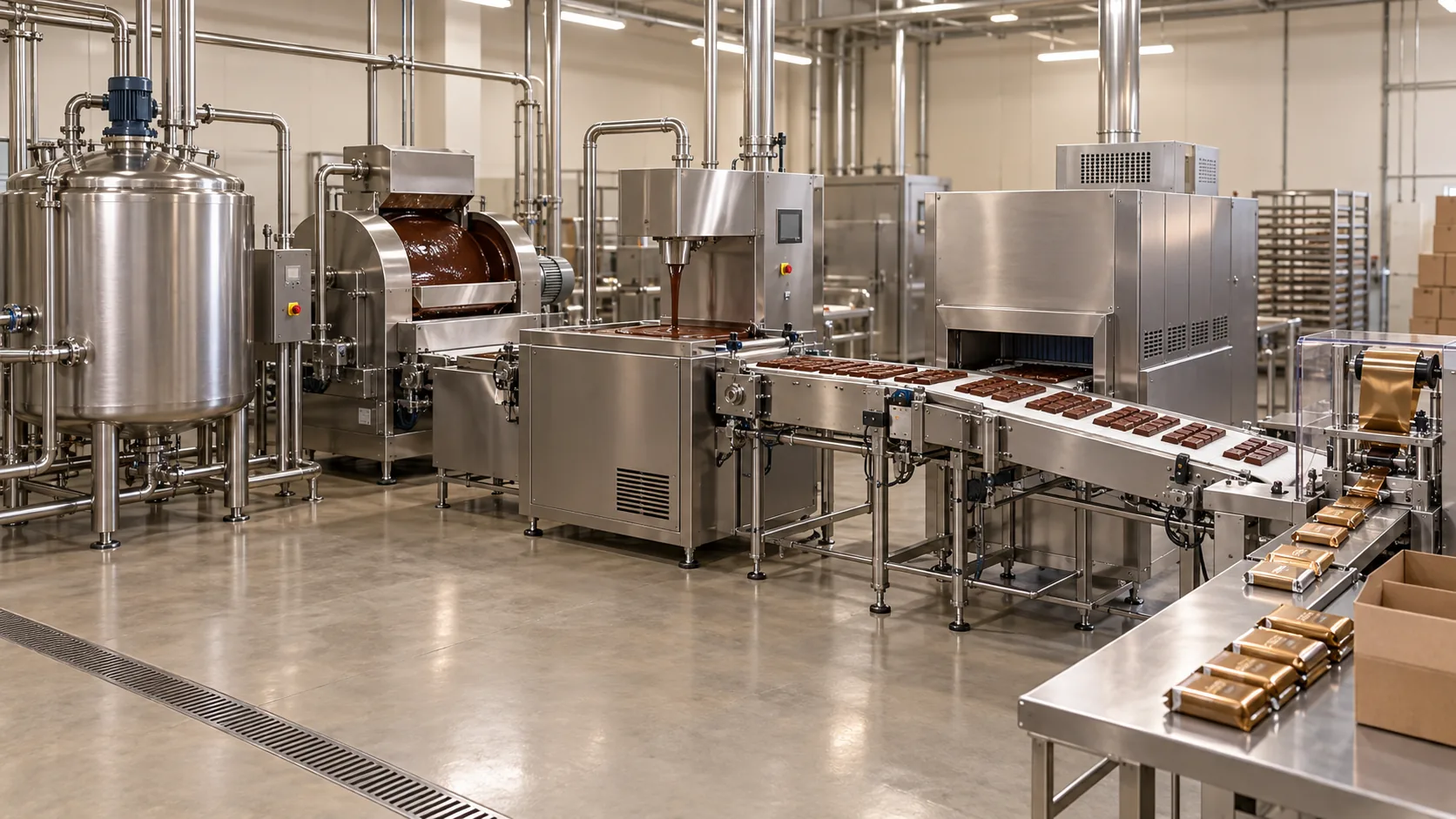
Modern candy manufacturing equipment — from depositors and enrobers to wrapping machines — is designed to minimize contamination and maximize the consistency of the final product, which directly influences how long that product stays within quality standards.
Shelf Life by Candy Type
Candy is not a monolithic category. A piece of hard candy and a chocolate truffle are chemically very different products with very different shelf lives. The key factors are water activity, fat content, added preservatives, and packaging.
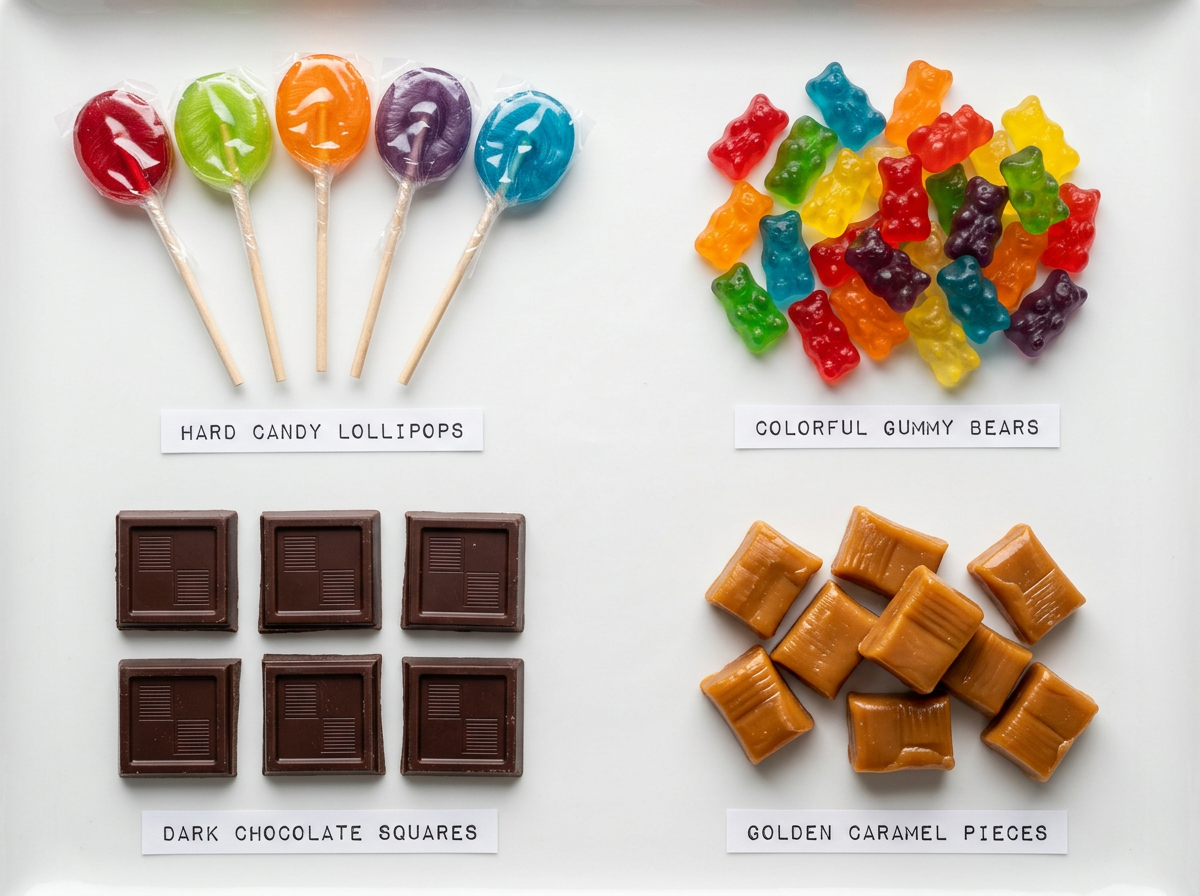
Hard Candy
Hard candy lasts 1–2 years unopened and up to 1 year after opening. It is the most shelf-stable candy form because it has extremely low water activity (typically aw < 0.3). At this level, microbial growth is virtually impossible. The main quality degradation you’ll see in old hard candy is:
- Stickiness: humidity causes the sugar surface to absorb moisture and become tacky
- Color fading: dyes break down over time, especially with light exposure
- Flavor weakening: volatile flavor compounds evaporate slowly through packaging
Classic hard candies like lollipops, peppermint drops, and rock candy can remain perfectly safe (if not ideal) for 2–3 years when stored correctly.
Chocolate Candy
Milk and dark chocolate bars typically last 1–2 years; filled chocolates last 6–12 months. The main enemy of chocolate is fat — specifically the cocoa butter and milk fat it contains. When stored at fluctuating temperatures, these fats migrate to the surface and recrystallize, creating a white or gray coating called fat bloom. Similarly, if moisture condenses on chocolate, sugar crystals dissolve and re-form on the surface — this is called sugar bloom.
Neither type of bloom makes chocolate unsafe, but it does affect texture and appearance. Old chocolate may also develop a slightly rancid or waxy taste as fats oxidize.
White chocolate has the shortest life of the chocolate family (6–8 months) because it contains no protective cocoa solids — just cocoa butter, milk, and sugar.
Gummy Candy
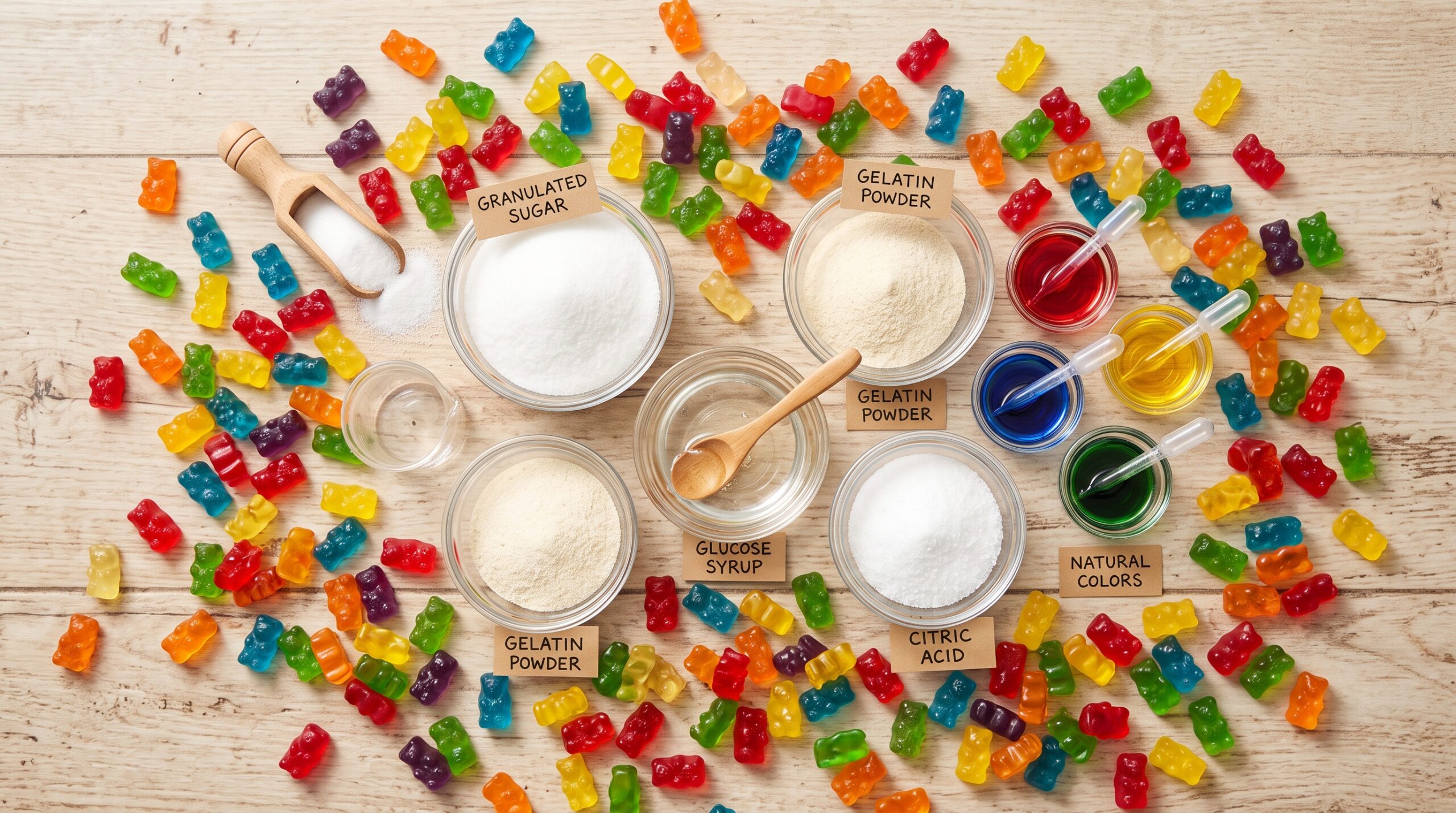
Gummy candies typically last 6–12 months unopened. Gummies are made from gelatin or pectin, water, sugar, and flavorings. Their higher moisture content (relative to hard candy) makes them more susceptible to both microbial growth and physical degradation. Over time, opened or improperly stored gummies will:
- Dry out and harden into rubbery, tough pieces
- Stick together into a single mass
- Develop mold if moisture reactivates and microbial contamination is present
- Lose flavor intensity
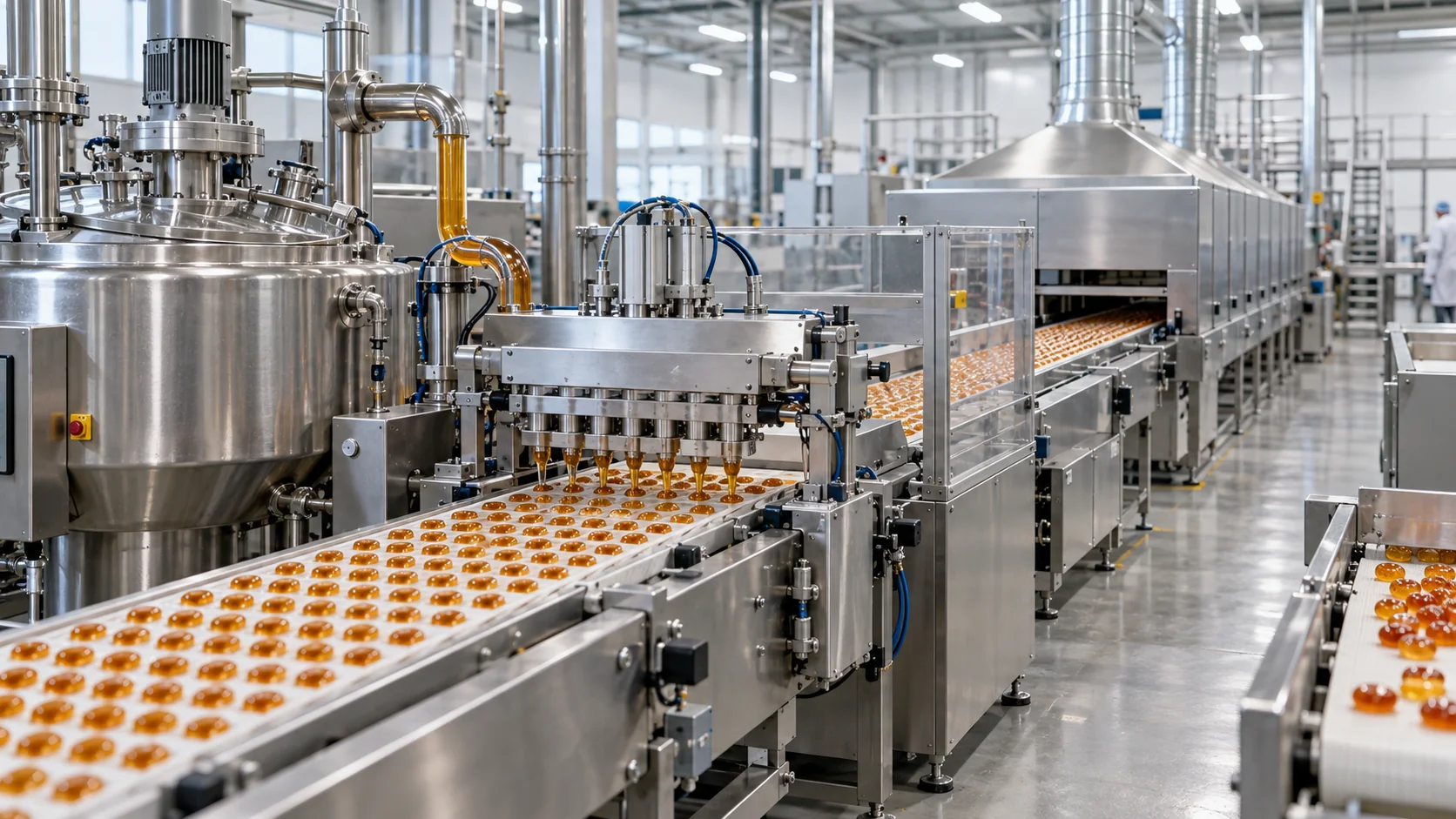
Some manufacturers add preservatives like potassium sorbate to extend gummy shelf life to 12–18 months. Industrial gummy production lines use sealed depositing systems that minimize air and contamination exposure during forming, which also contributes to longer shelf life.
Caramel and Toffee
Caramel typically lasts 6–9 months; toffee can last up to 1 year. Both are high-sugar confections that use Maillard reaction browning to develop their characteristic color and flavor. Individually wrapped caramels last longer than unwrapped pieces because moisture absorption is a primary degradation mechanism. Soft caramels are particularly vulnerable — they can crystallize, lose their chewy texture, or develop rancid dairy notes as the milk solids oxidize.
Candy Bars (Chocolate-Covered)
Compound candy bars with chocolate coatings and fillings (nuts, caramel, nougat, wafer) typically last 6–12 months. Each filling layer has its own degradation timeline. Nuts oxidize and go rancid. Wafers absorb moisture and soften. Nougat can dry out or crystallize. The interplay of these different components means candy bars typically hit quality decline sooner than pure chocolate.
Comparative Shelf Life Table
| Candy Type | Unopened Shelf Life | Key Quality Degradation | Still Safe After Expiry? |
|---|---|---|---|
| Hard candy | 1–2 years | Stickiness, color fade | Yes, usually 2–3 years |
| Dark chocolate | 1–2 years | Fat bloom, mild rancidity | Yes, 1–2 years past date |
| Milk chocolate | 1 year | Fat bloom, flavor loss | Usually yes, up to 1 year past |
| White chocolate | 6–8 months | Rancidity (no cocoa solids) | Often borderline |
| Gummy candy | 6–12 months | Hardening, sticking, mold | With caution — inspect for mold |
| Caramel/toffee | 6–9 months | Crystallization, rancid dairy | Usually yes if no mold |
| Candy bars (filled) | 6–12 months | Rancid nuts, soggy wafers | Depends on filling |
| Marshmallows | 6–12 months | Hardening, shape loss | Yes, just degraded texture |
| Lollipops | 1–2 years | Stickiness, color fade | Yes, 2+ years typically |
| Jelly beans | 1–2 years | Hardening, flavor loss | Yes, 1–2 years past date |
How Candy Manufacturing Affects Shelf Life
The shelf life of any candy product doesn’t begin at the point of sale — it begins in the factory. Production conditions, ingredient sourcing, machinery precision, and packaging technology all determine how long a candy product will maintain its quality.
Water Activity Control
Water activity (aw) is the single most important variable in confectionery shelf life. Professional candy producers engineer their recipes to hit specific water activity targets. Hard candy is cooked to precise temperatures that drive out nearly all free moisture. Gummies are formulated with specific gelatin-to-water ratios and then dried in controlled humidity chambers. Even a slight deviation from target aw can cut shelf life in half.
Modern candy production equipment includes in-line water activity monitoring systems that flag deviations before they result in product batches with shortened shelf life. Industrial depositing machines, for instance, are calibrated to deliver exact volumes of candy mass, ensuring consistent thickness and therefore consistent moisture evaporation during cooling.
Packaging Technology
Even the best candy recipe and manufacturing process can be undermined by poor packaging. Confectionery producers use several packaging approaches to maximize shelf life:
- Modified atmosphere packaging (MAP): replaces the air inside packaging with nitrogen or carbon dioxide to reduce oxidation
- Desiccant packets: absorb residual moisture in sealed bags
- Foil laminates: provide oxygen and moisture barriers for chocolate products
- Individually wrapped portions: limit exposure of each piece after the main package is opened
The packaging machinery used in candy factories is as important as the candy-making equipment itself. Proper sealing prevents the ingress of oxygen and moisture that trigger most candy degradation mechanisms.
Temperature During Production
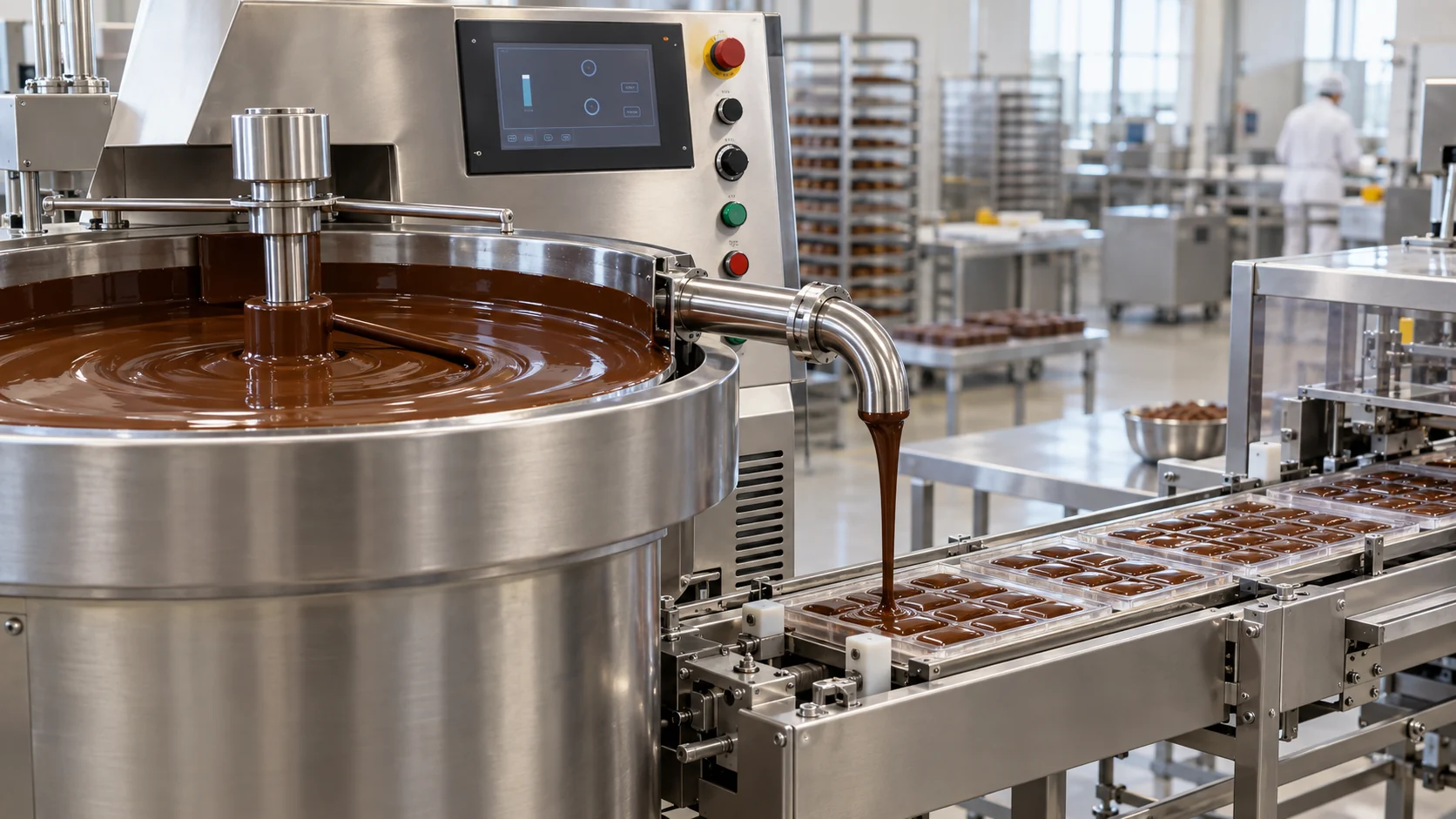
Many candy-making processes are temperature-sensitive. Chocolate tempering — the process of heating and cooling chocolate to specific temperatures — determines the crystal structure of the cocoa butter. Properly tempered chocolate has a shiny surface, clean snap, and stable crystal form (Form V cocoa butter crystals) that resists fat bloom for longer. Poorly tempered chocolate will bloom quickly and have a shorter effective quality life.
Similarly, cooking caramel and toffee to the correct final temperature determines their water content, texture, and shelf stability. Professional confectionery equipment uses precision temperature sensors and automated feedback controls to consistently hit these critical points — which directly translates to consistent, predictable shelf life in the final product.
Signs Your Candy Has Gone Bad
Quality decline is not the same as spoilage. Here’s how to distinguish “past its best” from “should not eat”:

Visual Inspection First
Look at the candy before tasting. These are signs of quality degradation that don’t necessarily mean the candy is unsafe:
- White or gray coating on chocolate (fat bloom or sugar bloom)
- Color fading on hard candy or gummies
- Slight graininess or crystallization on caramel
- Gummies that have fused together or hardened
These are signs that suggest you should not eat the candy:
- Visible mold (fuzzy spots, any color — especially on gummies, caramels, and soft candies)
- Strong rancid or sour odor that smells like old oil or fermentation
- Significant moisture inside sealed packaging — condensation or wetness
- Insect contamination (rare, but check old bulk candy)
Smell Test
Rancid fats have a distinctive smell — sharp, stale, slightly sour. If chocolate or a peanut butter cup smells like an old cooking oil, the fats have oxidized. This is not dangerous in small quantities but is genuinely unpleasant and a clear sign to discard.
Texture and Taste
If the candy passes the visual and smell test, a small taste test is reasonable. If it tastes stale, waxy, or off, just discard it. There is rarely a safety risk from eating a small piece of well-sealed, dry candy that’s past its date — but there’s also no reason to eat something that doesn’t taste good.
When to Automatically Discard
Some situations call for immediate discard regardless of appearance:
- Any mold present: mold on candy can produce mycotoxins. Don’t try to cut around it on soft candy — the mycotoxins can penetrate the whole piece.
- Packaging damage: torn seals, punctures, or swollen packaging suggest contamination risk
- Unusual liquid or syrup: a sign of significant microbial activity or breakdown of the candy matrix
- Candy stored in unsafe conditions: extreme heat or humidity over extended periods compromises integrity
How to Store Candy to Maximize Freshness
Storage conditions are often the primary variable between candy that lasts well beyond its best-by date and candy that degrades before it. The core principles are simple, but the details matter.
Temperature: Cool and Consistent
Ideal candy storage temperature is 60–70°F (15–21°C). Fluctuating temperatures cause condensation and promote fat bloom in chocolate. Refrigerating most candy is not recommended — it introduces moisture when the cold candy meets warm room air. The exception is chocolate-covered items in extremely warm climates: these can be refrigerated if placed in an airtight container first to prevent moisture absorption and odor transfer from the fridge.
Freezing candy is possible for long-term storage. Hard candy, most chocolate, and gummies can be frozen for 6–12 months with minimal quality loss. Thaw slowly in the refrigerator first before moving to room temperature to prevent condensation on the surface.
Humidity: Keep It Dry
High humidity is the enemy of most candy. Hard candy becomes sticky and starts to dissolve. Chocolate develops sugar bloom. Gummies grow mold. Keep candy in low-humidity environments — ideally below 50% relative humidity. In humid climates, sealed containers with silica gel packets are effective solutions.
Light: Darkness Preferred
UV light degrades both color compounds (dyes, natural pigments) and fats in candy. Store candy away from direct sunlight and fluorescent lighting. This is especially important for chocolate, which can develop off-flavors from light-induced lipid oxidation.
Airtight Containers
Once packaging is opened, transfer remaining candy to airtight containers. Oxygen exposure accelerates fat oxidation and flavor compound degradation. Glass or food-grade plastic containers with secure lids work well. Do not store candy in containers that previously held strongly scented foods — candy, especially chocolate, absorbs odors readily.
Storage Guidelines by Type
| Candy Type | Best Storage Temperature | Humidity | Expected Life if Well-Stored |
|---|---|---|---|
| Hard candy | 60–70°F (room temp) | < 50% RH | 2–3 years |
| Dark chocolate | 65–68°F | < 50% RH | 2 years |
| Milk/white chocolate | 60–65°F | < 50% RH | 1 year |
| Gummies | Cool room temp | < 50% RH | 6–12 months |
| Caramel/toffee | Room temp (wrapped) | < 50% RH | 6–9 months |
| Filled candy bars | Room temp | < 50% RH | 6–12 months |
The Candy Manufacturing Perspective: Why Expiration Dates Are Set the Way They Are
Understanding candy expiration from a manufacturer’s viewpoint clarifies why dates are where they are — and why they’re often conservative.
Candy companies conduct real-time shelf life studies: they produce batches, store them under controlled conditions, and evaluate them at regular intervals over time. They also conduct accelerated shelf life testing (ASLT), where elevated temperature and humidity simulate years of storage in a compressed timeframe. These tests use the Arrhenius equation and modified Maillard kinetics to predict quality decline rates.
Based on this data, most manufacturers set their best-by dates at 70–80% of actual quality shelf life. This means that if a product maintains acceptable quality for 18 months in controlled testing, the packaging will say “best by 12 months” — building in a safety buffer that accounts for non-ideal retail and consumer storage conditions.
From a food safety standpoint, the Institute of Food Technologists notes that the vast majority of packaged confectionery products are microbiologically stable well beyond labeled dates, particularly those with low water activity. The safety concern is not microbiological but rather sensory — rancid fats, oxidized flavors, or physically compromised texture.
For manufacturers who produce boba pearls, gummy confections, and other specialty candies at industrial scale, the consistency of their manufacturing equipment plays a major role in achieving consistent shelf life predictions. Precision depositing machines, temperature-controlled coatings systems, and automated packaging lines reduce the variability that causes batch-to-batch differences in shelf life.
Candy and Food Safety: What the Regulations Say
In the United States, the FDA does not require expiration dates on most foods except infant formula and certain medical foods. Candy date labeling is voluntary for most products, though many manufacturers include it as a quality communication and for inventory management purposes.
The USDA FoodSafety.gov resource provides storage recommendations for a range of foods. While candy is not always specifically listed, the guidelines align with the candy industry’s own recommendations: dry, cool storage; airtight containers after opening; and sensory evaluation (look, smell, taste) as the practical guide for edibility.
In the European Union and UK, pre-packed foods with a shelf life of more than 18 months are exempt from mandatory date marking. Many confectionery products fall into this category, meaning you may find European candy imports with no best-by date at all — legally.
In some markets, particularly Southeast Asia and East Asia where boba and confectionery manufacturing is concentrated, local regulations differ. Countries like China, Japan, and South Korea have specific labeling requirements for confectionery products that often include production date rather than expiration date. For the same product, a production date format requires consumers to calculate their own “use within” window based on the manufacturer’s stated shelf life.
Future Trends in Candy Shelf Life Extension
The confectionery industry is investing in several technologies to extend shelf life without increasing preservatives — a trend driven by consumer demand for cleaner labels.
Natural Preservatives
Rosemary extract, green tea polyphenols, and vitamin E (tocopherols) are increasingly used as natural antioxidants in chocolate and confectionery coatings. These slow fat oxidation without the chemical profile of synthetic preservatives like BHA and BHT.
Active Packaging
Active packaging systems incorporate oxygen scavengers, antimicrobial agents, or moisture regulators directly into packaging materials. For gummy candy, active packaging can extend shelf life by 25–40% compared to standard packaging. Several major confectionery manufacturers are already deploying these systems in premium product lines.
High-Pressure Processing (HPP)
HPP uses cold pressure rather than heat to destroy microbial contamination. It’s already common in juices and meats, and is being explored for filled chocolate products and artisan confections where heat processing would damage quality. HPP-treated products can achieve 2–3x longer shelf life in some applications.
Advanced Manufacturing Precision
As confectionery manufacturing equipment becomes more sophisticated, batch-to-batch consistency improves. Tighter control over water activity, temperature profiles, and sealing integrity directly translates to more predictable shelf life. AI-driven quality inspection systems can now detect micro-defects in candy coating or sealing that would otherwise create weak points for moisture ingress.
| Trend | Technology | Estimated Shelf Life Improvement |
|---|---|---|
| Natural antioxidants | Rosemary extract, vitamin E | 15–30% for chocolate |
| Active packaging | Oxygen scavengers, antimicrobials | 25–40% for gummies |
| High-pressure processing | Cold pressure treatment | 200–300% for filled products |
| MAP (Modified Atmosphere) | Nitrogen/CO₂ flushing | 20–50% across candy types |
| Advanced sealing equipment | Precision heat sealing | Reduced variable spoilage |
FAQ: Does Candy Ever Expire?
Does candy ever truly expire?
Candy does not become definitively “expired” the way perishable foods do. Most candy will remain safe to eat well past its best-by date, though quality — particularly flavor and texture — will decline. The only situations where candy should absolutely be discarded are if it shows mold, rancid smell, or has been stored in conditions that caused structural breakdown.
Is it safe to eat candy that is 2 years old?
It depends on the type. Hard candy stored in cool, dry conditions can be safe and acceptable for 2–3 years. Chocolate may have bloomed (white coating) but is often still edible. Gummies 2 years old are more likely to have dried out, hardened, or — if the packaging was breached — developed mold. Always inspect visually and by smell before tasting old candy.
Can old candy make you sick?
Rarely, and only in specific circumstances. The most likely scenario is eating moldy gummies or caramels, which can cause gastrointestinal upset in sensitive individuals. Rancid fats in old chocolate or nut-containing candy can cause nausea in larger quantities. Otherwise, eating old candy that has simply lost quality is unlikely to cause illness — it will just taste bad.
How long does Halloween candy last?
Most Halloween candy lasts 6 months to 1 year from the date it was produced, which means candy distributed in October is typically within its quality window until at least spring or early summer of the following year. Chocolate bars and hard candy often have explicit best-by dates of 12–18 months from production. StillTasty’s food storage guide is a helpful resource for checking specific candy types.
Does candy need to be refrigerated?
Most candy does not need refrigeration and is better stored at room temperature. Refrigeration introduces humidity when cold candy is removed from the fridge, and can cause sugar bloom on chocolate. The exception: in very hot climates (consistently above 77°F / 25°C), chocolate products can be refrigerated if placed in an airtight container first to prevent moisture absorption.
Why does chocolate turn white? Is it still safe to eat?
The white coating on chocolate is called “bloom” and is completely safe to eat. It comes in two forms: fat bloom (cocoa butter fats migrating to the surface, usually from temperature changes) and sugar bloom (surface sugars dissolving and recrystallizing, usually from humidity). Bloomed chocolate may look unappetizing and have a slightly different texture, but it poses no health risk. The flavor may be slightly compromised.
How can you tell if candy is no longer good?
The three-check method works well: look, smell, taste (in that order). Look for mold, significant color change, or moisture inside sealed packaging. Smell for rancidity, sourness, or fermentation. If both checks pass, a small taste will confirm whether the candy is still enjoyable. If any one check fails — especially visible mold or strong rancid smell — discard without tasting.
Conclusion
Does candy ever expire? In the strictest food safety sense, most candy doesn’t — at least not in a way that suddenly makes it dangerous at midnight on its best-by date. What actually happens is a gradual decline in quality: flavors fade, textures shift, and fats oxidize. The speed of this decline depends heavily on the type of candy, how well it was manufactured, and how it was stored.
Understanding this gives you a practical advantage. Hard candy and dark chocolate stored correctly can remain genuinely enjoyable well beyond their labeled dates. Gummies and caramel-filled bars need more attention and a closer look before eating. And any candy with visible mold should always be discarded — no exceptions.
For those in the candy manufacturing industry, the story of expiration dates is fundamentally a story of process control: water activity management, temperature precision, and packaging integrity. The better the production equipment and process, the more consistent and predictable the shelf life. For consumers, the practical rules are simpler: store it cool and dry, keep it sealed, check before you eat.
Looking for information about how candy is made at an industrial scale? Explore our resources on confectionery processing equipment, boba manufacturing lines, and quality control in food production.
Related Articles
- Can Candy Canes Expire? Complete Shelf Life & Storage Guide
- Shelf Life Testing Explained: Principles, Methods & Best Practices 2025
- What Makes Sour Candy Sour? The Acids, Chemistry, and Production Secrets
- Sour Tube Candy: What It Is, Flavors, How It’s Made & Why You Can’t Stop
- Gummy Candy Production Line
- Food Packaging Machine
- Skittles Manufacturing Process: Inside the Factory