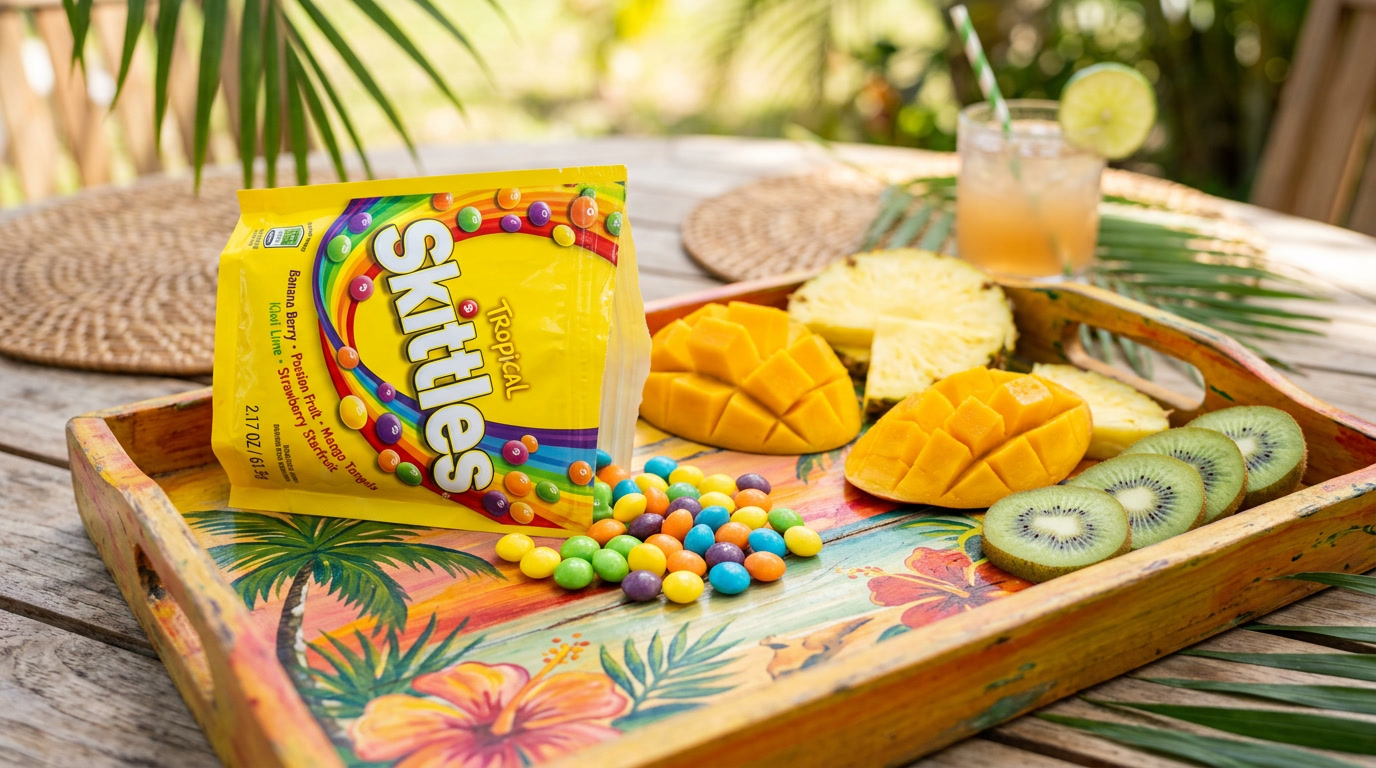
Yes — Tropical Skittles are gluten free. The US formula contains no wheat, barley, rye, malt, or oat ingredients. Tropical Skittles share the same gluten-free base formula as all other major US Skittles varieties.
Tropical Skittles — the yellow bag bursting with Kiwi Lime, Mango Tangelo, Strawberry Starfruit, Passion Fruit, and Pineapple — generate a specific set of gluten-free questions. The exotic tropical flavors often make consumers wonder whether the “natural flavors” in an unusually flavored candy might introduce unexpected ingredients, including gluten. This guide answers that question definitively and provides the full ingredient picture for Tropical Skittles.
Are Tropical Skittles Gluten Free? Full Ingredient Analysis
This article is part of our complete guide on are Skittles gluten free — covering every US and UK variety, celiac safety standards, and the full ingredient analysis for 2026.
Tropical Skittles are gluten free. The current US formula contains no wheat, barley, rye, oats, or derivatives of these grains.
Current US Tropical Skittles ingredient list:
Sugar, Corn Syrup, Hydrogenated Palm Kernel Oil, Apple Juice from Concentrate, Less than 2% of Citric Acid, Dextrin, Modified Corn Starch, Natural and Artificial Flavors, Coloring (Red 40 Lake, Yellow 5 Lake, Yellow 6 Lake, Blue 2 Lake, Blue 1 Lake, Red 40, Yellow 5, Yellow 6, Blue 1), Sodium Citrate, Carnauba Wax.
This is structurally identical to Original Skittles. The tropical flavor character comes entirely from the “Natural and Artificial Flavors” component — the same catch-all that delivers the fruit flavors in Original and Wild Berry varieties. None of the tropical flavor compounds introduce gluten.
Why Tropical Flavors Don’t Introduce Gluten
The five tropical flavors in Tropical Skittles deserve individual analysis, because unusual flavors sometimes prompt concerns about exotic carrier ingredients:
Kiwi Lime — Kiwi flavor is produced using natural kiwi extract or synthetic esters (typically ethyl butyrate-based blends). Lime flavor comes from citral or limonene from citrus oil. Neither introduces gluten.
Mango Tangelo — Mango flavoring uses natural mango extract or synthetic compounds mimicking mango’s characteristic lactone-ester profile. Tangelo is a citrus variety; its flavor is citrus-oil derived. No gluten.
Strawberry Starfruit — Strawberry flavor (natural or synthetic) and starfruit flavor compounds are fruit-derived or synthetic. Starfruit (carambola) flavoring, though uncommon in US candy, uses ester compounds. No wheat content.
Passion Fruit — Passion fruit flavor is among the most complex in confectionery, using a blend of aromatic esters. Still no gluten. Passion fruit compounds are synthesized or extracted from actual passion fruit; neither process involves wheat.
Pineapple — Pineapple flavor uses allyl hexanoate and ethyl acetate-based compounds (natural or artificial). Classic tropical candy flavor. No gluten.
None of the five tropical flavors introduce gluten at any stage — neither in the flavoring source materials nor in their delivery carriers within the Skittles formula.
Tropical Skittles Gluten-Free Status: The Dextrin Consideration
Like all Skittles varieties, Tropical Skittles contain dextrin in the ingredient list. This generates questions because dextrin can be wheat-derived or corn-derived.
In Tropical Skittles — as in all other Skittles varieties — the dextrin is corn-derived. Mars Wrigley’s classification of Tropical Skittles as gluten free is consistent with this. The modified corn starch and corn syrup in the same formula confirm a corn-starch-based approach throughout the product.
For celiac-level verification, this is confirmed through:
1. Mars Wrigley’s product classification (Tropical Skittles = gluten free)
2. The absence of any wheat allergen declaration on the packaging
3. Consistent reporting in the celiac community database resources
All Five Tropical Skittles Flavors: Gluten-Free Status
| Flavor | Flavor Type | Gluten Concern | GF Status |
|---|---|---|---|
| Kiwi Lime | Natural/artificial citrus-kiwi blend | None | ✅ GF |
| Mango Tangelo | Natural/artificial mango-citrus | None | ✅ GF |
| Strawberry Starfruit | Natural/artificial fruit blend | None | ✅ GF |
| Passion Fruit | Natural/artificial tropical ester | None | ✅ GF |
| Pineapple | Natural/artificial pineapple | None | ✅ GF |
All five flavors are gluten free. The tropical theme of the product doesn’t introduce any ingredient category that contains gluten.
Cross-Contamination Considerations for Celiac Consumers
For people with celiac disease managing trace-level sensitivity, the cross-contamination question is the relevant one after ingredients are confirmed clean.
Mars Wrigley operates large-scale confectionery manufacturing facilities. The company produces a range of products, including some that contain wheat or gluten. The specific equipment-sharing arrangements for Tropical Skittles production lines are not publicly disclosed in detail.
Practical celiac community guidance:
– The Celiac Disease Foundation lists Skittles (including Tropical variety) as gluten free
– Most celiac patients report consuming Tropical Skittles without adverse reaction
– For extreme sensitivity (reacting to cross-contact below 10 ppm), contact Mars Wrigley Consumer Care (1-800-551-0907) to ask about current manufacturing controls for the specific variety
How to Verify Tropical Skittles Gluten Free Status at Purchase
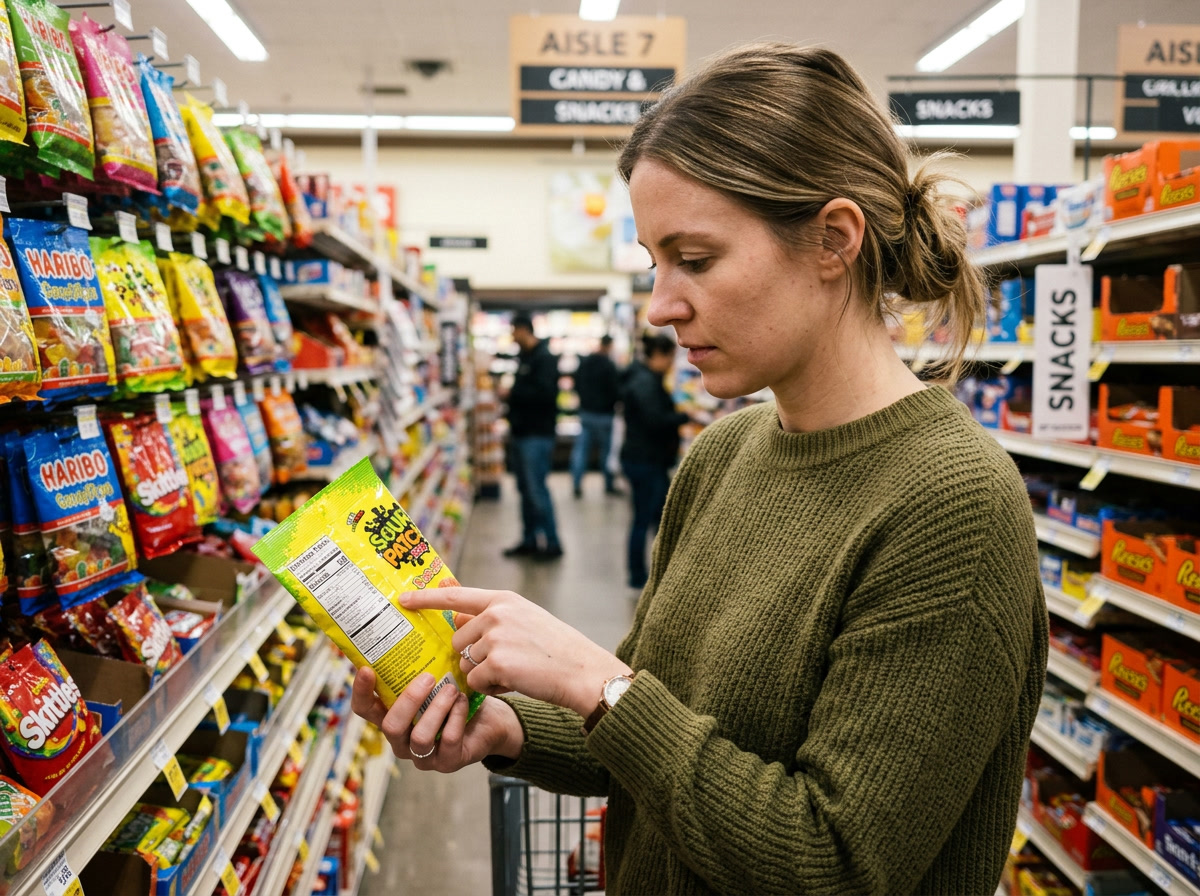
Check the Physical Label
Turn the yellow Tropical Skittles bag over. Scan the ingredient list for: wheat, wheat flour, wheat starch, barley, malt, malt flavoring, malt extract, rye, oats, spelt. None of these appear.
Check the Allergen Declaration
Under FALCPA, wheat must be declared if present. “Contains: Wheat” — or wheat called out in the ingredient list — is absent from Tropical Skittles packaging.
Verify Online
Mars Wrigley’s product information is available through their consumer portals. The Celiac Disease Foundation’s gluten-free candy list is maintained by medical professionals and is a reliable secondary verification source.
Tropical Skittles vs. Other Gluten-Free Tropical Candies
| Candy | Gluten Free? | Tropical Flavors | Notes |
|---|---|---|---|
| Tropical Skittles | ✅ Yes | Mango, Kiwi, Pineapple, Passion Fruit | No wheat ingredients |
| Starburst Tropical | ✅ Yes | Watermelon, Kiwi, Mango, Strawberry | GF by ingredients |
| Jolly Rancher Tropical | ✅ Yes | Watermelon, Mango | Hard candy; GF |
| Haribo Tropical (US) | ⚠️ Check | Mixed | Verify ingredients |
| Chupa Chups Mango | ✅ Yes | Mango | GF lollipop |
| Sour Patch Kids Tropical | ✅ Yes | Mango, Lime, Pineapple | GF; gelatin-free |
Tropical Flavors in Confectionery: A Manufacturing Perspective
The Tropical Skittles variety illustrates an important principle for confectionery manufacturers: complex, unusual flavor profiles — including tropical fruits — can be achieved entirely within a gluten-free formulation framework.
Tropical flavors present specific technical challenges in candy manufacturing:
– Thermal stability — tropical flavor compounds (particularly those with high ester content) can degrade at elevated processing temperatures. Confectionery lines must manage cooking temperatures carefully to preserve flavor integrity
– Migration and bloom — tropical oils can migrate to the candy surface during cooling, affecting appearance and mouthfeel. The carnauba wax coating in Skittles helps contain this
– Flavor balance — tropical blends (like Mango Tangelo or Strawberry Starfruit) require multi-component flavor formulations that maintain stability throughout the candy’s shelf life
None of these technical challenges require the introduction of gluten-containing ingredients. The Tropical Skittles formula demonstrates that even complex multi-note tropical flavors are fully achievable within the corn-based, gluten-free starch framework that all Skittles varieties share.
This is particularly relevant for confectionery equipment manufacturers and food production consultants: the flavor complexity of Tropical Skittles imposes no additional gluten-related production considerations compared to the simpler Original variety.
Tropical Skittles: Safe Candy Options for Celiac Travelers
One practical use case for this guide: people traveling to regions where tropical candy varieties are common (Southeast Asia, Latin America, Caribbean) and need to verify gluten-free status. US-formulated Tropical Skittles are safe. For locally produced tropical candy in those regions, the ingredient labeling and manufacturing standards vary significantly, and gluten-free verification should follow local labeling laws.
For international travelers managing celiac disease who can access US-imported Tropical Skittles, the gluten-free status is reliable based on the current US formulation.
Frequently Asked Questions
Are Tropical Skittles gluten free?
Yes. Tropical Skittles contain no wheat, barley, rye, malt, or gluten-containing ingredients. Mars Wrigley classifies them as gluten free.
Is the passion fruit flavor in Tropical Skittles gluten free?
Yes. Passion fruit flavoring in Tropical Skittles uses ester-based compounds (natural or synthetic) that contain no gluten. All five tropical flavors are gluten free.
Are Tropical Skittles safe for celiac disease?
Tropical Skittles are gluten free by ingredients. Most celiac patients tolerate them well. For extreme sensitivity, contact Mars Wrigley for current cross-contact information.
Are all Skittles varieties gluten free?
Yes — all major US Skittles chewy candy varieties (Original, Wild Berry, Tropical, Sour, Brightside) are gluten free. UK varieties are also gluten free by ingredients.
What is the dextrin in Tropical Skittles from?
The dextrin in Tropical Skittles is corn-derived, not wheat-derived. This is consistent with Mars Wrigley’s gluten-free classification of the product.
Do Tropical Skittles have a gluten-free label on the bag?
Not always. The gluten-free status is confirmed through Mars Wrigley’s product classification and the absence of wheat allergen declaration on the label, but the “Gluten Free” text may not appear on every packaging version.
Where can I buy gluten-free Tropical Skittles?
Tropical Skittles are widely available at major US retailers including Walmart, Target, Walgreens, CVS, and Amazon. All are the same US formula and gluten free.
Conclusion
Tropical Skittles are gluten free. All five tropical flavors — Kiwi Lime, Mango Tangelo, Strawberry Starfruit, Passion Fruit, and Pineapple — use flavor compounds that introduce no gluten. The base formula (corn starch, corn dextrin, corn syrup, palm kernel oil, synthetic colorings, carnauba wax) is identical to the gluten-free Original and Wild Berry varieties. Mars Wrigley classifies Tropical Skittles as gluten free, consistent with the FDA <20 ppm standard.
For celiac consumers, Tropical Skittles are a reliable choice in the gluten-free candy aisle. The unusual tropical flavor lineup is not a reason for extra scrutiny — the formula is just as clean and gluten-free as the classic Original variety. Verify the label at purchase, use celiac community resources for your specific sensitivity level, and enjoy the tropical rainbow.
Related Articles
- Wild Berry Skittles Gluten Free: Ingredients, Celiac Safety & Guide
- Skittles UK Gluten Free: Are UK Skittles Safe for Coeliacs? (2026)
- Original Skittles Gluten Free: Full Ingredient & Celiac Guide 2026
- Are Skittles Gluten Free? Everything You Need to Know Before Your Next Snack (2026 Guide)
- Gummy Candy Production Line
- Skittles Manufacturing Process: Inside the Factory
References & Sources
- Gluten-Free Labeling of Foods — U.S. Food & Drug Administration
- Gluten-Free Candy List — Celiac Disease Foundation
- Celiac Disease — NIH NIDDK
- USDA FoodData Central — Ingredient Database — U.S. Department of Agriculture
- Coeliac Disease — Wikipedia