Coffee boba tea blends brewed coffee or espresso with chewy tapioca pearls (or popping boba) and milk or cream for a caffeinated twist on classic bubble tea.
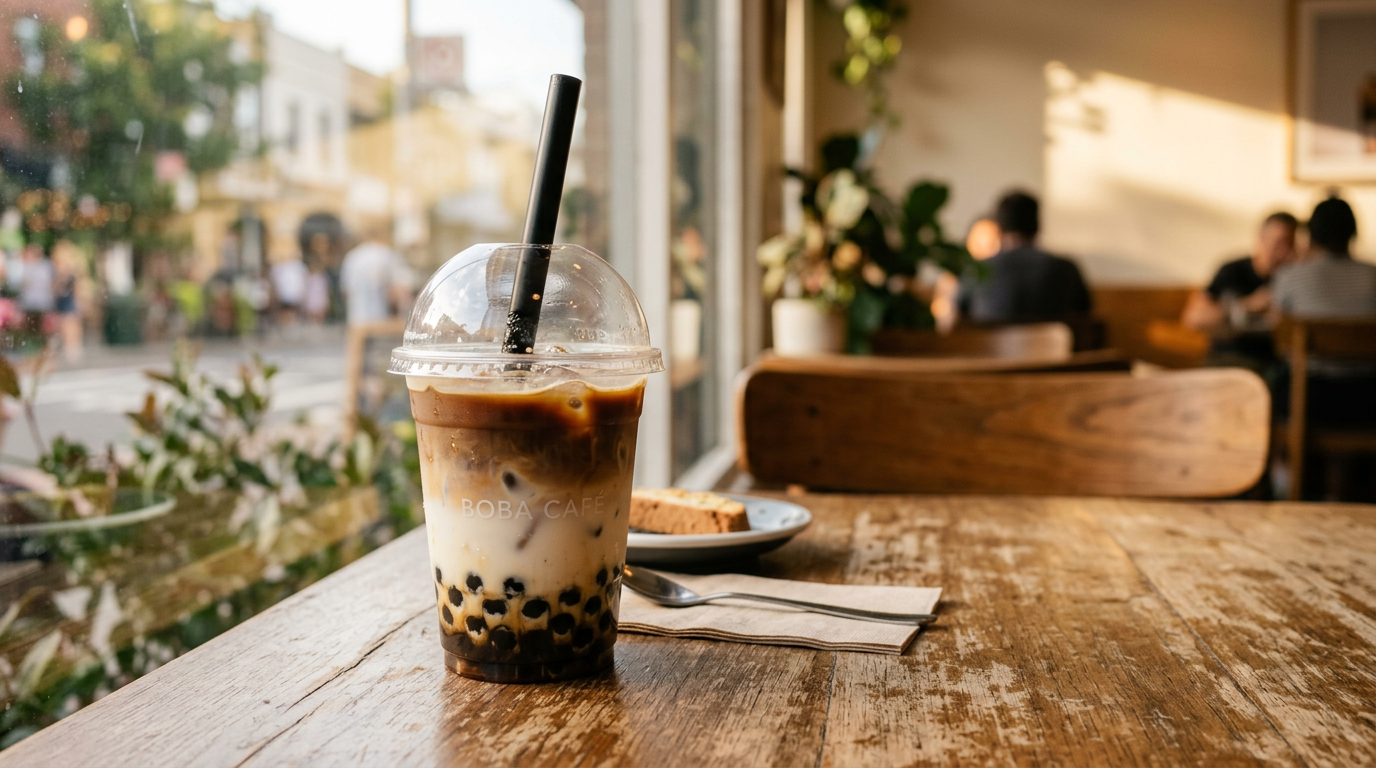
Picture a Tuesday afternoon slump. You’re somewhere between “I need caffeine” and “I want dessert,” and a regular iced coffee feels thin while a milk tea feels like it’s missing something. That gap is exactly where coffee boba tea lives, and it’s quickly become one of the fastest-growing crossover drinks on bubble tea menus heading into 2026.
We’ve spent time digging through both the café side (recipes, flavor pairings, menu trends) and the production side (what it actually takes to make tapioca pearls and popping boba at scale that hold up in a cold espresso base). This guide covers both. By the end, you’ll know what coffee boba tea actually is, the major style variations, how it’s made from a home recipe up through commercial-scale production, what mistakes to avoid with toppings and pearls, and where the category is heading.
What Is Coffee Boba Tea?
Coffee boba tea is a bubble tea variant where brewed coffee, espresso, or cold brew replaces (or blends with) traditional black tea, served with chewy tapioca pearls.
At its core, the drink follows the same architecture as any bubble tea: a base liquid, a dairy or non-dairy creamer, a sweetener, and a chewy or bursting topping eaten through a wide straw. The difference is the base. Instead of brewed black or oolong tea, you get coffee, sometimes espresso-forward, sometimes a milder drip-style brew, and increasingly cold brew, because its low acidity pairs so well with sweet tapioca.
What makes this category interesting from a manufacturing standpoint is that it sits at the intersection of two supply chains that don’t usually talk to each other: coffee roasting/brewing and confectionery-style topping production. A shop that wants to do coffee boba well needs pearls that won’t turn mushy in an acidic, often hot-brewed base, and that hold their chew for the 15–20 minutes a customer typically takes to finish a drink.
Coffee Boba Tea vs. Classic Milk Tea Boba vs. Popping Boba Coffee
| Feature | Classic Milk Tea Boba | Coffee Boba Tea | Popping Boba Coffee |
|---|---|---|---|
| Base liquid | Black/oolong tea | Coffee, espresso, or cold brew | Coffee or espresso |
| Topping | Tapioca pearls (chewy) | Tapioca pearls or mixed toppings | Popping boba (juice-filled) |
| Typical sweetener | Brown sugar, simple syrup | Brown sugar, vanilla, caramel | Fruit syrup, simple syrup |
| Texture profile | Soft, chewy | Chewy + slightly bitter contrast | Chewy shell, liquid burst |
| Common dairy | Whole milk, condensed milk | Oat milk, cream, condensed milk | Milk or dairy-free |
| Caffeine level | Moderate (tea) | High (coffee) | High (coffee) |
Why the Coffee + Tapioca Combination Works
The bitterness in coffee needs something to push against, and that’s where brown sugar tapioca pearls earn their reputation. The caramelized sugar coating dissolves slightly into the drink, creating streaks of sweetness that cut through the coffee’s edge. We’ve found that pearls cooked in a brown sugar syrup, rather than plain sugar water, hold their shape noticeably longer in a cold, acidic coffee base. That matters if you’re running a shop where drinks sit on a counter for a few minutes before pickup.
There’s also a textural reason this combination took off. Coffee on its own is a liquid-only experience. Add chewy pearls and suddenly there’s something to “eat” as well as drink, which is a big part of why bubble tea built such a loyal following among younger consumers in the first place.
Bubble tea itself originated in Taiwan in the 1980s, built around black tea, milk, and tapioca pearls. Coffee versions came much later, largely as bubble tea brands expanded into markets where coffee culture was already strong, including parts of East Asia, Southeast Asia, and North America. Rather than asking customers to choose between their coffee habit and their bubble tea craving, shops simply combined the two, and the format spread quickly once a few chains proved it sold well outside the morning rush.
Types of Coffee Boba Tea
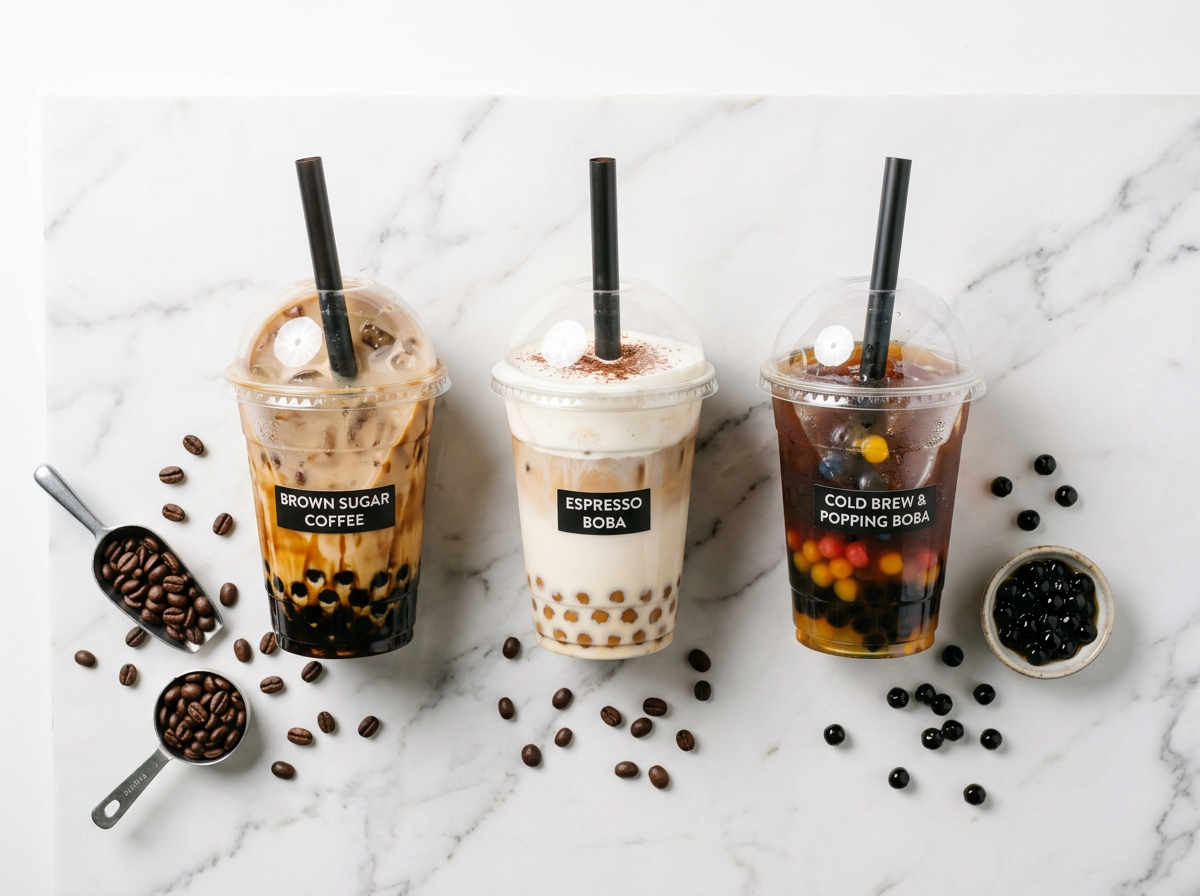
The main coffee boba tea styles are brown sugar coffee boba, espresso boba, cold brew boba, and popping-boba coffee, and each one suits a different flavor and texture preference.
Walk into any specialty bubble tea shop in 2026 and you’ll typically see four or five coffee-based options on the menu, usually grouped under a “coffee series” or “café series” heading. They’re not interchangeable. Each one has a different flavor target and, from a kitchen-operations perspective, a different prep workflow.
Brown Sugar Coffee Boba
This is the flagship. Brown sugar tapioca pearls are cooked, then tossed in a hot brown sugar syrup that caramelizes slightly and coats the pearls in dark streaks. The pearls go into the cup first, the syrup is sometimes drizzled along the inside of the glass for a striped effect, then milk and a coffee shot are poured over ice.
It’s aimed at customers who want dessert-level sweetness with a caffeine kick, and it pairs well with oat milk, which brings its own mild sweetness that plays nicely with the brown sugar. One thing to watch: the pearls need to be used within 4 hours of cooking. After that the texture firms up and loses the chew that makes the drink worth ordering.
Espresso Boba
A more coffee-forward variation aimed at people who find regular milk tea boba too sweet. A double or triple espresso shot is poured over ice, milk or cream is added, and plain (not brown sugar) tapioca pearls go in for texture without adding extra sweetness.
This one is for espresso drinkers who want texture without piling on more sugar, often finished with a thin layer of cold foam, similar to a cold foam cold brew. The espresso needs to be pulled fresh. Pre-made coffee concentrate flattens the flavor, and regular customers notice immediately.
Cold Brew Coffee Boba
Cold brew’s naturally lower acidity and smoother mouthfeel make it one of the most popular coffee boba bases for shops doing high volume, since it can be batch-brewed overnight and held cold for 12 to 24 hours without quality loss.
It works well for high-volume shops and for customers sensitive to acidity, usually paired with vanilla or caramel syrup and condensed milk. The steep ratio matters here. Too weak and the coffee gets lost under the milk and pearls, so aim for a concentrate diluted at most 1:1.
Popping Boba Coffee Drinks
Instead of (or alongside) chewy tapioca pearls, some coffee boba drinks use popping boba: small spheres with a thin gel shell that burst with flavored juice when bitten. In a coffee base, popping boba adds a fruit-forward contrast (passion fruit, lychee, mango) that some customers prefer over the starchy chew of tapioca.
It suits customers who want a fruity contrast against bitter coffee, or who simply dislike the texture of tapioca. The one thing to get right: popping boba should go in just before serving, since sitting in hot or highly acidic liquid too long can soften or rupture the shell early.
Production tip: If you’re scaling a coffee boba menu across multiple locations, the topping, not the coffee, is usually the bottleneck. Tapioca pearls and popping boba both need precise temperature and timing control during production to get a shell-to-filling or texture ratio that survives shipping, storage, and a few minutes in a finished drink. For shops sourcing at volume, working with a popping boba and tapioca pearl production line built specifically for bubble tea toppings tends to be far more consistent than small-batch kitchen production.
How Coffee Boba Tea Is Made: From Café Recipe to Commercial Production
Coffee boba tea is made by brewing coffee, cooking tapioca pearls or popping boba separately, then combining both with milk, ice, and sweetener in a finishing step that takes under two minutes per cup.
There’s a meaningful gap between “how to make coffee boba tea at home” and “how a shop or manufacturer produces the components that go into thousands of cups a day.” Both matter, so here’s both.
The Café-Level Recipe
- Brew the coffee base. For brown sugar or espresso versions, pull 1–2 shots of espresso per drink. For cold brew versions, use a concentrate diluted roughly 1:1 with water or milk.
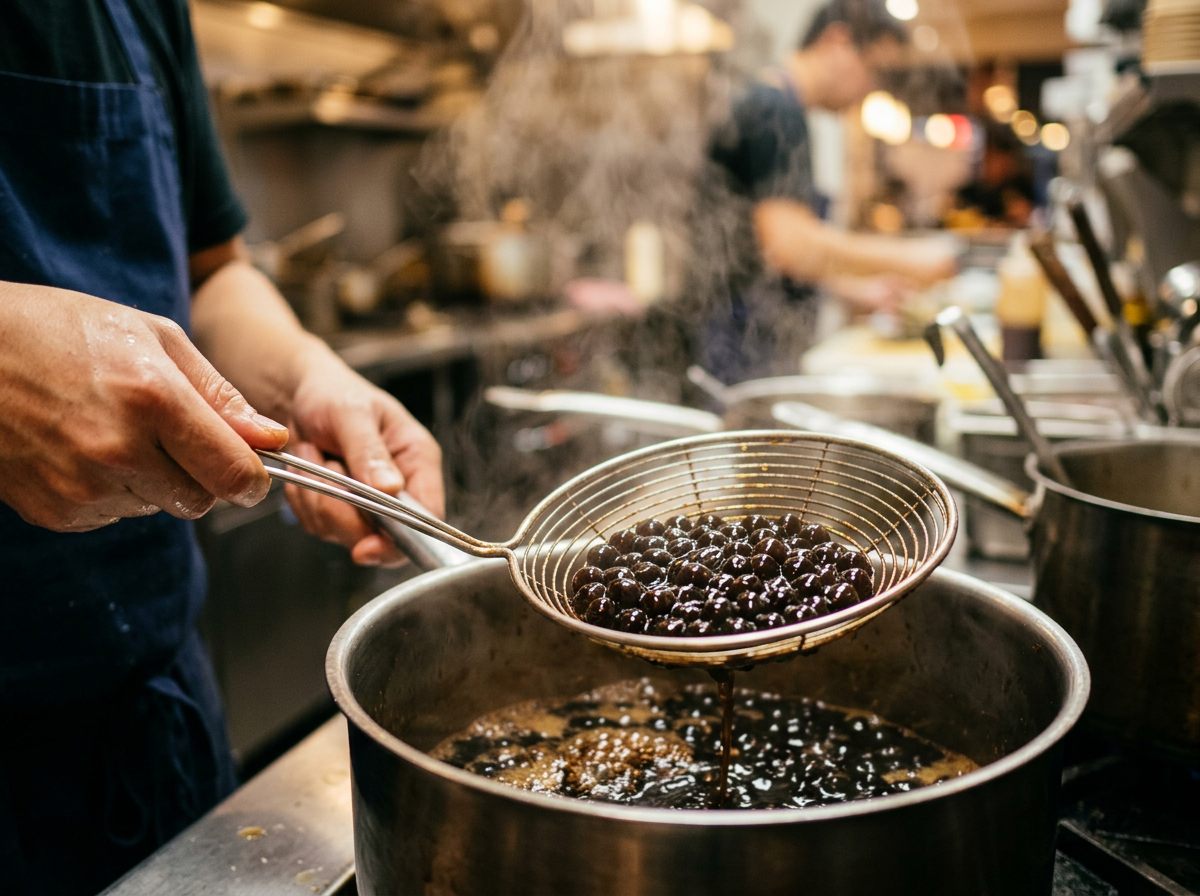
- Cook the pearls (if not pre-cooked). Boil tapioca pearls for 20–25 minutes, then let them sit covered in hot water for another 15–20 minutes off heat. Drain and toss in brown sugar syrup while still warm if making the brown sugar style.
- Build the cup. Add pearls (and/or popping boba) to the bottom of the cup, fill with ice.
- Add milk and sweetener. Pour in milk, oat milk, or cream, plus any syrup.
- Top with coffee. Pour the espresso or cold brew over the top so it layers visually before stirring.
- Seal and serve with a wide straw (standard bubble tea straws are roughly 12mm in diameter to accommodate the pearls).
A few small adjustments change the drink considerably. Swapping condensed milk for oat milk cuts the sweetness noticeably and makes the coffee flavor more prominent, which some customers prefer once they’ve tried the standard version a few times. Adding a pump of vanilla syrup before the coffee goes in, rather than stirring it in afterward, distributes the flavor more evenly without needing to shake the cup. And for anyone making this at home without an espresso machine, a strong moka pot brew or a double-strength drip coffee gets close enough that most people won’t notice the difference once milk and pearls are added.
The Commercial Production Side
This is the part most coffee boba tea articles skip entirely, and it’s where the real quality differences between shops come from.
When we looked at how mid-size bubble tea chains source their toppings, the pattern was consistent. Shops doing under a few hundred cups a day cook pearls in-house from dry or frozen tapioca starch pellets, but anything beyond that scale shifts to pre-made fresh or frozen pearls and popping boba sourced from a dedicated production line. The reason isn’t just labor, it’s consistency. A batch of hand-cooked pearls can vary in chew and sweetness from one cook to the next, and that inconsistency shows up in customer complaints faster than almost anything else on a bubble tea menu.
Tapioca itself starts as starch extracted from cassava root, a process explained in more depth on Wikipedia’s tapioca overview, which covers how the starch is processed into the small pearls used across bubble tea and coffee boba drinks. On the manufacturing side, producing pearls that hold up in a coffee base specifically (which tends to be more acidic than tea, especially cold brew) requires tighter control over the starch-to-water ratio and cooking temperature than pearls destined for standard milk tea. Equipment built around a dedicated popping boba production process, including the gelling bath, sizing, and coating steps, is what allows manufacturers to hit a consistent shell thickness across a production run. That thickness directly affects how long the boba holds up once it’s dropped into a hot or acidic coffee drink.
Food-grade equipment standards also matter more than most café operators realize. Any machinery that contacts tapioca starch, syrups, or popping boba gel needs to meet food contact material requirements. In the US, this falls under FDA guidance on food packaging and food-contact substances. For a manufacturer, that means stainless steel surfaces, proper sealing on cooking vessels, and traceable sourcing for any plastic components in the production line.
Workplace safety is the other side of this that rarely gets mentioned in consumer-facing articles. Cooking lines for tapioca pearls and popping boba run hot syrup, steam, and moving parts close together, and OSHA’s guidance on machine guarding in food processing covers the kind of guarding and lockout procedures that apply to this equipment. For a manufacturer scaling from a pilot line to full production, this isn’t a paperwork formality. It shapes where operators stand, how hoppers are loaded, and how often the line needs to stop for cleaning and inspection.
Where Coffee Boba Tea Shows Up: Cafés, Chains, and Beyond
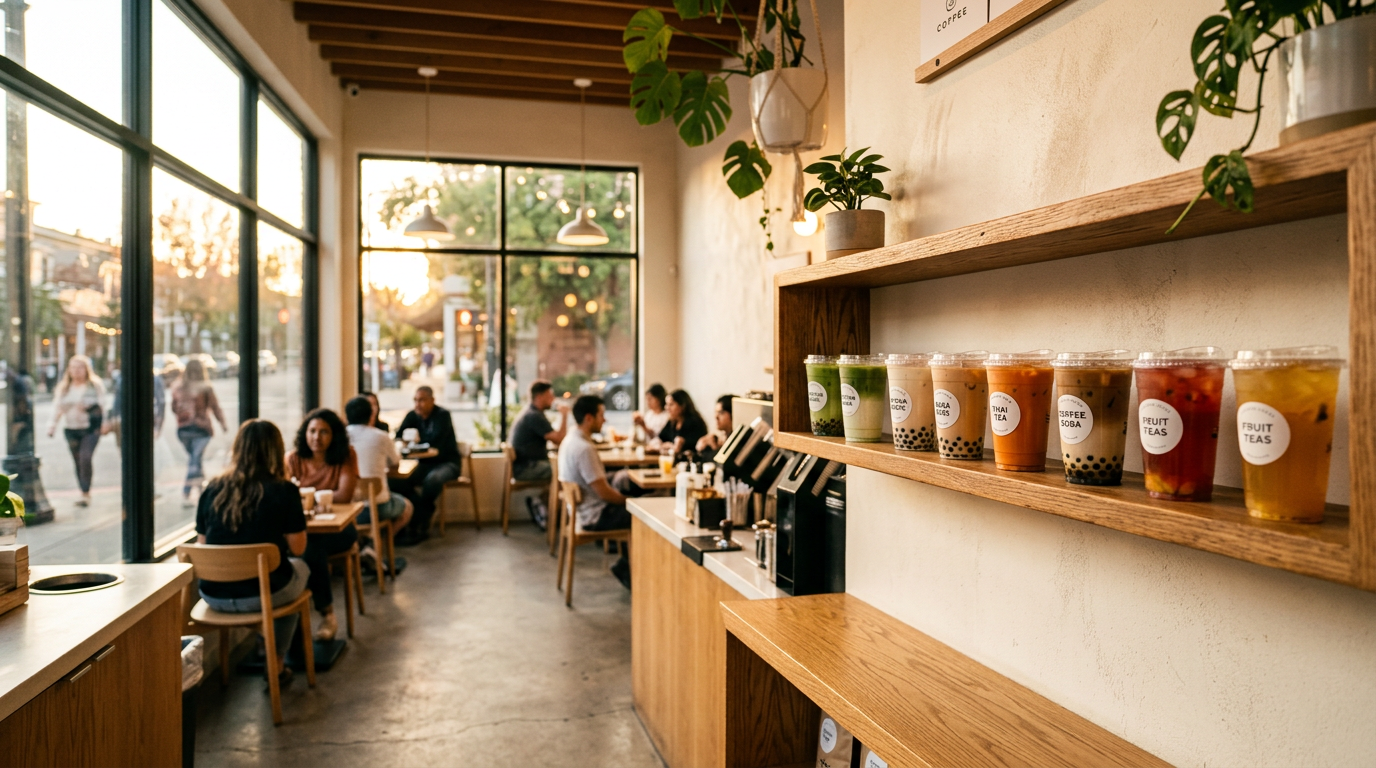
Coffee boba tea now appears across specialty bubble tea chains, independent cafés, dessert shops, and even convenience-store ready-to-drink lines, each with different production needs.
The category didn’t stay confined to bubble tea shops for long. A few distinct business types now serve coffee boba tea, and each one approaches sourcing differently.
Specialty bubble tea chains were first to add a coffee series, usually as a way to capture customers during morning and early-afternoon hours when tea-based drinks see less demand. For these chains, the coffee boba menu often becomes one of the higher-margin categories, since the espresso machine and topping inventory are already on site for other drinks.
Independent coffee shops have gone the other direction, adding tapioca pearls or popping boba to their existing espresso and cold brew menu as a way to differentiate from chain coffee competitors. Here, the challenge is usually the opposite of a bubble tea shop: the barista knows coffee extremely well but has little experience cooking or sourcing tapioca pearls, which is why pre-cooked frozen pearls have become the default entry point for coffee-first shops experimenting with boba.
Dessert and snack shops treat coffee boba tea as part of a broader “drink dessert” category alongside milkshakes and slushes, often leaning into the brown sugar style because it photographs well and reads as indulgent on a menu board.
Ready-to-drink (RTD) bottled and canned versions are the newest entrant, sold through convenience stores and grocery chains. These typically use a stabilized tapioca pearl that can survive weeks of cold storage without breaking down, which is a meaningfully different production challenge than pearls made for same-day service. Manufacturers producing for the RTD channel generally run separate formulations and cook times specifically tuned for shelf stability rather than fresh-serve texture.
What ties all of these together is the same underlying constraint: the topping has to perform under whatever conditions that business model creates, whether that’s a counter that turns over a cup every 90 seconds or a bottle that sits in a cooler for three weeks.
How to Choose Toppings & Avoid Common Coffee Boba Mistakes
Choose tapioca pearls for chew and sweetness, popping boba for a fruity contrast, and always match the topping’s acidity tolerance to the coffee base, especially with cold brew.
Most of the coffee boba tea complaints we’ve seen, both from home recipe attempts and from shop reviews, trace back to one of three mistakes. Here’s how to avoid them.
Mistake 1: Using Pearls That Sat Too Long
Tapioca pearls are at their best for roughly 4 hours after cooking. After that, they firm up, lose the soft chew that defines good boba, and can develop an unpleasant starchy texture. If you’re making coffee boba at home, cook pearls in small batches. If you’re running a shop, this is the single biggest argument for sourcing pre-cooked, individually portioned frozen pearls that can be reheated to order in small quantities, which avoids the “end of day mush” problem entirely.
Mistake 2: Pairing the Wrong Topping With High-Acid Coffee
Cold brew and certain single-origin espresso shots run more acidic than a typical brewed black tea base. Standard tapioca pearls generally tolerate this fine, but popping boba shells are more sensitive. Prolonged contact with high-acid liquid can soften the gel shell and cause premature bursting in the cup rather than in the customer’s mouth. If you’re building a cold brew and popping boba drink, add the popping boba last, right before the lid goes on.
Mistake 3: Over-Sweetening to Compensate for Bitter Coffee
It’s tempting to add extra brown sugar syrup when a coffee base tastes too bitter, but that usually masks the problem rather than solving it. A better fix is to adjust the coffee-to-milk ratio first, or switch to a less acidic bean or roast for the base. Sweetness should season the coffee, not cover for a bad brew.
A Quick Decision Framework
| If you want… | Choose this topping | Best coffee base |
|---|---|---|
| Maximum sweetness contrast | Brown sugar tapioca pearls | Espresso or strong cold brew |
| Minimal added sugar | Plain tapioca pearls | Cold brew |
| Fruity contrast / lighter feel | Popping boba (passion fruit, lychee) | Cold brew or iced Americano |
| High-volume consistency | Pre-cooked frozen pearls | Any |
For shops scaling beyond a single location, working directly with a bubble tea topping production line is usually the most reliable way to standardize texture and sweetness across every cup, regardless of which barista is on shift.
Future Trends in Coffee Boba Tea (2026 and Beyond)
Coffee boba tea is moving toward functional ingredients (protein, adaptogens), regional bean sourcing, and lower-sugar formulations as health-conscious demand grows.
The bubble tea category overall has grown from a regional Taiwanese specialty into a global phenomenon. Global Edge at Michigan State University’s overview of the bubble tea industry traces this expansion and notes how quickly the format adapts to local tastes, which is exactly the dynamic driving the coffee crossover. A few specific shifts worth watching:
- Some manufacturers are developing reduced-sugar tapioca pearls cooked in monk fruit or allulose-based syrups, aimed at customers who want the texture of brown sugar boba without the full sugar load.
- Shops are starting to treat the coffee base with the same care as the topping, pairing, for example, a brighter Ethiopian roast with popping boba and a darker Sumatran roast with brown sugar pearls.
- Collagen, plant protein, and adaptogenic powders such as ashwagandha and lion’s mane are showing up as optional add-ins to coffee boba menus, particularly in markets with strong wellness-drink culture.
- Expect more “mixed topping” cups, half tapioca pearls and half popping boba, giving customers two textures in one drink and giving shops a way to feature two production-line outputs in a single item.
| Trend | Driver | Production Implication |
|---|---|---|
| Reduced-sugar pearls | Health-conscious consumers | New syrup formulations, ingredient sourcing |
| Single-origin coffee pairings | Specialty coffee crossover | Staff training, smaller-batch brewing |
| Functional add-ins | Wellness drink culture | Additional SKUs, allergen labeling |
| Mixed-topping cups | Variety-seeking customers | Dual-line production, portion consistency |
We’d put real weight behind the reduced-sugar pearl trend specifically. It’s the one most directly tied to manufacturing rather than just menu design, and it’s already showing up in production requests from mid-size chains heading into 2026.
FAQ
What is coffee boba tea?
Coffee boba tea is brewed coffee or espresso served with chewy tapioca pearls and milk, combining a caffeinated base with bubble tea’s signature chewy topping. It’s typically served iced, with pearls settling at the bottom of the cup and a wide straw for drinking and eating the toppings together.
What is boba coffee called on menus?
Boba coffee usually appears as “coffee boba,” “brown sugar coffee boba,” or “espresso boba” on menus. Some shops use “café series” as a category header to group all coffee-based bubble tea drinks together, distinguishing them from the tea-based options.
Can you make coffee boba tea with regular drip coffee?
Yes, drip coffee works, though espresso or cold brew are more common because of their stronger flavor. If using drip coffee, brew it slightly stronger than usual since ice and milk will dilute the flavor significantly by the time the drink is finished.
How long do tapioca pearls stay good in coffee boba?
Cooked tapioca pearls stay at peak texture for about 4 hours before becoming firm and starchy. This is true regardless of the base liquid, though the acidity in coffee (especially cold brew) can accelerate texture changes slightly compared to tea.
Does coffee boba tea have more caffeine than regular boba tea?
Yes, coffee boba tea generally has more caffeine than tea-based boba, since coffee contains roughly double the caffeine of an equivalent serving of brewed black tea. A double-shot espresso boba can contain well over 150mg of caffeine, compared to roughly 40 to 60mg in a typical black tea boba.
What’s the difference between tapioca pearls and popping boba in a coffee drink?
Tapioca pearls are chewy and starchy; popping boba has a thin gel shell that bursts with flavored juice. Tapioca pearls work well with brown sugar coffee styles, while popping boba pairs better with cold brew or lighter coffee bases where a fruity contrast is desirable.
Is coffee boba tea good for someone who doesn’t like sweet coffee drinks?
Yes, espresso boba with plain tapioca pearls and minimal syrup gives texture without much added sweetness. Choosing oat or whole milk over condensed milk, and skipping flavored syrups, keeps the drink closer to a textured iced coffee than a dessert.
Why does my homemade coffee boba taste watery?
Watery coffee boba usually means the coffee was diluted too much by ice and milk, or the brew wasn’t strong enough to begin with. Brew the coffee at roughly double normal strength if it’s going over ice, and add ice to the cup before the liquid rather than after, so you can judge how much room is actually left for coffee versus milk.
Conclusion
Coffee boba tea works because it solves two problems at once. It gives coffee drinkers the chewy, interactive texture that made bubble tea popular, and it gives bubble tea drinkers a stronger caffeine option than a standard tea base provides. Whether you’re making it at home with cooked tapioca pearls and a shot of espresso, or sourcing toppings at scale for a multi-location bubble tea brand, the same principle holds: the topping needs to match the coffee base, both in flavor and in how it holds up over the life of the drink.
If you’re building out a coffee boba tea menu and need toppings that perform consistently, pearls that hold their chew in cold brew, popping boba that doesn’t burst early in an acidic base, start by looking at how the topping is produced, not just how it’s flavored. That’s where the consistency customers actually notice comes from.
Related Articles
Bubble Tea Popping Boba: Science, Flavors & Commercial Production Guide
Boba Popping Pearls: Complete Guide to Flavors, Production & Commercial Use
What Is Popping Boba Made Of? Ingredients, Science & Manufacturing Explained
How Many Calories in Boba Tea? Cup Size, Sugar, and Toppings
Bubble Tea Calories: Complete 2026 Calorie Count & Nutrition Guide