Marshmallows were invented in ancient Egypt around 2000 BCE, made from the sap of the marshmallow plant mixed with honey, though the fluffy white candy form we know today wasn’t developed until 19th-century France and industrialized by extrusion in 1948.
Picture an ancient Egyptian physician crushing the root of a wild marsh plant, blending the thick, sticky sap with honey and crushed nuts into a smooth, sweet paste. That was the world’s first marshmallow — nothing like the plump white cylinder you drop into hot cocoa, but the direct ancestor of every marshmallow candy ever made. From royal Egyptian medicine cabinets to automated extrusion lines producing hundreds of kilograms per hour, the story of when marshmallows were invented spans four thousand years of human ingenuity. This guide traces every major turning point in that story — and explains what it means for anyone working in confectionery manufacturing today.
What Is a Marshmallow?
A marshmallow today is a sugar-based confection: corn syrup and refined sugar cooked to a precise temperature, blended with dissolved gelatin, then whipped at high speed to incorporate air until the mixture becomes a stable, voluminous foam. That foam is extruded into ropes, coated in cornstarch or powdered sugar, cut to size, and packaged. The whole process is mechanized, fast, and continuous.
But the word “marshmallow” originally referred to something entirely different: a plant.
The Marshmallow Plant (Althaea officinalis)
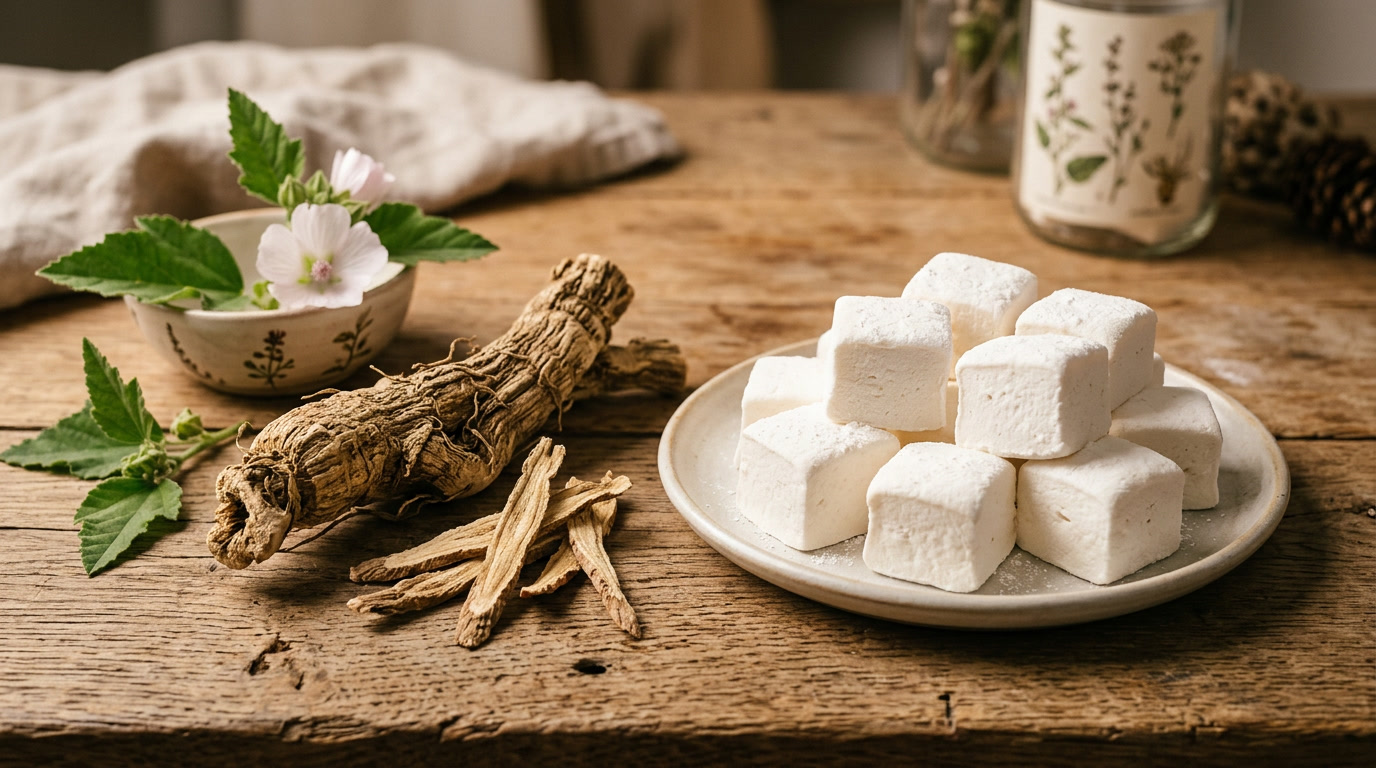
Althaea officinalis — the marshmallow plant — is a perennial herb native to Europe, North Africa, and western Asia. It grows in wetlands, marshes, and damp meadows, typically reaching one to two meters in height. The root is the part that matters for candy history: it contains a high concentration of mucilaginous polysaccharides — long-chain carbohydrates that form a thick, gel-like substance when the root is soaked or ground with water.
This natural gel has a mildly sweet flavor, a cohesive texture, and remarkable soothing properties when consumed. According to Marshmallow – Wikipedia, the genus name Althaea derives from the Greek altho, meaning “to cure” — a direct reflection of how central this plant was to ancient and medieval medicine. The root extract was used to treat sore throats, inflammation of the digestive tract, skin irritation, and respiratory complaints across at least three continents for more than two millennia.
This is the ingredient that gave marshmallow candy its name. Modern marshmallows contain no Althaea officinalis — that transition happened in the 19th century — but the lineage is unbroken from the plant to the confection.
From Medicine to Candy: A Three-Phase Story
The transformation from medicinal root extract to global mass-market candy follows three distinct phases:
Phase 1 — Ancient Egypt to 18th century: Root sap used as medicine and occasional luxury food across Egypt, Greece, Rome, and medieval Europe.
Phase 2 — 19th-century France: French confectioners adapt the root extract into an aerated candy, replacing or supplementing it with egg whites and, later, gelatin.
Phase 3 — 20th century onwards: American manufacturers industrialize production through extrusion, completely replacing plant extract with gelatin and transforming marshmallows into a commodity confection.
Understanding when marshmallows were invented and how the recipe evolved through these phases is directly relevant to confectionery equipment selection today — because every phase introduced processing requirements that shaped the specialized machinery now used in marshmallow production lines.
| Era | Form | Primary Use | Key Stabilizer |
|---|---|---|---|
| 2000 BCE – 1800 CE | Root sap paste or lozenge | Medicine / royal delicacy | Althaea officinalis sap |
| 1800–1948 | Whipped, aerated candy | Confectionery and pharmacy | Plant extract + egg white |
| 1948–present | Extruded cylinders / shapes | Mass-market candy | Gelatin + corn syrup |
The Ancient Origins of Marshmallows (2000 BCE – 18th Century)
When people ask when were marshmallows invented, the honest answer is: the original invention was medical, not culinary, and it happened roughly four thousand years ago in Egypt.
Egyptian Royal Treat (circa 2000 BCE)
The earliest documented use of marshmallow as a food dates to ancient Egypt, approximately 2000 BCE. Egyptian records — including references found in papyri and tomb paintings — describe a preparation made by extracting sap from the root of the marshmallow plant and combining it with honey, wheat, and nuts. The resulting sticky, sweet, smooth mixture was considered a delicacy associated with gods and royalty.
This was not a mass-market confection. The marshmallow plant had to be harvested from wetland environments, the root had to be cleaned and processed, and the extraction of sufficient sap was labor-intensive. The product was rare, expensive, and prestigious. Tomb offerings at royal Egyptian burial sites included sweet preparations consistent with these early marshmallow recipes, suggesting the food held ceremonial as well as gustatory significance.
The exact flavor would have been very different from modern marshmallows: lightly sweet from the honey rather than intensely sweet from refined sugar, with a slightly herbal or earthy note from the root extract, and a smooth, dense texture rather than the airy foam of contemporary versions. But the lineage is clear: when we ask when were marshmallows invented as a foodstuff, 2000 BCE Egypt is the answer the historical record supports.
Marshmallow Across the Ancient World (1000 BCE – 500 CE)
After Egypt, the marshmallow plant spread through Greek and Roman medical practice. Greek physicians, including Hippocrates in the fifth century BCE, documented the root’s uses for wound healing, burns, and digestive complaints. The plant was listed in the Hippocratic corpus among herbs with significant therapeutic value.
Roman naturalist Pliny the Elder wrote about althaea in the first century CE, noting its suitability as emergency food during periods of famine — the mucilaginous quality made the root filling and the sap provided calories. Roman cooks and physicians both worked with the plant, blurring the line between food ingredient and medicinal preparation in a way that would persist for centuries.
Arab physicians of the medieval Islamic Golden Age also documented Althaea officinalis extensively. Ibn Sina (Avicenna), writing in the 11th century, described preparations using the root as treatments for respiratory and digestive ailments. His encyclopedic Canon of Medicine remained a reference in both European and Middle Eastern medical practice well into the 17th century, carrying marshmallow plant preparations alongside it.
Medieval Europe: Apothecary to Pantry (600–1700 CE)
In medieval Europe, marshmallow root was a fixture in apothecary shops throughout the continent. Prepared as dried root pieces, root decoctions, or processed into lozenges and pastes, it was prescribed for everything from toothaches to insect stings to sore throats. A snack by any other name: A brief history of marshmallows from the Delaware Public Archives traces this use through the medieval period, noting that the root was considered both a food and a medicine, switching roles depending on need and economic circumstance.
Monasteries across Europe cultivated marshmallow plants in their medicinal gardens alongside other therapeutic herbs. Monastic pharmacies sold root preparations to the surrounding communities. In times of harvest failure or famine, the root was consumed directly as food — it was filling, relatively available in wet habitats, and safe to eat in substantial quantity.
By the 16th and 17th centuries, pâte de guimauve — literally “marshmallow paste” — was being made in French and English confectionery kitchens. These early paste recipes combined root extract with sugar, egg whites, or other binding agents. The product occupied a dual position: sold as candy in confectionery shops and simultaneously marketed as a soothing preparation for respiratory ailments in pharmacies.
The Birth of Modern Marshmallow Candy (19th Century)
The 1800s are when marshmallows were invented in the form closest to what we recognize today. French confectionery expertise, improvements in sugar availability, and a gradual shift from medicinal to purely culinary product all converged.
French Confectioners Transform the Recipe
In the early decades of the 19th century, French confiseurs — professional candy makers — took the traditional pâte de guimauve recipe and dramatically refined it. The key change was process: instead of simply mixing root extract with sugar into a thick paste, they began whipping the marshmallow plant extract vigorously with egg whites and hot sugar syrup.
This whipping step introduced air into the mixture, creating a stable foam rather than a dense paste. The result was lighter, springier, and more pleasant to eat — a confection rather than a medicine with a sweet coating. The texture was recognizably closer to modern marshmallows: soft, yielding, with a slight bounce.
These early modern marshmallows were made entirely by hand. Confectioners whipped the mixture in copper bowls using hand tools, poured the foam into cornstarch molds, allowed each piece to set for 24 to 48 hours, then rolled the pieces in powdered sugar. The whole operation was artisanal and small-scale. A single skilled worker could produce a few hundred pieces per day at most.
The product was expensive, sold primarily in confectionery shops catering to bourgeois and upper-class customers in Paris and other major French cities. Marshmallow candy as a luxury sweet — rather than a medicine — was establishing itself as a distinct category.
Gelatin Enters the Picture (1840s–1890s)
The single most consequential formulation change in marshmallow history happened gradually through the mid-to-late 19th century: the replacement of marshmallow plant extract with gelatin.
Gelatin — extracted from the collagen in animal bones and connective tissue — had been used in savory aspic preparations for centuries. Its adaptation as a confectionery ingredient began in earnest in the 1840s. Candy makers discovered that gelatin could perform the same structural function as Althaea officinalis sap: stabilizing the aerated sugar foam, providing elasticity, and maintaining the shape of molded pieces.
The advantages of gelatin over plant extract were substantial. Gelatin was cheaper, available in consistent quality, easier to dissolve and control in a production environment, and produced a more neutral flavor that let the sweetness come through without herbal undertones. The transition was commercially logical even if it severed the ingredient connection to the plant that gave marshmallows their name.
By the 1890s, most commercial marshmallow production in Europe and the United States had transitioned to gelatin-based formulations. The candy kept the name; the plant became irrelevant to production. This is when marshmallows were invented as a purely confectionery product, disconnected from their medicinal heritage.
| Decade | Development | Significance |
|---|---|---|
| 1820s–1840s | French whipped marshmallow recipe | Lighter texture, candy-not-medicine positioning |
| 1840s–1860s | Gelatin introduced as stabilizer | Lower cost, consistent production |
| 1870s–1890s | Large-scale batch production begins | Marshmallows move from specialty to mainstream |
| 1900s–1940s | US manufacturers adopt recipe | Foundation for mass-market production |
Industrial Revolution: Mass Production Changes Everything (20th Century)
If the 19th century is when modern marshmallows were invented as a confection, the 20th century is when they were industrialized into a commodity. The defining moment is a 1948 patent that changed how every major marshmallow manufacturer in the world operates.
The 1948 Extrusion Patent
In 1948, Alex Doumak — son of the founder of Doumak, Inc., the company behind Campfire Marshmallows — patented a continuous extrusion process for marshmallow production. Before this invention, making marshmallows was a batch operation: a quantity of aerated foam was prepared, poured into individual molds or onto a flat surface, allowed to set, then cut into pieces. Each cycle required labor to set up, fill, wait, unmold, and cut. Output was limited by how many batches a facility could run simultaneously.
Doumak’s extrusion process mechanized the forming step entirely. The aerated marshmallow mass was forced under pressure through a shaped die — an extruder — which produced a continuous rope of uniform cross-section emerging from the machine in an endless stream. This rope was automatically coated in cornstarch or powdered sugar as it traveled along a conveyor, then fed into a cutting station that sliced it into pieces of precise, uniform length.
The impact was transformative. Where batch production measured output in pieces per worker-hour, continuous extrusion measured output in kilograms per hour of machine time. The uniformity of extruded marshmallows — the consistent cylindrical shape, the predictable cut-to-size pieces, the reproducible density — was a direct product of the die geometry and machine parameters rather than worker skill.
This is the patent that made the modern marshmallow industry possible. The short, plump white cylinder that defines “marshmallow” in the popular imagination exists specifically because it is the ideal shape for an extruded confection — easy to extrude, easy to coat, easy to cut, and stable during packaging.
How Modern Marshmallows Are Made: The Full Process
Understanding the current marshmallow manufacturing process shows exactly how the historical answer to “when were marshmallows invented” connects to present-day production engineering.
Step 1 — Sugar cooking. Refined granulated sugar and high-fructose corn syrup are combined in a continuous cooker and heated to precise temperature — typically 115–120°C for standard marshmallows. Temperature control at this stage directly determines the final water activity and texture of the finished product. A 2°C deviation in cooking temperature can shift the marshmallow from ideal softness to unacceptably stiff.
Step 2 — Gelatin hydration. Granular gelatin — typically bovine or porcine, with specific bloom strength selected for the target texture — is dissolved in water and held at temperature to maintain viscosity and prevent premature gelling.
Step 3 — Aerating. The cooked sugar syrup and dissolved gelatin are combined and fed into a high-speed continuous aerator — the most critical piece of equipment on the line. The aerator injects air (or nitrogen for premium products) at controlled pressure while mixing at high speed. The degree of aeration determines marshmallow density: a standard marshmallow runs at roughly 0.2–0.3 g/cm³. Inline density meters monitor the aerated mass continuously and trigger automatic speed adjustments to hold density within specification.
Step 4 — Extrusion. The aerated mass is fed to the extruder. Screw-type or piston-type extruders push the foam through shaped dies, producing continuous ropes. Die geometry controls cross-sectional shape (round, square, or specialty shapes). Extrusion pressure is carefully controlled — too high and the foam structure collapses; too low and the rope loses dimensional consistency.
Step 5 — Coating. Extruded ropes travel through a powder-coating system — typically a cornstarch bed or starch/sugar blend — that prevents surfaces from sticking together and creates the characteristic non-tacky exterior.
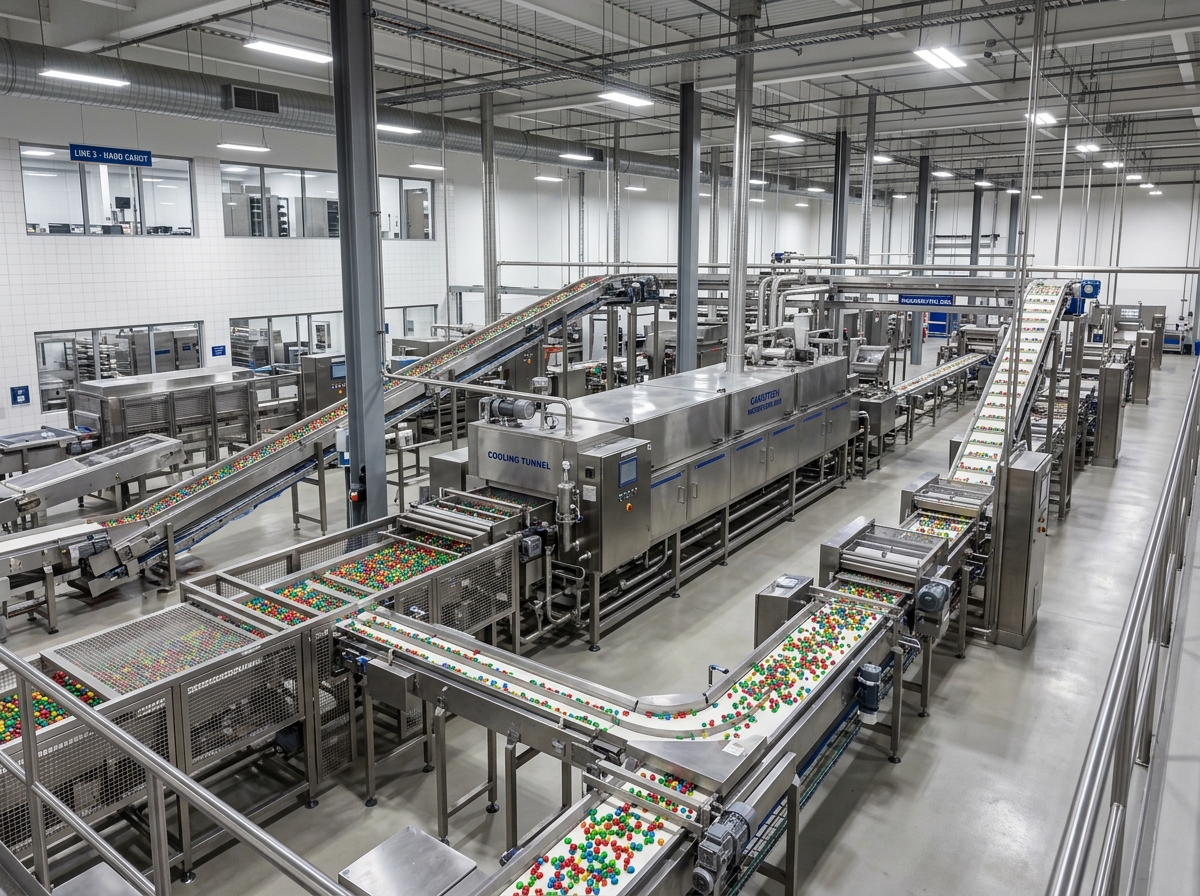
Step 6 — Conditioning. The coated rope passes through a temperature- and humidity-controlled conditioning tunnel. This step removes excess moisture from the marshmallow surface, stabilizes the foam structure, and allows the gelatin network to set properly. Conditioning time and conditions vary by formulation.
Step 7 — Cutting. High-speed rotary or ultrasonic cutters slice the rope to exact length. Integrated checkweighers verify piece weight against specification and divert out-of-spec pieces.
Step 8 — Packaging. Finished marshmallows are weighed, portioned, and sealed in bags — typically modified atmosphere packaging with nitrogen flush to extend shelf life.
Marshmallow Manufacturing Equipment: What the History Built
Every stage in the historical answer to “when were marshmallows invented” introduced processing requirements that shaped modern confectionery machinery. Understanding this history is practical: it explains why specific equipment specifications matter and what goes wrong when they are not met.
Core Equipment on a Modern Marshmallow Production Line
Continuous cookers. Temperature accuracy of ±0.5°C or better is standard. Cooking temperature determines water activity, which determines shelf life — a marshmallow cooked even slightly below target temperature retains more moisture than intended and will spoil faster in the package.
High-speed aerators. The aerator is where the distinctive marshmallow texture is created. Modern industrial aerators for marshmallow operate at controlled air-to-mass ratios and achieve density control in the 0.1–0.4 g/cm³ range. Nitrogen-aerated products produce a finer, more uniform bubble structure and better flavor stability than air-aerated versions — important for premium marshmallow lines.
Extrusion units. Variable die configurations allow the same extruder to produce different shapes. Pressure control is critical — extruder head pressure must be matched to the viscosity of the aerated mass for each recipe. Lines running vegan formulations (carrageenan-based or starch-based) require different pressure profiles than standard gelatin recipes.
Powder coating systems. Both drum-type and belt/spray-type coating systems are used in the industry. Consistent coating depth affects both surface tack and final weight. Under-coating produces sticky pieces that form clumps in packaging; over-coating creates a gritty, powdery surface that affects eating quality.
Conditioning tunnels. Humidity and temperature control within the tunnel is the most commonly underspecified parameter in marshmallow line procurement. If relative humidity inside the tunnel is too high, the cornstarch coating absorbs moisture and loses its anti-stick function. If too low, the marshmallow surface dries unevenly and the finished product has inconsistent texture through the cross-section.
| Equipment | Critical Parameter | Consequence of Out-of-Spec |
|---|---|---|
| Continuous cooker | Temperature ±0.5°C | Texture variation, short shelf life |
| Aerator | Density control ±0.02 g/cm³ | Inconsistent texture, weight variation |
| Extruder | Head pressure ±5% | Shape deformation, foam collapse |
| Powder coater | Coating uniformity <±10% | Sticky clumping or gritty surface |
| Conditioning tunnel | RH 45–55% ±3% RH | Moisture absorption, texture drift |
| Rotary cutter | Cut accuracy ±1 mm | Pack count error, consumer complaints |
Vegan Formulations and Equipment Flexibility
The growing vegan marshmallow market — accelerated by consumer demand for plant-based options in 2026 — requires production lines that can handle non-gelatin stabilizers. Carrageenan, pea protein, tapioca starch, and agar-agar each have different viscosity profiles and require different temperature and pressure handling compared to standard gelatin.
In practice, this means that equipment procured for mixed production (both gelatin and vegan runs) needs variable-speed aerators, adjustable extruder head pressure, and temperature-adjustable cookers with wider operating ranges. Equipment designed exclusively for gelatin marshmallow production is often underspecified for these alternative formulations.
Future Trends in Marshmallow Manufacturing (2026 and Beyond)
The historical arc of marshmallow invention — from Egyptian plant extract to French aerated candy to industrial extrusion — continues to evolve. Two forces are driving the next phase: consumer demand for inclusive formulations and the confectionery industry’s adoption of automation technology.
Plant-Based and Vegan Marshmallows
Vegan marshmallow brands have demonstrated commercial viability at scale. The technical challenge is replicating the unique viscoelastic properties of gelatin — it functions simultaneously as a foam stabilizer, structure-forming agent, and texture modifier — using plant-derived ingredients. No single plant-based alternative performs all three functions as well as gelatin; most commercial vegan marshmallows combine two or three ingredients (typically carrageenan plus modified starch, or pea protein plus agar).
Each substitute combination changes the processing requirements. Carrageenan-stabilized marshmallow mass typically requires a higher cook temperature and a lower aerator speed than gelatin-based recipes. Starch-based formulations require more precise humidity control in the conditioning tunnel because modified starches are more hygroscopic than gelatin.
For confectionery equipment suppliers, the practical implication of this trend is clear: buyers in 2026 are specifying equipment with wider operational ranges specifically to accommodate future recipe flexibility. Modular aerator units, wide-range extruder pressure systems, and digitally controlled conditioning tunnels are growing categories because they reduce the capital cost of adapting to new formulations.
Automation and Smart Production Lines
Industry 4.0 technologies are entering confectionery manufacturing at increasing speed. For marshmallow production specifically, the highest-impact applications in 2026 include:
Vision-system quality inspection. Camera-based inline inspection systems operate at full line speed, checking shape conformity, color consistency, and coating uniformity on every piece. They replace periodic manual sampling with continuous 100% inspection and can detect and reject defective pieces without stopping the line.
Predictive maintenance. Sensors on extruders, aerators, and cookers generate continuous operational data. Machine learning models trained on historical failure patterns flag early signs of bearing wear, seal degradation, or heat-exchanger fouling before they cause unplanned downtime. For continuous-process equipment like marshmallow lines, unplanned stops are especially costly because the entire aerated mass in transit must typically be discarded when the line halts unexpectedly.
Digital recipe management. Full digital storage of cook temperature profiles, aerator speed curves, extruder pressure parameters, and conditioning tunnel settings enables instant, precise recipe changeovers with minimal operator input and virtually no batch-to-batch drift.
Energy monitoring. Continuous per-kilogram energy consumption tracking enables systematic optimization of cook and drying parameters for lower operating costs — increasingly important as energy prices remain elevated globally.
Frequently Asked Questions About Marshmallow History
When were marshmallows invented, exactly?
The first marshmallow-like food was invented in ancient Egypt around 2000 BCE, made from the root sap of the Althaea officinalis (marshmallow) plant mixed with honey. This was a medicinal and luxury food, not a sweet candy in the modern sense. The light, aerated candy form was developed by French confectioners in the early 19th century. The mass-produced, extruded cylinder marshmallow familiar today was standardized by Alex Doumak’s 1948 patent.
What were the original marshmallows made of?
Original marshmallows were made from the mucilaginous sap extracted from the root of the wild marshmallow plant (Althaea officinalis). This natural sap was combined with honey, nuts, or grain depending on the culture and era. Modern marshmallows no longer contain any marshmallow plant extract — they are made from gelatin, corn syrup, refined sugar, vanilla flavoring, and air.
Who invented the modern marshmallow candy?
French confectioners in the early 1800s developed the first modern-style marshmallow candy by whipping marshmallow plant extract with egg whites and sugar syrup into a light, aerated foam poured into molds. The mass-market, extruded marshmallow was invented by Alex Doumak in 1948, when he patented the continuous extrusion process that enabled large-scale mechanical production.
When did marshmallows stop containing the marshmallow plant?
The shift from genuine Althaea officinalis extract to gelatin happened gradually during the late 19th century — primarily between the 1860s and 1890s. By the early 20th century, essentially all commercial marshmallow production had transitioned fully to gelatin. The plant ingredient that gave marshmallows their name had been completely replaced by a more economical and consistent animal-derived alternative.
Are marshmallows vegan?
Conventional marshmallows are not vegan because they are stabilized with gelatin, which is derived from animal collagen. Vegan marshmallow alternatives using carrageenan, tapioca starch, pea protein, or agar-agar are commercially available in 2026 and represent a growing segment of the confectionery market.
How are marshmallows made in a factory today?
Modern factory marshmallow production runs as a continuous process: sugar and corn syrup are cooked to precise temperature, combined with dissolved gelatin, whipped at high speed in an industrial aerator to incorporate air, extruded through shaped dies to form continuous ropes, coated with cornstarch or powdered sugar, cut to size in automated cutting stations, conditioned for moisture stability, and sealed in packaging. Industrial lines produce 300–800 kg of finished marshmallow per hour.
What is the marshmallow extrusion process and who invented it?
Marshmallow extrusion is the continuous process of pushing aerated marshmallow mass through a shaped die to produce a uniform rope that is then coated and cut into individual pieces. Alex Doumak patented this process in 1948, transforming marshmallow production from batch hand-molding to continuous mechanized manufacturing. Before this invention, every marshmallow was individually hand-formed. After it, billions could be produced annually by machines.
How does marshmallow history connect to confectionery equipment?
Every stage in marshmallow history — from Egyptian hand-molding to French batch whipping to Doumak extrusion — introduced new processing requirements that drove equipment development. Modern marshmallow production lines (continuous cookers, high-speed aerators, extrusion units, conditioning tunnels, automatic cutters) are direct technical descendants of these historical process innovations. Understanding how marshmallows were invented and evolved gives equipment buyers the context to understand why specific machinery specifications exist and what happens when they are not met.
Conclusion
Marshmallows have a history that almost nobody knows about. The candy most people associate with campfires and hot cocoa is actually one of the oldest food preparations still recognizable in human records — a direct descendant of an ancient Egyptian medicinal delicacy made from wild plant extract over four thousand years ago.
The key turning points in the marshmallow’s history are clear: the Egyptian origin around 2000 BCE, the French confectionery reinvention in the early 1800s, the late-19th-century transition from plant extract to gelatin, and the 1948 extrusion patent that made mass production possible. Each transition introduced manufacturing requirements that drove equipment development — and those requirements continue to evolve today as vegan formulations, smarter automation, and energy efficiency push the next generation of marshmallow production innovation.
For confectionery manufacturers and equipment buyers in 2026, understanding this history is not just interesting — it is practical. The specifications that define a well-designed marshmallow production line exist because of specific process problems that emerged at each stage of the candy’s evolution. Knowing where those specifications came from helps you evaluate equipment more precisely and avoid the underspecification errors that cause the most common marshmallow production quality issues.
Explore our range of marshmallow manufacturing equipment and full confectionery production line solutions to see how modern machinery addresses every stage — from precision sugar cooking to automated extrusion and packaging.
Related Articles
- How Are Skittles Made? The Full Factory Process Explained (2026)
- Original Skittles Gluten Free: Full Ingredient & Celiac Guide 2026
- What Are Marshmallows Made Out Of? The Complete Ingredient & Manufacturing Guide
- How Many Calories in Boba? Full Drink and Topping Guide
- Marshmallow Production Line
- Marshmallow Machine & Production Equipment