The lowest calorie candies are hard candies and sugar-free gummies at 10–20 calories per piece — 60–80% fewer calories than a standard chocolate bar. Options like Jolly Ranchers, Werther’s Sugar-Free, and Smart Sweets let you satisfy cravings without blowing your calorie budget.
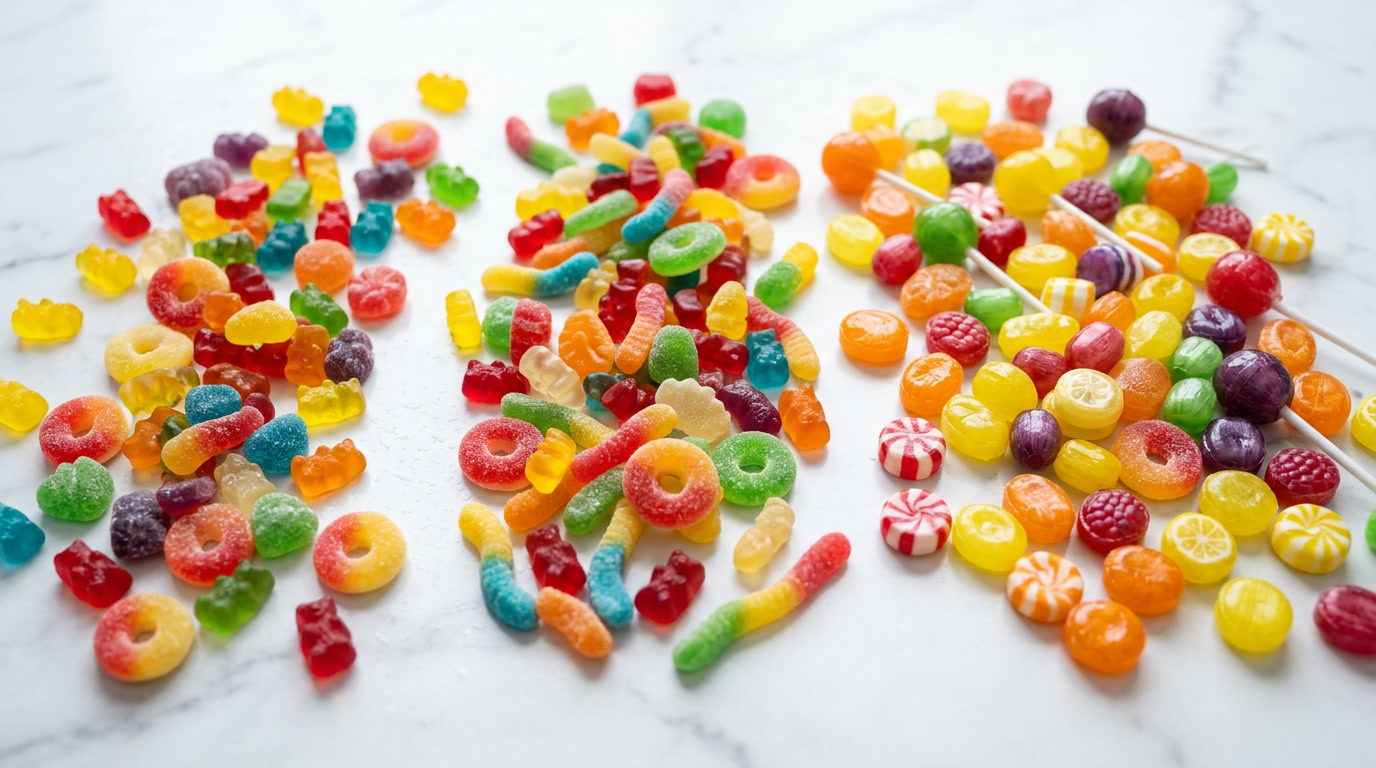
You’re standing in the candy aisle at 9 PM, willpower crumbling. You know you want something sweet, but you also know a king-size Snickers will cost you 440 calories you’d rather not spend. Here’s the thing most diet guides won’t tell you: not all candy is created equal. Some options clock in under 15 calories per piece. A few are essentially “free” foods in any reasonable eating plan.
This guide ranks the actual lowest calorie candies with real numbers, explains why certain candies are lighter than others (it comes down to ingredients and how they’re manufactured), and gives you a practical cheat sheet for every craving scenario — movie theater, late-night, keto, diabetic-friendly, and everything in between.
What Is “Low Calorie” When It Comes to Candy?
Under 100 calories per serving is the widely accepted benchmark for low-calorie candy, though the best options fall well below that threshold. The FDA defines “low calorie” as 40 calories or less per serving for most foods. In practice, the lowest calorie candies we’ll cover range from 10 to 100 calories per standard serving.
How the FDA Defines Calorie Claims on Candy
The FDA’s Nutrition Facts label guidelines set specific thresholds that candy manufacturers must follow:
- “Calorie-free”: fewer than 5 calories per serving
- “Low calorie”: 40 calories or fewer per reference amount
- “Reduced calorie”: at least 25% fewer calories than the regular version
- “Light”: at least 33% fewer calories than the reference food
Watch the serving size. A “50-calorie serving” of gummy bears might be just 5 pieces — not the handful you’re actually reaching for. The numbers in this guide are per piece and per ounce, so you can compare fairly.
What Actually Makes Candy High in Calories?
Three ingredients drive calories in candy: sugar, fat, and starch. Protein and fiber contribute calories too, but they’re rarely the dominant factor.
| Macronutrient | Calories per gram | Main role in candy |
|---|---|---|
| Sugar (sucrose, HFCS, glucose) | 4 kcal/g | Sweetness, texture, binding |
| Fat (cocoa butter, palm oil, dairy) | 9 kcal/g | Creaminess, mouthfeel, richness |
| Starch / maltodextrin | 4 kcal/g | Bulking agent, texture modifier |
| Sugar alcohols (erythritol, xylitol) | 0.2–2.4 kcal/g | Low-calorie sweeteners |
| Fiber (inulin, chicory root) | ~2 kcal/g | Bulking, prebiotic function |
| Stevia, sucralose, aspartame | ~0 kcal/g | Intense sweeteners |
A chocolate bar is high calorie because it contains both sugar (4 kcal/g) and fat (9 kcal/g). Hard candy, by contrast, is almost pure sugar dissolved in water — it has no fat and relatively little mass per piece. That’s why hard candy wins the calorie-per-piece comparison almost every time.
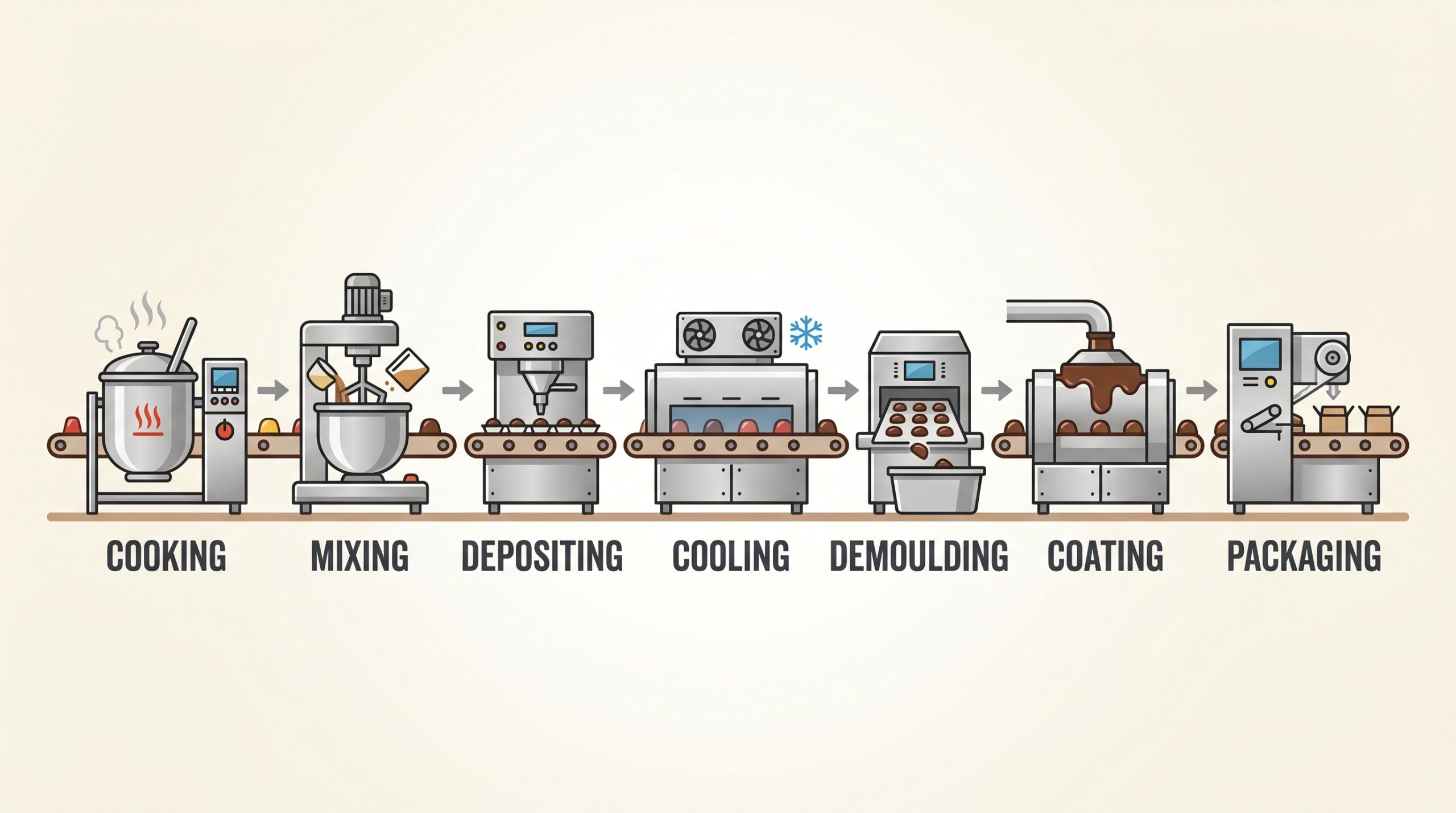
In modern confectionery manufacturing, producing genuinely low-calorie candy requires substituting those calorie-dense ingredients while maintaining texture, mouthfeel, and shelf stability — a significant engineering challenge. Candy lines built around precision depositing and controlled aeration are specifically designed to handle alternative sweetener formulations that behave differently from traditional sugar syrups.
The 10 Lowest Calorie Candies Ranked
The single lowest calorie candy per piece is a standard hard candy at roughly 11–15 calories, followed by sugar-free gummies and compressed sugar mints. Here’s the definitive ranked list.
Hard Candy: The Calorie-Per-Piece Champion
Hard candies win on calories per piece simply because they’re small, contain no fat, and are eaten slowly (one piece lasts 5–10 minutes, limiting over-consumption). A single Jolly Rancher: 23 calories. A Werther’s Original hard candy: 22 calories. A Brach’s fruit drop: 15 calories.
The kicker? Sugar-free hard candies drop to 5–12 calories per piece. Werther’s Sugar-Free Hard Candies come in at 8 calories each. That’s a 60% reduction from the regular version.
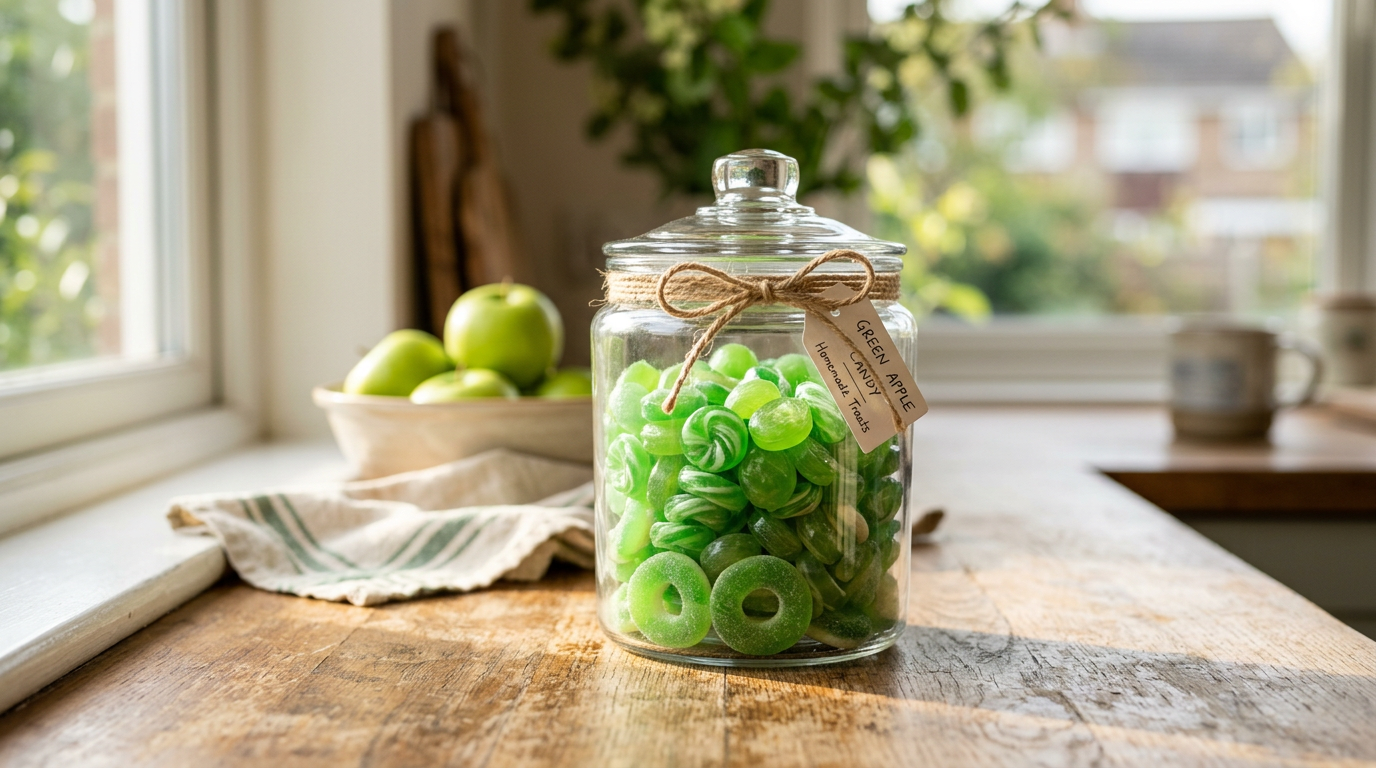
Hard candy is one of the oldest candy forms — made by cooking sugar and corn syrup to 300°F (the “hard crack” stage), then pulling, cooling, and forming. The high temperature drives off water, concentrating flavor and creating that characteristic glass-like texture. Sugar-free versions replace sucrose with maltitol or isomalt, which behave similarly at high temperatures but deliver roughly half the calories.
Sugar-Free Gummies and Soft Candies
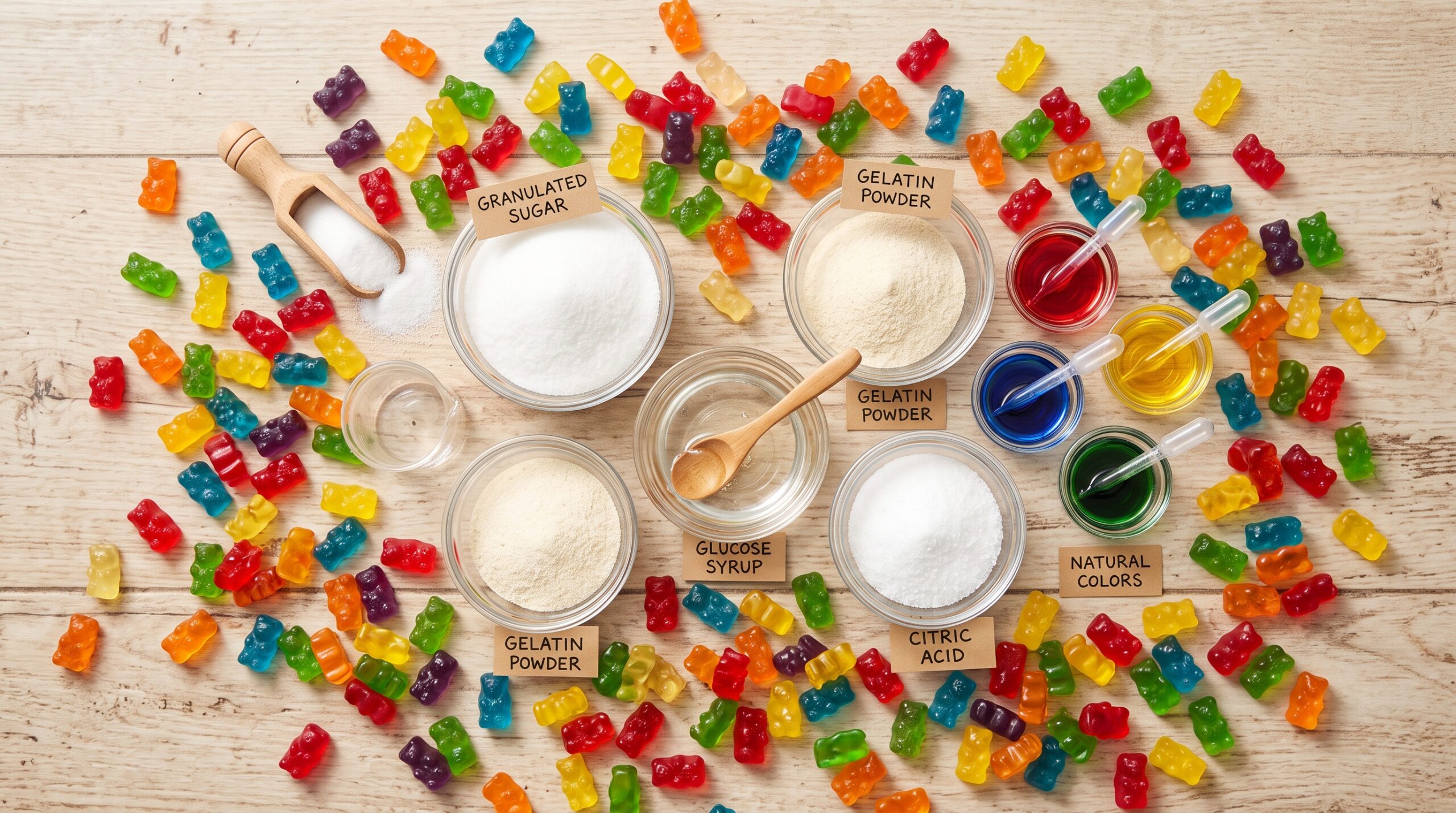
Gummy candy has been through a low-calorie revolution. The traditional recipe — gelatin + corn syrup + sugar — delivers about 130–150 calories per 1.4 oz serving. Modern sugar-free versions using soluble fiber (chicory inulin) instead of sugar bring that down to 70–100 calories for the same serving size.
Smart Sweets is the category benchmark: their gummy bears contain 90 calories per 1.8 oz bag, versus 170 calories in the same size of Haribo. The secret is replacing sugar with soluble corn fiber and sweetening with stevia — which also means 13g of fiber per bag, an unexpected bonus.
The Full Lowest Calorie Candy Rankings
| Candy | Serving size | Calories | Calories per piece |
|---|---|---|---|
| Brach’s Fruit Drops (hard candy) | 3 pieces | 45 | 15 |
| Werther’s Sugar-Free Hard Candy | 3 pieces | 24 | 8 |
| Jolly Rancher Hard Candy | 1 piece | 23 | 23 |
| Sugar-Free Breath Mints (Tic Tac) | 1 piece | 0 (<0.5) | ~0 |
| Pixie Stix | 1 stix | 12 | 12 |
| Cotton Candy (standard bag) | 0.5 oz | 54 | N/A |
| Smarties (compressed sugar) | 1 roll (6g) | 25 | 4 |
| Twizzlers (1 piece) | 1 piece (15g) | 45 | 45 |
| Sour Patch Kids | 4 pieces | 70 | 17.5 |
| Smart Sweets Gummies | 1 bag (50g) | 90 | N/A |
| Peppermint Patty (mini) | 1 piece (14g) | 60 | 60 |
| Starburst (1 piece) | 1 piece (5g) | 20 | 20 |
| Dark Chocolate (70%+, 1 square) | 1 square (5g) | 28 | 28 |
| Candy Corn | 5 pieces (15g) | 56 | 11 |
| Sugar-Free Gummy Bears | Per oz | 70 | ~10 |
Types of Low Calorie Candy Explained
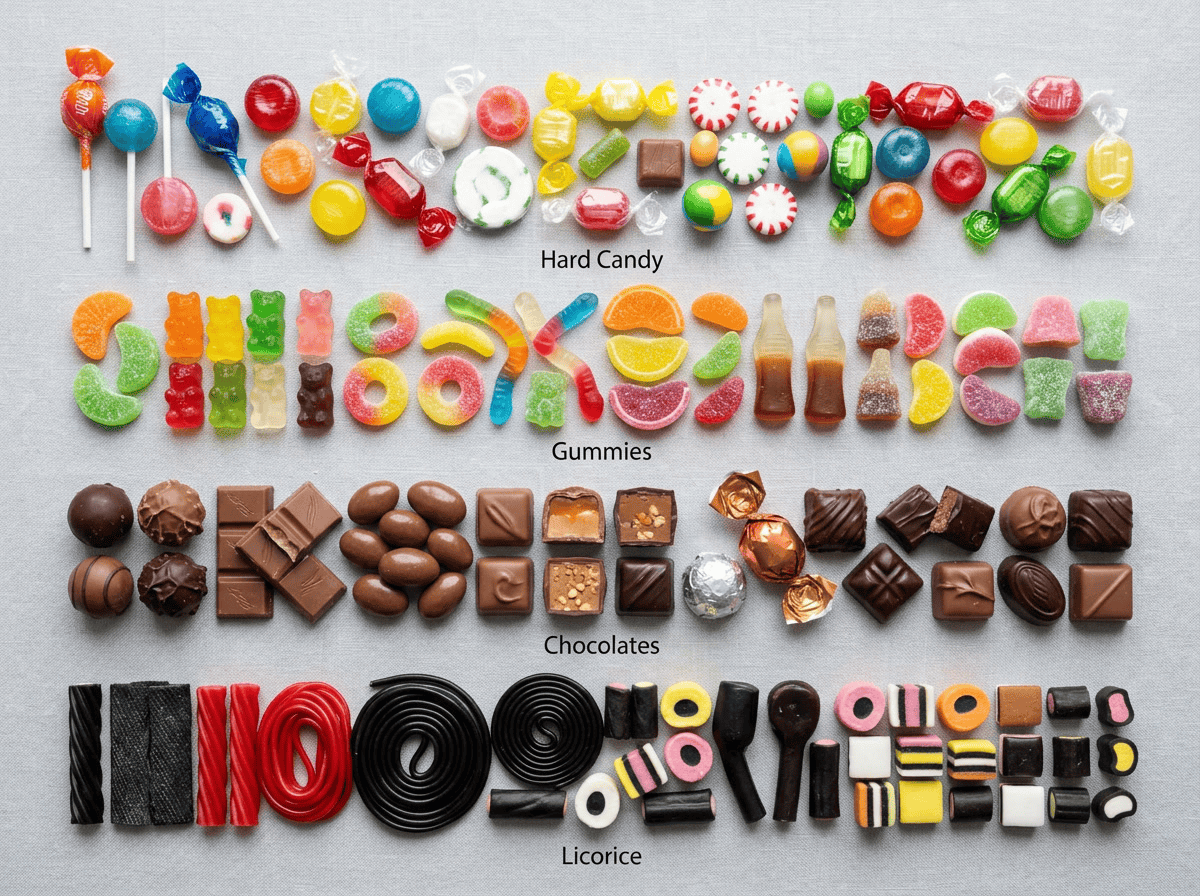
Low calorie candy falls into four categories: sugar-free formulations, portion-controlled formats, naturally light candy types, and calorie-reduced alternatives. Understanding which category you’re buying from helps you make smarter choices at the store.
Sugar-Free Candy: Replacing Sugar With Alternatives
Sugar-free candy doesn’t eliminate sweetness — it replaces sugar with ingredients that provide fewer or zero calories. The main substitutes:
Polyols (sugar alcohols): Erythritol (0.24 kcal/g), xylitol (2.4 kcal/g), maltitol (2.1 kcal/g), isomalt (2.0 kcal/g), and sorbitol (2.6 kcal/g). These are partially absorbed in the small intestine; the rest passes through, which is why large amounts can cause digestive discomfort. Per the USDA FoodData Central database, erythritol is unique among polyols — it’s almost completely absorbed and then excreted unchanged, contributing essentially no calories and no GI side effects at moderate intake.
High-intensity sweeteners: Stevia (0 cal), sucralose (0 cal), and aspartame (~4 cal/g but used at 1/200th the amount of sugar). These provide intense sweetness in tiny quantities. A stick of Trident gum uses about 0.05g of sucralose — effectively zero calories from the sweetener.
Soluble fiber: Smart Sweets pioneered using soluble corn fiber as a bulking agent. Fiber contributes approximately 2 kcal/g (versus sugar’s 4 kcal/g) and has the added benefit of slowing sugar absorption and increasing satiety.
Portion-Controlled Formats: Small Pieces, Big Satisfaction
Some of the most effective low-calorie candy strategies aren’t about reformulation at all — they’re about piece size. Tic Tacs exploit this brilliantly: each mint is technically 0 calories (1.9 calories, rounded down by FDA rules for sub-2-calorie servings). Smarties rolls deliver 25 calories for an entire roll of 15 compressed sugar pellets — the portion size, not the formula, is what makes them light.
Naturally Light Candy Types
Cotton candy is an interesting case. It’s pure spun sugar with essentially no fat — a half-ounce bag runs about 54 calories. The problem is that half an ounce looks like a lot of cotton candy visually but disappears in three bites, making over-eating easy. Still, for a carnival treat, it’s among the lighter options.
Licorice is denser than hard candy but fat-free. A 1-piece Twizzler (15g) runs 45 calories. The calorie count comes entirely from sugar and corn syrup — no fat, no dairy. Red Vines are comparable. Neither is “low calorie,” but both are far lighter than chocolate-covered options at similar serving sizes.
Pixie Stix — essentially flavored powder sugar in a straw — deliver just 12 calories per stix. A nostalgia pick more than a health food, but objectively among the lowest calorie candy products on the market.
How Candy Manufacturers Make Low Calorie Candy
Low calorie candy is made by replacing sugar with sweetener alternatives, incorporating air to reduce density, or reducing portion size while increasing flavor intensity. Each approach requires specific manufacturing techniques.
Replacing Sugar: The Technical Challenge
Replacing sucrose in candy is harder than it sounds. Sugar does far more than sweeten — it controls viscosity, moisture retention, crystallization behavior, browning reactions (Maillard reaction), and shelf life. In hard candy manufacturing, sugar is cooked to precise temperatures to achieve specific crystal structures. Switch to maltitol, and the behavior at high temperatures changes: maltitol has a lower melting point and different hygroscopicity (tendency to absorb moisture from the air), which affects both production line parameters and the finished product’s shelf life.
Gummy candy presents different challenges. Traditional gelatin-and-sugar gummies rely on sugar’s hygroscopic properties to prevent sticking and maintain texture. Sugar-free gummies using maltitol or erythritol require reformulated gel systems and often additional hydrocolloids (pectin, carrageenan) to achieve comparable texture.
Air Incorporation: Aerated Candy
One underappreciated technique for reducing calories is aeration — whipping air into candy mass before it sets. Aerated chocolate can be 20–30% lower in calories per bar than solid chocolate because a significant portion of the volume is air bubbles. The same principle applies to nougat, marshmallow, and frappé candy types.
Commercial aeration requires high-speed mixing equipment under controlled temperature and pressure. The bubble size distribution, foam stability, and final product density all affect both calorie count and eating experience. A properly aerated gummy or chocolate delivers a lighter mouthfeel that many consumers prefer — lower calorie and better texture.
Moisture and Water Activity Control
Water contains zero calories, and increasing the water content of candy reduces its calorie density per gram. Jelly candies and fruit-flavored soft candies with higher moisture content are lower calorie per piece than dry hard candy, even though hard candy looks “smaller.”
Water activity (Aw) must be carefully controlled in candy manufacturing. High water activity enables mold growth and shortens shelf life. Commercial producers use water activity meters and humidity-controlled production environments to find the sweet spot between lower calorie density and acceptable shelf stability.

Lowest Calorie Candy for Every Situation
The best low calorie candy choice depends on the context — what you’re craving, where you are, and what dietary restrictions you’re managing. Here’s a practical situation guide.
At the Movies: Keeping It Under 200 Calories
The movie theater candy situation is brutal — standard boxes run 400–800 calories. But with smart choices, you can enjoy the full movie-candy experience for under 200 calories.
- Twizzlers (small box, 5 pieces): ~220 calories. Not perfect, but significantly lighter than Milk Duds (370 cal) or M&Ms (480 cal for a theater box).
- Junior Mints (small box): 160 calories — mint + chocolate, small box, under 200.
- Swedish Fish (small box): 180 calories. All sugar, no fat, surprisingly reasonable.
- Gummy Bears (standard serving): 130 calories. Eat slowly, they last longer.
The strategy: pick from the licorice, gummy, or compressed sugar family. Avoid chocolate-coated anything — the fat layer doubles the calorie density.
For Weight Loss: The Lowest Calorie Candy Per Craving-Fix
According to CDC guidelines on calorie balance, most adults operate in a 1600–2400 calorie range. A 50–100 calorie candy splurge represents just 3–6% of daily intake — entirely manageable. The key is choosing candy that satisfies the craving without triggering overeating.
Research-backed picks for weight loss contexts:
- Strong mint/menthol candies (hard candy, sugar-free): The intense flavor creates a clean palate and natural stop signal.
- Single-piece dark chocolate (70%+ cacao, 1 square): 28 calories and enough bitterness to prevent mindless eating.
- Smart Sweets Sour Blast Buddies: 90 calories for an entire bag, plus 9g fiber that supports satiety.
For Diabetics and Keto Dieters
Diabetics and keto dieters need to watch not just calories but glycemic impact. The American Diabetes Association recommends limiting foods that spike blood glucose, which means avoiding high-glycemic sweeteners even if the calorie count is low.
Glycemic-safe options:
- Erythritol-sweetened hard candy: glycemic index (GI) ≈ 0
- Stevia-sweetened gummies: GI ≈ 0
- Xylitol mints and gums: GI ≈ 7 (very low, also inhibits cavity-causing bacteria)
- Dark chocolate 85%+: GI ≈ 20–25
Avoid for blood sugar management:
- Maltitol (GI ≈ 35 — raises blood sugar similarly to white bread)
- Sorbitol (GI ≈ 9, but converted to fructose in the liver)
- Candy sweetened with honey or agave (marketed as “natural” but glycemically significant)
| Situation | Best pick | Calories | Glycemic impact |
|---|---|---|---|
| Movie theater | Junior Mints (small box) | 160 | Moderate |
| Weight loss snack | Smart Sweets Gummies | 90 | Low |
| Keto / low-carb | Werther’s Sugar-Free | 8 per piece | None |
| Diabetic-friendly | Erythritol hard candy | 10–15 | None |
| Mindless snacking | Sugar-free mints | ~0 | None |
| Chocolate craving | Dark chocolate 85%+ | 28 per square | Low |
Future Trends in Low-Calorie Confectionery (2026 and Beyond)
The next generation of low-calorie candy will be driven by precision fermentation sweeteners, functional fiber ingredients, and AI-optimized formulations — all designed to close the taste gap between “diet” candy and the real thing.
Precision Fermentation and Novel Sweeteners
Traditional stevia has a well-known bitter aftertaste at higher concentrations, and maltitol’s GI effects limit how much can be used. Allulose is one of the most promising emerging sweeteners: it provides just 0.2 kcal/g, has a GI of essentially zero, and actually behaves like sugar in cooking. According to NIH research on dietary sweeteners, allulose may also have blood-glucose-lowering effects in diabetic subjects. The FDA now exempts allulose from “Total Sugars” labeling in the US, making it commercially very attractive.
Brazzein (a protein sweetener from the oubli fruit, now produced via fermentation) and thaumatin are protein-based intense sweeteners that provide clean sweetness profiles without bitterness. As fermentation costs drop, these will move from specialty health foods into mainstream confectionery.
Fiber-Based Candy Innovation
The Smart Sweets model — replacing sugar with soluble fiber — is already being extended across the category. Inulin-type fructans (from chicory root) and soluble corn fiber not only reduce calories but add prebiotic benefits, changing the narrative from “low calorie candy” to “functional candy.”
The World Health Organization’s sugar intake guidelines recommend keeping free sugar intake below 10% of total energy — roughly 25–50g/day for most adults. Fiber-based candy formulations make this target achievable without eliminating sweet treats entirely.
Frequently Asked Questions About Lowest Calorie Candy
What candy has the least calories overall?
Sugar-free mints are technically the lowest at under 2 calories each (essentially zero). If you want candy with a more traditional taste experience, Brach’s fruit drops and Werther’s Sugar-Free hard candies are among the lowest at 8–15 calories per piece.
What is the lowest calorie candy with real sugar?
Pixie Stix (12 calories per straw) and Smarties rolls (25 calories for an entire roll) are the lowest calorie options made with conventional sugar. Both rely on small portion sizes rather than reformulation.
Is sugar-free candy actually lower in calories?
Usually yes. Sugar-free hard candy saves roughly 60% of calories versus regular (8 cal vs. 22 cal per piece). The savings depend on which sweetener replaces sugar — erythritol provides the greatest reduction (0.24 kcal/g vs. 4 kcal/g for sugar).
What’s the lowest calorie candy at the movies?
Junior Mints (small box, 160 calories) and Swedish Fish (small box, ~180 calories) are your best options from a standard concessions stand. Both are fat-free and significantly lighter than chocolate-covered options.
Can I eat candy on keto?
Yes — choose candy sweetened exclusively with stevia, erythritol, or monk fruit. Avoid maltitol, which has a GI of approximately 35. Werther’s Sugar-Free and isomalt-based hard candies are generally keto-compatible.
Why does sugar-free candy sometimes cause stomach problems?
Most sugar-free candy uses polyols (sugar alcohols). Polyols are incompletely absorbed, causing fermentation in the large intestine. Erythritol is the exception — it is almost fully absorbed and causes virtually no GI effects.
How many calories does a single piece of chocolate have?
A 5g square of dark chocolate (70%+ cacao) contains approximately 28 calories. A full 1.5 oz milk chocolate bar is approximately 230 calories.
What candy can I eat to lose weight?
Hard sugar-free candies, Smart Sweets gummies, and dark chocolate (1–2 squares) fit easily into a calorie deficit. Choose strong-flavored options (peppermint, sour) for natural portion control.
Conclusion
The lowest calorie candy options — hard candies, sugar-free gummies, compressed sugar mints, and small-portion chocolates — let you indulge without derailing a healthy eating plan. The gap between “satisfying sweet treat” and “diet destruction” is far narrower than most people realize. A Werther’s Sugar-Free hard candy at 8 calories is genuinely comparable to its 22-calorie regular counterpart. A bag of Smart Sweets at 90 calories delivers a full candy experience with a third of the calories of traditional gummies.
The key principles: choose hard candy or sugar-free formats for the lowest per-piece calorie count, watch serving sizes regardless of the label claims, and stick to erythritol or stevia-sweetened options if you’re diabetic or keto. As new sweeteners like allulose and precision-fermented proteins continue entering the market, the gap between low-calorie and full-calorie candy will keep narrowing — better formulations, better taste, fewer compromises.
Ready to explore how modern confectionery technology makes these lower-calorie formats possible at scale? Browse our guides to candy manufacturing equipment to see how commercial candy producers engineer texture, sweetness, and calorie profiles into every batch.
Related Articles
- Low Calorie Candy: The Complete 2026 Guide to Guilt-Free Sweet Treats That Actually Taste Good
- Lowest Calorie Candies: The Complete Guide for 2026
- Haribo Sugar Free Gummy Bears Review: The Sweet Truth Behind the Internet’s Most Infamous Candy
- Korean Candy: The Complete Guide to South Korea’s Best Sweets (Traditional, Modern & What’s Worth Buying)
- Gummy Candy Production Line
- Are Skittles Dairy Free? Complete Ingredient Guide
- Are Skittles Gluten Free? Complete Guide 2026