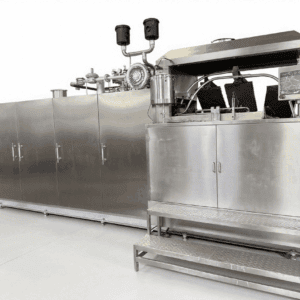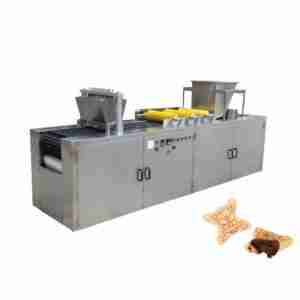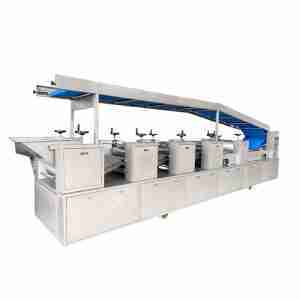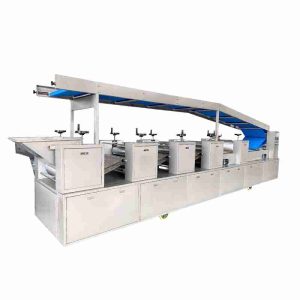
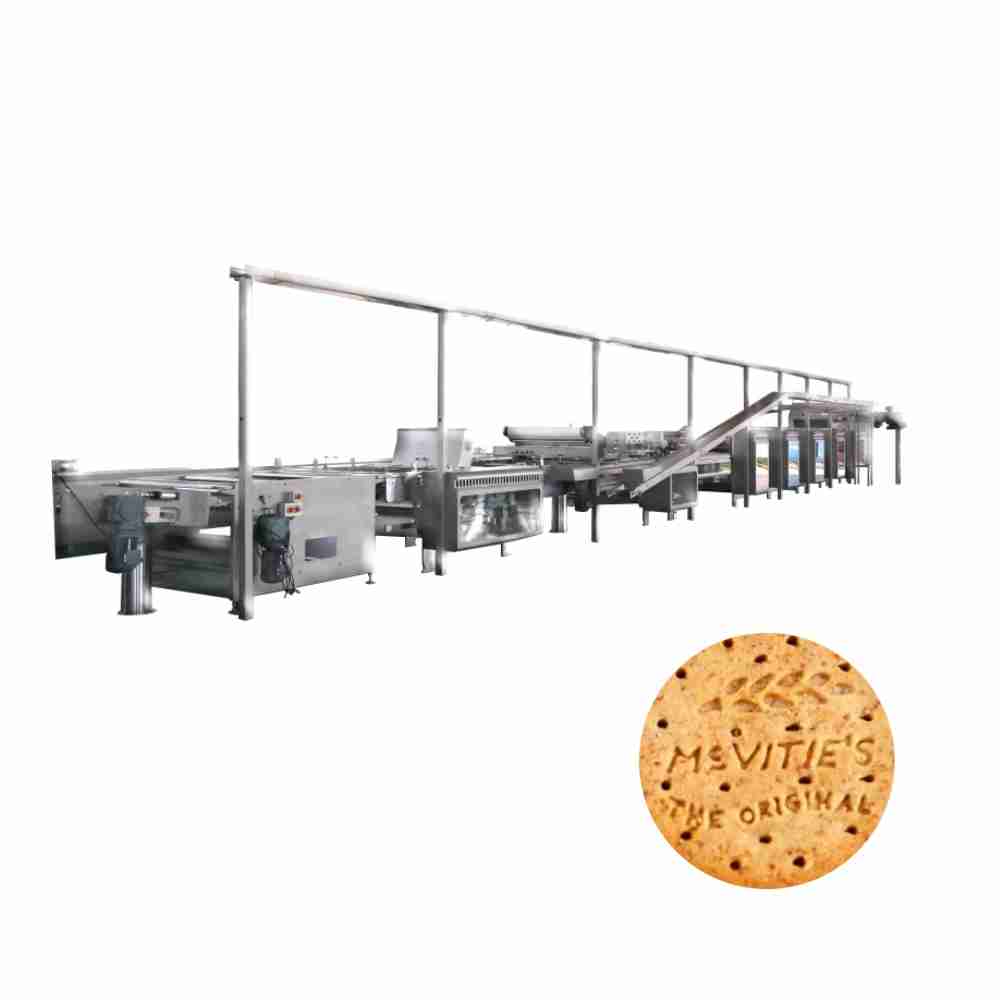
Soft biscuits are a type of biscuits made with oil, low-gluten flour, and sugar.This type of biscuit has a smooth taste, less gluten during dough preparation, and good plasticity and adhesionTherefore, Junyu recommends that customers use roller printing machines, which can increase the pattern anainterest of biscuits. Typical soft biscuits are Oreo, Digestive, caramel butter biscuits, oatmeal biscuits, etc.Machine principle: After horizontal dough mixing. The dough is directly transported to the forming machine forroller printing, there is a rubber roller under the belt to help crab the shapes. The raw biscuit can be directlypassed through the salt and sugar spreader then entering the oven for baking. Usually, the baking time requiredis shorter than hard biscuit.
| Model | JYB-280 | JYB-400 | JYB-600 | JYB-800 | JYB-1000 | JYB-1200 | JYB-1500 | Remark |
| Capacità di produzione(kg/h) | 0 | 250 | 500 | 750 | 1000 | 1250 | 1500 | Customized capacity |
| Lunghezza del forno(m) | 16 | 28 | 40 | 40 | 60 | 50 | 70 | Depend |
| Total length(m) | 29.6 | 64.5 | 85.5 | 92.5 | 125 | 125 | 150 | If No U Turn Conveyor |
| Temperatura di cottura(°C) | 190-240°C | 190-240°C | 190-240°C | 190-240°C | 190-240°C | 190-240°C | 190-240°C | Depend |
| Potenza dell'intera linea(kW) | 80 | 90 | 300 | 400 | 00 | 800 | 900 | If Use Electric Oven |
| Forno a GPL(kg/h) | 10 | 20 | 35 | 45 | 60 | 70 | 80 | If Use LPG Oven |
| Peso dell'intera linea (kg) | 6000 | 12000 | 20000 | 28000 | 35000 | 45000 | 55000 | Approx |
The production process begins with the preparation of raw materials such as flour, sugar, fats, and water. These ingredients are mixed in a dough mixer to form a uniform dough.
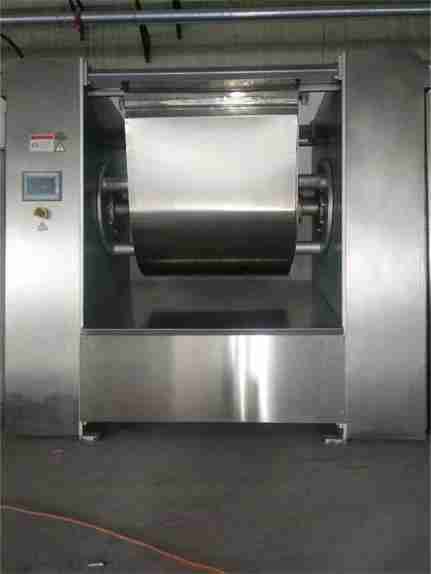
A high – efficiency dough mixer ensures that the dough is evenly mixed. This step is crucial for achieving the right consistency and texture for the biscuits.
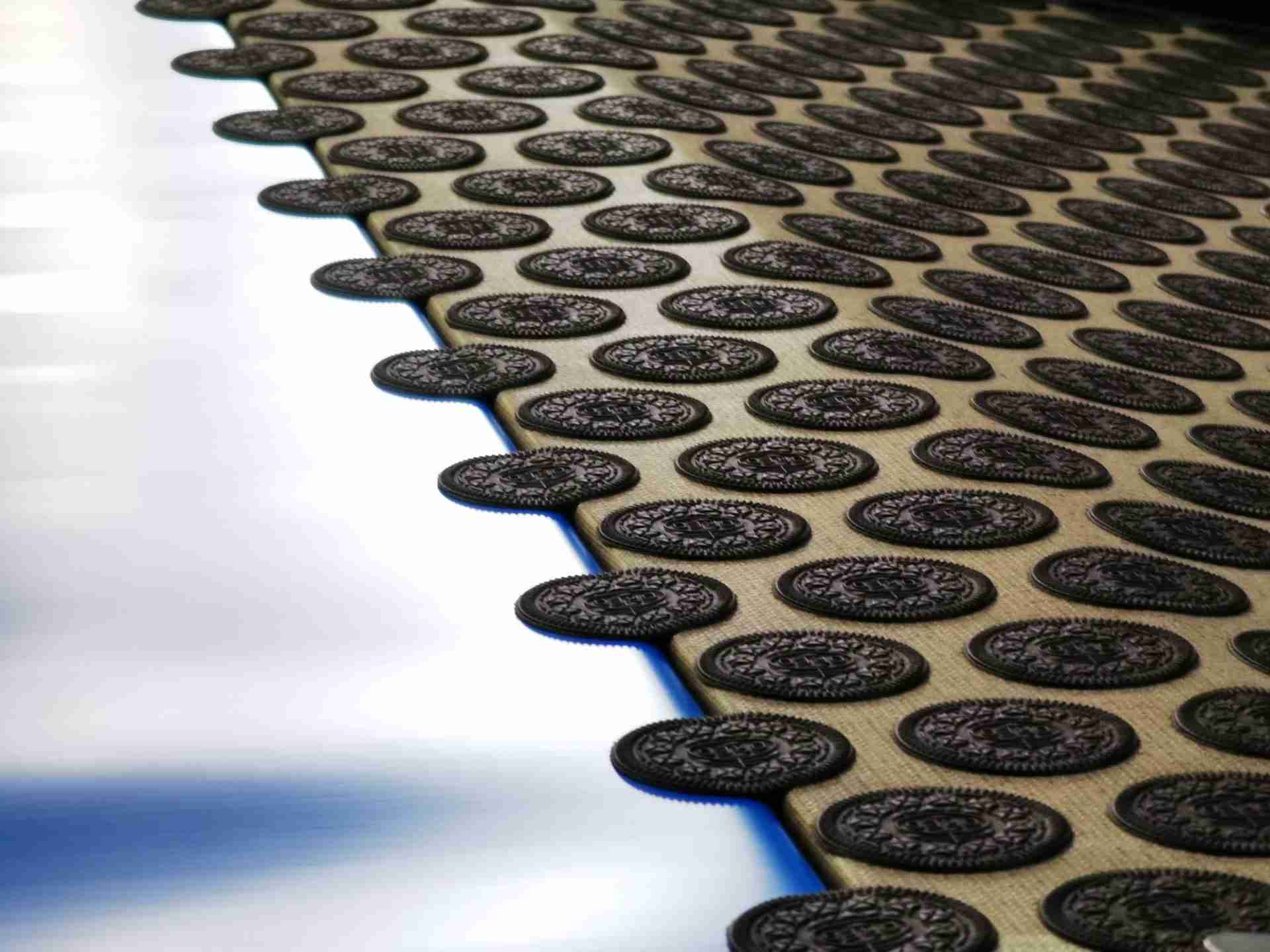
A rotary moulder shapes the dough sheets into the desired biscuit forms. The moulder’s molds are designed to create a variety of shapes, including the classic digestive biscuit shape.
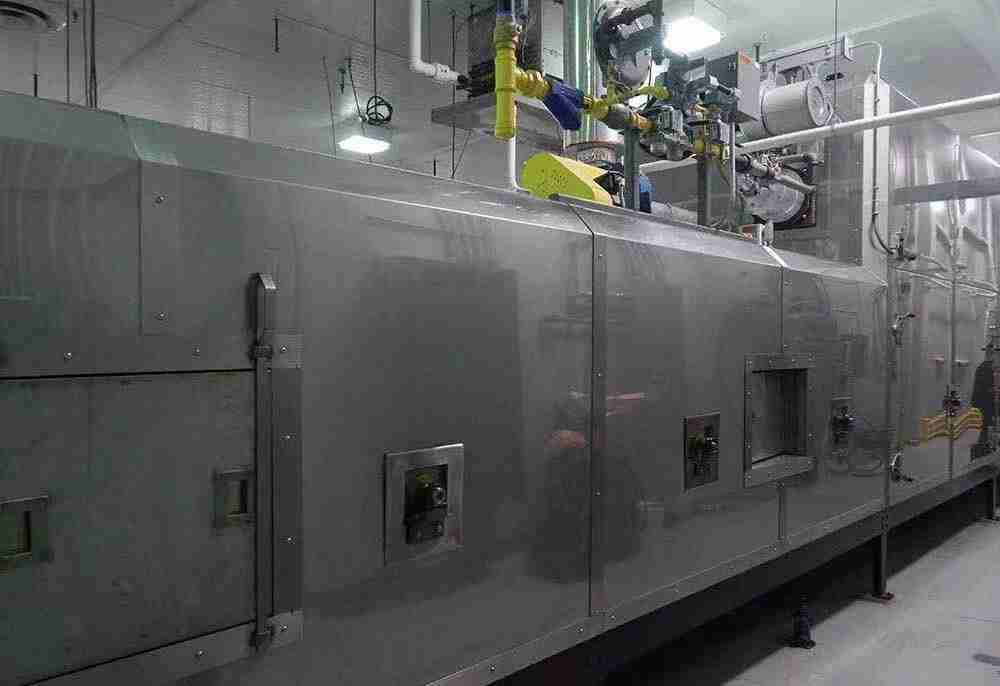 The biscuits are baked in a tunnel oven, which offers versatile heating options, including electricity and gas, for precise temperature control. The oven’s intelligent temperature control ensures even baking and a consistent product.
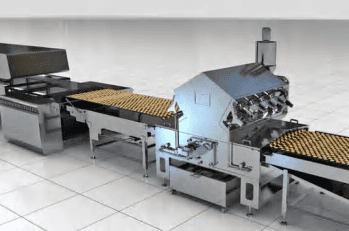
After baking, a spraying system applies a layer of oil to the biscuits. This step enhances the biscuits’ flavor and texture.
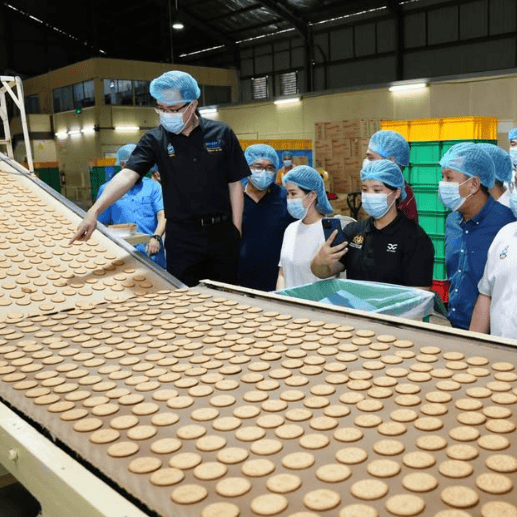
The biscuits are cooled on a cooling conveyor. This step is crucial for stabilizing the biscuits’ texture and ensuring they are ready for the next stage.
Finally, the biscuits are packaged using an automated packing system. This ensures they are neatly sealed and protected for distribution and sale
Fully automatic crisp digestive biscuit production lines are suitable for large – scale manufacturing facilities as well as smaller – scale production units. They can produce a wide range of biscuits, from traditional crisp digestives to more specialized and innovative products.
In summary, the fully automatic crisp digestive biscuit production line offers an efficient and reliable solution for high – quality biscuit production. Its precise control, versatile capabilities, energy – efficient operation, user – friendly interface, superior hygiene standards, customizable output, and cost – effective design make it an excellent choice for any business in the food manufacturing industry
**Act Now! Limited-Time Offer**
**Request a FREE Custom Quote Today!**
**Book a Live Demo: See the Line in Action!**
Domanda e Risposta
La torta corta è un tipo di biscotto con una consistenza friabile, mentre il biscotto duro ha una consistenza più dura ed è più resistente alla masticazione. La torta corta di solito ha un contenuto più elevato di grassi e zuccheri, conferendole una struttura più friabile. Il biscotto duro, d'altra parte, ha un contenuto di grassi e zuccheri inferiore, risultando in una consistenza più compatta. La superficie della torta corta spesso presenta un motivo in rilievo, mentre il biscotto duro di solito ha un foro rotondo concavo e un aspetto più liscio.
Un biscotto è una piccola pasta da forno piatta, tipicamente dolce, che può essere realizzata con vari ingredienti come farina, zucchero e burro. I biscotti possono avere diverse consistenze e sapori, variando da morbidi e gommosi a croccanti e burrosi.
I biscotti possono essere classificati in diversi tipi, tra cui biscotto duro, biscotto morbido, biscotti al bicarbonato e wafer. Il biscotto morbido ha una consistenza più compatta ed è più resistente alla masticazione, il biscotto friabile ha una consistenza friabile, i biscotti al bicarbonato sono fatti con impasti fermentati e hanno un sapore fermentato distintivo, e i wafer sono leggeri e porosi con meno zucchero e grassi.
Forni rotativi con scaffali: Progettati per operazioni di cottura ad alto volume con un sistema di scaffali rotanti per garantire una cottura uniforme.
Forni a tunnel: Forni specializzati per produzione continua ad alto volume. I prodotti si muovono attraverso il forno su un nastro trasportatore.
I forni a tunnel elettrici utilizzano l'effetto Joule per generare calore. Sono facili da usare e da mantenere, e possono riscaldare zone separate a temperature diverse. Sono altamente efficienti, senza emissioni, e offrono un controllo preciso della temperatura.
La tecnologia a infrarossi può essere utilizzata nei forni e può essere alimentata sia a gas che a elettricità. Trasmette energia termica sotto forma di onde elettromagnetiche ed è efficace per la doratura superficiale, l'asciugatura, la stagionatura e la fusione delle coperture dei prodotti.
Il gas naturale è una delle fonti di energia più comuni per i forni a tunnel. Offre un buon controllo della temperatura, flessibilità, ed è pulito e igienico nel funzionamento.
GPL è portatile e versatile, rendendolo adatto per aree senza infrastrutture di gas naturale. Ha una densità energetica superiore rispetto al gas naturale e offre benefici simili in termini di controllo della temperatura e flessibilità.
Il costo iniziale dei forni a gas può essere superiore a quello dei forni elettrici, ma offrono bassi costi operativi e riscaldamento rapido.
Il carburante diesel è meno comune ma può essere utilizzato in aree dove il gas naturale o il GPL non sono disponibili.
Il combustibile per olio viene talvolta utilizzato in zone dove il gas naturale o il GPL non sono disponibili. È relativamente economico ma produce emissioni più elevate rispetto al gas naturale o al GPL.
I forni a tunnel ibridi combinano diverse tecnologie di riscaldamento, come convezione diretta e convezione indiretta, offrendo i vantaggi di più metodi di riscaldamento in una singola macchina. Questo permette maggiore flessibilità e una migliore qualità del prodotto.