Popping boba is made of fruit juice, sodium alginate, water, sugar, and calcium chloride or calcium lactate — these ingredients undergo spherification to form a thin gel shell encasing a burst of liquid that pops on contact.
You bite into one of those little spheres floating in your bubble tea, and it explodes in your mouth. Fruit juice, sweetness, an almost theatrical pop. That moment is pure food chemistry. But behind that pop is a surprisingly precise formulation — one that confectionery engineers, food scientists, and manufacturers have refined over decades. This guide breaks down exactly what popping boba is made of, how the spherification science works, what separates industrial production from a home kitchen experiment, and where the category is heading in 2026 and beyond.
What Is Popping Boba?
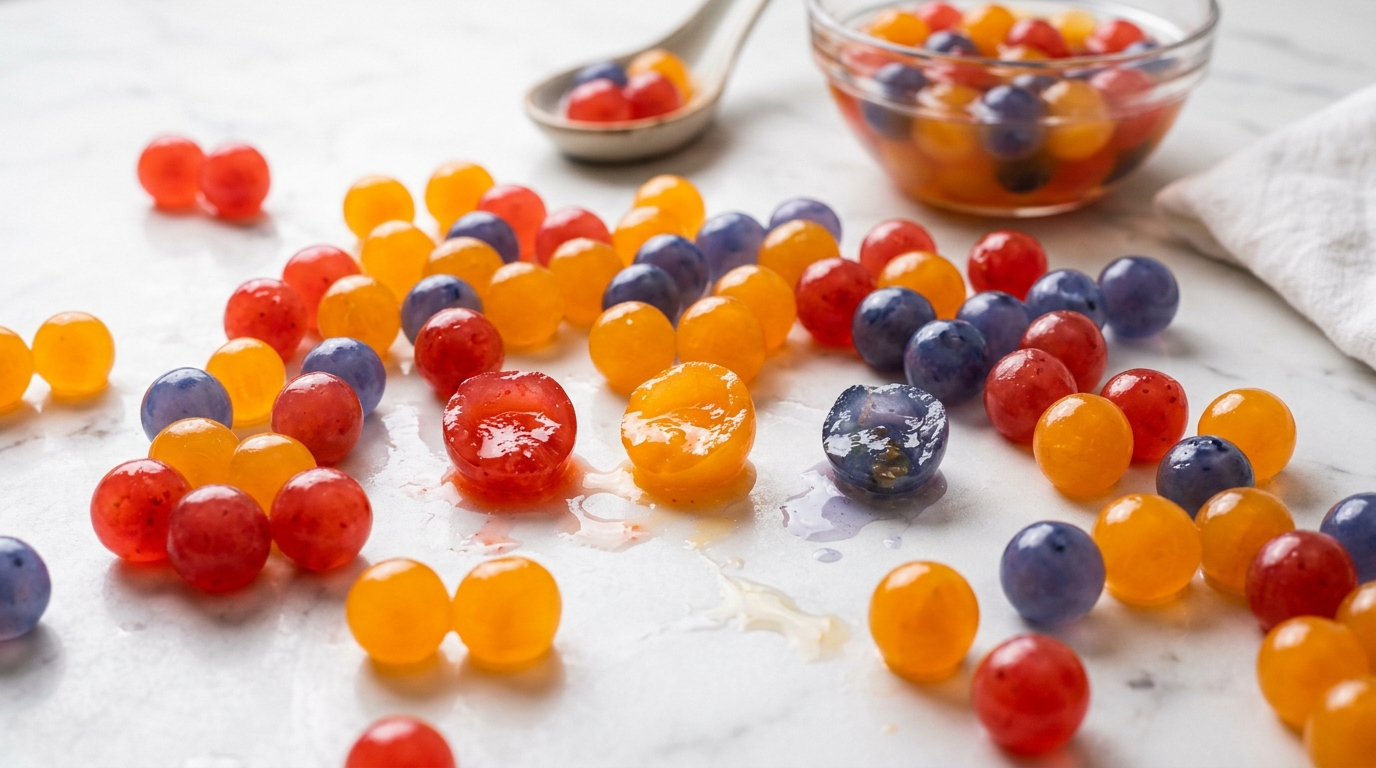
Popping boba is a spherical, gel-encased confection filled with flavored liquid that bursts when bitten or pressed. It’s not a solid bead. The thin, flexible outer membrane encloses a pocket of juice that releases all at once under pressure. The sensation is immediate and dramatic — which is exactly why popping boba has become one of the most sought-after toppings in bubble tea, frozen yogurt, acai bowls, and dessert applications worldwide.
Understanding what popping boba is made of starts with that structure: outer shell, liquid interior. Every ingredient choice flows from that architecture.
Origins and How It Arrived
The roots of popping boba trace back to Taiwan in the 1980s, where the bubble tea industry was already experimenting with novel toppings for tea-based drinks. Traditional tapioca boba had dominated since the early 1980s, but manufacturers wanted something with more sensory impact — a topping that could add flavor and texture simultaneously. The application of spherification chemistry to the bubble tea category changed the industry permanently.
By the early 2000s, popping boba had spread across East Asia. By 2010, it was appearing in specialty shops across North America and Europe. As of 2026, it is a mainstream commercial product manufactured at industrial scale across Taiwan, China, Thailand, and increasingly Southeast Europe and South Asia, driven by the ongoing global expansion of bubble tea culture.
What Makes Popping Boba Different from Regular Boba
The difference between popping boba and tapioca boba is fundamental — material, structure, and function are all distinct.
| Characteristic | Popping Boba | Tapioca Boba | Crystal Boba |
|---|---|---|---|
| Primary material | Sodium alginate gel | Tapioca starch | Konjac or agar gel |
| Core | Flavored liquid | Solid (starch) | Semi-solid gel |
| Sensation | Bursts on pressure | Chewy | Soft, slightly chewy |
| Flavor contribution | High — releases juice instantly | Low — neutral starch base | Mild |
| Heat stability | Moderate | High | Moderate |
| Manufacturing method | Spherification | Cooking and shaping | Gel forming |
| Shelf life (commercial) | 12–18 months | 12–24 months | 6–12 months |
The defining difference: popping boba is not a starch product. It’s a hydrocolloid gel formed through a controlled chemical reaction — not by cooking starch. That distinction matters enormously for manufacturing, storage, and quality control.
Core Ingredients in Popping Boba
The short list of what popping boba is made of surprises most people. There are only five to eight core ingredients, depending on the formulation. Each one plays a precise role. There’s no room for approximate measurements or substitutions in commercial production — the chemistry either works or it doesn’t.
Sodium Alginate — The Shell-Forming Agent
Sodium alginate is the structural backbone of every popping boba. It’s a naturally derived polysaccharide extracted from brown seaweed species — primarily Macrocystis pyrifera and Laminaria hyperborea. In food science, it carries the designation E401 under EU food additive codes. The FDA classifies it as GRAS (Generally Recognized As Safe) for use in food manufacturing.
Its defining property: sodium alginate gels instantly when it contacts divalent cations — specifically calcium ions (Ca²⁺). This reaction is the entire basis of spherification. The calcium ions displace sodium ions from the alginate chains and crosslink adjacent polymer chains through ionic bonding, forming a three-dimensional hydrogel network that is rigid enough to hold shape and flexible enough to stretch before rupturing.
In commercial popping boba production, sodium alginate is used at concentrations between 0.3% and 1.0% by weight, depending on desired shell thickness and burst pressure. Higher concentrations create a tougher, thicker shell with a more pronounced chew. Lower concentrations produce a more delicate, easily-ruptured bead. Getting this concentration right is the first quality variable a manufacturer controls in every production run.
According to Wikipedia’s article on sodium alginate, the compound is used across food manufacturing as a thickener, gelling agent, and encapsulation material — applications that range far beyond bubble tea, including pharmaceutical capsule coatings and wound dressings.
Calcium Chloride and Calcium Lactate — The Hardening Agents
The calcium source is the second critical ingredient in popping boba. Two options dominate commercial production, and the choice between them significantly affects the final product’s quality and shelf life.
Calcium chloride (CaCl₂, E509) is the classic setting agent for basic spherification. The alginate-laden juice is dripped into a calcium chloride bath, and the calcium ions immediately crosslink the alginate at the bead surface, forming the gel shell. Calcium chloride is inexpensive, reactive, and predictable. Its downside: it contributes a faint bitterness if residual concentration is too high, and the crosslinking reaction continues even after the bead is removed from the bath — meaning beads left sitting in the solution become progressively firmer and eventually lose their liquid center entirely.
Calcium lactate is preferred for reverse spherification, the method used in virtually all commercial production. It has a neutral flavor, better heat stability, and critically — the crosslinking reaction stops when the bead is removed from the alginate bath. The shell stabilizes at a defined thickness rather than continuing to harden in storage. Calcium lactate is more expensive than calcium chloride, but for industrial-scale production where 12–18 months of shelf life is a requirement, it’s the standard choice.
Some high-end formulations use calcium lactate gluconate, which offers even better solubility, a cleaner flavor profile, and more predictable reactivity. The cost premium is higher, but the formulation precision it enables justifies the investment for premium-positioned products.
Fruit Juice, Puree, and Flavoring
The interior of popping boba is typically a precisely calibrated blend of several components:
- Fruit juice or puree concentrate (25–60% of total liquid weight) — mango, strawberry, lychee, passion fruit, blueberry, green apple, kiwi, and peach are the commercial staples. Concentrate is preferred over fresh-pressed juice for consistency and shelf stability.
- Water — to adjust Brix (dissolved sugar concentration) and viscosity to specification
- Sugar or glucose-fructose syrup — to hit the target sweetness (typically 55–75° Brix for commercial product)
- Citric acid — to add tartness and act as a mild natural preservative; also helps with pH control
- Natural or artificial flavors — to amplify or standardize flavor regardless of seasonal fruit variation
- Colorants — natural (anthocyanins from purple sweet potato or elderberry, beta-carotene, spirulina blue) or artificial (FD&C Red 40, Yellow 5, Blue 1), depending on target market regulations and brand positioning
The fruit juice percentage directly affects the burst experience. Higher juice content delivers a more intense, authentic flavor explosion. But juice also introduces pH variability — and pH directly controls how quickly the calcium-alginate gel reaction proceeds. In industrial production, pH is tightly monitored and adjusted with buffer agents (sodium citrate is most common) to maintain the target range of 3.5–4.5 for consistent gel formation batch after batch.
Sweeteners, Preservatives, and Functional Additives
| Ingredient | Function | Common Form | EU Code |
|---|---|---|---|
| Sodium alginate | Gel shell formation | Food-grade powder | E401 |
| Calcium chloride | Basic spherification bath | Food-grade solution | E509 |
| Calcium lactate | Reverse spherification agent | Powder | E327 |
| Citric acid | Acidulant and mild preservative | Powder | E330 |
| Sodium citrate | pH buffer and acidity regulator | Powder | E331 |
| Potassium sorbate | Antimicrobial preservative | Solution or powder | E202 |
| Xanthan gum | Viscosity modifier | Powder | E415 |
| FD&C Red 40 | Synthetic red colorant | Solution | E129 |
| Beta-carotene | Natural orange/yellow colorant | Oil suspension | E160a |
Potassium sorbate (E202) is nearly universal in commercial popping boba formulations. It prevents mold and yeast growth throughout the 12–18 month shelf life without affecting flavor, texture, or gel behavior. Many premium brands are transitioning to natural antimicrobials — nisin, rosemary extract — but for cost-competitive manufacturing at scale, potassium sorbate remains the dominant choice.
The Spherification Process — How the Shell Forms
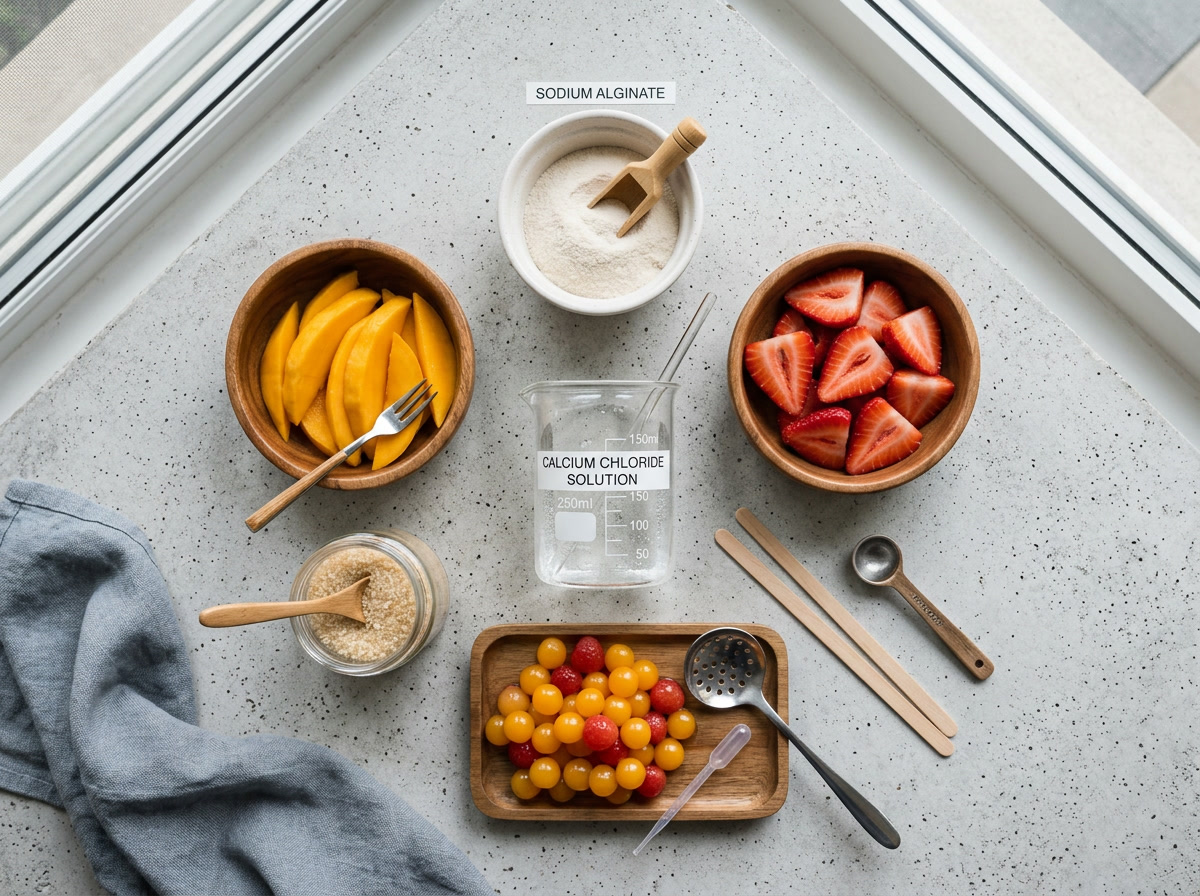
Spherification is the mechanism that turns a liquid into a self-contained gel sphere. It is a core technique within molecular gastronomy — the application of scientific principles to culinary production. Understanding spherification is essential to understanding what popping boba is made of at a deeper level, because the process is inseparable from the ingredients: you can’t formulate popping boba without knowing how those ingredients interact.
Basic Spherification
In basic spherification, sodium alginate is dissolved directly into the flavored juice solution. This alginate-juice mixture is then dripped — or pushed through a calibrated nozzle — into a bath of calcium chloride solution.
The instant the droplet contacts the calcium bath, calcium ions diffuse inward from the droplet surface. They crosslink the alginate chains to form a continuous, self-sealing gel membrane. The reaction proceeds inward over time, which is why timing matters precisely: 2–5 minutes in the bath is the typical window for achieving a burst-able shell without gelling the interior.
The fundamental limitation of basic spherification for commercial production: the crosslinking reaction does not stop when the bead leaves the bath. Residual calcium inside the bead continues reacting with the alginate throughout the shell. Over days and weeks, the interior gradually gels. Shelf life without advanced preservation steps is short — measured in days, not months.
Reverse Spherification — The Commercial Standard
For virtually all commercially produced popping boba, reverse spherification is the preferred and more reliable method. The entire process is inverted:
- The calcium source (calcium lactate or calcium lactate gluconate) is dissolved into the juice filling
- The sodium alginate goes into the setting bath
- When the calcium-loaded juice droplet hits the alginate bath, gel forms on the outside of the droplet
- The shell builds outward from the droplet surface, creating a clean, uniform membrane
- When the bead is removed and rinsed, the reaction stops completely — because the alginate is no longer in contact with the interior
This is why commercial popping boba can sit on a shelf for 12–18 months with the liquid center intact. There is no ongoing crosslinking. The shell is fully formed, stable, and will remain in that state indefinitely as long as the packaging is intact.
The Wikipedia article on spherification notes that reverse spherification was popularized in fine dining by Ferran Adrià’s elBulli kitchen in the early 2000s. Its adaptation for mass-produced, shelf-stable popping boba — a rather different engineering challenge — came through refinement by Taiwanese food manufacturers who needed not just culinary elegance but food-safety-compliant, commercially scalable output.
Why the Gel Shell Forms — The Chemistry
When calcium ions (Ca²⁺) contact sodium alginate chains, they displace the monovalent sodium ions (Na⁺) and form ionic crosslinks between adjacent alginate polymer chains. These crosslinks create a three-dimensional hydrogel network: rigid enough to hold its shape under gravity, flexible enough to deform under pressure before rupturing.
As described in detail in Wikipedia’s treatment of calcium chloride, the calcium ion’s divalent charge is what makes it effective at crosslinking: it can simultaneously bind to two separate polymer chains, effectively stitching them together in a way that monovalent ions (like sodium) cannot.
The burst threshold — the force required to rupture the membrane — depends on four variables:
- Alginate concentration (higher = tougher shell)
- Calcium ion concentration in the bath (higher = faster crosslinking, thicker gel for a given dip time)
- Reaction time (longer = thicker shell, slower burst)
- Bead diameter (smaller beads burst more easily relative to their size)
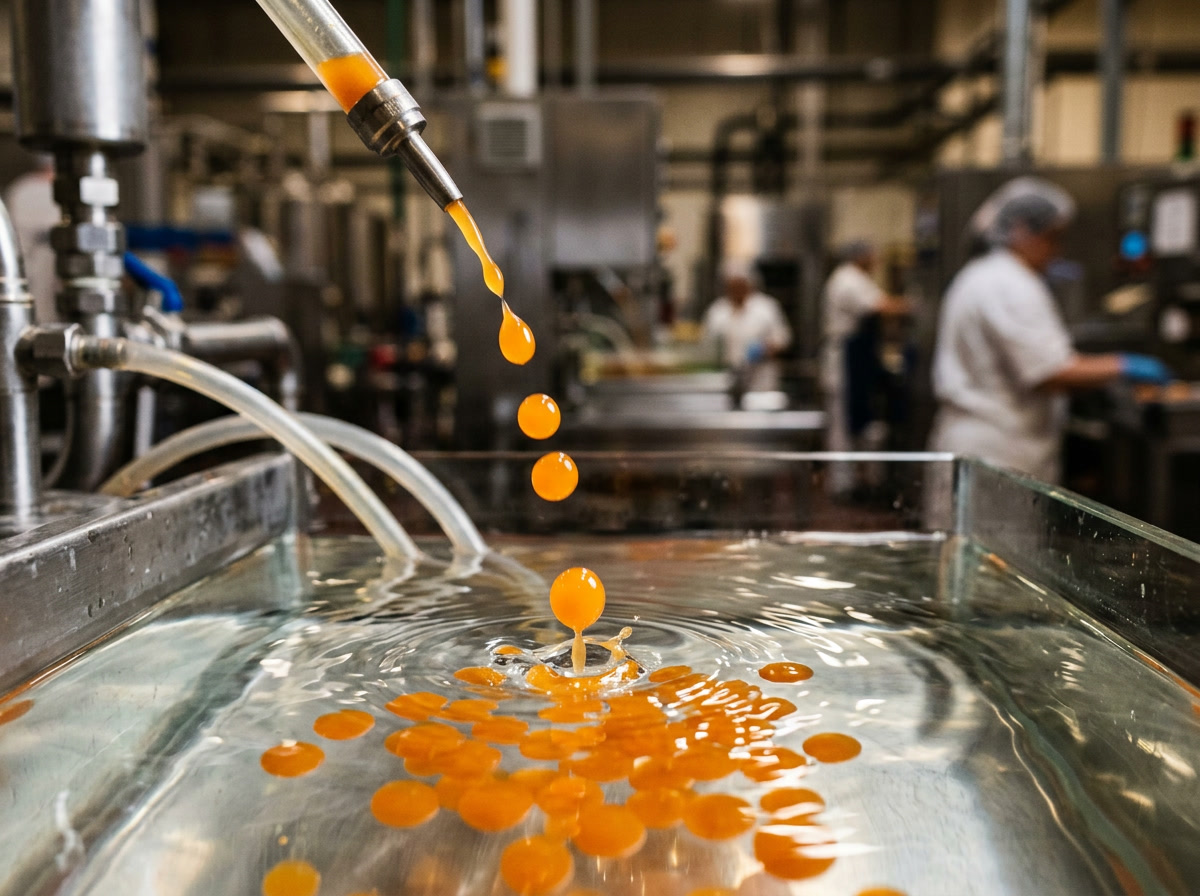
Industrial equipment — specifically spherification drip machines or vibration-driven extrusion nozzles — produces beads with tightly controlled diameter (typically 8–12mm for commercial popping boba) and therefore consistent burst behavior across an entire production run. In practice, well-run factories maintain shell thickness variation of ±0.05mm per batch — tight enough that every bead in a consumer cup bursts at approximately the same force.
Industrial Manufacturing vs. Home Production
Knowing what popping boba is made of is one thing. Understanding how production scale changes the process — and why industrial methods produce fundamentally different results from home kits — is where it gets practically important for anyone in the confectionery manufacturing space.
Commercial Production Equipment
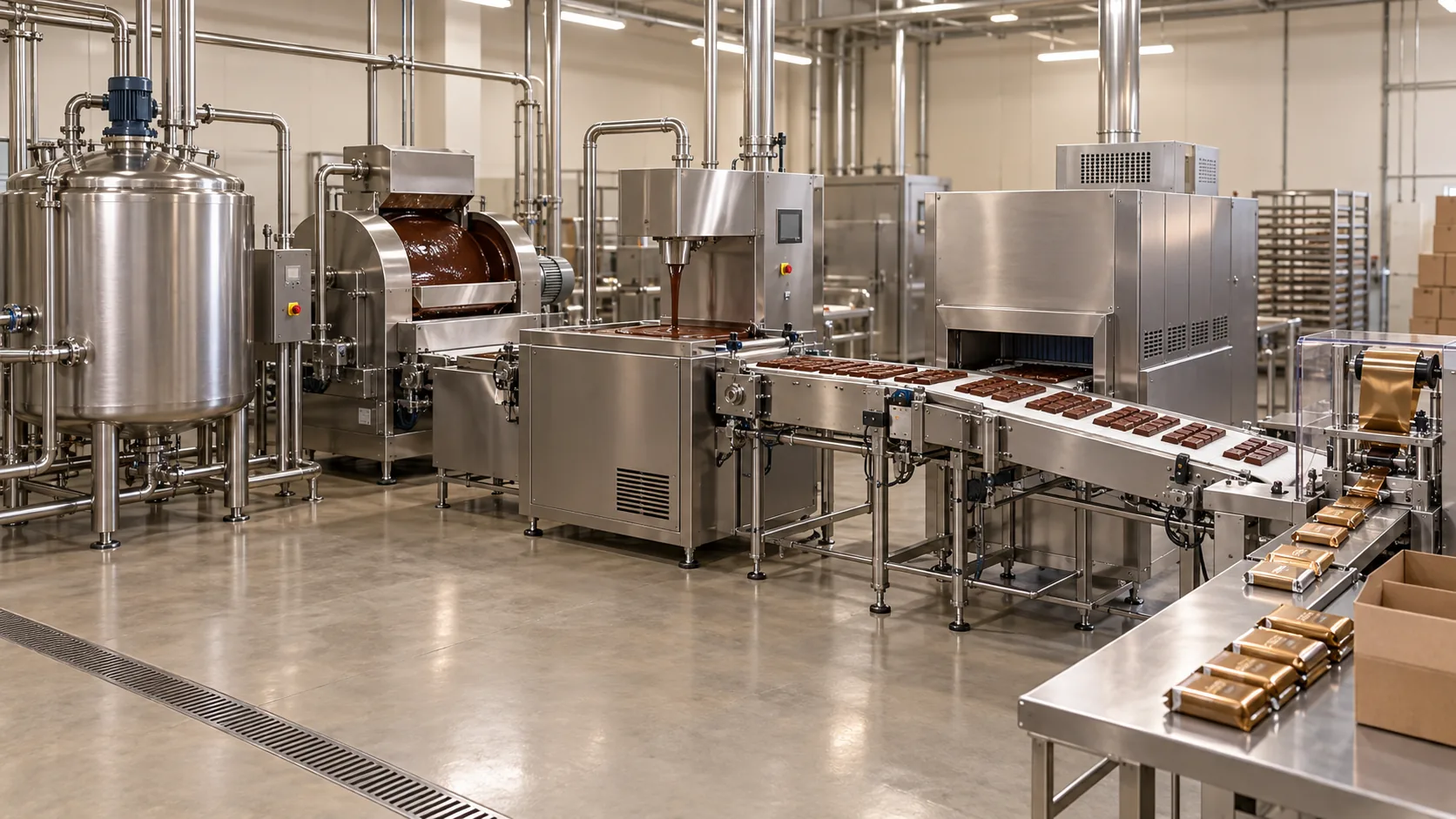
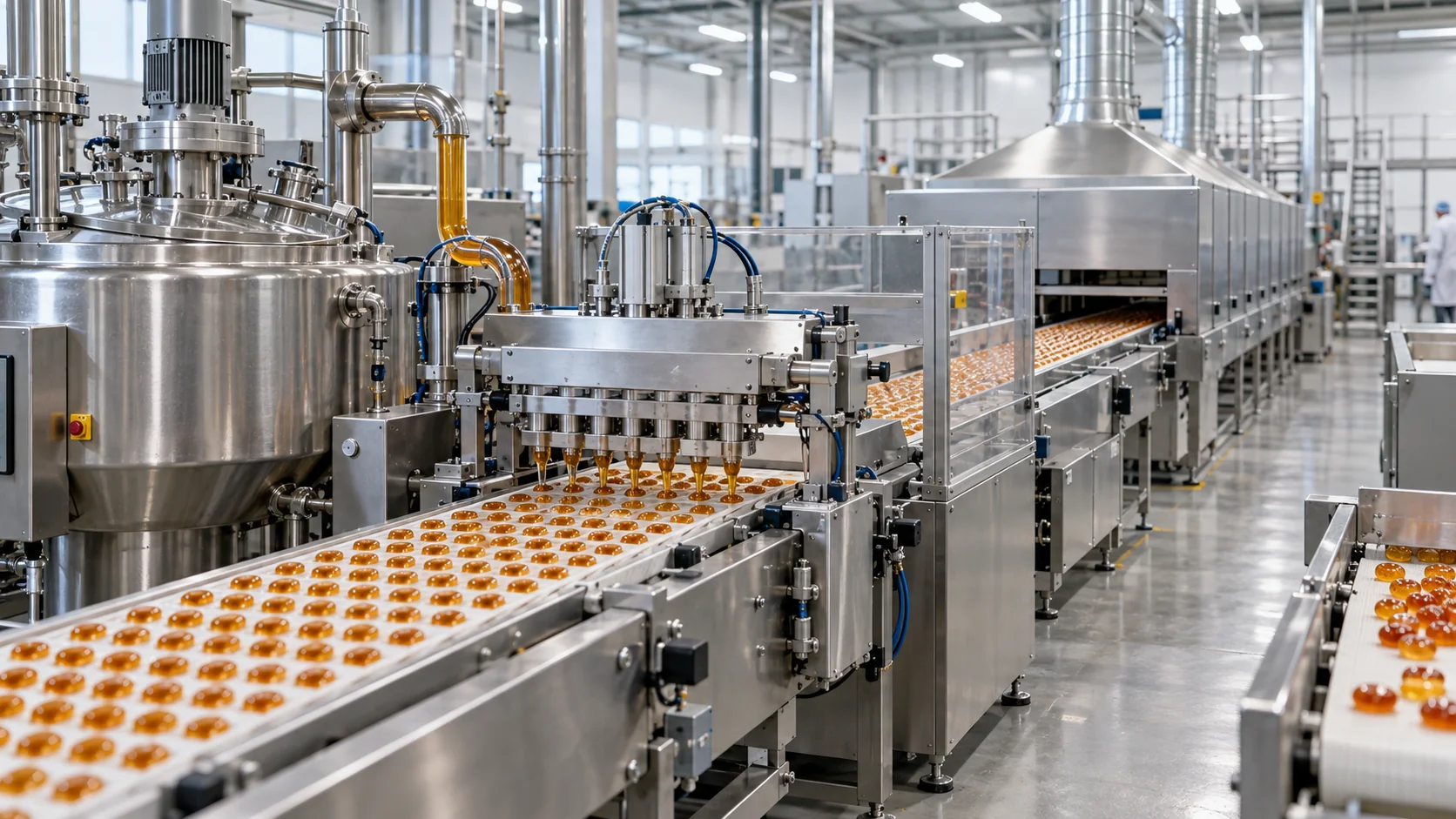
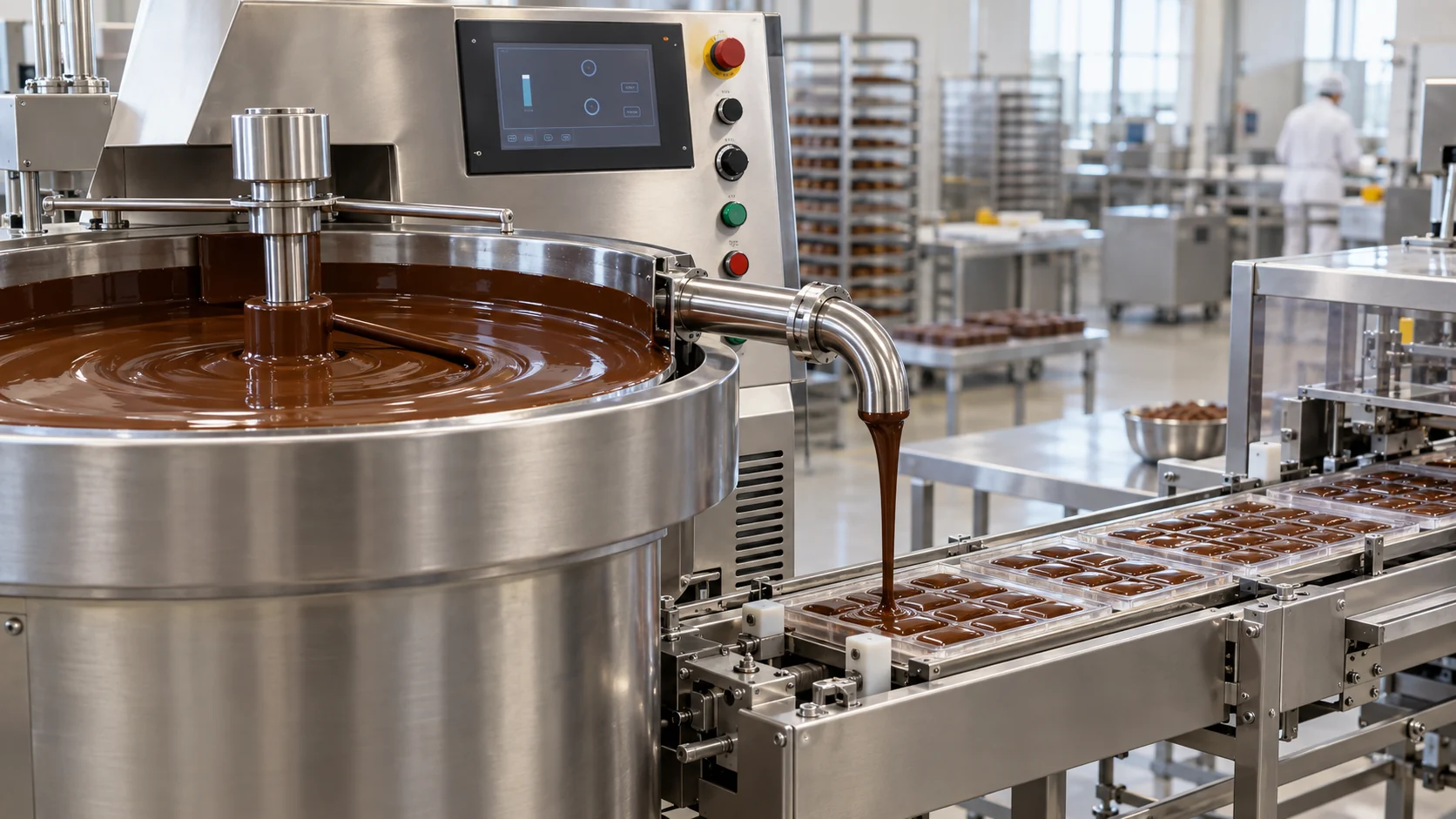
A commercial popping boba production line includes several integrated stages:
- Dissolving and mixing tanks with precision dosing — sodium alginate or calcium lactate is hydrated at controlled temperature (often 45–60°C for alginate dissolution, then cooled to 20–25°C before use). Concentration accuracy of ±0.02% is standard in professional settings.
- Multi-nozzle extrusion head or vibration plate — produces hundreds to thousands of droplets per second with consistent diameter. The vibration frequency of the plate determines the bead size; different plate configurations produce different standard sizes.
- Spherification bath system — maintained at a controlled temperature and alginate concentration, continuously recirculated to prevent concentration gradients that would cause batch-to-batch variation.
- Rinse station — removes residual alginate from the bead surface, preventing off-texture exterior.
- Syrup packing tank — finished beads are transferred into a preservation syrup (sugar solution with potassium sorbate and citric acid) that protects the shell during storage and contributes additional sweetness.
- Aseptic filling and sealing line — fills into consumer-format cups or pouches under controlled sanitary conditions.
Full production lines processing 200–500 kg/hour are well-established technology for standard fruit-juice boba. The entire sequence from raw ingredients to sealed, labeled product can run in under 2 hours for an optimized line.
Quality Control in Factory Production
Commercial producers monitor critical control points at every stage of the process:
- Alginate viscosity (measured by rotational viscometer before batch start) — this is the primary indicator of lot-to-lot variation in raw material quality
- Juice Brix — target range 55–75° Brix; outside this range, interior fluid stability and gel formation can be compromised
- pH of the juice blend — ideal range 3.5–4.5 for standard fruit-based formulations; deviating outside this window slows or disrupts the calcium-alginate reaction
- Shell thickness (destructive sampling) — random-sample beads are cut open and shell thickness measured against specification during production
- Burst test — a texture analyzer measures peak force at bead rupture; this single metric is the most predictive QC measurement for what consumers actually experience
Without these controls, popping boba quality varies dramatically from batch to batch — some beads tough and barely rupturing, others already collapsed. The consistency that makes commercial popping boba reliable is entirely a function of process discipline, not just ingredient quality.
How Home Kit Boba Differs
Home spherification kits replicate the same chemistry with significantly different practical limitations:
- Droplet size is inconsistent — hand-dropping with a spoon or eye dropper produces beads ranging from 6mm to 15mm in the same batch, meaning very different burst forces
- Alginate quality — consumer-grade sodium alginate varies more widely in viscosity and purity than food-manufacturing-grade product
- Basic spherification is the standard method — meaning the interior continues gelling over time; home-made beads should be consumed within 24–48 hours
- No practical preservation system — refrigeration is required, and microbial safety relies on rapid consumption
The chemistry is identical. The outcomes are not. For anyone evaluating commercial suppliers or equipment for popping boba production, this gap is important context.
Types of Popping Boba by Ingredient Profile
Not all popping boba products share the same formulation. Product types vary based on juice content, gelling agent choice, flavor system, and target application — and these differences matter for procurement, menu development, and manufacturing planning.
Fruit Juice Popping Boba
The category standard and the dominant product in bubble tea applications. The interior filling is primarily real fruit juice or juice concentrate at 30–60% of total formulation weight. Mango, strawberry, passion fruit, lychee, and blueberry are the global top sellers. The high juice content delivers the bright, recognizable burst that drives repeat consumption. These formulations also perform best in the pH 3.5–4.5 range where the alginate system is most reliable.
Sourcing note: the quality difference between juice-forward and syrup-forward formulations is immediately apparent in sensory testing. Juice-based boba releases real fruit flavor on burst. Syrup-based versions taste notably more artificial, even with high-quality flavoring compounds.
Syrup-Based Popping Boba
Here, the interior is flavored sugar syrup rather than juice. This enables a wider flavor range — including matcha, taro, caramel, brown sugar, and other non-fruit profiles that can’t be made from juice alone. Syrup-based boba also offers a longer practical shelf life because the higher sugar content (65–75° Brix) provides additional antimicrobial protection. The burst sensation differs slightly — syrup is more viscous, producing a slower-release, slightly richer mouth feel compared to the immediate, clean pop of a juice-based bead.
Specialty Variants in 2026
The popping boba category is diversifying rapidly. Currently commercializing in 2026:
- Alcohol-filled popping boba — wines, sake, spirits at 5–15% ABV, targeting adult beverage applications and cocktail garnish uses
- Yogurt or probiotic-filled boba — uses reverse spherification with heat-stabilized yogurt formulations; calcium lactate concentration must be adjusted to account for dairy’s natural buffering capacity
- Honey-filled boba — requires viscosity adjustment since honey’s high solids concentration can slow calcium ion diffusion during bead formation
- Vitamin and electrolyte-fortified boba — water-soluble vitamins (B-complex, C) or electrolytes dissolved in the juice base for functional beverage positioning
Nutritional Profile and Safety
Popping boba is a low-calorie topping in typical serving sizes. The nutritional profile varies by formulation, but some useful generalizations apply.
Calorie Count and Macros
A standard 30g serving of commercial fruit-juice popping boba contains approximately:
- Calories: 20–55 kcal (range driven by sugar content variation)
- Sugar: 5–13g
- Fat: 0g
- Protein: less than 0.5g
- Sodium: 10–30mg
- Dietary fiber: trace amounts (from alginate)
The primary caloric contribution is sucrose or glucose-fructose syrup. Sodium alginate itself contributes essentially zero calories — it’s a soluble dietary fiber that passes through the GI tract without metabolization. That said, popping boba is added to drinks and desserts that already contain significant sugar, so the cumulative caloric contribution of a full bubble tea order is considerably higher than the boba topping alone.
Food Additive Safety
Both key structural ingredients — sodium alginate (E401) and calcium chloride (E509) — are approved by food safety authorities across major global markets. Both are derived from natural sources: alginate from brown seaweed, calcium chloride from mineral sources. Their use in food manufacturing has a multi-decade safety record.
The Wikipedia article on popping boba confirms the spherification process uses these food-safe compounds, which are also used in cheese-making, canning (calcium chloride), and pharmaceutical applications.
Regarding allergens: popping boba in its standard formulation contains no common allergens — no gluten, dairy, eggs, nuts, soy, or shellfish. That said, manufacturers’ product labels should always be verified, as some flavored variants include dairy-based ingredients or use shared production lines with allergen-containing products.
Dietary Suitability
| Category | Standard Popping Boba | Notes |
|---|---|---|
| Vegan | ✅ Yes | No animal-derived ingredients in base formula |
| Vegetarian | ✅ Yes | — |
| Gluten-free | ✅ Yes | No starch in the formulation |
| Halal | ✅ Usually | Verify colorants and flavors with supplier |
| Kosher | ✅ Usually | Verify production facility certification |
| Nut-free | ✅ Yes | No nuts in standard formulation |
| Allergen note | ⚠️ Verify per product | Some cream/milk tea variants contain dairy |
Future Trends in Popping Boba (2026 & Beyond)
The global bubble tea market exceeded $4 billion USD in 2024 and continues to expand into South Asia, the Middle East, and Eastern Europe. Popping boba is one of the fastest-growing sub-categories within that market — driven by its high sensory differentiation and the visual appeal that drives social media sharing. Several trends are actively shaping what popping boba will be made of in the next few years.
Natural Ingredient Formulations
Consumer demand for clean-label products is driving active reformulation across the category. The transition is underway from artificial colorants (FD&C dyes) to natural alternatives — anthocyanins from purple sweet potato or elderberry, beta-carotene for orange/yellow, spirulina for blues and greens. On the preservation side, natural antimicrobials (nisin, rosemary extract, natamycin) are replacing potassium sorbate in premium-positioned products, though at significant cost premium.
The core gel chemistry — alginate plus calcium salt — is already inherently clean-label and natural-origin. The reformulation challenge is almost entirely in colorants and preservatives, not the structural ingredients.
Plant-Based and Functional Variants
The intersection of popping boba with functional food is the most commercially significant emerging trend. Current development directions include:
- Probiotic-encapsulated boba — engineering encapsulation-grade live cultures that survive through spherification and shelf life (this is a genuinely difficult formulation challenge — most probiotic strains are killed by the calcium salt concentrations used)
- Adaptogen-infused boba — ashwagandha, lion’s mane, and reishi extracts dissolved in the juice base for functional beverage positioning
- Electrolyte-loaded boba — sodium, potassium, and magnesium formulations targeting sports hydration applications
- Reduced-sugar and stevia-sweetened — responding to sugar-reduction mandates and consumer demand in premium markets
| Trend | Driver | Status in 2026 | Manufacturing Complexity |
|---|---|---|---|
| Natural colorants | Clean-label demand | Actively commercializing | Low |
| Probiotic boba | Functional food positioning | R&D / early commercial | Very high |
| Alcohol-filled boba | Adult beverage market | Commercializing | Medium |
| Reduced-sugar formulations | Health and regulatory pressure | Active in premium segment | Medium |
| Adaptogen-infused variants | Wellness positioning | R&D / pilot | Medium |
| Biodegradable packaging | Sustainability mandates | Pilot stage | Low |
The manufacturing challenge with functional variants is preserving the active ingredient through spherification and shelf life. Probiotic count, vitamin bioavailability, and CBD (in legal markets) all degrade under the processing conditions and during long storage. This requires significantly tighter formulation science and more sophisticated production monitoring than standard fruit-juice boba — and is where specialized manufacturing expertise creates a meaningful competitive advantage.
FAQ
What exactly is sodium alginate and is it safe to eat?
Sodium alginate is a natural polysaccharide extracted from brown seaweed. It is safe — it’s classified GRAS by the FDA and approved across the EU, UK, and most global markets under food additive code E401. It has been used in food manufacturing for decades and passes through the body as soluble dietary fiber without metabolization.
Does popping boba contain real fruit juice?
High-quality commercial popping boba uses real fruit juice or juice concentrate at 30–60% of the filling weight. Lower-cost formulations use primarily artificial flavors and colorants in a sugar syrup base. The ingredient label will clearly list “fruit juice” or “fruit juice concentrate” if real juice is present — if it lists only “natural flavors” or “artificial flavors,” the burst is flavored syrup rather than juice.
Is popping boba vegan?
Yes, in standard formulations. Sodium alginate is derived from seaweed, calcium chloride and calcium lactate are mineral-derived, and fruit juice is plant-based. No animal products are required in the base recipe. Specialty variants with dairy (cream, milk tea, yogurt-filled boba) are exceptions — check the product label.
How is popping boba different from regular tapioca boba?
Tapioca boba is made from cassava starch — cooked, shaped, and chewy. Popping boba is made from sodium alginate and a calcium salt. It has a thin gel shell and a liquid interior that bursts. The two products share almost no ingredients and no manufacturing process, despite both being called “boba.” The experience is entirely different: one is a solid chew, the other is a liquid burst.
Why does some popping boba lose its burst over time?
When calcium inside the interior juice continues to slowly crosslink the alginate shell after the bead is formed — a process called syneresis — the interior gradually gels rather than remaining fully liquid. This happens in poorly formulated products or those improperly sealed. Commercial producers control it with pH buffering, sealed packaging, and optimized preservation systems. A well-formulated commercial product maintains its burst for 12–18 months. Homemade boba made with basic spherification will start losing burst quality within 24–48 hours.
Can popping boba be made without sodium alginate?
Yes, with trade-offs. Agar-agar and carrageenan can form gel shells, but they tend to be more brittle and less elastic, which produces a sharper, less satisfying pop. Gellan gum is used in some specialty formulations. For industrial-scale production where shelf stability and consistent burst behavior are both required, sodium alginate remains the standard because no alternative combines its reactivity, GRAS status, and long shelf-life compatibility as efficiently.
How long does commercial popping boba last?
Properly packaged commercial popping boba has a shelf life of 12–18 months at room temperature in sealed containers. Refrigeration extends shelf life but is not required for most formulations. Once opened, the product should be refrigerated and consumed within 3–7 days. The primary shelf-life limiting factors are the preservation system (potassium sorbate concentration) and packaging integrity.
What equipment is needed to produce popping boba commercially?
The core equipment includes a precision mixing and dissolving system for sodium alginate and calcium lactate, a multi-nozzle extrusion or vibration-plate bead former, a spherification bath with temperature and concentration control, a rinsing station, and an aseptic filling line. Full production lines range from semi-automated systems at 20–50 kg/hour (suited for small-scale or specialty production) to fully automated lines capable of 300–500 kg/hour. The specific equipment configuration depends on target output volume, bead diameter specification, and the range of formulations the line needs to run.
Conclusion
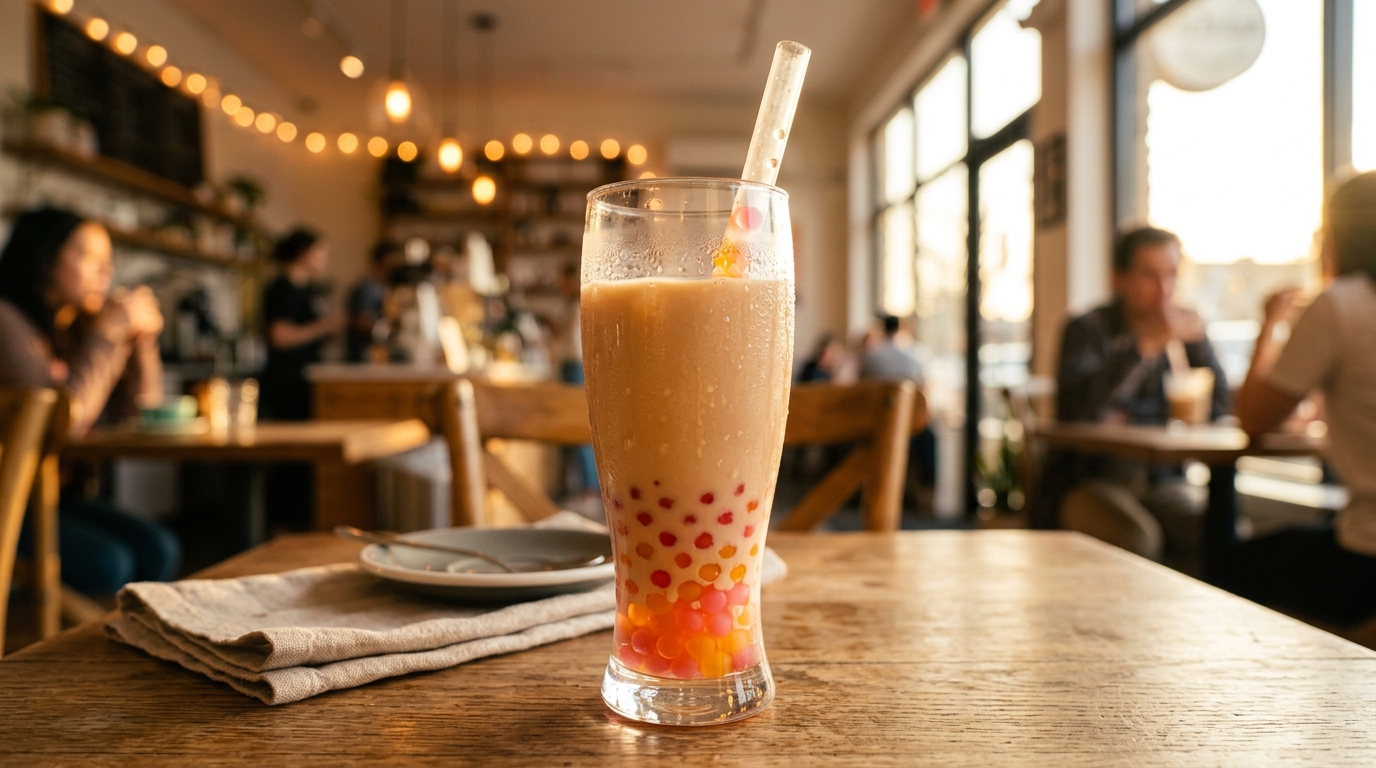
Popping boba is made of a small, precise set of ingredients — sodium alginate, a calcium salt, fruit juice, water, sugar, and a handful of additives. The sensory magic is almost entirely a product of how those ingredients interact chemically. The spherification reaction creates a gel shell that contains liquid under pressure and releases it the instant that shell is punctured. That’s food chemistry in direct service of a consumer experience.
For anyone involved in confectionery manufacturing — whether evaluating production equipment, developing new formulations, or sourcing commercial popping boba — the deeper lesson is in process control. The ingredients are widely available and the chemistry is well-understood. What separates high-quality, shelf-stable popping boba from inconsistent product is formulation discipline: exact alginate and calcium concentrations, controlled pH, precise reaction timing, and a reliable preservation system. Those variables determine whether every bead in a consumer cup delivers the same satisfying burst or produces an unpredictable range from barely-popping to already-gelled.
As the category continues to grow — into functional variants, natural-ingredient reformulations, and specialty applications — the manufacturers with the tightest process control will capture the most defensible positions. The ingredients are almost secondary to the engineering.
Related Articles
- How do I choose the right gummy manufacturing machine for my business?
- How do gummy manufacturing machines ensure food safety standards are met?
- Haribo Gummy Bears Ingredients: Complete Breakdown & Manufacturing Guide
- Strawberry Gummies: Complete Guide to Ingredients, Manufacturing & Market Opportunities
- Popping Boba Production Line
- Konjac Pearl Making Machine
- How Are Skittles Made? The Full Factory Process