Lowest Calorie Candies: The Complete Guide for 2026
The lowest calorie candies are hard candies (10–15 calories each), sugar-free gummies (5–15 calories each), and compressed sugar mints — most containing under 100 calories per serving when portioned correctly.
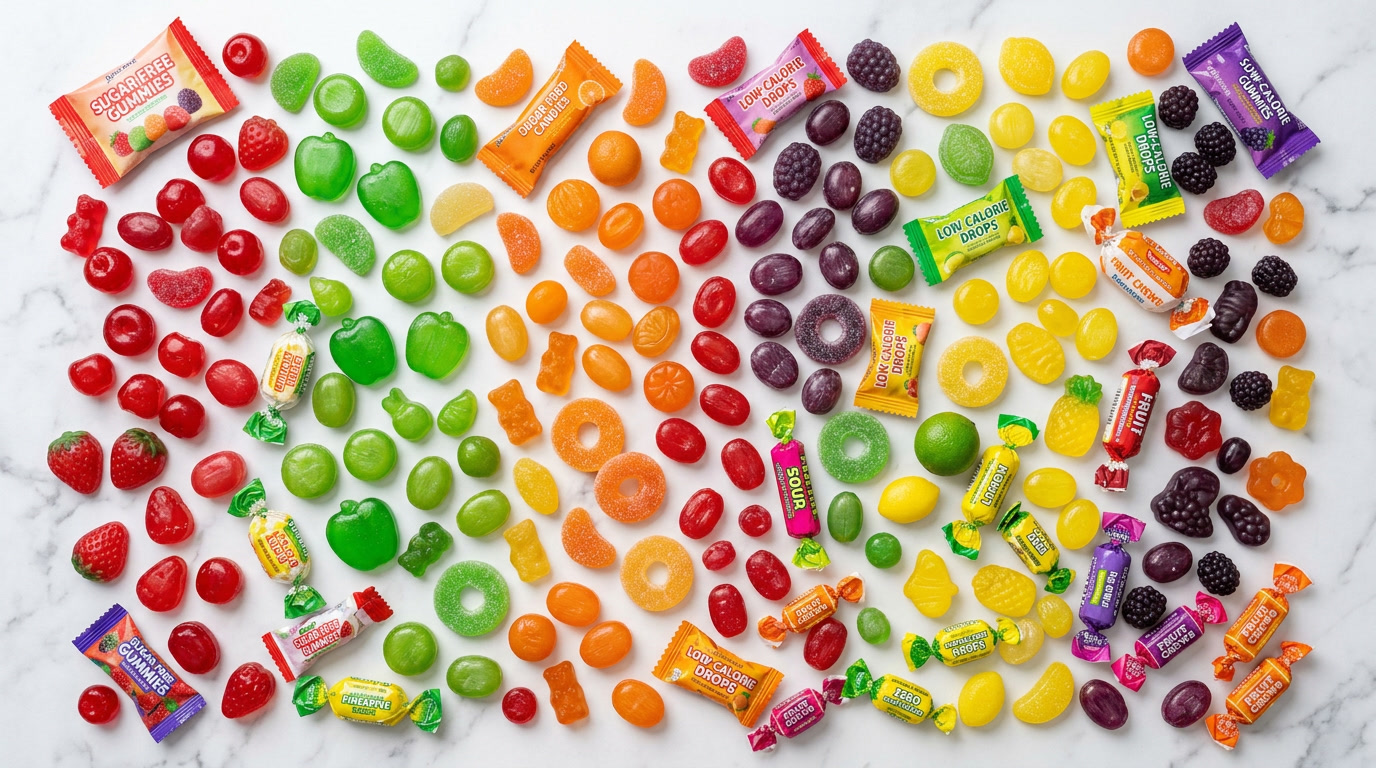
You’re halfway through a diet and the sugar craving hits like a freight train. The candy aisle suddenly looks like enemy territory — but it doesn’t have to be. The truth most guides skip: calorie counts across candy types vary by a factor of 10, and knowing which category to reach for is the difference between a 15-calorie treat and a 250-calorie setback.
This guide breaks down the lowest calorie candies by category, explains the science behind why some candies pack far fewer calories than others, and gives you a practical framework for satisfying cravings without blowing your daily targets.
What Are the Lowest Calorie Candies?
The lowest calorie candies are those with the smallest ratio of calories to volume — achieved through air incorporation, sugar substitutes, reduced fat content, or simply small serving sizes with intense flavor.
Most candy calories come from three macronutrients: sugars (4 cal/g), fats (9 cal/g), and to a lesser extent, starches (4 cal/g). Chocolate and caramel-based candies are calorie-dense because they combine sugars AND fats. Hard candies and gummies are lower because they contain almost no fat — their calories come almost entirely from sugar or sugar substitutes.
According to data published by the USDA FoodData Central, standard hard candy averages 60–70 calories per ounce, while chocolate-covered caramels can hit 140–160 calories per ounce — more than double.
Calorie Drivers in Candy
Three factors determine how calorie-dense a candy is:
- Fat content — The single biggest driver. Fat has 9 cal/g vs. sugar’s 4 cal/g. Any candy with chocolate, butter, or cream is automatically higher calorie.
- Water activity — Gummies and jellied candies retain moisture, which adds weight without adding calories. A 30g serving of gummies may have 20+ grams of water.
- Sweetener type — Sugar-free candies swap sucrose for erythritol, xylitol, or stevia. Erythritol, for example, contributes virtually 0 calories despite tasting sweet.
The Calorie Range: What to Expect
| Candy Category | Calories per Piece | Calories per Ounce |
|---|---|---|
| Hard candy (standard) | 10–15 | 60–70 |
| Sugar-free hard candy | 5–10 | 25–40 |
| Gummy bears (standard) | 8–12 | 80–90 |
| Sugar-free gummies | 5–15 | 40–60 |
| Fruit chews (Starburst-style) | 20–25 | 100–110 |
| Chocolate bars (milk) | 25–35 per square | 145–155 |
| Caramel chews | 35–45 | 120–135 |
| Peanut butter cups | 90–110 per cup | 160–175 |
The gap is dramatic. Reach for a sugar-free hard candy instead of a peanut butter cup and you’ve cut calorie exposure by 90% while still satisfying a sweet craving.
Types of Low Calorie Candies
Different candy formats achieve low calorie counts through different mechanisms. Understanding each type helps you choose wisely based on your taste preferences and dietary constraints.

Hard Candies
Hard candies are the classic go-to for dieters, and for good reason. A single Werther’s Original contains about 23 calories. A standard Jolly Rancher runs 23 calories per piece. Life Savers hard candies clock in at just 15 calories each — one of the lowest figures you’ll find in any non-sugar-free candy.
The mechanism is simple: hard candy is essentially crystallized sugar dissolved in water, with no fat whatsoever. The slow-dissolving nature also works in your favor psychologically — it takes 5–10 minutes to finish one piece, which can interrupt craving cycles before they escalate.
Sugar-free variants (sweetened with isomalt or sorbitol) drop to 5–10 calories per piece. The Werther’s Sugar Free line, for example, runs 8 calories per candy.
What to watch: hard candies have a high sugar-per-calorie ratio, meaning they can spike blood glucose quickly despite the low absolute calorie count. If you’re managing blood sugar alongside weight, the sugar-free versions are worth the switch.
Sugar-Free Gummies
Sugar-free gummies have quietly become one of the most popular lowest calorie candies options — especially among gym-goers who want something with texture. Brands like SmartSweets and Lily’s have built entire product lines around this insight.
SmartSweets Gummy Bears contain 90 calories per 50g bag — that’s the whole bag, not one serving. Per gummy, that’s roughly 5–7 calories. The sweetening comes from stevia and allulose, both of which contribute negligible calories.
A note on digestive tolerance: many sugar-free gummies use maltitol or sorbitol as bulking agents. These sugar alcohols pass through the gut largely undigested, which is why some gummies carry the warning “excess consumption may cause laxative effects.” Erythritol-based gummies (like those from SmartSweets) are generally better tolerated.
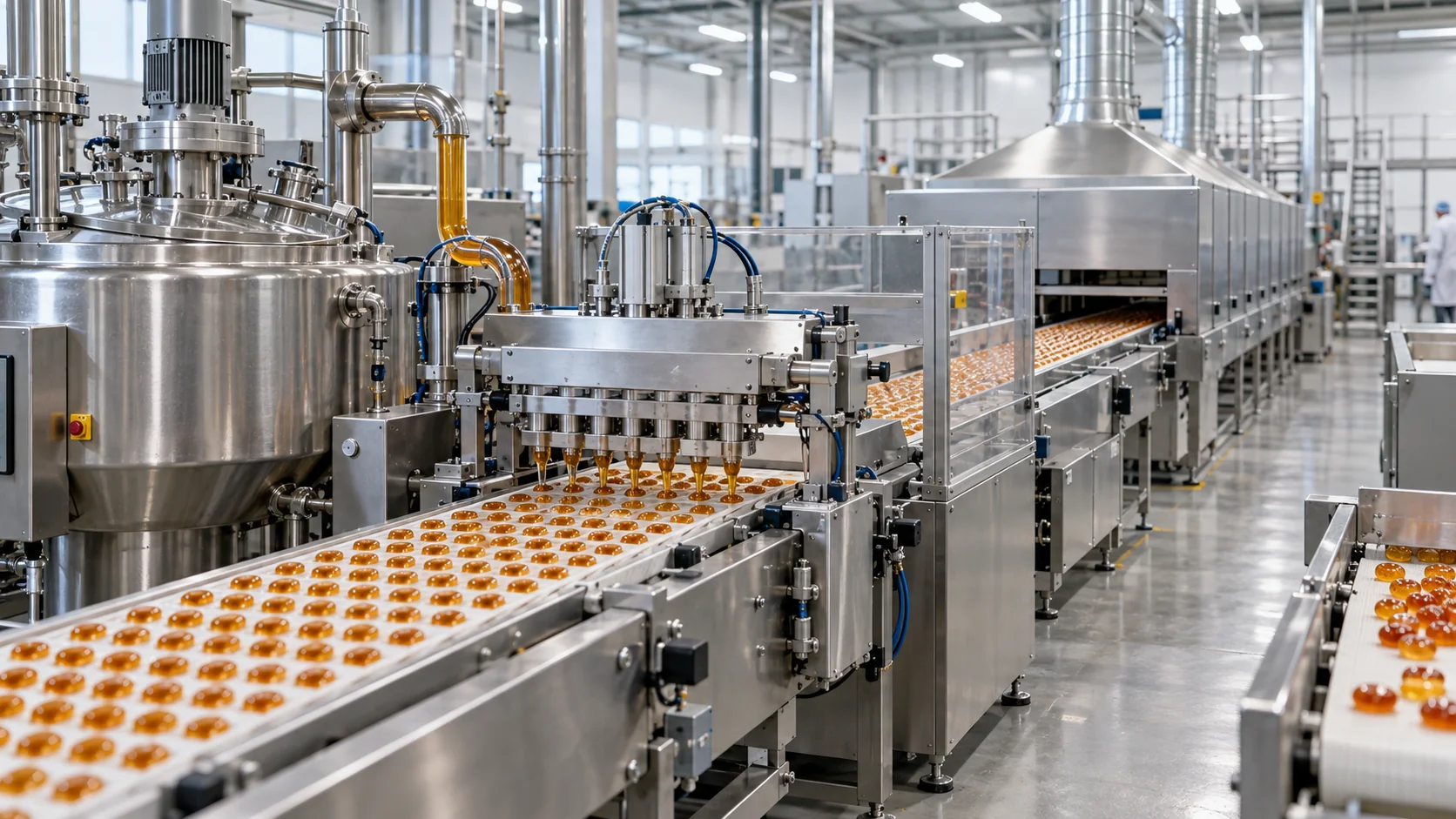
For gummy candy production at scale, achieving this texture-without-sugar balance requires precise control of the gelling agent-to-sweetener ratio — something that confectionery equipment engineers have refined considerably over the past decade as demand for reduced-sugar formats has grown.
Lollipops and Suckers
Lollipops occupy a unique space in the lowest calorie candies ranking. Because they’re portion-controlled by design (one stick = one unit) and take time to consume, they’re psychologically effective at managing sweet cravings.
A standard Dum Dum lollipop: 25 calories. A Tootsie Pop: 60 calories (it has a chocolate center). YumEarth organic pops run about 30 calories each.
Chupa Chups, one of the world’s best-selling lollipop brands, runs 40–45 calories for their standard size — still well under 100 calories.
Compressed Mints and Breath Mints
This is the often-overlooked category. Altoids Mints contain just 1.5 calories per mint. Tic Tacs are famously marketed at under 2 calories per piece (though the serving size of “1 piece” is technically 1.9 calories — they round down). Breath Savers contain 5 calories per mint.
Mints don’t feel like candy to most people, but they trigger the same sweet/cool flavor receptors and can break a craving cycle effectively. If you’re serious about lowest calorie candies, mints are arguably the best-in-class option.
Sour Candies
Sour candies deserve their own entry because they’re surprisingly competitive on calories despite their intense flavor. The sourness comes from acids (citric, malic, tartaric) which add negligible calories. Trolli Sour Brite Crawlers run about 110 calories per 40g serving — higher than hard candy but lower than chocolate.
Warheads Extreme Sour hard candies: 25 calories per piece. The intensity of sour flavor means you’re unlikely to eat more than 2–3 at a sitting, making effective calorie exposure lower than the per-piece number suggests.
Lowest Calorie Candies for Weight Loss
For weight loss specifically, candy selection isn’t just about the per-piece calorie count — it’s about satiation efficiency: how long the candy suppresses the craving per calorie spent.

Ranking by Satiation Efficiency
Not all low-calorie candies are equal in how long they keep cravings at bay. Here’s a practical ranking:
| Candy | Calories | Avg. Eating Time | Satiation Score |
|---|---|---|---|
| Sugar-free hard candy | 8 | 8–10 min | ⭐⭐⭐⭐⭐ |
| Lollipop (standard) | 25–40 | 12–15 min | ⭐⭐⭐⭐ |
| Sugar-free gummies (5 pieces) | 25–35 | 5–7 min | ⭐⭐⭐ |
| Breath mints (2–3 pieces) | 4–10 | 3–5 min | ⭐⭐ |
| Fruit chews (3 pieces) | 60–75 | 2–3 min | ⭐⭐ |
For weight loss, the calculus favors slow-dissolving formats. A sugar-free hard candy takes 8–10 minutes to finish. That’s 10 minutes of sweet satisfaction for under 10 calories — an extremely efficient trade.
Calorie Budget Framework
If you’re working with a 1,500–2,000 calorie daily budget and want to include candy:
- Under 50 cal/day candy allowance → stick to 3–5 sugar-free mints or 1–2 sugar-free hard candies
- 50–100 cal/day allowance → a full lollipop, 5–6 hard candies, or half a bag of SmartSweets
- 100–150 cal/day allowance → a SmartSweets full bag, 8–10 standard gummies, or a small handful of Starbursts (2–3 pieces)
The practical insight: setting a daily candy allowance and choosing high-satiation formats within it is far more sustainable than blanket candy avoidance, which tends to trigger bingeing.
What About Natural Candy?
Fruit-based candies (dried fruit, fruit leather) often get labeled as “healthy” but aren’t necessarily low calorie. Dried mango runs 330 calories per 100g. Fruit leather (like Stretch Island) is about 45–50 calories per strip — respectable, but not dramatically lower than conventional candy for the same serving size.
The advantage of fruit-based candy is nutrient density — vitamins, fiber, potassium — not calorie reduction.
Lowest Calorie Candy at the Movies
Movie theater candy is a unique challenge: the serving sizes are enormous by design, and the packages feel like single servings even though they contain 3–5 “official” servings.
A standard movie theater box of Raisinets (3.5 oz): 380 calories. A box of M&Ms: 480 calories. A bag of Twizzlers: 270 calories. Red Vines pull-apart candy: 200 calories for a 2.5 oz bag.
The Movie Theater Lowest Calorie Candies Ranking
| Theater Candy | Package Size | Total Calories | Per Piece |
|---|---|---|---|
| Twizzlers (small box) | 2.5 oz | 130–150 | 30 |
| Red Vines | 2.5 oz | 200 | 20–25 |
| Junior Mints | 3 oz box | 320 | ~12 |
| Raisinets | 3.5 oz | 380 | ~7 |
| M&Ms | 3.1 oz | 480 | ~10 |
| Reese’s Pieces | 3.4 oz | 510 | ~9 |
| Butterfinger BBs | 3 oz | 430 | ~12 |
The real danger at the movies isn’t any individual candy’s calorie density — it’s mindless consumption during a 2-hour film. A small box of Junior Mints seems manageable (320 cal total) but eaten piece by piece over a movie, it goes fast.
The lowest calorie movie theater strategy: get a smaller box, eat slowly, and consider smuggling in your own sugar-free hard candies (15–25 calories total for a pocket full).
How Confectionery Manufacturers Reduce Calories
Understanding how low-calorie candy is actually made gives you a better framework for reading labels and evaluating new products. This is where the production side matters.
Sugar Replacement Technologies
The confectionery industry has developed several approaches to calorie reduction:
Bulking agents: Polyols like erythritol (0 cal/g), sorbitol (2.6 cal/g), and maltitol (2.1 cal/g) replace sucrose (4 cal/g) in bulk while maintaining texture. Erythritol is the cleanest option — it’s not fermented by gut bacteria, so it doesn’t cause digestive distress the way maltitol can.
High-intensity sweeteners: Stevia, sucralose, and monk fruit provide sweetness at 0 calories but can’t replace sugar’s structural role in candy. They’re typically used in combination with a bulking agent — stevia provides the sweet note while erythritol provides the mass and texture.
Aeration: Incorporating air into candy reduces calorie density per volume without changing the surface area or apparent size. Aero chocolate bars and mousse-filled chocolates use this technique. A standard chocolate bar that’s 30% air has 30% fewer calories per piece of the same size.
According to research published by the Institute of Food Technologists, consumer acceptance of sugar-reduced candies has improved significantly over the past decade as sweetener technology has advanced — the “chemical aftertaste” complaint that plagued early stevia formulations is largely resolved in modern products.
Why Gummy Candy Is Easier to Reformulate
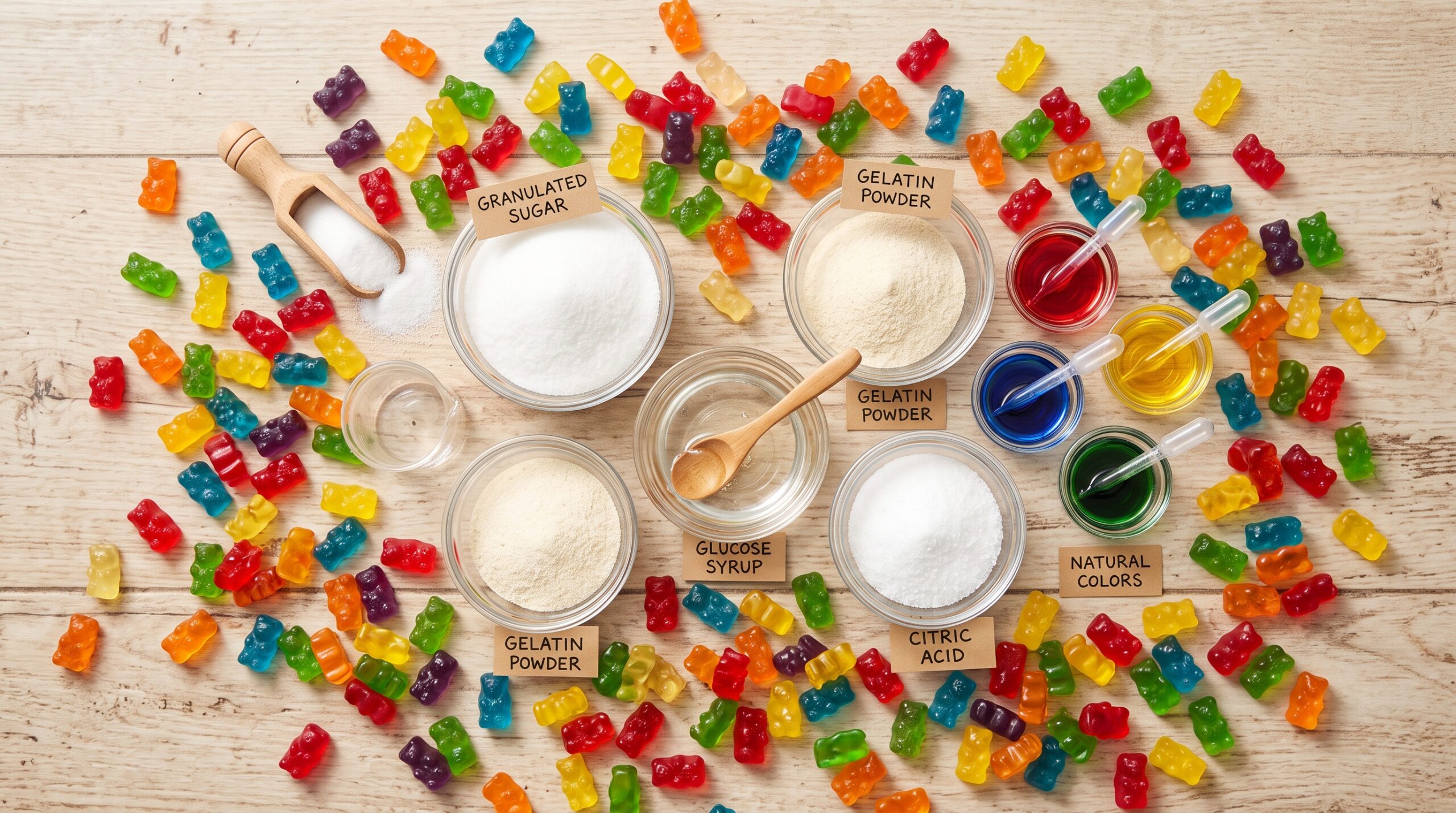
Gummy candy is particularly amenable to calorie reduction because its texture comes from gelatin (or pectin) — not from sugar. The gelatin provides structure; sugar historically provided sweetness AND bulk. When you replace the sugar with erythritol + stevia, the gelatin scaffold still holds.
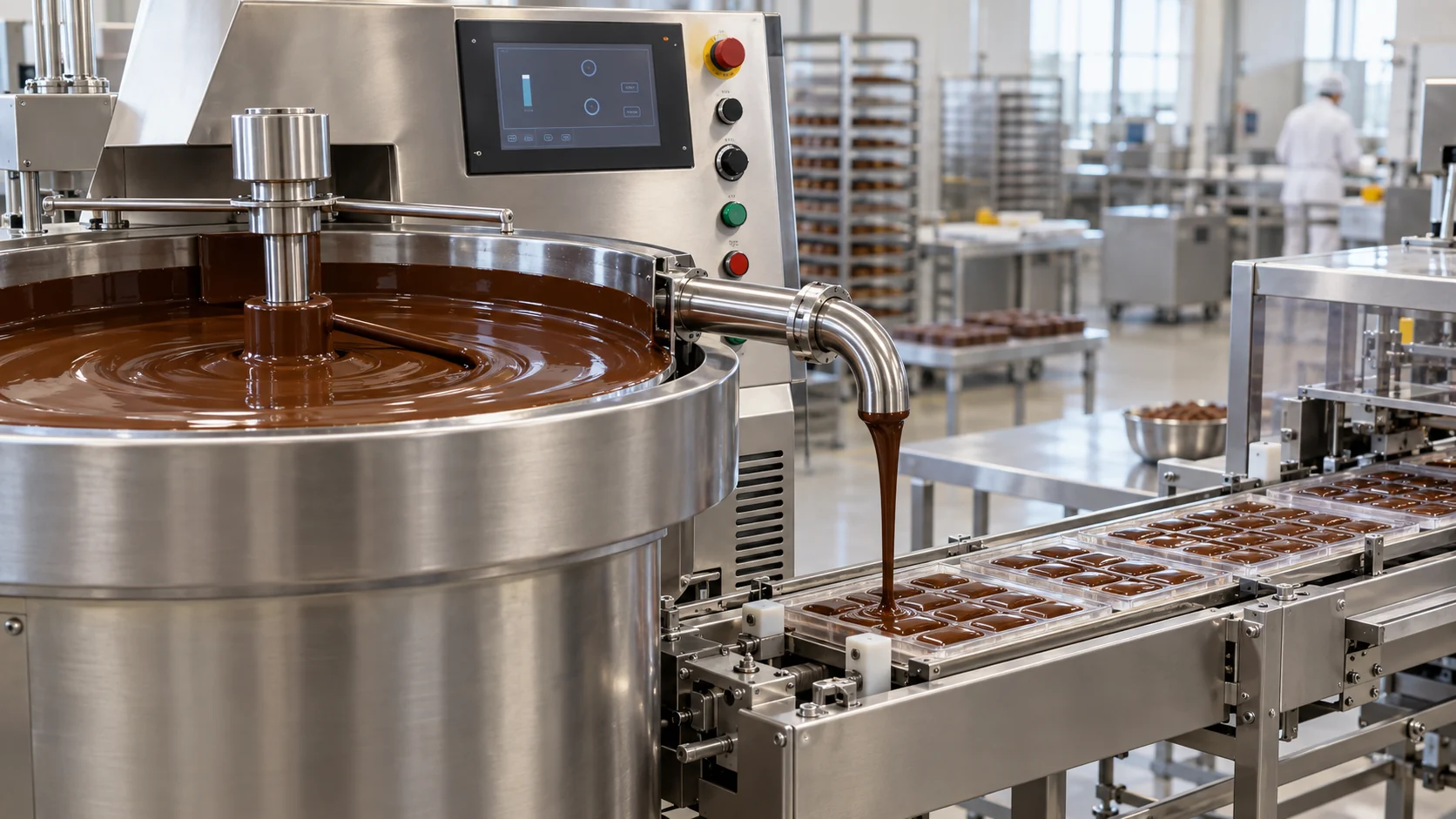
This is why the sugar-free gummy category has exploded: the product still looks, feels, and chews like a gummy. The reformulation is almost invisible to the consumer. Chocolate reformulation is harder because fat is integral to texture and mouthfeel, and fat carries calories that can’t be easily swapped.
Future Trends in Low Calorie Candy (2026 and Beyond)
The candy industry’s shift toward lower-calorie formats is accelerating. Several trends are worth understanding if you’re either a consumer trying to stay ahead of new product launches or a manufacturer evaluating your product development roadmap.
Allulose: The Emerging Game-Changer
Allulose is a rare sugar that occurs naturally in small quantities in figs and raisins. It tastes virtually identical to sucrose but is metabolized differently — roughly 90% is absorbed in the small intestine and excreted in urine without contributing calories. The FDA has approved allulose to be listed as 0.4 cal/g (vs. sucrose’s 4 cal/g).
For candy manufacturers, allulose is exciting because it caramelizes like sugar — something erythritol doesn’t do. This means caramel candies, toffees, and pralines can now be made with dramatically reduced calorie content while maintaining authentic flavor profiles. Expect to see allulose-based caramels and toffees entering mainstream candy aisles by 2025–2026.
The Harvard T.H. Chan School of Public Health has noted allulose’s potential in reducing glycemic impact, though longer-term studies on its metabolic effects are still ongoing.
Personalized Candy Dosing
Smart packaging technology is enabling “precision snacking” — packages designed so that a defined number of pieces (say, 10 gummies) is clearly a single serving, with portion indicators built into the package architecture. This doesn’t change the candy itself but changes consumption behavior.
Research from the packaging industry suggests that visible portion cues can reduce consumption by 15–25% without any change in formulation.
Plant-Based and Functional Ingredients
The next wave of low-calorie candies won’t just be calorie-reduced — they’ll aim to be calorie-reduced AND nutrient-positive. Think gummies fortified with collagen peptides, vitamin D, or probiotics. The calorie count stays low while the product justifies a health positioning.
Frequently Asked Questions
What is the absolute lowest calorie candy?
The lowest calorie individual candy is a breath mint — Altoids mints run 1.5 calories per piece, and Tic Tacs are officially under 2 calories. Among “candy” in the traditional sense (something you’d buy as a treat), sugar-free hard candies at 5–8 calories per piece are the practical lowest. A full pocket’s worth is still under 50 calories.
Are sugar-free candies actually lower in calories?
Yes, though not always dramatically so. Sugar-free hard candies typically run 5–10 calories vs. 15–23 for standard hard candy. The bigger benefit of sugar-free is glycemic impact — they don’t spike blood glucose the same way. For total calorie reduction, both matter; for blood sugar management, the “sugar-free” label is more meaningful.
What are the lowest calorie gummy candies?
SmartSweets Gummy Bears (90 cal/bag) and Lily’s Gummy Bears (60 cal/bag) are the market leaders. Per piece, they run 5–7 calories each. Standard Haribo Gold-Bears run about 8–10 calories per piece — so the sugar-free versions aren’t dramatically lower per gummy, but they’re significantly lower per gram and have better glycemic profiles.
What candy can I eat at the movies without breaking my diet?
Twizzlers (30 cal/piece) and Red Vines (20–25 cal/piece) are the best theater options — they’re large, take time to chew, and are fat-free. Junior Mints are another reasonable choice at ~12 cal/piece, though the box is usually 3+ servings. The best strategy: bring your own sugar-free hard candies. A dozen pieces = under 100 calories for the whole film.
How many calories are in Jolly Ranchers?
A standard Jolly Rancher hard candy contains 23 calories per piece. Jolly Rancher Gummies run higher — about 100 calories per 28g serving (roughly 7–8 gummies). The hard candy version is significantly more calorie-efficient per unit of sweet satisfaction.
Can candy fit into a weight loss diet?
Yes — strategically. The key is treating candy as a planned allowance rather than an impulse decision. Setting a daily 50–100 calorie candy budget and choosing high-satiation formats (slow-dissolving hard candy, lollipops) allows you to manage cravings without triggering the deprivation-binge cycle that derails many weight loss efforts.
What’s the difference between “sugar-free” and “reduced sugar” candy?
“Sugar-free” means less than 0.5g of sugar per serving — the product uses sugar substitutes for sweetness. “Reduced sugar” means the product has at least 25% less sugar than the reference product. Reduced-sugar candy often still contains significant calories; the sugar has simply been partially cut. Sugar-free candy typically has the larger calorie reduction.
Are sour candies lower in calories than regular candy?
Not inherently — the sourness comes from acids, which add minimal calories, but the candy base (sugar, pectin, glucose syrup) is similar to non-sour candy. However, the intensity of sour candy tends to limit how many pieces you eat per sitting, which lowers effective calorie consumption. Warheads Extreme Sour Hard Candy (25 cal/piece) is one of the better options in this category.

Conclusion
The lowest calorie candies — hard candies, sugar-free gummies, mints, and sour candies — give you real options for satisfying sweet cravings without major calorie impact. The range across candy types is dramatic: a breath mint at 1.5 calories versus a peanut butter cup at 100+. The science behind that gap comes down to fat content, sweetener type, and whether the product uses water or air to add volume without calories.
For practical use: stock your desk or pantry with sugar-free hard candies or a pack of sugar-free mints. Set a daily candy budget in your calorie tracker. Choose slow-dissolving formats over chewy ones. And at the movies, reach for Twizzlers or Red Vines — or bring your own sugar-free options. You don’t have to give up candy to maintain a healthy diet; you just have to be strategic about which candies you reach for.
Related Articles
- Lowest Calorie Candy: The Complete 2026 Guide to Guilt-Free Sweets
- How Many Calories in a Boba? Complete 2026 Calorie Guide
- Low Calorie Candy: The Complete 2026 Guide to Guilt-Free Sweet Treats That Actually Taste Good
- Master the Sugar Cooking Process: From Soft Caramels to Hard Candies
- Gummy Candy Production Line
- Are Skittles Dairy Free? Complete Ingredient Guide
- Are Skittles Gluten Free? Complete Guide 2026