Short answer: Traditional marshmallows are made from sugar, corn syrup or glucose syrup, water, gelatin, and air. Flavoring and color vary by product. A light coating of starch, powdered sugar, or a similar dry blend helps the finished pieces stay separate. The recipe changes when a manufacturer needs a different bite, shape, shelf life, or gelatin-free formula.
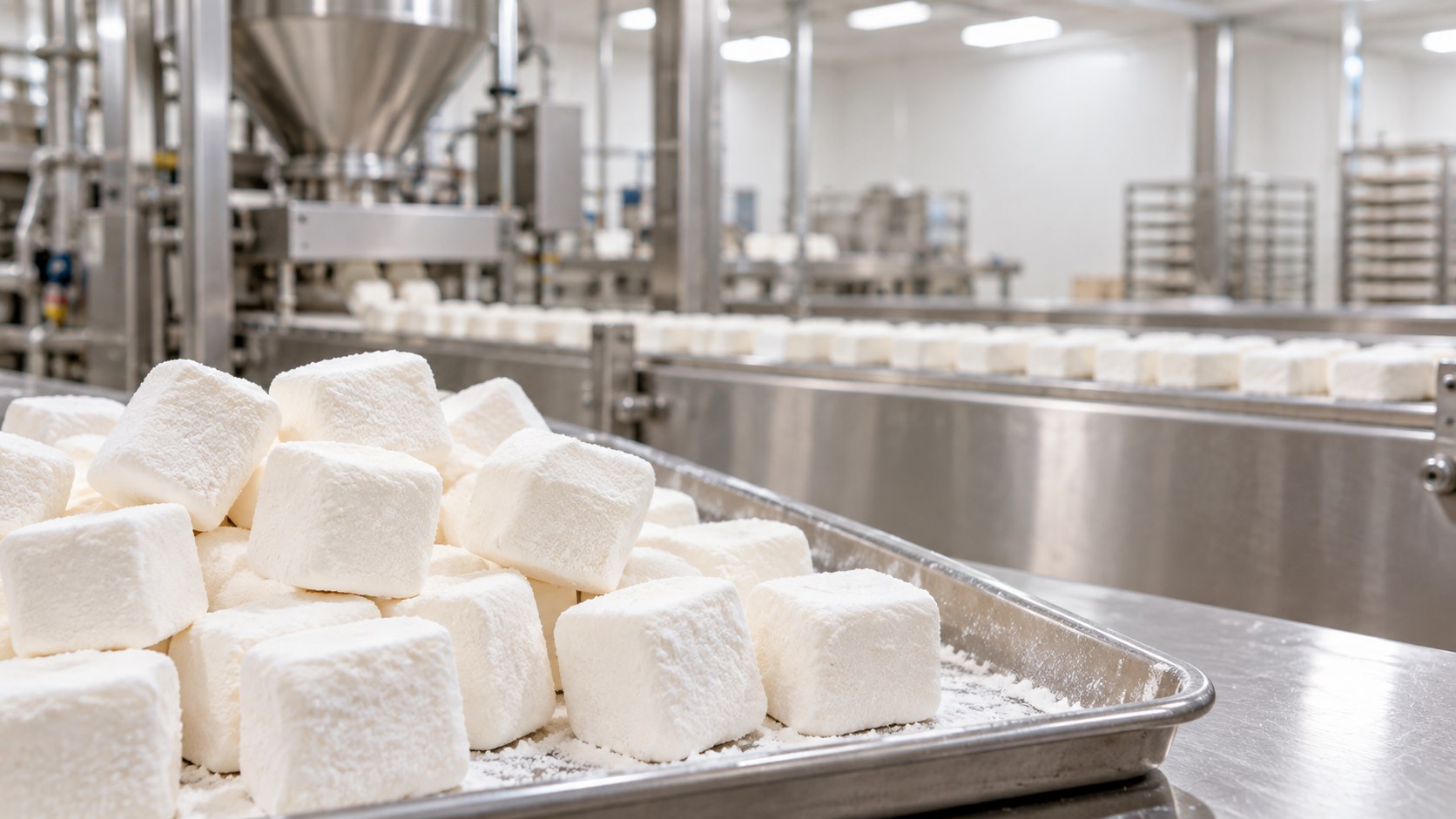
The familiar white cube is a food-science problem in disguise. Sugar gives the product its solids and sweetness. Syrup helps manage the sugar system. Gelatin or another setting system gives the foam enough structure to hold its shape. Whipping adds the air that makes a marshmallow light instead of dense.
What are marshmallows made of?
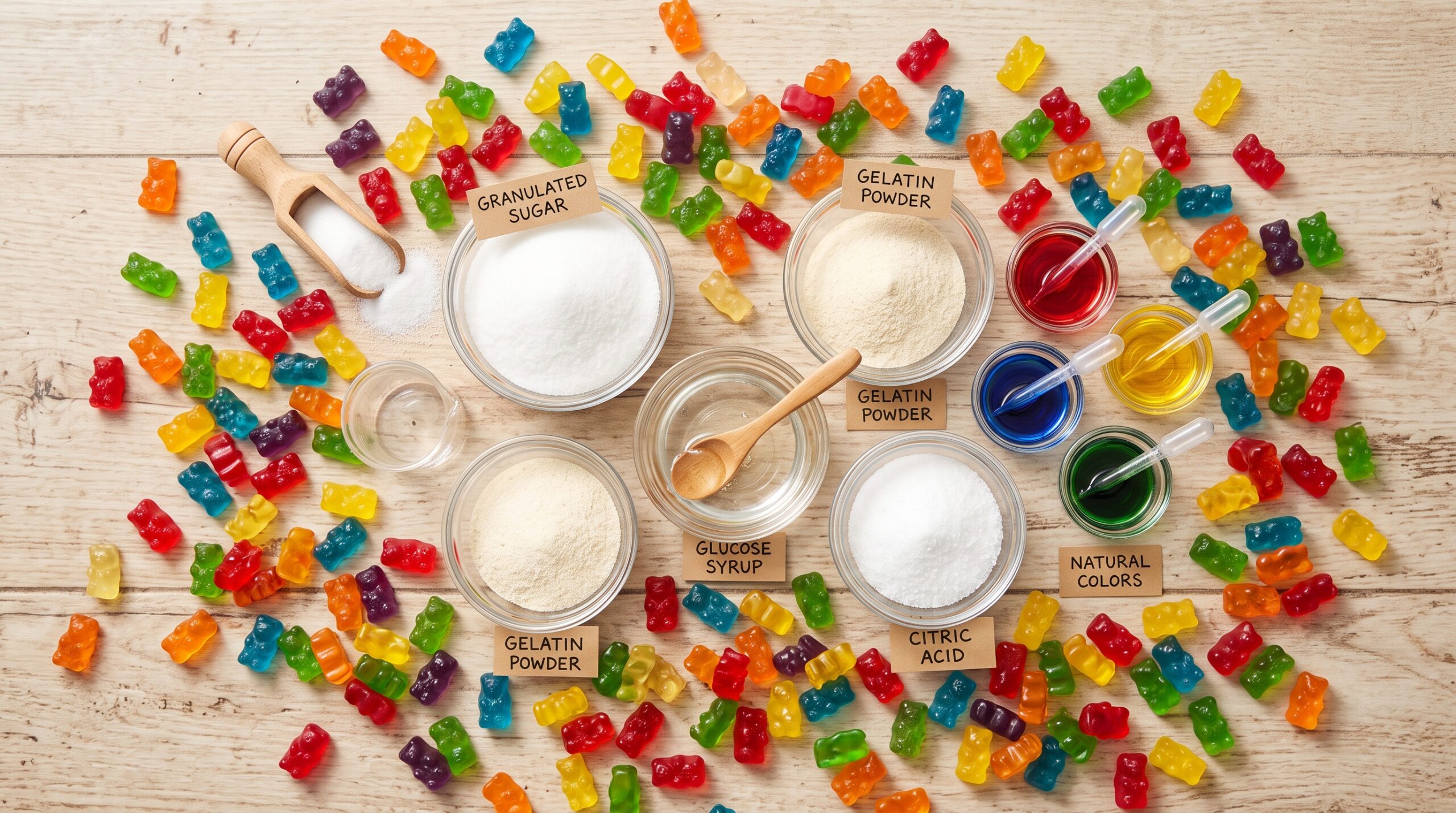
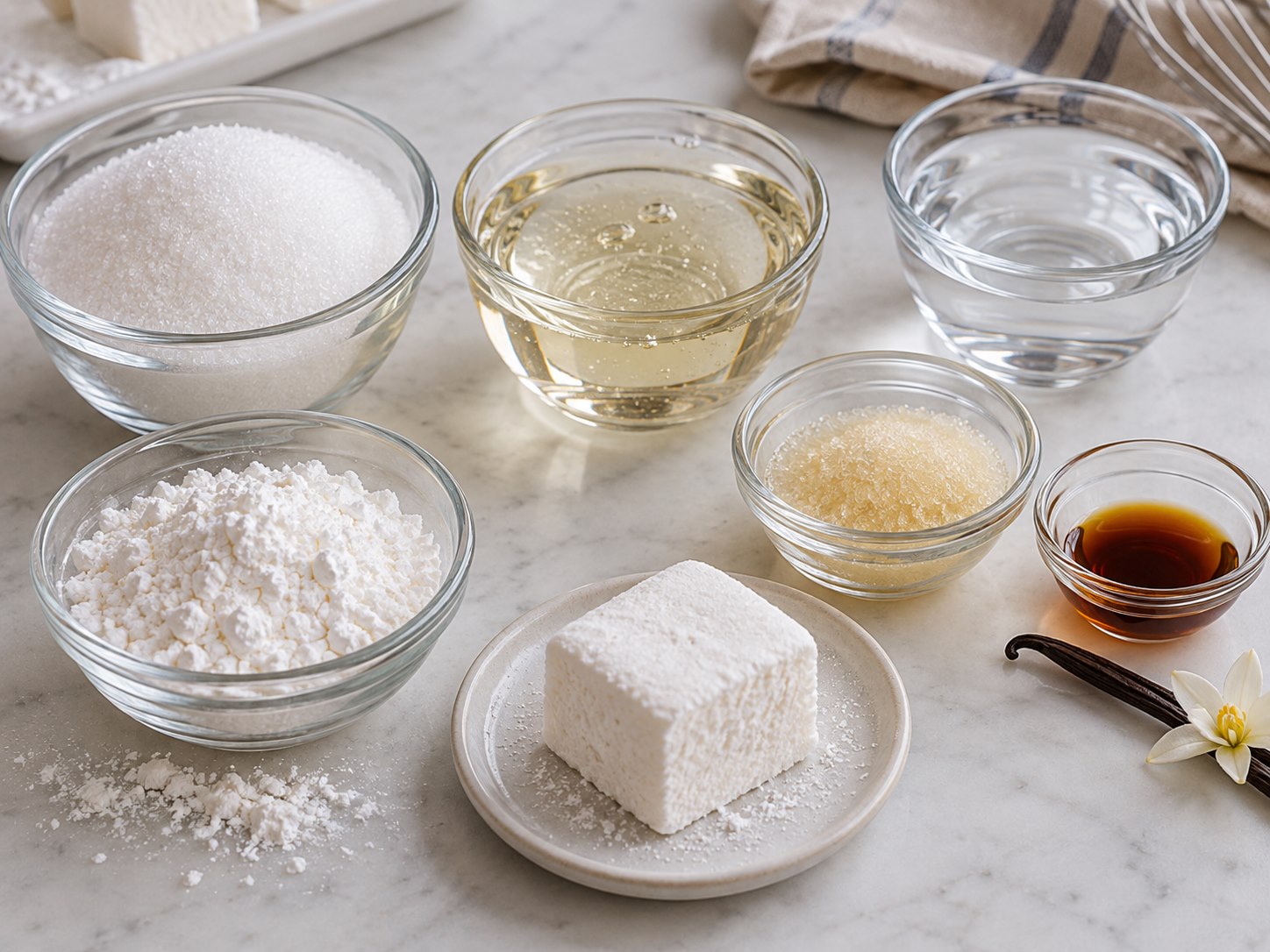
Most modern marshmallows use a short ingredient list, but the ingredients do several jobs at once. This ingredient map describes the usual roles rather than one universal formula. Commercial recipes differ by country, label requirements, flavor, shape, and process.
| Ingredient or component | What it does | What changes when it changes |
|---|---|---|
| Sugar | Provides sweetness and much of the finished candy’s solid structure. | The balance affects sweetness, firmness, moisture, and the risk of a gritty texture. |
| Corn syrup or glucose syrup | Works with sugar during cooking and helps control crystallization. | The syrup system affects softness, chew, stickiness, and how the mass behaves during forming. |
| Water | Dissolves the sugar and hydrates the setting agent before part of it leaves during cooking and whipping. | Too little or too much available water changes viscosity, density, and set. |
| Gelatin or another setting system | Helps stabilize the air cells and gives the foam a springy body. | The type and level change bite, heat response, dietary labeling, and process conditions. |
| Air | Creates the fine foam that makes marshmallows light and compressible. | Cell size and total aeration change density, softness, and how evenly pieces cut. |
| Flavor and color | Defines the sensory profile and appearance. | Liquid additions can change viscosity, color, and the amount of mixing the formula needs. |
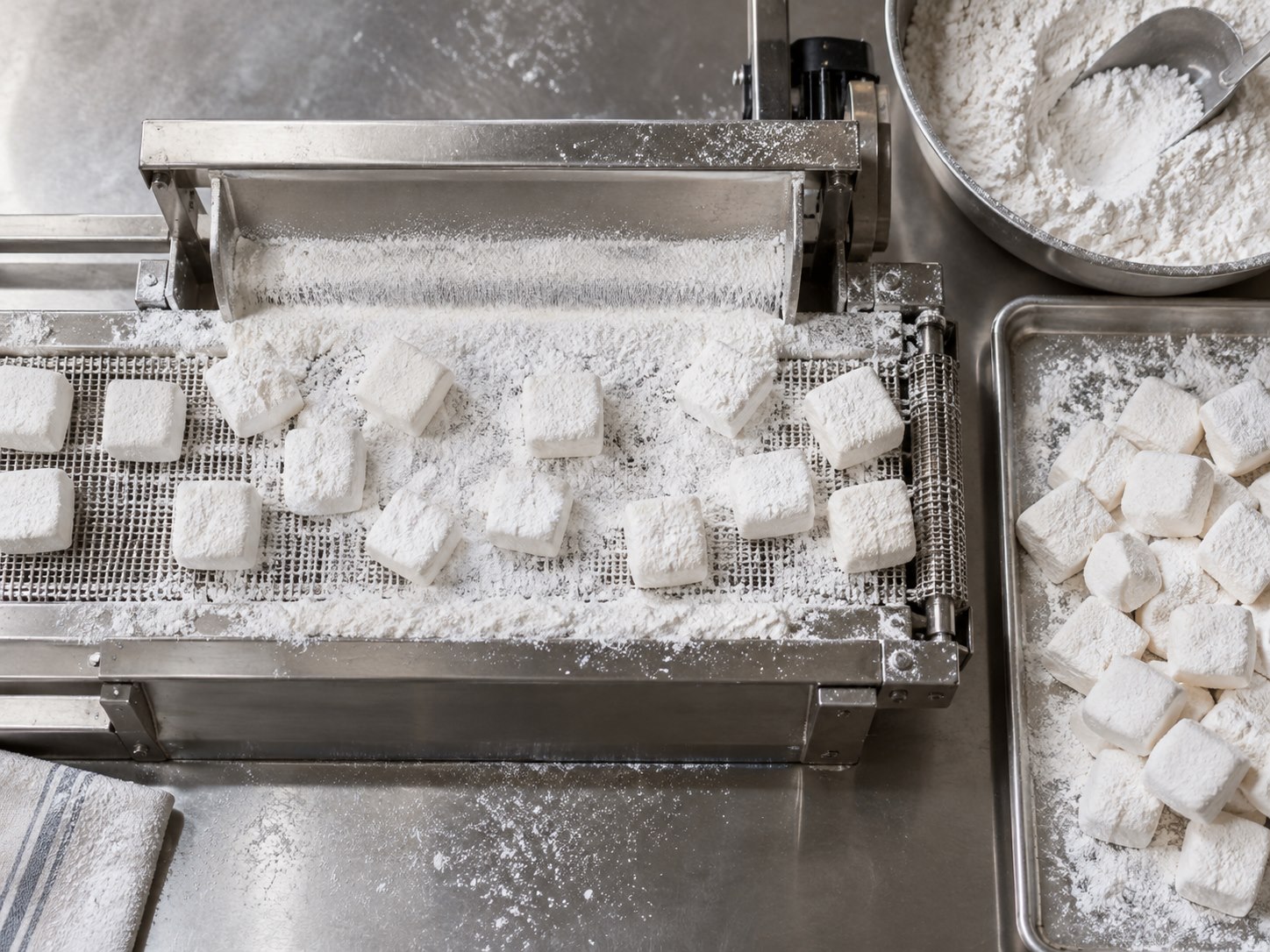
| Starch or dry coating | Reduces sticking during cooling, cutting, handling, and packing. | The coating affects surface feel, dust control, and package appearance. |
The American Chemical Society’s food-science explainer describes the basic product as a foam stabilized by gelatin, with sugar and corn syrup providing the surrounding matrix. The US Food and Drug Administration’s food-substance reference also lists gelatin as a food substance. Those references support the general ingredient roles, but they do not define a single recipe for every marshmallow sold in every market.
For a factory buyer, this distinction matters. A request for “marshmallow equipment” is incomplete until the team knows the recipe family, finished density, product shape, coating, packaging format, and target output.
What each ingredient changes in texture
Sugar and syrup set the candy base
Granulated sugar supplies the bulk of the dissolved solids. Corn syrup or glucose syrup is used with it to make the cooked syrup easier to manage and to reduce unwanted crystallization. The balance affects whether the finished piece feels tender, chewy, tacky, or firm.
Manufacturers do not choose syrup only for sweetness. They choose it for how the cooked mass flows, how it mixes with the setting phase, and how it behaves when the product is deposited or extruded. A formula that works in a small bowl may need different handling when the same mass moves through a pump, mixer, or forming head.
Gelatin gives the foam a framework
Gelatin is a protein-based gelling ingredient. After it is hydrated, it can help the whipped sugar mixture hold a network of air cells. That is why a marshmallow can be squeezed and still recover its shape instead of spreading like syrup.
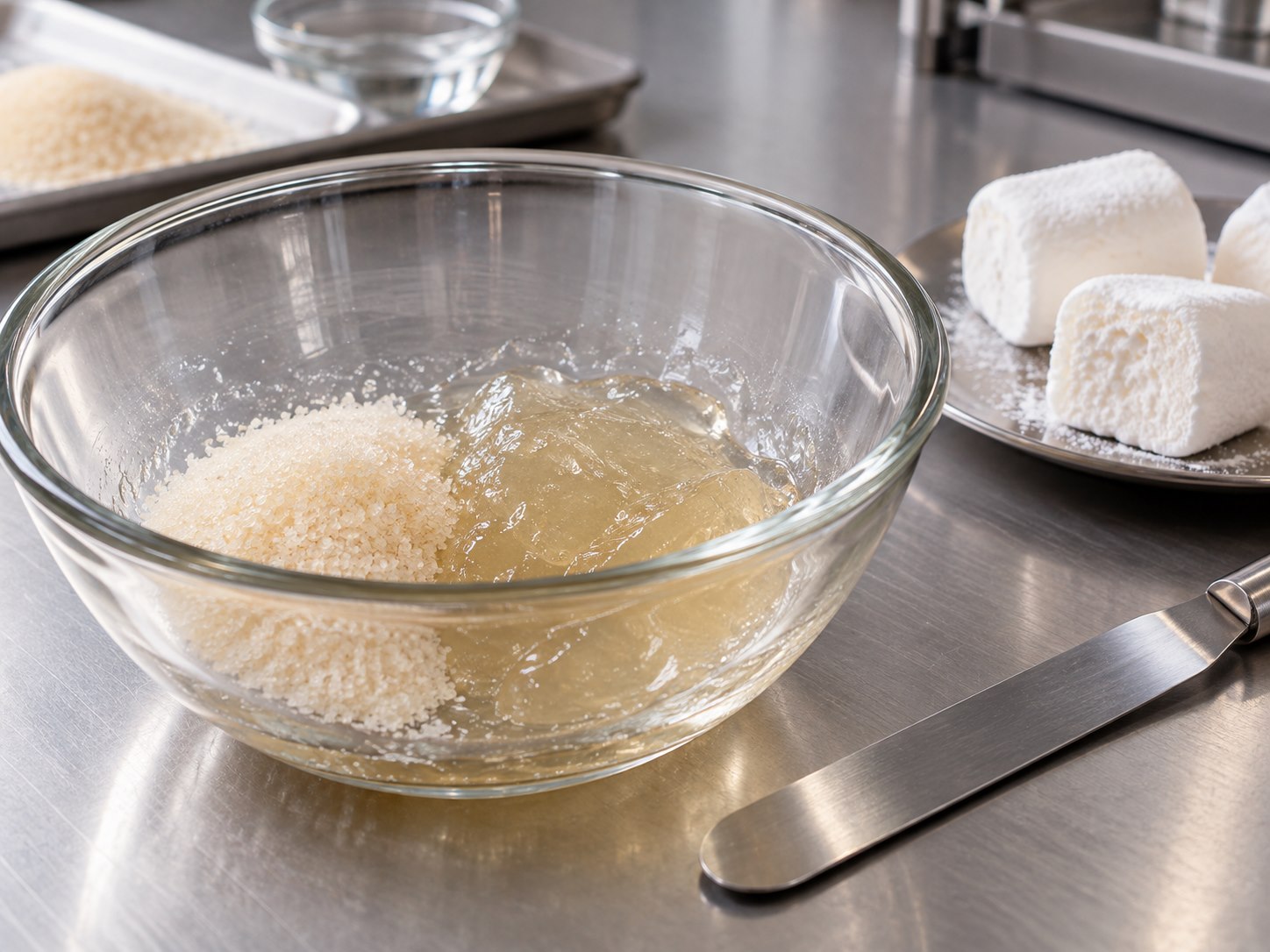
The source and labeling requirements for gelatin can vary. Buyers who need halal, kosher, vegetarian, or vegan positioning should treat the setting system as a specification, not as an assumption based on the product name.
Air makes a marshmallow light
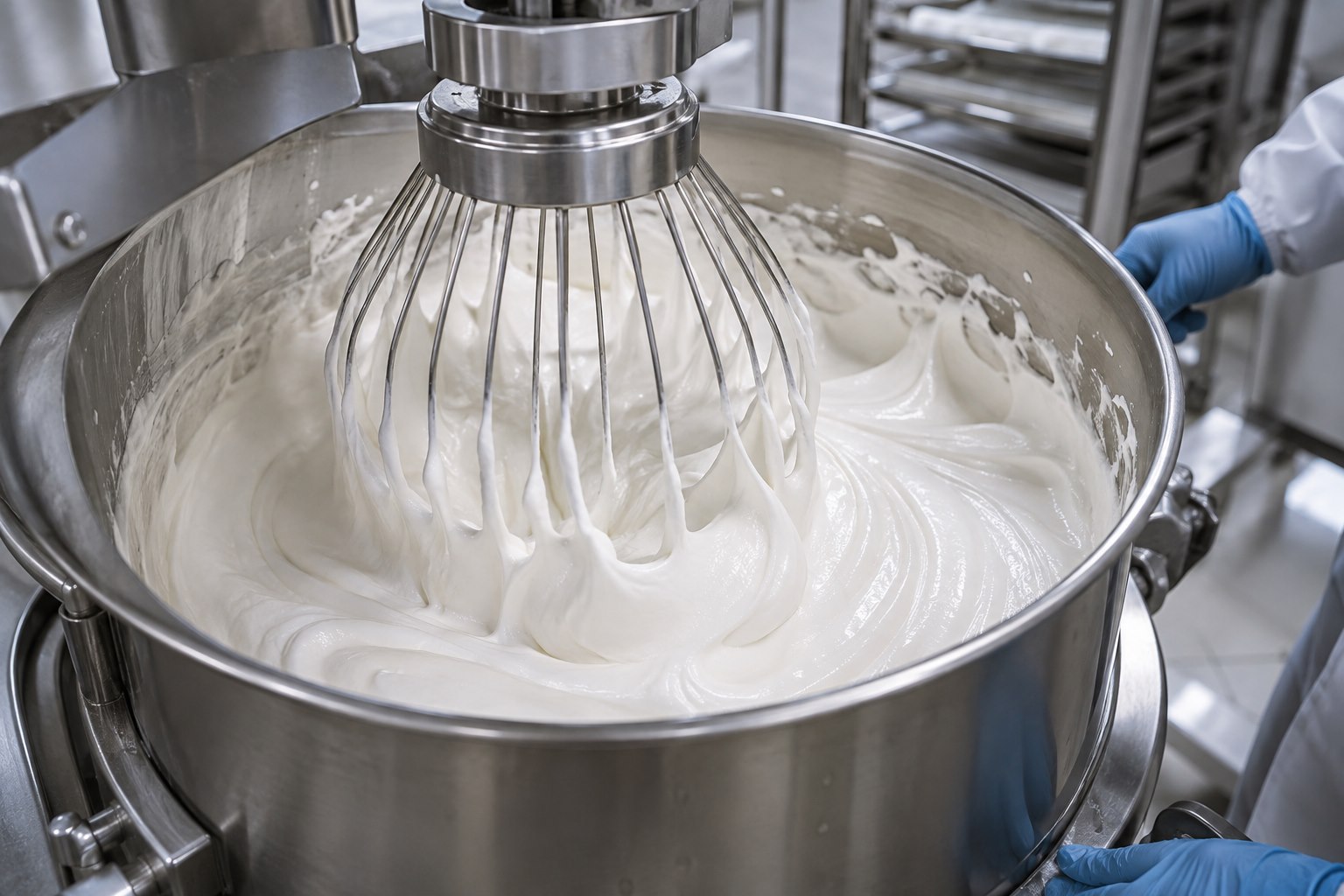
Whipping adds air to the cooked sugar and setting system. The mixer does more than blend ingredients. It creates a foam with a certain density and bubble structure. Mixing speed, batch temperature, residence time, and the order of additions all influence the result.
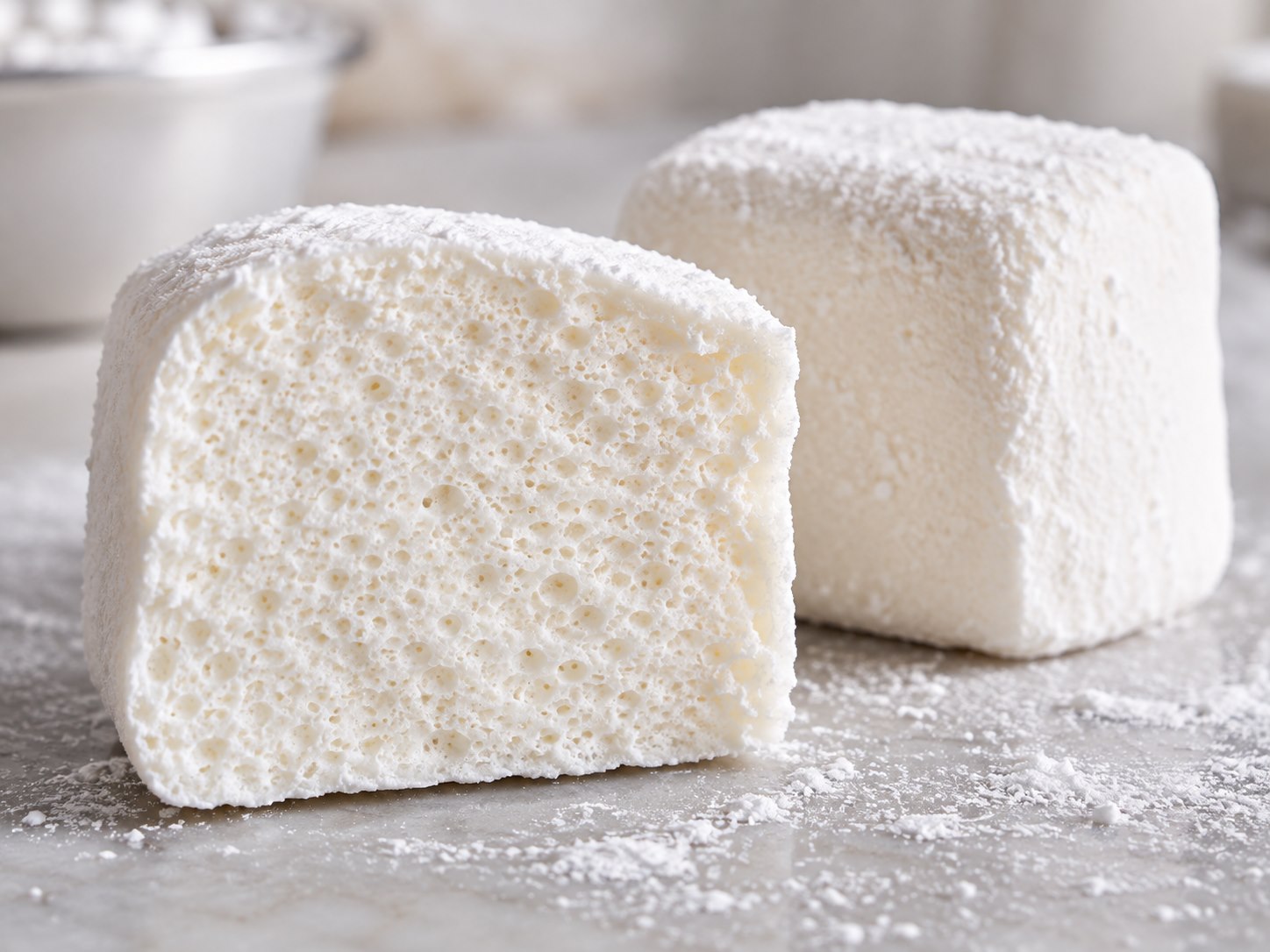
A cross-section of a finished piece makes the idea easier to see. The small pockets are the reason the product feels soft and airy. If the cells are too large or uneven, the pieces can feel coarse, collapse during handling, or cut with an irregular surface.
How are marshmallows made in a factory?
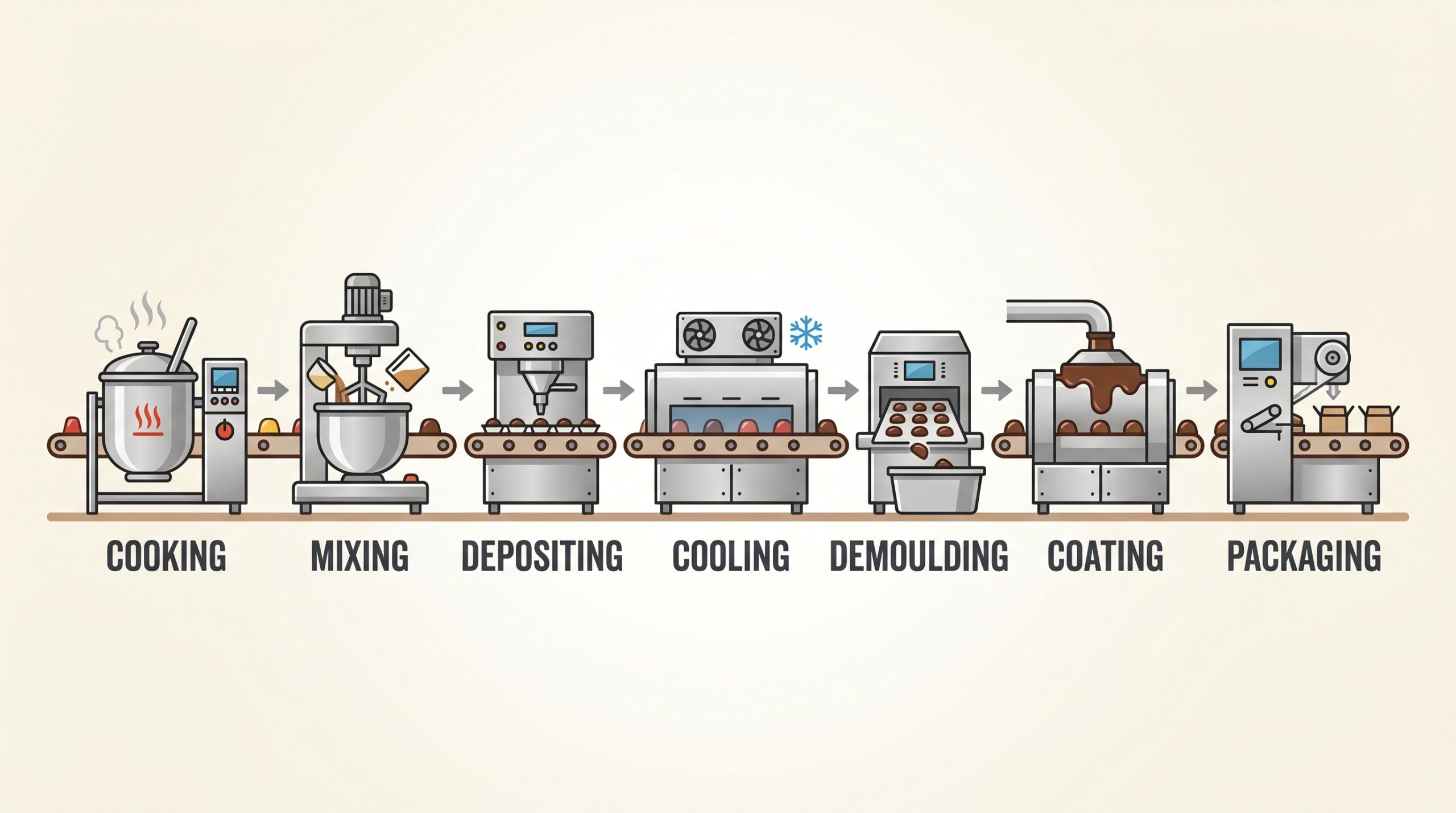
Industrial production follows the same basic food-science idea as a home batch, but the factory must control flow, timing, sanitation, repeatability, and packaging. The sequence below is a useful high-level map. The actual line layout depends on the recipe and product format.
- Batch the ingredients. Sugar, syrup, water, flavor, color, and the setting phase are prepared according to the approved formula. Ingredient temperature and hydration state matter before mixing begins.
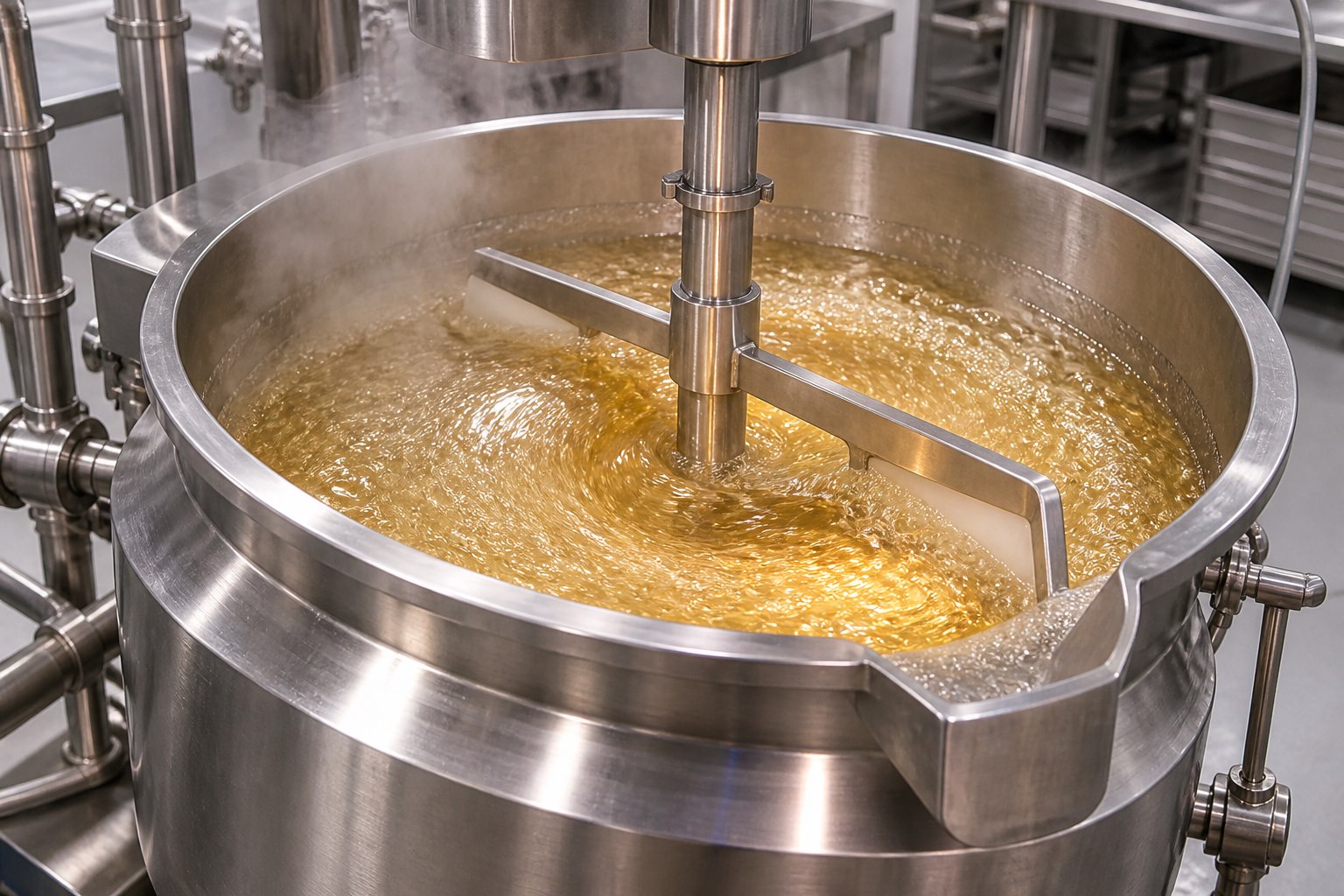
- Cook the syrup. Sugar and syrup are heated in a sanitary kettle so the solids dissolve and the batch reaches the required processing condition. A factory controls this step with the recipe and equipment, rather than relying on a visual guess.
- Hydrate the setting phase. Gelatin is commonly bloomed in water before it meets the hot syrup. Gelatin-free formulas use a different stabilizing system and must be tested for the same target texture.
- Combine and whip. The syrup and setting phase enter a mixer or aerator. The mass becomes opaque and expands as air is incorporated. Flavor and color may be added at a controlled point in the mix.
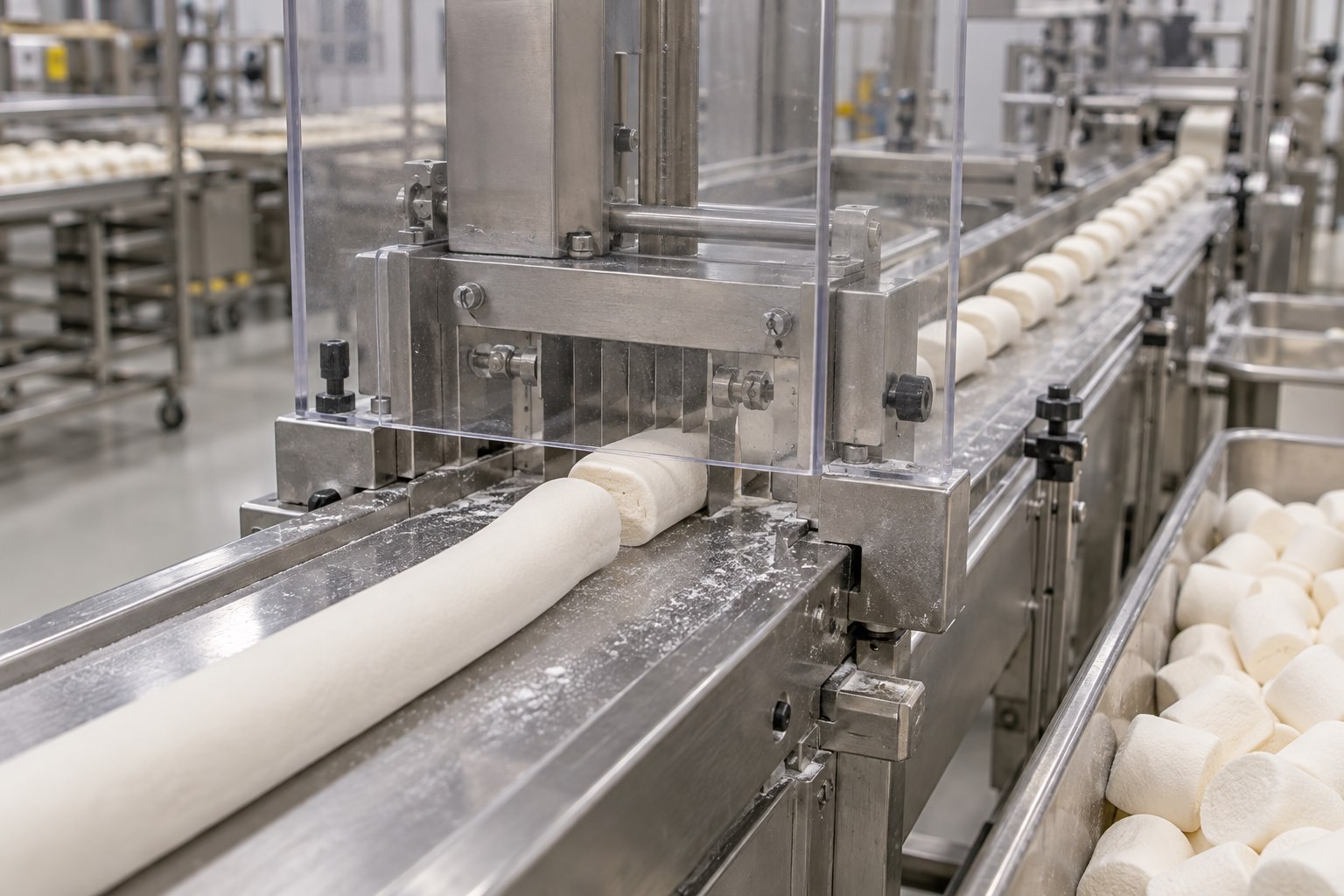
- Form the product. A line may extrude the foam into a continuous rope, deposit it into a starch bed, or use another forming method that fits the shape. The forming method affects edge definition, speed, cleaning, and changeover.
- Cut and coat. A rope can be cut into pieces. Deposited pieces can be released from a starch tray or handled on a conveyor. A dry coating helps limit sticking while the surface becomes easier to handle.
- Cool, condition, inspect, and pack. Pieces are allowed to stabilize under controlled conditions, checked against the product specification, and packed in the selected bag, carton, or bulk format.
A university food-science demonstration shows the same logic at small scale: make the gelatin solution, cook the sugar mixture, combine them, whip in air, and deposit the mass into starch. A production line replaces hand mixing and piping with sanitary equipment and controlled transfer between stages.
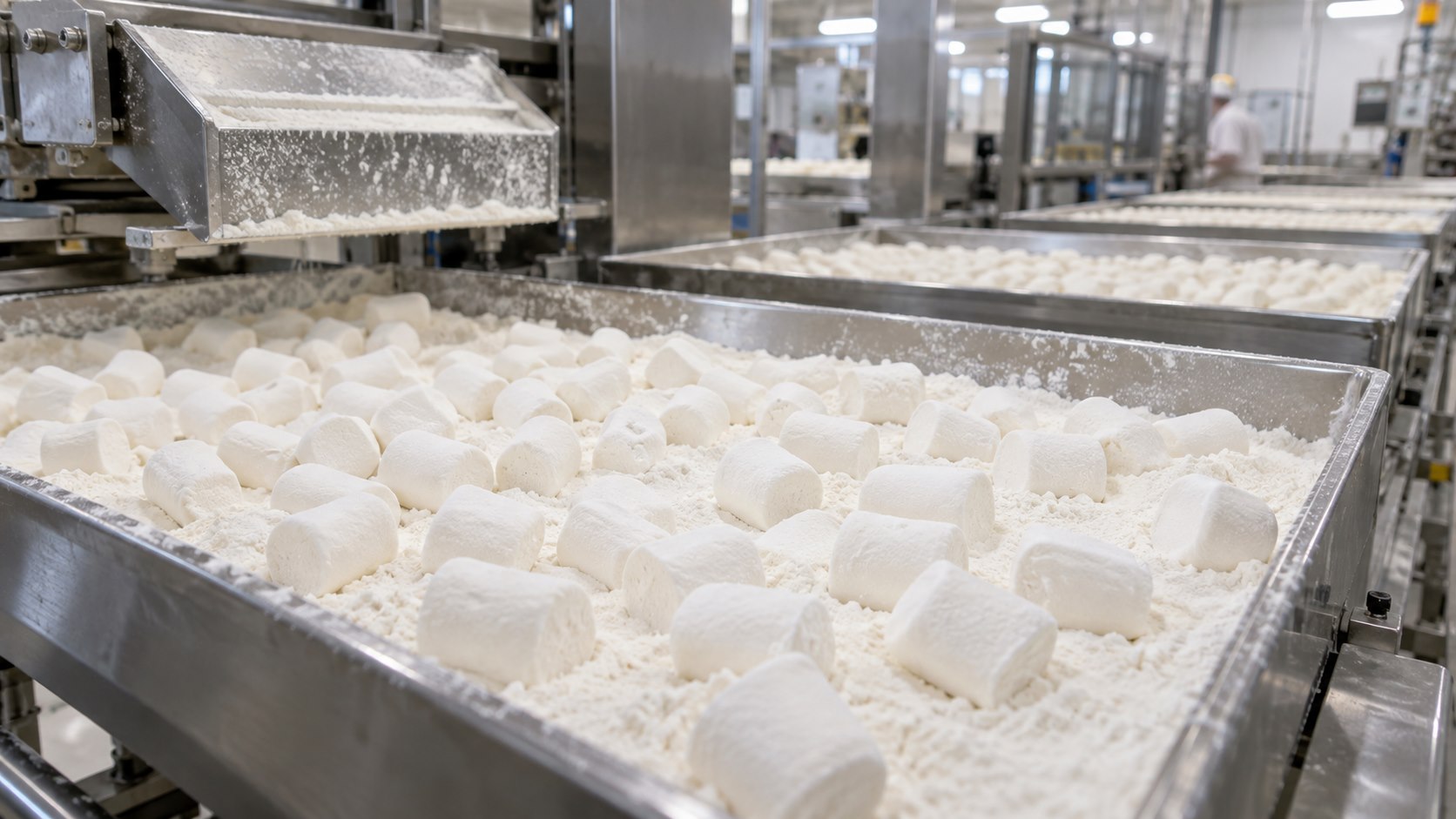
Another common layout uses a forming head and a cutting station. The mass becomes a rope, then the cutter produces pieces at a repeatable interval. The best choice depends on the desired shape and the buyer’s priorities for changeover, cleaning, coating, and packaging.
Why are marshmallows soft, springy, and stable?
Three process variables explain most of the texture a buyer notices:
- Solids and moisture: The cooked syrup must have the right balance of dissolved solids and available water for the next stage. That balance affects firmness and shelf stability.
- Foam structure: Whipping determines how much air enters the mass and how evenly the cells are distributed. A dense product and a light product can use similar ingredients but need different mixing conditions.
- Setting and handling: The setting system must hold the foam while the product cools and moves through forming, coating, inspection, and packing. Timing matters because a mass can be too fluid at one point and too firm at another.
This is also why a machine cannot be selected from the word “marshmallow” alone. The line has to handle the target viscosity, density, shape, and surface treatment without damaging the foam.
How do homemade, classic, and gelatin-free marshmallows differ?
The ingredients may look similar on paper, but the product experience depends on the setting system and the process. Use this comparison as a starting point rather than a label claim.
| Product type | Typical process difference | What to confirm before scaling |
|---|---|---|
| Classic gelatin marshmallow | A sugar syrup is combined with hydrated gelatin and whipped into a stable foam. | Gelatin source, target density, bite, coating, and market labeling requirements. |
| Homemade batch | Small equipment gives the operator a short path from kettle to mixer to pan or piping bag. | Consistency between batches, cooling space, cutting labor, and package handling. |
| Gelatin-free or vegan-style product | Another gelling or foaming system replaces gelatin. The system may need different hydration, heat, and whipping conditions. | Formula validation, supplier documentation, allergen controls, cleaning, and the required texture. |
| Flavored or colored product | Extra liquid or powder ingredients are added at a controlled point so the foam is not weakened. | Color stability, flavor strength, mixing order, and whether inclusions can pass through the forming equipment. |
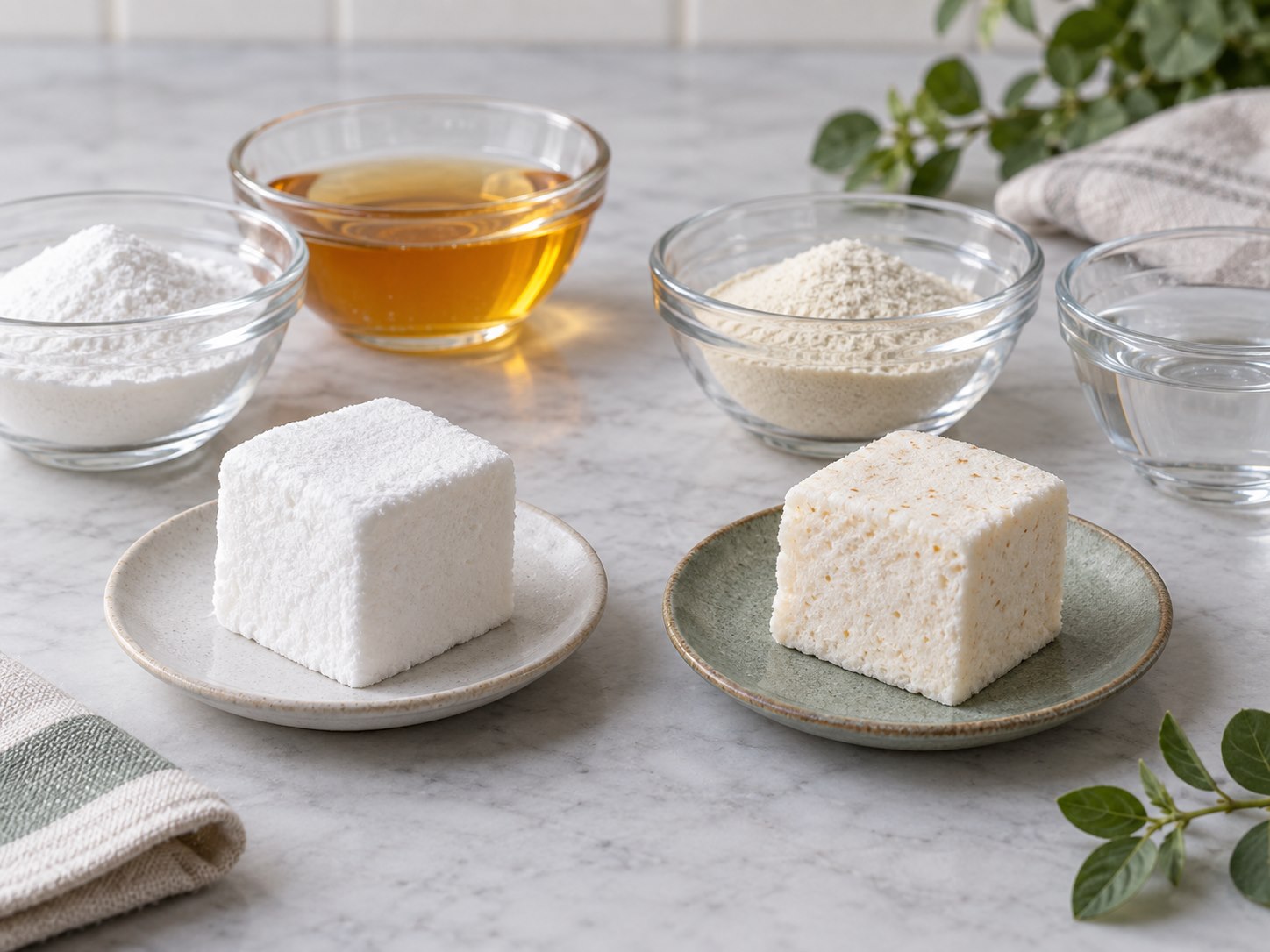
For any dietary claim, the ingredient list and supplier documentation should lead the decision. Do not infer vegan, vegetarian, halal, or kosher status from color, shape, or a short marketing name.
What equipment does a marshmallow factory need?
A marshmallow line usually connects several functions rather than relying on one universal machine. A buyer can use the process map below to prepare a more useful inquiry.
| Process need | Equipment function | Information the supplier needs |
|---|---|---|
| Prepare syrup | Heating and mixing in a sanitary kettle or cooking system. | Recipe family, batch size, heat source, cleaning method, and required controls. |
| Create the foam | Whipping or aeration with controlled transfer into the forming stage. | Target density, viscosity window, batch or continuous preference, and flavor additions. |
| Make the shape | Extrusion and cutting, starch deposition, or another forming route. | Piece shape, dimensions, surface finish, changeover needs, and acceptable waste. |
| Keep pieces separate | Coating, dust removal, conveying, and conditioning. | Coating material, dust-control expectations, cooling space, and handling time. |
| Pack the product | Weighing, bagging, sealing, cartoning, or bulk packing. | Pack weight, film or carton type, seal format, date coding, and export-market needs. |
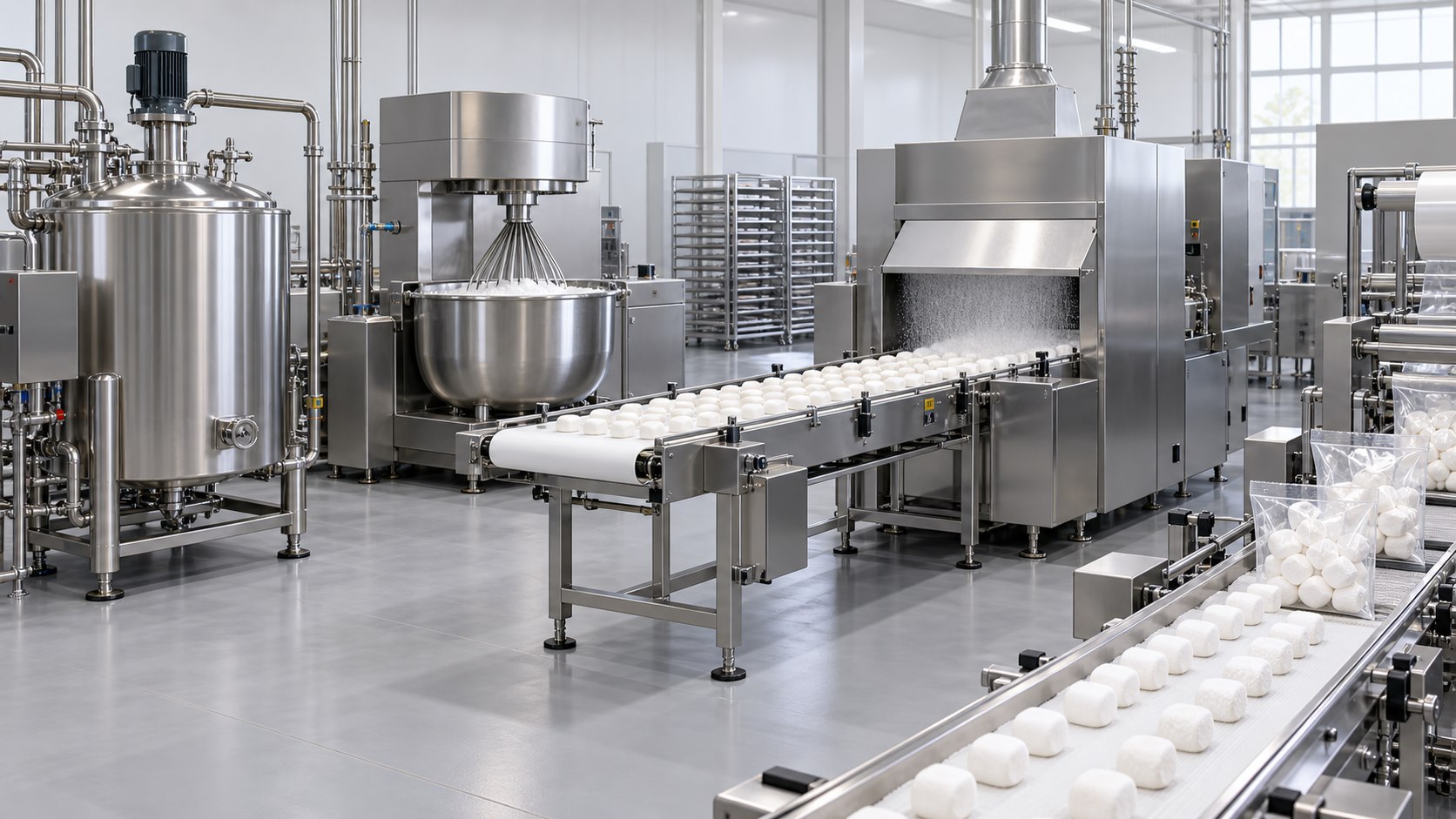
JY Machine’s marshmallow processing line page is the right starting point for a machinery discussion. Buyers who are still comparing formats can also review the marshmallow production line category and the marshmallow machine buying guide.
When you request a proposal, include the product shape, target piece weight or size, formula family, coating, expected output, packaging, and market requirements. If the recipe is still under development, say so. A pilot or flexible configuration may be more useful than specifying a large line too early.
What should be checked before marshmallows are packed?
Quality checks should match the product specification and local food requirements. A practical inspection plan may include:
- piece size and shape consistency;
- surface coverage and unwanted sticking;
- foam density and bite after conditioning;
- flavor and color consistency between batches;
- foreign-material and allergen controls;
- package weight, seal quality, and traceability information.
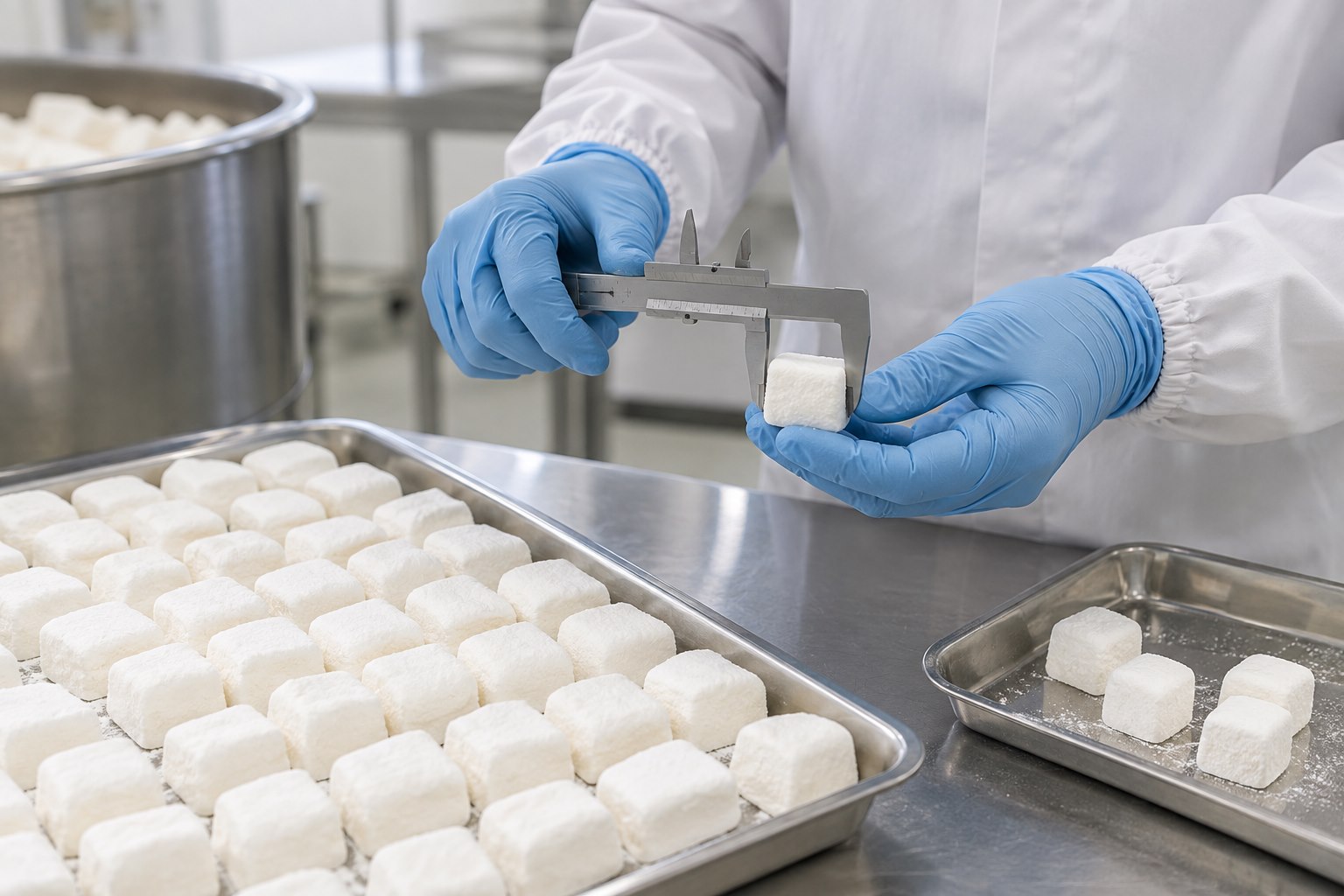
The right checks depend on the product and market. They should be agreed before commissioning so the line, sampling points, and documentation support the same definition of a finished piece.
How are marshmallows packaged after production?
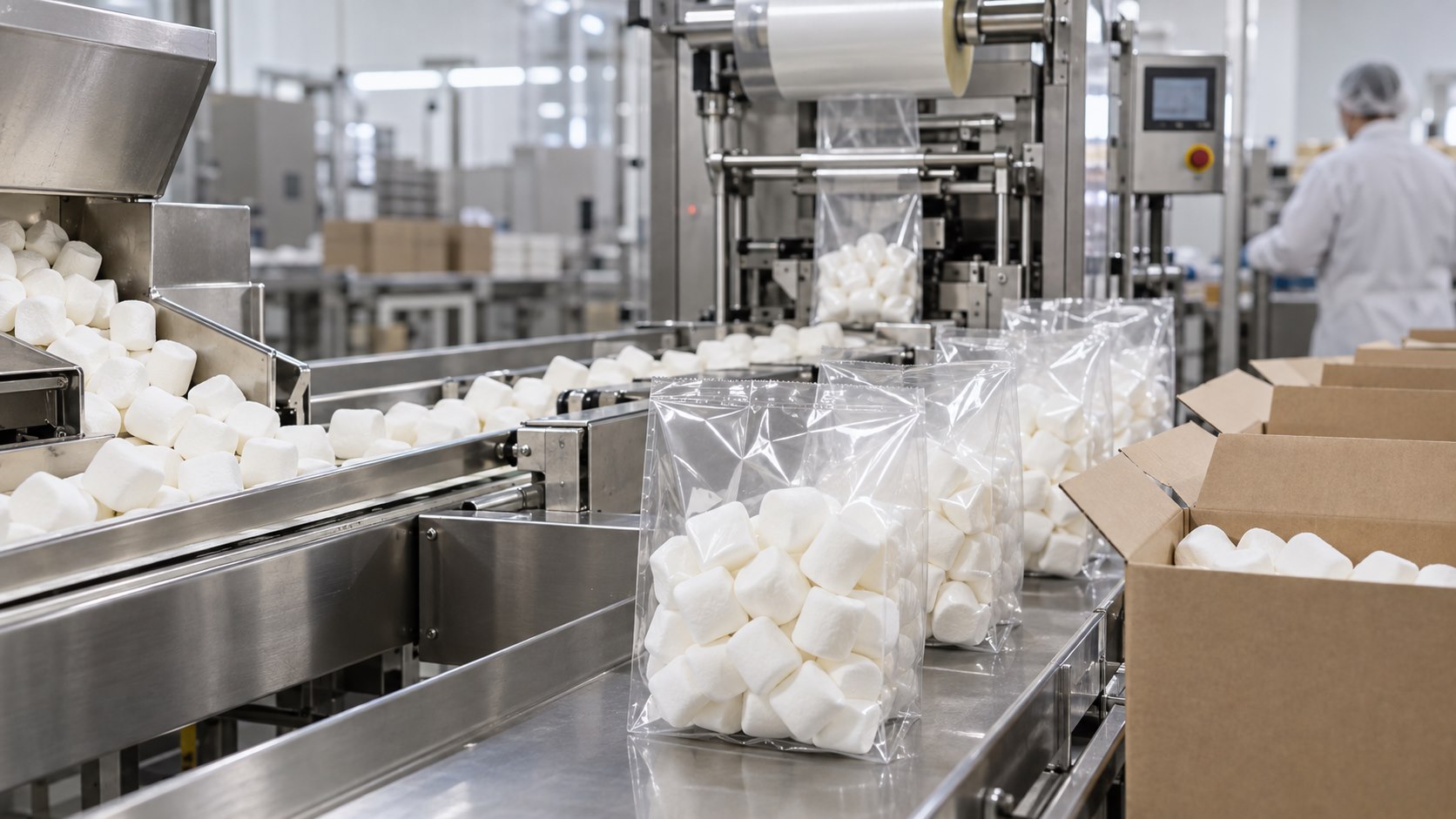
Packaging protects a soft, sugar-rich product from moisture pickup, sticking, compression, and contamination. The package format also affects the final line layout. Small retail bags, food-service packs, and bulk cartons may need different weighing, sealing, conveying, and case-packing steps.
Common questions about marshmallows
Are marshmallows made from pork?
Some marshmallows use gelatin, and the source of gelatin can vary. It is not accurate to assign one animal source to every product. Check the ingredient declaration and any verified dietary documentation for the specific product and market.
Are marshmallows vegan?
Traditional gelatin marshmallows are not vegan. Gelatin-free products use another gelling or foaming system, so the recipe and process must be validated separately. A vegan claim should come from the product documentation and manufacturing controls, not from appearance.
Why do marshmallows use corn syrup or glucose syrup?
The syrup works with sugar during cooking and helps control crystallization. That affects the final chew, softness, and handling behavior. The exact syrup choice depends on the recipe and the market.
How are marshmallows shaped in a factory?
Factories may extrude the foam into a rope and cut it, deposit it into a starch bed, or use another forming method. The best route depends on shape, density, coating, changeover, and package format.
What machine is used to make marshmallows?
A commercial setup may include a syrup cooker, gelatin or setting-phase preparation, whipping or aeration, forming, cutting or starch handling, coating, conditioning, inspection, and packaging. The final configuration should be matched to the formula and product specification.
Can a small marshmallow recipe be moved to factory production?
It can be a useful starting point, but it should not be copied into a large line without trials. Heat transfer, mixing energy, air incorporation, transfer time, and cleaning all change with scale. Test the target texture and package performance before fixing the equipment design.
Choose the line around the product specification
The answer to “what are marshmallows made of” is short. The answer to “what should a marshmallow line include” depends on the formula, density, shape, coating, packaging, and production plan.
Send JY Machine your target product details, including ingredient or dietary constraints, piece format, coating, pack size, expected output, and destination market. The team can then review whether the process needs a cooker, aerator, forming and cutting system, starch handling, packaging, or a connected line. Use the contact page to request a configuration discussion.
Related articles and equipment pages
Marshmallow production line category
Marshmallow machine buying guide