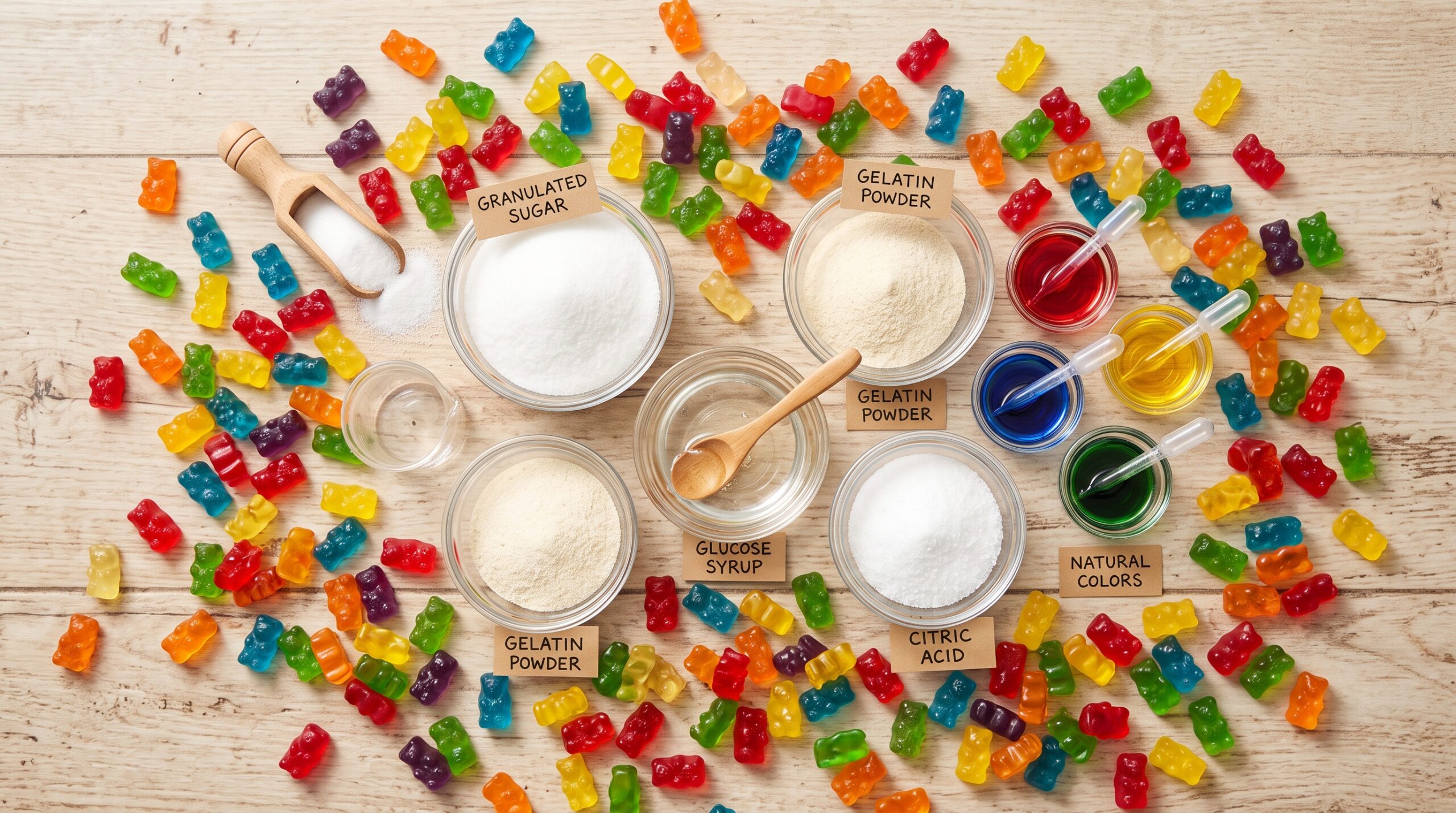
परिचय: थोक विनिर्माण को समझना
बड़े पैमाने पर गमी मिठाइयाँ बनाना जटिल है। इसमें खाद्य विज्ञान और प्रक्रिया इंजीनियरिंग शामिल है। यह साधारण व्यंजनों से कहीं आगे है। यह नियंत्रित रासायनिक प्रतिक्रियाओं और सटीक मशीनरी के बारे में है।
यह लेख तकनीकी प्रक्रिया को तोड़ता है गमी मिठाइयों का निर्माण थोक में। हम सामग्री रसायन विज्ञान से लेकर अंतिम गुणवत्ता जांच तक के विज्ञान की जांच करेंगे। यह उपभोक्ता मार्गदर्शिका नहीं है। यह उद्योग पेशेवरों के लिए एक तकनीकी विश्लेषण है।
इन सिद्धांतों को समझना महत्वपूर्ण है। आपको नए उत्पाद विकसित करने, मौजूदा उत्पादन लाइनों को अनुकूलित करने और लगातार गुणवत्ता सुनिश्चित करें बड़े पैमाने पर।
हम इन प्रमुख चरणों को कवर करेंगे:
- मुख्य गमी सामग्री का मूलभूत रसायन विज्ञान।
- प्राथमिक जेलिंग एजेंटों का तुलनात्मक विश्लेषण।
- औद्योगिक उत्पादन लाइन का चरण-दर-चरण विश्लेषण।
- सामान्य विनिर्माण दोषों के लिए तकनीकी समस्या निवारण।
- गमी प्रौद्योगिकी में भविष्य के रुझान।
मूलभूत रसायन विज्ञान
एक गमी की बनावट, स्थिरता और स्वाद उसके मुख्य घटकों के बीच सटीक रासायनिक अंतःक्रियाओं पर निर्भर करता है। प्रत्येक सामग्री का सूत्र में एक विशिष्ट, मापने योग्य कार्य होता है।
जेलिंग एजेंट: हाइड्रोकोलाइड हृदय
जो एक गमी को गमी बनाता है वह उसकी जेल संरचना है। यह हाइड्रोकोलाइड्स से आता है। ये लंबी-श्रृंखला वाले पॉलिमर होते हैं जो पानी में एक त्रि-आयामी नेटवर्क बनाते हैं। वे पानी को फंसाकर एक अर्ध-ठोस बनावट बनाते हैं।
सही हाइड्रोकोलाइड चुनना गमी निर्माण में सबसे महत्वपूर्ण निर्णय है। विकल्पों में जिलेटिन, पेक्टिन या स्टार्च शामिल हैं। यह चुनाव अंतिम चबाने और पिघलने के व्यवहार को परिभाषित करता है।
मिठास: स्वाद से बढ़कर
Sweeteners provide taste, but their main technical job is controlling texture and water activity. This control prevents microbial growth and ensures shelf stability.
सुक्रोज़ और ग्लूकोज़ सिरप अधिकांश काम करते हैं। उनके बीच का अनुपात महत्वपूर्ण है। ग्लूकोज़ सिरप एक डाक्टरी एजेंट के रूप में कार्य करता है। यह सुक्रोज़ की क्रिस्टलीकरण की क्षमता में हस्तक्षेप करता है। इससे दानेदार बनावट नहीं बनती और सही चबाने वाला बनावट बनी रहती है।
Sugar-free formulations use polyols like sorbitol and maltitol. These present technical challenges. They have a lower Maillard browning point and high hygroscopicity. This can lead to stickiness if not managed properly.
अम्ल: स्वाद और जेलन
Food-grade acids like citric, malic, and tartaric acid provide the tangy flavor that balances sweetness.
Their technical role is even more important. Acids lower the pH of the gummy mixture. This is necessary for certain hydrocolloids to set properly. High-methoxyl (HM) pectin won’t gel unless the pH is within a narrow range, typically 3.2 to 3.6.
Flavors, Colors, and Additives
स्वाद और रंग को गर्मी और अम्लता का सामना करना चाहिए। उच्च खाना पकाने के तापमान से वाष्पशील स्वाद यौगिक और कुछ प्राकृतिक रंगद्रव्य टूट सकते हैं।
Release agents are essential for handling gummy sweets bulk. A light coating of carnauba wax or medium-chain triglyceride (MCT) oil is applied in a polishing pan. This prevents gummies from sticking together in packaging and provides an attractive gloss.
The Gelling Matrix Showdown
सही जेलिंग एजेंट का चयन एक तकनीकी निर्णय है। यह बनावट, लागत, प्रसंस्करण मानकों और बाजार स्थिति को प्रभावित करता है। एक सीधी तुलना से प्रत्येक मुख्य हाइड्रोकोलॉइड के विशिष्ट लाभ और सीमाएँ स्पष्ट होती हैं।
Understanding Critical Parameters
We evaluate gelling agents based on several key technical metrics. These include the final texture profile and the mechanism and conditions required for setting. We also look at processing tolerance, final product clarity, and ingredient source. The source affects labeling claims like “vegan.”
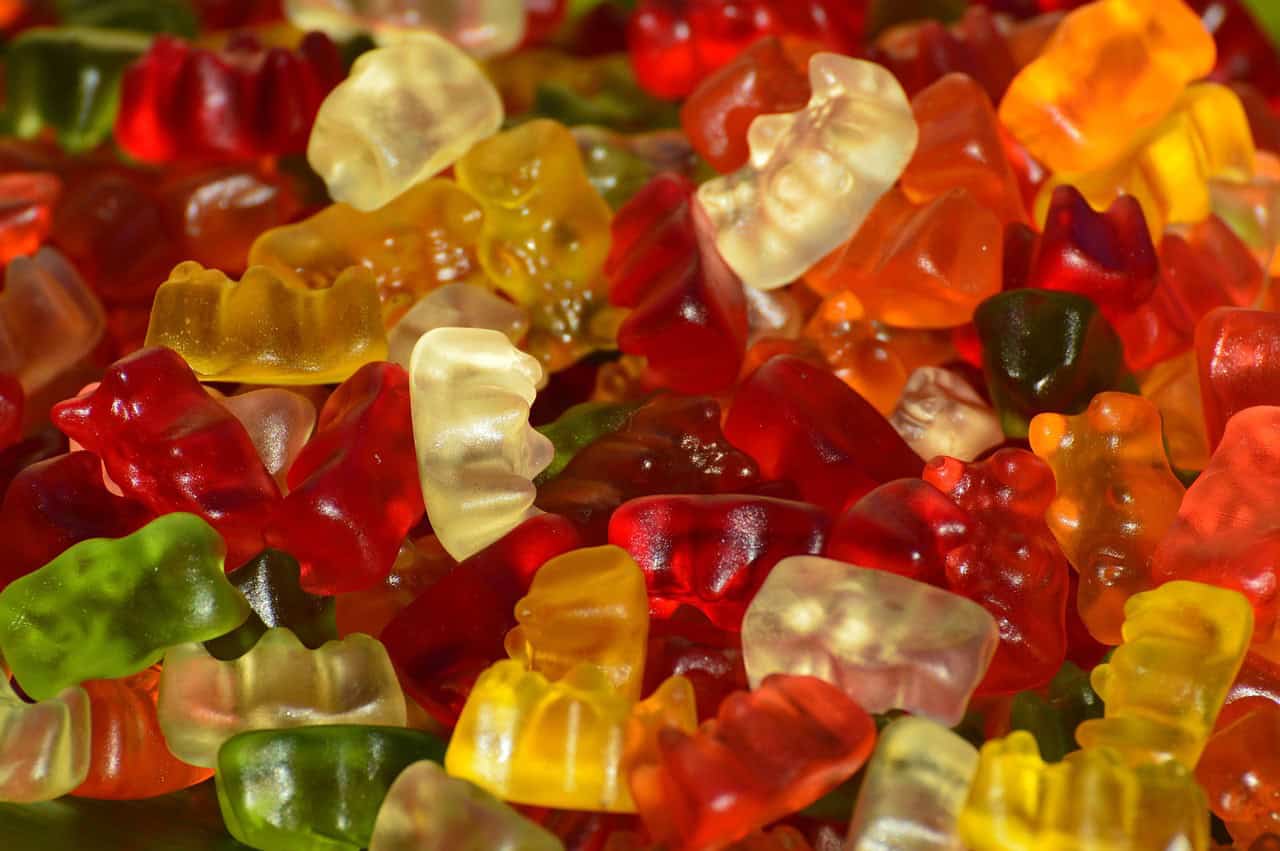
Comparative Analysis Table
This table provides a technical comparison of gelatin, pectin, and modified starch. This data is essential for any product developer formulating a new gummy candy.
विशेषता | Gelatin (Bovine/Porcine) | Pectin (HM/LM) | संशोधित स्टार्च |
बनावट प्रोफ़ाइल | Elastic, chewy, slow melt-in-mouth (“classic chew”) | संक्षिप्त, कोमल काट, साफ़ टूटना (कम "चबाने वाला") | छोटा, भारी, अक्सर अपारदर्शी, "गाढ़ा" हो सकता है |
सेटिंग तंत्र | तापीय प्रतिवर्ती (गर्मी से पिघलता है, ठंडा होने पर जम जाता है) | विशिष्ट pH और चीनी सांद्रता की आवश्यकता होती है (HM पेक्टिन) | ठंडा होने और सूखने के दौरान जम जाता है, तापीय प्रतिवर्ती नहीं |
प्रसंस्करण तापमान | गिरावट से बचने के लिए कम खाना पकाने का तापमान | उच्च खाना पकाने का तापमान संभव है | जिलेटिनाइज करने के लिए उच्च-कतरनी खाना पकाने की आवश्यकता होती है |
स्पष्टता | उत्कृष्ट स्पष्टता और चमक | अच्छी स्पष्टता, थोड़ा धुंधला हो सकता है | अपारदर्शी |
स्रोत/लेबलिंग | पशु मूल (जब तक निर्दिष्ट न हो, शाकाहारी/हलाल/कोषेर नहीं) | पौधे-आधारित (फल स्रोत), शाकाहारी-अनुकूल | पौधे-आधारित (मक्का, टैपिओका), शाकाहारी-अनुकूल |
जिलेटिन क्लासिक, लोचदार चबाने और उत्कृष्ट स्पष्टता प्रदान करता है। लेकिन इसका पशु मूल इसे शाकाहारी और कुछ धार्मिक आहार बाजारों से बाहर कर देता है। इसकी तापीय प्रतिवर्तीता एक प्रमुख प्रसंस्करण विशेषता है।
पेक्टिन एक साफ, छोटा काटने का अनुभव प्रदान करता है और पौधे-आधारित है। यह इसे शाकाहारी बाजार के लिए आदर्श बनाता है। हालांकि, एक उचित जेल प्राप्त करने के लिए इसे पीएच और ठोस सांद्रता पर सख्त नियंत्रण की आवश्यकता होती है।
संशोधित स्टार्च लागत प्रभावी और पौधे-आधारित है। यह एक भारी, छोटे-बनावट वाला चबाने का अनुभव बनाता है। इसका परिणाम एक अपारदर्शी उत्पाद होता है और यह तापीय प्रतिवर्ती नहीं होता है। इसका मतलब है कि प्रसंस्करण त्रुटियों को ठीक करना मुश्किल है।
उत्पादन लाइन का विवरण
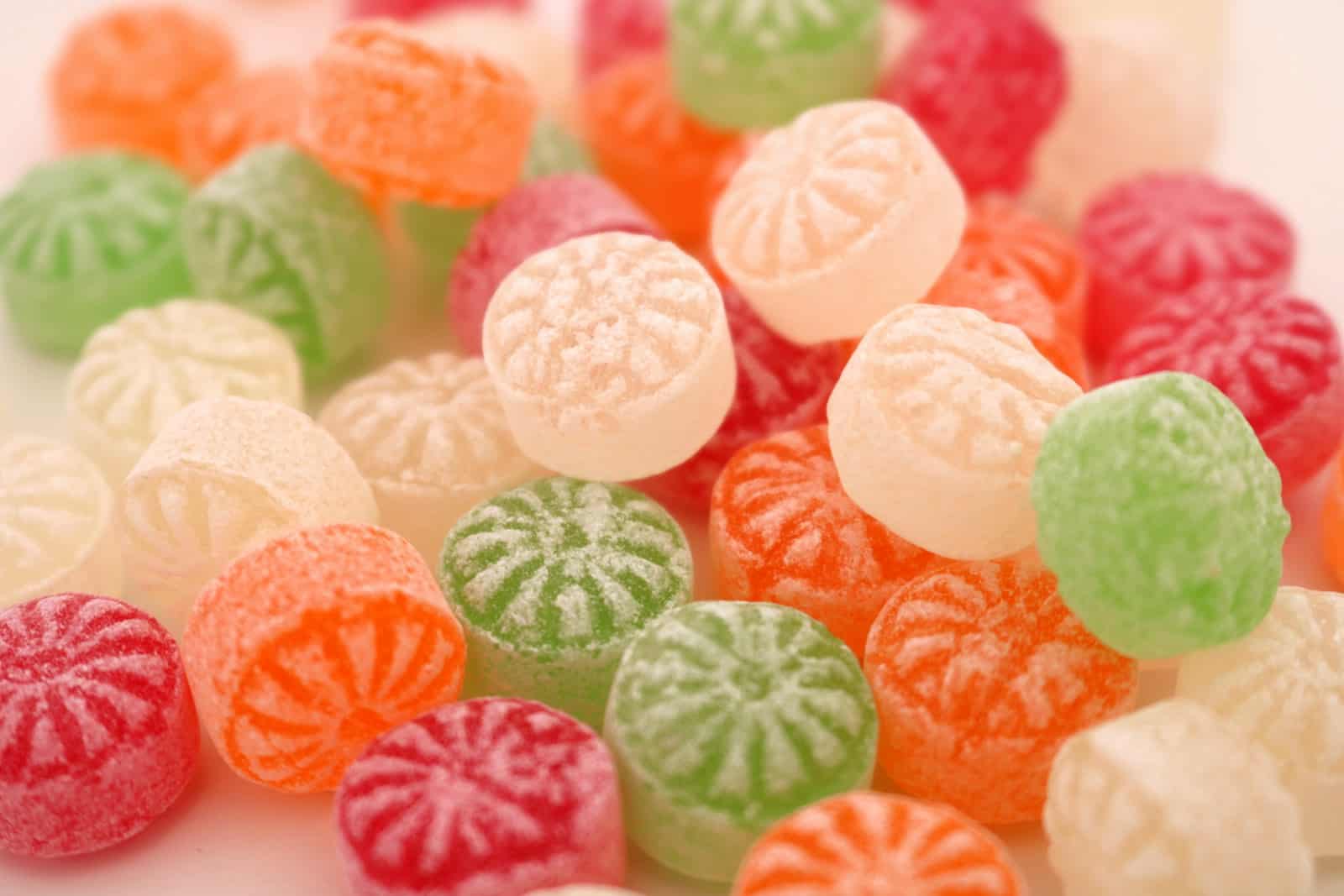
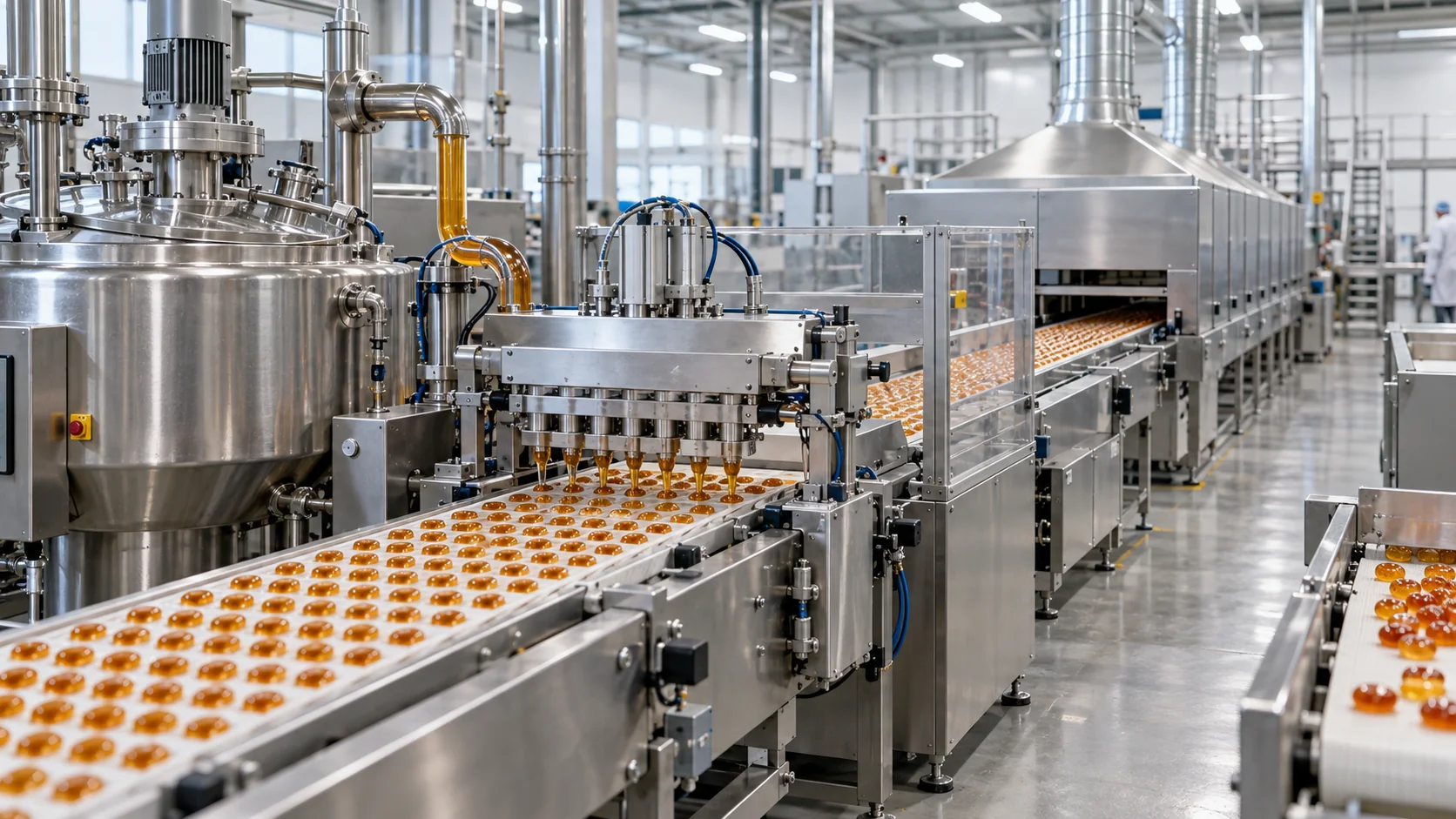
औद्योगिक गमी निर्माण एक सतत, अत्यधिक स्वचालित प्रक्रिया है। प्रत्येक चरण को दक्षता, निरंतरता और स्वच्छता के लिए डिज़ाइन किया गया है।
Step 1: Compounding and Pre-Cooking
प्रक्रिया की शुरुआत कंपाउंडिंग से होती है। सूखे और तरल सामग्री को मिलाकर एक समान मिश्रण बनाया जाता है। मिलाने का क्रम महत्वपूर्ण है। जेल बनाने वाले एजेंट आमतौर पर पहले पानी में फैलाए जाते हैं ताकि पूरी हाइड्रेशन सुनिश्चित हो सके, उसके बाद शर्करा डाली जाती है।
यह मिश्रण फिर धीरे-धीरे प्री-कुकिंग टैंक में गर्म किया जाता है ताकि ठोस पदार्थों को घुलाना शुरू किया जा सके।
चरण 2: पकाना से अंतिम ठोस तक
मिश्रण को एक औद्योगिक कुकर, अक्सर जेट कुकर में पंप किया जाता है। यह उपकरण सीधे भाप इंजेक्शन का उपयोग करता है। यह सामग्री को सेकंडों में उसकी अंतिम लक्षित ठोस सामग्री तक पकाता है। इससे सामग्री की गर्मी से होने वाली क्षति कम हो जाती है।
The target solids are measured in degrees Brix (°Bx). They’re typically between 78-82°Bx. This high concentration of sugar lowers water activity. This ensures the final product is microbiologically stable.
Step 3: Dosing of Actives
After cooking, the hot gummy mass is held in a buffer tank. Here, heat-sensitive and volatile ingredients are added. These include acids, flavors, and colors.
यह उच्च-प्रेसिजन इनलाइन इंजेक्शन और मिक्सिंग सिस्टम का उपयोग करके किया जाता है। यह पूरे बैच में पूर्ण समानता सुनिश्चित करता है बिना सक्रिय पदार्थों को पूरी पकाने के तापमान के संपर्क में लाए।
Step 4: Depositing – Heart of Forming
The finished liquid gummy mass goes to a depositor. This portions the exact amount into molds. Two primary methods exist.
cURL Too many subrequests. starch mogul line. Impressions of the गमी आकार बनाए गए हैं ट्रेयों में भरे हुए कंडीशन्ड फूड-ग्रेड स्टार्च से। डिपोजिटर इन छापों को भरता है। स्टार्च दो उद्देश्यों की पूर्ति करता है: यह गमी का आकार बनाए रखता है और इसकी सतह से नमी खींचता है, जिससे एक त्वचा बनने में मदद मिलती है।
A more modern method is starchless depositing. This process uses silicone, metal, or polycarbonate molds. This method offers better hygiene and eliminates starch dust. It produces gummies with higher clarity and a smoother surface finish.
Step 5: Curing and Drying
Regardless of the depositing method, the molded gummies move into curing rooms. These rooms have tightly controlled temperature and humidity.
Over 24 to 48 hours, the gummies cool and the gel structure fully matures. During this time, they also lose a final percentage of moisture. This achieves their target texture and water activity.
चरण 6: समाप्ति और पॉलिशिंग
After de-molding, the gummies are tumbled in large polishing pans. A fine mist of a polishing agent is applied. This might be carnauba wax or fractionated coconut oil.
This final step gives the gummies their characteristic gloss. Most importantly, it prevents them from sticking together in bulk packaging.
Technical Troubleshooting for Defects
Even in a well-controlled process, defects can occur. Identifying the root cause requires technical understanding of the formulation and process.
Problem: “Sweating” or Syneresis
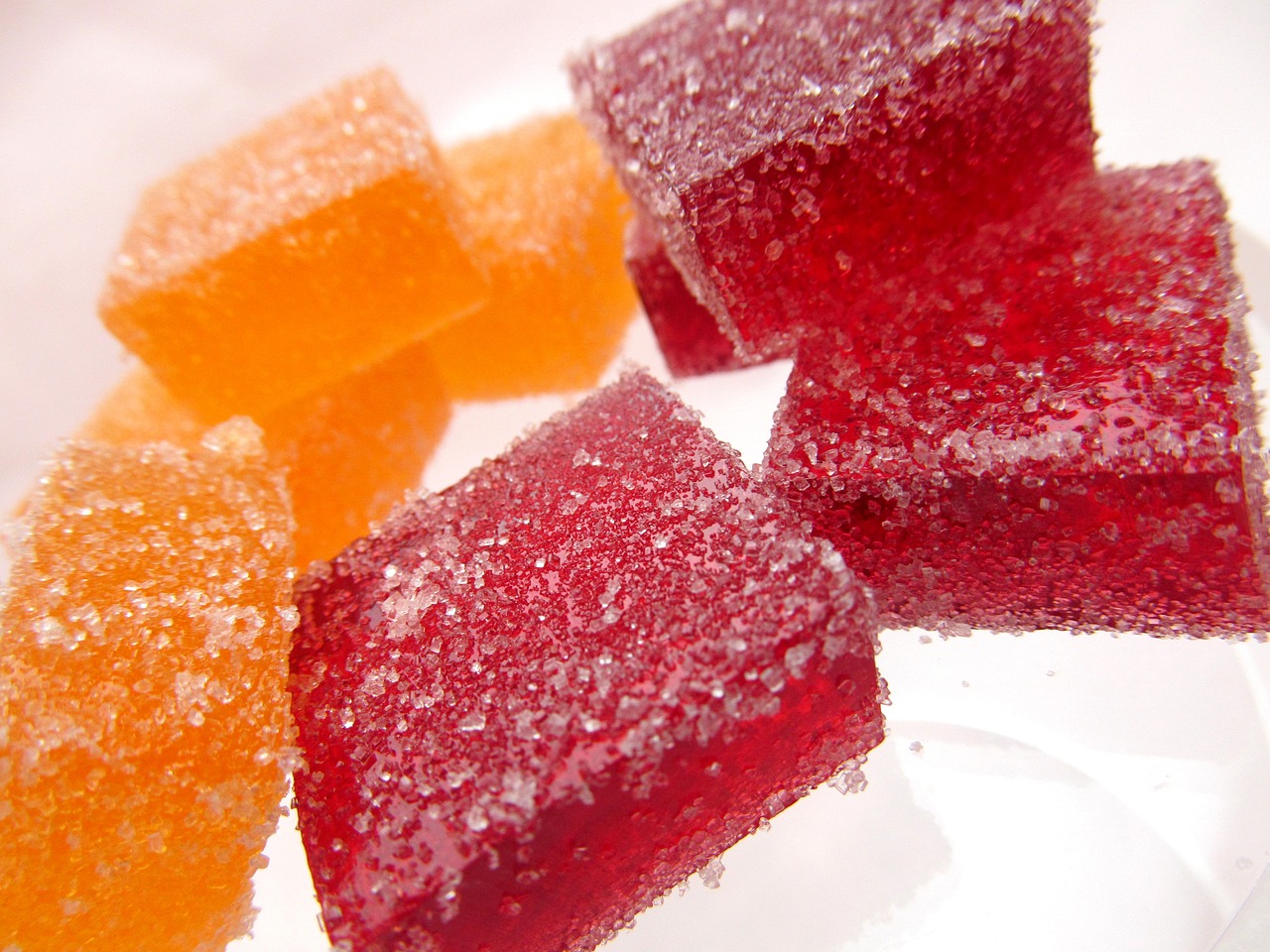
Syneresis is the weeping of liquid from the gel. It’s a common defect. Gummies appear wet or sticky in the package.
This is often caused by an incorrect final solids level. If the Brix is too low, there is excess unbound water. It can also result from a pH imbalance or adding acid too early. This can partially break down the gelling agent.
समाधान में प्रत्येक बैच के अंतिम ब्रिक्स की जांच एक कैलिब्रेटेड रिफ्रैक्टोमीटर से करना शामिल है। साथ ही मिश्रण का पीएच मान निर्दिष्ट सीमा के भीतर है यह भी सुनिश्चित करें कि एसिड मिलाने से पहले।
Problem: Sticky or Unset Gummies
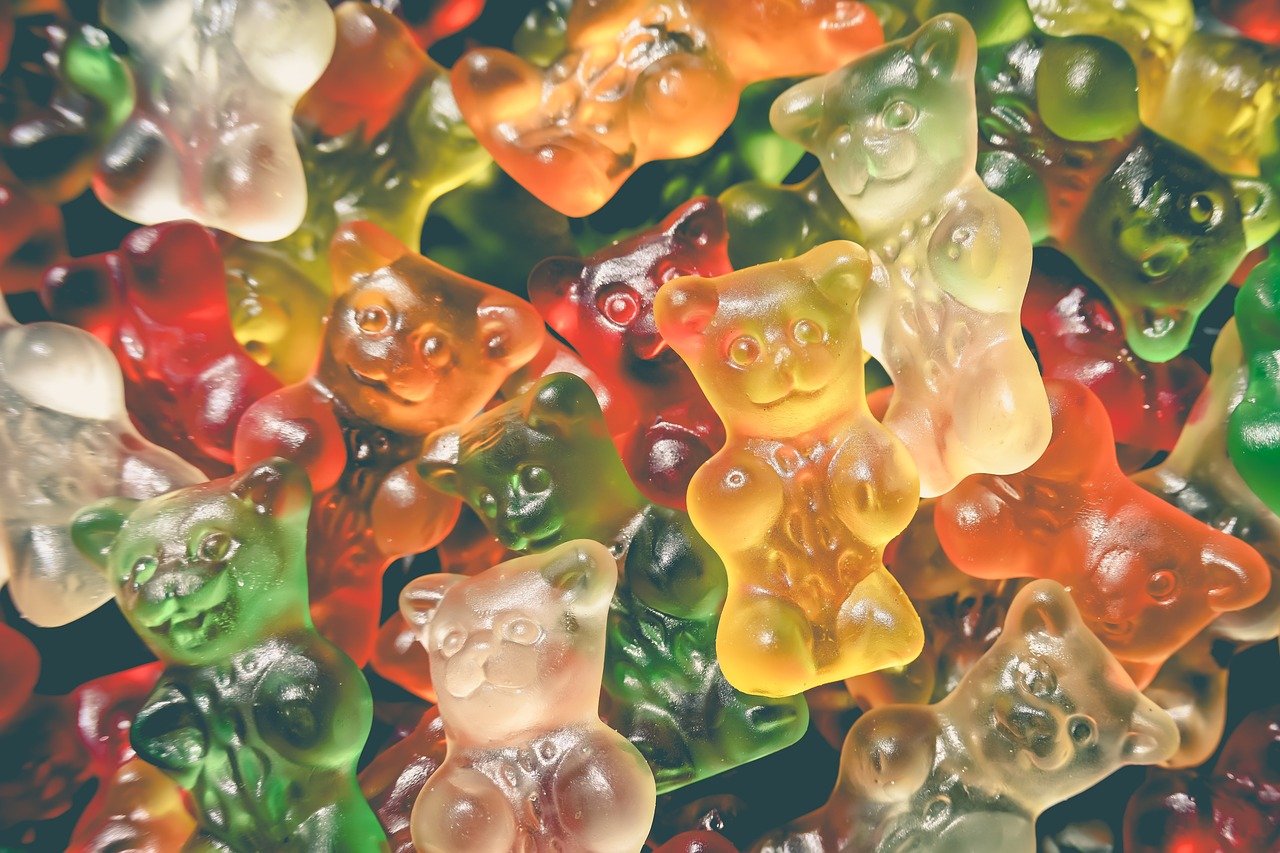
A gummy mass that fails to set properly results in a product that is too soft and sticky.
The most common cause is degradation of the gelling agent. For gelatin, this happens if the mass is held at too high a temperature for too long. For pectin, the cause is often an incorrect pH. This prevents the gel network from forming.
Corrective actions include checking cooking temperatures and hold times. For pectin-based systems, the pH of the mixture must be verified before depositing. A formula review to confirm gelling agent concentration may also be necessary.
धब्बेदार या क्रिस्टलीय बनावट
A grainy texture is caused by the crystallization of sucrose. This is a critical failure of the sugar system.
The primary cause is an incorrect ratio of sucrose to glucose syrup. Insufficient glucose syrup fails to prevent sucrose crystallization. Another cause is incomplete dissolution of sugar crystals during cooking.
To resolve this, the formula’s sugar ratio must be adjusted to increase the proportion of glucose syrup. Additionally, the cooking process should be validated to ensure all crystalline sugar is fully dissolved before depositing.
निष्कर्ष: गमी तकनीक का भविष्य
Producing gummy sweets bulk demonstrates applied food science. Success depends on mastering the interplay between ingredient chemistry, precise process control, and rigorous quality assurance.
प्रमुख तकनीकी स्तंभ पुनरावलोकन
सफल उत्पादन का मूल तीन स्तंभों पर निर्भर करता है। सबसे पहले, वांछित बनावट और बाजार के लिए सही जेलिंग मैट्रिक्स का चयन करें। दूसरा, लक्ष्य ठोस सामग्री प्राप्त करने के लिए सटीक पकाने की प्रक्रिया को लागू करें। तीसरा, उत्पाद संरचना को अंतिम रूप देने के लिए नियंत्रित क्यूरिंग वातावरण को लागू करें।
आसमान पर नवाचार
प्रौद्योगिकी लगातार विकसित हो रही है। उपभोक्ता की मांग और प्रसंस्करण उन्नतियों से यह विकास प्रेरित होता है।
- सुदृढ़ीकरण: उद्योग विटामिन, खनिज और न्यूट्रास्यूटिकल्स को शामिल करने पर भारी ध्यान केंद्रित कर रहा है। यह इन सक्रिय तत्वों की स्थिरता और जैवउपलब्धता को बनाए रखने में तकनीकी चुनौतियों का सामना करता है।
- स्वचालन और प्रक्रिया नियंत्रण: ब्रिक्स, पीएच, और विस्कोसिटी की निगरानी के लिए रीयल-टाइम सेंसर का एकीकरण स्थिरता में सुधार कर रहा है और अपशिष्ट को कम कर रहा है। एआई-चालित प्रक्रिया तर्क भी इन सेंसर के साथ जोड़ी जा रही है।
नई बनावट और सामग्री: नई पौधों आधारित हाइड्रोकोलॉइड्स और अनूठे सामग्री संयोजनों पर अनुसंधान सीमाओं को धकेल रहा है। यह एक नई पीढ़ी के गमी उत्पादों का वादा करता है जिसमें बेहतर बनावट और संवेदी अनुभव है।
संदर्भ लिंक:
- खाद्य में मोटाई और जमावट एजेंट के रूप में हाइड्रोकोलॉइड्स: एक महत्वपूर्ण समीक्षा – पीएमसी (एनआईएच) https://www.ncbi.nlm.nih.gov/pmc/articles/PMC3551143/
- खाद्य हाइड्रोकोलॉइड्स: संरचना, गुणधर्म, और अनुप्रयोग – पीएमसी https://pmc.ncbi.nlm.nih.gov/articles/PMC11011930/
- खाद्य संरचना के विकास में हाइड्रोकोलॉइड्स की भूमिका – रॉयल सोसाइटी ऑफ केमिस्ट्री https://books.rsc.org/books/edited-volume/772/chapter/502467/The-Role-of-Hydrocolloids-in-the-Development-of
- स्टार्च जेलगणन – साइंसडायरेक्ट टॉपिक्स https://www.sciencedirect.com/topics/food-science/starch-gelatinization
- पेक्टिन हाइड्रोजेल्स: जेल-निर्माण व्यवहार, तंत्र, और खाद्य अनुप्रयोग – पीएमसी https://pmc.ncbi.nlm.nih.gov/articles/PMC10530747/
- कन्फेक्शनरी विज्ञान और तकनीक के मूल सिद्धांत – विस्कॉन्सिन विश्वविद्यालय https://interpro.wisc.edu/courses/fundamentals-of-confectionery-science-and-technology-module-1-sugar-confections/
- कन्फेक्शनरी प्रसंस्करण – फूड टेक्नोलॉजिस्ट्स संस्थान (आईएफटी) https://www.ift.org/news-and-publications/food-technology-magazine/issues/1999/december/columns/processing
- खाद्य प्रसंस्करण में पोलिसैकराइड्स, स्टार्च, प्रोटीन, पेक्टिन, और फाइबर की गुणधर्मों पर अनुसंधान – पीएमसी https://pmc.ncbi.nlm.nih.gov/articles/PMC9857836/
- पेक्टिन स्थिरित मछली जेलगणन इमल्शन: भौतिक स्थिरता, रिओलॉजिकल, और इंटरैक्शन गुणधर्म – पीएमसी https://pmc.ncbi.nlm.nih.gov/articles/PMC9326445/
- विभिन्न आणविक भार वाले पेक्टिन का जेलगणन व्यवहार और मकई स्टार्च की बनावट पर प्रभाव – साइंसडायरेक्ट https://www.sciencedirect.com/science/article/abs/pii/S0308814618308021
संबंधित लेख
- गमी मिठाइयाँ कैसे बनाएँ: घर के रसोईघर से व्यावसायिक उत्पादन तक की पूरी गाइड
- सर्वश्रेष्ठ गमी उत्पादन लाइन समाधान कुशल कैंडी निर्माण के लिए
- How do I know if a gummy manufacturing machine is suitable for large-scale production?
- मैं विशिष्ट उत्पादन आवश्यकताओं के लिए गमी निर्माण मशीन को कैसे अनुकूलित कर सकता हूँ?
- गमी कैंडी उत्पादन लाइन
- खाद्य पैकेजिंग मशीन
- स्किटल्स निर्माण प्रक्रिया: फैक्ट्री के अंदर