Gummy candy is not inherently harmful, but high sugar content and sticky texture make it best enjoyed in moderation as an occasional treat.
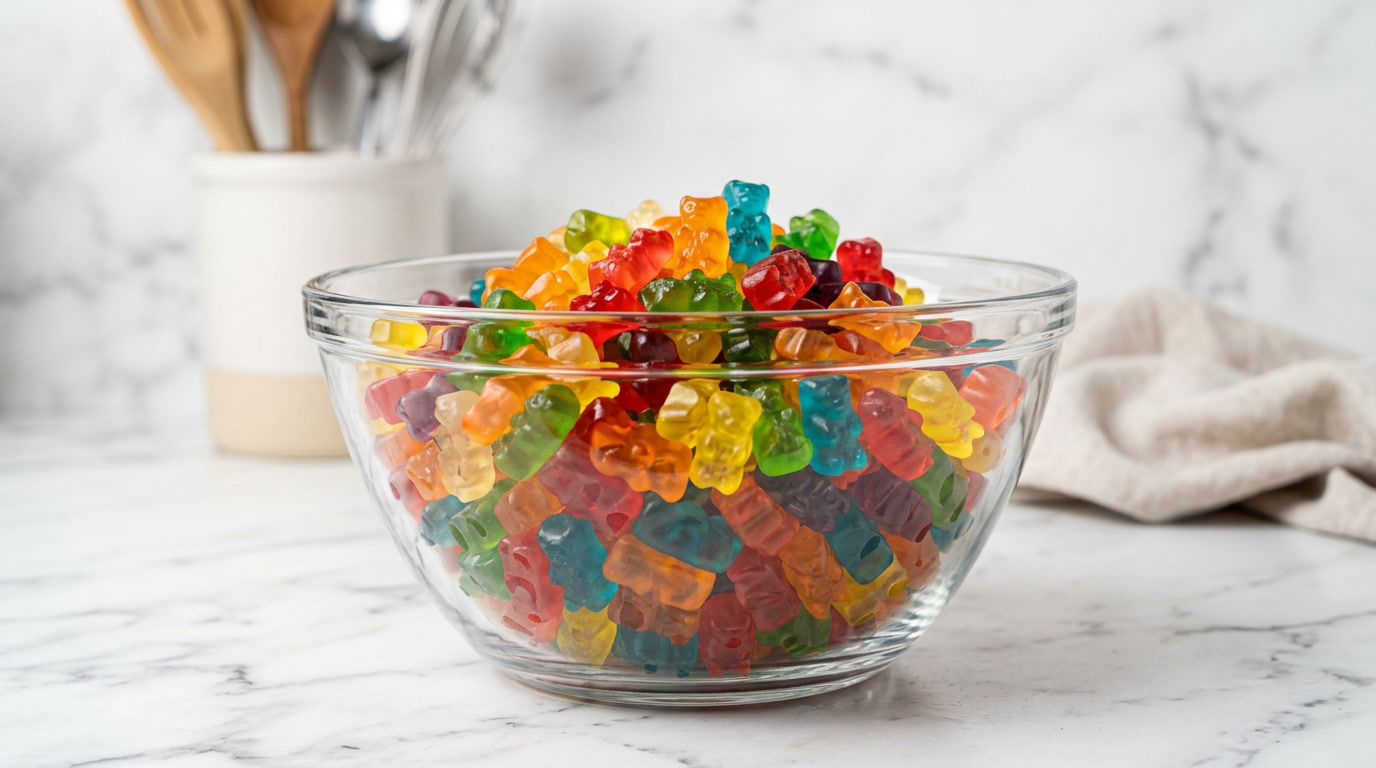
You grab a handful of gummy bears before a movie and think nothing of it. Then you grab another handful. Before long, the bag is half-empty and you’re asking the question you probably should have asked earlier: are gummies actually bad for you?
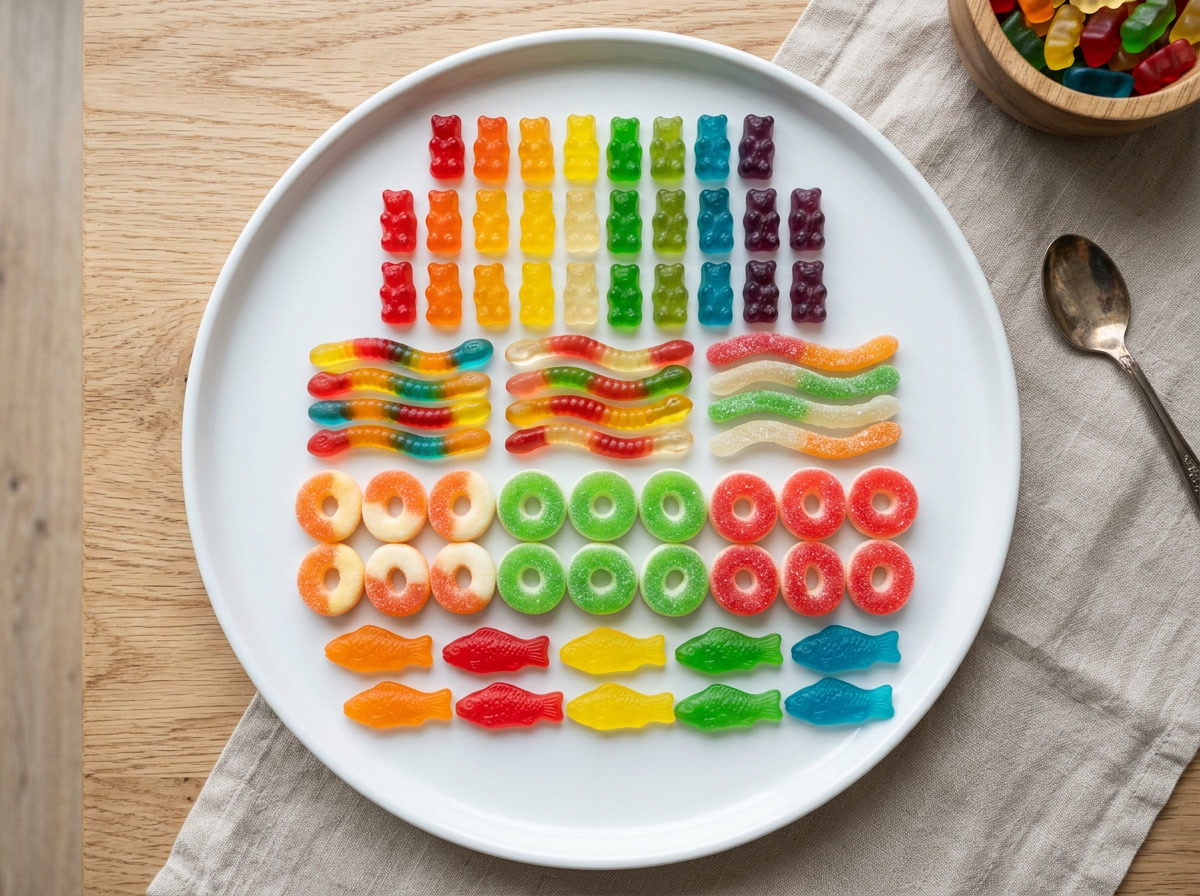
It’s a fair question — and one that almost nobody answers clearly. Most searches return warnings about cannabis edibles. But traditional candy gummies — the gummy bears, worms, rings, and frogs you grew up with — are an entirely different product with their own distinct nutritional profile and health trade-offs.
The short answer: they’re not poison. But they’re also not a neutral food. The high sugar load, sticky texture, and near-zero nutritional value mean regular gummy candy earns its occasional-treat status. Here’s what the science and the manufacturing reality actually tell you.
What Are Gummies Made Of?
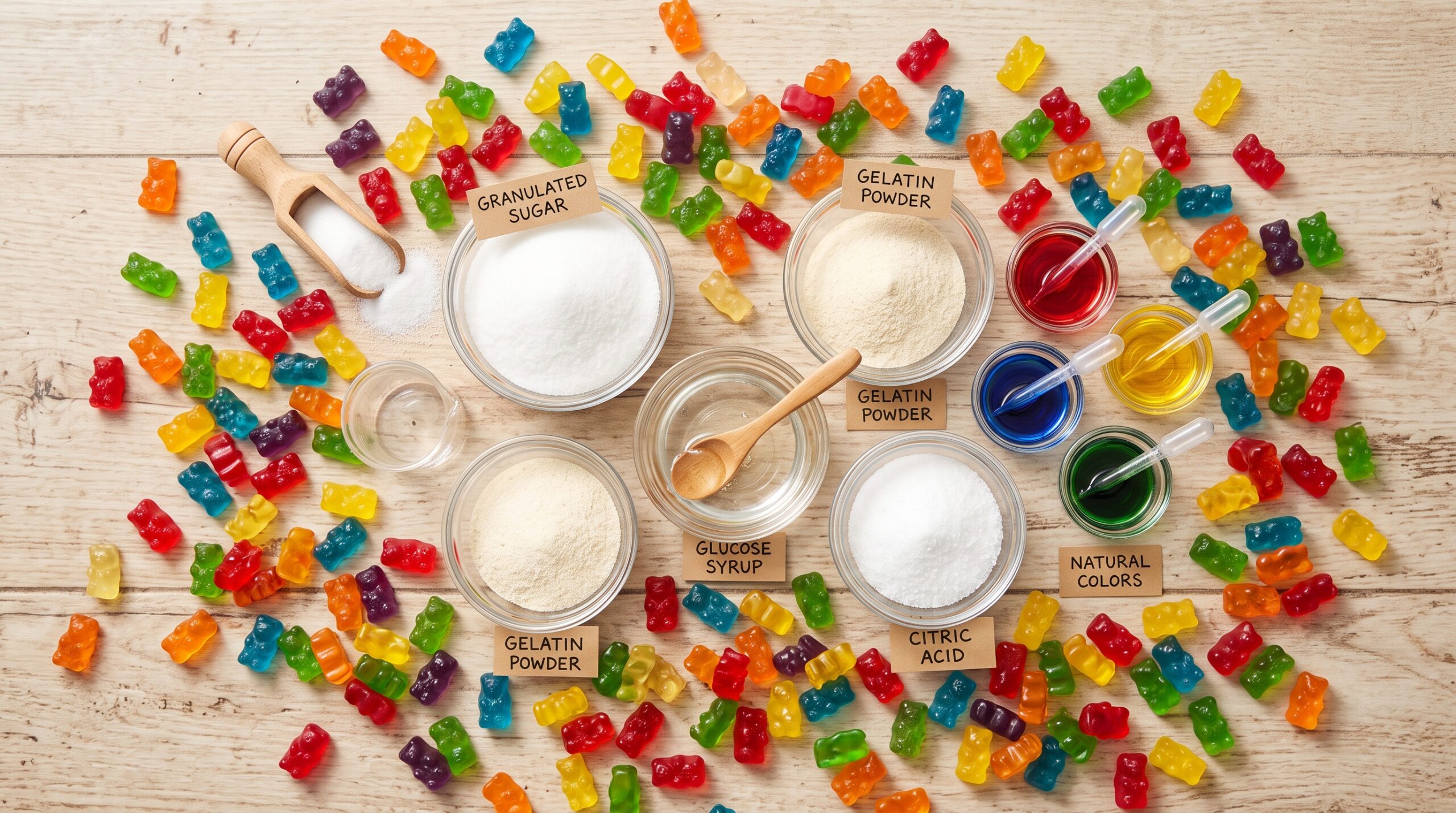
Gummy candy is built from a gelling agent, sugar, glucose syrup, water, acid, and flavorings — a deceptively simple formula that’s been largely unchanged since the 1920s.
Understanding the ingredients tells you a lot about why gummies behave the way they do in your body.
Core Ingredients and Their Function
The base of every gummy is a gelling agent that creates the signature chewy texture. Two agents dominate:
- Gelatin — derived from boiled animal bones and connective tissue (pork or beef collagen). It produces a firm, elastic chew with a slight gloss. Roughly 85–90% of gummy candy on the market uses gelatin as the gelling agent.
- Pectin — a plant-based polysaccharide extracted from citrus peels and apple pomace. It creates a softer, slightly less elastic bite and a more opaque appearance. Used in vegan, halal, and kosher gummy products.
Beyond the gelling agent, every gummy contains:
- Sucrose — standard table sugar, the primary sweetener and bulking agent
- Glucose syrup — refined from corn or wheat starch; adds sweetness, controls crystallization, and contributes to the smooth texture
- Citric acid — the sharp sour note in most gummies; also acts as a mild preservative and adjusts pH
- Natural or artificial flavors — the strawberry, raspberry, pineapple, and cola profiles that define each shape
- Natural or artificial colors — Red 40, Yellow 5, Yellow 6, and Blue 1 are the four most common synthetic dyes in U.S. gummy brands; natural alternatives include spirulina (blue-green), carmine (red-pink), and beta-carotene (orange-yellow)
- Carnauba wax or mineral oil — a thin coating applied after de-molding to prevent pieces from sticking together and to give the finished product a subtle shine
What the Nutritional Numbers Actually Look Like
A standard 1.5 oz (43 g) serving of gummy bears — roughly 15 to 18 bears depending on brand — contains:
| Nutrient | Amount | % Daily Value |
|---|---|---|
| Calories | 130–150 kcal | 7% |
| Total Carbohydrates | 35–38 g | 13% |
| Total Sugar | 28–32 g | — |
| Added Sugar | 28–32 g | 56–64% |
| Protein | 2–3 g | 4% |
| Fat | 0 g | 0% |
| Fiber | 0 g | 0% |
For context, the American Heart Association recommends no more than 25 g of added sugar per day for women and 36 g for men. One standard serving of gummy bears nearly exhausts — or exceeds — the daily sugar limit for women in a single snack. That’s the figure worth remembering.
Gelatin vs. Pectin — Does the Gelling Agent Matter?
| Feature | Gelatin Gummies | Pectin Gummies |
|---|---|---|
| Source | Animal collagen (pork/beef) | Plant (citrus/apple) |
| Texture | Firmer, more elastic | Softer, slightly less springy |
| Melting point | Higher — holds shape in heat | Lower — melts faster |
| Protein content | 2–3 g per serving | 0 g |
| Suitable for vegans? | No | Yes |
| Collagen benefit claim? | Marginal (digestion breaks down most) | None |
| Common brands | Haribo Gold-Bears, Black Forest | Annie’s Organic, Surf Sweets |
From a health standpoint, the gelling agent matters far less than the sugar content, which is nearly identical across both types.
The Sugar Problem — How Much Is Too Much?
One serving of gummy candy delivers 28–32 g of added sugar with no fiber, protein, or micronutrients to slow its absorption — making it one of the most sugar-dense snack foods by weight.
How Gummy Sugar Hits the Body
Gummies contain sucrose and glucose syrup — both fast-digesting sugars. Unlike the natural sugar in a whole apple, which arrives with fiber that slows gastric emptying and blunts the glucose spike, gummy sugar enters the bloodstream rapidly after digestion in the small intestine.
The result is a sharp rise in blood glucose and a corresponding insulin surge. For healthy adults in good metabolic shape, this cycle is manageable in small, infrequent doses. For people with pre-diabetes, insulin resistance, or diabetes, even occasional gummy binges can be disruptive to blood glucose management.
According to data from USDA FoodData Central, 100 g of standard gummy candy contains approximately 66–77 g of total sugar. By comparison, 100 g of Coca-Cola contains about 11 g of sugar. Gummies are concentrated sugar in a portable, nearly irresistible chew format — which is exactly why portion control is so difficult with them in practice.
Chronic high-sugar intake is connected to:
- Weight gain — gummies provide caloric density without triggering meaningful satiety hormones (leptin, cholecystokinin). You don’t feel full the way you would after eating 150 calories of nuts or cheese.
- Elevated triglycerides — excess fructose (half of sucrose by molecular weight) is converted to triglycerides in the liver under conditions of regular overconsumption.
- Energy crashes — the rapid blood glucose spike is followed by an equally rapid dip, triggering hunger and cravings roughly 60–90 minutes after eating.
- Tooth decay — addressed in detail in the next section.
The World Health Organization recommends limiting free sugars to less than 10% of total energy intake, with further benefits below 5% — roughly 25–50 g per day for an average adult. A single serving of gummies consumes that entire range.
Are “Sugar-Free” Gummies a Better Option?
Sugar-free gummies substitute sucrose with sugar alcohols — maltitol, sorbitol, isomalt, or erythritol — or with high-intensity sweeteners like sucralose or stevia. These reduce the caloric load and moderate the blood sugar spike.
The trade-off is well-documented: sugar alcohols (especially maltitol and sorbitol) are incompletely absorbed in the small intestine. At doses above 10–15 g, they pull water into the colon osmotically, causing cramping, bloating, and diarrhea. This is not a hypothetical concern — a well-known sugar-free gummy bear brand became genuinely famous on Amazon for this exact reason, generating hundreds of reviews describing extreme digestive distress after eating a large portion.
Practical bottom line: for most people, eating 10–12 regular gummy bears occasionally is a lower-risk choice than eating a large portion of sugar-free gummies with maltitol. Moderation beats substitution.
Are Gummies Bad for Your Teeth?
Yes — gummies are among the most dentally damaging candy formats, because their sticky texture prolongs sugar and acid contact with tooth enamel far beyond what most people realize.
Why Stickiness Is the Core Problem
The chewiness that makes gummies satisfying is the same property that makes them hard on teeth. Standard gelatin-based gummies adhere tenaciously to the pits, grooves, and interproximal surfaces of teeth. Chocolate melts and rinses away within seconds of saliva contact. Hard candy dissolves. Gummy residue, by contrast, can persist wedged between molars and in enamel fissures for 20–40 minutes after eating without deliberate oral hygiene.
During that entire window, Streptococcus mutans and other cariogenic bacteria in the dental biofilm metabolize the sugar residue and produce lactic acid. That acid demineralizes enamel. Repeated acid exposures over time create cavities.
The American Dental Association identifies sticky, slowly-dissolving sugary foods as a higher cavity risk than non-sticky high-sugar foods. Critically, frequency matters as much as quantity: eating 5 gummies five times across a day is more damaging than eating 25 gummies in one sitting, because each separate exposure resets the acid attack clock and gives enamel less time between episodes to remineralize.
Sour gummies add a second layer of dental risk: the citric acid coating that delivers the sour effect has a pH of roughly 2.5–3.2, approaching the 5.5 threshold at which enamel begins to dissolve directly, independent of bacterial metabolism.
Minimizing Dental Damage
If you’re going to eat gummies, these practices meaningfully reduce the dental impact:
- Eat them with a full meal, not as a standalone snack. Saliva flow is highest during eating and helps buffer acids and mechanically clear food debris.
- Rinse with water immediately afterward — this dislodges loose residue and dilutes acid. Brushing immediately after is actually counterproductive: acid-softened enamel can be abraded by toothbrush bristles.
- Wait 30–40 minutes, then brush with fluoride toothpaste to remineralize enamel.
- Avoid gummies late at night when salivary flow drops to its lowest point and the mouth’s natural buffering capacity is minimal.
- Consider xylitol gum immediately after — xylitol inhibits S. mutans growth and stimulates saliva flow.
Are Gummies Bad for Your Stomach?
For most people eating reasonable portions, gummy candy causes no digestive issues. The problems start with specific ingredients consumed in excess — particularly sugar alcohols, citric acid overload, and sheer sugar volume.
The Gelatin and Collagen Claim
You may have seen marketing language suggesting that the gelatin in gummies benefits gut health or joint cartilage. This claim is technically grounded in real biochemistry but routinely overstated.
Gelatin is denatured collagen — primarily composed of the amino acids glycine, proline, and hydroxyproline. When consumed, stomach acid and proteolytic enzymes break it down into these constituent amino acids, which are absorbed and used throughout the body for whatever biosynthetic purpose is most pressing. They don’t selectively flow to joint cartilage or gut lining.
The NIH Office of Dietary Supplements notes that while collagen peptides show modest evidence for joint discomfort reduction at therapeutic doses (10–15 g per day in clinical research), the 2–3 g of gelatin in a candy gummy serving is unlikely to produce a measurable benefit. You’d need to eat roughly 5–7 servings of gummy bears to approach a therapeutic collagen dose — and at that point, the 150+ g of sugar you’ve consumed is a far more significant health input than the collagen.
When Gummies Do Cause Stomach Problems
Citric acid sensitivity: People with acid reflux, GERD, or gastritis may find that sour gummies with heavy citric acid coatings aggravate symptoms. The high-acid coating can relax the lower esophageal sphincter and increase reflux events.
Volume-induced osmotic diarrhea: Eating a genuinely large quantity of regular gummies — half a bag or more in one sitting — can draw water into the intestine osmotically due to sugar load, causing cramping and loose stools, particularly in children with smaller body mass.
Sugar alcohol gummies: This is the most common and severe cause of gummy-related digestive distress. Any gummy labeled “sugar-free” or “diabetic-friendly” that lists maltitol or sorbitol as primary sweeteners should be approached with caution. Read the label. If the sugar alcohol content per serving exceeds 10 g, consider limiting your intake to a small test portion first.
How to Choose Better Gummies — A Practical Guide
The gap between the worst and best gummy options on the market is significant once you know what to look for on the label.
What to Prioritize on the Label
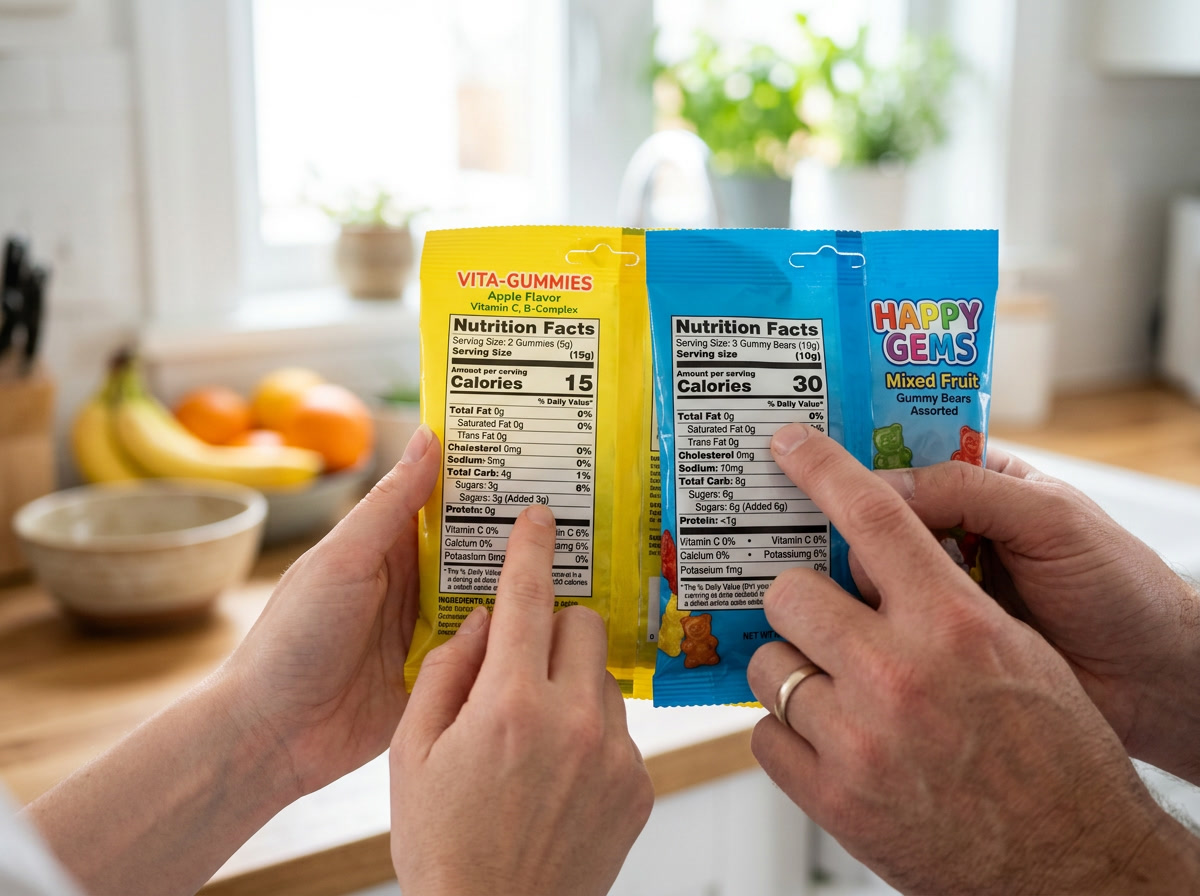
- Added sugar per serving — under 15 g is a reasonable target if you’re eating gummies more than rarely. Under 10 g is excellent.
- Ingredient list length — a gummy with 6 ingredients is less processed than one with 20. Shorter is generally better.
- Artificial dyes — Red 40, Yellow 5, Yellow 6, and Blue 1 are present in most mainstream U.S. gummy brands. The EU requires mandatory warning labels (“may have an adverse effect on activity and attention in children”) on products containing these dyes; the U.S. does not. The evidence in adults is weak, but for parents of hyperactivity-sensitive children, natural color alternatives are worth seeking out.
- High-fructose corn syrup — present in some but not all gummy formulations. Nutritionally, glucose syrup and HFCS behave similarly; the more meaningful metric is total sugar content.
- Gelling agent — gelatin vs. pectin matters primarily for dietary restriction compliance (vegan, halal, kosher), not meaningfully for health outcomes.
Gummy Options by Health Profile
| Tier | Example | Added Sugar/serving | Key Attribute |
|---|---|---|---|
| Standard candy | Haribo Gold-Bears | 30 g | Classic; artificial dyes; gelatin |
| Improved mainstream | Black Forest Organic | 18 g | Organic cane sugar; no HFCS |
| Better-for-you candy | Annie’s Organic Bunny Fruits | 11 g | Pectin; natural colors |
| Functional supplement | Olly Vitamins Gummies | 2–5 g | Added vitamins; still contains sugar |
| Sugar-free candy | Albanese Sugar Free | 0 g sugar | Maltitol — GI risk in large servings |
The “functional gummy” category — vitamins, probiotics, collagen, sleep — has grown enormously. These products occupy a gray zone between candy and supplement. If you’re genuinely using vitamin gummies to address a nutritional need, a low-sugar version is a reasonable delivery mechanism. If you’re eating 4 vitamin gummies “because they taste good,” you’re eating candy with a supplement label — and paying a supplement price for it.
How Gummies Are Made — The Manufacturing Reality
Understanding how gummy candy is produced at scale explains why ingredient quality and texture consistency vary so dramatically between budget and premium brands.
The Industrial Gummy Production Process
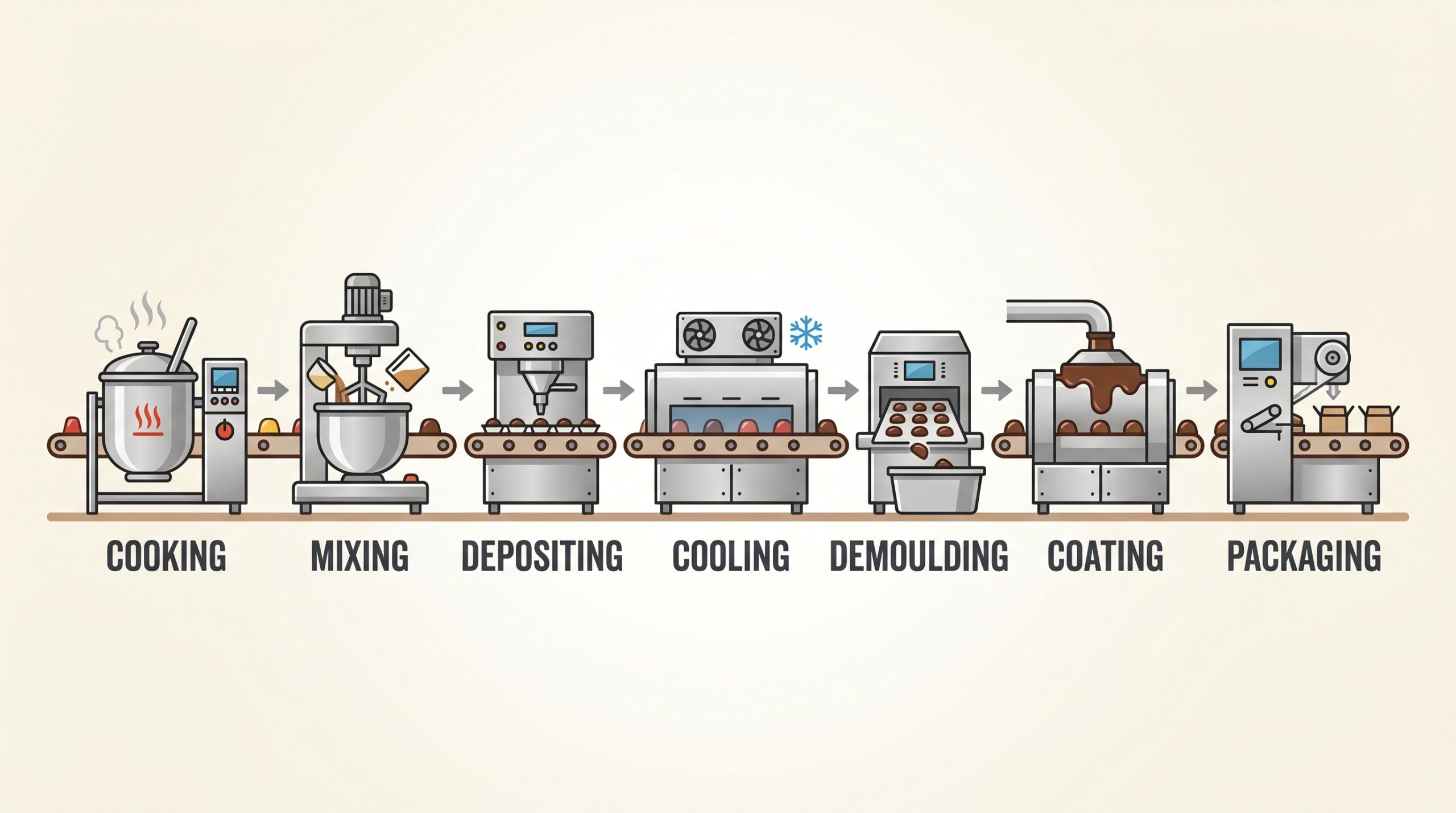
Commercial gummy candy production centers on a mogul depositing system — a machine that injects hot liquid candy mass into starch powder molds, then conveys those molds through a conditioning tunnel while the gummies set. The process at most facilities runs continuously, 24 hours a day.
Step by step:
- Ingredient preparation — gelatin is hydrated in cold water, then dissolved at 55–60°C. Pectin requires a slightly different hydration curve. The dissolved gelling agent is combined with sugar, glucose syrup, and citric acid to create a liquid candy mass at 80–90°C.
- Flavor and color dosing — flavor compounds and colorants are metered into the candy mass immediately before depositing. This is a critical quality control point: natural flavor compounds are volatile and degrade at high temperatures, which is why premium brands that use real fruit extracts must inject them at lower temperatures with faster line speeds.
- Starch mogul depositing — the hot candy mass is pumped into a depositor head that injects precise volumes (typically 2–5 g per piece) into cavities pressed into starch powder. The starch acts as both the mold surface and a moisture absorber during setting.
- Conditioning/drying — molds travel through a temperature-controlled tunnel (typically 18–22°C, 30–40% relative humidity) for 24 to 72 hours. Moisture migrates out of the candy into the starch during this period, reducing water activity and firming the gummy to its final texture. Humidity control in this phase directly determines shelf life.
- De-molding and finishing — gummies are separated from starch on a de-molding screen, then cleaned of starch residue. A light coating of vegetable oil or carnauba wax is applied to prevent pieces from sticking together. Sour variants are tumbled with a citric acid and sugar mixture at this stage.
- Packaging — filled into pouches, bags, or bulk containers under low-humidity conditions to prevent moisture re-uptake.
For more on commercial gummy candy equipment and production systems, see our gummy candy production line guide.
Where Quality Diverges Between Brands
The difference between a premium gummy brand and a low-cost private label comes down to three variables:
- Conditioning time: 72-hour conditioning produces a firmer, more consistent texture with lower residual moisture and longer shelf life than a 24-hour minimum run. Budget producers optimize for throughput; premium producers optimize for texture.
- Temperature precision: variations of ±3°C in the conditioning tunnel produce measurable differences in final gummy hardness. Modern facilities run closed-loop temperature control; older lines run open systems with wider variance.
- Ingredient sourcing: the most significant quality driver. Real fruit extracts versus artificial flavor compounds. Natural colors versus petroleum-derived dyes. Grass-fed gelatin versus commodity gelatin. These choices are reflected in the ingredient list length and cost — and in the final taste experience.
Future Trends in Gummy Candy (2026 and Beyond)
The gummy candy market is bifurcating: traditional indulgence candy is holding stable, while a fast-growing functional and better-for-you segment is capturing new health-conscious consumers.
The Functional Gummy Boom
The crossover between candy and nutraceutical has produced one of the fastest-growing categories in the packaged food industry. The appeal is clear: a delivery format people already enjoy, combined with ingredients they feel good about consuming.
| Functional Category | Growth Driver | Key Ingredients |
|---|---|---|
| Vitamin/mineral gummies | Children’s supplement adoption | Vitamins D, C, B12, Zinc, Iron |
| Sleep gummies | Sleep health awareness surge | Melatonin, L-theanine, Ashwagandha |
| Probiotic gummies | Gut health trend | Lactobacillus acidophilus, Bifidobacterium |
| Collagen gummies | Beauty-from-within market | Marine collagen peptides, Vitamin C |
| Energy/focus gummies | Cognitive performance trend | Caffeine, B vitamins, Lion’s mane extract |
| Immunity gummies | Post-pandemic awareness | Elderberry, Vitamin C, Zinc |
The manufacturing challenge is real: most bioactive ingredients are sensitive to the heat, low water activity, and acidic pH of the gummy manufacturing environment. Probiotics are particularly difficult — most Lactobacillus strains do not survive 80–90°C processing temperatures unless microencapsulated in heat-stable shells before incorporation. Encapsulation technology is now a key differentiator for functional gummy producers.
Sugar Reduction and Clean-Label Reformulation
Responding to public health pressure and EU sugar reduction targets, major brands are actively reformulating with:
- Allulose — a rare sugar that tastes and behaves like sucrose in processing but is largely excreted without metabolism. Negligible insulin response, 0.4 kcal/g versus sucrose’s 4 kcal/g. Increasingly cost-competitive.
- Monk fruit extract — intensely sweet (150–200× sucrose), zero calorie, increasingly viable at scale as extraction costs fall.
- Prebiotic fibers — inulin, chicory root fiber, and resistant dextrins partially replace sugar bulk while adding a modest gut health benefit.
Clean-label consumers are also pushing brands away from petroleum-derived dyes toward natural color alternatives. The technical challenge is color stability: natural pigments from spirulina, carmine, and turmeric fade during shelf life in ways that artificial dyes do not. This is an active area of formulation R&D in 2026.
FAQ
Are gummies very bad for you?
Standard candy gummies are not “very bad” in small, occasional amounts. The primary concern is added sugar — roughly 28–32 g per standard serving, near or above the daily recommended limit. Eaten in controlled portions a few times a week, they pose no serious health risk for most healthy adults. The risk compounds with frequency and portion size.
Are gummies bad for your stomach?
Regular candy gummies in normal portions are generally fine for most people’s digestion. Problems arise with sugar-free gummies containing maltitol or sorbitol, which cause diarrhea and cramping above 10–15 g. Sour gummies with heavy citric acid coatings can aggravate acid reflux and gastritis in sensitive individuals.
Are gummies bad for your teeth?
Yes — gummies are among the worst candy formats for dental health. Their sticky texture adheres to enamel and feeds cavity-causing bacteria for 20–40 minutes after eating. Eat them with meals rather than as standalone snacks, and rinse with water immediately afterward.
Are gummies bad for your heart?
Chronic high-sugar intake is associated with elevated triglycerides, increased LDL particle count, and systemic inflammation — all cardiovascular risk factors. Occasional gummy consumption in an otherwise balanced diet doesn’t meaningfully affect heart health. Daily heavy consumption as part of a broadly high-sugar diet does, over months and years.
Are gummies bad for your kidneys?
In normal amounts, candy gummies pose no direct kidney risk for healthy adults. People with chronic kidney disease should monitor phosphorus and potassium intake, but gummies are not a significant source of either mineral. The concern is indirect: chronic high-sugar diets contribute to obesity and type 2 diabetes, both of which cause progressive kidney damage over time.
Are gummies bad for you if eaten every day?
Daily gummy consumption adds up quickly. Even one modest daily serving adds roughly 150–200 extra empty sugar calories — calories with no nutritional payoff. Over months, this contributes to weight creep, dental erosion, and metabolic strain. If you find yourself reaching for gummies daily, switching to a low-sugar vitamin gummy or a piece of fruit addresses the craving with less metabolic cost.
Are gummies bad for children?
Children are more vulnerable to the dental damage and blood sugar disruption that candy gummies cause. Portion control is especially important — half a standard serving (8–10 bears) is appropriate for younger children. The sticky texture also poses a minor choking risk for children under 3. For school-age children, eating gummies after a meal rather than as a standalone snack significantly reduces the dental impact.

Conclusion
Candy gummies are not inherently bad for you — but calling them “harmless” does a disservice to the nutritional facts. Their high added sugar content (28–32 g per serving), near-zero fiber, and sticky texture create real trade-offs for dental health, blood sugar management, and caloric balance when consumed frequently or in large quantities.
That said, context matters. Eating a small handful of gummy bears after dinner a few times a week is not a health disaster. The damage accumulates when gummies become a daily habit, a large-portion snack, or a routine treat for children whose teeth and metabolic systems are more sensitive to the impact.
The better-for-you gummy market is evolving rapidly, with reduced-sugar formulations, natural color alternatives, and functional ingredients creating genuinely improved options. If you love gummies, look for pectin-based or gelatin-based options with under 15 g of added sugar per serving, natural colors, and a short ingredient list. Your teeth — and your blood sugar — will notice the difference.
Related Articles
- Gummy Candy Production Line — How Commercial Gummies Are Made
- What Are Gummy Bears Made Of? Ingredients Explained
- Pectin vs Gelatin for Gummy Candy — Which Is Right for Your Line?
- Types of Candy Equipment for Modern Confectionery Factories
- How to Start a Gummy Candy Business — Equipment and Process Guide