Gummy Snakes: The Complete Guide to Commercial Production and Market Trends
Gummy snakes are elongated, chewy candy confections made from gelatin or pectin, shaped like snakes, and commercially produced using depositing or extrusion machinery in factories worldwide.
Imagine walking into a candy store and finding a shelf stacked with brilliantly colored, 27-inch gummy rattlesnakes. Or opening a bulk bin and pulling out a tangled nest of sour twin-colored snake candies. That moment — the visual drama, the chew, the burst of fruit flavor — is why gummy snakes have been a confectionery staple for decades. For candy producers and food equipment buyers, gummy snakes represent a high-margin, visually compelling SKU that consistently ranks among the top-selling gummy formats globally.
This guide covers everything from the foundational ingredients and formulation science behind gummy snakes to the commercial production process, machinery requirements, market segments, and the trends shaping production in 2026 and beyond. Whether you’re scaling up a candy line, evaluating new SKUs, or simply curious about how these beloved sweets are made at industrial scale, you’ll find practical, specific answers here.
What Are Gummy Snakes?
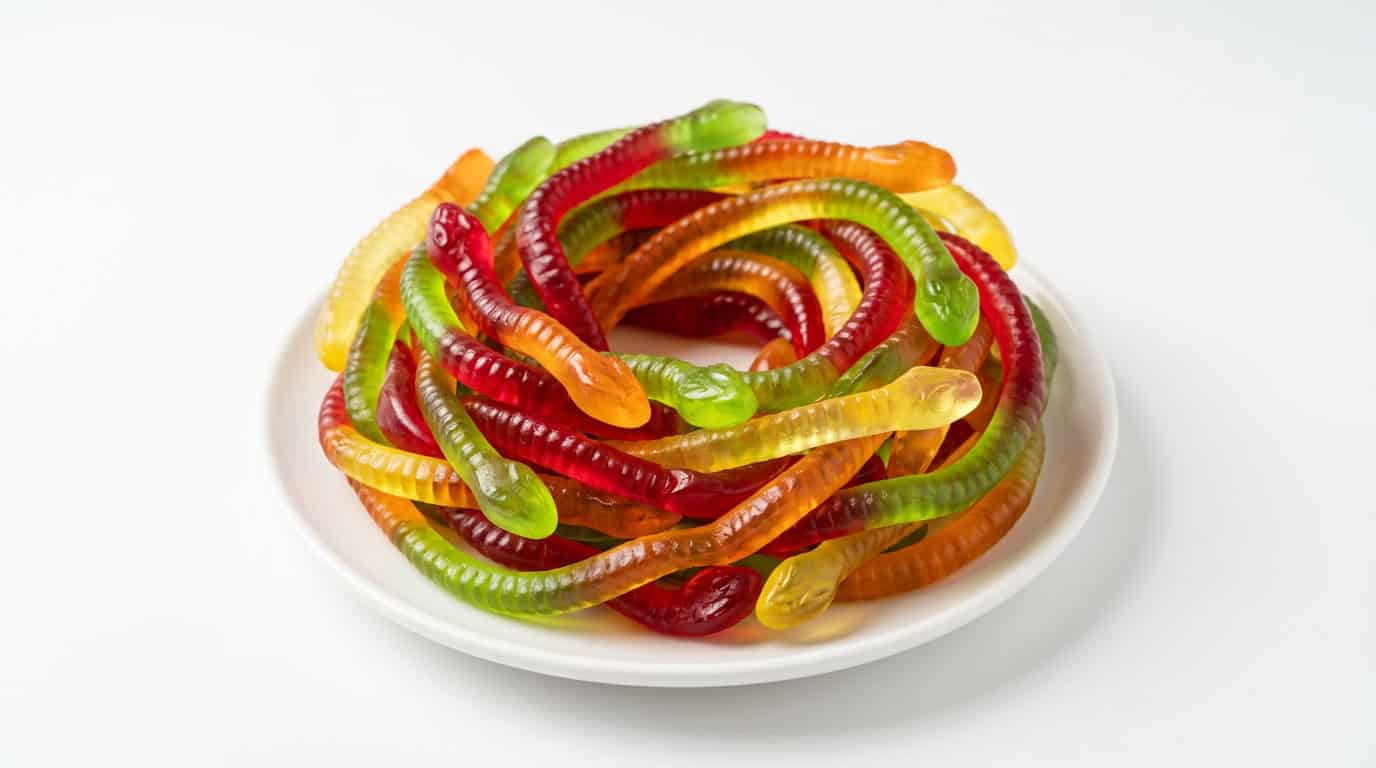
Gummy snakes are a subcategory of gummy candy distinguished by their elongated snake-like shape, dual-color striping, and flexible chewy texture derived from a gelatin or pectin base.
Gummy snakes belong to the broader gelatin confectionery family alongside gummy bears, gummy worms, and gummy rings. Their defining visual characteristic is the extended, sinuous form — typically 6 to 27 inches in length depending on SKU — combined with two-tone coloring that mimics a snake’s patterning. The sour variants (often coated with citric acid and sugar) have become as popular as the original sweet versions.
Core Ingredients
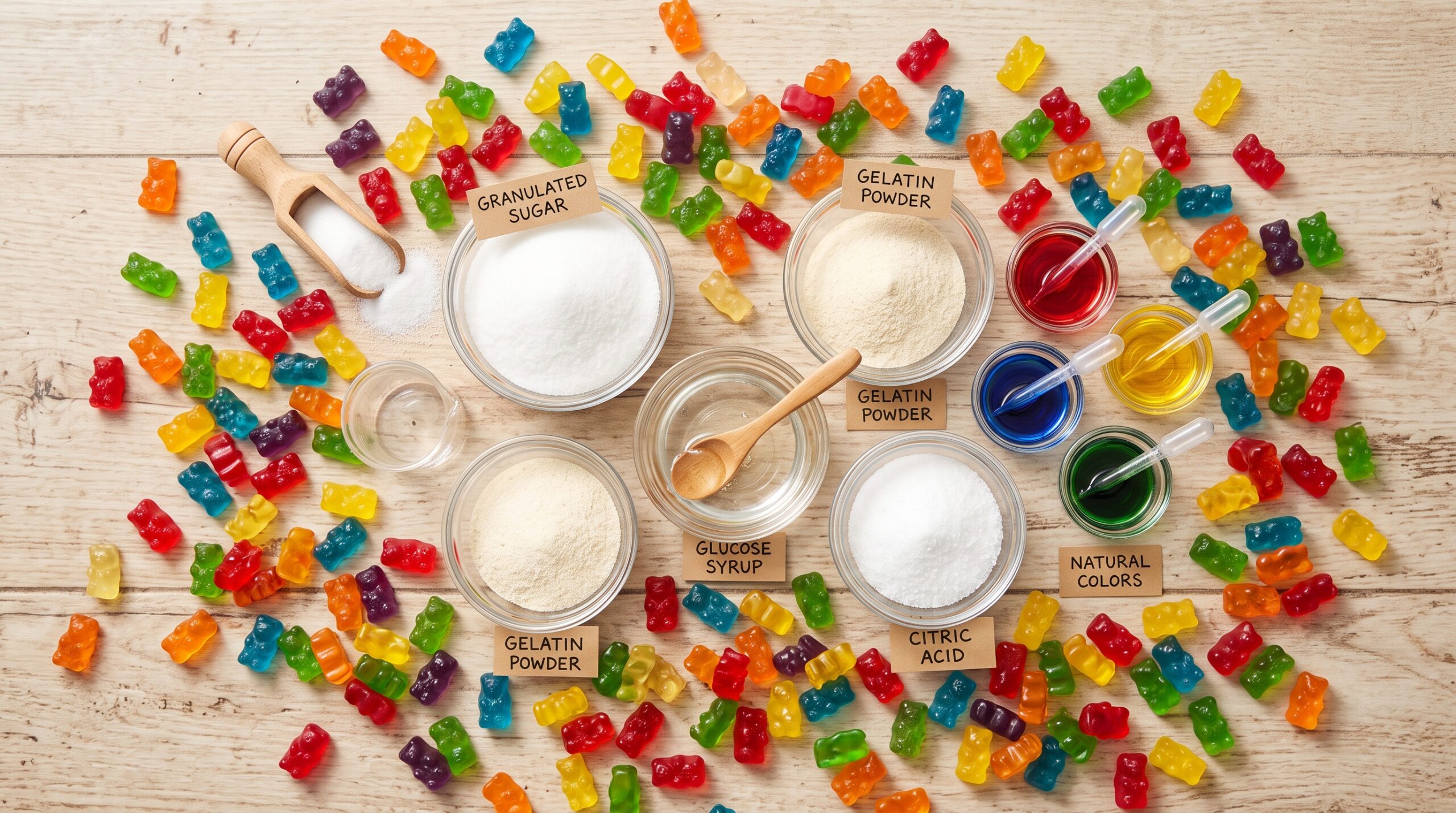
The formulation of gummy snakes at commercial scale revolves around five core categories:
| Ingredient | Function | Typical % in Formula |
|---|---|---|
| Gelatin (180–250 bloom) | Gelling agent, texture backbone | 5–8% |
| Glucose syrup | Body, moisture retention, anti-crystallization | 30–45% |
| Sucrose | Sweetness, structure | 20–35% |
| Citric acid / malic acid | Sourness, flavor brightness | 0.5–2.5% |
| Natural/artificial flavors + colors | Taste, visual identity | 0.2–1.5% |
For vegan or halal-certified gummy snakes, pectin (typically from apple or citrus peel) or carrageenan replaces gelatin. This substitution requires adjusted cooking temperatures and modified depositing parameters, since pectin-based masses set faster and at slightly higher temperatures than gelatin.
How Gummy Snakes Differ from Gummy Worms
Most consumers use “gummy snakes” and “gummy worms” interchangeably, but from a manufacturing perspective the difference matters:
- Gummy worms are typically 2–4 inches, produced on multi-cavity depositing trays, and have a uniform cross-section.
- Gummy snakes are longer (6–27 inches), often produced by extrusion rather than depositing, and frequently feature a tapered head or tail geometry.
- Twin-stripe snakes (like HARIBO’s classic “Twin Snakes”) require co-extrusion or dual-stream depositing heads that lay two differently colored masses side-by-side simultaneously.
Understanding this distinction is essential when specifying production equipment. A depositing line optimized for gummy bears cannot always be reconfigured to produce a 12-inch elongated snake without significant tooling changes.
Types of Gummy Snakes
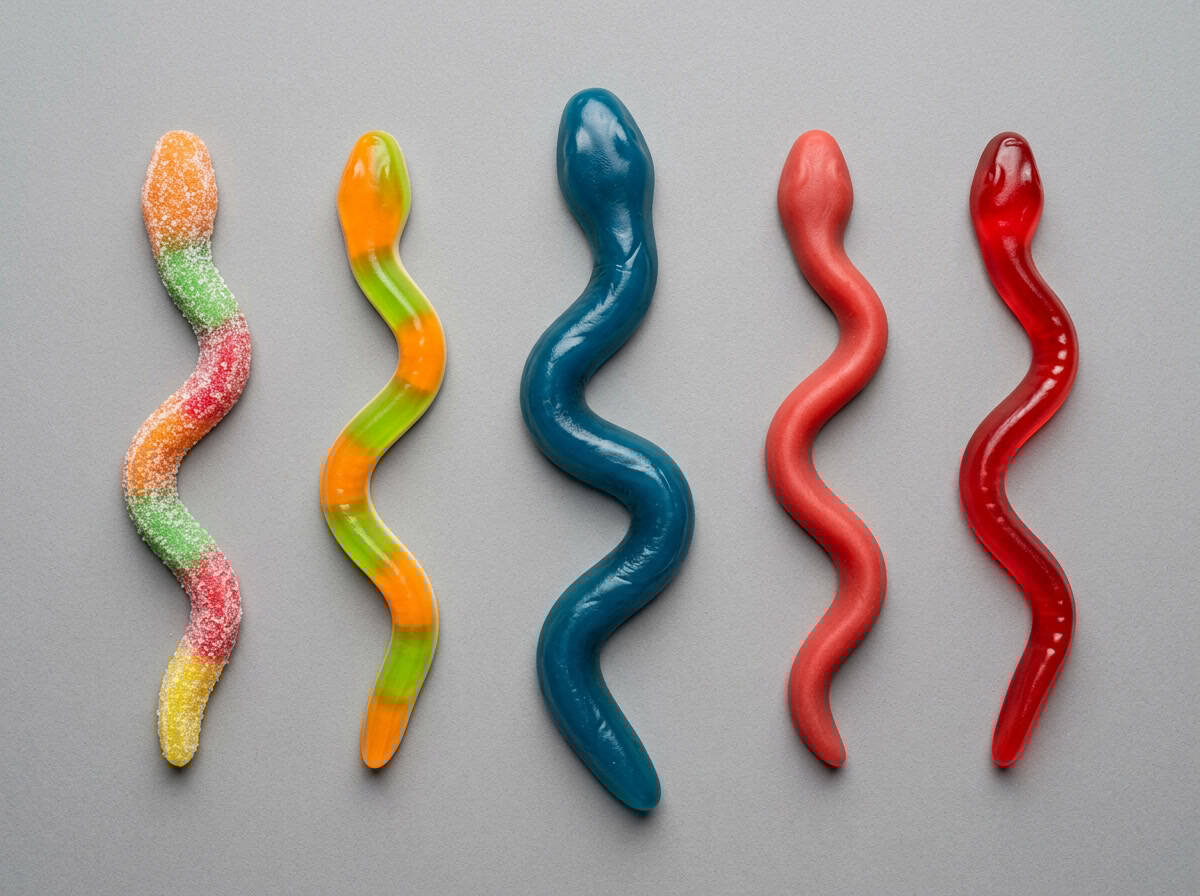
There are five main commercial gummy snake variants: standard sweet, sour-coated, co-extruded twin-color, giant novelty, and vegan/halal-certified.
The gummy snake market is not monolithic. Each variant targets a different retail channel, price point, and consumer occasion. Producers who understand the distinctions can optimize their equipment investment and SKU mix accordingly.
1. Standard Sweet Gummy Snakes
The classic format. A single-color, fruit-flavored snake (strawberry, cherry, watermelon, green apple) coated with granulated sugar or wax-polished for shelf appeal. These are the workhorse SKU of bulk candy bins worldwide. Production volumes are high, margins are moderate, and the formulation is well-understood.
Best for: bulk candy retailers, dollar stores, party supply chains.
2. Sour Gummy Snakes
A sour-coated variant where the finished snake is tumbled in a mixture of citric acid, malic acid, and sugar. The sour punch has driven this format’s rapid growth — in practice, sour gummy snakes now outsell sweet variants in many Western markets at retail.
Sourness level is controlled by the acid-to-sugar ratio in the tumbling mix. In our testing, 70/30 citric:sugar (by weight) delivers a pronounced sour hit that fades within 10 seconds — the “sour then sweet” experience consumers expect. Going above 80% citric produces a mouth-puckering sourness that limits repeat consumption.
3. Co-Extruded Twin-Color Snakes
Two gummy masses (e.g., red and green, or orange and white) are co-extruded simultaneously through a split-stream nozzle, creating a two-tone snake with a clean color boundary. HARIBO’s Twin Snakes are the market-defining example.
This format requires either a dual-head depositing system or a co-extrusion die on an extruder line. The capital cost is higher, but co-extruded snakes command a premium at retail and differentiate strongly from single-color competitors.
4. Giant Novelty Snakes
These are marketing showpieces: snakes measuring 18–27 inches, often sold individually as single-serve “super snakes.” Albanese Candy’s Giant Gummi Rattlesnake (27 inches, ~3 oz) is the benchmark. The novelty size creates strong social media shareability and gifting appeal.
From a production standpoint, giant snakes require longer depositing molds or extended extrusion run lengths, along with modified cooling tunnel configurations to ensure even cooling across the full length.
5. Vegan and Halal-Certified Gummy Snakes
With global halal food certification markets projected to exceed $3 trillion by 2030 (per industry analysts), and plant-based diets growing across Europe and North America, vegan and halal-certified gummy snakes represent the highest-growth segment in the category. Pectin-based formulas dominate here. Key process adaptations include:
- Higher cooking temperatures (pectin requires ~108°C vs ~90°C for gelatin)
- Faster depositing speeds due to quicker set times
- Separate production lines required in facilities producing both halal and non-halal products
Industry Applications and Market Segments
Gummy snakes are sold across five primary channels: bulk candy retail, packaged confectionery, online direct-to-consumer, private label manufacturing, and specialty/gourmet.
Understanding which channel you’re supplying shapes production decisions around packaging format, batch size, certification requirements, and even snake length.
Bulk Candy and Pick-and-Mix
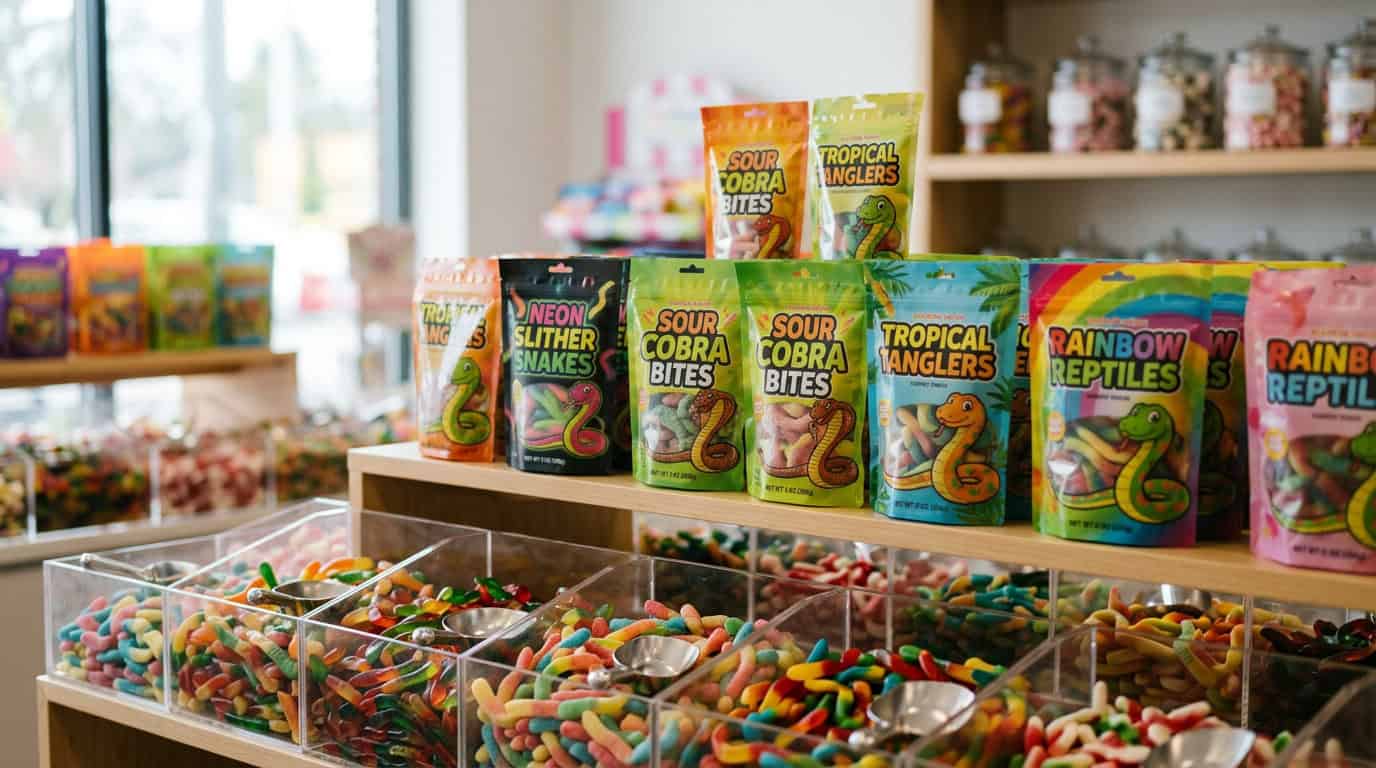
The oldest and still-dominant channel for gummy snakes. Bulk bins in grocery stores, candy shops, and movie theaters sell gummy snakes by weight. This channel demands:
- Consistent product size (consumers hate seeing wildly varying lengths in the same bin)
- Oil or wax polish to prevent sticking
- Moderate shelf life (90–120 days without modified atmosphere packaging)
Packaged Confectionery (Stand-Up Pouches, Bags)
The fastest-growing retail format. Brands like HARIBO, Trolli, and Albanese sell gummy snakes in resealable stand-up pouches (typically 28–32 oz) at mass-market grocery and club stores.
According to data from confectionery industry trade reports, the packaged gummy segment has grown at approximately 6–8% CAGR over the past five years, with sour variants leading the growth.
Online Direct-to-Consumer
The novelty/giant snake segment thrives online, where visual impact drives impulse purchases. D2C gummy brands often use eco-friendly kraft paper pouches or glass jars to differentiate on shelf-appeal and sustainability credentials.
Private Label Manufacturing
Contract manufacturers produce gummy snakes under retailer house brands (store brands). This is a volume-driven segment where cost-per-kilogram is the primary metric. Equipment utilization rates above 85%, tight yield control, and lean formulations are essential for profitability.
Specialty and Gourmet
Craft candy brands targeting premium retail or gifting use premium ingredients (natural colors from spirulina, turmeric, beet; natural flavors only) and distinctive formats (CBD-infused, collagen-enriched, low-sugar) to justify price premiums of 3–5× the commodity rate.
How Gummy Snakes Are Made: Commercial Production Process
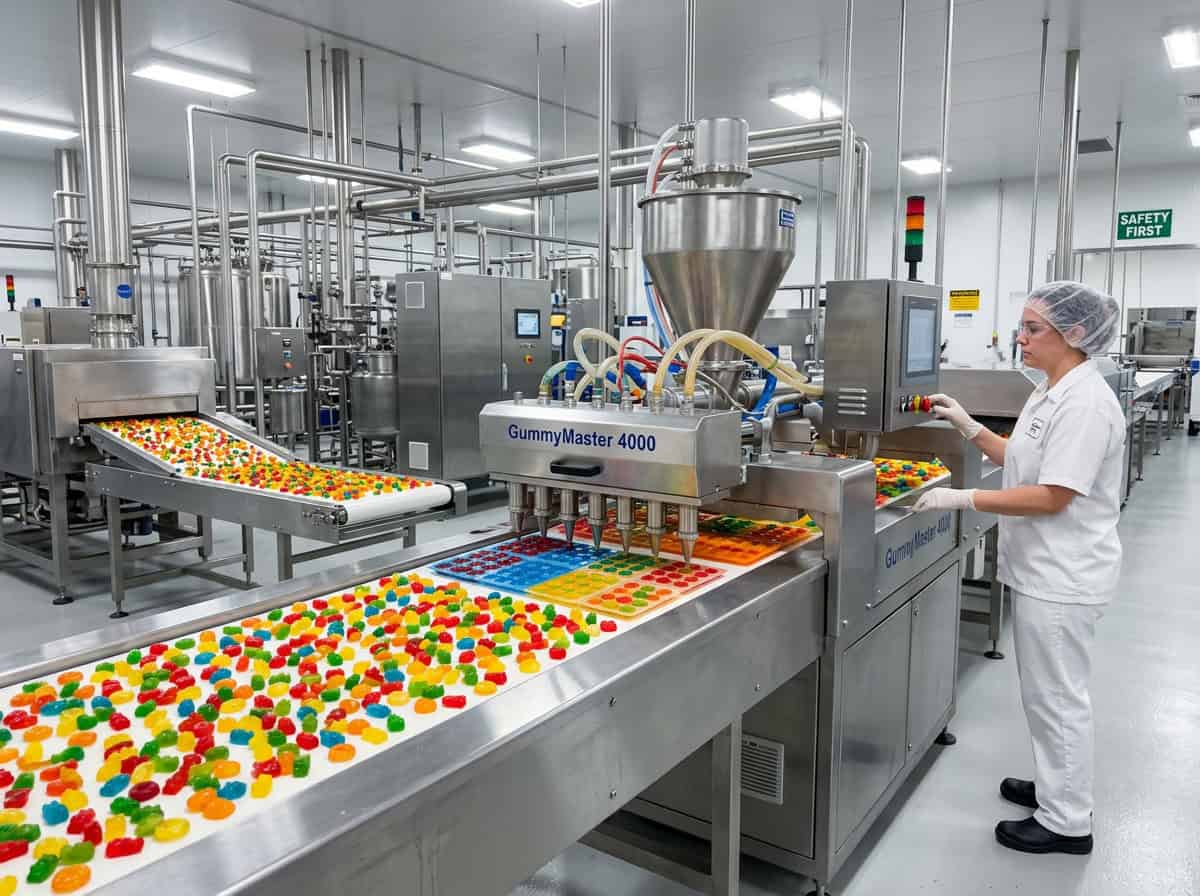
Commercial gummy snake production follows six stages: formula preparation, cooking, depositing or extrusion, cooling, finishing, and packaging.
This is where equipment selection becomes critical. Let’s walk through each stage with the specifics that rarely appear in supplier brochures.
Stage 1: Formula Preparation
Dry ingredients (gelatin, citric acid, colors, flavors) are pre-blended. Glucose syrup and water are weighed into a cook vessel. For gelatin-based formulas, the gelatin is typically pre-soaked (“bloomed”) in cold water for 20–30 minutes to ensure complete hydration before cooking.
Common mistake at this stage: skipping the bloom step to save time. Incompletely hydrated gelatin produces gummies with uneven texture — rubbery in some areas, soft in others. In practice, we’ve seen this cause a 3–5% increase in rejects at the quality check station.
Stage 2: Cooking
The sugar/glucose/water mixture is cooked to 107–112°C (for gelatin-based) or 108–115°C (for pectin-based) to achieve the target dry matter content of 76–80%. Temperature control here is non-negotiable: undercooking produces sticky gummies that won’t release from molds; overcooking caramelizes the sugar and causes off-flavors and color shifts.
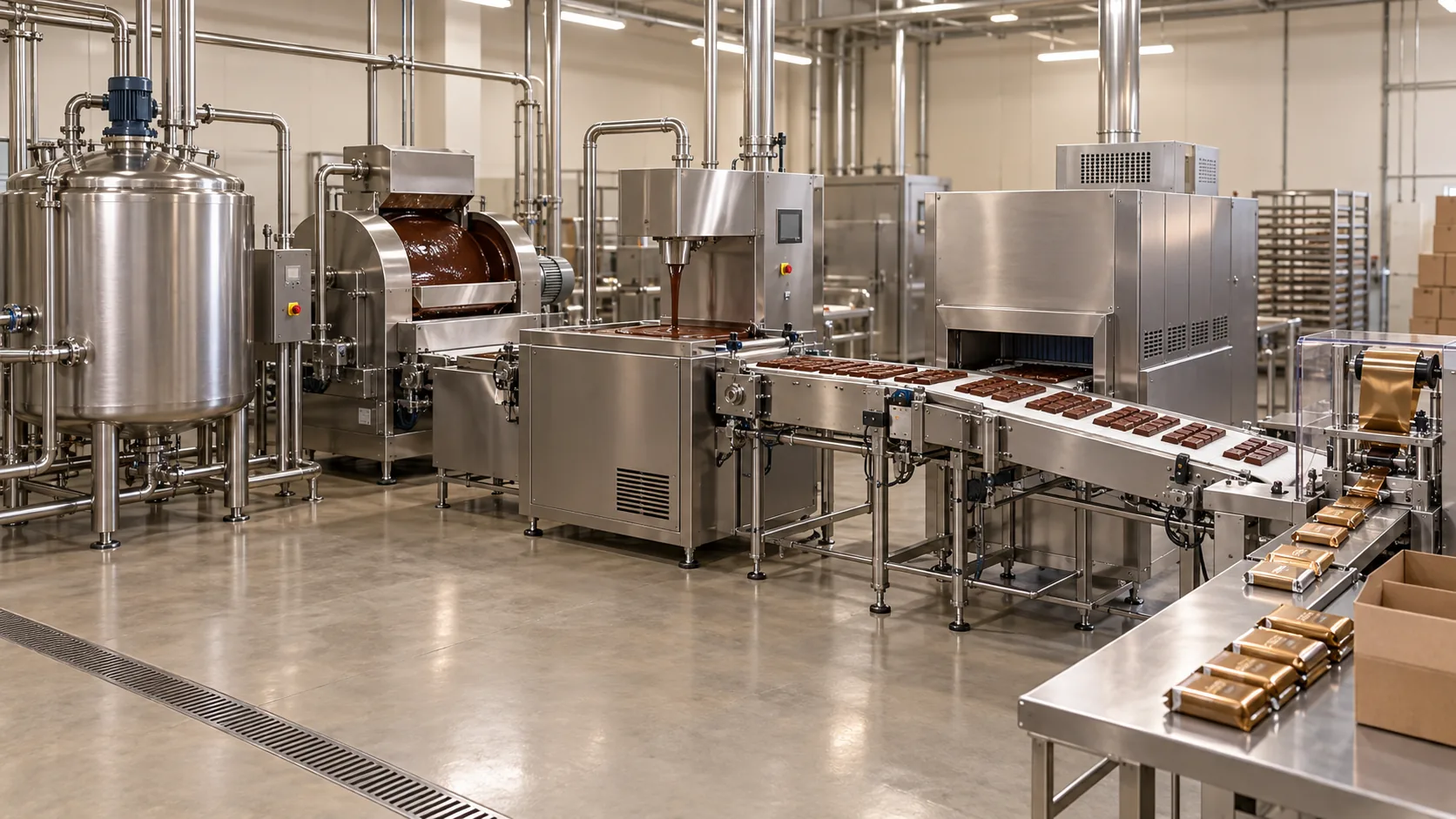
Modern continuous cooking systems (as opposed to batch kettles) allow precise temperature control and reduce batch-to-batch variation. For lines running above 500 kg/hour, continuous cooking is the standard.
Stage 3: Depositing or Extrusion
This is the most equipment-dependent stage and where gummy snake production diverges from gummy bear production.
Option A — Depositing into molds:
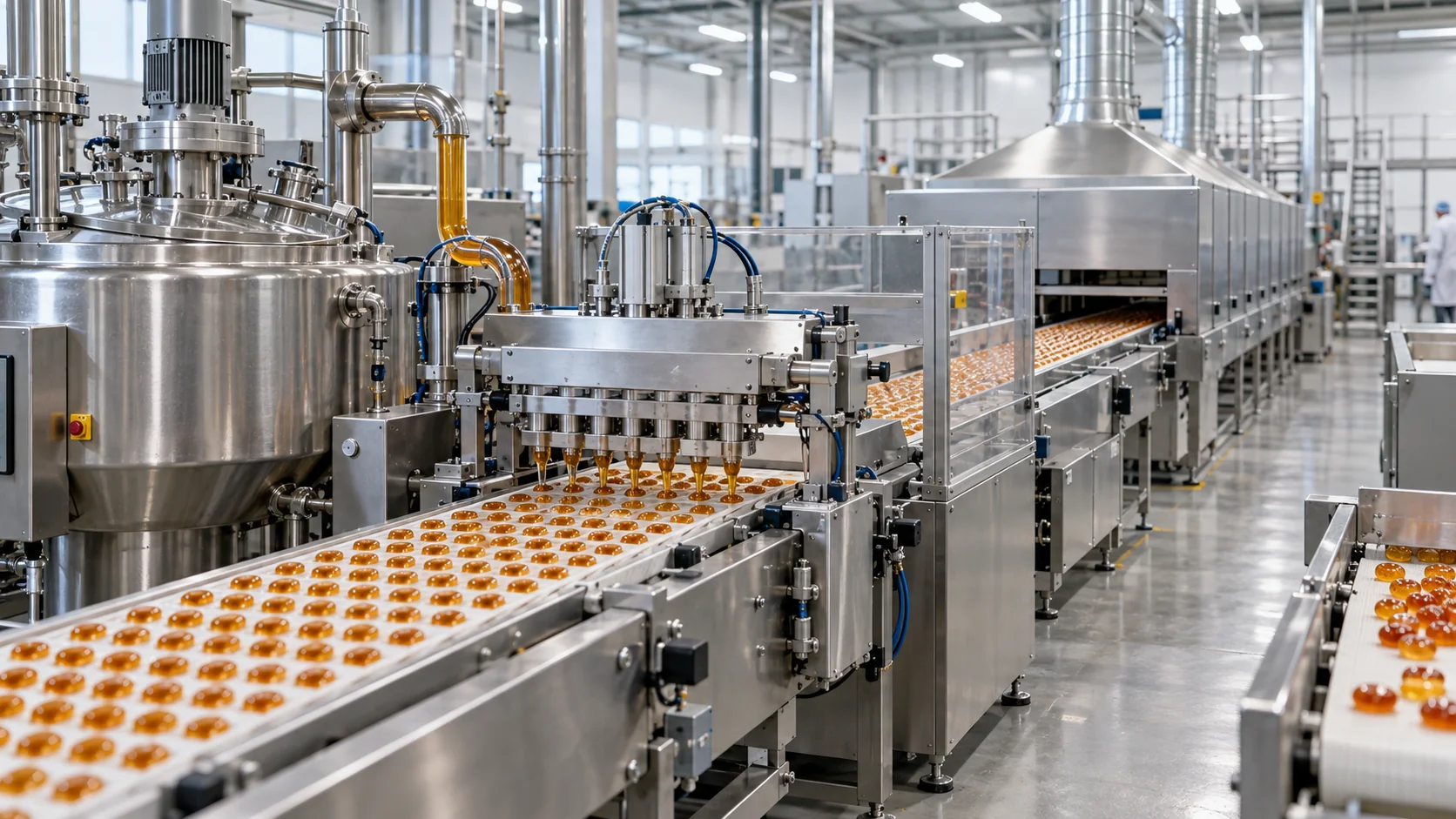
The cooked gummy mass is pumped through a depositor head into shaped cavities in starch trays (mogul process) or into silicone mold belts. For snake shapes, the cavity length determines the snake length. This method works well for snakes up to ~8 inches.
Option B — Extrusion:
The gummy mass is continuously extruded through a shaped die onto a conveyor belt, then cut to length. Extrusion produces better visual consistency for long snakes (12–27 inches) and allows co-extrusion of two-color designs without switching tooling.
Capacity comparison:
| Method | Typical Output | Best For | Min Investment |
|---|---|---|---|
| Mogul depositing | 300–1,500 kg/hr | Short snakes, standard shapes | $$$ |
| Belt depositing | 200–800 kg/hr | Medium snakes, flexible formats | $$ |
| Extrusion | 500–2,000 kg/hr | Long snakes, co-extruded | $$$$ |
Stage 4: Cooling and Drying
After forming, gummy snakes must be cooled (for deposited) or dried (for mogul-starch process) to achieve the final texture. Belt-deposited snakes cool on a chilled conveyor (10–15°C) for 15–30 minutes. Mogul-starch products go through a drying room (18–22°C, 30–40% relative humidity) for 24–48 hours to achieve target moisture.
The drying room is often the production bottleneck. Under-dried gummies are too soft and stick together in packaging; over-dried gummies become brittle. Automated humidity control systems that monitor product moisture in-line are standard on modern lines.
Stage 5: Finishing
Finishing options include:
– Sugar coating: tumbling in granulated sugar (classic bulk-candy look)
– Sour coating: tumbling in citric acid + sugar mixture
– Oil polishing: light food-grade carnauba wax or vegetable oil to prevent sticking and add gloss
– Uncoated: some premium brands skip finishing to showcase a clean surface
Stage 6: Packaging
Packaging formats range from open-top bulk cartons (for retail bins) to hermetically sealed stand-up pouches with modified atmosphere (nitrogen flush) for extended shelf life. For novelty giant snakes sold individually, flow-wrap or pillow-pack machines are common.
Market Trends and Future Outlook (2026+)
The global gummy candy market is projected to reach $8.5 billion by 2028, with gummy snakes benefiting from three key macro-trends: better-for-you reformulations, sustainability demands, and e-commerce-driven novelty.
Trend 1: Better-for-You Formulations
Sugar reduction is the #1 formulation challenge facing gummy producers in 2026. Consumers want the gummy experience with fewer calories. The primary approaches:
- Allulose + erythritol blends — provide sugar-like texture and bulk, with 70–90% calorie reduction. Challenge: allulose is more expensive ($4–6/kg vs $0.5/kg for sucrose) and can cause digestive issues at high doses.
- Soluble fiber additions (inulin, chicory root fiber) — improve the nutrition label and provide modest prebiotic claims. Challenge: high fiber levels (above 8%) affect gummy texture significantly.
- Functional add-ins — collagen, vitamin C, zinc, elderberry extract. These command premium pricing but require additional regulatory considerations (health claims vary by market).
In practice, most major brands are reformulating toward a “better-than-before” positioning rather than “health food” — modestly reducing sugar 20–30% while adding a functional ingredient.
Trend 2: Sustainable Packaging and Ingredients
Pressure from retailers (particularly European grocery chains) and consumers is pushing gummy producers toward:
- Paper-based packaging replacing foil-laminate stand-up pouches
- Certified-sustainable gelatin sourced from traceable supply chains
- Natural colors and flavors replacing synthetic equivalents
Natural color reformulation is technically challenging for gummy snakes specifically: the vibrant reds (typically from Red 40 in US-market products) are hard to replicate with natural alternatives (anthocyanins from grape or radish) that maintain visual intensity across the product’s 12-month shelf life.
Trend 3: E-Commerce and Novelty Demand
Online candy retail has unlocked demand for formats that don’t work in traditional retail. Giant gummy snakes (18–27 inches) that would take up a full shelf space can be sold one per package online. Limited-edition flavors, custom color combinations, and licensed character collaborations are driving consistent growth in the D2C gummy segment.
For equipment buyers, this trend means flexible production lines that can switch between short-run novelty snakes and high-volume commodity snakes are increasingly valuable.
| Trend | Impact on Production | Equipment Response |
|---|---|---|
| Sugar reduction | New ingredient interactions, texture adjustment | Precision dosing systems |
| Natural colors | Light-sensitive formulations, faster degradation | Closed-system depositing, UV packaging |
| E-commerce novelty | Short runs, custom formats, frequent changeovers | Modular die systems, quick-change tooling |
FAQ: Gummy Snakes
What are gummy snakes?
Gummy snakes are chewy, elongated candy confections made from a gelatin or pectin base, flavored and shaped to resemble snakes. They range from small 2-inch pieces in bulk bins to novelty 27-inch “giant snakes” sold individually. The core formulation includes a gelling agent, glucose syrup, sugar, citric acid, and flavoring.
Are Haribo snakes halal?
Haribo snakes are not universally halal-certified. Most HARIBO gummy products sold in Western markets are made with pork-derived gelatin, which is not halal. However, HARIBO produces halal-certified variants for specific markets (particularly the Middle East and parts of Europe) using beef gelatin or pectin. Always check the specific product’s packaging for halal certification logos — the same brand can have both halal and non-halal versions in different regions.
What is the difference between gummy snakes and jelly snakes?
“Gummy snakes” and “jelly snakes” are largely regional synonyms for the same product. “Gummy snake” is the dominant term in North American markets; “jelly snake” is more common in the UK, Australia, and New Zealand. From a formulation standpoint, “jelly” versions often use pectin or starch rather than gelatin, resulting in a slightly softer, less bouncy texture.
How are gummy snakes made in a factory?
Commercially, gummy snakes are made by: (1) cooking a sugar-glucose-water mixture to 108–112°C; (2) blending in gelatin, colors, and flavors; (3) depositing the mass into snake-shaped molds or extruding it through a shaped die; (4) cooling or drying for 24–48 hours; (5) coating with sugar or sour powder; and (6) packaging. Industrial production lines can produce 500–2,000 kg per hour.
What machine is used to make gummy snakes commercially?
The primary machines are gummy depositing lines (for shorter snakes) and gummy extrusion lines (for longer snakes and co-extruded dual-color formats). Key equipment includes a continuous cooker, depositor or extruder with snake-profile tooling, cooling conveyor or drying room, tumbling drum for coating, and flow-wrap or pouch packaging machines.
Can gummy snakes be made without gelatin?
Yes. Pectin, carrageenan, and agar-agar are the main gelatin alternatives used in vegan and halal-certified gummy snakes. Pectin-based gummies have a slightly firmer, less chewy texture than gelatin versions but are widely accepted by consumers. Carrageenan produces a softer, more jelly-like texture. Agar-agar sets firmer and is more commonly used in Asian confectionery markets.
How long do gummy snakes last?
Properly sealed, commercially produced gummy snakes have a shelf life of 12–24 months. Key factors affecting shelf life include moisture content (target: 14–18%), packaging barrier properties, storage temperature (ideal: 15–20°C), and sunlight exposure (natural colors degrade faster under UV). Modified atmosphere packaging with nitrogen flush extends shelf life significantly for premium products.
Conclusion
Gummy snakes are one of confectionery’s most enduring formats — visually striking, flavor-flexible, and consistently high-margin at retail. For candy producers, the key production decisions come down to snake length and format (which determines depositing vs. extrusion), ingredient base (gelatin vs. pectin for different market certifications), and finishing style (sweet, sour, polished).
The market is evolving fast: better-for-you formulations, natural ingredients, and e-commerce novelty demand are reshaping what consumers expect. Producers who invest in flexible, modular equipment — and who build formulation capability around reduced-sugar and plant-based gelling agents — are best positioned to capture the next wave of gummy snake growth.
If you’re evaluating equipment for a new gummy snake production line or scaling an existing line, the right machine partner should be able to walk you through output capacity calculations, tooling options for your target snake formats, and the engineering trade-offs between depositing and extrusion at your scale. That’s the conversation worth having before you commit to capital.
Related Articles
- How Do You Make Gummy Bears? From Home Kitchen to Commercial Production
- Vegan Jelly Bears: Complete Guide to Ingredients, Production & Market Trends
- How to Make Gummy Sweets: The Complete Guide from Home Kitchen to Commercial Production
- The Ultimate Guide to Cactus Candy: Commercial Production, Ingredients, and Industry Trends
- Gummy Candy Production Line
- Starch-Free Gummy Depositing Machine
- Are Skittles Gluten Free? Complete Guide 2026