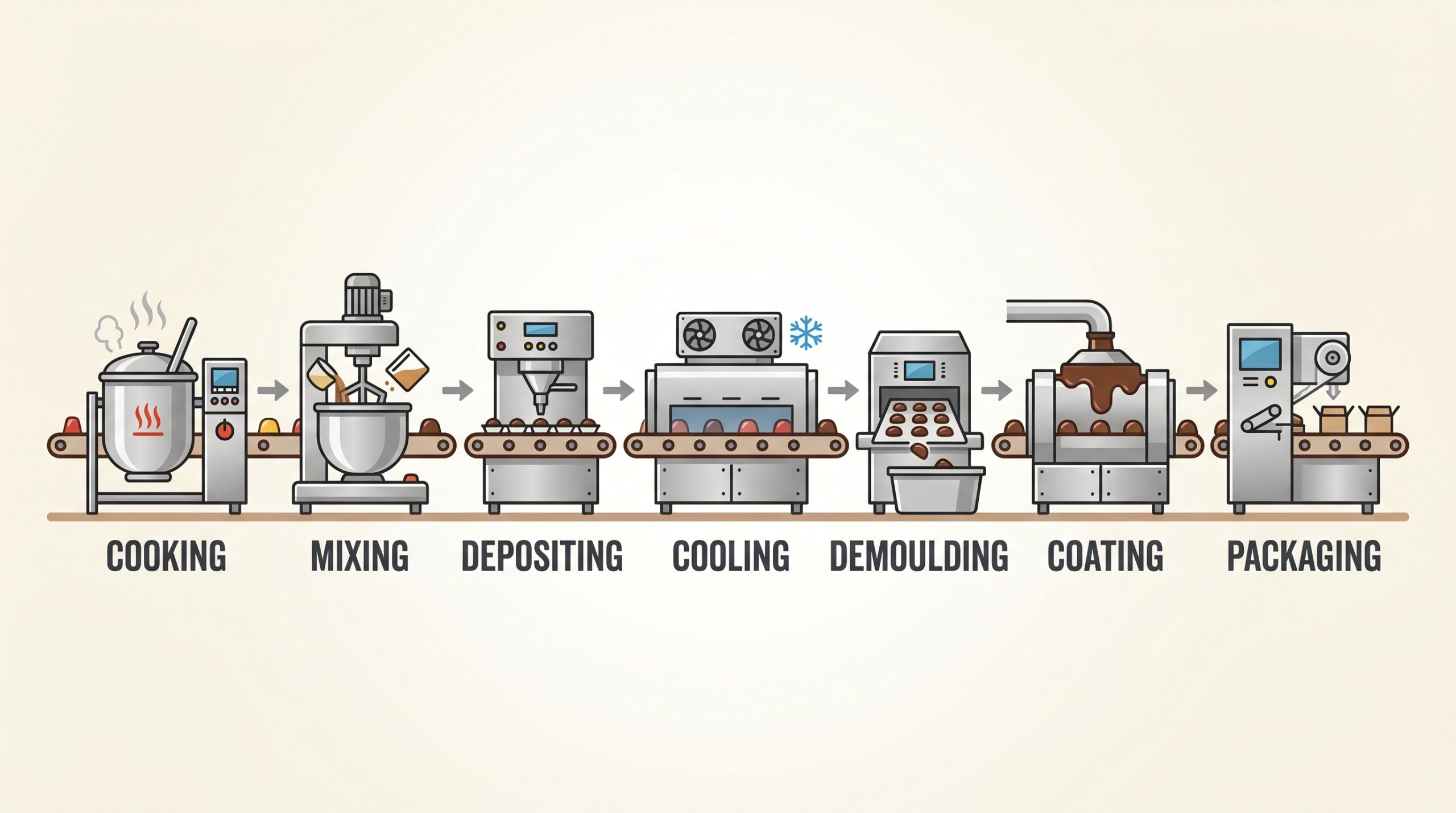
If you’re interested in learning more about chocolate making, then you’ve probably wondered: How is chocolate made in factories? Every factory has a different recipe, based on the type of chocolate you’re interested in. It begins with the processing of cocoa beans. After they’ve been roasted, they’re mixed with a mixture of other ingredients. These ingredients are then mixed together in machines until the mixture resembles cake batter. After the chocolate is mixed, it’s then placed in refining machines to smooth out the texture. These machines then turn the chocolate into a dry powder.
Cocoa butter
Historically, cocoa butter was a major ingredient in chocolate making. The triglyceride composition of cocoa butter is unique among natural fats, giving it an exceptionally sharp melting curve. This characteristic, which can cause shrinkage in moulds, also results in the need for tempering to prevent polymorphic crystallisation. Many countries now prohibit the use of fats in pure chocolate, but there are substitutes for cocoa butter that have a similar taste and texture.
Another use of cocoa butter is for treating painful mouth sores and recurring blisters on the lips. Combined with essential oils, cocoa butter soothes and hydrates sensitive skin. This plant-derived polyphenol also exerts antioxidant powers in the immune system, fighting inflammation, DNA damage, and cellular mutations. These compounds can also help prevent or treat autoimmune diseases, which can cause fatigue and other health problems.
Hạt ca cao
Traditionally, cacao beans have been dried and fermented to develop their natural flavors. The fermentation process removes the bitter taste from the bean, making it more palatable to the human palate. This process typically takes two to eight days, depending on the cacao variety. Fermented beans contain more flavor and body than unfermented ones. However, unfermented beans are still used for traditional dishes, such as molecular gastronomy and Mexican chocolate.
To make chocolate, cacao beans are processed by first separating their hulls from the nibs. The hulls are removed by blowing air on the beans. Next, the beans are transferred to a microwave for twenty to thirty seconds, depending on the power of your microwave. This will encourage the extraction of cocoa butter. Once the cocoa nibs are separated from the shells, they can be put back into the blender to make a smooth paste.
Ủ
Before making a piece of chocolate, the cocoa beans must be roasted and ground. This is done by passing the beans through a specialized machine that removes the thin shell. Once the beans have been roasted, they are ground into a thick, brown liquid called cocoa liqueur. This liquid is then poured into moulds. The next step is to use a conching machine to knead the chocolate into a paste.
The chocolate is then processed to a consistency that is ready to be packaged. The chocolate is processed by a machine giống như một máy xay thực phẩm khổng lồ. Sau đó, nó được trộn với đường, sữa và vani. Sau quá trình này, sô cô la được đổ vào khuôn. Sau đó, nó được gửi qua một máy đóng gói và sẵn sàng để vận chuyển. Sô cô la sau đó trải qua quá trình tôi để ổn định độ đặc của nó.
Methods of tempering
Depending on the type of steel and the tempering temperature, there are many different methods used to improve the properties of a metal. Different methods can change the hardness of steel, the toughness of the metal, or the tensile strength of the metal. Tempering can also be used on welded steel and normalized steel. But what exactly is tempering? What are the benefits and limitations of tempering?
The first method, which involves quenching a part in hot oil, is known as martempered steel. This process reduces brittleness of steel by changing its structure. It makes the steel more malleable and wear-resistant. But it is important to note that this method is only suitable for alloy-containing steels. It may also be limited to the use of certain sections of steel. In factories, tempering is often done in separate processes.
Nguyên liệu
Chocolate factories create confections in a number of ways. Some produce discrete products, such as chocolate, while others create continuous products like chocolate bars and cocoa powder. Regardless of the method used, factories typically use electricity and heat. Cocoa beans come from cacao trees in Central and South America. They are dried and ground into powder, which then goes through a process known as chocolate processing. This process creates an exquisite product.
Cocoa butter is a key ingredient. This ingredient provides chocolate with its smoothness, beautiful lustre, and velvety glaze. When cocoa butter is ground, it begins to melt and form a paste or liquid called cocoa liquor. Once poured into a mold, the liquid solidifies and becomes chocolate. The process of making chocolate also requires the addition of lecithin, a fat often derived from soy, which acts as an emulsifier. Vanilla and vanillin are two common flavors, and sometimes chocolate bars can also contain add-ins like nuts and fruits.
Bài viết liên quan
- Làm thế nào để tôi chọn máy làm kẹo jelly phù hợp cho doanh nghiệp của mình?
- Sàn nhà máy đến Bảng màu của bạn: Hành trình qua quá trình làm sôcôla
- Các loại khuôn nào mà máy làm kẹo dẻo hình gấu sử dụng để tạo hình dạng cho kẹo dẻo?
- Máy đảm bảo phân phối đều các hương vị và màu sắc trong kẹo dẻo như thế nào?
- Dây chuyền sản xuất sôcôla
- Dây chuyền sản xuất thanh sôcôla
- Quy trình sản xuất Skittles: Bên trong nhà máy