Red Lobster Cheddar Biscuits Recipe: The Complete Copycat Guide
Bake fluffy, cheesy copycat Red Lobster cheddar biscuits in 25 minutes using flour, sharp cheddar, butter, and a garlic herb butter glaze.
Quick answer: Mix flour, baking powder, garlic powder, sharp cheddar, cold butter, and buttermilk into a soft dough; drop by spoonfuls onto a baking sheet; bake at 450°F for 10–12 minutes; brush immediately with garlic herb butter. Done in under 30 minutes.
If you’ve ever walked into a Red Lobster and found yourself eating three biscuits before the entrée arrived, you already know the problem. The Red Lobster cheddar biscuits recipe is one of the most searched copycat recipes on the internet — and for good reason. These drop biscuits hit every note at once: flaky, buttery, deeply cheesy, and finished with a garlicky herb glaze that makes it nearly impossible to stop at one.
The good news? You don’t need a restaurant kitchen or a box of their branded mix to pull this off. With a handful of pantry staples and 25 minutes of active time, you can have a batch of red lobster cheddar biscuits recipe results that’s arguably better than the original — fresher, hotter, and with more cheese if you want it.
This guide goes deeper than the average copycat post. We’ll cover the exact ingredient science (why cold butter matters more than technique), the three most common mistakes home bakers make when attempting a red lobster cheddar biscuits recipe, every meaningful variation from gluten-free to extra-spicy, and a step-by-step method that works even if you’ve never made drop biscuits before.
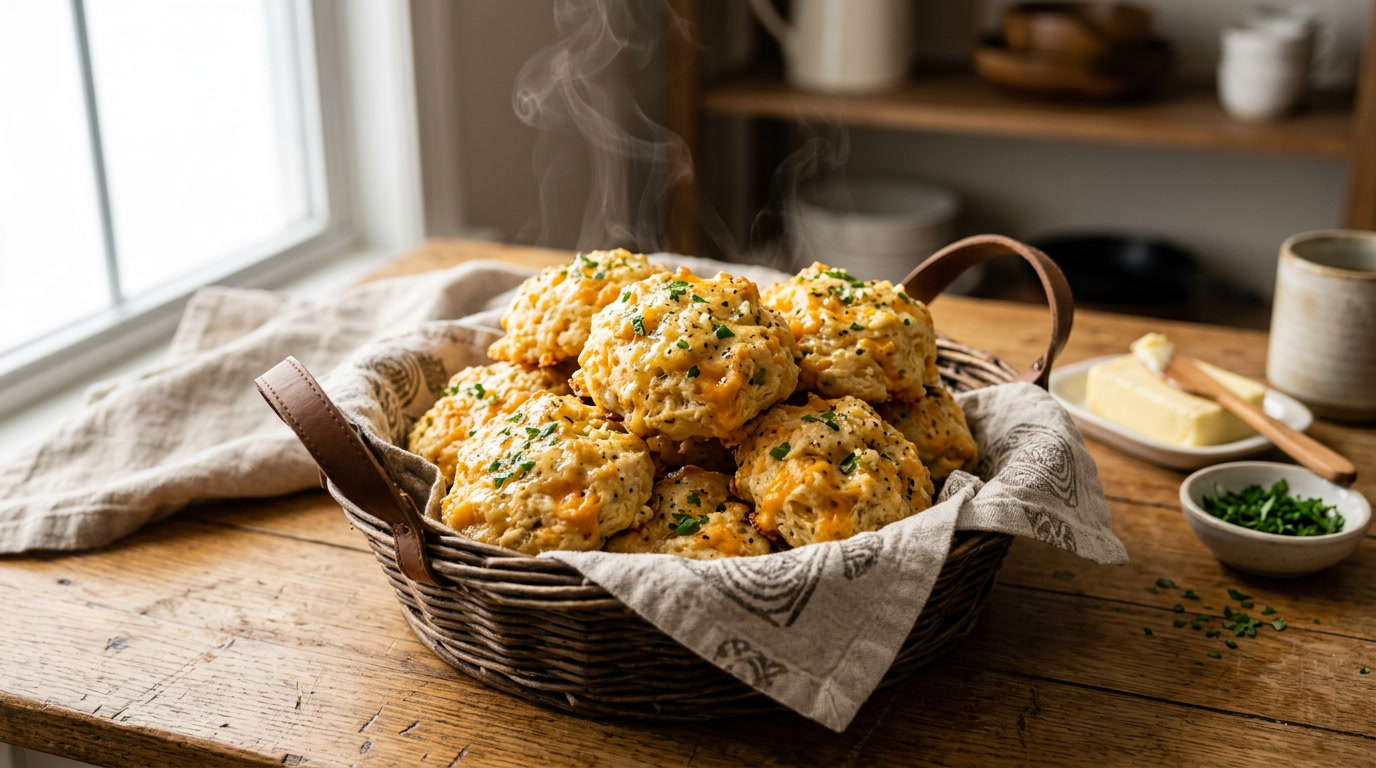
What Are Red Lobster Cheddar Bay Biscuits?
Cheddar Bay Biscuits are buttery, drop-style biscuits loaded with sharp cheddar cheese and topped with a garlic-herb butter glaze — served as a complimentary appetizer at Red Lobster restaurants across the United States.
Red Lobster introduced Cheddar Bay Biscuits to their menu in 1992, and they quickly became the chain’s most iconic item — arguably more recognized than any dish on the actual menu. The name “Cheddar Bay” is a branding invention (there’s no real Cheddar Bay), but it evokes the seafood-coastal feel the restaurant chain cultivates.
What makes them different from a standard drop biscuit:
- Double fat — butter is worked into the dry ingredients AND brushed on hot from the oven
- Sharp cheddar — not mild, not pre-shredded (which is coated with cellulose). Sharp cheddar melts into pockets throughout the biscuit.
- Garlic in two forms — garlic powder in the dough for interior flavor, fresh-minced or dried garlic in the finishing butter for the top crust hit
- Slight tang — buttermilk or a buttermilk substitute adds acidity that activates the baking powder more aggressively, giving lift
Drop Biscuits vs. Cut Biscuits
| Feature | Drop Biscuits (Red Lobster style) | Cut Biscuits (Southern style) |
|---|---|---|
| Technique | Dough dropped by spoon, no shaping | Dough rolled flat, cut with round cutter |
| Texture | Crispier exterior, irregular edges | Even, layered, pull-apart interior |
| Time | 5–10 min prep | 15–20 min prep |
| Error tolerance | Very high | Lower — overworking kills flakiness |
| Result | Rustic, golden, craggy | Uniform, tall, classic |
Drop biscuits are more forgiving for home bakers. The irregular edges created by dropping the dough create more surface area, which means more crust — and more crust means more of that garlic butter glaze sticking.
The Role of Each Ingredient
Understanding what each component does helps you substitute intelligently when you’re missing something:
- All-purpose flour — provides structure. Cake flour produces a more tender crumb but less chew. Bread flour is too tough.
- Baking powder — leavening. Use fresh baking powder (it should bubble when dropped in water). Old baking powder = flat biscuits.
- Baking soda — a small amount helps with browning and tang activation when buttermilk is present.
- Salt — flavor amplifier. Under-salted biscuits taste flat even when hot.
- Garlic powder — more even distribution than fresh garlic in the dough; fresh garlic burns at high biscuit temperatures.
- Sugar — just a pinch. Promotes browning and rounds out the savory edge.
- Cold unsalted butter — fat creates steam pockets during baking = flakiness. Cold is critical. Room-temperature butter dissolves into the flour and produces a dense crumb.
- Sharp cheddar — the sharper the better. Extra-sharp aged cheddar melts into pools of flavor; mild cheddar just disappears.
- Buttermilk — acidity reacts with baking soda for extra lift + contributes a slight tang. Can be substituted.
Types and Variations of Red Lobster Cheddar Biscuits Recipe
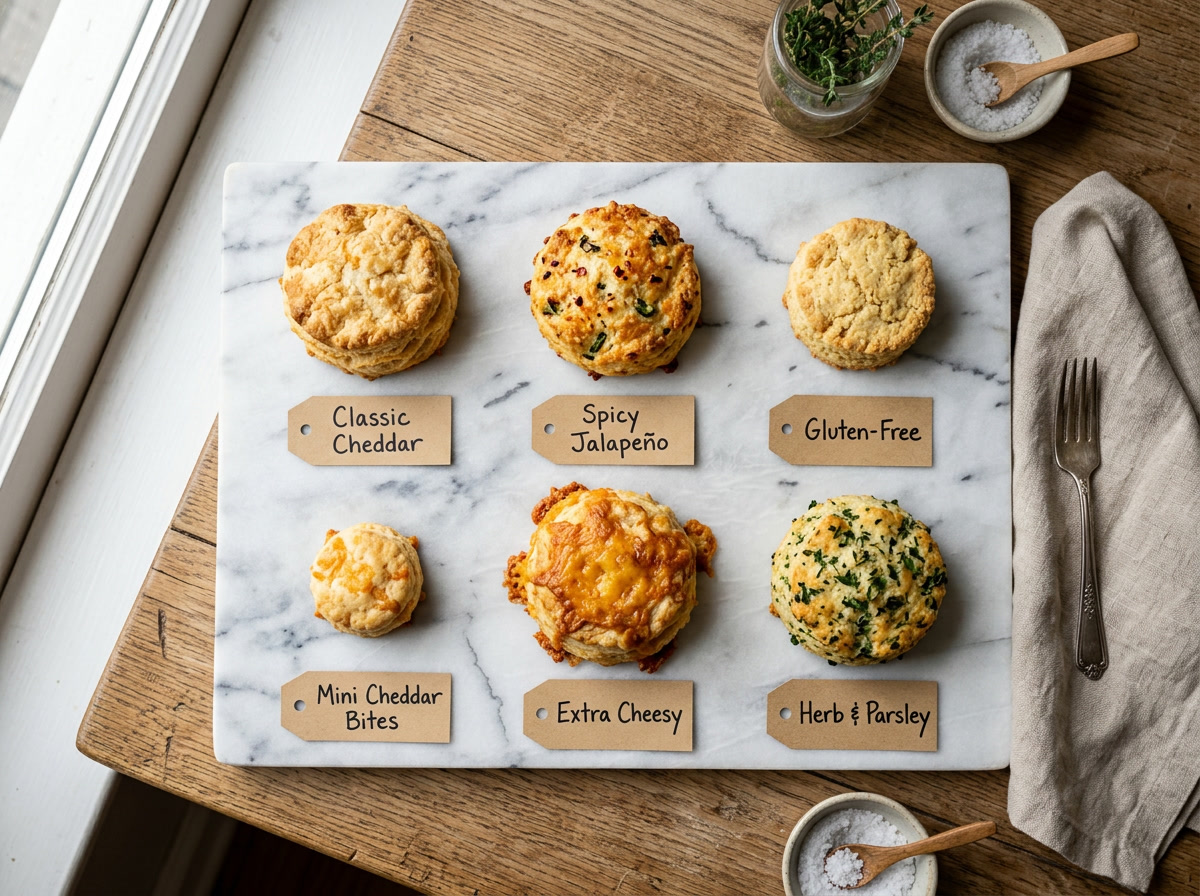
The base red lobster cheddar biscuits recipe is a drop biscuit, but it branches into at least six tested variations — from the classic to gluten-free, extra-cheesy, spicy, mini, and make-ahead frozen.
Most copycat recipe posts give you one version and call it done. In practice, home bakers have very different needs — dietary restrictions, different heat preferences, cooking ahead for a party, or simply wanting to dial up the cheese. Here’s the full landscape:
1. The Classic From-Scratch Version
This is the benchmark. No shortcuts, no box mix. Every ingredient is common pantry fare:
Makes: 10–12 biscuits | Time: 25 minutes | Temp: 450°F (230°C)
Ingredients:
- 2 cups (240g) all-purpose flour
- 1 tablespoon baking powder
- ½ teaspoon baking soda
- 1 teaspoon garlic powder
- 1 teaspoon granulated sugar
- ¾ teaspoon fine sea salt
- 6 tablespoons (85g) cold unsalted butter, cut into ½-inch cubes
- 1 cup (113g) sharp cheddar cheese, freshly grated
- ¾ cup (180ml) cold buttermilk
For the garlic butter glaze:
- 4 tablespoons (57g) unsalted butter, melted
- 1 teaspoon garlic powder (or 1 clove finely minced)
- ½ teaspoon dried parsley
- ¼ teaspoon fine sea salt
2. The Bisquick Shortcut
If you’re running on a weeknight timeline, Bisquick gets you 80% of the way there in 15 minutes flat. Bisquick already contains fat, leavening, and salt, so you add less.
- 2 cups Bisquick baking mix
- ⅔ cup cold milk (whole milk preferred)
- 1 cup sharp cheddar, freshly grated
- ½ teaspoon garlic powder
Mix just until combined, drop, bake 8–10 minutes at 450°F. Apply the same garlic butter glaze above. The texture is slightly softer and less complex than from-scratch, but perfectly acceptable.
3. Gluten-Free Version
Use a 1:1 gluten-free flour blend (Bob’s Red Mill 1-to-1 Baking Flour works reliably). The key adjustment: add ½ teaspoon xanthan gum if your blend doesn’t include it, and let the dough rest for 5 minutes before dropping — GF flour needs more hydration time.
- Replace all-purpose flour with GF 1-to-1 flour
- Add ½ tsp xanthan gum if not in your blend
- Use 1 tablespoon extra buttermilk (GF flour absorbs more liquid)
- Bake time: 12–14 minutes (GF biscuits need slightly longer)
Texture is slightly denser, but the cheddar and garlic butter glaze largely mask the difference.
4. Extra-Cheesy “Double Cheddar” Version
For cheese maximalists: use 1½ cups (170g) of cheese instead of 1 cup. Split it — ¾ cup sharp cheddar folded into the dough, ¼ cup white cheddar mixed in, and a final ¼ cup sharp cheddar scattered on top of each drop before baking. The top layer browns into a crispy cheese crust.
5. Spicy Jalapeño Version
Add to the dry ingredients:
- ½ teaspoon smoked paprika
- ¼ teaspoon cayenne pepper
- 2 tablespoons finely diced fresh jalapeño (or pickled jalapeño, patted dry)
The jalapeño adds heat that cuts through the richness of the cheddar. In the garlic butter glaze, add ¼ teaspoon red pepper flakes.
6. Mini Biscuit Appetizer Version
For parties: drop 1 tablespoon portions instead of 2 tablespoons. You’ll get 24–28 mini biscuits. Reduce baking time to 7–8 minutes. These are ideal for serving alongside soups or as cocktail party finger food.
| Variation | Key Modification | Best For |
|---|---|---|
| Classic from-scratch | Standard recipe | Everyday baking |
| Bisquick shortcut | Replace flour + leavening with Bisquick | Speed |
| Gluten-free | GF 1:1 flour + xanthan gum | Dietary restriction |
| Extra-cheesy | 1.5× cheese, layered | Cheese lovers |
| Spicy jalapeño | Paprika + cayenne + jalapeño | Heat seekers |
| Mini biscuits | 1 tbsp drops, 7–8 min | Parties and appetizers |
How to Make Red Lobster Cheddar Biscuits: Step-by-Step
Combine dry ingredients, cut in cold butter, fold in cheddar and buttermilk, drop onto a baking sheet, bake at 450°F for 10–12 minutes, and brush immediately with garlic butter. Do not overmix.
This is the section where most recipes fail you by being too vague. Let’s walk through every step with the specifics that actually matter.

Step 1: Prep Your Ingredients (5 minutes)
Start cold. This is the single most important instruction in the entire recipe:
- Cut cold butter into ½-inch cubes and put them back in the freezer for 10 minutes.
- Measure out your buttermilk and refrigerate it.
- Grate your cheddar cheese fresh. Pre-shredded cheese is coated with potato starch or cellulose to prevent clumping — this coating inhibits melting. Block cheese grated on the large holes of a box grater melts completely differently: faster, more thoroughly, and with better stretch.
- Preheat your oven to 450°F (230°C). This high heat is essential — it creates rapid steam from the cold butter before it melts, which is what causes the flaky pockets.
Step 2: Mix the Dry Ingredients
In a large bowl, whisk together:
- 2 cups all-purpose flour
- 1 tablespoon baking powder
- ½ teaspoon baking soda
- 1 teaspoon garlic powder
- 1 teaspoon sugar
- ¾ teaspoon fine salt
Whisk thoroughly — uneven distribution of baking powder means some biscuits rise and some don’t.
Step 3: Cut In the Butter
Add the cold butter cubes to the dry ingredients. Use a pastry cutter, two forks, or your fingertips to work the butter into the flour until it resembles coarse, irregular crumbs — some pieces should be pea-sized, some smaller.
Do not use a food processor. It processes too fast and creates uniform small crumbs rather than the irregular range you want. Those larger butter pockets are what produce steam and flakiness in the oven.
Temperature check: If the butter starts to feel soft or your hands get very warm, put the bowl in the freezer for 3 minutes and then continue. Warm butter = flat, dense biscuits.
Step 4: Add the Cheese
Toss the grated cheddar through the butter-flour mixture with a fork until evenly distributed. Coating the cheese in flour helps it stay suspended in the dough rather than sinking.
Step 5: Add the Buttermilk
Make a well in the center of the dry ingredients. Pour in ¾ cup cold buttermilk all at once. Using a rubber spatula or fork, fold the mixture together with 10–15 strokes maximum. Stop when the dough just comes together — it will look shaggy, rough, and slightly dry in spots.
This is correct. The temptation is to keep mixing until smooth. Don’t. Every additional stroke develops gluten and toughens the biscuit. Shaggy is the goal.
If the dough seems genuinely too dry to hold together (environmental humidity varies), add buttermilk 1 tablespoon at a time, folding once between additions.
Step 6: Drop and Bake
Line a baking sheet with parchment. Using a large spoon or a 3-tablespoon cookie scoop, drop mounds of dough 2 inches apart. You want height, not spread — build each mound up rather than spreading it flat.
Bake at 450°F for 10–12 minutes, rotating the pan halfway through, until the tops are golden and the edges are set. The biscuits should look slightly underdone in the center at the 10-minute mark — carry-over heat finishes them.
Step 7: Apply Garlic Butter Immediately
The moment the biscuits come out of the oven, melt the finishing butter and stir in garlic powder, parsley, and salt. Brush immediately, generously, and while the biscuits are still hot. The hot biscuit surface absorbs the butter into the crust rather than just sitting on top. This is the step that makes these taste like the restaurant’s version.
Common Mistakes and How to Fix Them
| Mistake | Symptom | Fix |
|---|---|---|
| Warm butter | Flat, greasy biscuits | Start with freezer-cold butter; use fingertips briefly |
| Overmixing | Tough, dense interior | Stop at 10–15 folds; shaggy dough is fine |
| Old baking powder | No rise, dense discs | Test: 1 tsp in hot water should bubble vigorously |
| Oven too cool | Pale, soft biscuits | Preheat to 450°F minimum; use an oven thermometer |
| Waiting to apply butter | Butter sits on top | Apply glaze within 60 seconds of pulling biscuits out |
| Pre-shredded cheese | Grainy, doesn’t melt | Grate block cheese fresh every time |
Industry Applications and Serving Ideas
Red lobster cheddar biscuits recipe pairs best with seafood, soups, eggs, and chili — versatile enough to replace dinner rolls in almost any meal context.
The red lobster cheddar biscuits recipe, at its restaurant origin, serves as a strategic hospitality move: give guests something warm and delicious the moment they sit down, and they’ll rate the meal higher regardless of what comes next. Food scientists call this the “primacy effect” — first impressions shape the entire experience.
At home, they translate into more contexts than most people use them for:
With Seafood
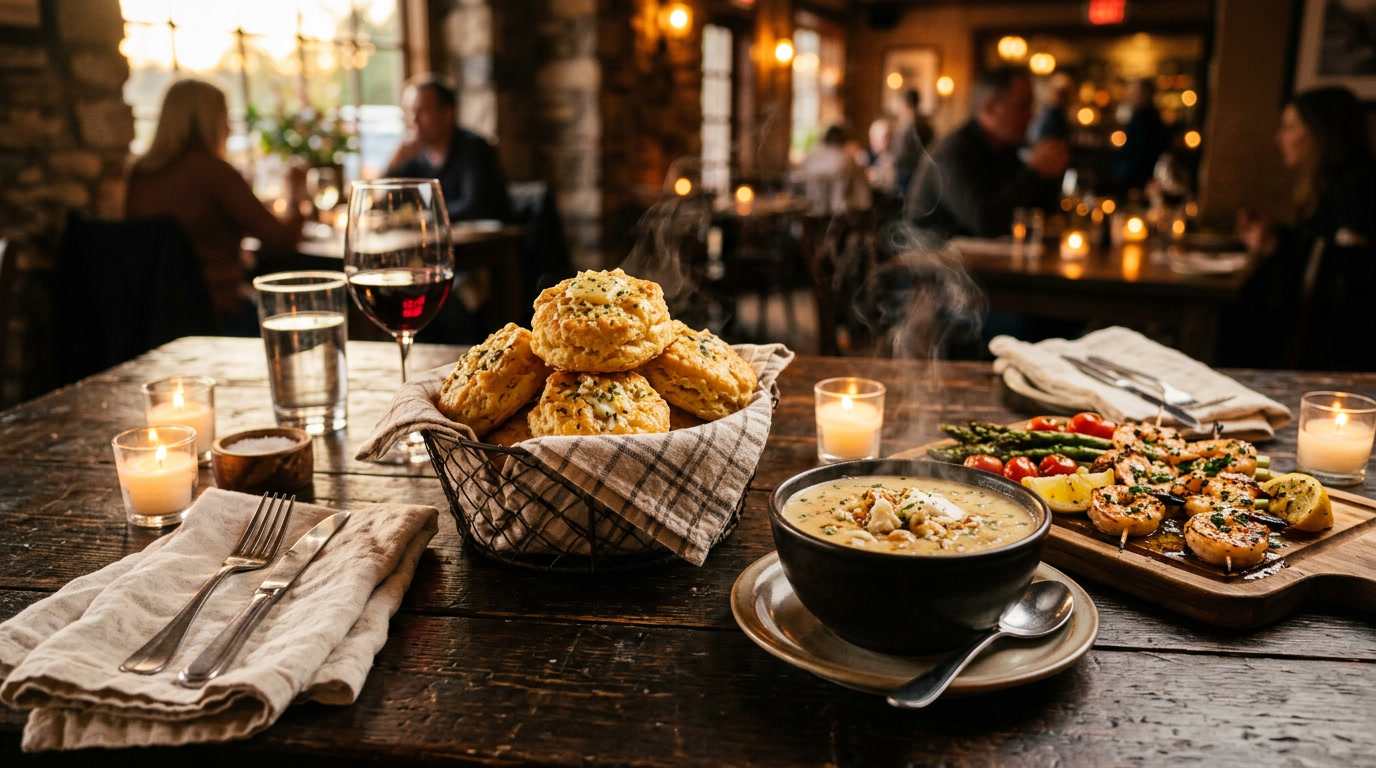
The classic pairing. The garlic butter notes in the biscuit complement pan-seared salmon, shrimp scampi, crab legs, and clam chowder. The slight tang from buttermilk cuts through rich cream sauces.
With Soups and Stews
These biscuits are built for dunking. The irregular, craggy edges created by the drop method have more surface area than a uniform roll, so they soak up broth without disintegrating immediately. Tomato bisque, beef stew, white chicken chili — all strong pairings.
As a Breakfast Item
Split and toasted cheddar bay biscuits work as a base for eggs Benedict (use hollandaise, not Canadian bacon — the garlic note is already strong). They also make excellent breakfast sandwiches when stuffed with scrambled eggs and crispy bacon.
At Parties
The mini variation (1-tablespoon drops, 7–8 minutes) turns these into passed appetizers that disappear immediately. Set out a small bowl of extra garlic butter glaze for dipping.
Meal Pairing Table
| Meal Context | Recommended Variant | Notes |
|---|---|---|
| Seafood dinner | Classic | Standard recipe, serve hot |
| Soup night | Classic or extra-cheesy | Dunk directly |
| Breakfast sandwich | Classic | Split and toast cut sides |
| Cocktail party | Mini biscuits | 1 tbsp drops, extra glaze for dipping |
| Spicy food night | Jalapeño version | Pairs with chili, barbecue |
| Gluten-intolerant guest | Gluten-free version | Make separately, label clearly |
Make-Ahead, Storage, and Reheating
Red lobster cheddar biscuits recipe biscuits keep at room temperature for 2 days, refrigerator for 5 days, or freeze unbaked for up to 3 months — always reheat in the oven, not the microwave.
The restaurant serves these fresh from the oven in every batch — that’s their advantage. At home, you can replicate this by either baking the full batch immediately or using smart storage strategies.
Make-Ahead Options
Option A — Freeze unbaked dough drops (best quality):
- Complete the dough through Step 6 (drop phase).
- Place the baking sheet in the freezer for 1 hour until the dough mounds are solid.
- Transfer frozen dough balls to a zip-lock bag and freeze for up to 3 months.
- Bake from frozen at 450°F for 15–17 minutes (no thawing needed).
- Apply garlic butter glaze as usual when they come out.
This is our preferred method — the biscuits taste essentially freshly made, and you can pull out exactly as many as you need.
Option B — Bake and reheat:
- Bake the full batch and let cool completely.
- Store in an airtight container at room temperature for up to 2 days or refrigerate for up to 5 days.
- Reheat: 350°F oven for 5–7 minutes. Do NOT microwave — the crust turns soft and the cheese turns rubbery.
- Brush with a fresh batch of garlic butter after reheating.
Option C — Par-bake (8 minutes), finish later:
- Bake at 450°F for 8 minutes (they’ll be set but pale).
- Cool, refrigerate for up to 24 hours.
- Finish in a 450°F oven for 5–6 minutes until golden.
- Apply garlic butter immediately.
Freezing Pre-Baked Biscuits
If you have leftover baked biscuits:
- Cool completely, wrap individually in plastic wrap.
- Freeze up to 2 months.
- Thaw at room temperature 1 hour, then reheat in 350°F oven for 8–10 minutes.
- Quality is noticeably lower than frozen-dough method, but acceptable for soups.
Future Trends: Where Cheddar Bay Biscuits Are Headed (2026+)
The red lobster cheddar biscuits recipe is evolving toward high-protein, gluten-free, and globally-spiced variations as home bakers push into functional food territory.
According to food trend data tracked by the USDA’s Economic Research Service, home baking remains significantly elevated above pre-2020 baseline levels, with biscuit and quick-bread recipes being among the most searched categories year-over-year. The copycat recipe category specifically is growing because consumers want restaurant quality at grocery-store ingredient prices.
Trend 1: Protein-Enriched Biscuits
The fitness and “high-protein” food trend is reaching baked goods. We’re already seeing creators adapt the red lobster cheddar biscuits recipe by substituting ¼ cup of all-purpose flour with unflavored whey protein or chickpea flour. The impact:
- Whey protein sub: Produces a slightly chewier biscuit with ~4g more protein per biscuit. Flavor impact is minimal if unsweetened whey is used.
- Cottage cheese addition: Replace buttermilk with full-fat cottage cheese blended smooth — adds protein and creates a denser, moister interior. Taste tester feedback: “Richer, more like a cheese biscuit than a light drop biscuit.
Trend 2: Fermented and Sourdough-Discard Versions
Sourdough discard (unfed starter) is increasingly used as a buttermilk substitute in drop biscuits. The substitution ratio: replace ½ cup buttermilk with ½ cup active discard + 3 tablespoons milk. Benefits:
- Adds complex fermented flavor
- Slightly better rise (live yeast contribution)
- Uses up discard rather than discarding it
The sourdough version produces a biscuit with noticeably more depth of flavor — a slight tang and yeastiness that pairs particularly well with the garlic butter glaze.
Trend 3: Global Spice Profiles
Chefs at food festivals are riffing on the classic red lobster cheddar biscuits recipe base with non-Western spice profiles:
- Indian-spiced: Cumin + coriander in the dough, paneer or gouda instead of cheddar, cilantro in the finishing butter
- Mexican-inspired: Cotija + pepper jack, chipotle powder in the dough, lime zest in the glaze
- Korean-influenced: Gochugaru (Korean chili flakes) in the dough, toasted sesame in the glaze, mozzarella instead of cheddar for the stretch effect
These variations stretch the recipe well beyond its Red Lobster roots while keeping the core drop-biscuit technique intact.
FAQ: Red Lobster Cheddar Biscuits Recipe
Q1: What cheese does Red Lobster actually use in their biscuits?
Red Lobster uses sharp cheddar cheese. Their commercial recipe uses pre-shredded sharp cheddar for consistency and speed, but at home, freshly grating sharp or extra-sharp cheddar from a block produces noticeably better results — more even melting, richer flavor, no anti-caking coating.
Q2: Can I use self-rising flour instead of all-purpose?
Yes, with adjustments. Self-rising flour already contains baking powder and salt. Omit the added baking powder and salt from the recipe, and reduce baking soda to ¼ teaspoon. The result is slightly less control over leavening balance, but functionally correct.
Q3: What can I substitute for buttermilk?
The most reliable buttermilk substitute: pour 1 tablespoon of white vinegar or fresh lemon juice into a measuring cup, then fill to ¾ cup with whole milk. Stir and let sit for 5 minutes until slightly curdled. The acidity level is close enough to activate the baking soda correctly. Greek yogurt thinned with milk (1:1 ratio) also works well and produces a slightly tangier, richer biscuit.
Q4: Why are my biscuits flat and dense?
Three most likely causes: (1) butter was too warm when cut into the flour — it needs to be genuinely cold, not just cool; (2) baking powder is old or expired — check by dropping a teaspoon in hot water, it should bubble immediately; (3) oven temperature is lower than indicated — use an oven thermometer to verify your oven hits 450°F.
Q5: How do I make these ahead for a dinner party?
Freeze unbaked dough drops on a parchment-lined sheet, then transfer to a bag. Bake from frozen at 450°F for 15–17 minutes the day of the party. This method produces biscuits indistinguishable from freshly-made. Pre-mix the garlic butter glaze and keep it warm in a small saucepan.
Q6: Can I make these dairy-free?
Yes, though the result is significantly different. Use plant-based butter (Miyoko’s performs best), dairy-free cheddar shreds (Violife is the most melt-friendly), and oat milk or almond milk with 1 tablespoon of apple cider vinegar as the buttermilk substitute. The texture is softer and the flavor less sharp, but it’s a workable version for dairy-free guests.
Q7: What’s the difference between Cheddar Bay Biscuits and regular cheddar drop biscuits?
The garlic butter glaze applied immediately after baking is the defining difference. Many cheddar drop biscuit recipes skip this step or apply butter before baking. The Red Lobster method — garlic butter on hot biscuits right out of the oven — creates a glossy, aromatic crust that gets absorbed into the top layer rather than sitting on the surface. Without that step, you have a good biscuit; with it, you have Cheddar Bay.
Q8: How many biscuits does one batch make, and how do I scale up?
The base recipe yields 10–12 biscuits using 3-tablespoon drops. The recipe scales linearly — double everything for 20–24 biscuits. For large batches (3× or more), work in separate bowls and bake in staggered batches: warm biscuits from the second batch are still hot when the first batch is served.
Conclusion
This red lobster cheddar biscuits recipe has earned its reputation as the internet’s most beloved restaurant copycat for one simple reason: it works, and it works fast. From a cold start to a hot biscuit, you’re looking at under 30 minutes, and the critical variables are few — cold butter, sharp cheddar freshly grated from a block, and the garlic herb butter glaze applied the moment the pan hits the counter.
Master the base recipe first. Once you can make a classic batch reliably, the variations — from the Bisquick shortcut to the frozen-dough make-ahead method to the spicy jalapeño version — all follow the same logic. The core technique doesn’t change; you’re just adjusting what you put into it.
The next time you’re hosting a dinner, making seafood at home, or just want something warm and cheesy on a weeknight, this is the recipe to reach for. Make a double batch if you can — these disappear faster than you’d expect, and nobody has ever complained about leftover Cheddar Bay Biscuits.
Related Articles
- Sausage Balls Red Lobster Recipe: The Ultimate Cheddar Bay Guide
- Red Lobster Cheddar Bay Biscuit Recipe: The Complete Guide from Home Kitchen to Commercial Bakery
- Sausage Balls with Red Lobster Biscuit Mix: The Ultimate Cheddar Bay Party Recipe
- Easy Cheddar Bay Biscuit Recipe: Better Than Red Lobster’s (Homemade Version)
- Biscuit Production Line
- Advanced Automatic Biscuit & Cracker Machine
- Original Skittles Gluten Free: Celiac Safety Guide