Is Gum Candy? The Complete Confectionery Classification Guide
Yes, gum is candy — it’s a confectionery product sold alongside candy, though uniquely designed to be chewed but not swallowed.
Walk into any convenience store and you’ll find gum stacked in the candy aisle, right between the Skittles and the Snickers. Yet many people pause at the question: is gum actually candy? The answer matters more than you’d think — it shapes how gum is taxed, how it’s regulated, and how manufacturers design and market it. This guide cuts through the confusion, covering the official industry classification, the science of what makes gum unique, how it’s produced at scale, and where it fits in the global confectionery market.
What Is Gum, and How Is It Classified as Candy?
Gum is classified as candy — specifically as a subset of the broader confectionery category. The distinction that trips people up is that gum is engineered to be chewed and expectorated (spat out), not swallowed in the way a chocolate bar or gummy bear is consumed. But that difference in consumption method doesn’t remove it from the candy family.
The Official Confectionery Definition
The National Confectioners Association (NCA), the U.S. trade body representing the candy and gum industry, explicitly groups chewing gum under “confectionery” alongside chocolate, sugar candies, and mints. The NCA’s annual industry reports consistently include gum sales in their total confectionery market data — and the numbers are significant. In 2023, U.S. gum retail sales reached approximately $3.2 billion, a figure that sits comfortably inside a total confectionery market worth over $47 billion.
Globally, the Wikipedia article on chewing gum traces gum’s classification back centuries. Ancient peoples chewed tree resin for pleasure — the same fundamental activity as enjoying candy. Modern commercial gum simply formalizes that practice into a manufactured product with defined ingredients, shelf life, and regulatory status.
From a U.S. Food and Drug Administration (FDA) standpoint, gum falls under the “food” category and is subject to the same ingredient disclosure requirements as candy bars. The FDA does not draw a categorical distinction between gum and other confections; both must list all ingredients, allergens, and nutrition facts on the label.
Where Gum Falls on the Candy Spectrum
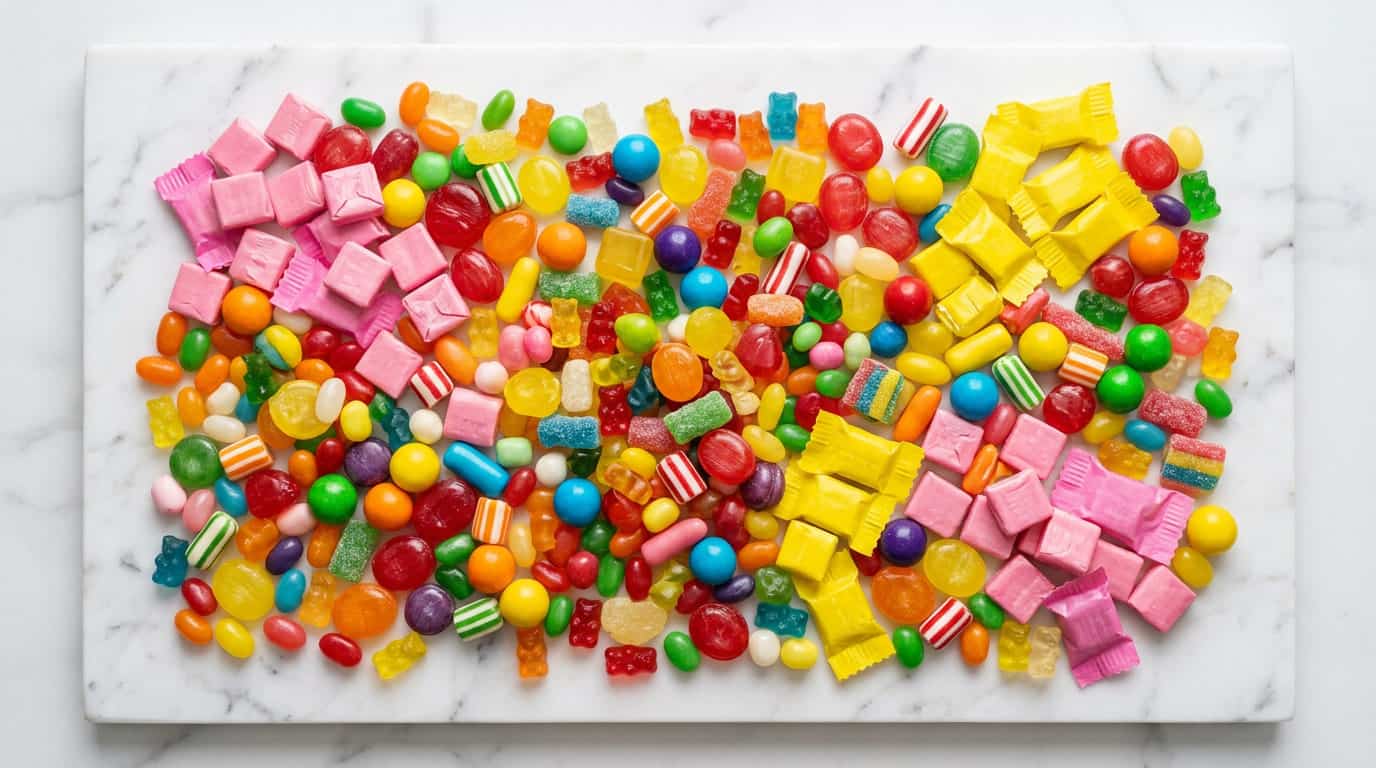
Candy is not monolithic. The confectionery world separates into three main branches:
- Chocolate confections — chocolate bars, truffles, bonbons
- Sugar confections — hard candy, caramel, gummies, lollipops, marshmallows
- Gum and mints — chewing gum, bubble gum, pellet gum, breath mints
Gum occupies the third branch. It shares the sugar-and-flavoring DNA of sugar confections, but its defining ingredient — gum base — sets it apart mechanically. Gum base is a blend of elastomers, resins, fats, and emulsifiers that create the chewy, insoluble matrix. When you chew gum, the sugars and flavoring dissolve and get swallowed, while the gum base remains in your mouth for expelling.
| Classification Criterion | Traditional Hard Candy | Gummy Bear | Chewing Gum |
|---|---|---|---|
| Primary ingredient | Sugar syrup | Gelatin + sugar | Gum base + sugar |
| Consumed entirely? | Yes | Yes | No — gum base remains |
| Caloric per piece | 20–30 kcal | 5–8 kcal | 5–10 kcal |
| FDA category | Food / Confectionery | Food / Confectionery | Food / Confectionery |
| Sold in candy aisle? | Yes | Yes | Yes |
| Sugar-free version available? | Yes | Yes | Yes |
| Confectionery trade body inclusion? | Yes | Yes | Yes |
The bottom line: every major industry body, regulatory agency, and retail channel treats gum as candy. The chew-don’t-swallow mechanic is a feature, not a classification boundary.
Types of Gum and How They Compare to Other Candies
Not all gum is the same. The category spans everything from classic 5-stick packs to high-tech functional pellets, and understanding those subcategories clarifies exactly where each type fits relative to other candy forms.
Bubble Gum vs. Chewing Gum
Bubble gum is a softer, more elastic formulation optimized for blowing bubbles. It uses a higher ratio of polyvinyl acetate in the gum base, which increases stretch and elasticity. Classic brands include Dubble Bubble and Bazooka. Bubble gum tends to be sweeter, more brightly colored, and marketed heavily toward children — placing it squarely in the candy aisle positioning.
Chewing gum (the broader category) covers everything from minty sticks to pellet-style pieces like Mentos Gum or Orbit. The gum base is firmer, and flavor profiles lean toward mint, spearmint, and cinnamon rather than fruit — a deliberate positioning move toward “adult” or “breath freshening” use, which is why chewing gum is sometimes shelved near the checkout register rather than deep in the candy section.
Sugar-Free Gum vs. Regular Gum
This distinction has practical health and regulatory implications. Regular gum uses sucrose or glucose syrup as its sweetener — the same ingredients found in hard candy and gummies. Sugar-free gum replaces those with polyols (sorbitol, xylitol, maltitol) or high-intensity sweeteners (aspartame, acesulfame-K, sucralose).
The American Dental Association (ADA) has granted its Seal of Acceptance to several sugar-free gum brands, noting that chewing sugarless gum for 20 minutes after meals stimulates saliva flow, which neutralizes acids and helps protect tooth enamel. That health benefit doesn’t strip gum of its candy classification — it’s an added feature, like comparing a protein candy bar to a standard chocolate bar.
Practical note: Xylitol-sweetened gum offers the strongest evidence for dental benefits. Brands like Trident and Orbit with xylitol as the first-listed polyol deliver 1–2g of xylitol per piece, which is the effective range for cavity-reduction studies.
Functional Gum (Energy, Dental, Nicotine)
The newest frontier in gum is functional formulation — gum engineered to deliver active compounds. Categories include:
- Energy gum (caffeine per piece, ~40–100mg)
- Nicotine replacement gum (2mg or 4mg nicotine, sold as an OTC drug)
- CBD/hemp gum (cannabidiol-infused, emerging category)
- Melatonin gum (sleep support, regulated as a dietary supplement)
Nicotine gum is the notable exception: the FDA regulates it as an over-the-counter drug, not candy, because of its active pharmacological ingredient. All other functional gums remain in the food/confectionery category unless an active pharmaceutical is present.

| Gum Type | Key Sweetener | Calories/Piece | Main Benefit | FDA Category |
|---|---|---|---|---|
| Regular stick gum | Sucrose | 10–15 kcal | Flavor / freshness | Food |
| Sugar-free pellet gum | Xylitol / sorbitol | 5 kcal | Dental health | Food |
| Bubble gum | Corn syrup | 20–25 kcal | Fun / blowing bubbles | Food |
| Energy gum | Sorbitol + caffeine | 5 kcal | Stimulant | Food |
| Nicotine gum | Sorbitol | 5 kcal | Smoking cessation | OTC Drug |
| CBD gum | Sucrose or xylitol | 5–10 kcal | Relaxation | Food (varies by state) |
How Gum Is Manufactured — The Confectionery Production Process
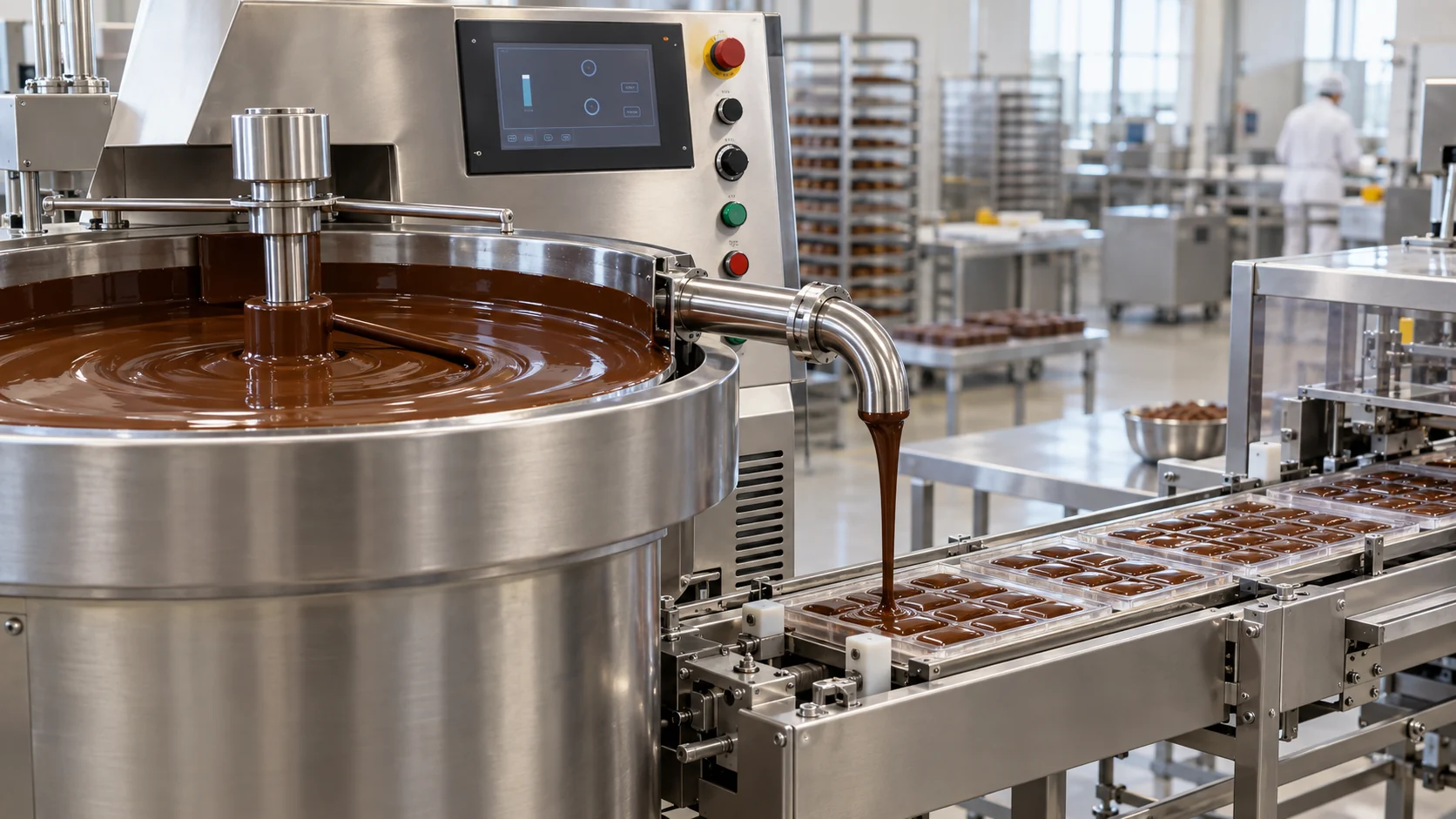
Understanding gum’s production makes its candy status even clearer. The manufacturing process closely parallels that of other sugar confections, with one key difference: the gum base mixing stage. This is exactly the kind of large-scale processing that industrial confectionery machinery is designed to handle.
Gum Base: The Foundation
Gum base is the insoluble backbone of every piece of gum. A typical commercial gum base contains:
- Elastomers (natural: chicle, jelutong; synthetic: polyisobutylene, polyvinyl acetate) — provide chewiness
- Resins (ester gum, polyvinyl acetate) — bind elastomers and create cohesion
- Plasticizers (lanolin, stearic acid, glycerin) — soften and add flexibility
- Fats and emulsifiers (hydrogenated vegetable oils, lecithin) — smooth texture, prevent sticking
The gum base itself has no flavor or sweetness. All taste comes from the next stage: compounding.
From Mixing to Wrapping — Industrial Gum Manufacturing Steps
Commercial gum production follows a linear sequence:
- Gum base melting — Base is heated to ~50°C in jacketed mixing vessels to achieve a uniform molten state.
- Compounding — Softeners (glycerin), sweeteners (sugar or polyols), and flavorings are added in sequence to the blending machine. Batch mixers operate at controlled RPM to distribute ingredients evenly without overworking the elastic matrix.
- Cooling and rolling — The compounded mass exits the mixer as a soft slab and passes through chilled rollers that progressively flatten it to the target thickness (typically 2–4mm for stick gum; 5–8mm for pellets before coating).
- Scoring and cutting — Automated cutting machinery scores the sheet into individual pieces, whether sticks, tabs, or pre-formed shapes.
- Conditioning — Cut pieces rest in temperature- and humidity-controlled chambers for 24–48 hours. This step is critical: it allows the gum to stabilize its moisture content and chew profile. Skipping it results in either sticky or crumbly pieces.
- Coating (pellet gum) — Pellet-format gum receives a hard sugar or polyol coating in rotating coating pans — the same technology used for candy-coated chocolates. Multiple thin coats of coating syrup are applied and dried before a polishing glaze (carnauba wax or shellac) is added.
- Wrapping and packaging — Finished pieces are fed into high-speed wrapping machines (foil, wax paper, or film depending on format) and then into retail packaging.
How Gum Manufacturing Machines Work
Industrial gum production relies on specialized confectionery processing equipment at each stage. The mixing and extruding equipment must withstand the high viscosity and elasticity of gum compound — forces that would seize standard food mixers. Key machine types include:
- Sigma-blade batch mixers — the workhorse of gum compounding, with two counter-rotating Z-shaped blades that fold and shear the viscous mass
- Cooling conveyor systems — controlled air-blast tunnels that rapidly set the extruded slab before rolling
- High-precision rotary cutters — maintain uniform piece dimensions at throughputs of 500+ pieces/minute
- Coating pans — perforated rotating drums for pellet gum, with precise spray systems for coating syrup
Modern confectionery machinery manufacturers supply all of these production stages as integrated lines, capable of producing tens of thousands of pieces per hour. The same fundamental equipment types used for hard candy and gummy bear production are adapted for gum, reinforcing the underlying unity of the confectionery category.

Gum vs. Other Candies: Industry Applications and Market Position
If you need further evidence that gum is candy, look at the market structure. Gum doesn’t have its own separate retail category — it competes for the same shelf space, the same shopper dollars, and is produced by the same companies that make gummies, hard candies, and chocolates.
The Global Confectionery Market
The global confectionery market was valued at approximately $244 billion in 2023 and is projected to reach $280 billion by 2028, according to industry research. Chewing and bubble gum consistently account for roughly 8–10% of total confectionery value — a smaller slice than chocolate (around 45%) but comparable to sugar-free candy and mints.
The major gum manufacturers — Mondelēz International (Trident, Dentyne, Chiclets), Mars (Orbit, Extra, Eclipse), and Perfetti Van Melle (Mentos, Airheads Xtremes Gum) — are candy-first companies that treat gum as one product line among many confectionery offerings.
Where Gum Fits in the Candy Industry
Retailers reinforce gum’s candy status through category management. In the U.S., the standard planogram for checkout impulse zones groups gum with mints and small candy packages because they share the same:
- Purchase driver: impulse, not planned shopping
- Price point: typically under $3 per unit
- Occasion: on-the-go, personal treat, breath freshening
The supply chain, too, treats gum as candy. Major candy distributors (McLane Company, Core-Mark) carry gum alongside every other confection category in the same temperature-neutral warehousing and delivery networks.
Is Gum Candy for Dietary, Legal, and Tax Purposes?
The question “is gum candy” gets practical teeth (no pun intended) when money and nutrition enter the picture. Different U.S. states define candy for tax purposes, and those definitions can include or exclude gum in ways that matter to manufacturers, retailers, and consumers.
Tax Classification of Gum
The U.S. has no uniform national sales-tax treatment for candy. Many states exempt food from sales tax but do tax candy and confections. Whether gum gets taxed depends on how each state’s tax code defines “candy.”
Illinois, for example, defines candy as a preparation of sugar, honey, or sweeteners combined with chocolate, fruit, nuts, or other ingredients, formed into bars, drops, or pieces — and classifies gum separately as a taxable food under its candy tax statute. Minnesota similarly taxes gum under its confectionery category.
The Streamlined Sales Tax (SST) definition used by 24 states defines candy as “a preparation of sugar, honey, or other natural or artificial sweeteners in combination with chocolate, fruits, nuts, or other ingredients or flavorings in the form of bars, drops, or pieces” — and notably excludes products containing flour (which is why a Twix bar might not be taxed as candy in some states, while a plain Starburst would be). Gum generally does fall under SST candy definitions because it meets the sweetener-based ingredient profile and contains no flour.
Nutritional Labeling and Dietary Considerations
From a nutrition standpoint, gum occupies an interesting position:
- Caloric contribution is negligible — most pieces contain 5–15 kcal because you don’t swallow the gum base (which holds the bulk of the fat and polymer mass).
- Sugar content is real — regular gum’s 2–4g of sugar per piece still counts in daily intake, particularly relevant for diabetics tracking carbohydrate consumption.
- Sorbitol warning — sugar-free gums using sorbitol must carry an FDA-mandated statement: “Excess consumption may have a laxative effect.” This applies when a daily serving delivers more than 50g of sorbitol — easily achievable if someone chews a full pack of sugar-free gum in a day.
Gum in Food Safety Regulations
Both the FDA (U.S.) and EFSA (European Union) regulate gum as a food product. Gum ingredients must hold GRAS (Generally Recognized As Safe) status or specific food additive approval. The gum base itself is approved under FDA 21 CFR Part 172.615, which lists permitted gum base substances with detailed purity requirements.
This regulatory framework is identical in structure to that governing other candy ingredients — further confirmation that, from a regulatory standpoint, gum is candy.
Future Trends in Gum and the Confectionery Industry (2026+)
The gum market faces headwinds — global sales dipped after 2015 as younger consumers shifted to mints and breath strips — but innovation is driving a resurgence. Two major trends are reshaping the category.
Functional Gum Innovation
Functional gum is the fastest-growing segment of the gum market. Instead of competing directly with mints on freshness, functional gum manufacturers are repositioning gum as a delivery mechanism for health-adjacent ingredients. Caffeine gum for athletes, xylitol gum for dental health, and melatonin gum for sleep are already mainstream.
The next wave includes:
– Probiotic gum — delivering live cultures via extended chewing time, which avoids the acid environment of the stomach that kills many oral probiotic supplements
– Vitamin gum — B12 and D3 in gum format for consumers who dislike swallowing capsules
– Electrolyte gum — targeting endurance athletes for rapid sodium and potassium replenishment
These innovations leverage a genuine advantage gum has over other candy forms: the chewing duration allows for sustained buccal (mouth lining) absorption, which can deliver active compounds into the bloodstream faster than swallowing a tablet.
Sustainable Gum Base Materials
The environmental profile of synthetic gum base is a growing concern. Most commercial gum base uses polyvinyl acetate — a plastic polymer — which is non-biodegradable and contributes to litter. Spent gum is one of the most expensive urban surfaces to clean.
Several companies are developing plant-based gum bases from natural chicle (the original gum base from the Manilkara chicle tree), jelutong, and other sustainable elastomers. Brands like Simply Gum and Chicza already market fully natural, biodegradable gum. As ESG requirements tighten for major confectionery manufacturers, investment in sustainable gum base R&D is accelerating.
The manufacturing implications are significant: natural gum bases behave differently from synthetics under heat and mechanical stress, requiring retooled blending and extrusion equipment calibrated for lower viscosity and different elasticity profiles.
| Trend | Market Driver | 2026 Outlook | Manufacturing Impact |
|---|---|---|---|
| Functional / active-ingredient gum | Health-conscious consumers | Strong growth (CAGR ~8%) | Specialized mixing for active compounds |
| Sugar-free / polyol gum | Dental health awareness | Steady, mainstream | No major equipment change |
| Natural / biodegradable gum base | ESG & sustainability pressure | Early-stage, premium segment | New blending protocols required |
| Pellet / compressed gum | Convenience and portability | Growing, driven by Gen Z | Coating pan capacity expansion |
| Plant-based / vegan gum | Vegan consumer growth | Niche → mainstream by 2027 | Gelatin-free base sourcing |
Frequently Asked Questions About Gum and Candy
Is gum considered candy by the FDA?
Yes, the FDA classifies gum as a food product within the confectionery category. Gum must meet the same ingredient labeling, GRAS, and food additive approval requirements as other candies. The one exception is nicotine gum, which the FDA regulates as an over-the-counter drug due to its pharmacological ingredient.
Why is gum sold in the candy aisle?
Gum is sold in the candy aisle because it shares the same purchase occasion, price point, and consumer profile as other impulse confectionery. Retailers and category managers group gum with candy and mints in checkout zones because that placement maximizes impulse sales for all three segments.
Is chewing gum healthy or unhealthy?
It depends on the type. Sugar-free gum with xylitol has genuine dental benefits — the ADA recognizes it for reducing cavity-causing acid. Regular sugared gum contributes a small amount of sugar and calories but isn’t considered a health risk in moderate quantities. Neither type should be swallowed intentionally, though accidentally swallowing a piece of gum is harmless; the gum base passes through the digestive tract intact.
Is sugar-free gum still candy?
Yes. The absence of sugar doesn’t change the confectionery classification. Sugar-free gum uses polyols (xylitol, sorbitol) or high-intensity sweeteners, but it remains a flavored, sweetened confection manufactured and distributed within the candy supply chain.
Does gum have calories?
Yes, but very few. A typical stick of regular gum contains 10–15 kcal; sugar-free gum is usually 5 kcal or less. Because you don’t swallow the gum base (which accounts for most of the gum’s mass), caloric intake is minimal compared to other candies.
What’s the difference between bubble gum and chewing gum?
Bubble gum uses a softer, more elastic gum base formulation (higher polyvinyl acetate ratio) optimized for blowing bubbles. It is sweeter and fruit-flavored. Chewing gum uses a firmer base and is usually mint-flavored, positioned around freshness rather than fun. Both are candy.
Is gum taxed as candy?
It depends on your state. Under the Streamlined Sales Tax definition used by 24 states, gum generally qualifies as candy and is subject to candy sales tax. Some states, like Illinois and Minnesota, tax gum explicitly. Others treat it differently from candy under their local definitions. Check your state’s specific food and candy tax statutes.
How is gum manufactured differently from gummy candy?
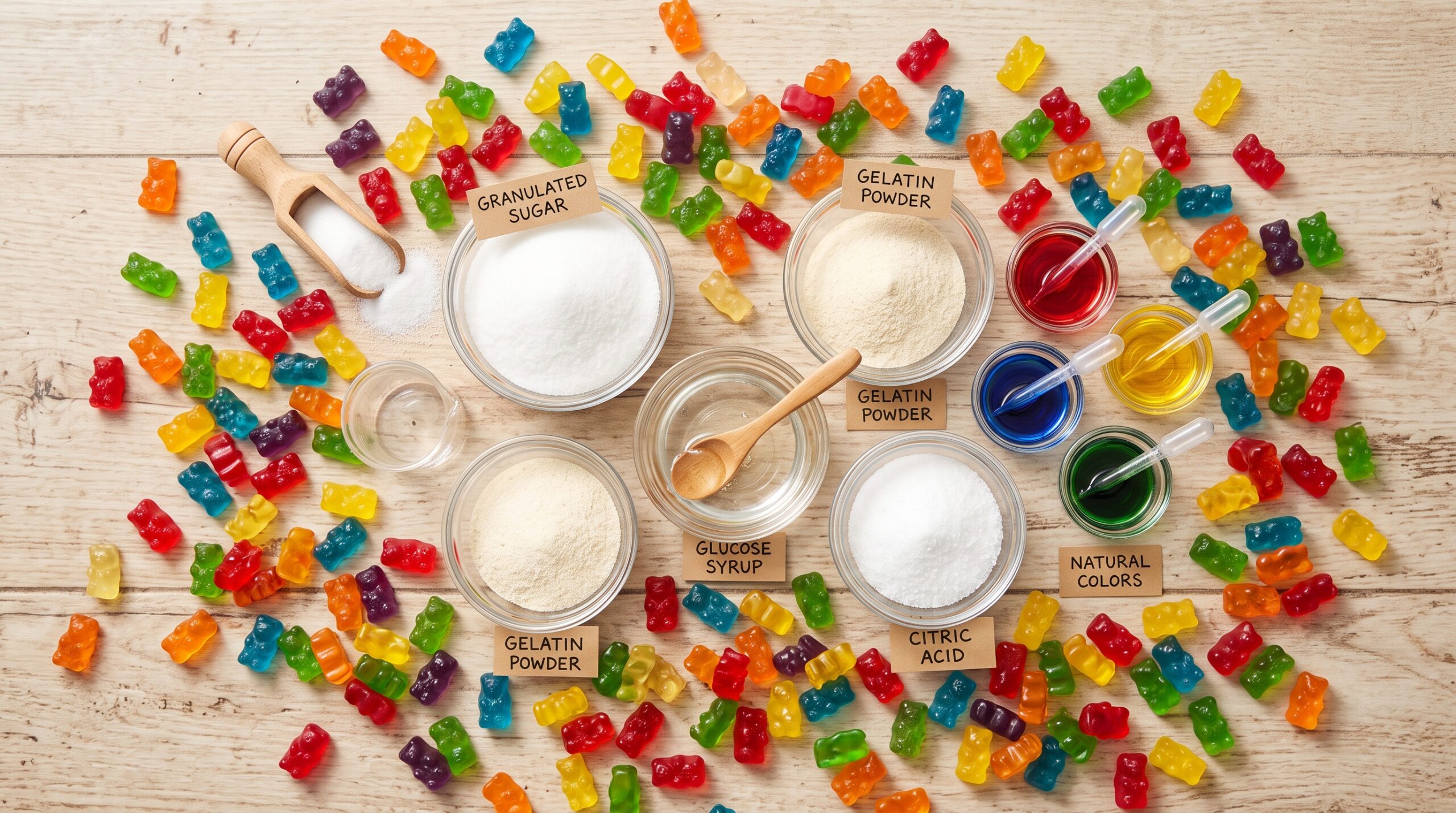
Gummy candy uses gelatin (or pectin for vegan versions) as its base, dissolved in sugar syrup, cast into molds, and solidified. Gum uses gum base — a blend of elastomers and resins — that never dissolves or solidifies in the same way. Gummy manufacturing uses depositing and starch-molding equipment; gum manufacturing uses sigma-blade mixers, rolling/scoring lines, and coating pans. Both processes are handled by industrial confectionery machinery, and both products are candy.

Conclusion
Is gum candy? Every metric that defines candy — industry classification, retail placement, regulatory treatment, manufacturing process, and supply chain — puts gum firmly in the confectionery category. The only thing that makes gum unusual is the insoluble gum base that you chew but don’t swallow. That’s a texture and delivery-mechanism quirk, not a categorical distinction.
For consumers, the practical takeaway is simple: treat gum the way you treat any candy. Enjoy it in moderation, opt for xylitol-sweetened varieties if dental health matters to you, and check ingredient labels if you’re managing sugar intake or following a vegan diet. For manufacturers and machinery operators, gum’s place in the candy family means it benefits from the same advances in confectionery processing technology — mixing, coating, conditioning — that are driving efficiency and innovation across the entire confectionery category.
The candy aisle has the right instinct. Gum belongs there.
Internal links: related: gummy manufacturing machine guide | related: candy production equipment overview
External sources used in this article:
– Chewing gum — Wikipedia
– National Confectioners Association — candyusa.com
– FDA 21 CFR Part 172.615 — Gum Base Substances
– American Dental Association — Seal Program
Related Articles
- Top Gummy Candy Brands in 2026: The Complete Guide for Confectionery Professionals
- Sugar Confectionery: From Raw Sugar to Perfect Candy – Expert Manufacturing Guide
- What Makes Sour Candy Sour? The Acids, Chemistry, and Production Secrets
- Sour Tube Candy: What It Is, Flavors, How It’s Made & Why You Can’t Stop
- Gummy Candy Production Line
- Biscuit Production Line
- Are Skittles Gluten Free? Complete Guide 2026