You’ve probably seen them by now — those wildly shaped, almost-too-pretty-to-eat gummy candies showing up in candy stores, TikTok hauls, and import snack aisles everywhere. They’re stacked like toy bricks, shaped like dinosaurs with impeccable detail, or designed as tiny ocean creatures with layered colors you’d never expect from a gummy. That’s 4D gummies, and they’re not a passing trend. They represent a genuine evolution in confectionery — not just a visual gimmick but a different approach to texture, flavor delivery, and consumer engagement that the candy industry hasn’t seen since the gummy bear itself was invented in 1922.
This guide explains what 4D gummies actually are (the “4D” part is more interesting than you’d think), how they’re made, what distinguishes them from every other gummy on the shelf, where they’ve taken root across different markets, and where the whole category is heading. If you’re a candy enthusiast, a buyer, or someone who saw a bag at the checkout and wondered what the difference actually is — read on.
What Are 4D Gummies, and What Does “4D” Actually Mean?
The name sounds like marketing, but there’s more substance to it than most candy branding. The “4D” in 4D gummies stands for 3D + Delicious — acknowledging that these candies go beyond flat or simple molded shapes to deliver genuinely three-dimensional, architecturally detailed forms alongside flavor complexity that flat gummies can’t replicate.
That distinction matters practically. A traditional gummy bear or ring is essentially a flat two-dimensional profile extruded or pressed into a mold — the third dimension is depth, but there’s no structural detail, no undercuts, no intricate surface geometry. 4D gummies use precision injection molding or layered molding processes that allow features like interlocking building block studs, realistic dinosaur scale textures, fish fins, flower petals, or modular assembly points to be reproduced in food-grade gelatin at candy scale.
The fourth dimension — whether you call it flavor, interactivity, or experience — comes from what happens when you actually eat one. Many 4D gummies incorporate a juice-filled liquid center that bursts on bite, a dual-texture shell-and-core construction, or sequential flavor release that plays out over the chew. That’s genuinely different from a standard gummy’s single-layer, uniform-chew experience. It’s why consumers describe eating them differently — there’s a sequence to it, not just a flavor.
What separates 4D gummies from the broader universe of shaped candy is the combination of all three elements simultaneously: precise three-dimensional form, multi-layer or filled texture architectureそして flavor complexity designed for the geometry. Remove any one of those and you’re back to a regular gummy.
How 4D Gummies Are Made: The Manufacturing Process
Most gummy candy guides describe the process at a level that could apply to any gelatin product made anywhere. The manufacturing of 4D gummies is genuinely more complex — the tolerances required for interlocking shapes and liquid-filled cores demand precision that standard gummy production lines can’t achieve. Here’s what actually goes into them.
Base Formulation
The gummy mass begins with the same core ingredients as any gelatin candy, but the ratios and sequencing are tighter:
-
Gelatin or pectin (typically 6–10% of the total formula by weight) — gelatin is the standard for conventional 4D gummies; pectin is the vegan alternative, producing a slightly firmer, less elastic texture
-
Glucose syrup and sugar — primary sweeteners, also controlling water activity and shelf-life stability
-
Fruit juice concentrate or natural/artificial flavors — for liquid-filled variants, the core fill is formulated separately at a different sugar concentration to remain pourable at fill temperature
-
Citric or malic acid — for tartness balance and preservation
-
着色料 — natural (fruit and vegetable concentrates, beta-carotene) or synthetic (FD&C Red 40, Yellow 5, Blue 1), often applied in layers to achieve the color differentiation visible in cross-section
Precision Molding
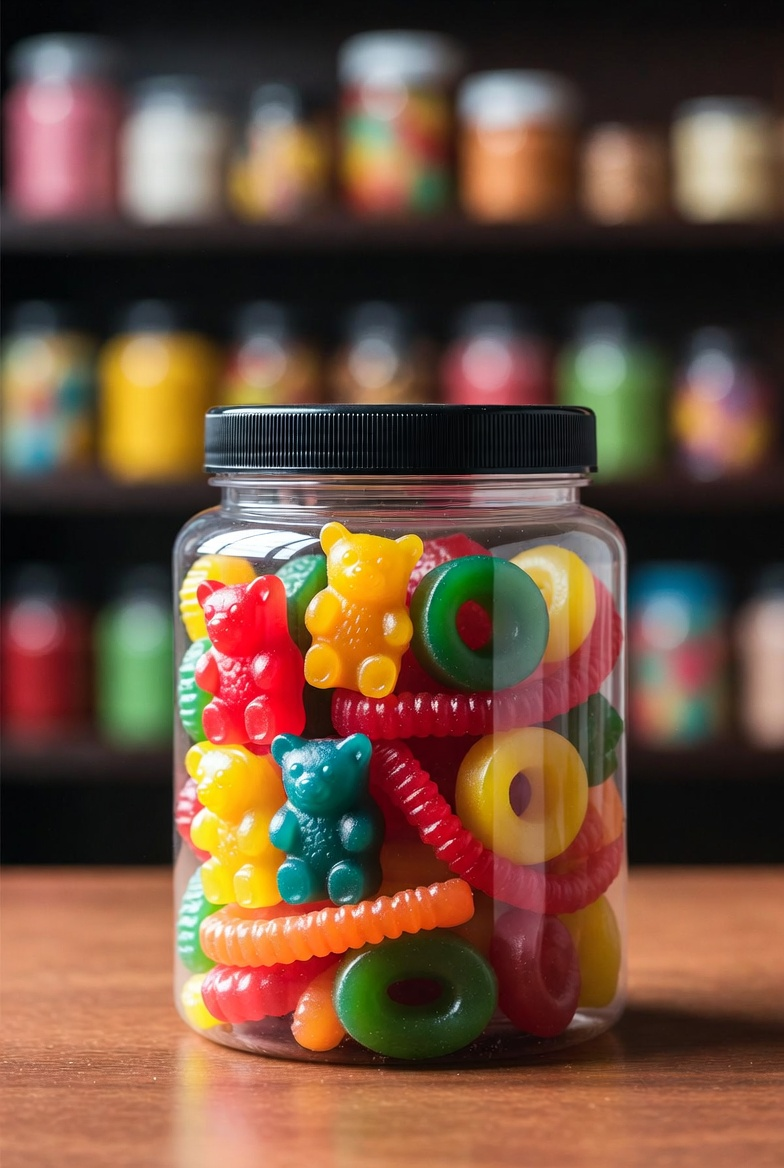
This is where 4D gummy production diverges most sharply from conventional gummy manufacturing. Standard gummies are deposited into starch mogul molds or simple silicone cavities. 4D gummies require:
-
Layered injection molding for dual-color or dual-texture constructions
-
Precision silicone or polycarbonate molds with undercut geometry to reproduce interlocking details
-
Temperature-controlled sequential deposition for liquid-filled cores — the outer shell must be partially set before the liquid center is deposited, or the fill will escape the cavity
For building-block variants (like the widely recognized Amos block gummies), the stud geometry must be dimensionally consistent enough that blocks from different bags physically interlock. That’s a food manufacturing tolerance challenge that most candy lines aren’t designed for.
Setting, Demolding, and Finishing
After molding, the gummies pass through a controlled cooling and conditioning environment — typically 18–24°C at 40–50% relative humidity — for 24 to 48 hours. This step determines final texture: too short and the gummies are soft and tacky; too long and they dry out, losing the elastic chew that defines a quality gummy. The specific parameters depend on gelatin bloom strength and formula water content.
Finishing options include:
-
Sour sugar or citric acid coating — adds tactile contrast and flavor intensity
-
Carnauba wax polish — prevents surface tackiness and extends shelf life
-
Oiling — lighter surface treatment for a glossy, slightly slick finish
-
No coating (natural finish) — common in premium and clean-label variants
4D Gummies vs. Regular Gummies: The Honest Comparison
Most comparisons between 4D gummies and standard gummies focus on shape. Shape is part of it — but it’s not the whole story. Here’s the full breakdown across the dimensions that actually matter to consumers and buyers:
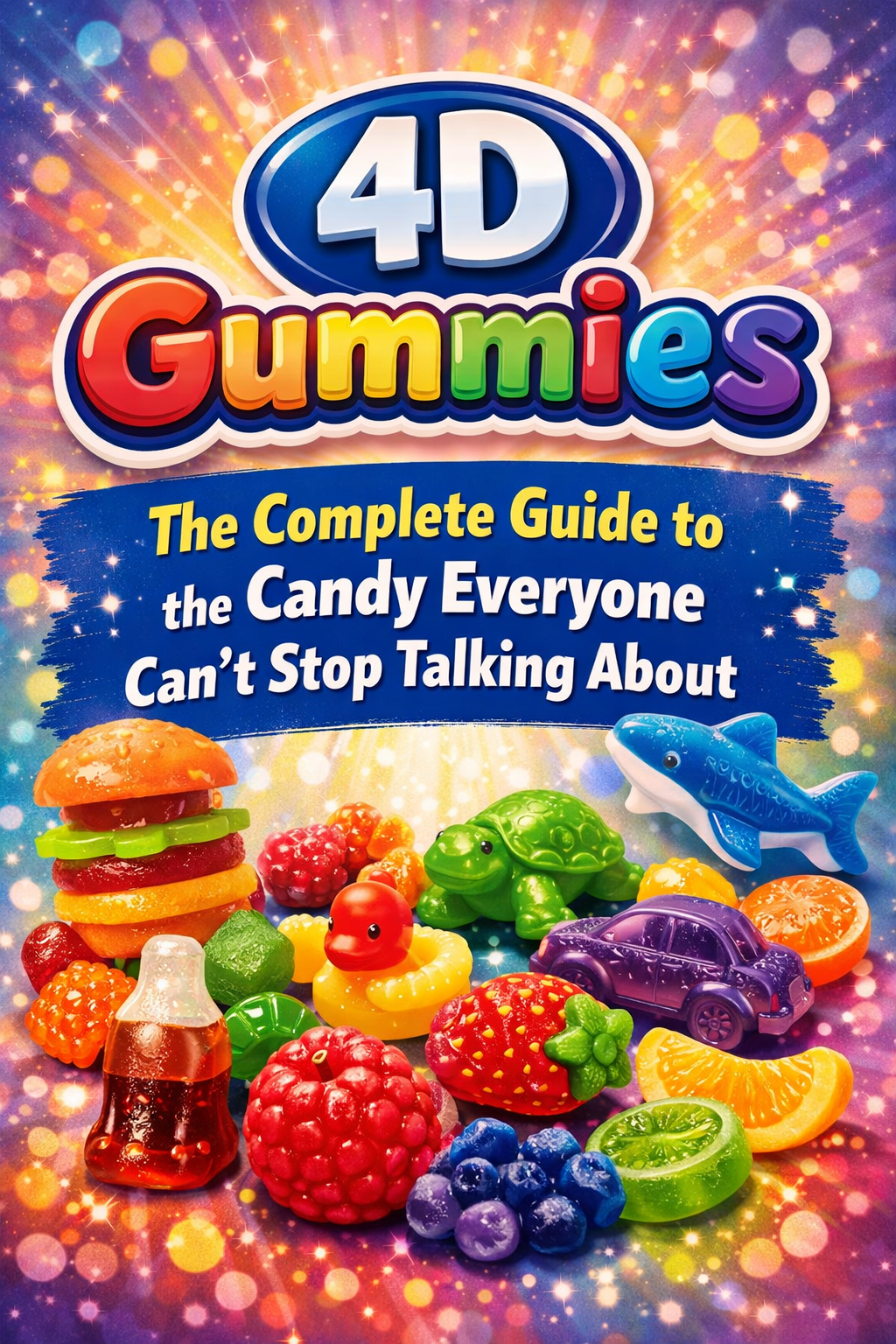
The interactive and collectible dimensions deserve more attention than they typically get in candy category analysis. 4D gummies that assemble — block formats, puzzle formats, figurine kits made of edible components — create a usage occasion that traditional gummies can’t access. The candy becomes a toy, briefly. That shifts the purchase trigger from hunger or craving to gifting, novelty, and experience — a meaningfully different and higher-margin market position.
Popular Types of 4D Gummies: What’s Actually on the Market
The 4D gummy category has diversified rapidly since Amos introduced the block gummy format. Here’s a breakdown of the major product archetypes currently competing for shelf and digital space:
Block Gummies (Building Brick Format)
The format that arguably started the 4D gummy mainstream. Geometric blocks with interlocking studs in flavors like green apple, strawberry, lemon, and blueberry — designed to stack and build like toy bricks, then be eaten. The Amos brand brought this to wide international distribution and it remains the most recognized 4D gummy format globally.
Dinosaur Gummies
Highly detailed three-dimensional dinosaur figures — T-Rex, Brachiosaurus, Triceratops — with surface texture that faithfully reproduces scales. Often available with a liquid fruit-burst center. The “dinosaur theme + candy” combination has a proven track record in children’s markets, and the 4D detail level elevates it significantly beyond flat dinosaur shapes.
Fruit-Shaped Burst Gummies
Shaped as strawberries, grapes, peaches, or pineapples with an internal juice-filled core in a matching or contrasting flavor. The visual realism combined with the burst texture makes these one of the most shared formats on social media — the cross-section reveal when bitten has become its own content format.
Ocean and Marine Theme Gummies
Mermaids, fish, seahorses, and shells — often with multiple colors within a single piece to suggest water-like gradients. Popular for party and event use where the visual presentation of a candy spread matters.
Gummy Blocks with Puzzle Assembly
Beyond simple stacking bricks, more complex puzzle-assembly formats have emerged — where individual gummies are shaped as interlocking pieces that form a larger image or figure when assembled. Primarily in the gift and novelty segment rather than everyday snack.
Key Ingredients: What Goes Into Quality 4D Gummies
Understanding the ingredient list lets you evaluate quality across brands — and explains why some 4D gummies have a noticeably better texture and flavor than others.
One detail worth knowing about liquid-filled 4D gummies specifically: the inner fill’s sugar concentration is critical not just for flavor but for microbiological safety. A fill with insufficient dissolved sugar content creates an aw (water activity) environment that supports bacterial and mold growth even inside a sealed candy. Reputable manufacturers test fill water activity as part of standard QC — it should be below 0.70 for shelf-stable performance. This is one of the technical reasons why cheap liquid-filled gummies from unverified sources can have shelf-life problems that their sealed packaging conceals until opened.
Industry Applications: Where 4D Gummies Are Making Real Business Impact
4D gummies aren’t just a retail novelty — they’re reshaping category economics across several distinct market channels.
Specialty and Import Candy Retail
The primary growth channel has been specialty candy retail — both physical stores and e-commerce. Import candy stores in the US, UK, and Australia building Korean, Japanese, and Chinese candy sections have used 4D gummies as anchor products: high visual appeal, strong social media presence, and unique enough that customers make special trips rather than just adding them to a grocery basket. The non-chocolate chewy candy subcategory generated $6 billion in the US alone in the 52 weeks ending June 2024, with 5.7% year-over-year growth — and specialty novelty formats like 4D gummies are a documented driver of that growth.
Gift and Occasion Retail
The interactivity and visual presentation of 4D gummies translate directly to gift applications. Block gummies in transparent gift boxes, dinosaur gummy sets with assembly cards, themed ocean gummy collections for beach-themed events — these products reach a price point and presentation standard that traditional bulk gummies can’t access. Gifting occasions represent higher average transaction values than impulse candy purchases, and 4D gummies’ design complexity supports premium packaging.
Subscription and Snack Box Services
Global snack subscription boxes (Bokksu, TokyoTreat, Universal Yums, and dozens of similar services) have adopted 4D gummies as recurring inclusion items. The format photographs well, ships without fragility issues, and consistently generates positive unboxing reactions. For subscription box curators, 4D gummies solve the “what do we put in this month that people will actually share” problem reliably.
Children’s Party and Event Markets
The interactive and collectible nature of block and character 4D gummies makes them natural event candy — party favors, activity tables where children assemble and then eat, or simply as part of a high-visual candy display. Catering and party supply buyers have integrated 4D gummies into their sourcing specifically because the format adds a participation element that flat candy bowls don’t.
Food Service and Experiential Dining
A smaller but growing channel: upscale dessert bars, themed cafés, and experiential dining concepts have incorporated 4D gummies as plated dessert components or interactive table elements. A dessert service where guests receive a set of themed 4D gummies alongside a dessert creates a memorable touchpoint that doesn’t require kitchen labor — it’s a manufactured product served with intention.
How to Evaluate Quality When Buying 4D Gummies
Not all 4D gummies are made equal. Here are the factors that separate well-made products from the disappointments — relevant whether you’re buying for personal enjoyment, retail purchase, or wholesale sourcing.
Texture on first bite. Quality 4D gummies should have a slight resistance before giving way cleanly — not crumbly, not excessively hard, not collapsing immediately. The shell should be intact with no moisture seepage visible on the surface, which would indicate water activity problems or packaging failures.
Flavor clarity. Each layer or flavor zone should be clearly distinct. In a well-made burst gummy, the outer chew flavor and the inner fill flavor should register separately and sequentially, not merge into a vague sweetness. Cheap fill formulations often have high citric acid content that masks actual fruit flavor — you taste sour before you taste anything.
Structural fidelity. For building block formats, the stud geometry should be consistent enough to actually interlock. If studs are rounded, misaligned, or dimensionally inconsistent across pieces from the same bag, manufacturing quality control is insufficient for the product’s intended use.
Ingredient transparency. Legitimate 4D gummy manufacturers provide full ingredient declarations including gelatin source, colorant identifications, and allergen statements. Unbranded or repackaged 4D gummies without complete labeling are a sourcing risk for both retail and consumer use.
For retail buyers and wholesale sourcing of 4D gummies and broader confectionery categories, Sinofude Technology — Gummy Candy Manufacturing and Supply provides detailed product specifications, ingredient documentation, and manufacturing capability information for 4D gummy formats.
Future Trends in 4D Gummies
The global gummy candy market was valued at USD 8.12 billion in 2023 and is projected to grow at a CAGR of 5.4% through 2031. The novelty formats driving above-average growth within that trajectory are exactly the category that 4D gummies occupy. Several specific directions are clearly emerging.
Functional 4D Gummies
Vitamin gummies have been mainstream for years. The logical extension — and one that’s already appearing from several manufacturers — is functional ingredients delivered through 4D gummy formats: vitamin C, probiotics, collagen peptides, magnesium, or adaptogens. The challenge is formulation stability — heat-sensitive ingredients like probiotics require post-molding addition or encapsulation, and the 4D molding process involves temperatures that preclude simple mixing. Research into low-temperature gelation systems and encapsulated functional ingredients is directly enabling this product direction.
Vegan and Plant-Based Formulations
Pectin-based and agar-agar-based 4D gummies are already in development at multiple manufacturers, responding to demand from consumers who avoid gelatin for religious, dietary, or ethical reasons. The texture challenge is real — plant-based hydrocolloids set differently than gelatin, and replicating the elastic, slow-release chew of gelatin-based gummies with plant alternatives requires precise formulation work. Furcellaran (an algae-derived polysaccharide) is one of the more promising alternatives being actively researched for its texture profile in gummy applications.
Reduced-Sugar and Sugar-Free Formats
Consumer demand for lower-sugar confectionery is documented and consistent. Sugar-substitute 4D gummies using maltitol, erythritol, or allulose are in development, though the texture impact of reducing sucrose and glucose syrup requires careful compensation with alternative humectants and texture modifiers. Clinical research on sugar-substitute gummy formulations confirms that erythritol and maltitol combinations can replicate acceptable texture while meaningfully reducing glycemic impact — providing the technical foundation for this product direction.
3D-Printed Custom 4D Gummies
Food-grade 3D printing in gelatin-based materials is no longer experimental — it’s a commercially available manufacturing approach for small-batch custom confectionery. Custom 4D gummies printed to specific shapes — company logos, event-specific characters, personalized gifts — represent a premium custom market that standard injection molding can’t economically serve at low quantities. As food-grade 3D printing costs decrease and print resolution improves, the gap between injection-molded and printed gummy quality continues to narrow.
Sensory Layering and Multi-Texture Architecture
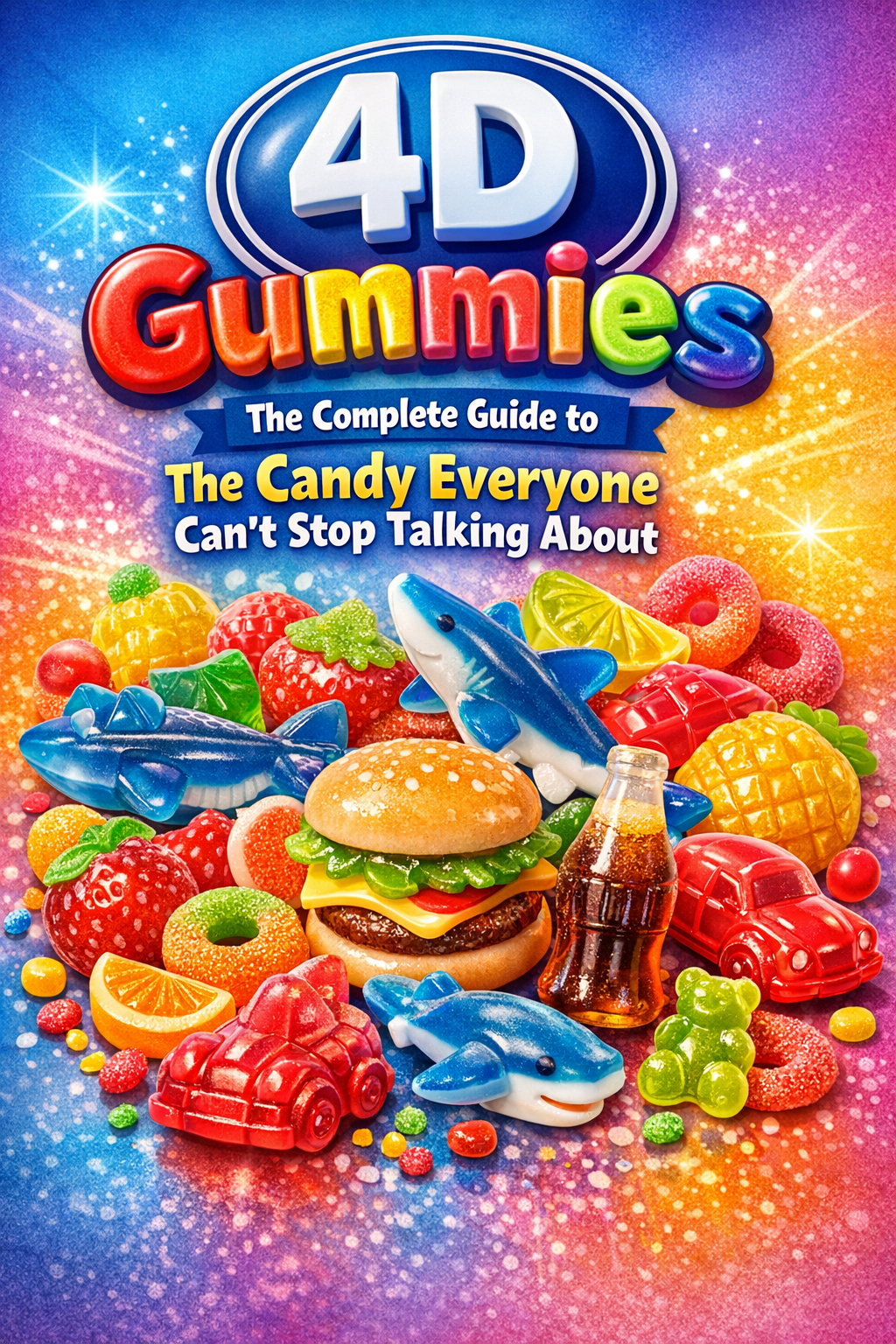
The next evolution beyond juice-burst centers is more sophisticated sensory architecture: gummies with foam-layer centers, popping candy inclusions, liquid crystal liquid centers that shift flavor as temperature changes, or sequential texture release that changes from chewy to melting. Several confectionery innovation labs are actively working on these formats — they require significant formulation and manufacturing investment, which means they’ll first appear at premium price points before broader market adoption.
For comprehensive information on 4D gummy product formats, ingredient specifications, and manufacturing capabilities — including block gummies, dinosaur gummies, and juice-burst variants — Sinofude Technology’s 4D Gummies Resource and their Dinosaur Gummies Guide provide detailed technical and commercial information.
Authority References:
-
State of the Industry 2024: Gummies Shine with Innovation — Snack & Bakery
-
Gummy Candies Market Demand and Growth Opportunities — USD Analytics
-
How to Make Gummy Candy: Gummy Production Explained — GummyGenix
-
Intake of Sugar Substitute Gummy Candies Benefits Glycemic Response — PMC/NIH
-
The Industrial Gummy Making Process: A Step-by-Step Guide — TG Machine