अपवर्तन का विज्ञान: ब्रिक्स परीक्षण में तकनीकी गहरा विश्लेषण
परिचय
Many professionals use Brix testing to measure “sugar.” But the number on your refractometer actually shows something else entirely. It’s measuring a fundamental physical principle: light refraction. This value is a proxy, not an absolute measure of sweetness.
The core science behind Brix testing is simple. It measures how light bends in a liquid solution. When light passes from air into a sample, the angle it bends is directly related to how much stuff is dissolved in that sample.
The Brix scale takes this light-bending measurement and converts it into something more useful. It shows the percentage of sucrose by weight in a water solution.
This guide will give professionals a complete analysis. We’ll explore:
- How light refraction works and what refractive index means.
- A technical comparison of analog, digital, and laboratory refractometer technologies.
- A detailed, step-by-step protocol for accurate and repeatable measurements.
- The critical limitations of Brix testing and necessary corrections for non-sucrose solutions.
- Advanced applications and interpretations in key industrial and agricultural quality control settings.

The Fundamental Principle
Understanding Light Refraction
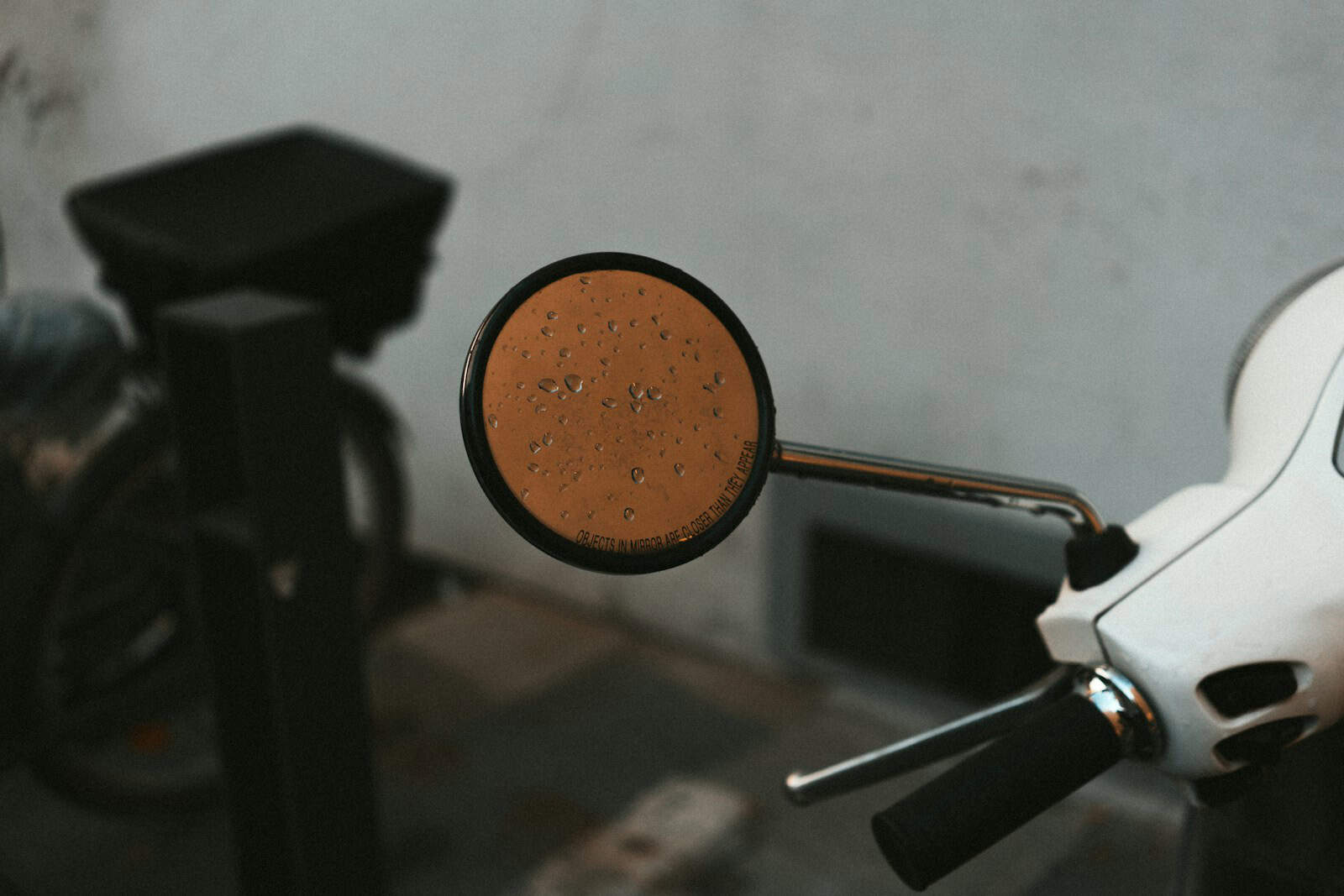
Refraction happens when light travels from one medium into another with different density. The light ray changes direction, or “bends.”
Think of a straw in a glass of water. It looks bent because light travels slower in water than in air.
This relationship follows Snell’s Law: n₁sinθ₁ = n₂sinθ₂. Here, n₁ and n₂ are the refractive indices of the two media. θ₁ and θ₂ are the angles of incidence and refraction. A refractometer is basically a device built to measure this angle change precisely.
Defining Refractive Index
The Refractive Index (RI) is a number that shows how much a light ray bends when it enters a material. It’s calculated as the ratio of light speed in a vacuum to light speed in the substance.
Here’s the key principle for Brix testing: dissolved solids in a liquid directly affect its optical density.
More dissolved solids like sugars, salts, or proteins make the solution optically denser. This slows down light passing through it. The result is a higher angle of refraction and a higher refractive index.
Pure, deionized water at 20°C has a refractive index of about 1.3330. This serves as the universal zero point (0.0 °Bx) on the Brix scale. It provides a stable baseline for all measurements.
The Brix Scale
The Brix scale (°Bx) isn’t an independent physical unit. It’s a practical conversion of the refractive index measurement. It transforms the abstract RI value into something widely understood: the percentage of sucrose by mass in pure water.
For example, a solution measuring 25 °Bx has the same refractive index as 25 grams of sucrose in 75 grams of water.
The International Commission for Uniform Methods of Sugar Analysis (ICUMSA) rigorously defines and maintains this scale. Their standards specify calibration based on sucrose solutions at 20°C (68°F).
Understanding this sucrose-based calibration is critical. It’s the main source of errors when measuring solutions with other types of dissolved solids. We’ll explore this in detail later.
The Tools of the Trade
Analog Handheld Refractometers
The simplest refractometer works on pure optics. It uses ambient light that passes through a sample on a prism.
The light refracts, and you view an internal scale through an eyepiece. You identify the “shadow line”—the boundary between light and dark fields—to determine the Brix value.
cURL Too many subrequests.
cURL Too many subrequests.
cURL Too many subrequests.
cURL Too many subrequests.
cURL Too many subrequests.
cURL Too many subrequests.
cURL Too many subrequests.
cURL Too many subrequests.
cURL Too many subrequests.

cURL Too many subrequests.
cURL Too many subrequests.
cURL Too many subrequests.
cURL Too many subrequests.
cURL Too many subrequests.
cURL Too many subrequests.
cURL Too many subrequests.
विशेषता | cURL Too many subrequests. | cURL Too many subrequests. | cURL Too many subrequests. |
सिद्धांत | cURL Too many subrequests. | cURL Too many subrequests. | cURL Too many subrequests. |
सटीकता | cURL Too many subrequests. | cURL Too many subrequests. | cURL Too many subrequests. |
cURL Too many subrequests. | cURL Too many subrequests. | cURL Too many subrequests. | cURL Too many subrequests. |
cURL Too many subrequests. | cURL Too many subrequests. | cURL Too many subrequests. | cURL Too many subrequests. |
लागत | cURL Too many subrequests. | cURL Too many subrequests. | cURL Too many subrequests. |
cURL Too many subrequests. | cURL Too many subrequests. | cURL Too many subrequests. cURL Too many subrequests.cURL Too many subrequests. | cURL Too many subrequests. |
The Meticulous Method
Step 1: Critical Calibration
Calibration is the most critical step for ensuring data integrity. It establishes your instrument’s zero point. All subsequent measurements are compared against this.
You must perform this using distilled or, preferably, deionized (DI) water. These purified water sources are free of dissolved solids that would alter the refractive index and create a faulty baseline.
Before testing any sample, place a few drops of DI water on the clean, dry prism. The reading must be exactly 0.0 °Bx.
On a digital refractometer, press a “ZERO” or “CAL” button. On an analog model, use the included screwdriver to turn the calibration screw. Turn until the shadow line aligns perfectly with the 0.0 mark on the scale. This step is not optional. It’s fundamental to accuracy.
Step 2: Sample Preparation
Accurate readings depend on well-prepared and properly handled samples. The first consideration is temperature.
The sample and refractometer prism must be at the same temperature for an accurate reading. Automatic Temperature Compensation (ATC) helps, but it has limits. It compensates for the instrument’s temperature, not for a sudden temperature difference between a hot sample and cool prism.
For best results, allow the sample to reach the ambient temperature of the instrument. This is especially critical for high-accuracy lab work or when using non-ATC instruments.
Sample uniformity is also crucial. The measurement reflects only the few drops on the prism. They must represent the entire batch. Stir liquids thoroughly before sampling. For fruits, extract juice from a composite of the whole fruit, not just one small, potentially sweeter area.
Finally, ensure sample clarity. Suspended solids, pulp, or air bubbles can scatter light. This leads to a blurry shadow line on analog models or an error reading on digital ones. Let samples settle, or filter them if necessary. When applying the sample, use a pipette to draw from the middle of the liquid. This avoids surface films or sediment.
Step 3: Reading the Measurement
The method for taking a reading varies by instrument type.
For an analog refractometer, apply the sample and close the daylight plate. Hold the instrument up to a natural, bright light source. Look through the eyepiece and turn the focusing ring until the scale is sharp and clear.
Take the reading at the boundary between the blue and white fields, known as the shadow line. Read the value on the scale where this line intersects.
For a digital refractometer, the process is much simpler. After applying the sample, press the “READ” or “MEASURE” button. The instrument will perform the measurement, apply temperature correction, and display a stable, final Brix value on the screen in seconds.
Step 4: Post-Measurement Cleaning
Residue from a previous sample is a primary source of cross-contamination and inaccurate results. You must clean the prism meticulously after every single reading.
Use a soft, non-abrasive cloth or lens wipe dampened with deionized water. Gently wipe the prism surface and the underside of the cover plate. Dry it completely with a clean, dry portion of the cloth.
Never use harsh chemicals or abrasive materials that could scratch the delicate prism surface. A damaged prism will permanently compromise the instrument’s accuracy.
Table 2: Troubleshooting Guide
समस्या | Likely Technical Cause | समाधान |
Blurry Shadow Line | Improper focus (analog), dirty prism, or suspended solids in sample. | Adjust eyepiece, clean prism with DI water, let sample settle or filter. |
Reading Won’t Zero | Dirty prism, using tap water for calibration, or instrument damage. | Clean prism thoroughly with DI water, use only DI water, check for prism scratches. |
Inconsistent Results | Temperature differential, non-homogenous sample, or dirty prism. | Allow sample and prism to equilibrate, mix sample well, clean prism after each use. |
cURL Too many subrequests. | cURL Too many subrequests. | cURL Too many subrequests. |
cURL Too many subrequests.
cURL Too many subrequests.
cURL Too many subrequests. cURL Too many subrequests. cURL Too many subrequests.
cURL Too many subrequests.
cURL Too many subrequests.
- cURL Too many subrequests.
- cURL Too many subrequests.
- cURL Too many subrequests.
- cURL Too many subrequests.
cURL Too many subrequests.
cURL Too many subrequests.
cURL Too many subrequests.
cURL Too many subrequests.
cURL Too many subrequests. cURL Too many subrequests. cURL Too many subrequests.
cURL Too many subrequests.
cURL Too many subrequests.
आवेदन | cURL Too many subrequests. | cURL Too many subrequests. |
cURL Too many subrequests. | cURL Too many subrequests. | cURL Too many subrequests. |
cURL Too many subrequests. | cURL Too many subrequests. | cURL Too many subrequests. |
cURL Too many subrequests. cURL Too many subrequests. | cURL Too many subrequests. | cURL Too many subrequests. |
शहद | cURL Too many subrequests. | cURL Too many subrequests. |
cURL Too many subrequests. | cURL Too many subrequests. | cURL Too many subrequests. cURL Too many subrequests. cURL Too many subrequests. |
Coffee (Brewed) | Organic Acids, Lipids, Melanoidins, Carbohydrates | Reading is interpreted as Total Dissolved Solids (TDS) to measure extraction yield and strength. Not a measure of sweetness. |
निष्कर्ष
A Recap of Truths
Technical mastery of Brix testing requires moving beyond a superficial definition. The key is to internalize a few core principles that govern its accuracy and utility.
- Brix testing is a physical measurement of refractive index. This correlates to the total concentration of all dissolved solids, not just sugar.
- The choice of instrument—analog, digital, or lab-grade—must be based on the specific application and required level of precision and objectivity.
- A meticulous protocol is non-negotiable. Rigorous calibration with deionized water, strict temperature control, and thorough cleaning are the foundation of reliable data.
- Always consider your sample’s composition. For any non-sucrose solution, the reading is an “apparent” value that may require application-specific correction factors or interpretation.
The Power of Measurement
When you fully understand its scientific principles and inherent limitations, Brix testing is transformed. It stops being just a simple number. It becomes a powerful, rapid, and cost-effective data-driven tool.
For the quality control manager, agronomist, or food scientist, an informed Brix measurement provides insight into process control, product consistency, and final quality.
Leveraging this technical understanding allows professionals across countless fields to make faster, more informed decisions. This ensures consistency from the field to the laboratory and from the factory floor to the finished product.
- ICUMSA – International Commission for Uniform Methods of Sugar Analysis https://www.icumsa.org/
- AOAC इंटरनेशनल – आधिकारिक विश्लेषण रसायनों का संघ https://www.aoac.org/
- ASTM International – Food & Beverage Testing Standards https://www.astm.org/
- ISO – अंतरराष्ट्रीय मानकीकरण संगठन https://www.iso.org/
- एफडीए – भारत खाद्य एवं औषधि प्रशासन https://www.fda.gov/
- USDA – भारत कृषि विभाग https://www.usda.gov/
- इंस्टीट्यूट ऑफ फूड टेक्नोलॉजिस्ट्स (IFT) https://www.ift.org/
- कोडेक्स एलिमेंटेरियस (WHO/FAO) https://www.fao.org/fao-who-codexalimentarius/
- NIST - राष्ट्रीय मानक और प्रौद्योगिकी संस्थान https://www.nist.gov/
- American Society of Brewing Chemists (ASBC) https://www.asbcnet.org/
संबंधित लेख
- 2025 आवश्यक खाद्य परीक्षण गाइड: कुकी उत्पादन में संदूषण से रोकथाम
- शेल्फ लाइफ टेस्टिंग की व्याख्या: सिद्धांत, विधियाँ और सर्वोत्तम अभ्यास 2025
- माइक्रोबायोलॉजिकल टेस्टिंग: सिद्धांत, विधियाँ और डेटा व्याख्या 2025
- इंजीनियर का कठोरता परीक्षण गाइड: सिद्धांत और विधियाँ 2025
- गमी कैंडी उत्पादन लाइन
- बिस्किट उत्पादन लाइन
- क्या स्किटल्स ग्लूटेन फ्री हैं? पूर्ण मार्गदर्शिका 2026