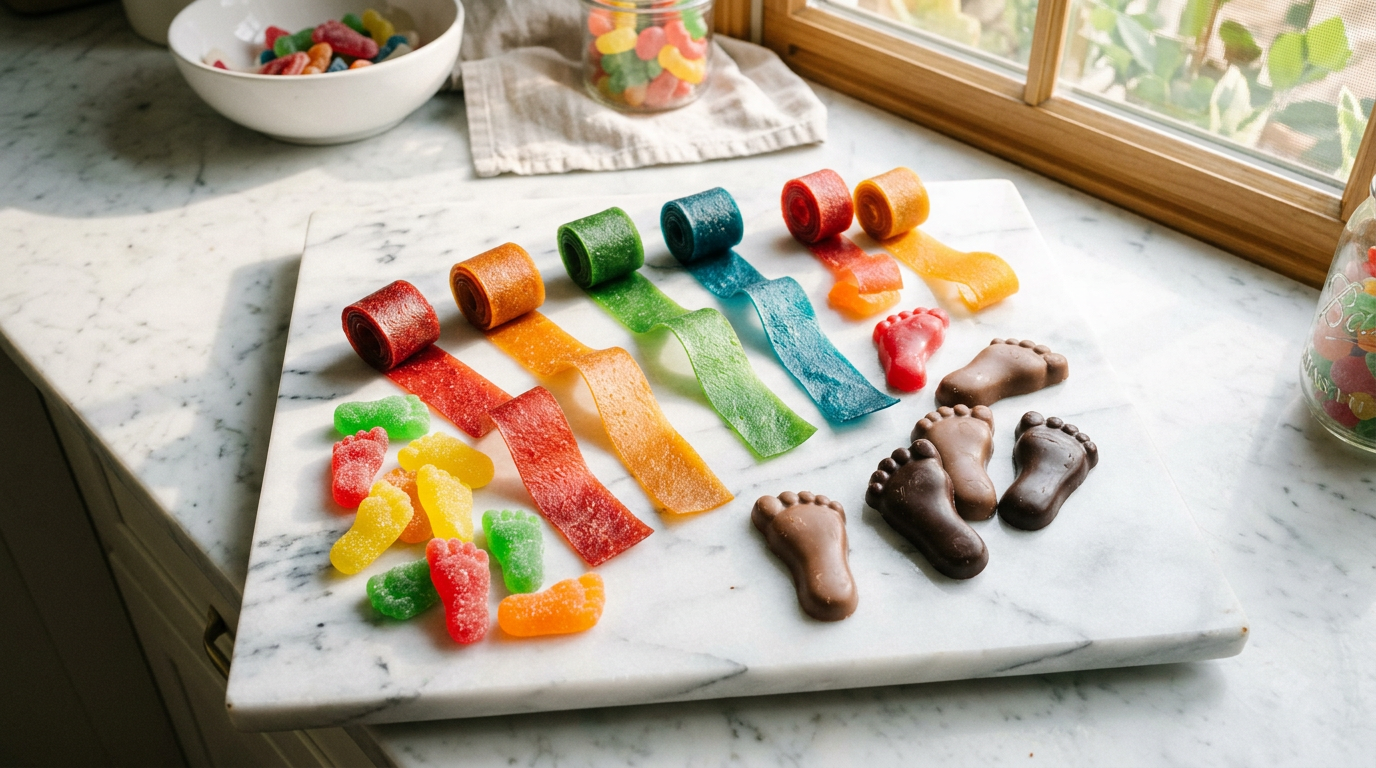
Foot candy is novelty confectionery shaped like feet or the iconic Fruit by the Foot: a long, rolled, fruit-flavored strip made from fruit puree, sugar, and pectin.
You’ve probably unrolled a Fruit by the Foot strip and measured it against your arm as a kid. Or maybe you’ve stumbled across gummy chocolate toes in a novelty candy shop and done a double-take. Either way, foot candy covers a surprisingly wide range of confectionery, and the category is bigger, more varied, and more interesting than the name suggests.
What you’ll find here: every type of foot candy, the ingredients that make each one work, how they’re manufactured at scale, and what’s changing in the category in 2026. If you’re a confectionery buyer, a candy enthusiast, or someone evaluating equipment for a new production line, this should answer the questions that most product pages and retail listings don’t bother with.
What is foot candy?
Foot candy covers two distinct confectionery categories. One is novelty candy shaped like a human foot or toes. The other is the rolled fruit strip known as Fruit by the Foot. Both have earned cult followings, but they share almost nothing in terms of manufacturing process or ingredient profile.
Fruit by the Foot: the classic definition
Fruit by the Foot is a brand-name fruit snack made by General Mills under the Betty Crocker label. Each roll contains roughly three feet (about 91 cm) of thin, flexible fruit strip, which is exactly where the name comes from. The strip rolls up into a small cylinder, and unrolling it mid-snack is half the appeal.
The product launched in 1991 and positioned itself as a companion to the already-popular Fruit Roll-Ups. Where Fruit Roll-Ups are flat sheets, Fruit by the Foot is a continuous tape, longer and narrower, with a slightly chewier texture. Flavors range from Strawberry and Berry Tie-Dye to more adventurous limited editions.
One roll (21 g) has about 80 calories, 17 g carbohydrates, and 7 g of sugar. That’s relatively modest for a candy, which is part of why it’s still marketed to children and health-conscious parents as a snack option.
| Feature | Fruit by the Foot | Fruit Roll-Up |
|---|---|---|
| Shape | Long continuous strip (~91 cm) | Flat sheet on plastic film |
| Texture | Chewy, slightly stretchy | Softer, more pliable |
| Weight per serving | 21 g | 14 g |
| Sugar per serving | 7 g | 10 g |
| Launched | 1991 | 1983 |
Foot-shaped novelty candies
Separate from the General Mills product, a category of foot-shaped novelty candy has grown steadily in gag-gift shops, specialty confectionery stores, and online markets. The formats include:
- Chocolate feet: molded dark, milk, or white chocolate cast in a realistic foot shape, complete with toes
- Gummy feet: gelatin or pectin-based gummies shaped into feet, sometimes with individual toe details
- Sour foot candy: gummy feet coated in citric acid powder for a sharp sour kick
- Hard candy feet: lollipop-style suckers shaped like cartoon feet
Companies like Toe-Rific Chocolates (USA) have built entire brands around the foot motif, offering everything from milk chocolate feet to caramel-filled toe clusters. Their tagline, “the original chocolate foot,” leans hard into the novelty angle, and it works. This level of candy is gift-driven, not snack-driven. The purchase decision is emotional, not nutritional.
Types of foot candy
Each foot candy format belongs to a different production family, with different equipment, ingredients, and quality-control requirements. Here’s how they break down.
Fruit strip foot candy (Fruit by the Foot style)
This is the largest-volume category. The strip is made via a co-rotational twin-screw extrusion or drum dryer process: fruit puree concentrate blends with sugar, corn syrup, and pectin, gets cooked to a precise Brix (sugar concentration), then flows onto a conveyor belt where it dries into a thin, flexible sheet. That sheet gets cut into narrow strips, rolled, wrapped in plastic film, and boxed.
The technical challenge is finding the right balance of flexibility and cohesion. Too dry and the strip cracks when you unroll it. Too wet and it sticks to the film wrapper. Experienced confectionery engineers target a water activity (Aw) of about 0.55 to 0.65 for this format. According to food science research on fruit confections, water activity in this range reliably inhibits microbial growth while keeping texture pliable for six to nine months.
Gummy foot candy
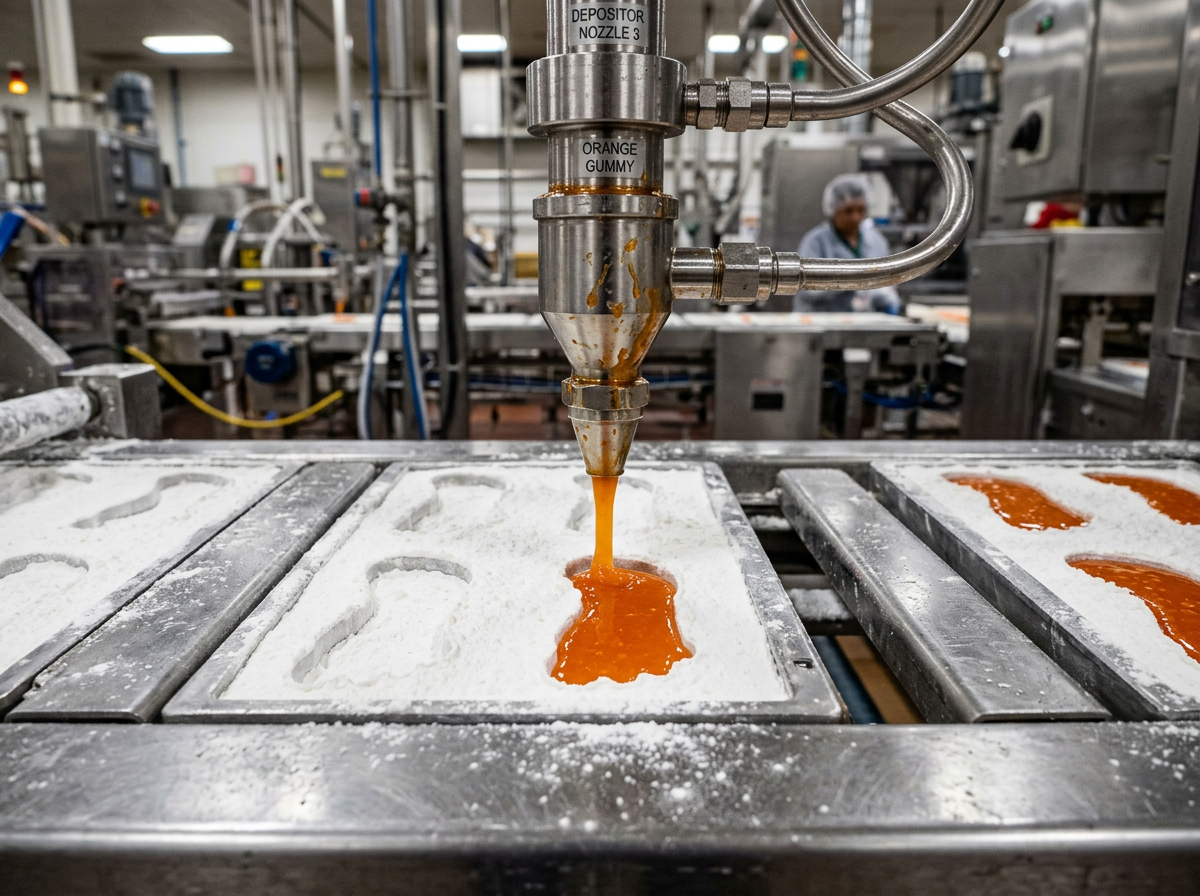
Gummy feet sit in the same production family as gummy bears, worms, and rings. Starch mold depositing is the standard method. Liquid candy mass (gelatin plus sugar, glucose syrup, flavoring, and color) gets deposited into cornstarch molds shaped like feet, then demoulded after 24 to 48 hours of conditioning. The result is a semi-translucent, chewy piece that holds the foot shape with surprising anatomical detail.
Pectin-based gummies follow the same mold process but set faster and produce a firmer, less springy texture. They’re often preferred for vegan lines since pectin comes from citrus peel or apple pomace, not animal hides.
Chocolate foot candy
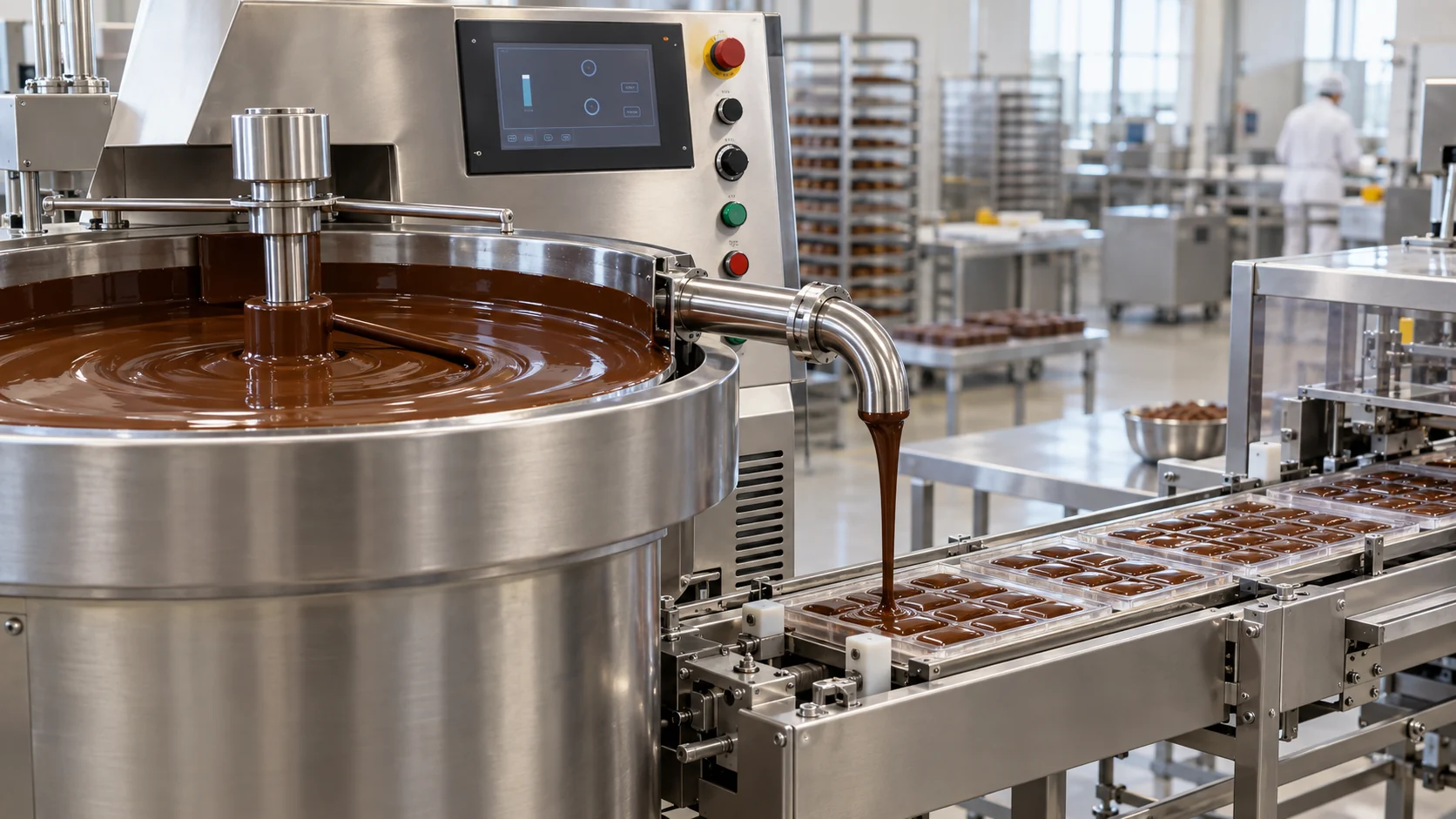
Chocolate feet are molded chocolate confections, either solid or filled. The process is standard chocolate moulding: tempered chocolate (typically 28 to 30°C for dark, 27 to 28°C for milk) gets poured into polycarbonate or silicone foot-shaped molds, vibrated to remove air bubbles, then cooled in a chocolate cooling tunnel. The piece releases from the mold after the chocolate contracts slightly upon setting.
Quality markers are bloom resistance (fat bloom gives chocolate a whitish film), snap (a clean break indicates proper tempering), and gloss (well-tempered chocolate has a mirror-like surface). Toe-Rific’s products use Belgian-style milk chocolate. Higher cocoa butter content means better mouthfeel and a longer bloom-free shelf life than cheaper compound coatings.
Sour and hard foot candy
Sour foot gummies are standard gummies with a post-mold acid coating: a blend of citric acid, malic acid, and sugar applied by tumbling in a coating drum. The ratio matters. Malic acid lingers longer than citric, so products aiming for a prolonged sour sensation often skew 30/70 citric to malic.
Hard candy feet use a boiled sugar mass (cooked to 150 to 155°C, the hard crack stage) poured into foot-shaped molds or cut from a pulled rope. The category is declining slightly as chewy formats gain market share, but it stays relevant in seasonal and novelty contexts.

Key ingredients in foot candy
The ingredient profile varies sharply by format, but every foot candy type shares a core set of components that define texture, flavor, and shelf life.
Sweeteners and binders
Sugar (sucrose) is the primary sweetener in virtually every foot candy format. In fruit strips, it works alongside high-fructose corn syrup or glucose syrup to control moisture migration and crystallization. Pure sucrose solutions crystallize readily; adding glucose disrupts crystal formation and keeps the strip flexible over its shelf life.
In gummies, the ratio of sucrose to glucose syrup typically runs 50:50 to 60:40 by weight. Too much glucose and the piece becomes overly sticky; too little and it hardens prematurely. Manufacturers targeting European markets often replace corn-derived glucose with wheat or potato-derived alternatives for non-GMO positioning.
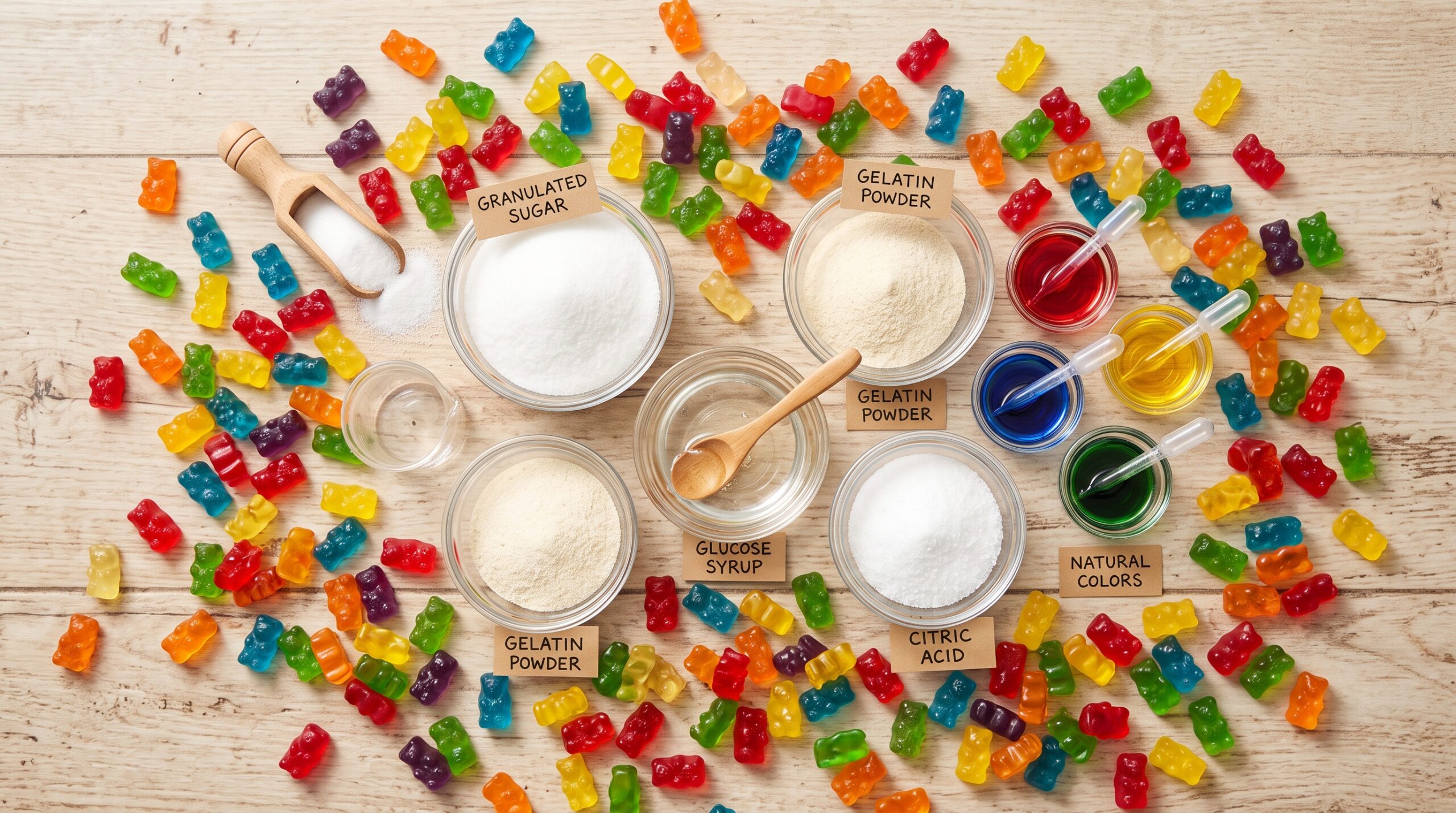
Gelatin (for non-vegan gummies) is the structural binder. It’s what gives gummy candy its characteristic chew and elastic snap. Typical usage levels run 5 to 8% of the total mass. Porcine (pork) gelatin is most common due to its favorable bloom strength-to-cost ratio, though bovine (beef) gelatin is used for halal and kosher production runs. The FDA’s guidance on food-grade gelatin classifies gelatin sourced from mammals as Generally Recognized As Safe, requiring no special labeling beyond allergen declarations.
Pectin, the plant-based alternative, gels differently. It requires a specific pH (around 3.0 to 3.5) and sugar concentration (60 to 65°Brix) to form a stable gel. That’s why pectin gummies have a slightly firmer, cleaner bite compared to gelatin versions.
Flavoring and color agents
Foot candy flavors are almost entirely synthetic or nature-identical at the commodity level. Strawberry, berry, watermelon, and tropical blends dominate. Synthetic wins because natural fruit flavorings fade during high-temperature processing and have inconsistent batch-to-batch profiles. A well-formulated synthetic strawberry compound delivers identical organoleptic results every time, at a fraction of the cost.
Color follows the same split. FD&C Red 40, Yellow 5, and Blue 1 handle most of the spectrum in conventional fruit candy. Natural alternatives (spirulina for blue-green, beet for red, turmeric for yellow) are gaining ground on premium SKUs but come with real tradeoffs: beet fades at high processing temperatures, and spirulina shifts color at low pH.
Gelatin vs. pectin: what drives the choice?
The pectin vs. gelatin decision comes down to target consumer, price point, and processing capability.
| Factor | Gelatin | Pectin |
|---|---|---|
| Source | Animal hides/bones | Citrus peel / apple pomace |
| Suitable for vegans | No | Yes |
| Gelling temperature | Sets at ~15 to 20°C | Requires precise pH + Brix |
| Texture | Springy, elastic chew | Firmer, cleaner bite |
| Cost (relative) | Lower | Higher (30 to 50% premium) |
| Processing complexity | Standard | Requires tighter pH control |
| Shelf life | 12 to 18 months | 12 to 18 months (comparable) |
In practice, most mainstream foot candy leans pectin. Fruit by the Foot uses no gelatin; it’s pectin-set and technically vegan-friendly. Novelty gummy feet at lower price points use gelatin for cost efficiency and the texture most consumers expect in a gummy.
How foot candy is made
The manufacturing process differs by format, but the logic is the same across all of them: cook the candy mass to the right concentration, shape it while it’s fluid, and condition it until stable.
Mixing and cooking
For fruit strip formats, the process starts with blending fruit puree concentrate (typically 65 to 70°Brix) with sugar, glucose syrup, pectin, citric acid, and flavor. This slurry goes into a continuous cooker where temperatures hit 115 to 120°C, driving off excess moisture until the final Brix reaches 78 to 82°. Color and heat-sensitive flavor notes are added post-cook to prevent volatilization.
For gummy formats, dry sugar and glucose syrup are dissolved in water, heated to 107 to 110°C, then combined with a pre-dissolved gelatin (or pectin) solution. The mass must stay at 70 to 80°C during depositing. Below this range it sets too fast in the depositor; above it, colors and flavors degrade.
For chocolate formats, tempering is where most things can go wrong. Tempered chocolate means the cocoa butter is locked into Form V crystals, the stable polymorph that gives chocolate its snap, gloss, and bloom resistance. Tempering runs chocolate through a three-stage temperature cycle: melt fully at 45 to 50°C, cool to 27 to 28°C to seed crystals, then rewarm slightly to 29 to 32°C to eliminate unstable crystal forms.
Shaping and molding
Fruit strips exit the cooker and flow through a precision-width slot die onto a stainless steel drum dryer or conveyor belt dryer, spreading into a continuous thin film. Drying time and temperature determine final moisture content. Most commercial lines run drum temperatures of 70 to 90°C with a 5 to 10 minute dwell time. After drying, a rotary cutter divides the sheet into strips of the correct width (typically 22 to 25 mm for foot candy strips).
Gummy feet use starch mogul systems: a moving tray of cornstarch receives liquid candy deposits from a multi-nozzle depositor head, then travels through a conditioning room (room temperature, controlled humidity) for 24 to 48 hours. After conditioning, the pieces tumble out of the starch, which applies a light dusting layer that reduces stickiness. Demoulded gummies then pass through an oil polishing drum (food-grade oil, often palm) for the glossy finish.
Chocolate foot molds use either automated one-shot depositors for hollow or filled pieces, or simpler pour-and-scrape methods for solid pieces. Industrial lines vibrate molds on a resonant table at 50 to 60 Hz to remove entrapped air before cooling.
Cooling, packaging, and quality control
Cooling is format-specific. Chocolate exits its molds after 20 to 25 minutes in a cooling tunnel at 10 to 14°C. Fruit strips cool by ambient air in the drying section. Gummies exit the starch mogul system at near-ambient temperature and go directly to polishing.
Quality control checkpoints:
– Weight: automatic checkweighers flag pieces outside ±3% of target weight
– Moisture / water activity: near-infrared (NIR) sensors or oven drying; critical for shelf life
– Texture: texture profile analyzers (TPA) measure hardness, springiness, and cohesion against a spec sheet
– Color / appearance: machine vision systems compare each piece to a master color reference
– Microbiology: batch sampling to FSSC 22000 or SQF standard protocols
At the packaging stage, fruit strip candy goes into individual plastic film pockets sealed with heat, then into boxes of 10. Gummy pieces get flow-wrapped or pouched. Chocolate feet are individually wrapped in foil or placed into gift boxes.
Popular foot candy brands and products in 2026
The foot candy market isn’t dominated by one player. It’s a mix of a mass-market giant, niche novelty brands, and a growing indie segment.
General Mills (Fruit by the Foot) is the category anchor. Production runs in the hundreds of millions of units annually, distributed through major grocery, club, and convenience channels across North America. The key advantage is flavor variety and co-brand tie-ins: limited editions (Berry Tie-Dye, Strawberry, Watermelon) consistently sell out at launch. In 2026, General Mills is pushing reduced-sugar line extensions using monk fruit sweetener blends to capture health-oriented buyers.
Toe-Rific Chocolates (based in the US) occupies the novelty gifting space with foot and toe-themed chocolate products handcrafted in small batches. The differentiator is presentation: products come in gag-gift packaging designed to trigger laughs at the point of purchase. This brand thrives on social media, especially Instagram and TikTok, where unboxing reaction videos drive organic reach.
Big Foot Candy is a specific novelty category of oversized gummy or hard candy shaped like a bigfoot/sasquatch footprint rather than a human foot. These are common in airport novelty shops and online gag-gift retailers. They’re also popular as party favors and theme event candy.
Private label and indie producers are growing fastest as starch mogul equipment becomes accessible to smaller manufacturers. A medium-capacity gummy line (300 to 500 kg/hour output) now costs $120,000 to $350,000 fully equipped, a price point that more specialty confectionery startups can reach compared to five years ago. This has brought foot-shaped gummies into farm markets, artisan candy shops, and corporate gifting programs where custom molds print a company logo on the underside of each gummy foot.
Future trends in foot candy (2026 and beyond)
The category is shifting in a few concrete directions: cleaner labels, more customization, and format experimentation.
Vegan and organic alternatives
The biggest structural shift is the move away from gelatin. In 2026, pectin-based and agar-based gummies account for nearly 28% of new gummy confectionery SKU launches globally, up from around 12% four years ago. Foot candy is following: gummy feet with “vegan,” “plant-based,” or “no gelatin” claims are showing up in natural food retail and commanding 15 to 25% price premiums over conventional gelatin versions.
Organic certification is slower to penetrate because certified organic sugar and fruit puree significantly increases COGS. But brands targeting premium gifting channels are making it work, especially when paired with compostable or recyclable packaging that reinforces the positioning.
Customization and on-demand candy production
3D-printed chocolate feet. Custom logo gummy feet. Foot candy with the recipient’s name embedded in the sole. This sounds niche, but the confectionery customization market is growing at double digits annually. Corporate gifting, event catering, and direct-to-consumer candy subscription boxes are all creating demand for small-batch, high-personalization production.
On the equipment side, digital depositing systems with servo-controlled multi-nozzle heads now allow manufacturers to switch mold shapes with a software change rather than a physical mold swap. For a foot candy line, that means you can produce gummy bears in the morning and switch to gummy feet by afternoon with minimal downtime. That capability didn’t exist 10 years ago.
| Trend | Impact on foot candy production | Timeline |
|---|---|---|
| Vegan / pectin-based formulas | Higher formulation precision required; pH control is critical | Now, accelerating through 2027 |
| Reduced sugar / monk fruit blends | Requires reformulation of gelling system; texture changes | 2026 to 2028 |
| Custom small-batch molds | Servo depositors + fast-change mold systems | Now (premium segment) |
| Compostable packaging | Wrapper redesign; heat-seal parameters may shift | 2026 to 2028 |
| Natural colors at scale | Higher ingredient cost; some instability under heat | 2026+ |
The confectionery machinery behind all of this is evolving just as fast as the candy. Gummy depositing lines from established manufacturers now offer integrated quality vision systems, servo-controlled dosing, and PLC-based recipe management, meaning a single operator can run what used to require a full shift crew. For producers looking to add foot candy to their portfolio, the entry point has never been lower. But the technical specifications still matter: a poorly specified depositor or dryer will create quality problems that no formulation fix can solve. Confectionery equipment selection for gummy candy deserves as much attention as the recipe itself.
FAQ
What exactly is foot candy?
Foot candy means two things: the Fruit by the Foot fruit strip (a long, rolled, fruit-flavored tape) and foot-shaped novelty candies like gummy feet, chocolate feet, or hard candy feet. Both are popular confectionery items with different ingredient profiles and manufacturing processes.
Is Fruit by the Foot vegan?
Yes. Fruit by the Foot contains no gelatin, dairy, or other animal products. It’s made primarily from pear puree concentrate, sugar, corn syrup, pectin, and natural/artificial flavors. The pectin is plant-derived (from citrus peel), making it suitable for most vegan diets. Always check the current label since formulations can change.
What is Big Foot candy?
Big Foot candy is novelty confectionery shaped like a bigfoot (sasquatch) footprint rather than a human foot. It typically comes in oversized gummy or hard candy formats and is sold primarily in tourist shops, gift stores, and online novelty retailers. The name is a play on the cryptid legend and is unrelated to Fruit by the Foot.
How long is a Fruit by the Foot strip?
Each Fruit by the Foot roll is approximately three feet (about 91 centimeters) long when fully unrolled. That’s where the name comes from. The strip weighs 21 grams per package and is about 22 to 25 mm wide.
What are gummy feet made of?
Standard gummy feet are made from sugar, glucose syrup, water, gelatin (in non-vegan versions), citric acid, natural or artificial flavors, and food-safe colorants. Vegan gummy feet substitute pectin or agar for gelatin and require tighter pH and Brix control during cooking to achieve a comparable texture.
Can foot candy be made at home?
Yes, in small batches. Fruit strip foot candy is the most approachable: blend fruit puree with pectin, sugar, and lemon juice, spread on a silicone mat, and dry at 70°C for 4 to 6 hours. Gummy feet require silicone foot molds (widely available) and a standard gummy recipe. Chocolate feet require tempered chocolate and polycarbonate or silicone foot molds. Home batches won’t match commercial consistency, but the process is completely doable.
What equipment is used to make foot candy commercially?
– Fruit strips: drum dryers or conveyor belt dryers, rotary strip cutters, individual flow wrappers
– Gummy feet: starch mogul depositing systems, conditioning rooms, oil polishing drums, checkweighers
– Chocolate feet: chocolate tempering machines, vibrating mold tables, cooling tunnels, demoulding systems
Industrial-scale gummy lines can produce 300 to 1,000 kg per hour. Confectionery equipment suppliers can specify the right configuration for your target output and SKU mix.

Conclusion
Foot candy is a broader category than most people expect. At one end you have a mass-market fruit snack that’s been a lunchbox staple for 35 years. At the other you have artisan chocolate feet, novelty gummy toes, and customized corporate gifting confections. What they share is an unusual shape with strong novelty appeal, and a set of manufacturing processes that are more precise and technically demanding than the end product suggests.
If you’re evaluating foot candy production for your business, the format you choose determines your equipment investment, ingredient complexity, and target price point. Fruit strips require dryers and cutters. Gummies require a starch mogul system and conditioning infrastructure. Chocolate feet need tempering and mold management. Each path is viable; the right one depends on your volume targets, market positioning, and existing production capabilities.
Related Articles
Gummy Candy Manufacturing: A Complete Guide to Equipment & Process
Fruit Snack Production Line: How Fruit Strips Are Made
Chocolate Moulding Machine Guide for Novelty Confectionery
Key Candy Ingredients: Gelatin, Pectin, Sugar & Glucose Syrup Explained
Gummy Bear Machine: Capacity, Cost & Choosing the Right System
Confectionery Equipment for Candy, Gummy & Chocolate Production