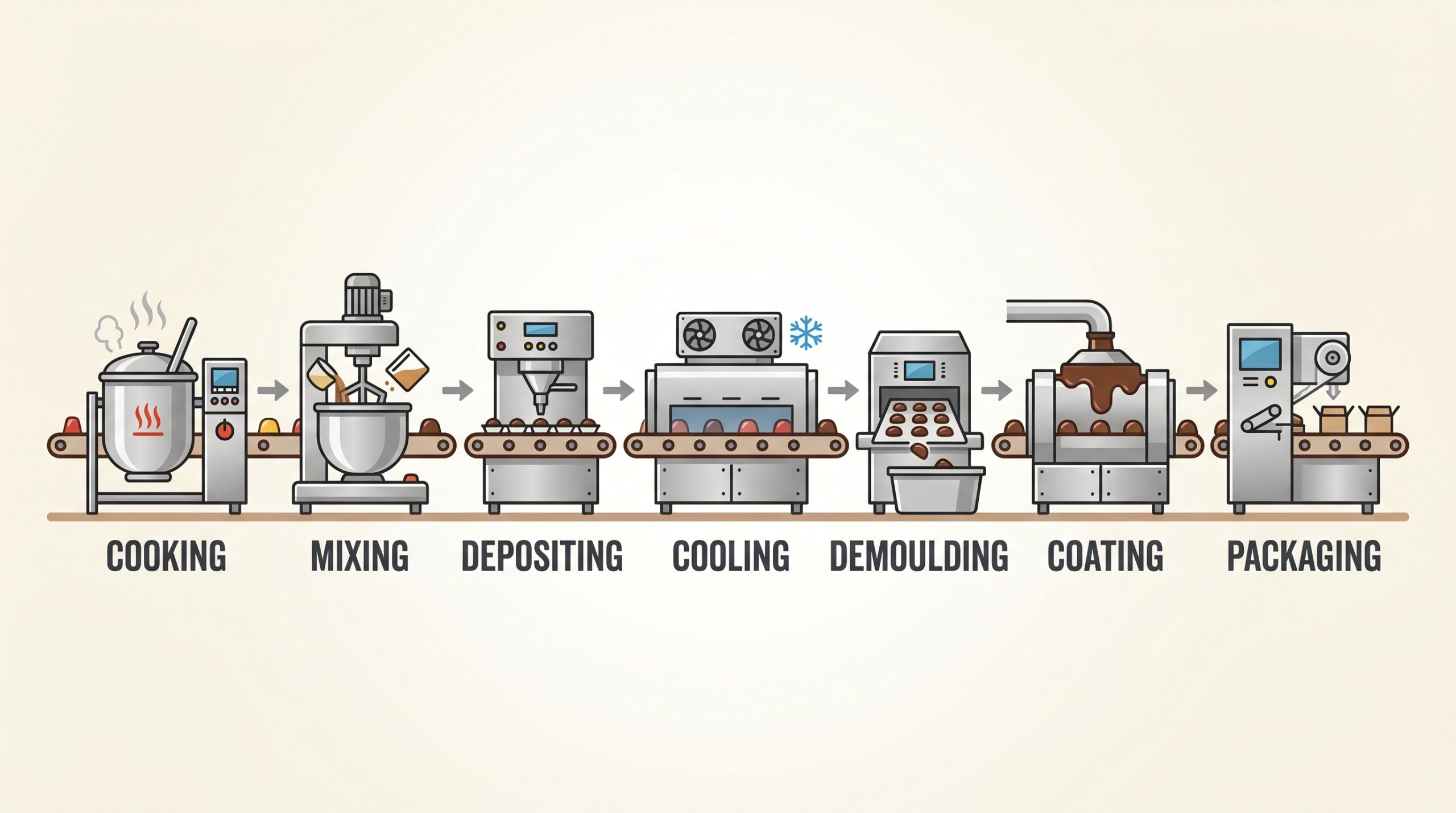
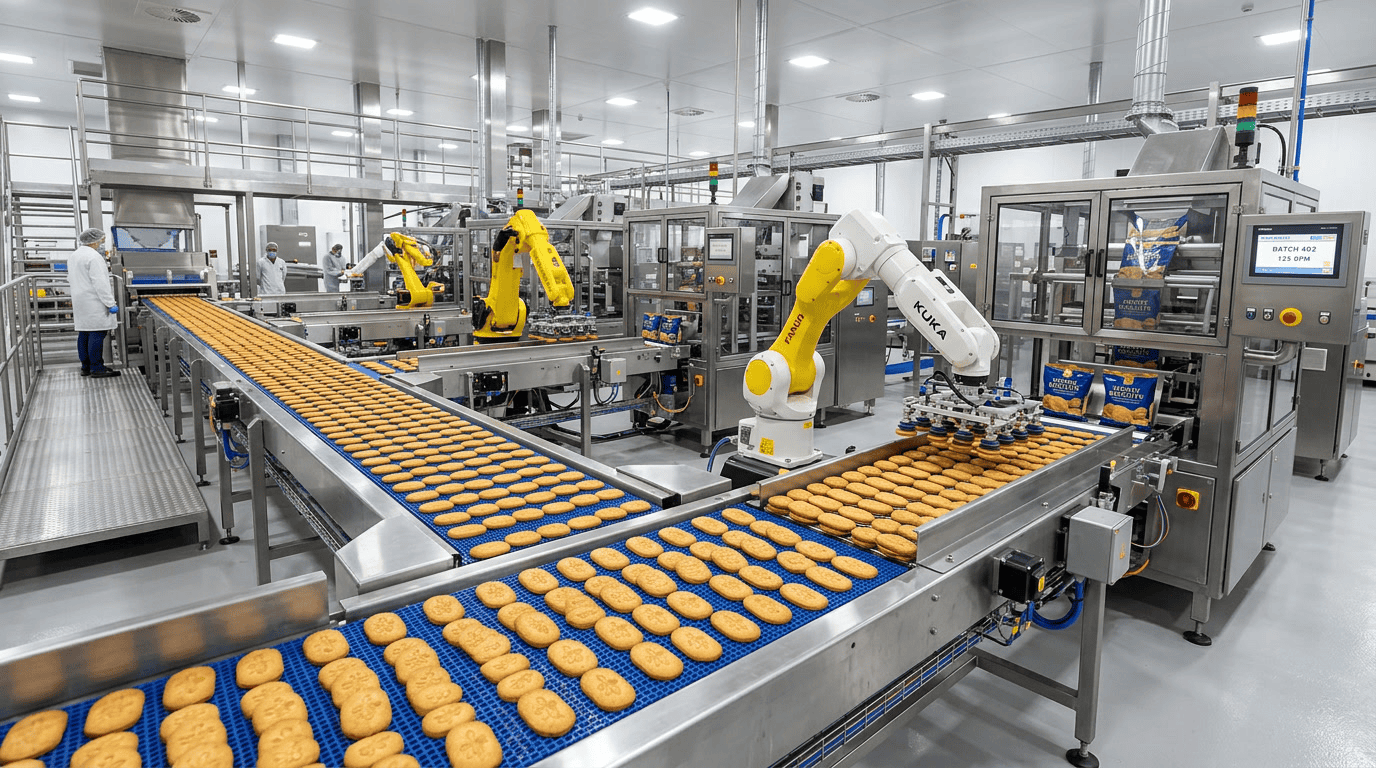
A honey biscuit production line automates the complete process of mixing, forming, baking, cooling, and packaging honey-flavored biscuits at industrial scale — delivering consistent taste, texture, and output from hundreds to thousands of kilograms per hour.
Walk into any major supermarket and you’ll find rows of honey biscuits — golden, lightly sweet, with that unmistakable amber glaze. What you won’t see is the precision engineering behind every single one. Industrial honey biscuit manufacturing is a science: the wrong oven temperature by just 5°C, the wrong dough hydration by 2%, the wrong forming speed — and an entire batch fails. This guide breaks down exactly how professional honey biscuit production lines work, what equipment matters most, and how to choose the right line for your output targets.
What Is a Honey Biscuit Production Line?
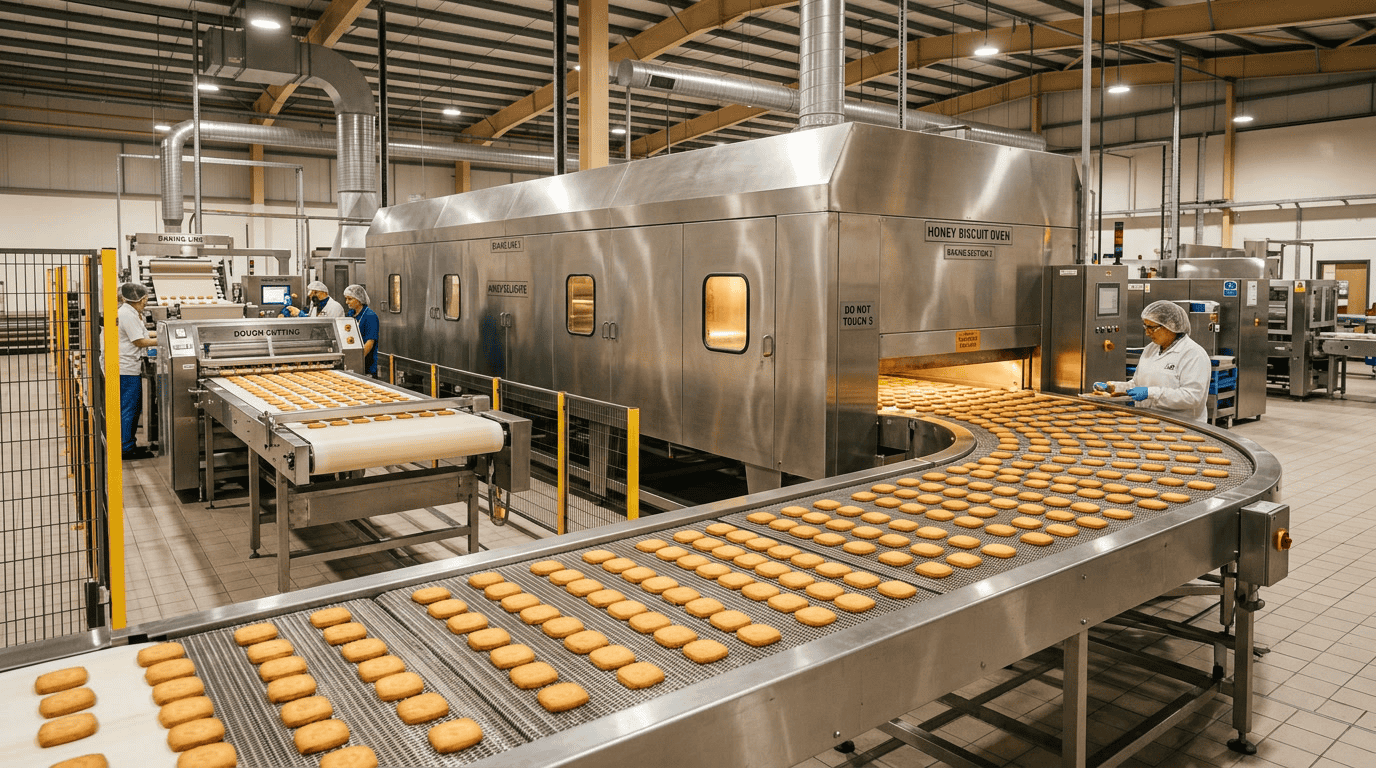
A honey biscuit production line is a fully integrated series of food processing machines that transforms raw ingredients — flour, honey, butter, sugar, eggs, leavening agents — into finished, packaged honey biscuits with minimal manual intervention.
Unlike small-batch artisan baking, industrial production lines operate continuously, often 16–24 hours per day. The core challenge is maintaining the sensory profile — the characteristic honey sweetness, the crisp snap, the even golden-brown color — across every unit produced at high speed.
A complete honey biscuit line typically includes:
- Ingredient dosing and mixing system — precision weighing and automated dough preparation
- Dough sheeting and forming unit — rolling and cutting or rotary molding
- Tunnel oven — the heart of the line, where baking chemistry happens
- Cooling conveyor — mandatory for texture stability before packaging
- Honey glaze application system (optional but common for honey biscuits specifically)
- packaging machine — flow wrap, tray seal, or pillow bag formats
Each subsystem must run in sync. A mismatch in conveyor speed between the oven exit and the cooling section, for example, causes biscuits to stack or break — a common production loss point operators underestimate.
Key Performance Metrics for Honey Biscuit Lines
| Metric | Small-Scale Line | Mid-Scale Line | Industrial Line |
|---|---|---|---|
| Output capacity | 100–300 kg/hr | 300–800 kg/hr | 800–2000+ kg/hr |
| Biscuit thickness tolerance | ±1.5 mm | ±0.8 mm | ±0.3 mm |
| Oven zone control | 2–3 zones | 4–5 zones | 6–8 zones |
| Automation level | Semi-auto | Fully auto | Fully auto + PLC |
| Changeover time | 60–90 min | 30–45 min | 15–20 min |
The thickness tolerance matters more than most buyers realize. At ±1.5 mm variance, you get visible inconsistency on retail shelves — and rejected product from major retailers. Industrial lines achieving ±0.3 mm require precision-ground sheeting rollers and closed-loop control systems.
Types of Honey Biscuit Machines
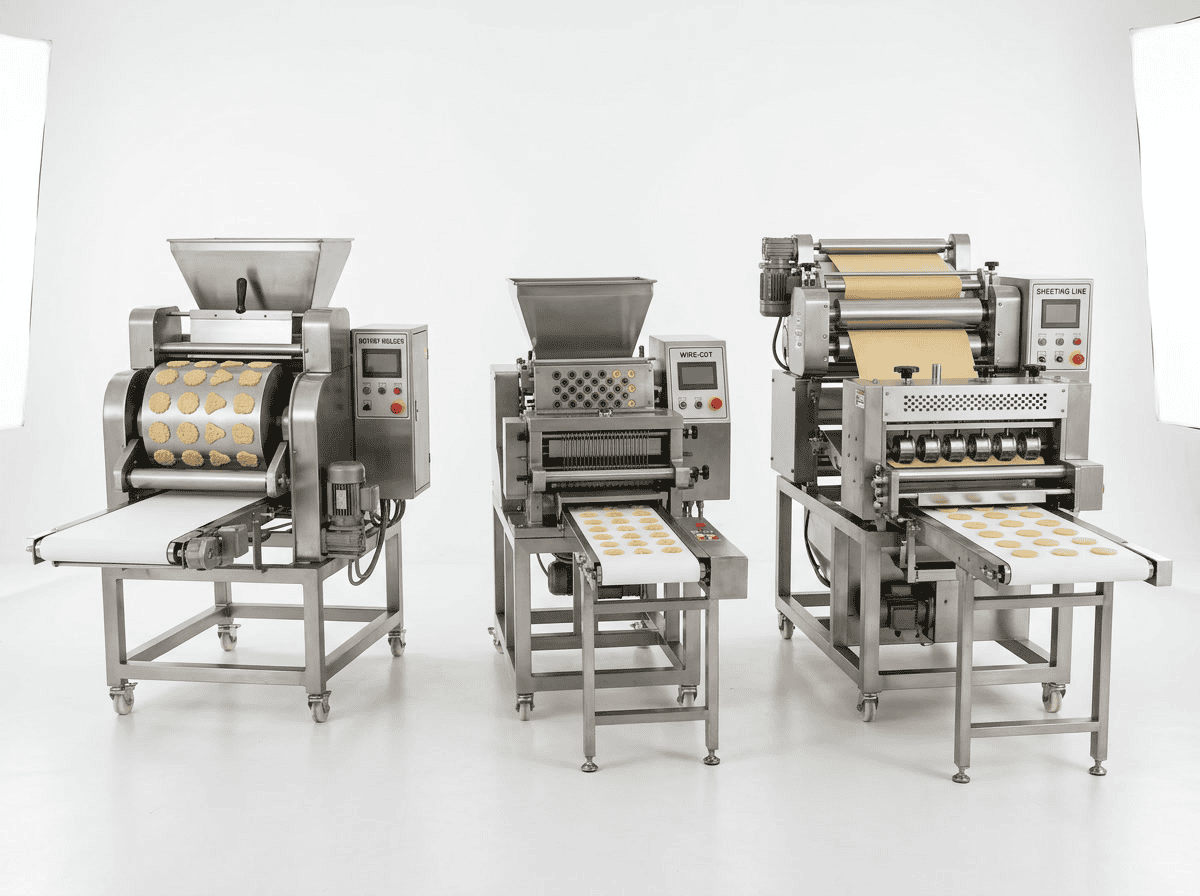
Not all honey biscuit machines are the same. The format — wire-cut, rotary molded, sheeted-and-stamped, or deposited — determines the texture, appearance, and ingredient formulation.
Rotary Molder
The most common format for mass-produced honey biscuits. The dough is pressed into engraved metal molds on a rotating drum, then released onto the conveyor belt.
Best for: Short, dense honey biscuits with embossed patterns (logos, floral designs, text). The high mold pressure gives a defined shape that holds through baking.
Limitation: Requires stiffer dough (lower water content, typically 16–20% moisture). High-honey-content formulations above 18% can stick to the molds and require anti-stick coatings or mold release agents.
Wire-Cut Machine
Wire-cut machines extrude dough through a die and cut it with a thin wire at programmed intervals. The result is a slightly irregular, “handmade” appearance that premium brands use deliberately.
Best for: Soft, chewy honey cookies rather than crisp biscuits. Wire-cut products tend to have higher fat and sugar content (enabling softer texture after baking).
Limitation: Less dimensional control than rotary molding. Not suitable if the product spec requires precise geometry for downstream packaging automation.
Sheeting and Stamping Line
Dough is rolled flat by a series of sheeting rollers to precise thickness, then cut by stamping dies. This is the traditional biscuit format — think classic round crackers.
Best for: Thin, crisp honey biscuits with clean edges. The sheeting process aligns the gluten structure, which contributes to the characteristic “snap.”
Limitation: Higher scrap rate from offcuts (typically 5–12% depending on biscuit shape). Circular dies have the lowest scrap; irregular shapes can reach 15–20% scrap unless scrap dough is reclaimed and re-sheeted.
Comparison of Honey Biscuit Machine Types
| Machine Type | Texture Profile | Shape Precision | Typical Capacity | Formulation Flexibility |
|---|---|---|---|---|
| Rotary molder | Crisp, dense | High (embossed) | 200–1500 kg/hr | Medium |
| Wire-cut | Soft, irregular | Low | 100–500 kg/hr | High |
| Sheeting + stamp | Crisp, uniform | High (clean cut) | 300–2000 kg/hr | Medium-High |
| Depositor | Soft, domed | Low-medium | 80–300 kg/hr | Very high |
Industrial Applications of Honey Biscuit Production Equipment
Honey biscuit production lines serve a wider range of industries than most people expect. Understanding end-use applications helps both equipment buyers and product developers make better specification decisions.
Retail FMCG Manufacturing
Large-scale consumer goods manufacturers produce honey biscuits for supermarket own-label and branded products. Requirements here are stringent: consistent weight (±2 g tolerance is common for 100 g packs), zero foreign-body contamination (inline metal detection and X-ray systems are standard), and allergen management for multi-product facilities.
Output demand for a single SKU in this segment typically justifies lines running at 800–2000 kg/hr. Downtime cost is high — a one-hour stoppage on a 1200 kg/hr line producing biscuits at $2.50/kg equals $3,000 in lost output.
Private Label and Contract Manufacturing
Mid-tier contract manufacturers supply honey biscuits to multiple brands simultaneously. These operations need fast changeover (switching between product formats in under 30 minutes) and flexible packaging — the same biscuit body may be packed into multiple formats for different customers.
A mid-scale line at 400–600 kg/hr with quick-change forming heads and PLC-controlled oven profiles is the typical choice here.
Export and Specialty Markets
Honey biscuits for export to markets with specific regulatory standards (EU, US, Japan) require documentation trails that fully automated lines provide via production data logging. Some specialty honey biscuits — buckwheat honey, manuka honey, raw honey variants — use higher honey concentrations (20–30% by flour weight) that require modified baking profiles and sometimes lower-temperature tunnel ovens to protect heat-sensitive honey compounds.
According to the Food and Agriculture Organization of the United Nations, global biscuit and cookie consumption has grown steadily at approximately 3.5% annually, driven by Asia-Pacific markets — underlining why modern production equipment needs to scale efficiently.
Foodservice and Institutional Supply
Hotels, airlines, and institutional catering require honey biscuits in bulk, non-retail formats. These lines often run simpler packaging (poly-bags rather than pillow packs) but need strict weight control for portion management.
How to Choose the Right Honey Biscuit Production Line
Choosing a honey biscuit production line is not a product catalog decision — it’s an engineering evaluation. Most costly mistakes happen when buyers match capacity on paper but miss downstream bottlenecks.
Step 1: Define Your Output Requirements — Then Add 25%
Calculate your peak daily output requirement, then add a 25% buffer. A line running at 100% capacity is one breakdown away from missing delivery. If you need 500 kg/hr at peak, specify a 625 kg/hr line.
Consider seasonality: honey biscuit demand typically spikes 30–50% in Q4 (holiday gifting). A line sized for average demand will be your bottleneck exactly when margins are highest.
Step 2: Evaluate Oven Zone Control — Not Just Total Length
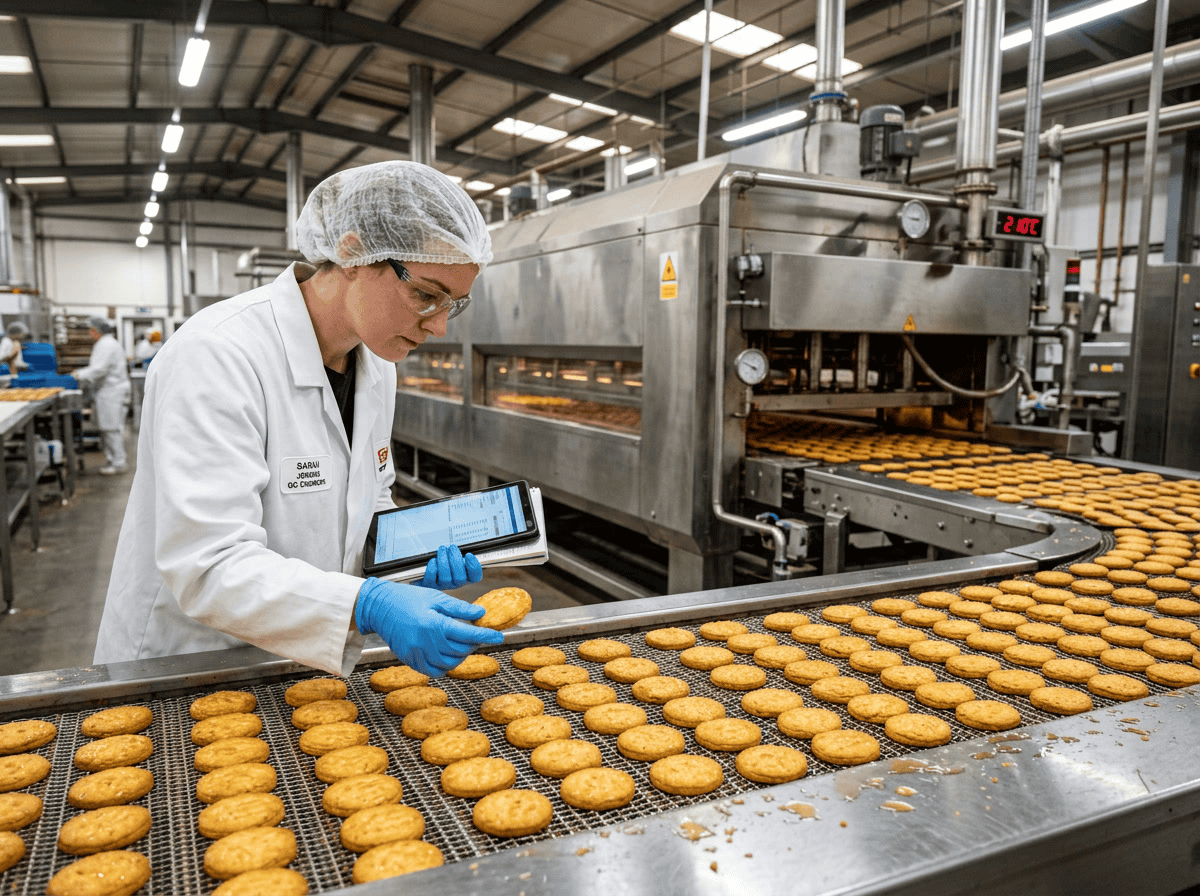
Oven length is a common selling point that obscures what actually matters: independent zone temperature control. Honey biscuits are sensitive because honey’s natural sugars (primarily fructose, which caramelizes at lower temperatures than sucrose) can cause rapid over-browning in the final baking zone.
A 6-zone oven with individual top/bottom control gives the baker the ability to ramp up heat through zones 1–4 for core baking, then reduce the top heat in zones 5–6 to achieve golden color without bitter surface caramelization. A 3-zone oven gives you far less control — fine for simple water crackers, problematic for honey-enriched dough.
Step 3: Assess Dough Handling for High-Sugar Formulas
High-honey and high-sugar doughs are sticky and temperature-sensitive. At mixer bowl temperatures above 24°C, honey doughs can lose structural integrity and become unworkable for sheeting or molding. Specify:
- Chilled mixing bowls (jacketed with water cooling) if your facility runs above 22°C ambient
- Dough rest conveyors with temperature-controlled environments before sheeting
- Anti-stick roller coatings (silicone or PTFE) on sheeting rollers
Many buyers learn this the hard way in summer production runs. In practice, facilities without cooling in the mixing zone lose 15–20% more batches during warmer months.
Step 4: Verify Cleaning and Allergen Management Protocols
Honey contains proteins that are classified as allergens in several regulatory frameworks (EU Directive 2003/89/EC). If your line produces non-honey products in the same facility, cross-contamination management becomes critical.
Evaluate whether the line supports:
- Wet cleaning (CIP/WIP systems) for honey residue removal — dry cleaning is insufficient for sticky honey residues
- Removable contact parts (forming rollers, conveyor belts) that can be sanitized in dedicated wash stations
- Changeover documentation compatible with BRC or IFS food safety standards
Step 5: Request Factory Acceptance Tests (FAT) with Your Actual Formulation
Never accept a production line based on the manufacturer’s standard demonstration biscuit. The formulation matters enormously. Request a Factory Acceptance Test (FAT) using your own recipe — your flour protein content, your honey variety, your intended baking time.
A reputable manufacturer will run FAT trials and provide documented test reports including: biscuit weight variance, color L a b* measurements, moisture content post-baking, and texture analysis (hardness, fracturability).
Honey Biscuit Line Selection Checklist
| Evaluation Factor | Questions to Ask | Red Flags |
|---|---|---|
| Oven zone control | How many independent zones? Top/bottom separate? | “3 zones” with no top/bottom separation |
| Dough handling | What’s the max ambient temp for stable operation? | No chilling option mentioned |
| Cleaning systems | CIP/WIP compatible? Removable parts for sanitation? | “Manual washdown only” for honey residue |
| FAT procedures | Will you run our formulation at FAT? | “We use standard demo biscuit only” |
| After-sales support | Local service engineers? Parts lead time? | No service presence in your region |
| Capacity buffer | What’s max rated vs. sustained output? | Only “peak” numbers given, no sustained |
Future Trends in Honey Biscuit Production Technology (2026+)
The honey biscuit machinery sector is changing faster than at any point in its history. Three forces are reshaping equipment design: energy costs, ingredient traceability, and automation depth.
AI-Driven Process Control
Modern tunnel ovens are beginning to incorporate machine vision systems that read biscuit color in real time and automatically adjust oven zone temperatures to compensate for variation in honey sugar content or ambient humidity. Early installations at pilot scale show 60–80% reduction in color rejects without operator intervention.
These systems use near-infrared (NIR) sensors positioned at the oven exit to measure moisture content and surface color simultaneously — data that previously required lab testing with a 30-minute lag. Real-time closed-loop control means the oven adjusts to the batch, not the other way around.
Energy Recovery and Sustainability
Tunnel ovens are among the highest energy consumers in food production — a 40-meter tunnel oven for a 600 kg/hr honey biscuit line typically consumes 200–300 kW. According to Statista’s industrial energy consumption data, food processing accounts for approximately 6% of total industrial energy use globally.
Newer equipment designs integrate heat recovery systems that capture exhaust heat from oven venting and redirect it to the inlet air conditioning or facility heating — reducing net energy consumption by 15–25% in well-implemented installations. Some manufacturers now offer direct-fired gas ovens with recuperative burners that achieve 25–30% better thermal efficiency than conventional designs.
Clean-Label and Functional Honey Biscuit Lines
Consumer demand for clean-label products (no artificial additives, no preservatives) is driving reformulation, and reformulation drives equipment changes. High-honey formulations (30%+ honey by flour weight) that reduce or eliminate refined sugar require lower baking temperatures and longer dwell times — pushing total oven length requirements up while reducing conveyor speed.
Some manufacturers now offer modular oven extensions — add-on sections that lengthen an existing line without replacing the full oven structure — specifically to accommodate the trend toward clean-label baking without capital replacement.
Digitalization and Traceability
Regulatory requirements for ingredient traceability (EU Farm to Fork strategy, US Food Safety Modernization Act) are pushing equipment manufacturers to integrate production data logging as a standard feature rather than an option. Modern lines record batch parameters — oven temperatures, conveyor speeds, weight measurements, metal detector alerts — in a format exportable to ERP and QA systems.
For honey specifically, batch traceability to the hive or apiary of origin is increasingly demanded by premium buyers and some retail chains, requiring the production line’s batch management system to interface with raw material tracking databases.
FAQ: Honey Biscuit Production Lines
What output capacity do I need for a honey biscuit production line?
Start with your peak annual volume divided by productive hours (typically 5,500–6,500 hr/year for two-shift operations), then add 25% capacity buffer. A facility targeting 3,000 tonnes per year typically needs a line rated at 550–600 kg/hr sustained output. Undersizing is the most common and most expensive capacity planning mistake.
How much does an industrial honey biscuit production line cost?
A complete line ranges from approximately $150,000–$250,000 USD for small-to-mid-scale semi-automatic setups (100–400 kg/hr) to $400,000–$1,200,000+ USD for fully automated industrial lines at 800–2000 kg/hr. The wide range reflects oven length, automation level, packaging format, and brand. Factor in installation, commissioning, and operator training — typically 10–15% of equipment cost.
What is the difference between a honey biscuit and a honey cookie production line?
Technically, biscuits (UK/AU terminology) or crackers use lower-fat, lower-sugar doughs that are sheeted or rotary-molded and bake to a crisp, snappy texture. Cookies (US terminology) or soft biscuits use higher-fat, higher-sugar doughs (often wire-cut or deposited) and bake to a softer, chewier result. The primary machinery difference is in the forming system: rotary molders or sheeting lines for biscuits; wire-cut or depositing machines for cookies. Some lines offer interchangeable forming heads to produce both formats.
How long does a honey biscuit production line last?
A well-maintained industrial biscuit line from a reputable manufacturer typically has a 15–25 year service life for the structural components (oven body, conveyor frames). High-wear items — forming molds, conveyor belts, sheeting rollers — require replacement every 2–5 years depending on throughput. Planned maintenance programs that replace wear parts proactively (rather than reactively) reduce unplanned downtime by 40–60% over the line’s lifetime.
What are the most common quality problems in honey biscuit production?
The five most frequent issues are: (1) uneven browning — usually an oven zone calibration or dough thickness variance problem; (2) cracking after cooling — caused by too-rapid cooling or overbaking reducing moisture below 2%; (3) sticking to molds — excess honey content or mold temperature too high; (4) weight variation — sheeting roller wear or inconsistent dough feed; (5) bitter aftertaste — honey caramelization in high-temperature final oven zones. Each has a specific engineering fix.
Can a honey biscuit line handle multiple flavors or variants?
Yes, but changeover time is the limiting factor. Modern lines with quick-release forming heads and PLC-stored oven profiles can switch between, say, plain honey, honey-sesame, and honey-oat biscuits in 20–40 minutes for the forming section. The more complex limitation is allergen changeover — if one variant contains nuts and another doesn’t, full CIP wet cleaning between variants is required, adding 2–4 hours to changeover time.
What certifications should I look for in a honey biscuit machine manufacturer?
At minimum: ISO 9001 quality management certification, CE marking (for EU sales), and food-grade material certification for all product-contact components (typically stainless steel 304 or 316, FDA-compliant polymers for belts and seals). Manufacturers who are members of industry associations such as the China Food Preparation Equipment Industry Association or equivalent national bodies typically maintain higher quality standards and have access to technical standards updates.
Conclusion
Honey biscuit production is where food science, mechanical engineering, and process control intersect. The machines that produce the biscuits you see on every shelf represent decades of refinement in dough handling, heat transfer, and automation — and the technology is advancing rapidly toward AI-driven control, energy recovery, and full batch traceability.
Whether you’re evaluating your first production line or upgrading existing equipment, the principles are the same: define your real output requirements (with headroom), specify oven control depth not just length, verify your formulation performs on the actual line before acceptance, and invest in cleaning systems that match your allergen management obligations.
The right honey biscuit production line is not the cheapest option that meets today’s volume — it’s the option that handles tomorrow’s growth, next season’s peak, and next year’s product variant without requiring a capital replacement. Get the specification right at the start, and the line will be producing profitable biscuits long after the initial investment is recovered.
Looking for a honey biscuit production line or biscuit machine supplier? Explore our biscuit machine product range for full production line configurations, capacity specifications, and technical consultation.
Related Articles
- The Best Complete Biscuit Production Line for Your Manufacturing Needs
- American Biscuit: History, Types, and Industrial Production Guide
- Modern Biscuit Production Line: How Factories Make Millions of Cookies Daily
- Candy Production Line in China – High Efficiency & Quality Manufacturing
- Gummy Candy Production Line
- Food Packaging Machine
- Skittles Manufacturing Process: Inside the Factory