The Engineer’s Guide to Gummy Manufacturing: A Technical Analysis
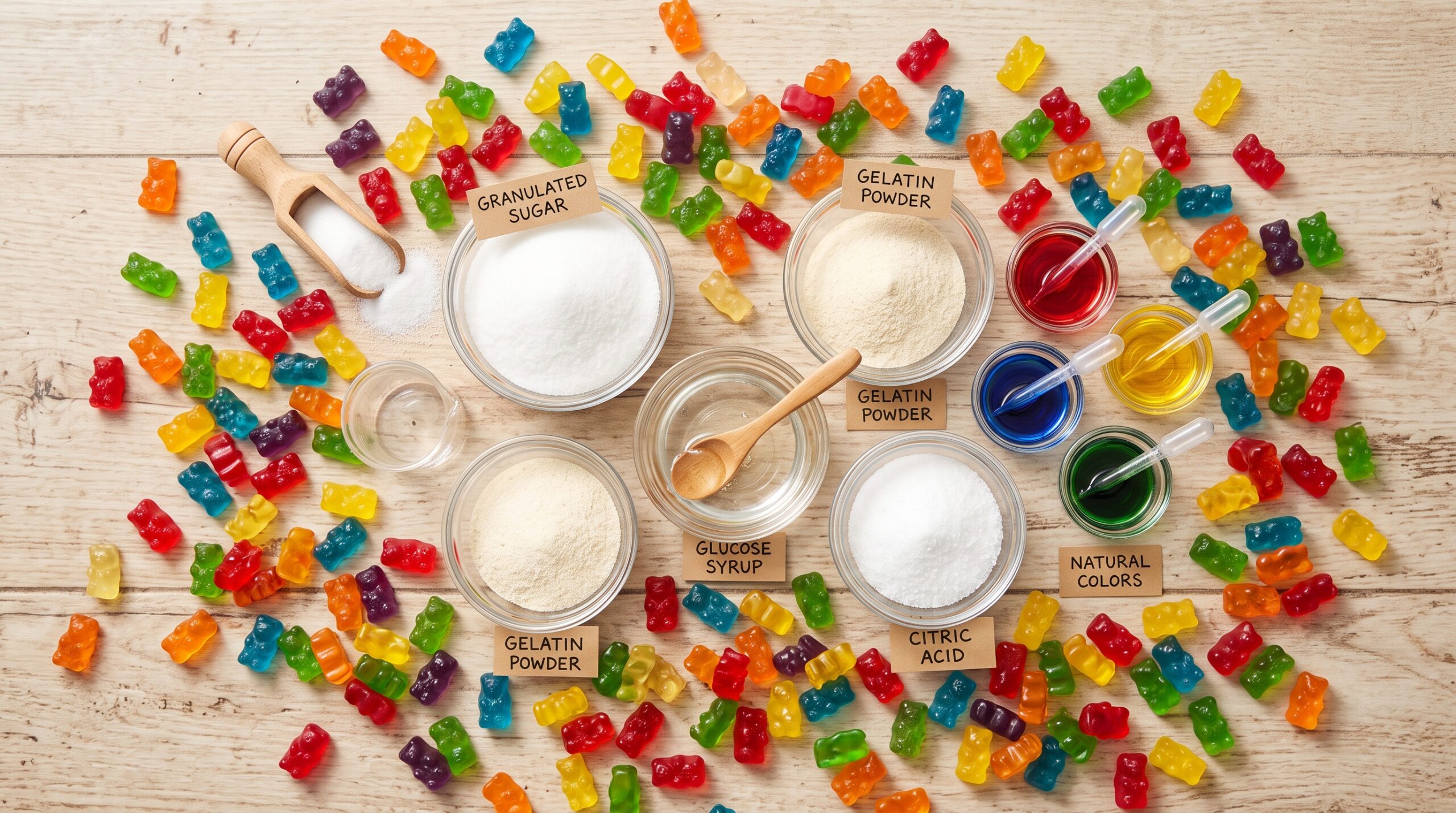
Making gummy candies on a large scale is much more complex than most people expect. It’s not just about mixing ingredients in the right amounts. Chemical reactions and precise engineering controls govern the entire process. Success doesn’t happen by accident. It comes from understanding how formulation, process, and equipment work together.
This guide goes beyond basic instructions. We’ll provide a deep, technical analysis of commercial gummy production. We’ll break down the fundamental science that creates the gummy structure. You’ll learn about the critical roles of ingredients like gelling agents and how they affect the final product.
We’ll walk through each stage of manufacturing, from mixing to packaging. We’ll highlight the critical control points along the way. Our analysis of key equipment includes a comparison of starch and starchless depositing methods. This will help inform your capital investment decisions. Finally, we’ll address quality control and provide a practical troubleshooting guide. We’ll bring together the science and engineering principles you need to achieve consistent, high-quality results in gummy manufacturing.
Core Gummy Science
The final texture, stability, and shelf life of a gummy are determined long before it reaches a mold. These characteristics come from chemical interactions within the initial mixture. Understanding what each component does is the foundation of successful formulation and product development.
At its core, a gummy is a hydrocolloid gel matrix. The gelling agents, sweeteners, and acids you choose determine every physical property of the end product. We’ll break down this matrix to understand why each ingredient choice matters.
The Gelling Agents
The gelling agent forms the structural backbone of the gummy. It creates that signature chew and holds the shape. Choosing the right agent is one of the most critical decisions in formulation.
Gelatin comes from animal collagen and is the traditional choice. Its bloom strength measures how rigid the gel will be. This is a key specification. Gelatin creates a uniquely elastic, chewy texture. It provides a melt-in-the-mouth experience because of its thermo-reversible properties. This means it melts near body temperature.
Pectin is the primary plant-based alternative. It’s typically extracted from citrus peels or apple pomace. Pectin creates a “shorter,” cleaner bite compared to gelatin. Pectins fall into two main categories: High Methoxy (HM) or Low Methoxy (LM). HM pectin is most common for gummies. It requires a high concentration of sugar (typically over 60 Brix) and a low pH (typically under 3.5) to form a gel.
Other hydrocolloids like Carrageenan and Modified Starch are also used. Carrageenan comes from seaweed. It can create soft, elastic gels and is popular in vegan formulations. Modified starch is often used to add body or as a primary gelling agent in certain jelly-type confections.
Đặc trưng | Gelatin | Pectin (HM) | Carrageenan (Iota) |
Nguồn | Thực vật (Collagen) | Thực vật (Citrus/Táo) | Tảo biển |
Gelling Mechanism | Thermal (Cooling) | Sugar & Acid (pH < 3.5) | Calcium Ion Interaction |
Kết cấu | Elastic, Chewy, Melts | Short, Tender, “Clean Bite” | Soft, Elastic Gel |
pH Độ nhạy | Stable over a wide range | Requires low pH | Stable over a wide range |
Thermal Property | Thermo-reversible | Not easily reversible | Thermo-reversible |
Common Use Case | Traditional Gummy Bears | Vegan Gummies, Jellies | Vegan, Dairy Gels |
Sweeteners Beyond Taste
Sweeteners do more than just provide flavor. They’re functional ingredients that manage texture and shelf stability.
Sucrose (table sugar) and various corn syrups are the workhorses of gummy formulations. Sucrose provides the primary sweetness. Corn syrup is crucial for controlling crystallization. The different chain lengths of sugars in corn syrup act as “doctoring agents.” They physically interfere with sucrose molecules’ ability to form large, undesirable crystals.
The type of corn syrup used matters significantly. This is specified by its Dextrose Equivalent (DE). A lower DE syrup (like 42 DE) contains more long-chain carbohydrates. This contributes to a chewier, more viscous body. A higher DE syrup (like 63 DE) has more simple sugars. This provides more sweetness and less viscosity.
These sweeteners also play a critical role in controlling water activity (aw). They bind free water in the formulation. This lowers the water activity to a level that inhibits microbial growth. This ensures the product is shelf-stable.
For “sugar-free” products, we use polyols, or sugar alcohols. These include sorbitol, maltitol, and erythritol. These ingredients provide sweetness with fewer calories. But they also act as humectants and plasticizers, affecting the final texture. It’s important to consider their potential for causing laxative effects when consumed in large quantities.
cURL Too many subrequests.
cURL Too many subrequests.
cURL Too many subrequests.
cURL Too many subrequests.
cURL Too many subrequests.
Quy trình sản xuất
cURL Too many subrequests. cURL Too many subrequests.
cURL Too many subrequests.
cURL Too many subrequests.
- cURL Too many subrequests.
- cURL Too many subrequests.
- cURL Too many subrequests.


cURL Too many subrequests.
cURL Too many subrequests.
- cURL Too many subrequests. cURL Too many subrequests. cURL Too many subrequests.
- cURL Too many subrequests.
cURL Too many subrequests.
cURL Too many subrequests.
- cURL Too many subrequests. cURL Too many subrequests.cURL Too many subrequests.
- cURL Too many subrequests.
- cURL Too many subrequests.
cURL Too many subrequests.
cURL Too many subrequests.
cURL Too many subrequests.
cURL Too many subrequests.
cURL Too many subrequests.
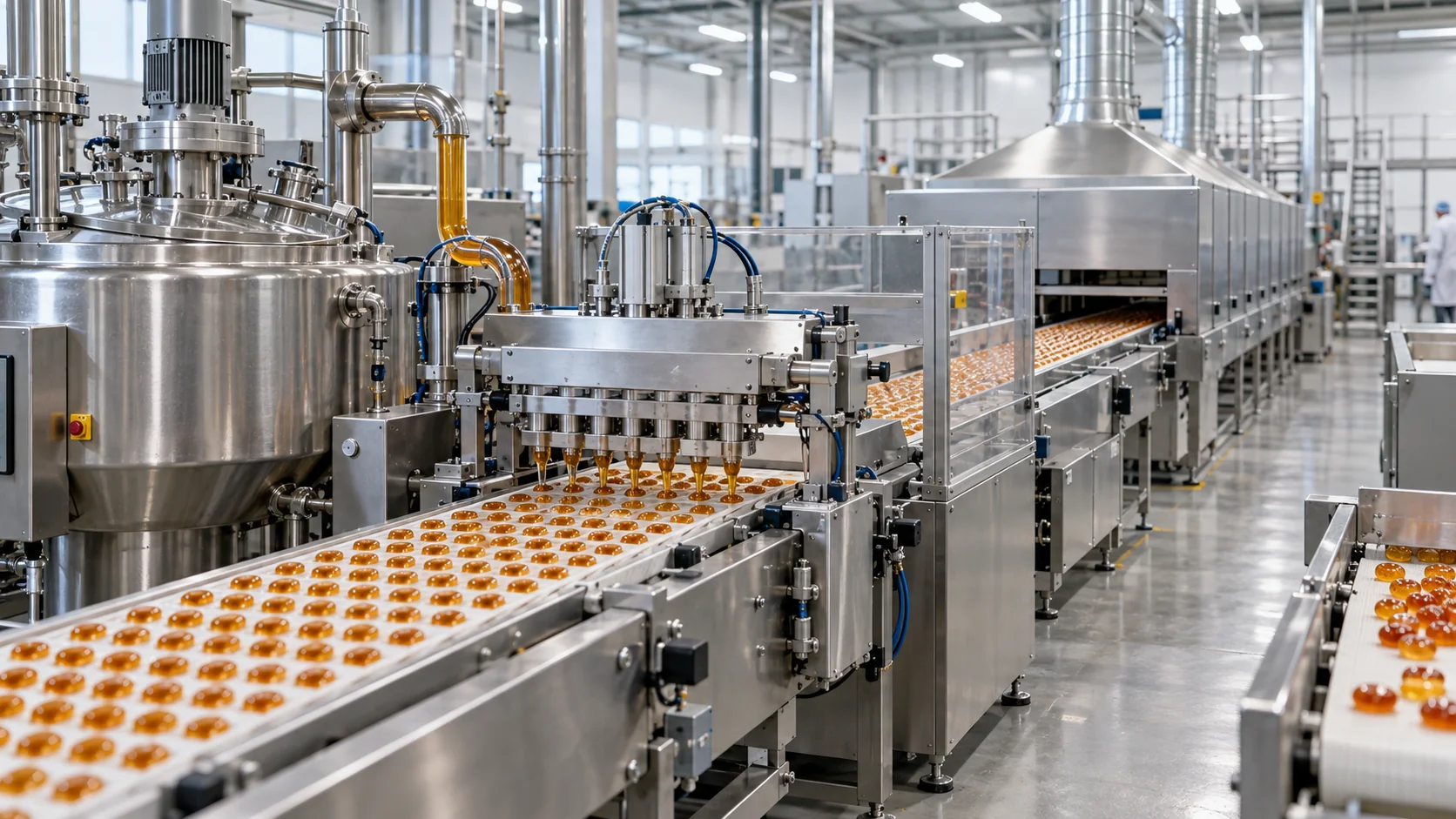
Sự khác biệt lớn nhất trong dây chuyền sản xuất kẹo dẻolà công nghệ phân phối. Lựa chọn giữa dây chuyền Tinh Bột Mogul truyền thống và dây chuyền Không Tinh Bột hiện đại có ảnh hưởng sâu sắc. Nó ảnh hưởng đến chi phí, vệ sinh và tính linh hoạt.
cURL Too many subrequests.
cURL Too many subrequests.
Khía cạnh | Dây chuyền Ông trùm Tinh bột | |
Molds | cURL Too many subrequests. | cURL Too many subrequests. |
Linh hoạt | cURL Too many subrequests. | cURL Too many subrequests. |
Chi phí Vốn | Cao | cURL Too many subrequests. |
cURL Too many subrequests. | cURL Too many subrequests. | Thấp |
cURL Too many subrequests. | cURL Too many subrequests. | Excellent (easy to clean) |
Cycle Time | Slower (includes starch handling) | Faster depositing cycle |
Phù hợp để | High-volume candy, complex shapes | Nutraceuticals, hygienic production |
Pectin vs. Gelatin Chemistry
While our first table provided a high-level comparison of gelling agents, a deeper dive into the molecular mechanisms reveals more. Understanding gelatin and pectin at this level shows why they behave so differently. It also explains why they require such distinct processing parameters. This understanding is key to advanced formulation and troubleshooting.
Molecular Structure & Gelling
The gelling of gelatin is a physical process driven by temperature. Gelatin comes from collagen, a protein consisting of three polypeptide chains wound into a triple-helix. When heated in water, this helix unwinds, and the chains disperse. Upon cooling, the chains lose energy and begin to associate with each other again. But instead of perfectly reforming the triple-helix, they form a disordered 3D network. These points of association are held together by weak hydrogen bonds. They’re called junction zones, and they trap water to form the gel.
The gelling of High Methoxy (HM) pectin is a more complex chemical process. Pectin is a polysaccharide made of long galacturonic acid chains. In water, these chains are negatively charged and repel each other. To form a gel, two conditions must be met. First, you need a high concentration of sugar (high Brix). The sugar is hygroscopic and “steals” water away from the pectin chains. This forces them closer together. Second, you need a low pH. The acid neutralizes the negative charges on the pectin chains. This eliminates the electrostatic repulsion. With these two conditions met, the chains can now associate through hydrogen bonding and hydrophobic interactions to form the gel network.
Thông số quy trình quan trọng
This difference in gelling mechanism determines the critical control points for each system.
For gelatin, the single most critical factor is temperature. The process is a straightforward function of cooling. As long as the gelatin is fully hydrated, gelling is predictable as the mass cools below a certain temperature (around 30-35°C). The pH is far less critical for the gelling mechanism itself. Though it still impacts flavor and stability.
For pectin, we manage three interdependent factors: Brix, pH, and temperature. All three must be within their target range simultaneously for gelling to occur correctly. If the Brix is too low, the pectin chains remain too hydrated to interact. If the pH is too high, the chains continue to repel each other. If the temperature is too high, the molecular motion prevents stable junction zones from forming. A failure in any one of these parameters will result in complete failure of the gel to set. This is a primary point of failure in pectin gummy production.
Textural and Sensory Impact
The molecular structure directly translates to the eating experience. Gelatin’s network is held by many weak hydrogen bonds. This network is flexible and elastic, creating the classic gummy “chew.” Because these bonds are weak and temperature-dependent, they break easily at body temperature. This leads to the pleasant, clean, melt-in-the-mouth sensation.
Pectin’s gel network is formed under specific chemical conditions and is more rigid. This results in a texture that is not as elastic. It breaks more cleanly when chewed. This is described as a “short” or “tender” bite. Because the gel is not primarily temperature-dependent, it doesn’t melt in the mouth the same way as gelatin. This delivers a different kind of flavor release.
Quality Control & Troubleshooting
Even with a perfect formulation and state-of-the-art equipment, process deviations can lead to product defects. Robust quality control and a deep understanding of common manufacturing challenges separate amateur producers from professional operations. This section is built from direct, hands-on experience in resolving production issues.
Critical QC Checkpoints
Quality control is not a single step but a continuous process. We implement checks throughout production to catch deviations early.
In-process checks are vital. We constantly monitor the Brix of the cooking mixture with a refractometer. We check the pH with a calibrated pH meter and the temperature with probes. These three parameters are the most immediate indicators of batch health.
Final product testing validates the process. We measure the final water activity (aw) to confirm shelf stability. We use a Texture Profile Analyzer (TPA) to objectively measure hardness and elasticity. We verify the final moisture content. These quantifiable metrics ensure every batch is consistent.
Hướng dẫn xử lý sự cố kỹ thuật
Problems in production are inevitable. The key is to quickly diagnose the root technical cause and implement the correct solution. A common issue we encounter is a batch failing to set. This causes significant downtime and material loss. The following table outlines this and other frequent problems. It links them to their engineering and chemical causes.
Vấn đề | Nguyên nhân kỹ thuật tiềm năng | Giải pháp(s) |
Gummies are too soft / won’t set | 1. Brix too low (excess water). <br> 2. Incorrect pH (for pectin). <br> 3. Insufficient gelling agent. <br> 4. Gelling agent not fully hydrated. | 1. Tăng thời gian/nhiệt độ nấu để nâng cao Brix. <br> 2. Xác minh và điều chỉnh pH về phạm vi mục tiêu (ví dụ, 3.2-3.6 cho pectin HM). <br> 3. Kiểm tra lại các tính toán công thức. <br> 4. Cải thiện quy trình trộn sơ bộ/hỗn hợp. |
Gummies are too hard / tough | 1. Brix too high (overcooked). <br> 2. Excessive gelling agent. <br> 3. Stoving time too long / humidity too low. | 1. Giảm thời gian/nhiệt độ nấu. <br> 2. Kiểm tra lại công thức. <br> 3. Giám sát và điều chỉnh điều kiện sấy sơn. |
“Sweating” or sticky gummies | 1. Water activity (aw) is too high. <br> 2. Inversion of sucrose due to overly aggressive acid/heat. <br> 3. Inadequate polishing/coating. | 1. Đảm bảo đạt mục tiêu Brix/độ ẩm cuối cùng. <br> 2. Thêm axit vào cuối quá trình nấu, làm lạnh nhẹ trước khi thêm. <br> 3. Đảm bảo phủ kín bằng dầu/sáp. |
Cloudy or hazy gummies | 1. Premature gelling of pectin in the kettle. <br> 2. Gelling agent not fully dissolved. <br> 3. Certain flavor oils or active ingredients. | 1. Sử dụng bộ đệm (natri citrate) và thêm axit cuối cùng. <br> 2. Đảm bảo hỗn hợp không vón cục và nhiệt độ nấu đủ. <br> 3. Sử dụng chất nhũ hóa hoặc dạng hòa tan dễ hơn của thành phần. |
Conclusion: Science and Precision
We have journeyed from the molecular interactions of individual ingredients to the large-scale mechanics of a full production line. This analysis underscores a fundamental truth. Successful, repeatable gummy manufacturing is the deliberate combination of food science and process engineering.
The process begins with a deep respect for ingredient chemistry. You must understand how gelling agents form their structure. You need to know how sweeteners control stability and how acids catalyze the entire reaction. It then moves to the domain of engineering. Here, these chemical principles are executed through precisely controlled stages of cooking, depositing, and curing.
Finally, it’s cemented by diligent quality control. This verifies that every parameter has been met. It’s also supported by the experiential knowledge to troubleshoot the inevitable deviations. Mastering gummy manufacturing is not about a secret recipe. It’s about mastering these principles. With a firm grasp of this technical foundation, the goal of producing a high-quality, consistent, and stable gummy product is entirely achievable.
- USDA NIFA – Advanced Food Manufacturing https://www.nifa.usda.gov/topics/advanced-food-manufacturing
- Tạp chí Kỹ Thuật Thực Phẩm https://www.foodengineeringmag.com/
- ScienceDirect – Journal of Food Engineering https://www.sciencedirect.com/journal/journal-of-food-engineering
- PMMI (máy đóng góiHiệp Hội Nhà Sản Xuất Kẹo) https://www.pmmi.org/
- FDA – Hazard Analysis Critical Control Point (HACCP) https://www.fda.gov/food/guidance-regulation-food-and-dietary-supplements/hazard-analysis-critical-control-point-haccp
- FDA – Nguyên tắc HACCP & Hướng dẫn Ứng dụng https://www.fda.gov/food/hazard-analysis-critical-control-point-haccp/haccp-principles-application-guidelines
- Viện Các Nhà Kỹ Thuật Thực Phẩm (IFT) https://www.ift.org/
- Wikipedia – Food Engineering https://en.wikipedia.org/wiki/Food_engineering
- University of Arkansas – Institute of Food Science and Engineering https://catalog.uark.edu/generalinfo/universitycentersandresearchunits/instituteoffoodscienceandengineering/
- FDA – Guidance & Regulation (Food and Dietary Supplements) https://www.fda.gov/food/guidance-regulation-food-and-dietary-supplements
Bài viết liên quan
- Gấu dẻo: Nó được làm từ gì? Hướng dẫn đầy đủ về thành phần & quy trình sản xuất
- Thành phần Gummy Bears Haribo: Phân tích đầy đủ & Hướng dẫn sản xuất
- Kẹo Dẻo Nhật Bản: Các Loại, Quy Trình Sản Xuất & Hướng Dẫn Ngành Công Nghiệp
- Hướng Dẫn Toàn Diện: Bí Mật Sản Xuất Kẹo Dẻo Trung Quốc Được Tiết Lộ Cho Năm 2025
- Dây Chuyền Sản Xuất Kẹo Dẻo
- Máy đóng gói kẹo dẻo không tinh bột
- Skittles Có Gluten Không? Hướng Dẫn Toàn Diện 2026