Red Lobster Cheddar Bay Biscuit Recipe: The Complete Guide from Home Kitchen to Commercial Bakery
Combine 2 cups flour, 1 cup shredded sharp cheddar, ¾ cup cold buttermilk, 6 tbsp cold butter, 1 tbsp baking powder, ½ tsp garlic powder, and a pinch of salt. Drop onto a baking sheet and bake at 450°F for 10–12 minutes, then brush immediately with melted garlic butter.
If you’ve ever sat down at a Red Lobster table before the entrées arrived, you know the moment: a basket of warm, golden biscuits lands in front of you, fragrant with cheddar and garlic, with that unmistakable tender-crisp exterior. You eat one. Then another. Then you wonder whether you should order a second basket before the food comes. The red lobster cheddar bay biscuit recipe has a kind of cult following that most restaurant dishes never achieve — and for good reason. They hit every pleasure note: rich, salty, cheesy, garlicky, and impossibly light.
This guide covers everything from the exact home recipe (with the full science behind why each ingredient does what it does), to pro-level variations, commercial-scale production considerations, and why the global bakery equipment industry is paying close attention to American drop-biscuit demand. Whether you’re baking a batch on Sunday morning or evaluating a commercial biscuit production line for your food business, you’ll find what you need here.
What Are Cheddar Bay Biscuits?
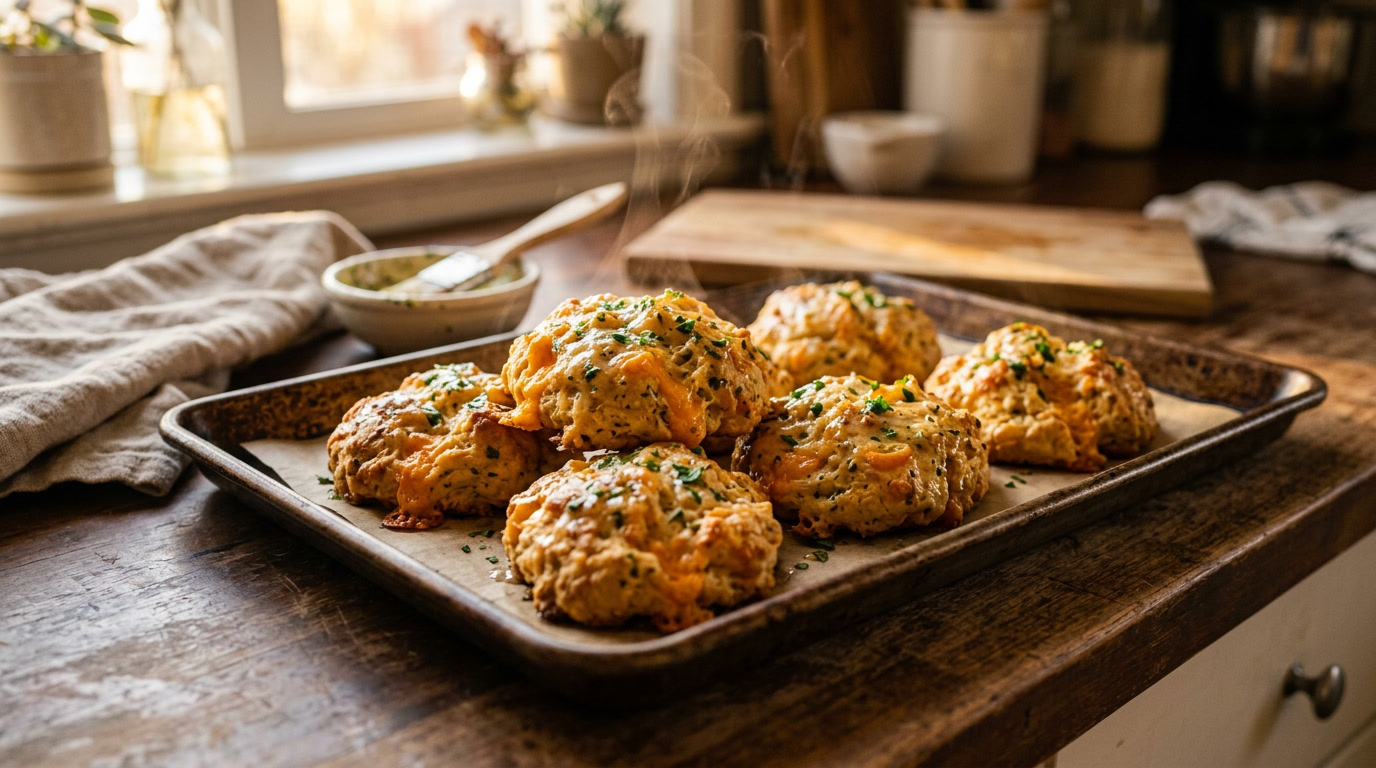
Cheddar Bay Biscuits are savory drop biscuits made with sharp cheddar cheese and brushed with garlic-herb butter — Red Lobster’s trademark complimentary bread since 1992.
Unlike rolled biscuits that require cutting and folding, drop biscuits are spooned directly onto the baking sheet, giving them that rustic, irregular shape and craggier surface. That rough texture is a feature, not a bug: those irregular edges catch the garlic butter topping and create crispy bits that contrast with the soft interior.
The Origin Story of Red Lobster’s Famous Biscuits
Red Lobster introduced Cheddar Bay Biscuits in 1992, replacing their corn muffins. The name “Cheddar Bay” is a marketing invention — there is no Bay — but it stuck. According to restaurant industry data, Red Lobster serves roughly 395 million biscuits per year, making them one of the most consumed restaurant breads in the United States. The recipe went semi-public in 2017 when Red Lobster licensed its name to a commercially available biscuit mix, but scratch-made versions consistently outperform the box in blind taste tests.
Home bakers have been reverse-engineering the red lobster cheddar bay biscuit recipe since the early 2000s. What started as a niche food blog pursuit became mainstream as the recipe’s simplicity (under 30 minutes, one bowl) became apparent. Today, searches for this recipe peak around holidays and summer seafood season.
What Makes Cheddar Bay Biscuits Unique
Three things set these biscuits apart from standard cheddar biscuits:
- High-fat, cold butter technique — butter is cut in cold and stays in small lumps. Steam from those lumps creates lift and flakiness.
- Sharp cheddar, not mild — the higher fat and more pronounced flavor of aged sharp cheddar survives the oven without becoming greasy.
- Post-bake garlic butter wash — this is the signature move. Brushing melted butter, garlic powder, and fresh parsley onto hot biscuits creates a lacquered, aromatic finish that the biscuit mix alone cannot replicate.
| Feature | Red Lobster Biscuits | Standard Cheddar Biscuits | Packaged Biscuit Mix |
|---|---|---|---|
| Technique | Drop (no rolling) | Rolled and cut | Drop or rolled |
| Cheese type | Sharp white or yellow cheddar | Often mild cheddar | Pre-mixed powder |
| Garlic butter topping | Yes — post-bake | Rarely | Yes — included in mix |
| Baking temp | 450°F | 400–425°F | 375–400°F |
| Time from scratch | 25–30 min | 35–45 min | 15–20 min |
| Flavor depth | High | Medium | Low-medium |
Essential Ingredients and Their Roles
Each ingredient in the red lobster cheddar bay biscuit recipe serves a precise structural or flavor function — substituting casually without understanding these roles leads to flat, dense, or greasy results.
Understanding the chemistry here is how you go from “decent” to “they taste exactly like the restaurant.” In practice, we’ve seen home bakers make one or two ingredient swaps and get completely different texture outcomes each time — here’s what matters.
The Flour Foundation
All-purpose flour with a protein content of 10–12% (standard US AP flour like King Arthur or Gold Medal) is the sweet spot. Bread flour (higher protein, 12–14%) develops too much gluten and makes biscuits tough. Cake flour (7–9%) produces a very tender crumb but biscuits that fall apart. AP flour gives you structure without chew.
Two cups is the standard quantity for a batch of 10–12 biscuits. Some recipes use 2.25 cups, which produces a slightly drier, more restaurant-like biscuit that holds its shape during service. For home baking, 2 cups is easier and more forgiving.
Baking powder (1 tablespoon, not teaspoon) is the primary leavener. It reacts first when wet (forming CO₂ bubbles) and again in the oven’s heat (double-acting). This double reaction creates the tall, airy interior. Do not use single-acting baking powder or old powder that’s lost its potency — test it by dropping a teaspoon in hot water. If it doesn’t foam aggressively, replace it.
A small amount of baking soda (¼ teaspoon) reacts with the acid in buttermilk for additional lift and a slightly tangy flavor. This combination is why buttermilk produces better biscuits than regular milk.
Fat for Flakiness
Cold butter is non-negotiable. The mechanism is straightforward but frequently misunderstood: cold butter creates steam pockets in the oven. As the butter melts, it releases water as steam, and that steam expands, pushing the dough apart and creating layers. If the butter is soft or melted before baking, it blends into the flour and you lose those pockets — the result is a more bread-like, dense biscuit.
Six tablespoons (¾ stick) is typical. Cut it into small cubes and freeze for 15 minutes before using. Alternatively, use a cheese grater to grate frozen butter directly into the flour — this distributes it more evenly with minimal hand warmth.
Some recipes add 2 tablespoons of sour cream alongside the butter for extra richness. That’s worth trying if you want a more indulgent, restaurant-close result.
Cheese and Flavor Builders
Sharp cheddar — shredded from a block, not pre-shredded — makes a measurable difference. Pre-shredded cheese is coated with cellulose or potato starch to prevent clumping, and that coating inhibits melting and changes the texture. One cup (about 4 oz) is the standard amount. Some bakers go to 1.5 cups for extra cheesiness, but past that point the fat content can make biscuits greasy.
Garlic powder in the dough (½ tsp) and in the topping (1 tsp) creates a layered garlic flavor — subtle inside, pronounced outside. Fresh garlic cloves can replace garlic powder in the topping (1 minced clove per 4 tbsp butter), but avoid fresh garlic in the dough itself as its moisture affects the texture.
Old Bay seasoning (¼ tsp) is an optional but highly recommended addition that some copycat recipes use to echo the seafood restaurant environment. It adds paprika, celery salt, and bay leaf notes without making the biscuit taste fishy.
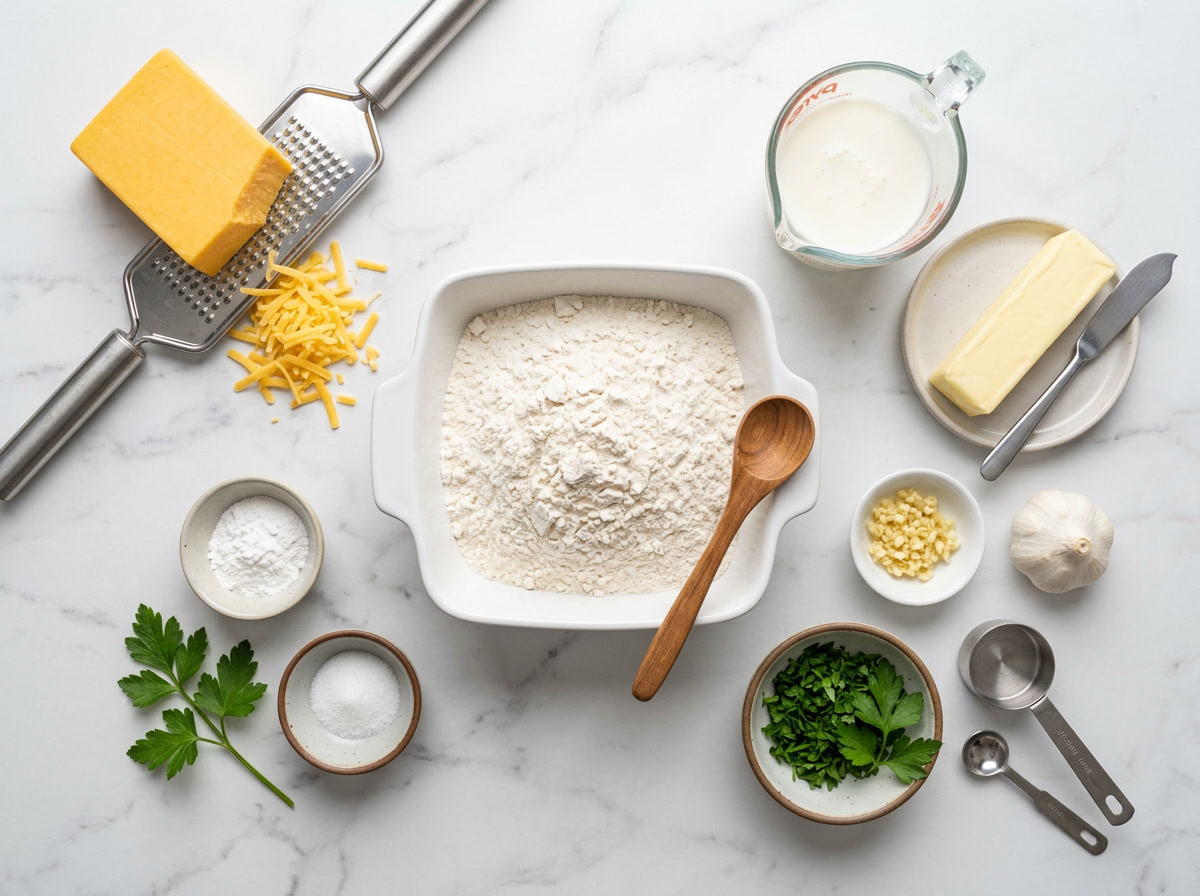
| Ingredient | Standard Amount | Effect if Increased | Effect if Decreased |
|---|---|---|---|
| All-purpose flour | 2 cups | Drier, more structured | Stickier dough, softer result |
| Sharp cheddar (block, shredded) | 1 cup | Richer flavor, risk of grease | Less flavor, drier texture |
| Cold butter (cubed) | 6 tbsp | Flakier but richer | Denser, less flaky |
| Buttermilk | ¾ cup | Stickier dough, more tang | Drier biscuit |
| Baking powder | 1 tbsp | Over-rises, bitter | Flat, dense |
| Garlic powder (dough) | ½ tsp | Stronger garlic base note | Milder, more subtle |
Step-by-Step Red Lobster Cheddar Bay Biscuit Recipe
The complete red lobster cheddar bay biscuit recipe takes 10 minutes to prep and 12 minutes to bake — ready in under 25 minutes from cold ingredients to warm biscuits.
This is a one-bowl, no-rolling operation. The key to replicating the restaurant result is working fast, keeping everything cold, and not overworking the dough.
Preparing the Dough
What you need:
For the biscuits:
– 2 cups all-purpose flour
– 1 tbsp baking powder
– ¼ tsp baking soda
– 1 tsp sugar
– ½ tsp garlic powder
– ½ tsp salt
– 6 tbsp cold unsalted butter, cubed (or grated frozen)
– ¾ cup cold buttermilk
– 1 cup sharp cheddar cheese, shredded from a block
For the garlic butter topping:
– 4 tbsp unsalted butter, melted
– 1 tsp garlic powder
– ½ tsp dried parsley (or 1 tsp fresh parsley, chopped)
– Pinch of salt
Steps:
- Preheat your oven to 450°F (232°C). Line a baking sheet with parchment paper.
- In a large bowl, whisk together the flour, baking powder, baking soda, sugar, garlic powder, and salt.
- Add the cold butter cubes. Use your fingertips or a pastry cutter to press the butter into the flour until the mixture looks like coarse crumbs with some pea-sized butter pieces remaining. Work quickly — if your hands are warm, use a fork or pastry blender.
- Stir in the shredded cheddar until evenly distributed.
- Pour in the cold buttermilk. Mix with a fork just until the dough comes together. Stop as soon as no dry flour remains — 10–15 stirs maximum. Overmixing activates gluten and makes the biscuits tough.
- Using a ¼-cup measuring cup or a large spoon, drop mounds of dough onto the prepared baking sheet, spacing about 2 inches apart. You should get 10–12 biscuits.
Baking to Perfection
Bake at 450°F for 10–12 minutes, until the tops are golden brown and the edges have just set. The high temperature is essential — it creates rapid steam expansion (flakiness) and Maillard browning on the cheese. Lower temperatures (400°F) produce paler biscuits with less texture contrast.
Do not open the oven in the first 8 minutes. The rising dough needs consistent heat; drafts cause sinking.
Check at 10 minutes: look for golden color on the tops and a dry appearance at the base. If the tops brown too fast but the centers look underdone, tent loosely with foil for the final 2–3 minutes.
Remove from the oven and immediately proceed to the topping.
The Signature Garlic Butter Topping
This step is what separates a good cheddar biscuit from a red lobster cheddar bay biscuit. Do it while the biscuits are still on the hot pan.
- In a small bowl, stir together the melted butter, garlic powder, parsley, and salt.
- Using a pastry brush, generously brush the warm biscuits while they’re still on the pan. The butter absorbs into the hot biscuit rather than running off.
- Serve immediately, or transfer to a rack. Best within 20 minutes of baking; still very good reheated at 300°F for 5 minutes the next day.
Pro tip: Double the garlic butter topping. One batch barely coats 12 biscuits. More butter = more flavor absorption = closer to restaurant result. According to this community discussion on Reddit, the amount of butter in the topping is consistently cited as the difference between “good” and “identical to Red Lobster.”

Scaling Up: Commercial Cheddar Bay Biscuit Production
Producing cheddar bay biscuits at commercial scale requires dedicated depositing and baking equipment that can maintain consistent dough temperature, portioning accuracy, and throughput.
This is where a home recipe and a commercial food operation diverge — not in flavor intent, but in the engineering required to replicate that result consistently across thousands of units per hour.
Commercial Drop Biscuit Equipment
The drop biscuit format is particularly well-suited to mechanized production because it eliminates lamination steps (no sheeting, cutting, or folding). Industrial food equipment manufacturers produce dedicated biscuit depositors — machines that portion dough by volume or weight into consistent drops at speeds of 1,000–3,000 pieces per hour.
Key equipment in a commercial cheddar bay biscuit line:
1. Dough mixer (spiral or planetary): Large-capacity commercial spiral mixers handle 50–200 kg batches. The critical parameter is temperature control — dough temperature at the end of mixing must stay below 18°C (64°F) to preserve butter integrity. Industrial chillers maintain bowl and ingredient temperature throughout mixing.
2. Dough depositor (biscuit dropper): Piston-based or auger-based depositors portion sticky drop-biscuit dough accurately. Auger systems handle higher viscosity doughs better. Accuracy within ±2g per piece is standard for commercial production.
3. Tunnel oven (conveyorized): Commercial bakeries use conveyorized tunnel ovens that maintain zones of temperature across 15–40 meters of travel. For drop biscuits, a high initial zone (230°C, equivalent to the home 450°F) followed by a moderate zone (200°C) replicates the crust-crumb contrast achievable in home ovens. Per food process engineering standards, baking time in a tunnel oven at equivalent temperatures runs 8–10 minutes at belt speeds of 1.5–2 m/min.
4. Butter application system (enrobing/spraying): The post-bake garlic butter topping is applied via spray nozzles or a butter enrober immediately after the biscuits exit the oven on a hot belt. Timing is identical to the home technique — butter absorbs when the surface is still >60°C.
5. Cooling conveyor and packaging: Biscuits cool to below 30°C before packaging to prevent condensation in sealed packaging.
Quality Control at Commercial Scale
Three variables require continuous monitoring in commercial cheddar biscuit production:
- Dough consistency: Buttermilk content must be exactly consistent; hydration variation of ±2% causes noticeable texture changes. Automated weighing systems with load cells control this.
- Cheese distribution: Manual incorporation at commercial scale uses ribbon mixers with timed additions to prevent cheese from sinking to the bottom of the batch.
- Garlic butter ratio: Spray systems are calibrated by volume per piece; overcoating leads to grease pooling in packaging.
| Production Scale | Daily Output | Equipment Required | Approximate Line Cost |
|---|---|---|---|
| Artisan (bakery café) | 200–500 pieces | Commercial deck oven, stand mixer, manual depositor | $15,000–$40,000 |
| Mid-scale (foodservice supply) | 2,000–5,000 pieces | Spiral mixer, piston depositor, rack oven | $60,000–$150,000 |
| Industrial (frozen, retail) | 20,000–100,000 pieces | Continuous mixer, tunnel oven, spray butter system, packaging line | $500,000–$2,000,000+ |
The Commercial Opportunity
American-style biscuits have significant global export potential. The biscuit market — encompassing both sweet biscuits and savory rolls — is valued at over $100 billion globally, with savory bread items growing faster than sweet categories in markets across Southeast Asia, the Middle East, and Europe. The unique format of the drop biscuit (no lamination, relatively simple formulation) makes it accessible to food manufacturers without specialized pastry equipment.
Commercial food machinery designed for drop biscuits, soft rolls, and similar soft-dough products can be adapted to cheddar bay biscuit production with adjustments to dough hydration settings and post-bake topping application. The commercial applications span QSR (quick-service restaurants), frozen retail, airline catering, and institutional foodservice.
Future Trends in Biscuit Production (2026+)
Automation, clean-label reformulation, and regional flavor adaptation are the three strongest trends shaping commercial biscuit production through 2026 and beyond.
Automated Biscuit Forming Technology
The shift toward fully automated soft-dough depositing is accelerating. Older systems required manual supervision at the depositing station; modern servo-controlled depositors now self-calibrate portion weight based on real-time feedback from checkweighers downstream. This reduces over-portioning waste by 3–5% — significant at commercial volumes.
Inline vision systems that detect under-baked, over-baked, or misshapen biscuits are becoming standard in mid-scale bakeries. These systems reject defective pieces automatically, maintaining quality standards at line speeds that would be impossible with human QC alone.
Clean-label pressure is also reshaping commercial recipes. Bakers are replacing partially hydrogenated fats, artificial flavorings, and potassium bromate with palm-oil alternatives, natural cheese powders, and malted wheat flour. The clean-label transition does not compromise quality — it requires reformulation, but the end product is often preferred by consumers in blind testing.
Global Demand for American-Style Biscuits
American breakfast and snack formats — biscuits, muffins, drop scones — are experiencing rapid adoption in China, Southeast Asia, and the Middle East as Western food culture expands. Commercial manufacturers in these regions are investing in production equipment that can handle high-hydration soft doughs (65–75% hydration) that differ from the lower-hydration traditional biscuits common in those markets.
The red lobster cheddar bay biscuit recipe format — a savory, cheese-filled drop biscuit — translates particularly well to these markets because:
- It requires no specialized rolling or lamination equipment
- The cheddar flavor profile is familiar from global cheese snack categories
- The garlic-butter topping can be adjusted to regional flavor preferences (adding soy-based umami notes, for example)
Food machinery companies serving these export markets are increasingly offering recipe customization services alongside equipment — providing the technical specifications and formulation guidance that allow buyers to produce Western-style biscuits without a trained pastry team on staff.
FAQ: Red Lobster Cheddar Bay Biscuit Recipe
The most common questions about this recipe, answered directly:
Q: How do I make cheddar bay biscuits taste exactly like Red Lobster?
Use block cheddar (not pre-shredded), keep the butter cold, bake at 450°F, and double the garlic butter topping. The post-bake butter brush is the single most important step — skip it or underdo it and the biscuits taste like generic cheddar drop biscuits. The sugar in the dough (1 tsp) also contributes to the specific flavor balance most copycat recipes miss.
Q: What is the best flour for Red Lobster biscuits?
Standard all-purpose flour at 10–12% protein (King Arthur or Gold Medal). Bread flour makes them chewy; cake flour makes them crumble. Do not use self-rising flour unless you reduce the added baking powder accordingly (self-rising already contains leavener and salt).
Q: Can I substitute regular milk for buttermilk?
Yes, but the texture and tang will differ. Make a buttermilk substitute by adding 1 tablespoon of white vinegar or lemon juice to ¾ cup of whole milk and letting it sit for 5 minutes. The acid is necessary to react with the baking soda. Using plain milk without acid produces a flatter, less-complex biscuit.
Q: Why are my cheddar bay biscuits dense and not fluffy?
Three common causes: (1) overworking the dough after adding buttermilk — stop as soon as it comes together; (2) warm butter — if the butter melted into the flour during mixing, you lose the steam-pocket mechanism; (3) old baking powder — test it, and if it doesn’t foam vigorously in hot water, replace it.
Q: Can these biscuits be made ahead and frozen?
Yes — two ways. Freeze before baking: drop unbaked dough onto a sheet pan, freeze until solid (1 hour), transfer to freezer bags. Bake from frozen at 450°F for 14–16 minutes. Freeze after baking: cool completely, wrap individually, freeze for up to 2 months. Reheat in a 300°F oven for 8–10 minutes.
Q: What is the difference between the Red Lobster mix and a scratch recipe?
The commercial mix uses dehydrated buttermilk, garlic powder, and cheese powder, with a shelf-stable fat (often partially hydrogenated) instead of fresh butter. Scratch recipes consistently outperform the mix in texture and flavor because fresh dairy fat behaves differently from shelf-stable alternatives. The mix is faster (15 minutes vs. 25), but you sacrifice the flaky interior and fresh cheese melt.
Q: Can the recipe be scaled up for a party or catering?
Yes — this recipe scales linearly. Double or triple all ingredients. The only adjustment: use a larger bowl and fold gently to avoid overworking a larger batch. Bake in multiple batches rather than crowding one pan; biscuits need space to rise and brown on all sides. For catering quantities (50+ pieces), a commercial rack oven or convection oven produces more consistent results than a home oven.

Conclusion
The red lobster cheddar bay biscuit recipe is deceptively simple — flour, cold butter, buttermilk, sharp cheddar, leavener, and a post-bake garlic butter wash. But the simplicity is the point: when each variable is understood and executed correctly (cold fat, minimal mixing, high heat, immediate butter topping), the result is genuinely difficult to distinguish from the restaurant original.
At home, the path to perfect biscuits is cold ingredients, fast hands, and restraint with the mixer. At commercial scale, the same principles translate to precise temperature control, accurate portioning equipment, and inline butter application systems. Whether you are baking a Sunday dozen for family or evaluating a production line that can output 20,000 units per shift, the underlying food science is identical — and getting it right starts with understanding why each step exists, not just following it.
Try the recipe this week. Then, if your goals extend beyond the kitchen — into foodservice supply, frozen retail, or international food manufacturing — the commercial production pathway described here offers a clear roadmap to scaling what is genuinely one of the most popular savory biscuit formats in the world.
Related Articles
- Sausage Balls with Red Lobster Biscuit Mix: The Ultimate Cheddar Bay Party Recipe
- Easy Cheddar Bay Biscuit Recipe: Better Than Red Lobster’s (Homemade Version)
- Sausage Balls Red Lobster Recipe: The Ultimate Cheddar Bay Guide
- Cheddar Bay Biscuit Sausage Balls: The Ultimate Party Snack Recipe
- Biscuit Production Line
- Advanced Automatic Biscuit & Cracker Machine
- Original Skittles Gluten Free: Celiac Safety Guide