The Science of Surface Perfection: A Technical Analysis of the Polishing Process
Introduction
Your search for a technical analysis of the polishing process ends here. This isn’t just a surface-level overview. It’s a deep dive into the complex science behind creating perfect surfaces.
Polishing goes far beyond a simple finishing step. It’s a precisely controlled engineering discipline. This process represents a complex dance between mechanical forces and chemical reactions. The goal? Achieving specific, measurable surface characteristics.
We’re moving beyond the idea of cosmetic shine. Instead, we’re entering the world of engineered specifications. This includes achieving roughness at the angstrom level. It means creating planarity at the nanometer scale. And it requires a subsurface free from crystalline damage.
This article breaks down the polishing process from a materials science and engineering perspective. We’ll analyze the fundamental principles of material removal. We’ll categorize the primary industrial methods. And we’ll examine the critical components involved. We’ll also explore the control strategies and measurement techniques essential for repeatable, high-performance results.
To provide a clear and structured analysis, we will cover the following key topics:
- Fundamental Science: The core mechanical and chemical mechanisms of material removal at the microscopic level.
- Process Taxonomy: A classification and comparison of modern industrial polishing techniques.
- Key Components: A detailed examination of the critical triangle: abrasives, slurries, and pads.
- Process Control: The parameters, models, and metrology used to transform polishing from an art into a science.
- Advanced Techniques: A look at the future of polishing, including emerging and specialized methods.
Fundamentals of Material Removal
To control a polishing process, you must first understand the fundamental science. How is material removed from a workpiece surface? This removal occurs at an atomic or microscopic scale. It’s governed by two primary modes: mechanical abrasion and chemical reaction.
These two modes aren’t always independent. In many advanced processes, they work together. This creates results that neither could achieve alone.

Mechanical Abrasion Physics
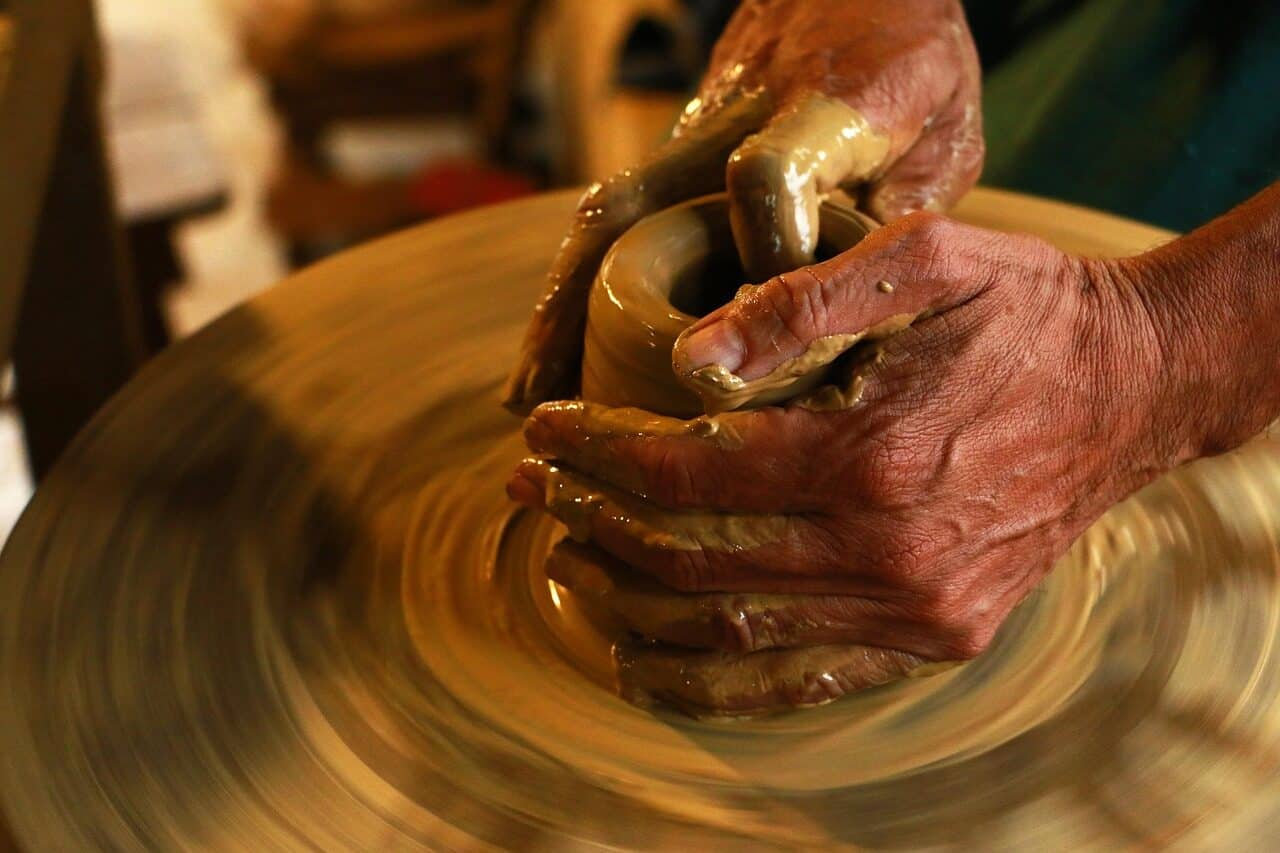
At its core, mechanical polishing is a form of micro-machining. Abrasive particles are suspended in a liquid slurry. They’re held against the workpiece by a polishing pad. These particles act as microscopic cutting tools.
The interaction between an abrasive particle and the surface can be categorized into three regimes. Ploughing occurs when the particle deforms the material without significant removal, creating a groove. Fracture happens in brittle materials, where micro-cracks spread and cause material to chip away. Cutting is the ideal mode. Here, a sliver of material is removed cleanly, like a nanoscale machine tool.
The effectiveness of this process depends heavily on the abrasive particle size distribution (PSD). For aggressive stock removal, larger abrasives in the range of several microns are used. For achieving a super-smooth final finish, as in semiconductor final polishing, abrasive sizes are reduced to the 10-50 nanometer range.
Friction and pressure are the driving forces. The applied downforce creates contact stress at the point where each abrasive particle meets the workpiece. This enables the physical removal of material.
Chemical-Mechanical Synergy
Chemical-Mechanical Planarization (CMP) represents the pinnacle of polishing synergy. It’s the dominant process in semiconductor manufacturing for good reason. It achieves global planarity with minimal surface damage. This is impossible with purely mechanical methods.
The principle relies on a chemical reaction to first weaken the workpiece surface. The slurry contains chemical agents that react with the substrate. This forms a soft, chemically modified surface layer. This is often called a passivation layer or a hydrated layer.
This softened layer is then easily and gently removed by the mechanical action of the abrasives. The energy required for this removal is much less than what would be needed to abrade the bulk, unreacted material.
The CMP cycle can be understood as a continuous, four-step process operating at every point on the wafer:
- Surface Reaction: Chemical agents in the slurry react with the top atomic layers of the workpiece.
- Soft Layer Formation: cURL Too many subrequests.
- cURL Too many subrequests. cURL Too many subrequests.
- cURL Too many subrequests. cURL Too many subrequests.
cURL Too many subrequests.

cURL Too many subrequests.
cURL Too many subrequests.
cURL Too many subrequests.
cURL Too many subrequests.
cURL Too many subrequests. cURL Too many subrequests.
cURL Too many subrequests. cURL Too many subrequests.
cURL Too many subrequests. cURL Too many subrequests.
cURL Too many subrequests. cURL Too many subrequests.
cURL Too many subrequests. cURL Too many subrequests.
cURL Too many subrequests.
cURL Too many subrequests.
cURL Too many subrequests. | Meccanismo Primario | cURL Too many subrequests. | cURL Too many subrequests. | cURL Too many subrequests. | cURL Too many subrequests. |
cURL Too many subrequests. | cURL Too many subrequests. | cURL Too many subrequests. | cURL Too many subrequests. | cURL Too many subrequests. | cURL Too many subrequests. |
cURL Too many subrequests. | cURL Too many subrequests. | cURL Too many subrequests. | cURL Too many subrequests. | cURL Too many subrequests. | cURL Too many subrequests. |
cURL Too many subrequests. | cURL Too many subrequests. | cURL Too many subrequests. | < 50 nm | No mechanical stress, good for complex shapes | Only for conductive materials, edge effects |
MRF | Mechanical (Magnetically-guided) | High-precision optics (telescopes, lasers) | cURL Too many subrequests. | Deterministic, high precision, rapid correction | High equipment cost, specialized application |
Il Triangolo Critico
A successful polishing process is dictated by the precise interaction of three critical components. These are the abrasive, the slurry chemistry, and the polishing pad. Understanding and controlling each element of this “critical triangle” is fundamental to achieving desired outcomes.
These consumables are not independent variables. Their properties are interconnected. Their selection must be considered as a complete system designed for a specific material and application.
Abrasives: The Cutting Component
The abrasive is the primary agent of mechanical material removal. Its key properties determine its performance. These include hardness, particle shape, size distribution, and chemical reactivity. The abrasive must be harder than the material it is polishing. This principle is defined by the Mohs scale of hardness.
Particle shape influences the removal mechanism. Sharp, angular particles tend to cut more aggressively. Rounded particles produce a smoother, lower-damage finish. The particle size distribution must be tightly controlled to ensure uniform removal and prevent scratching from oversized particles.
Common abrasive materials are selected based on the workpiece. For example, cerium oxide is uniquely effective for polishing glass due to a specific chemical affinity. Diamond is required for polishing ultra-hard materials like silicon carbide.
The following table outlines the properties and common applications of standard industrial abrasives.
Abrasive Material | Mohs Hardness | Typical Particle Size Range | Applicazioni principali | Note |
Aluminum Oxide (Al₂O₃) | 9 | 0.3 – 20 µm | Metals, Sapphire, General Lapping | Cost-effective, available in many grades. |
Cerium Oxide (CeO₂) | 6 | 50 nm – 5 µm | Glass, Optics, Silicon Dioxide (SiO₂) | Has a chemical polishing component with glass. |
Silicon Carbide (SiC) | 9.5 | 1 – 100 µm | Ceramics, Hard Metals, Stone | Very hard and sharp; used for rapid stock removal. |
Diamond | 10 | 10 nm – 50 µm | Hard materials (SiC, GaN), Hard disk drives | Ultimate hardness, but higher cost; often used as a slurry or fixed in a pad. |
The Role of Slurry Chemistry
The slurry is much more than just a liquid carrier for the abrasive particles. Its chemistry is an active component that can dramatically alter the polishing process, especially in CMP. The base liquid is typically high-purity deionized (DI) water.
cURL Too many subrequests.
cURL Too many subrequests.
cURL Too many subrequests.
cURL Too many subrequests.
cURL Too many subrequests.
cURL Too many subrequests.
cURL Too many subrequests.
cURL Too many subrequests.
cURL Too many subrequests.
cURL Too many subrequests.
cURL Too many subrequests.
cURL Too many subrequests.
cURL Too many subrequests.
Parametri Chiave del Processo
cURL Too many subrequests.
cURL Too many subrequests.
cURL Too many subrequests.
cURL Too many subrequests.
cURL Too many subrequests.
cURL Too many subrequests.
cURL Too many subrequests.
Parametro | cURL Too many subrequests. | cURL Too many subrequests. |
cURL Too many subrequests. | cURL Too many subrequests. | cURL Too many subrequests. |
cURL Too many subrequests. | cURL Too many subrequests. | cURL Too many subrequests. |
cURL Too many subrequests. | cURL Too many subrequests. | cURL Too many subrequests. |
cURL Too many subrequests. | cURL Too many subrequests. | cURL Too many subrequests. |
cURL Too many subrequests. | cURL Too many subrequests. | cURL Too many subrequests. |
cURL Too many subrequests.
cURL Too many subrequests. controllare il processo cURL Too many subrequests.
cURL Too many subrequests.
cURL Too many subrequests.
White Light Interferometry is a powerful non-contact technique that provides a full 3D topographic map of the surface. It is widely used to measure flatness, step heights, and overall surface form with high accuracy and speed.
Advanced and Future Techniques
The relentless drive for smaller, faster, and more complex devices continually pushes the boundaries of polishing technology. Research and development efforts are focused on enabling the processing of new, difficult materials. They also aim to achieve unprecedented levels of precision and cleanliness.
These advanced techniques provide solutions for next-generation manufacturing challenges. From ultra-hard substrates to environmental sustainability.
Emerging Polishing Methods
Several emerging and specialized methods are gaining traction for niche and future applications.
- Fixed Abrasive Polishing: In this method, abrasive particles are embedded directly into the polishing pad surface. This eliminates the need for a slurry, reducing consumable costs and waste. It also offers potentially better control over the abrasive-workpiece interaction, leading to improved defectivity.
- Electrochemical Mechanical Polishing (ECMP): ECMP is a hybrid process designed for difficult-to-machine metals like tungsten or nickel alloys. It combines the anodic dissolution of electropolishing with gentle mechanical abrasion. This achieves high material removal rates with very low surface damage and stress.
- Plasma-Assisted Polishing: For ultra-hard materials like diamond, gallium nitride (GaN), or silicon carbide (SiC), conventional polishing is extremely slow and can induce significant subsurface damage. Plasma-assisted polishing uses a reactive plasma to chemically activate the surface. This makes it possible to achieve “damage-free” removal with a much softer abrasive.
- Dry Polishing: A significant area of research is the development of completely dry polishing techniques. These methods may use lasers or energized gas clusters. They aim to eliminate the use of liquid slurries entirely. The primary driver is environmental sustainability, as this would drastically reduce water consumption and chemical waste.

Conclusion: Pursuing Perfection
The pursuit of the perfect surface is a cornerstone of modern technology. We have seen that achieving this is not an art form but a rigorous science. It’s grounded in a deep understanding of fundamental principles.
A successful polishing process hinges on the controlled synergy of mechanical forces and chemical reactions. It is a system-level challenge that requires careful co-optimization of the critical triangle: the abrasive, the slurry, and the pad.
Transforming this complex interaction into a predictable manufacturing process is achieved through a data-driven approach. Rigorous process control, guided by Preston’s law and more advanced models, and verified by precise measurement, is non-negotiable.
Looking forward, the evolution of polishing will continue to be a key enabler for future technologies. From the next generation of quantum computers and high-power electronics to advanced medical devices and ultra-precision optics, the ability to create ever-more-perfect surfaces will define the boundary of what is possible.
- Scienza dei Materiali e Ingegneria delle Superfici – ASM International https://www.asminternational.org/
- Manufacturing Processes and Precision Engineering – SME https://www.sme.org/
- Semiconductor Manufacturing and CMP – SEMI https://www.semi.org/
- Polishing and Surface Finishing – Wikipedia https://en.wikipedia.org/wiki/Polishing
- Precision Engineering Standards – ASME https://www.asme.org/
- Surface Treatment and Finishing – NIST https://www.nist.gov/
- Materials Processing Technology – ScienceDirect https://www.sciencedirect.com/topics/engineering/polishing
- Optical Manufacturing and Polishing – OSA (Optica) https://www.optica.org/
- Industrial Surface Finishing – Thomasnet https://www.thomasnet.com/
- Manufacturing Engineering Education – MIT OpenCourseWare https://ocw.mit.edu/
Articoli Correlati
- Processo di produzione Skittles: Dentro la fabbrica 2026
- Come vengono fatti i Skittles? Il processo completo in fabbrica spiegato (2026)
- Come vengono fatte le marshmallow? La guida completa agli ingredienti, al processo e a cosa c'è dentro quella soffice leccornia
- Guida Esperta: Dentro il Processo di Produzione di un Leader nella Fabbricazione di Orsetti Gommosi
- Linea di Produzione di Caramelle Gommose
- Macchina per Confezionamento Alimentare