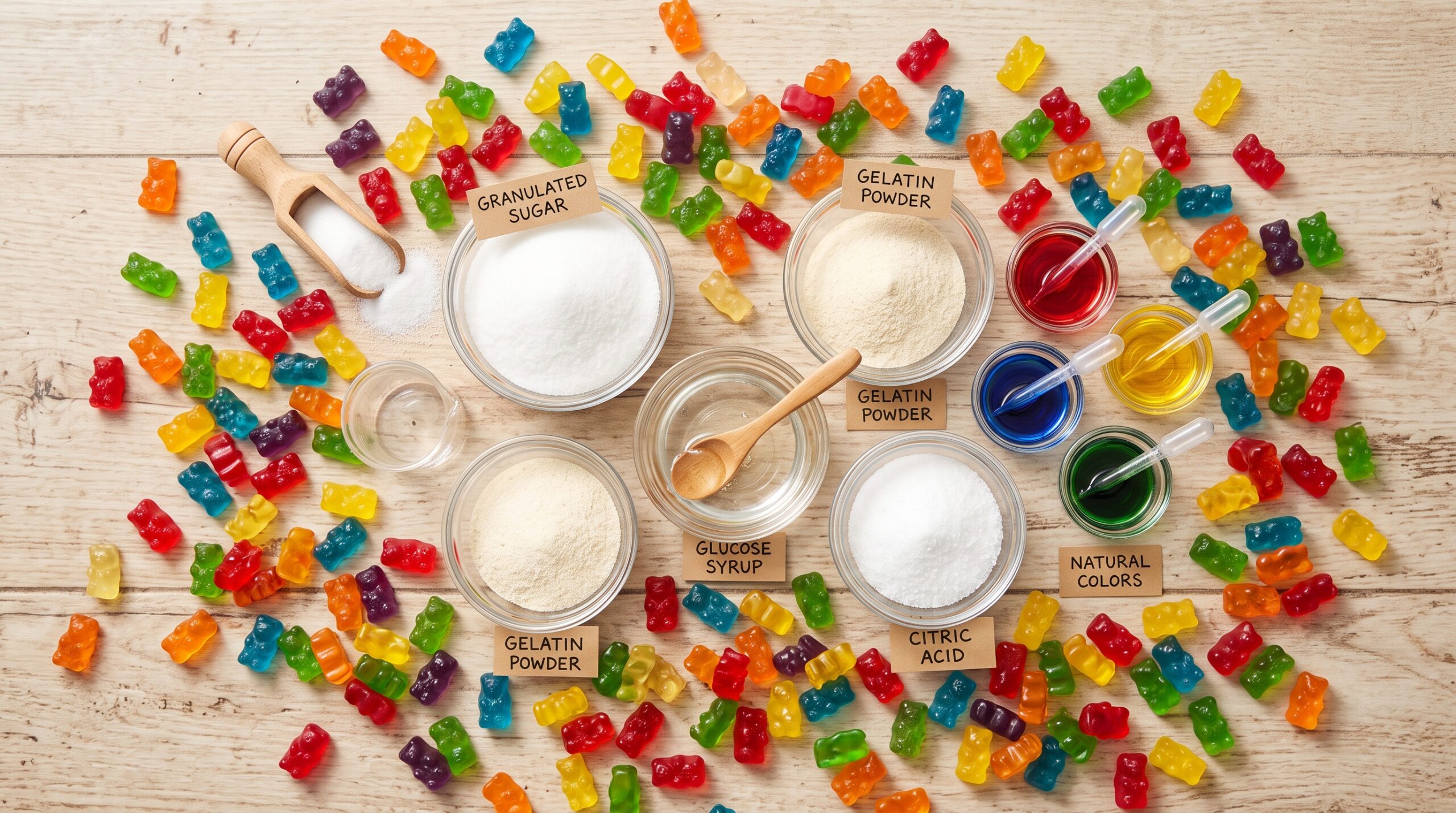
Gummy bears are made of gelatin (animal-derived collagen protein), sugar, glucose syrup, water, citric acid, natural or artificial flavorings, and food coloring — with gelatin providing the signature elastic, chewy texture.
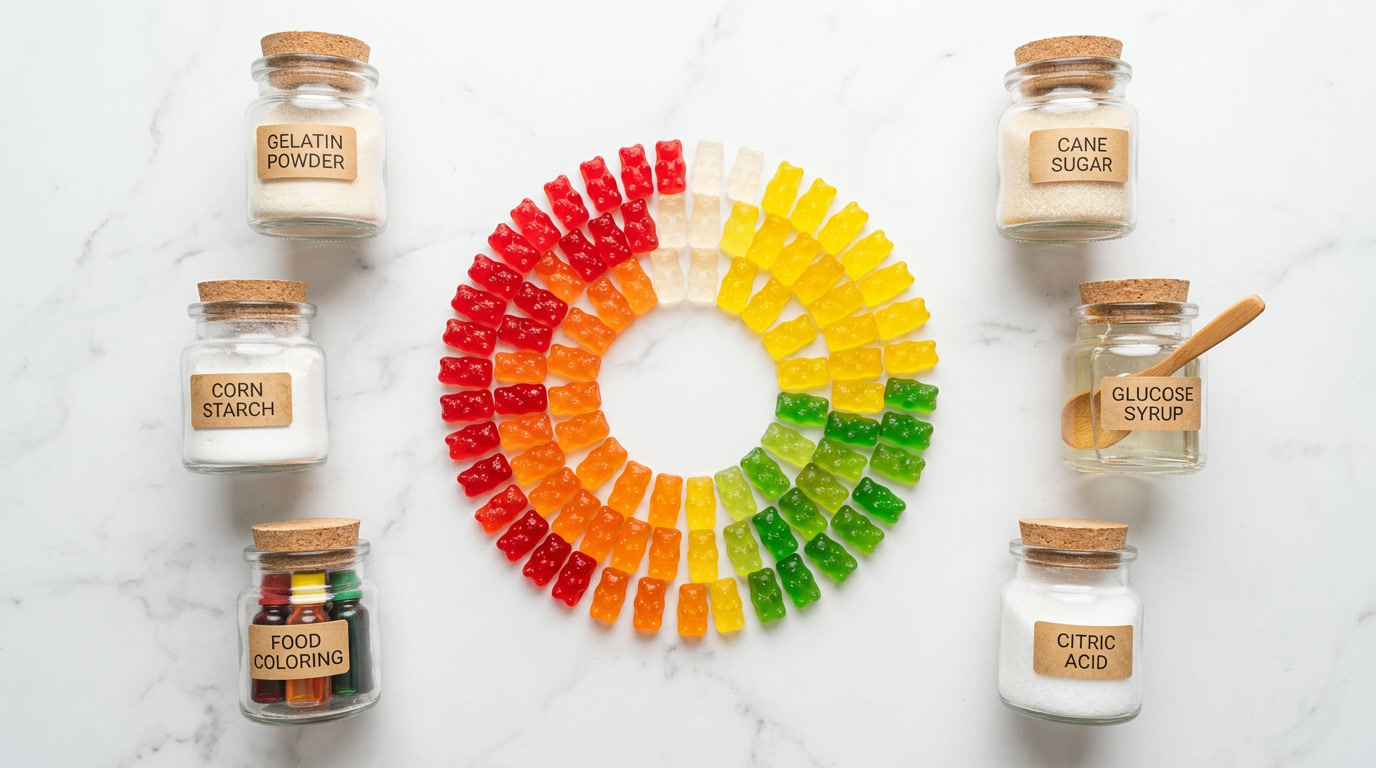
Walk down any candy aisle and gummy bears look deceptively simple: a translucent, jewel-colored bear shape you can hold between two fingers. Ask what a gummy bear is made of, though, and the answer quickly gets interesting — rendered animal bones, industrial starch mogul lines, and a precise balance of food chemistry that took decades of confectionery R&D to optimize.
We work closely with confectionery equipment manufacturers and have seen gummy bear production at both artisan and industrial scales. This guide breaks down every ingredient in a gummy bear, explains what each one does, compares the three main formulation types, and walks through the industrial manufacturing process. Whether you’re a curious consumer, a food professional evaluating new formulations, or someone researching candy production equipment, this is the most complete answer available to the question: gummy bear — what is it made of?
What Is a Gummy Bear Made Of? Core Ingredients
A gummy bear is made of six core ingredients: gelatin, sugar, glucose syrup, water, citric acid, and flavorings with colorings. Every ingredient serves a specific functional purpose, and adjusting any one of them changes texture, flavor, shelf life, or processing behavior.
Here is the complete ingredient profile of a standard commercial gummy bear:
| Ingredient | Typical % by Weight | Primary Function |
|---|---|---|
| Sugar (sucrose) | 40–50% | Sweetness, structure, water-activity control |
| Glucose syrup | 25–30% | Prevents crystallization, adds body and chew |
| Gelatin | 6–10% | Elastic gel network — the structural backbone |
| Water | 10–15% | Solvent; majority evaporates during drying |
| Citric acid | 0.5–1.5% | Tartness, flavor amplification, pH control |
| Natural/artificial flavorings | 0.3–1% | Fruit identity (strawberry, raspberry, lemon, apple) |
| Food colorings | < 0.5% | Visual appeal and flavor association cue |
| Coating (oil or beeswax) | Trace | Surface shine, anti-sticking, barrier |
Gelatin — The Structural Backbone of Every Gummy Bear
Gelatin is the most important ingredient in a gummy bear. Without it, no combination of sugar and syrup produces that signature elastic bounce and clean chew.
Gelatin is a processed protein derived from collagen — the structural protein found in connective tissue, skin, and bones of animals. Most commercial gummy gelatin comes from pigs (porcine gelatin) or cattle (bovine gelatin). The raw material is cleaned, acid- or alkali-treated to break collagen crosslinks, then hot-water extracted, filtered, evaporated, and dried into a powder rated by bloom strength (a measure of gel firmness). Confectionery gelatin typically runs 150–250 bloom; higher bloom means a firmer gummy at the same concentration.
What makes gelatin remarkable for candy production is its thermo-reversible gelling behavior. Below approximately 35°C (95°F), gelatin forms a solid three-dimensional protein network that traps the sugar-water solution and gives gummy bears their chew. Above that temperature, the network melts and the mass flows freely. This is exactly what a gummy production line needs: deposit the mass hot, set it cold, demold, and package.
According to Gummy bear — Wikipedia, Hans Riegel of Haribo invented the first gummy bear in Bonn, Germany in 1922. His use of gelatin as the structural agent distinguished these chewy, elastic candies from the hard sugar-based confections that dominated that era’s market — and the format has not fundamentally changed in over a century.
Gelatin — Wikipedia documents the full chemistry: collagen’s triple-helix protein chains partially denature during extraction, and when cooled, they re-associate into a gel network that is elastic, translucent, and capable of holding significant water without syneresis (weeping).
Sugar and Glucose Syrup — The Sweet Matrix
Sugar (sucrose) forms the bulk of a gummy bear by weight. It does far more than sweeten: at high concentrations, sucrose lowers water activity — the measure of unbound water available for microbial growth. Gummy bears typically target a water activity (Aw) of 0.55–0.65, which makes them shelf-stable at room temperature without preservatives.
Glucose syrup (corn syrup in North America, glucose-fructose syrup in many EU formulations) is essential for preventing sucrose crystallization. A pure sucrose solution would crystallize on cooling, producing a gritty, grainy texture. Glucose syrup — a mixture of glucose, maltose, and higher oligosaccharides — disrupts crystal nucleation and maintains the smooth, glassy appearance of a properly made gummy bear.
The glucose-to-sucrose ratio also controls texture. More glucose syrup produces a softer, more extensible gummy that retains moisture better. More sucrose produces a firmer, more brittle candy that can crystallize if humidity fluctuates. Most manufacturers work at a glucose:sucrose ratio of roughly 55:45 to 65:35, tuned to regional preference — US consumers tend to prefer slightly softer gummies than European consumers.
Citric Acid — The Sour Hit That Amplifies Flavor
Most gummy bears carry a background tartness that makes the sweetness pop. That’s citric acid, produced industrially via fermentation of glucose by Aspergillus niger.
Citric acid achieves four things simultaneously:
– Drops pH, creating perceived sourness
– Amplifies fruit flavor by stimulating saliva and enhancing retronasal flavor release
– Acts as a mild preservative by inhibiting microbial growth at low pH
– Can weaken gelatin gel strength at very high concentrations — so dosing must be controlled
Sour gummy bears apply extra citric acid as a surface coating after demolding — the initial burst of sourness before sweetness takes over is this coating dissolving on your tongue. Too much acid in the cooked mass, however, degrades gelatin over time, causing gummies to become sticky or lose their shape in storage.
Flavorings and Colorings — The Identity Layer
Standard gummy bear assortments come in red (strawberry or raspberry), orange, lemon/yellow, green (apple or lime), and white/clear (pineapple). Flavorings are either natural fruit concentrates, artificial flavor compounds, or blends of both.
Colorings range from synthetic FD&C dyes (Red 40, Yellow 5, Blue 1, Green 3) to natural alternatives: elderberry extract for purple, carrot concentrate for orange, spirulina for blue-green, and turmeric for yellow. The EU requires warning labels on six synthetic dyes (the “Southampton six”), which has pushed many European brands to reformulate with natural colorings — at significantly higher cost and with greater processing complexity, since natural colorings are heat- and pH-sensitive.
One detail most consumers overlook: color and flavor operate as a paired sensory cue. Green gummy bears in Europe typically taste of apple; in the US, they’re more likely lime. The color primes the expectation; the flavoring either confirms or subverts it.
Types of Gummy Bears by Ingredient Formulation
The three main formulations are gelatin-based (traditional), pectin-based (vegan), and sugar-free — each with distinct ingredient profiles, texture characteristics, and production requirements.
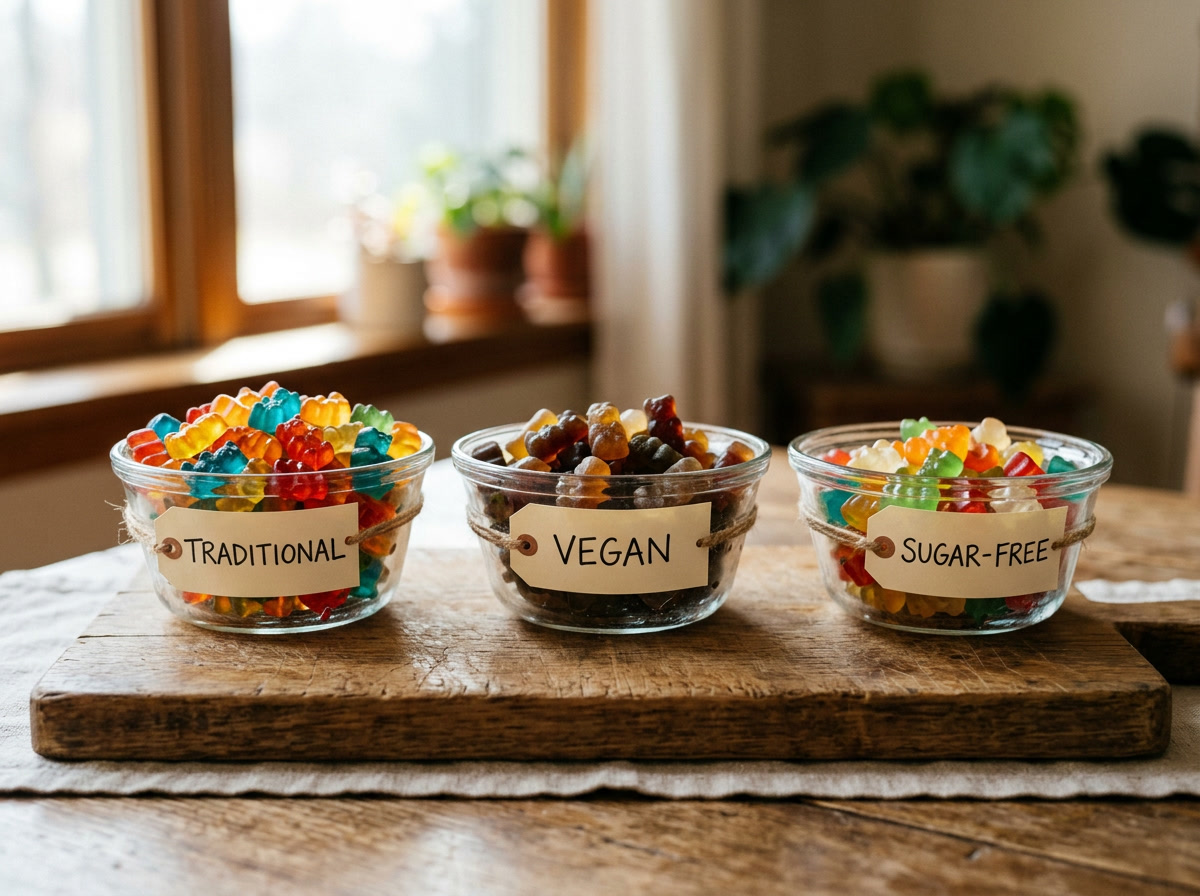
Traditional Gelatin-Based Gummy Bears
The original and most widely produced gummy bear. Porcine (pig) gelatin is the standard choice for most global brands — Haribo, Trolli, Black Forest — because it delivers consistent bloom strength, neutral flavor, and reliable processing behavior at industrial scale.
Bovine (beef) gelatin is used in halal-certified and kosher-certified gummy bears. Bovine gelatin behaves slightly differently: melt temperature and set time vary between sources, so formulations need adjustment when switching. Fish gelatin exists but is rarely used in gummy candy due to its lower gel strength and distinct flavor profile.
The original article that revealed this to a wide audience — Gummy Bears Are Actually Made Out Of Boiled Animal Parts — went viral precisely because most consumers had never connected “gelatin” on the label with the rendering process behind it. That viral moment drove measurable growth in searches for vegan gummy alternatives.
Vegan Gummy Bears
Growing demand for plant-based options has accelerated R&D in gelling alternatives. The main options:
- Pectin: Extracted from citrus peel or apple pomace — the same raw materials used in jam-making. Pectin produces a clear, firm gel that sets at higher temperatures than gelatin. The texture is less elastic, more brittle — vegan gummies often have a “jelly” bite rather than a stretchy chew. Pectin gels are sensitive to pH and calcium ion concentration, requiring precise acid and mineral control in the formula. Pectin — Wikipedia covers the full extraction chemistry and gel mechanism for readers who want the underlying science.
- Agar-agar: Derived from red algae. Sets significantly firmer than gelatin at equivalent concentrations, with a slightly grainy texture unless carefully formulated. Used in some Asian-market gummies and in certain premium natural-food products.
- Carrageenan: Another seaweed-derived hydrocolloid. Works with certain syrup systems but has faced consumer safety scrutiny, leading some brands to avoid it in clean-label positioning.
Sugar-Free Gummy Bears
Sugar-free formulations replace sucrose and glucose syrup with polyols:
- Maltitol and sorbitol are the most common. They behave similarly to sugar in cooking — same water-activity depression, compatible with gelatin — but have a lower glycemic impact. Warning: sorbitol is a laxative at high intake (> 20–30g). The infamous Amazon reviews of Haribo’s sugar-free bears, where buyers described extreme digestive distress, are a real-world data point on this effect.
- Isomalt: Lower hygroscopicity than sorbitol, better for packaging stability.
- Erythritol + stevia blends: Increasingly used in premium reduced-calorie gummies targeting keto and diabetic consumers.
Gelatin still provides the chewy structure in most sugar-free formulations. Vegan sugar-free gummies (pectin + erythritol) are now commercially available but represent a small fraction of the market.
| Formulation | Gelling Agent | Sweetener System | Texture | Suitable For |
|---|---|---|---|---|
| Traditional | Porcine gelatin | Sucrose + glucose syrup | Elastic, stretchy | General market |
| Halal / Kosher | Bovine gelatin | Sucrose + glucose syrup | Similar to traditional | Muslim, Jewish consumers |
| Vegan | Pectin or agar | Sucrose + glucose syrup | Firmer, less elastic | Vegans, vegetarians |
| Sugar-free | Porcine gelatin | Maltitol / sorbitol / erythritol | Elastic, less sweet | Diabetics, keto dieters |
| Vegan + sugar-free | Pectin | Erythritol + stevia | Firm, clean flavor | Vegan + low-sugar |
How Gummy Bears Are Made at Industrial Scale
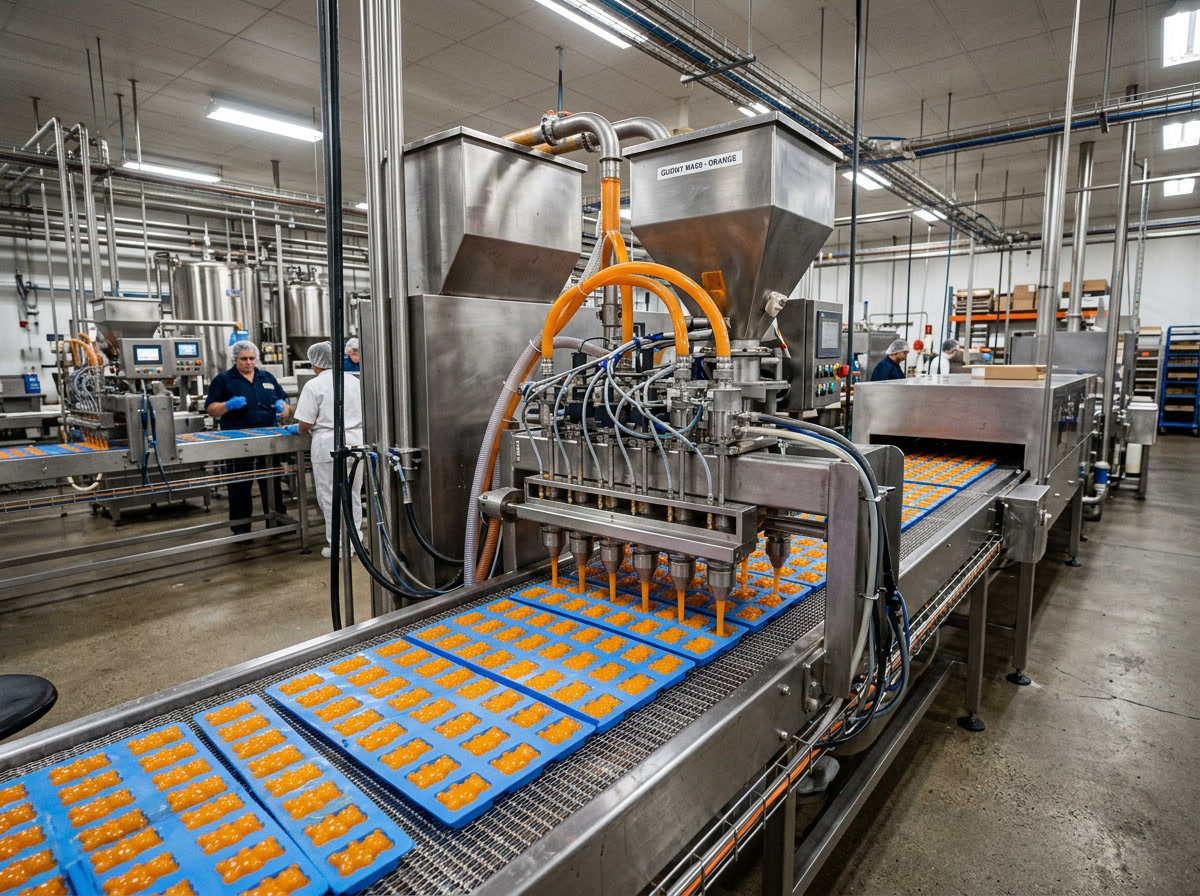
Gummy bears are produced via a starch mogul process: cooked candy mass is deposited into starch-printed molds, cooled 24–48 hours to set, demolded, coated with oil or wax, and packaged.
Understanding the manufacturing process explains why specific ingredient ratios are used — and why small formulation changes have large downstream effects on production performance.
The Starch Mogul Line
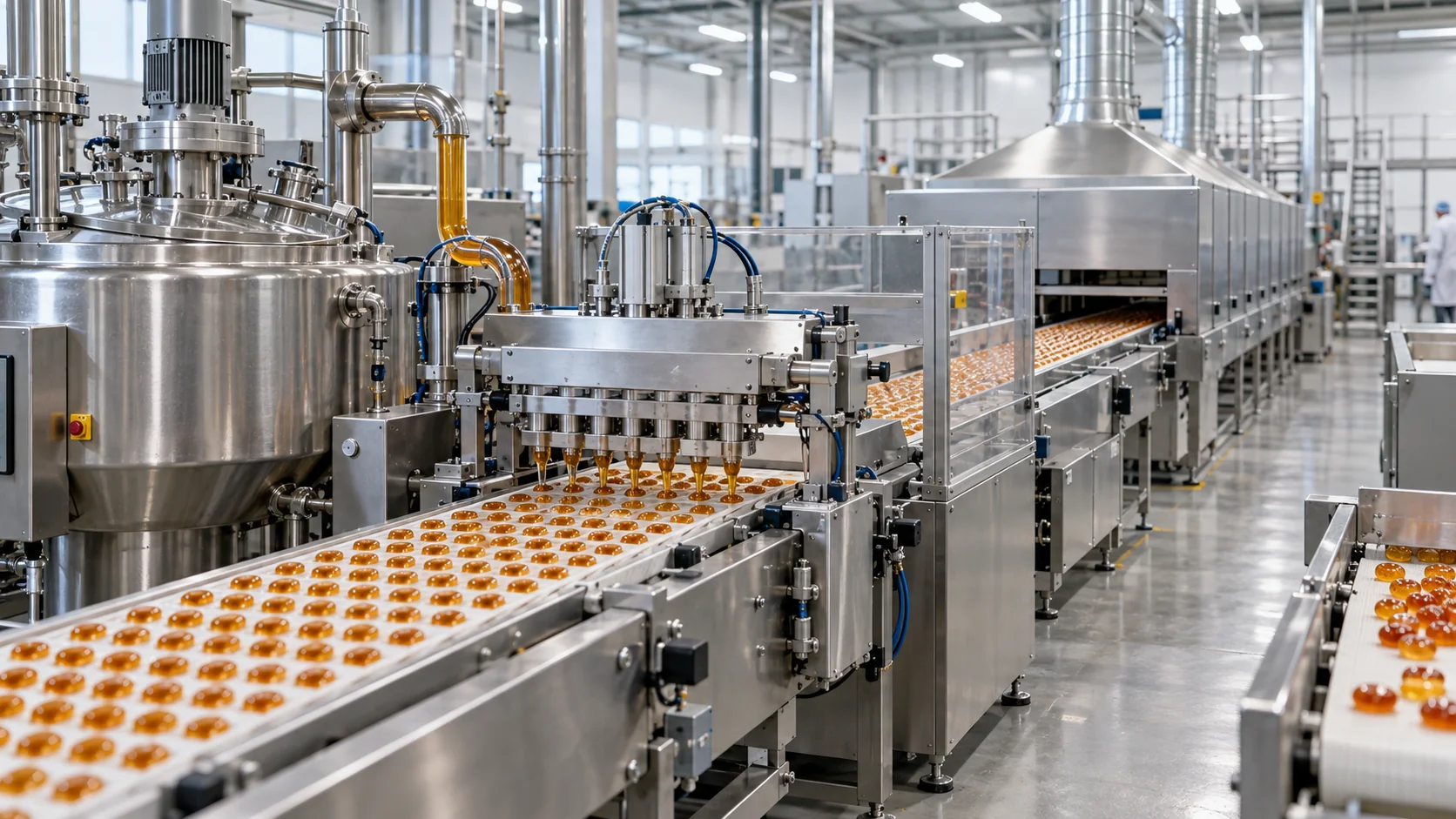
The starch mogul (or Mogul machine, impression depositing system) is the dominant industrial method for gummy production. The process runs continuously at high speed:
Mass cooking: Sugar, glucose syrup, and water are cooked to 107–112°C to drive off excess moisture and dissolve the sugar matrix fully. Separately, gelatin is pre-bloomed in cold water for 30–60 minutes (hydrated until swollen), then dissolved at 60–70°C. The gelatin solution is blended into the cooked sugar mass in a mixing vessel. Flavorings and colorings are added here; citric acid is held until as late as possible to minimize gelatin degradation.
Starch mold preparation: Long trays are filled with fine corn starch (or a starch/powdered sugar blend). A stamping board with metal bear impressions presses the shapes into the starch surface. The starch mold absorbs moisture from the deposited candy mass during setting, which helps firm the surface of the gummy bear.
Depositing: A depositor machine — fitted with a heated head and precision piston or gear-pump system — injects a precise volume of hot candy mass into each starch impression. Accuracy matters: a deviation of ±0.5g per piece causes weight nonconformance. Modern servo depositors achieve ±0.2g.
Setting and cooling: Loaded trays move through a temperature- and humidity-controlled cooling tunnel at 18–22°C for 24–48 hours. The gelatin network forms as the mass cools below its gel point; moisture migrates from the candy mass into the surrounding starch.
Demolding: A Mogul machine separates the set gummy bears from the starch. The starch is sieved, moisture-refreshed, and recirculated — a continuous-loop process on modern lines.
Finishing: Demolded gummy bears tumble in rotating drums with food-grade palm oil, sunflower oil, or carnauba wax. This creates the shiny surface, prevents pieces from sticking together, and provides a slight moisture barrier.
Quality control and packaging: Vision systems check shape and color; checkweighers verify individual piece weights; metal detectors screen every piece before packaging. Bags are filled by vertical form-fill-seal (VFFS) machines or weighed into bulk containers.
This YouTube walkthrough of how gummy bears are made shows the mogul line in action — the sheer speed of industrial deposition and demolding is striking even if you’re familiar with the theory.
Key Equipment in Gummy Bear Production
Industrial gummy bear production requires specialized confectionery machinery. The major equipment categories:
- Cooking kettles / continuous cookers: Jacketed batch vessels or continuous-flow tube cookers that bring the sugar mass to precise temperatures (107–112°C) with minimal color development or degradation.
- Gelatin dissolving tanks: Heated, agitated vessels that hydrate and dissolve gelatin without introducing air (air bubbles cause cloudiness and structural weakness in the finished gummy).
- Depositor machines: The precision core of the line. Heated heads deliver measured volumes into starch molds. Multi-color depositors can layer or swirl two masses in a single piece.
- Mogul machines (starch mogul lines): Automated systems that tray, stamp, convey, condition, and demold at rates from 200 to 1,200 trays per hour on modern high-speed lines.
- Cooling tunnels: Multi-zone conveyors with independent temperature and humidity control. Proper humidity management prevents surface condensation that would damage the starch mold.
- Tumbling and coating drums: Rotating stainless-steel drums where demolded gummies receive their oil or wax coating.
- Packaging lines: VFFS machines, flow wrappers, multi-head weighers for retail portion packs.
Ingredient Interactions in the Cooker
Ingredients behave differently in combination under heat and time. Key interactions operators manage:
- Citric acid + gelatin at high temperature: Acid hydrolyzes (cleaves) gelatin protein chains. Adding acid too early in a high-temperature cook weakens the final gel structure. Standard practice: add acid at the depositor head or after cooling to < 80°C.
- Color + pH: Many food colorings shift hue at acidic pH. A red gummy bear formulation with high citric acid may appear orange or pink rather than red unless the color is acid-stable. Formulators select colorings matched to the expected final pH.
- Glucose syrup viscosity + temperature: Viscosity drops sharply with temperature. If the candy mass cools even a few degrees in the depositor head, pump performance changes and deposit weight drifts. Heated depositor heads maintain a narrow temperature window — typically ±2°C — throughout a production run.
How Ingredients Affect Gummy Bear Texture and Flavor
Texture in a gummy bear is controlled primarily by gelatin percentage (firmness), gelatin bloom strength (elasticity), glucose-to-sucrose ratio (softness vs. brittleness), and final moisture content (chewiness vs. dryness).
Gelatin Concentration and Bloom Strength
These two variables are the primary levers for texture design:
- 6–7% gelatin at 200 bloom: Soft, yielding gummy — suitable for children’s products or premium “melt-away” formats. Bites cleanly without significant resistance.
- 8–9% gelatin at 200 bloom: Standard commercial gummy. Firm chew, holds shape at room temperature, rebounds after compression.
- 10%+ gelatin at 200–250 bloom: Chewy, dense, almost rubbery — used in sport/functional gummies designed to survive a gym bag at 35°C.
A 250-bloom gelatin at 7% produces a firmer gummy than a 150-bloom gelatin at 9% even though the higher-bloom version has less gelatin by weight. Bloom strength multiplied by concentration gives a better predictor of final gel firmness than concentration alone — and most industrial formulators characterize gelatin lots by bloom when setting up new batches.
The Glucose-to-Sucrose Ratio
Adjusting this ratio affects both texture and crystallization stability:
- Higher glucose syrup: Softer, more extensible gummy that resists moisture loss and stays pliable throughout shelf life. Preferred in warm/humid climates.
- Higher sucrose: Firmer, more rigid candy that can crystallize — showing up as white surface bloom — if stored in variable humidity.
Most commercial formulations run at glucose:sucrose ratios of 55:45 to 65:35. Beyond 70% glucose, the candy becomes too soft and sticky to demold cleanly; below 40% glucose, crystallization risk increases significantly in uncontrolled storage environments.
Water Activity and Shelf Life
Water activity (Aw) determines microbial stability and texture over time. Standard gummy bears target Aw 0.55–0.65:
- Below 0.55: The gummy dries out — hard, brittle, not shelf-friendly.
- 0.55–0.65: Stable zone. Low enough to inhibit mold; high enough to maintain chew.
- Above 0.65: Surface tackiness develops; mold growth becomes possible within weeks.
The cooking step drives the mass down to ~15–20% moisture. The 24–48 hour starch drying phase further reduces it to 6–10% in the finished candy. Packaging in moisture-barrier film (oriented polypropylene, PE-laminated foil) maintains the Aw within range through the shelf life.
Flavor Intensity, Acid Balance, and Retronasal Release
Flavor perception in gummy bears involves more than the flavoring percentage. Key dynamics:
- Citric acid enhances flavor release by stimulating salivation, which disperses volatile aromatic compounds across the palate. A gummy bear with low acid tastes “flat” even with the same flavoring percentage.
- Fat is absent in standard gummy formulas — this matters because fats carry and slowly release fat-soluble aroma compounds. In gummies, all flavor is water-soluble and releases rapidly on chewing, producing an intense but short-lived flavor burst.
- Gelatin concentration affects flavor perception: Higher gelatin levels slow the dissolution of the gummy bear in the mouth, which can make flavors seem more restrained even at identical flavoring percentages. High-gelatin sport gummies often need 10–20% more flavoring to achieve the same perceived intensity as a standard gummy.
Future Trends in Gummy Bear Manufacturing (2026+)
The gummy candy market is actively shifting toward plant-based, clean-label, and functional formulations, while manufacturing technology is advancing toward higher precision and lower energy consumption.
The global gummy candy market is substantial and growing, driven by both traditional confectionery demand and the expanding functional/supplement gummy category. Several trends are reshaping what a gummy bear is made of — and how it’s produced.
Plant-Based and Clean-Label Reformulation
Consumer pressure for ingredient transparency is forcing reformulation across the confectionery industry. For gummy bears specifically:
- Replacing synthetic colorings with natural alternatives (spirulina, elderberry, beet, carrot, turmeric). Natural colors are pH-sensitive, heat-sensitive, and 3–10x more expensive. Reformulation requires rethinking cooking temperatures, acid addition timing, and storage conditions.
- Replacing porcine gelatin in premium segments with pectin or hydrocolloid blends that approximate gelatin’s mouthfeel. No plant-based gelling system fully matches gelatin’s elastic, stretchy texture — this remains an active area of food-science R&D.
- Removing artificial flavorings in favor of concentrated natural fruit preparations. Flavor cost increases significantly, and natural flavors are typically less heat-stable than synthetic equivalents.
- Halal and kosher certification as standard rather than a niche offering — driven by global export requirements and ingredient traceability expectations.
Functional and Nutraceutical Gummy Bears
The supplement gummy market is arguably the most disruptive force in confectionery formulation today. Vitamins C, D3, B12, zinc, biotin, melatonin, CBD, and probiotics are all widely sold in gummy format — because consumers prefer gummies to capsules, especially for children’s vitamins.
The formulation challenges are significant:
- Vitamin C (ascorbic acid) degrades at cooking temperatures (> 80°C). Formulators use encapsulated vitamin C or low-temperature deposition.
- Probiotics are killed above 40°C. Functional probiotic gummies require cold-process depositing and refrigerated distribution — a fundamentally different manufacturing model.
- Mineral actives like zinc can interfere with gelatin gel strength, requiring bloom strength adjustment to compensate.
- Dosage accuracy: Active ingredients must be uniformly distributed in the candy mass and deposited accurately. A ±10% dosage variance on a vitamin D supplement gummy may be acceptable; a ±15% variance on a melatonin gummy raises regulatory concerns.
Production Technology: Precision, Efficiency, and Automation
Modern mogul lines integrate machine vision, AI-driven weight feedback, and servo-controlled depositors to reduce material waste and improve per-piece consistency. Equipment advances worth tracking:
- Servo depositors achieving ±0.2g piece weight versus ±1g on older pneumatic designs
- Multi-flavor depositors enabling two-color or filled gummies without a separate depositing pass
- Continuous cookers with heat recovery reducing steam consumption by 20–35% versus batch cooking
- Closed-loop starch conditioning systems recovering and recycling starch moisture energy
- In-line NIR (near-infrared) sensors measuring moisture content of the candy mass in real time before deposition — catching formulation drift before it affects product quality
| Trend | Consumer Driver | Formulation Impact | Equipment Impact |
|---|---|---|---|
| Plant-based gelling (pectin) | Vegan demand | pH-sensitive; different viscosity profile | Depositor head temperature tuning required |
| Natural colorings | Clean-label / EU regulation | Heat/pH sensitive; expensive | Tighter temperature control; faster changeovers |
| Functional actives | Health/supplement demand | Heat-sensitive actives → low-temp processing | Modified cooker designs; cold-addition systems |
| Sugar-free polyols | Diabetic, keto market | Different hygroscopicity; laxative risk at high dose | Drying parameters adjust; packaging upgrade needed |
| Precision deposition | Waste reduction, label compliance | Viscosity must be tightly controlled | Servo depositor upgrades; vision inspection |
Frequently Asked Questions About Gummy Bear Ingredients
Are gummy bears made from pig skin?
Yes — standard gelatin-based gummy bears use porcine gelatin, sourced from the skin and bones of pigs. During gelatin manufacturing, pig skin and bones are cleaned, acid- or alkali-treated to break down collagen crosslinks, then hot-water extracted to yield the gelatin solution. This makes conventional gummy bears unsuitable for those following halal, kosher, or vegan/vegetarian diets. Halal-certified gummies use beef gelatin from cattle slaughtered according to halal requirements; vegan gummies replace gelatin with pectin or agar.
Are Haribo gummy bears artificial?
Haribo gummy bears contain a mix of natural and artificial ingredients, with formulations varying by country. Original Goldbären uses natural flavorings (fruit concentrates) for the primary flavor notes, but synthetic colorings appear in some regional formulations. In European markets, Haribo has progressively shifted toward natural colorings to avoid the EU mandatory warning label on products containing Sunset Yellow (E110), Quinoline Yellow (E104), Carmoisine (E122), Allura Red (E129), Tartrazine (E102), and Ponceau 4R (E124). Check the specific country-market label, as ingredient lists differ.
What makes gummy bears chewy?
The chewiness comes from the gelatin protein network formed when the cooked candy mass cools below approximately 35°C. Gelatin proteins partially denature during cooking, then re-associate into a three-dimensional network on cooling — trapping the sugar-water solution and producing an elastic, rubbery structure. Gelatin percentage (more = firmer), bloom strength (higher = firmer at same percentage), and final moisture content (lower = drier and tougher) all control the chew level. Industrial formulators tune these three variables independently for each product.
Can gummy bears be made without gelatin?
Yes — vegan gummy bears use pectin, agar-agar, or hydrocolloid blends instead of gelatin. The texture differs noticeably: pectin gummies are firmer and more brittle, breaking cleanly rather than stretching; agar gummies are even firmer with a slightly grainy texture. Plant-based gelling agents are also more sensitive to processing conditions — pectin is particularly affected by pH and calcium ion concentration. No current plant-based system fully replicates gelatin’s elastic, stretchy mouthfeel, though ongoing R&D continues to narrow the gap.
How many calories are in gummy bears?
A standard 10-piece serving of gummy bears (approximately 38–40g) contains 130–140 calories, almost entirely from sugar. There is negligible fat and minimal protein. The high sugar content (sucrose + glucose syrup) accounts for essentially all caloric value. Sugar-free gummy bears using polyols like maltitol run 90–115 calories per equivalent serving, since polyols yield approximately 2.0–2.5 kcal/g versus 4 kcal/g for sucrose.
Are gummy bears gluten-free?
Most commercial gummy bears are naturally gluten-free, since gelatin, sucrose, glucose syrup, and citric acid contain no gluten proteins. However, glucose syrup derived from wheat starch (common in some European formulations) may contain trace gluten, and shared-facility cross-contamination is a real risk. Consumers with celiac disease should look for certified gluten-free labeling rather than relying on a visual ingredient check.
What is the shelf life of gummy bears?
Commercially produced gummy bears have a typical shelf life of 12–24 months at room temperature in sealed packaging. The high sugar concentration and low water activity (Aw 0.55–0.65) prevent microbial growth without refrigeration. Primary quality degradation over time is textural: gummies gradually harden as they lose residual moisture, or become sticky if packaging moisture-barrier fails. High temperature and humidity accelerate both mechanisms. Keep gummy bears in a cool, dry place and consume within a few months of opening to maintain optimal texture.
Conclusion
A gummy bear is, at its core, a precisely engineered sugar-gelatin system where every ingredient plays a defined role. Gelatin provides the elastic backbone; sugar and glucose syrup build the sweet, stable matrix; citric acid sharpens flavor; colorings and flavorings deliver the sensory identity. Change any one variable — gelatin percentage, bloom strength, glucose-to-sucrose ratio, acid level — and the texture, flavor, and shelf life all shift in predictable but interacting ways.
For manufacturers, the decade ahead is defined by reformulation pressure: replacing porcine gelatin with plant-based alternatives, swapping synthetic colorings for natural sources, and integrating functional actives that conflict with traditional high-temperature cooking processes. None of these transitions are simple, but the market demand is clear. The gummy bear format — flexible, portion-controlled, texturally appealing — will remain a growth category precisely because it adapts to whatever ingredients consumers demand next. Understanding what a gummy bear is made of today is the foundation for understanding what it will be made of tomorrow.
Related Articles
- What Are Gummy Bears Made Of? The Full Ingredient Breakdown
- Original Skittles Gluten Free: Full Ingredient & Celiac Guide 2026
- What Are Marshmallows Made Out Of? The Complete Ingredient & Manufacturing Guide
- Gummy Bear Flavors: The Complete Brand-by-Brand Guide (Plus How They Are Made)
- Gummy Candy Production Line
- Starch-Free Gummy Depositing Machine
- Are Skittles Gluten Free? Complete Guide 2026