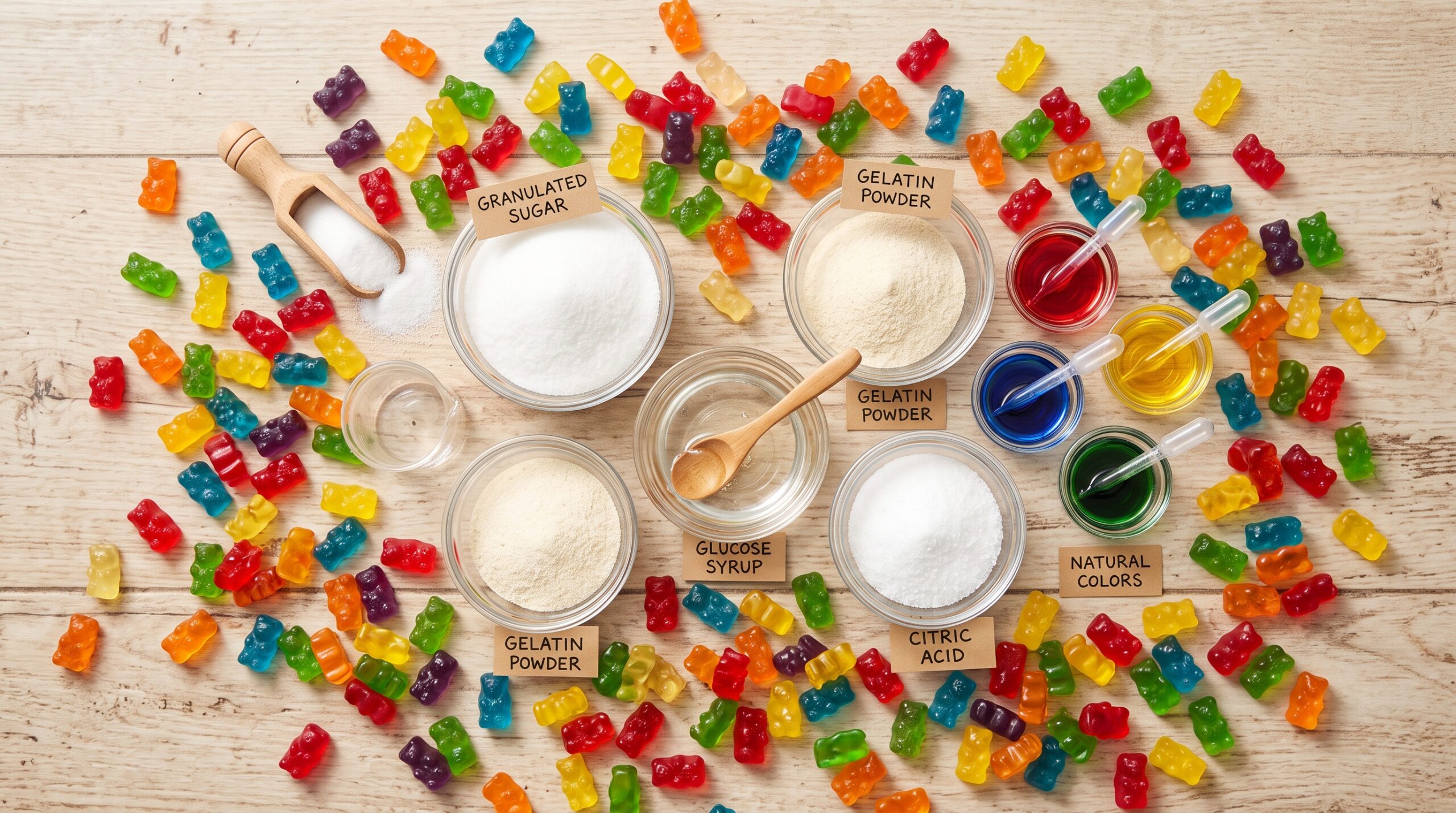
Ever wonder why a traditional old fashioned lollipop has that perfect, glass-like snap? Others can be gritty or sticky. The answer isn’t magic—it’s chemistry and physics. This isn’t a trip down memory lane. It’s a deep dive into the science of candy making.
This article breaks down the technical side of old fashioned lollipops. We’ll examine everything from how sugar molecules behave to the physics of the final product. Understanding this science helps you appreciate their unique quality. You might even recreate them with precision.
We’ll explore the core ingredients and their chemical roles. You’ll master the critical cooking stages. We’ll analyze what makes a perfect lollipop and compare old-school techniques with modern production methods.
A Technical Definition
To analyze the old fashioned lollipop, we need a technical starting point. We define it by its distinct physical and chemical properties, not its history. This approach moves beyond vague nostalgia. It gives us concrete qualities to examine.
Core Composition
The beauty of a traditional lollipop lies in its simple formula. It’s mostly sucrose (table sugar), water, and a crucial “interfering agent.”
This agent is usually an acid like cream of tartar or an invert sugar like corn syrup. Each ingredient has a precise chemical job. Sucrose provides structure. Water acts as the initial solvent. The interfering agent controls the final texture.
Physical Characteristics
An old fashioned lollipop has a hard, non-sticky texture. It makes a clean “snap” when broken. This is the hallmark of reaching the proper hard-crack stage during cooking.
It looks crystal clear. This glass-like appearance shows a non-crystalline, or amorphous, sugar structure. A cloudy or opaque lollipop means crystallization wasn’t controlled properly.
The flavor is often simple and clear. The flavorings must survive extremely high temperatures. That’s why essential oils and certain robust extracts are common choices.
Here are the key technical benchmarks:
- Ingredient Purity: Sucrose, Water, and an Interfering Agent.
- Structural State: Amorphous Solid (Sugar Glass).
- Thermal Benchmark: Achieves “Hard Crack” Stage (~300-310°F / 149-154°C).
- Sensory Profile: Brittle texture with a non-gritty, perfectly smooth mouthfeel.
The Chemistry of Sugar
Candy making is applied chemistry. To create a flawless old fashioned lollipop, you must understand how sugar molecules behave. This is the foundation of all hard candy.
Sucrose and Water
The process starts by dissolving sucrose in water. This creates a simple sugar solution. From here, the goal is to boil off nearly all the water while carefully managing the behavior of the remaining sucrose molecules.
The Role of “Doctoring”
The main challenge in making hard candy is preventing unwanted crystallization. As water evaporates and sugar concentration increases, sucrose molecules naturally want to organize back into a rigid, ordered crystal lattice.
If this happens, you get grainy, opaque, and structurally weak candy. To prevent this, we use “doctoring”—adding an interfering agent.
Sugar inversion becomes critical here. Adding an acid like cream of tartar and applying heat breaks down some sucrose molecules into their two components: glucose and fructose. This is called inversion.
Adding corn syrup, which already contains glucose, achieves a similar effect. These “interfering” glucose and fructose molecules get in the way of sucrose molecules. They disrupt the neat lattice structure that sucrose tries to form. This prevents crystallization and ensures a clear, glass-like final product.
The State of Supersaturation
As we boil the solution, water escapes as steam. The ratio of sugar to water increases dramatically. The solution becomes supersaturated—it holds more dissolved sugar than it normally could at that temperature.
This unstable, supersaturated state is essential. It allows the liquid to transform into a solid, glassy state upon cooling rather than remaining a thick syrup.
The Science of the Cook
Chemical theory meets practice at the stovetop. Mastering the cooking process means controlling temperature and preventing premature crystallization. It’s a scientific procedure disguised as culinary art.
A Technical Guide
Wir gehen dies mit methodischer Präzision an. Jeder Schritt verwaltet den Zustand der Zuckerlösung.
- Auflösen: Zuerst Zucker, Wasser und Maissirup (oder Weinstein) sanft erhitzen. Rühren, bis jedes Zuckerkristall gelöst ist. Dies muss geschehen, bevor die Lösung kocht.
- Kristallisation verhindern: Selbst ein einziges ungelöstes Kristall am Topfrand kann eine Kettenreaktion der Kristallisation auslösen und die ganze Charge ruinieren. Das Abwischen der Innenseiten mit einem nassen Backpinsel entfernt lose Kristalle.
- Kochen: Sobald die Lösung klar ist und kocht, das Rühren vollständig einstellen. Rühren fördert die Kristallbildung. Ein kalibriertes Zuckerthermometer ist von nun an Ihr einziger Leitfaden.
- Erreichen des Hartbruchstadiums: Beobachten Sie, wie die Temperatur die Stadien Weicher Ball, Fester Ball und Harter Ball durchläuft. Ihr Ziel ist das Hartbruchstadium – ein sehr spezifisches und unversöhnliches Temperaturfenster.
Temperatur als Kontrolle
Die Temperatur ist die wichtigste Variable. Sie misst direkt die Zuckerkonzentration im Sirup. Mit steigender Temperatur nimmt der Wassergehalt ab.
Stufe | Temperatur (°F) | Temperatur (°C) | Technische Beschreibung |
Weicher Ball | 235-245°F | 112-116°C | Bildet einen weichen, formbaren Ball |
Feste Kugel | 245-250°F | 118-120°C | Bildet eine feste Kugel; für Karamell |
Harte Kugel | 250-265°F | 121-129°C | Bildet eine harte, aber noch biegsame Kugel |
Harter Bruch | 300-310°F | 149-154°C | Es bilden sich spröde Fäden; Wassergehalt <1% |
Im Stadium des harten Bruchs erreicht die Zuckerkonzentration etwa 99%. Dieser extrem niedrige Feuchtigkeitsgehalt erzeugt die spröde, nicht klebrige und glasige Textur eines echten altmodischen Lutschers. Ein paar Grad zu niedrig, und der Lutscher wird klebrig. Ein paar Grad zu hoch, und der Zucker beginnt zu karamellisieren und wird bernsteinfarben.
Die Physik des Knackens
Ein perfekter altmodischer Lutscher ist nicht nur Süßigkeit – er ist essbares Glas. Das Verständnis seines physikalischen Zustands offenbart eine faszinierende Verbindung zwischen Küche und Materialwissenschaft. Es erklärt den Ursprung seines charakteristischen „Knackens“.
Kein Kristall, sondern ein Glas
Es gibt einen fundamentalen Unterschied zwischen einem kristallinen Festkörper und einem amorphen Festkörper. Ein kristalliner Festkörper, wie Kandiszucker oder ein Zuckerwürfel, hat eine hochgeordnete, sich wiederholende Molekularstruktur.
Ein amorpher Festkörper oder Glas hat eine ungeordnete, zufällige Molekularstruktur. Die Moleküle sind ungeordnet durcheinandergewürfelt, ohne langreichweitige Ordnung. Ein Lutscher teilt diese Struktur mit Fensterglas.
Think of a crowded room. In a crystalline solid, people are arranged in neat rows and columns. In an amorphous solid, they’re frozen in random positions they held when the music suddenly stopped.
The Role of Rapid Cooling
Cooling the molten sugar syrup quickly is crucial to achieving this glassy state. This process is called vitrification.
By pouring hot syrup onto a cool surface or into molds, we lower its temperature so rapidly that the disordered sugar molecules are “frozen” in place. They don’t have time or energy to arrange themselves into an ordered crystalline lattice.
Glass Transition Temperature
This brings us to the Glass Transition Temperature (Tg). This isn’t a melting point. It’s the specific temperature below which a liquid-like, disordered structure becomes a rigid, brittle solid.
For hard candy, the Tg is well above room temperature. This high Tg is why a lollipop is hard, solid, and glassy when you hold it. A candy with a lower Tg, due to higher water content, would be soft and chewy like caramel.
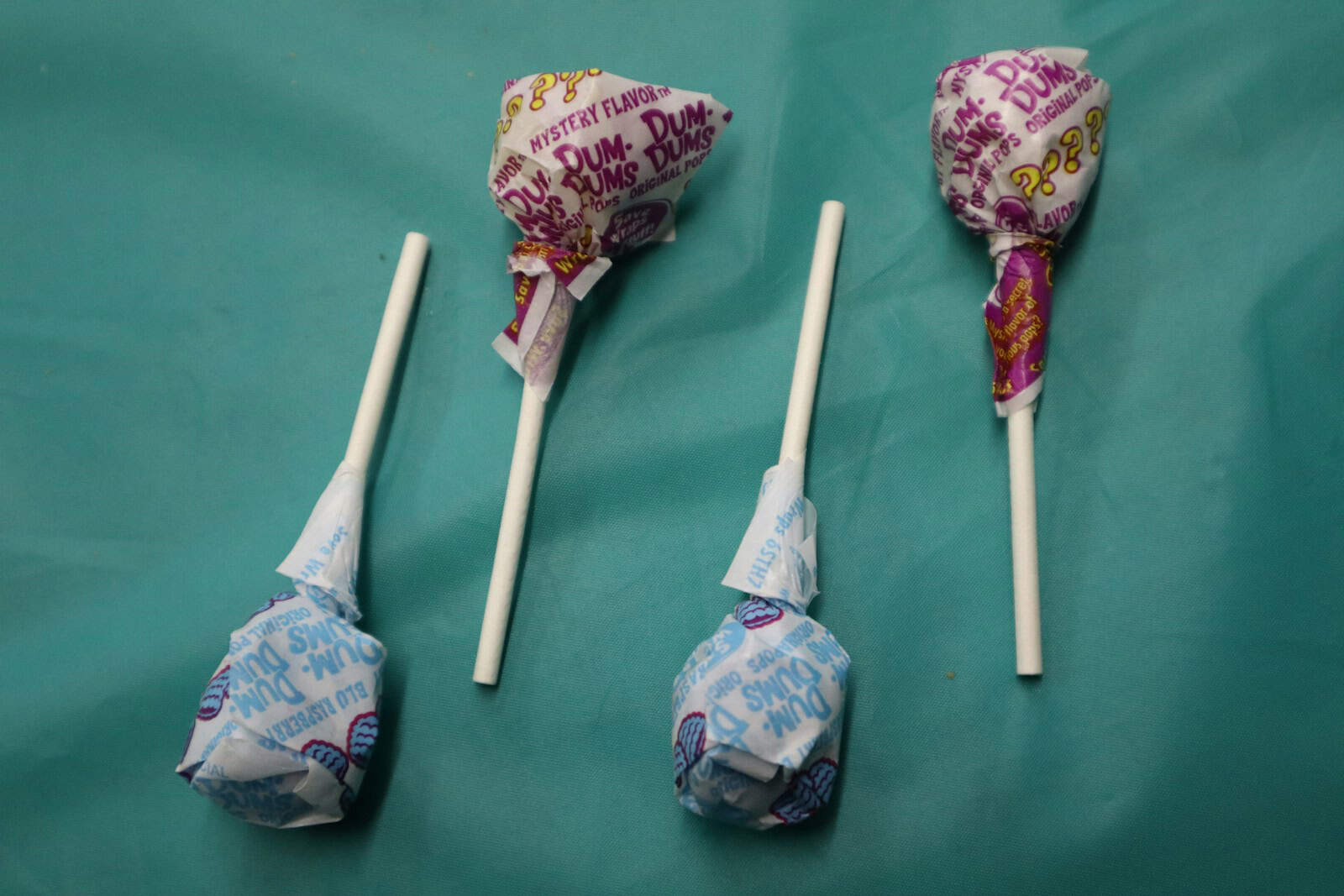
A Sensory Breakdown
Why do old fashioned lollipops feel, taste, and look the way they do? The answer to every sensory question lies in the chemistry and physics we’ve explored. The human experience is a direct result of material science.
Mouthfeel and Texture
The perfectly smooth surface of a lollipop is a direct result of its amorphous glass structure. There are no crystal facets for the tongue to feel.
This is why a well-made lollipop feels slick and seamless. A poorly made one has a “gritty” or “sandy” texture. That grittiness is the sensation of sugar crystals on your palate. The clean snap when you bite it is the fracture of a brittle, glassy material.
Flavor Science
The extremely high cooking temperature of 300-310°F places significant demands on flavorings. Many delicate flavor compounds can’t survive this heat. They degrade or “bake out,” losing their potency.
This is why natural essential oils—peppermint, lemon, or orange oil—are classic choices. They’re highly concentrated and relatively heat-stable. This contrasts with some synthetic flavor compounds that are more volatile. This requirement for heat stability often results in the “cleaner” and more direct flavor profile characteristic of traditional lollipops.
The Visual Appeal
The jewel-like clarity of a lollipop is also a product of its physics. In a non-crystalline structure, there are no crystal boundaries to scatter and reflect light.
Light passes directly through the candy, much like it passes through a window pane. This gives the lollipop its transparent, brilliant appearance. Any cloudiness is a tell-tale sign of unwanted microcrystals scattering the light.
Alte vs. Neue Produktion
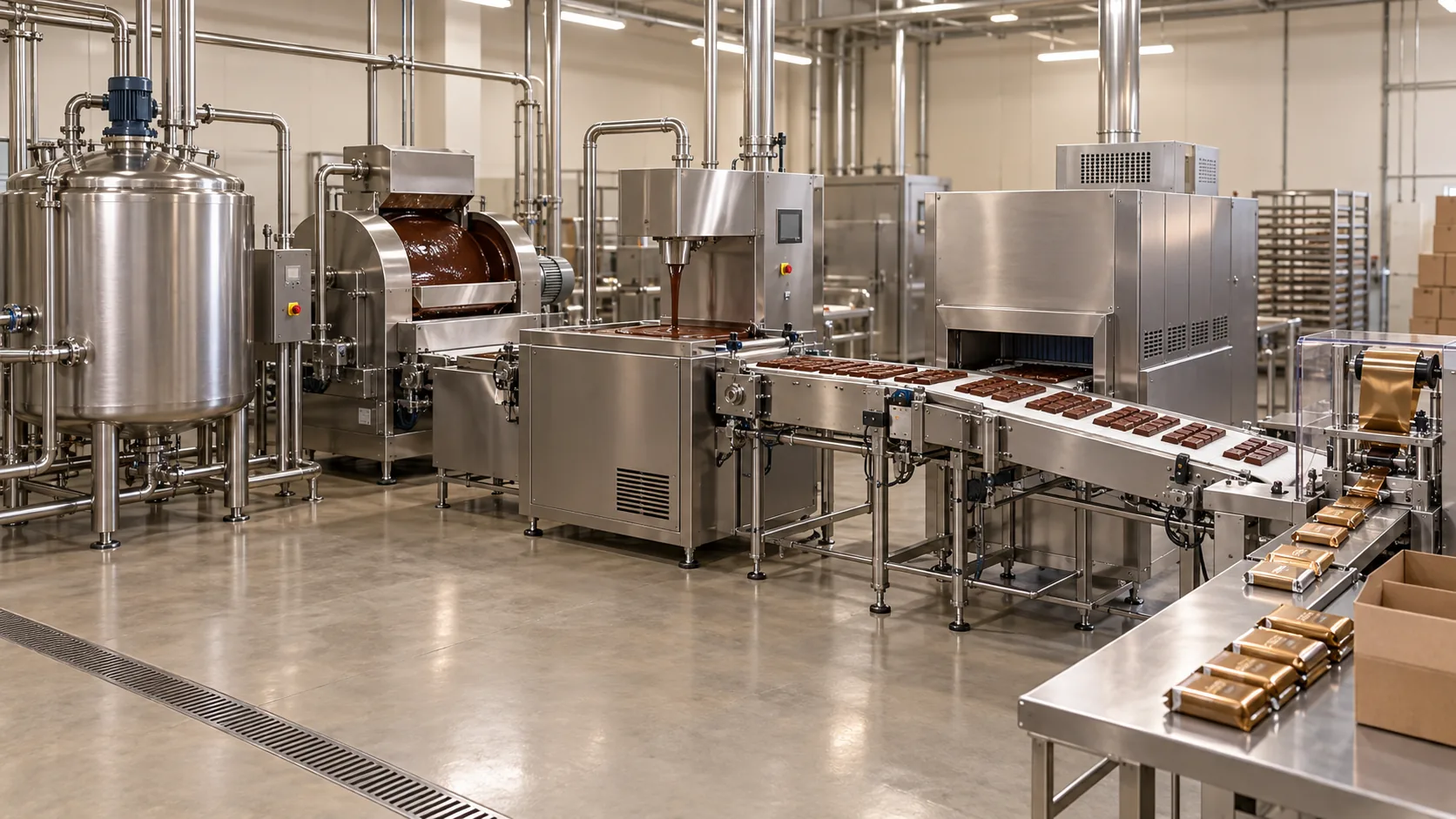
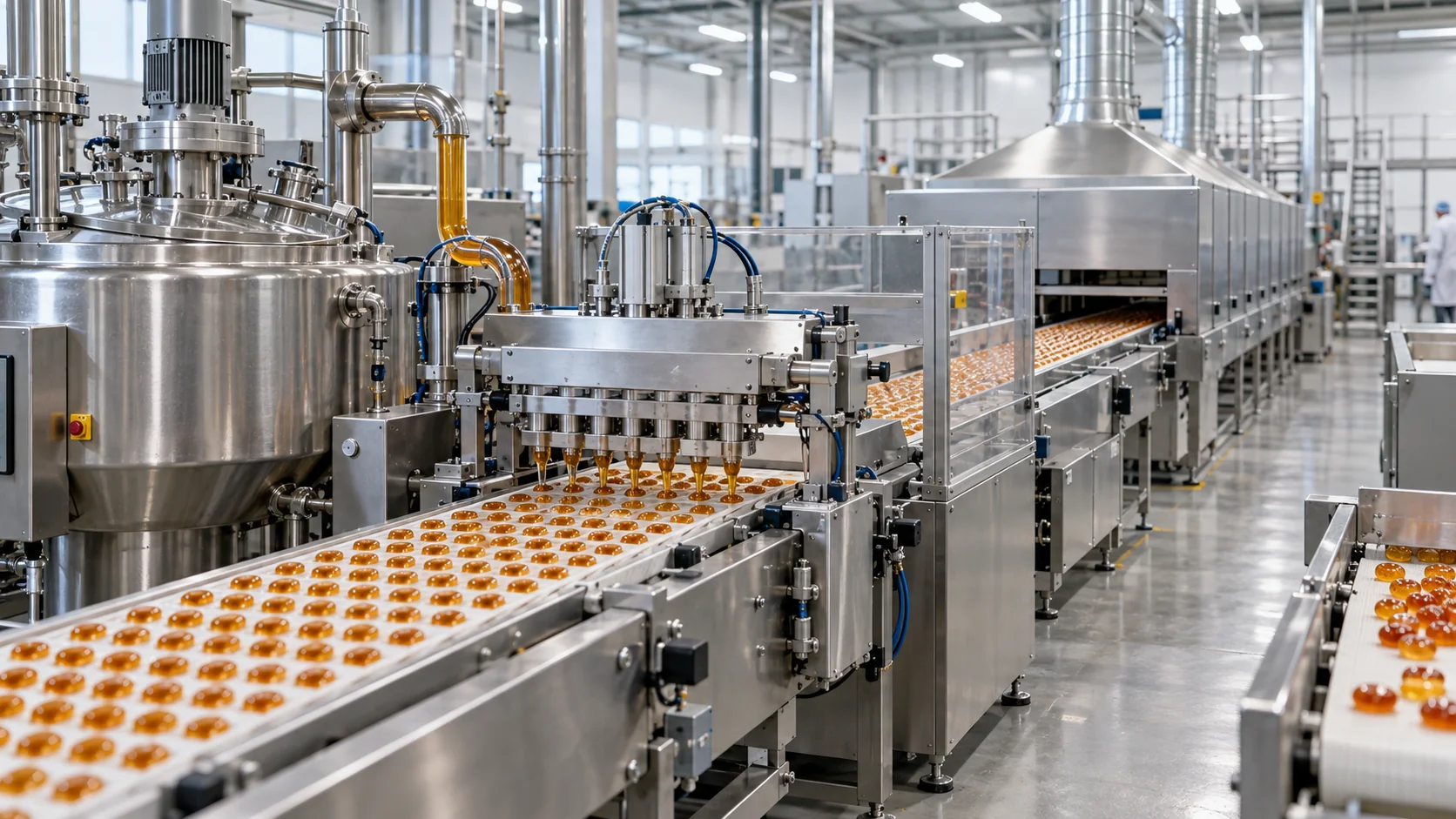
Die Prinzipien der Zuckerkunde sind universell. Doch ihre Anwendung variiert dramatisch zwischen Kleinserien-Handwerkern und großen Industriefabriken. Das Verständnis dieser Unterschiede beleuchtet die technischen Kompromisse, die in der modernen Produktion eingegangen werden.
Merkmal | Traditionelle / „Altmodische“ Methode | Moderne Industriemethode |
Kochen | Kleinserienfertigung, Kochen im offenen Kessel. Basiert auf geschickter Beobachtung und präziser Temperaturkontrolle. | Kontinuierliche Vakuumkocher. Schnell, effizient und hochautomatisiert. |
Ingredients | Einfach: Zucker, Wasser, Maissirup/Säure. Natürliche Aromen sind üblich. | Enthält oft eine größere Auswahl an Glukosesirupen, künstlichen Aromen, Farbstoffen und Konservierungsmitteln. |
Kristallisationskontrolle | Primär durch „Behandlung“ mit Säure/Invertzucker und sorgfältiger Technik gesteuert. | Präzise formulierte Sirupe und Zusatzstoffe gewährleisten Konsistenz in großem Maßstab. |
Forming | Handgießen, Formen oder Gestalten. Langsamerer Prozess. | Hochgeschwindigkeits- Abfüll- oder Stanzmaschinen. |
Resultierende Textur | Kann aufgrund sorgfältiger Kontrolle eine überragende Klarheit und einen sehr spröden „Bruch“ erreichen. | Sehr konsistent, kann aber eher auf Haltbarkeit (weniger spröde) als auf eine perfekte Glastextur ausgelegt sein. |
Moderne Methoden bieten unglaubliche Effizienz und Konsistenz. Doch die traditionelle Methode, wenn sie mit Geschick ausgeführt wird, ermöglicht ein Maß an Präzision, das zu einer überragenden glasartigen Textur führen kann.
Fazit
The unique qualities of an old fashioned lollipop aren’t accidental. They’re the direct and deliberate result of controlled chemistry and physics.
We’ve seen how preventing crystallization, precisely achieving the hard-crack stage, and forcing rapid cooling are the pillars of its creation. These steps work together to transform simple sugar syrup into stable, edible glass.
To appreciate a true old fashioned lollipop is to appreciate a masterful application of science. That perfect snap, the smooth texture, and the crystal-clear appearance are a testament to precise control of its material state. It’s a simple pleasure born from beautifully complex principles.
Referenzlinks:
- American Chemical Society – Sweet Science: Having Fun with Candy Chemistry https://www.acs.org/acs-webinars/library/candy-chemistry.html
- Journal of Chemical Education – Chemistry of Candy: A Sweet Approach to Teaching https://pubs.acs.org/doi/10.1021/acs.jchemed.7b00739
- UCSF SugarScience – Sweet science. Unsweetened truths. https://sugarscience.ucsf.edu/
- Chemical Safety Facts – The Science of Candy: Sugar Chemistry https://www.chemicalsafetyfacts.org/health-and-safety/the-science-of-candy-sugar-chemistry/
- Compound Interest – National Chemistry Week: The Chemistry of Candy https://www.compoundchem.com/2014/10/21/chemistryofcandy/
- AACT (American Association of Chemistry Teachers) – ChemClub Candy https://teachchemistry.org/chemclub/themes/candy
- Institute of Culinary Education – Sugar Science: The Art of Candy Making https://www.ice.edu/blog/sugar-science
- TeachEngineering – Rock Candy Your Body: Exploring Crystallization https://www.teachengineering.org/activities/view/uoh_crystals_lesson01_activity1
- Science Buddies – Growing Rock Candy Crystals https://www.sciencebuddies.org/science-fair-projects/project-ideas/FoodSci_p005/cooking-food-science/growing-rock-candy-crystals
- Carolina Knowledge – Rock Candy: An Edible Study of Crystallization https://knowledge.carolina.com/discipline/physical-science/chemistry/rock-candy-an-edible-study-of-crystallization/