Coffee Boba: The Ultimate Guide to Bubble Coffee
Coffee boba is iced coffee topped with chewy tapioca or popping boba pearls, blending café flavor with bubble tea texture in one drink.
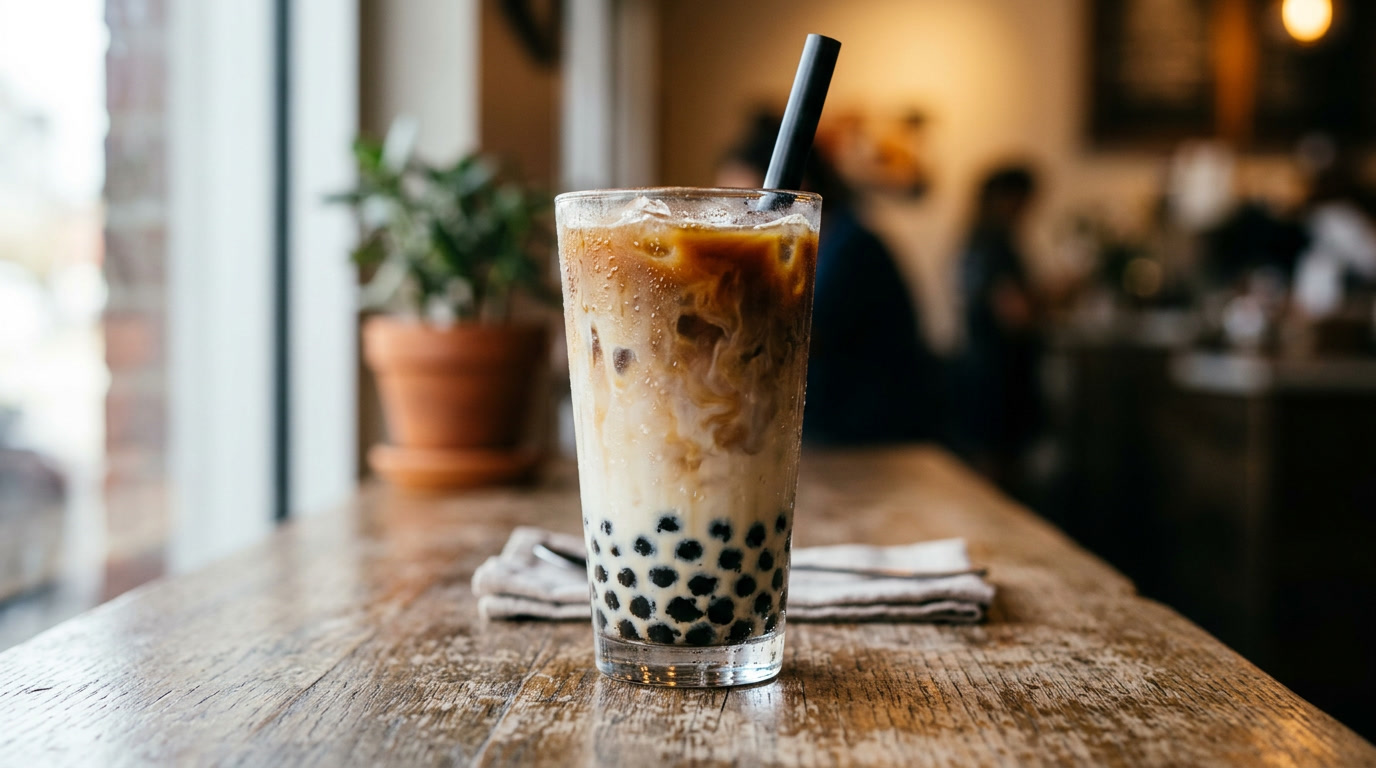
You’ve had your morning coffee. You’ve had bubble tea on a hot afternoon. But when someone hands you a drink that combines cold brew depth with the satisfying chew of boba pearls — something shifts. Coffee boba sits at the intersection of two of the world’s most popular drink cultures, and in 2025 it’s no longer a novelty. It’s a menu staple at thousands of cafés, a viral recipe trend, and a growing category in the global beverage industry.
This guide covers everything: what coffee boba actually is, how the different types compare, step-by-step home recipes, flavor combinations worth trying, where to find it, and the science behind why the texture contrast works so well. Whether you’re a home barista experimenting for the first time or an F&B operator building a boba menu, you’ll leave with a clear picture.
What Is Coffee Boba?
Coffee boba — also called bubble coffee — is a beverage that combines brewed coffee (cold brew, espresso, drip, or instant) with boba pearls (tapioca balls or popping boba) and typically milk or cream, served over ice.
The defining feature is the textural contrast: the silky, cold coffee meets the chewy or juice-bursting pearls at the bottom. Unlike standard milk tea bubble tea, coffee boba uses coffee as its base rather than tea, delivering a noticeably higher caffeine punch and a deeper, slightly bitter flavor profile that balances the sweetness of the pearls.
How Coffee Boba Differs From Regular Bubble Tea
Regular bubble tea — invented in Taiwan in the early 1980s according to Britannica’s overview of bubble tea history — uses black or green tea as its base. Coffee boba swaps that tea for coffee, which changes three things:
- Caffeine content: A 16 oz coffee boba can carry 90–130 mg of caffeine (from the coffee base alone), compared to 30–80 mg in a standard milk tea boba drink.
- Flavor profile: Coffee’s roasty, bitter notes contrast more sharply with sweet pearls, creating a more complex flavor.
- Versatility: Coffee works with both tapioca pearls and popping boba, and pairs with a wider range of syrups — from hazelnut to vanilla to brown sugar.
The Origin of Coffee in Boba Culture
Boba culture started in Taiwan, but coffee boba emerged later, driven by Western café culture meeting East Asian bubble tea shops. The hybrid gained mainstream momentum around 2018–2020 when TikTok and Instagram turned boba aesthetics viral. Today you’ll find coffee boba at independent cafés in Los Angeles, London, and Shanghai — and in home kitchens worldwide.
Types of Coffee Boba
Not all coffee boba is the same. The type of coffee base, the type of boba pearl, and the milk ratio all produce dramatically different drinks. Here’s how the categories break down.
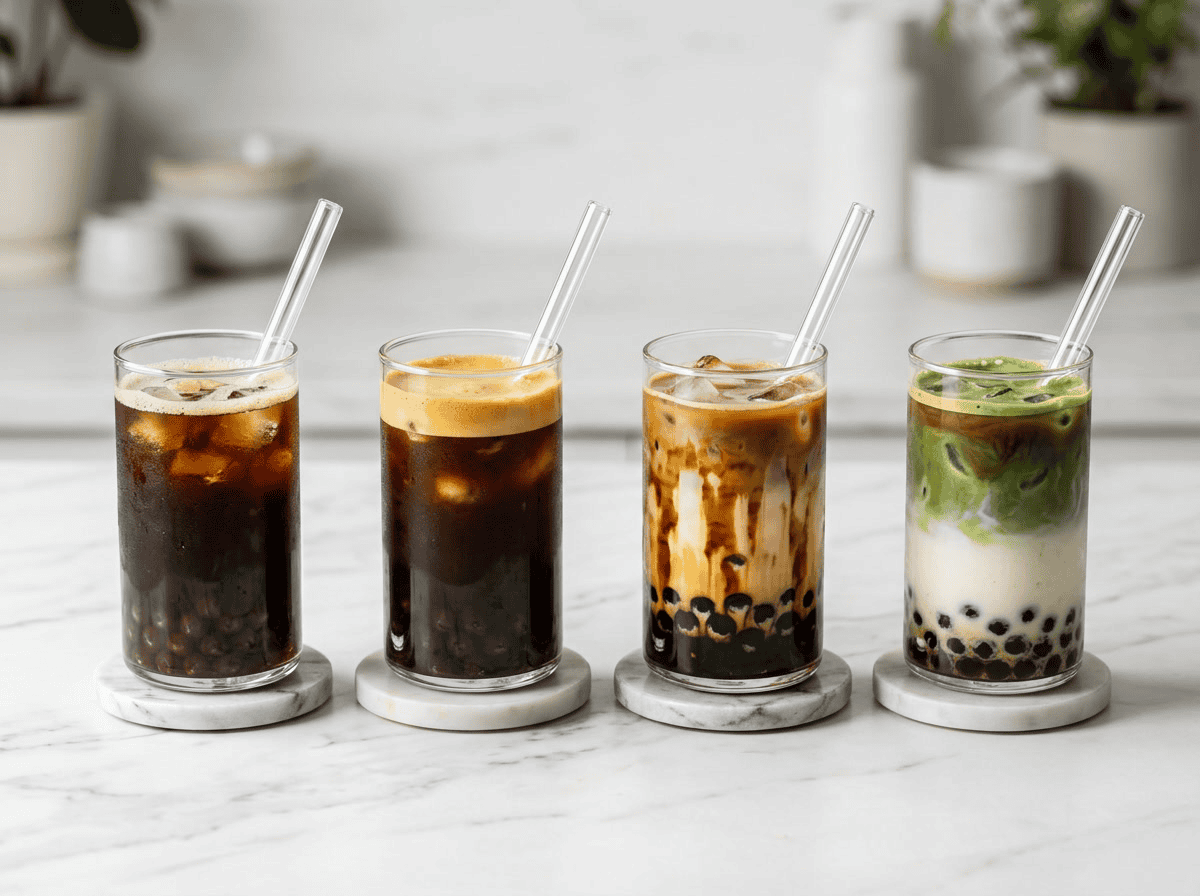
By Coffee Base
| Coffee Base | Flavor Profile | Best For |
|---|---|---|
| Cold brew | Smooth, low-acid, mellow | Everyday drinking, sensitive stomachs |
| Espresso shot | Intense, bold, crema-topped | Quick preparation, café-style |
| Drip / pour-over | Nuanced, light-to-medium body | Pour-over enthusiasts, specialty coffee |
| Instant coffee | Convenient, consistent | Home recipes, travel |
| Dalgona (whipped coffee) | Frothy, rich, striking visual | Instagram-worthy drinks |
Cold brew coffee boba is the most popular base. The 12–24 hour cold steeping process removes harsh acids while concentrating flavor, making it ideal for a drink that’s already sweet from the pearls. Cold brew typically runs 150–200 mg of caffeine per 16 oz — pair it with lightly sweetened tapioca pearls and the balance is close to perfect.
Espresso boba is the café professional’s version. Pull a double shot (60 ml), pour it over a full glass of ice and milk, then add pearls. The speed (30 seconds vs 24 hours) makes it practical for high-volume boba cafés. The flavor is bolder and slightly bitter, which cuts through creamy oat milk particularly well.
By Boba Pearl Type
| Pearl Type | Texture | Flavor | Best Pairing |
|---|---|---|---|
| Black tapioca pearls | Chewy, dense | Lightly sweet, neutral | Any coffee base |
| Popping boba | Bursts of juice | Fruity (mango, strawberry, passion fruit) | Cold brew, iced latte |
| White/clear tapioca | Softer chew | Very mild | Lighter coffee bases |
| Brown sugar boba | Chewy with caramel notes | Sweet, caramel | Milk-heavy coffee drinks |
| Konjac pearls | Firm, gel-like | Neutral | Low-calorie coffee drinks |
Popping boba — filled with fruit juice that bursts when bitten — are particularly interesting in coffee boba because the juice filling provides a flavor contrast to coffee’s bitterness. A passion fruit popping boba in a cold brew coffee creates an almost dessert-like experience. Popping boba is produced using a process called spherification: a flavored liquid center is encased in a thin alginate membrane. Commercial-scale production uses specialized popping boba machines that maintain precise temperature and concentration control throughout the spherification process.
Brown sugar boba has become the signature pearl for coffee boba in Southeast Asian cafés. The pearls are cooked in brown sugar syrup until they achieve a caramel glaze, then streaked along the glass wall before coffee and milk are poured over — creating the now-iconic “tiger milk coffee” visual.
By Milk Type
Whole milk adds creaminess and balances acidity. Oat milk has become the dominant non-dairy choice in specialty coffee, and it pairs equally well with boba. Coconut milk adds tropical sweetness that works especially well with popping boba. Condensed milk is the traditional Southeast Asian choice — sweet, rich, and authentic.
Coffee Boba Flavors: A Complete Guide
Coffee boba flavors extend far beyond plain cold brew and tapioca. Here is the landscape of what’s actually being served and what works.
Classic Coffee Boba Flavors
- Brown sugar coffee boba — the most-ordered variety globally; caramel sweetness complements coffee’s bitterness
- Vanilla coffee boba — vanilla syrup plus tapioca pearls in an iced latte base; approachable and crowd-pleasing
- Hazelnut coffee boba — Nutella-adjacent flavor profile, popular at independent cafés in Europe and North America
- Caramel coffee boba — similar to brown sugar but lighter; works especially well with cold brew
Specialty and Trending Flavors (2025)
- Matcha coffee boba (Dirty Matcha) — a shot of espresso poured into a matcha latte base with tapioca pearls; earthy, complex, visually striking
- Taro coffee boba — purple taro adds a sweet, nutty flavor; works well as a layered drink with cold brew on top
- Lavender coffee boba — lavender syrup softens coffee’s edge; popular in artisan cafés in Portland, Melbourne, and Seoul
- Pistachio coffee boba — emerged strongly in 2024–2025 following pistachio coffee viral trends; rich and slightly savory
- Coconut coffee boba — cold brew base with coconut cream and popping boba; tropical and refreshing
Seasonal Flavors Worth Knowing
| Season | Flavor | Pearl Pairing |
|---|---|---|
| Spring | Lavender, cherry blossom | Clear tapioca |
| Summer | Mango, passion fruit | Popping boba |
| Fall | Pumpkin spice, brown sugar | Black tapioca |
| Winter | Peppermint mocha, toffee | Brown sugar boba |
How to Make Coffee Boba at Home
Making coffee boba at home requires only four core components: coffee, boba pearls, milk, and sweetener. Here is the full method for both tapioca and popping boba versions.
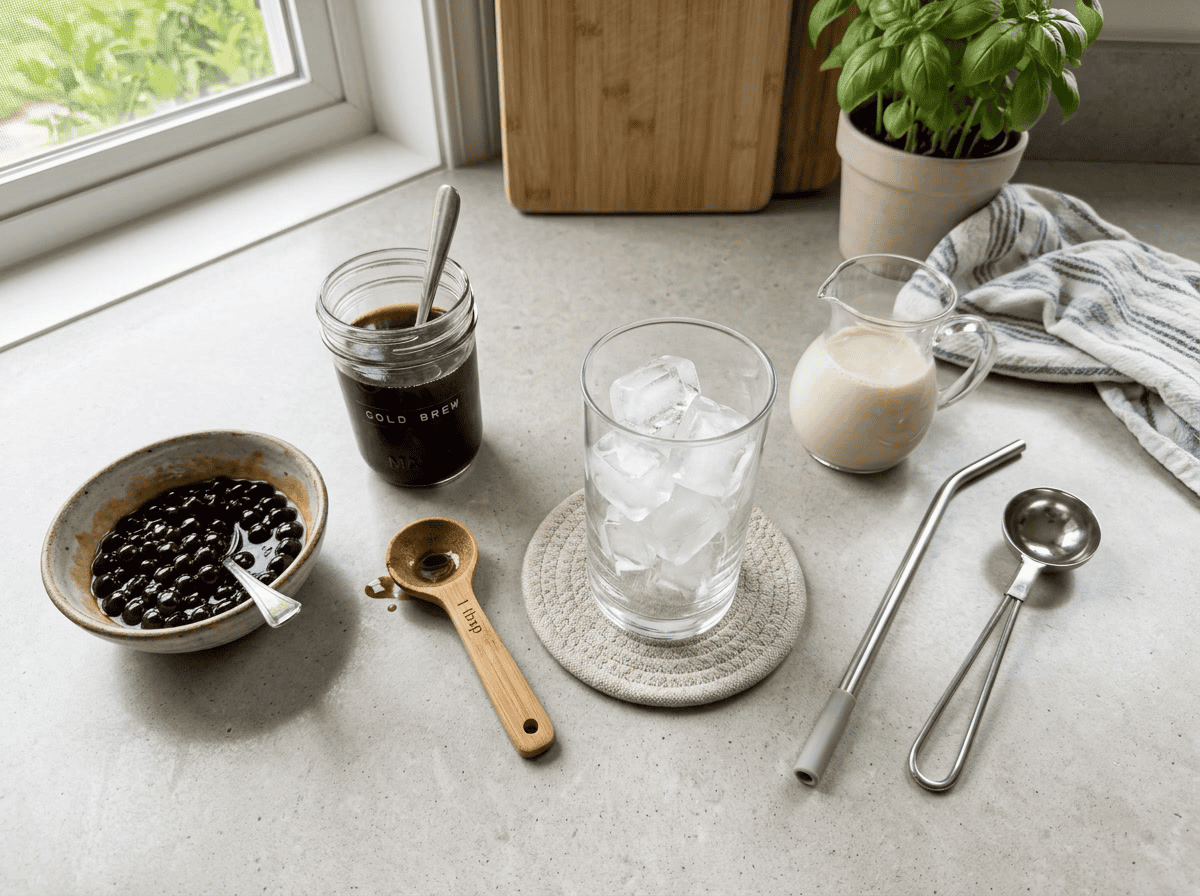
Method 1: Classic Cold Brew Coffee Boba
Prep time: 12–24 hours (for cold brew) + 30 minutes active
Serves: 2
Ingredients:
– 1 cup coarsely ground coffee
– 4 cups cold filtered water
– ½ cup dry black tapioca pearls (cooks to ~1 cup)
– 1½ cups whole milk or oat milk
– 2–3 tbsp brown sugar or simple syrup
– Ice
Step 1 — Make cold brew: Combine ground coffee and cold water in a jar or cold brew pitcher. Stir, cover, and refrigerate for 12–24 hours. Strain through a fine mesh sieve or cheesecloth. Cold brew concentrate keeps refrigerated for up to 2 weeks.
Step 2 — Cook tapioca pearls: Bring 4 cups of water to a full boil. Add dry tapioca pearls and cook 15–20 minutes, stirring occasionally, until pearls are fully translucent with a small white center remaining (they finish cooking off heat). Remove from heat and steep 5 more minutes. Drain, rinse with cold water, and immediately coat with 1–2 tbsp of brown sugar syrup to prevent clumping.
Step 3 — Prepare sweetener: Mix ¼ cup brown sugar with ¼ cup hot water until dissolved. Let cool.
Step 4 — Assemble: Spoon ¼ cup of cooked pearls into each glass. Fill with ice. Pour ¾ cup cold brew over ice. Add ¾ cup milk. Sweeten to taste. Insert a wide boba straw (12 mm diameter minimum — standard straws are too narrow for tapioca pearls).
Pro tip: Chill your glass before assembly. The temperature gradient between the cold brew, milk, and ice creates natural layering that makes the drink visually appealing before stirring.
Method 2: Espresso Boba Latte
Prep time: 30 minutes
Serves: 1
This is the café method — faster and bolder.
Ingredients:
– 2 shots espresso (60 ml)
– ¼ cup cooked tapioca pearls (prep as above)
– ¾ cup oat milk
– 1 tbsp vanilla syrup
– Ice
Assembly: Add pearls to a glass, fill with ice, pour in oat milk and vanilla syrup, then pour the two shots of espresso directly over the ice (do not stir — let it layer). The espresso will slowly bleed through the milk, creating a gradient effect.
Method 3: Popping Boba Iced Coffee
This version uses store-bought or commercially produced popping boba — no cooking required.
Ingredients:
– ¾ cup cold brew
– ¼ cup mango or passion fruit popping boba
– ½ cup coconut milk
– 1 tsp honey
– Ice
Assembly: Simply layer ice, popping boba, coconut milk, and cold brew. The pearls need no preparation — their juice-filled shells are ready to use straight from the jar. One spoonful delivers a burst of tropical flavor against the cold brew’s bitterness.
Common Mistakes to Avoid
- Under-cooking tapioca pearls: White centers mean the pearl isn’t cooked through — they’ll be unpleasantly gummy. If in doubt, go 3–5 minutes longer.
- Using pearls made hours ago: Tapioca pearls harden quickly after cooking. Use within 4 hours, and store in syrup at room temperature (not refrigerated — cold makes them stiff).
- Skipping the sweetener coat: Dry pearls clump together within minutes. The syrup coat is structural, not just for sweetness.
- Oversweetening the coffee: The pearls themselves are sweet. Taste before adding extra syrup.
- Standard drinking straws: Tapioca pearls won’t pass through a regular straw. You need a wide (12 mm+) boba straw.
Coffee Boba Near Me: What to Look For
Searching “coffee boba near me” will surface boba tea shops, coffee-and-tea hybrid cafés, and increasingly, mainstream coffee chains expanding into bubble tea territory. Here’s what to look for when evaluating a spot:
Signs of quality boba:
– Pearls cooked fresh (not sitting in syrup for 8+ hours)
– Visible pearl texture — soft-chewy, not mushy or rock-hard
– Option to customize sweetness and ice level
– Multiple coffee base options (not just instant)
Coffee boba at Starbucks: Starbucks does not offer traditional tapioca pearl boba, though some markets have tested coffee jelly and cold foam variations that approximate the concept. For true coffee boba, independent boba cafés and Asian-fusion tea shops reliably deliver better execution.
Pricing: Expect $5–$9 for a 16–24 oz coffee boba at a quality shop. Anything below $4 typically signals instant coffee base or pre-packaged tapioca soaked too long.
Coffee Boba Pearls: Production and Quality
The quality of boba pearls makes or breaks a coffee boba. Understanding how they’re produced helps you evaluate quality — whether you’re buying them at a store or sourcing them for a commercial operation.
How Tapioca Pearls Are Made
Black tapioca pearls start as cassava starch (tapioca flour), water, and brown sugar. The mixture is kneaded into a dough, rolled into spheres of consistent diameter (typically 6–8 mm for standard boba, 3–4 mm for mini pearls), then dried and packaged. The black color comes from brown sugar or caramel added during kneading. Commercially, tapioca pearl production machines automate the mixing, forming, and sizing steps to achieve consistent diameter — critical because unevenly sized pearls cook at different rates.
How Popping Boba Is Made
Popping boba uses a different process called reverse spherification. A flavored juice liquid containing calcium chloride is dropped into a sodium alginate bath, forming an elastic membrane around each droplet. The result is a thin-skinned sphere that bursts with juice when bitten. Industrial popping boba machines are designed to maintain the precise temperature (typically 20–25°C) and alginate concentration needed for consistent membrane thickness. Too thin, and pearls burst in transit; too thick, and they’re unpleasant to bite.
According to Wikipedia’s entry on tapioca pearls, tapioca balls are produced from starch extracted from the cassava root, a process that dates back centuries in Southeast Asian food culture.
Quality Markers to Check
| Quality Indicator | Good Sign | Bad Sign |
|---|---|---|
| Color | Deep, uniform | Pale, mottled |
| Texture | Chewy but yielding | Mushy or rock-hard |
| Flavor | Lightly sweet, neutral | Starchy, flavorless |
| Size consistency | All same diameter | Mixed sizes |
| Shelf life (packaged) | 12–18 months sealed | <6 months |
Coffee Boba Nutrition and Health
Coffee boba offers genuine pleasures but it’s worth understanding the full nutritional picture before making it a daily habit.
Caloric Breakdown
A standard 16 oz coffee boba with milk, sweetener, and tapioca pearls typically contains:
– Coffee base: 5–20 calories
– Milk (¾ cup whole milk): ~110 calories
– Tapioca pearls (¼ cup cooked): 130–160 calories
– Sweetener (2 tbsp brown sugar): ~100 calories
– Total: approximately 350–400 calories
The pearls account for roughly 35–40% of total calories. Substituting popping boba (which are smaller and less calorie-dense) or konjac pearls (nearly zero calories, high fiber) significantly reduces the total.
Caffeine Content
A coffee boba made with:
– Cold brew (16 oz concentrate): 150–200 mg caffeine
– Double espresso: 120–140 mg caffeine
– Drip coffee (8 oz): 90–100 mg caffeine
The Signos nutrition guide on boba tea notes that while boba beverages can fit into a balanced diet when consumed occasionally, high daily intake is associated with elevated added-sugar intake that can affect metabolic health.
Making Coffee Boba Healthier
- Use cold brew (lower acid, no added sweetener needed)
- Swap tapioca pearls for konjac pearls (near-zero calories)
- Use unsweetened oat milk or almond milk instead of whole milk
- Ask for 25–50% sweetness instead of full sugar
- Use a smaller portion of pearls (3 tbsp instead of 6)
Future Trends in Coffee Boba (2026 and Beyond)
The coffee boba category is evolving fast. Here are the developments that are reshaping it.
Premade Coffee Boba Products
Ready-to-drink coffee boba bottles and pouches are growing rapidly in Asian supermarkets and online. These products use UHT-treated coffee, shelf-stable tapioca pearls (or popping boba), and aseptic packaging. The challenge manufacturers face is maintaining pearl texture post-pasteurization — a problem being addressed by modified starch formulations.
Functional Ingredient Additions
By 2026, expect coffee boba positioned around functional claims: adaptogens (ashwagandha, reishi) in the coffee base, protein-enriched pearls, prebiotic fiber-added drinks. The global functional beverage market — cited as exceeding $100 billion by 2025 according to industry analysts — is intersecting with the boba trend, and coffee boba sits at a natural convergence point.
Automation in Commercial Boba Production
For cafés and manufacturers, the economic pressure to automate pearl preparation is growing. Manual tapioca cooking is labor-intensive and inconsistent at scale. Newer popping boba production lines and automated tapioca cooking systems are being adopted by mid-to-large boba chains. JY Machine’s popping boba production equipment, for example, allows continuous-output spherification at capacities up to 200 kg/h, enabling cafés to source consistent, freshly produced popping boba locally rather than importing from overseas.
Plant-Based Pearl Innovation
Konjac pearls, agar pearls, and other plant-based alternatives to cassava tapioca are entering commercial menus. They offer cleaner nutritional profiles and appeal to consumers seeking lower-sugar options. As noted in recent food science research from SciTechDaily’s analysis of boba health considerations, health-conscious consumers are actively seeking modifications to traditional boba to reduce sugar and calorie load.
FAQ: Coffee Boba
What is coffee boba made of?
Coffee boba is made of iced coffee (cold brew, espresso, or drip), boba pearls (typically tapioca or popping boba), milk or cream, and a sweetener. The four components are layered in a glass over ice and consumed through a wide straw.
Does coffee boba have more caffeine than regular boba?
Yes. Regular milk tea boba contains 30–80 mg of caffeine per 16 oz serving. Coffee boba contains 90–200 mg depending on the coffee base — roughly 2–4x higher. Cold brew and espresso versions run at the higher end.
Is boba tea ok for diabetics?
Standard boba — including coffee boba — contains significant amounts of added sugar from the pearls and syrup, making it a high-glycemic beverage. According to nutritional guidance, diabetics should consume boba only occasionally, opt for sugar-free syrup, reduce pearl quantity, and use unsweetened milk alternatives. Konjac pearl substitutes and cold brew without added sweetener can significantly reduce the glycemic impact.
What are popping boba and how do they differ from tapioca pearls?
Tapioca pearls are dense, chewy spheres made from cassava starch — they have a consistent chew throughout. Popping boba are thin-membraned spheres filled with flavored juice — they burst when bitten, releasing a splash of flavor. Popping boba are made via spherification (a chemistry-based process), while tapioca pearls are made by kneading and forming starch dough.
Can I use regular coffee for coffee boba?
Yes. Any coffee works — hot coffee cooled down, drip, French press, or instant. Cold brew and espresso are preferred because cold brew is already chilled and has a smoother flavor, while espresso provides quick preparation and intensity. Avoid adding coffee while hot — it melts the ice and dilutes the drink.
How long can I keep cooked tapioca pearls?
Cooked tapioca pearls should be used within 4–6 hours for best texture. Store them at room temperature in brown sugar syrup (not refrigerated — cold hardens them). They cannot be frozen or reheated effectively. If you need to prep ahead, cook fresh on the day of serving.
What milk is best for coffee boba?
Oat milk is the most popular non-dairy option — its neutral sweetness complements both coffee and boba pearls. Whole milk delivers the richest texture. Coconut milk adds tropical flavor that pairs well with popping boba. Condensed milk is traditional and sweet, but high in sugar.
Where can I buy popping boba pearls?
Popping boba is available at Asian grocery stores, specialty food shops (H-Mart, 99 Ranch), and online. Look for vacuum-sealed jars with consistent pearl size and a clear brine. For commercial buyers and cafés, sourcing directly from food equipment and ingredient manufacturers offers better consistency and cost at volume.
Conclusion
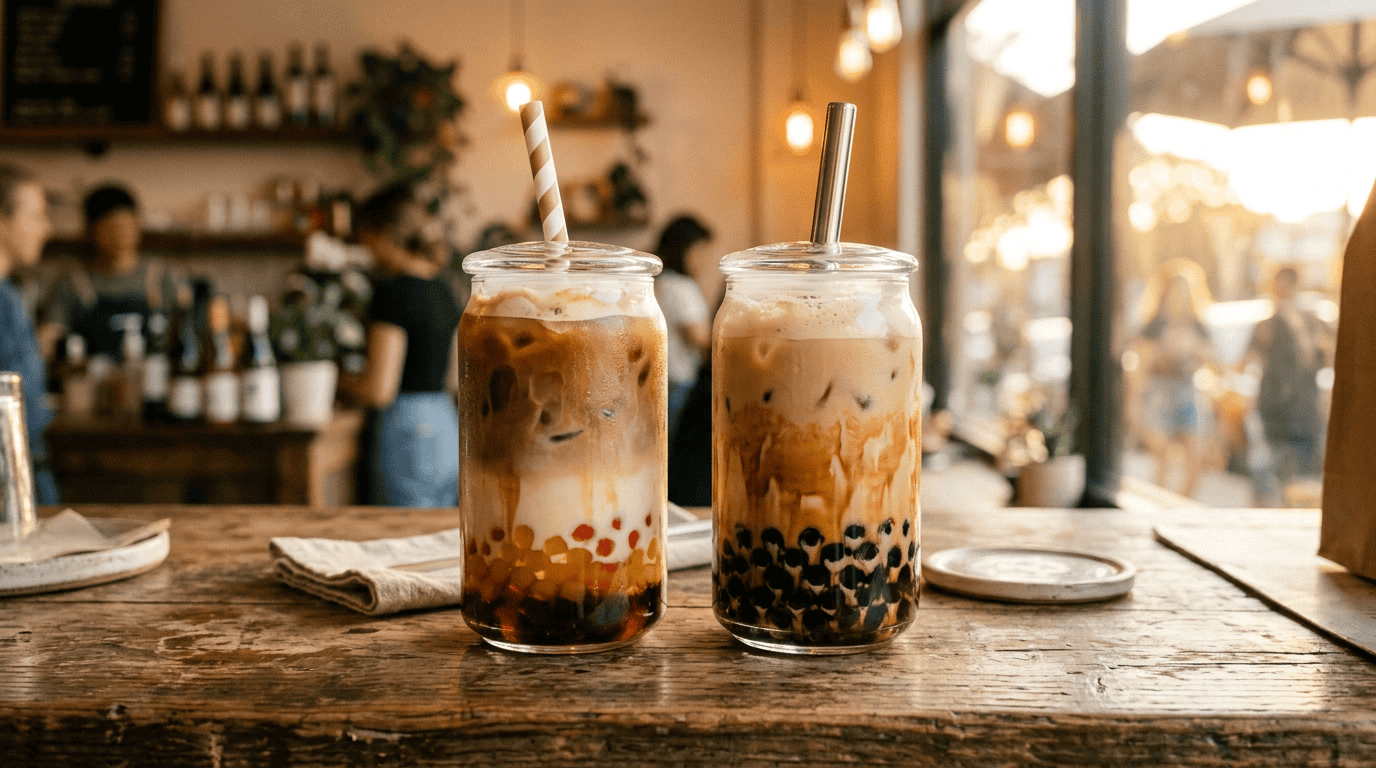
Coffee boba has moved from novelty to mainstream — and for good reason. It solves a real beverage problem: the need for something cold, caffeinated, and interesting enough to make the drink itself an experience. The combination of coffee’s complexity with the tactile satisfaction of boba pearls is genuinely greater than the sum of its parts.
At home, the barrier is lower than it looks. Cooked tapioca pearls, a jar of cold brew in the fridge, and the right wide straw is all you need to start. For café and commercial operators, the next step is understanding popping boba production — because the quality and freshness of the pearl is the single factor that most differentiates an average coffee boba from an excellent one. Whether you’re making one glass at home or equipping a production line, the fundamentals are the same: fresh pearls, good coffee, and the right balance of sweet and bitter.
Related Articles
- Crystal Boba vs Tapioca Pearls: Which Bubble Tea Topping Is Better?
- What Is Popping Boba Made Of? Ingredients, Science & Manufacturing Explained
- How Many Calories in Boba Tea? Cup Size, Sugar, and Toppings
- How Many Calories in Boba? Full Drink and Topping Guide
- Popping Boba Production Line
- Konjac Pearl Making Machine
- How Are Skittles Made? The Full Factory Process