Gummy Bear Flavors: The Complete Brand-by-Brand Guide (Plus How They’re Made)
Gummy bears typically come in 5–12 fruit flavors depending on the brand — with raspberry, orange, strawberry, pineapple, and lemon being the most universal across all major manufacturers.
Walk into any candy shop today and the gummy bear display hits you first — dozens of colors, a dozen brands, and one immediate question: what flavor is that green one, exactly? The answer isn’t as obvious as the color suggests. Green can mean apple, lime, or watermelon depending on the brand. White can be pineapple or strawberry-banana. The gummy bear flavor world is richer, more varied, and more technically interesting than most people realize. This guide maps every major brand’s flavor lineup, explains how those flavors are engineered in confectionery production, and helps you understand what separates a forgettable gummy from one people remember.
What Are Gummy Bear Flavors?
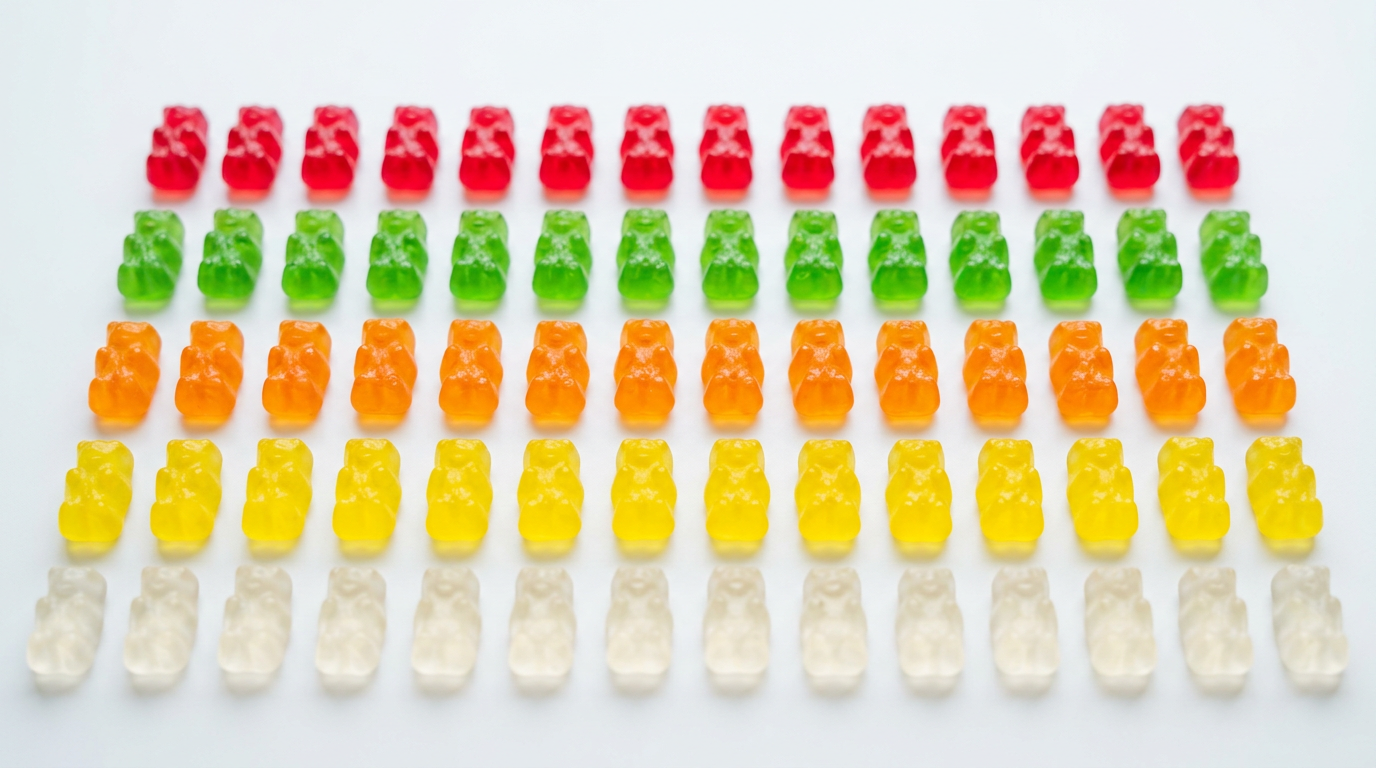
Gummy bear flavors are fruit-forward confections built on a gelatin or pectin base, with flavor profiles achieved through a combination of natural fruit concentrates, artificial flavor compounds, citric acid, and sugar ratios. The result is a chewy, sweet-tart candy that can replicate dozens of fruit identities within the same small bear shape.
The five foundational gummy bear flavors appear across nearly every brand: raspberry (red), orange (orange), strawberry (green in Haribo, red in others), pineapple (clear/white or yellow), and lemon (yellow). From there, brands diverge sharply. Albanese offers 12 distinct flavors. Black Forest uses real fruit juice. Trolli leans sour. Each approach reflects a deliberate manufacturing philosophy.
The Role of Gelatin and Pectin in Flavor Delivery
The base material affects flavor perception more than most people expect. Gelatin-based gummies (the traditional standard) have a slower melt profile on the tongue — flavors release over 3–5 seconds, building from initial sweetness into the acid finish. Pectin-based gummies, used in vegan and halal formulations, melt faster and deliver a brighter, more immediate fruit hit. If you’ve ever noticed that a vegan gummy bear tastes “sharper” upfront, that’s the pectin behaving differently under saliva.
According to Gummy bear – Wikipedia, the original Haribo Gold-Bears were invented by Hans Riegel in Bonn, Germany in 1922. The early formulations used natural fruit concentrates. Modern mass-market production blends natural and artificial flavoring systems to achieve consistency at scale.
Color-to-Flavor: Why It’s Not Universal
This is where candy novices get tripped up. Color is not a standardized flavor signal across brands. Haribo’s green bear is strawberry. Albanese’s green bear is lime. Trolli’s green bear is usually green apple. The color is a visual identity choice, not a flavor code — which is why brand-specific charts matter.
| Color | Haribo Gold-Bears | Albanese | Black Forest | Trolli |
|---|---|---|---|---|
| Red | Raspberry | Cherry | Strawberry | Strawberry |
| Orange | Orange | Orange | Orange | Orange |
| Green | Strawberry | Lime | Grape | Green Apple |
| Yellow | Lemon | Pineapple | Lemon | Lemon |
| Clear/White | Pineapple | — | — | — |
| Purple | — | Grape | — | Grape |
| Blue | — | Blue Raspberry | — | Blue Raspberry |
Gummy Bear Flavors by Brand
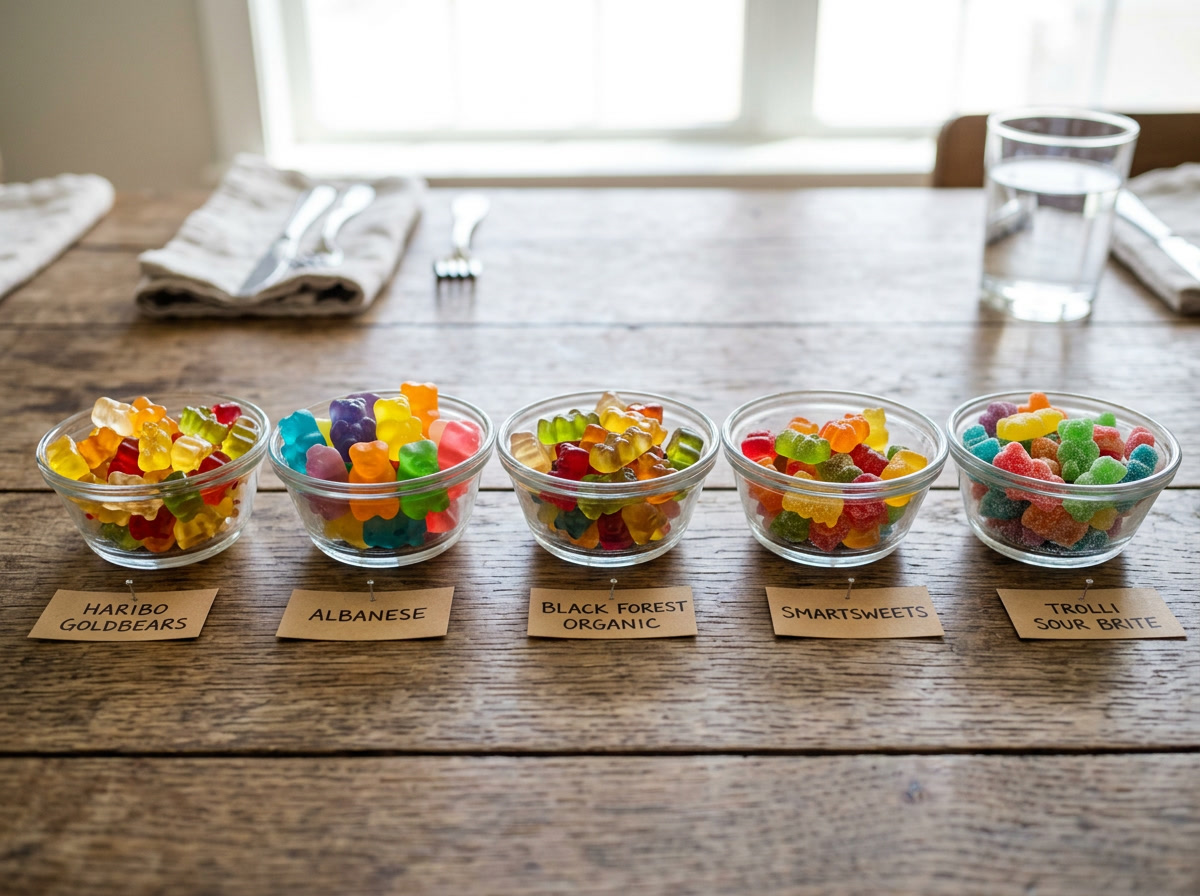
Every major gummy bear brand has built a distinct flavor identity over decades. Understanding the differences helps both consumers choose the right candy and manufacturers understand competitive positioning.
Haribo Gold-Bears: The Classic Five
Haribo remains the global benchmark. Their Gold-Bear lineup uses exactly five flavors: raspberry (red), orange (orange), strawberry (green), pineapple (clear), and lemon (yellow). The flavor intensity is deliberately moderate — sweet-forward with light acid, designed for broad appeal and long snacking sessions.
The signature Haribo texture — firmer than most American competitors — comes from a higher gelatin concentration (roughly 6.5–7% gelatin by weight versus the 5–5.5% typical of softer American gummies). This affects flavor delivery; firmer gummies take longer to release their flavor compounds, creating a more sustained taste experience.
In practice, Haribo’s restraint in flavor count is a deliberate business choice. Five SKUs means simpler production lines, less flavor changeover time, and more predictable quality. For a brand producing billions of bears annually, consistency beats variety.
Albanese: 12 Flavors, Maximum Coverage
Albanese World’s Best Gummies earns its name through sheer variety. Their standard assortment includes 12 distinct gummy bear flavors: cherry, orange, lime, pineapple, lemon, grape, watermelon, grapefruit, mango, blue raspberry, strawberry, and peach. Each flavor is matched to a specific color code, and Albanese is unusually consistent about this — their color-flavor mapping doesn’t change between product runs.
The Albanese flavor profile runs sweeter and softer than Haribo. They use a higher sugar-to-acid ratio, which makes individual bears feel more intensely flavored upfront but with less of the lingering tartness. Their mango and grapefruit variants stand out in the market — few mass-market competitors offer either.
For candy manufacturers or buyers sourcing flavor inspiration, Albanese’s lineup represents the current commercial frontier of mainstream gummy bear flavors. Their success with 12 flavors demonstrates that consumers respond well to expanded variety when color-coding is clear and consistent.
| Albanese Flavor | Color | Taste Profile |
|---|---|---|
| Cherry | Red | Sweet-tart, bold cherry |
| Orange | Orange | Citrus, slightly tangy |
| Lime | Green | Sharp lime, clean finish |
| Pineapple | Yellow | Tropical, sweet |
| Lemon | Light Yellow | Tart, bright |
| Grape | Purple | Sweet Concord grape |
| Watermelon | Pink | Light, refreshing |
| Grapefruit | Dark Pink | Bitter-sweet, adult-forward |
| Mango | Peach/Orange | Tropical, rich |
| Blue Raspberry | Blue | Tangy, artificial-sweet |
| Strawberry | Light Red | Jammy, sweet |
| Peach | Peach | Soft peach, less acid |
Black Forest: Real Fruit Juice Differentiation
Black Forest positions itself in the “better-for-you” segment of gummy bears. Their formulation uses real fruit juice as a flavoring component — a meaningful point of difference. The result is a slightly more muted, more natural fruit flavor compared to brands using artificial systems.
Black Forest’s standard bear pack runs six flavors: cherry, strawberry, orange, grape, lemon, and pineapple. The cherry is their standout — it reads closer to tart cherry than the synthetic Maraschino note most competitors use.
The real-juice positioning adds complexity on the production side. Natural fruit concentrates require more careful pH management, have shorter shelf lives, and can vary batch-to-batch more than artificial flavors. Manufacturers choosing a similar approach need to account for these variables in their confectionery process design.
Trolli: Sour-Forward and Novelty Variants
Trolli occupies a different flavor territory entirely. Their sour gummy bears coat a standard gelatin base in a sour sugar crust, shifting the dominant taste impression from the gelatin body to the exterior layer. The effect is a sharp initial sour hit that softens as the bear dissolves.
Standard Trolli sour bears run five flavors: lemon, lime, strawberry, orange, and green apple. The green apple is their most distinctive — a flavor almost no other mainstream brand offers in a standard bear format.
Trolli has also pushed more aggressively into novelty flavors: watermelon, blue raspberry, and seasonal limited editions. This reflects a broader industry trend: as the base gummy bear market matures, brands differentiate through limited-run flavors rather than permanent SKU expansion.
How Gummy Bear Flavors Are Created in Manufacturing
The flavor development process for gummy bears is more technical than it appears from the consumer side. Understanding it matters both for appreciating the final product and for any manufacturer sourcing or producing gummy candy at scale.
Flavor Compounds: Natural vs. Artificial
Commercial gummy bear production uses three flavor sourcing approaches:
- Artificial flavor compounds — synthetic molecules engineered to mimic fruit. Consistent, cheap, shelf-stable. The “blue raspberry” flavor that appears in dozens of products is almost entirely artificial — there is no such thing as a blue raspberry in nature.
- Natural fruit concentrates — dehydrated or concentrated real fruit juice added during cooking. More expensive, batch-variable, better label story.
- Nature-identical flavors — molecules chemically identical to those found in real fruit, but synthesized rather than extracted. Sits legally between natural and artificial in most markets.
Most mass-market gummy bears use artificial or nature-identical systems for the core flavors and may use real fruit concentrates only for premium or marketing-facing varieties.
The Cooking and Depositing Process
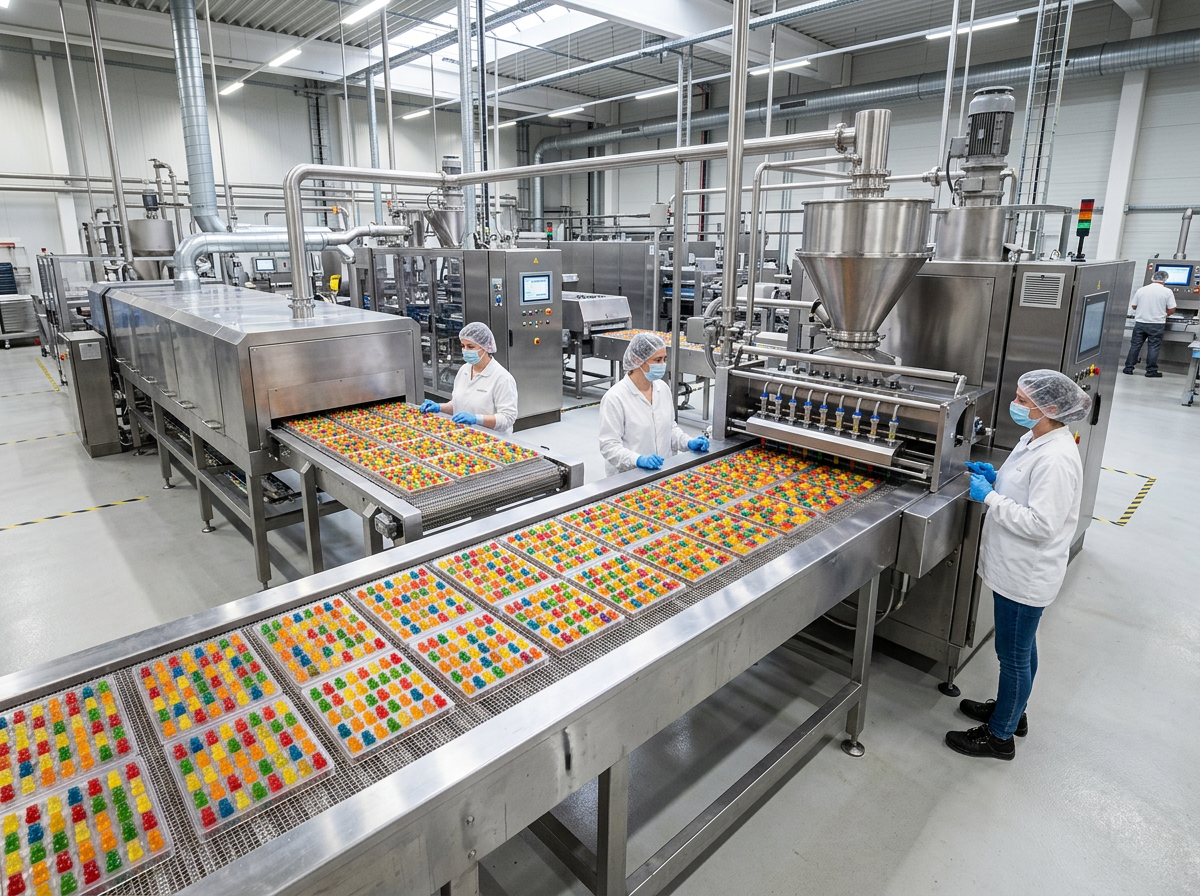
Gummy bear production follows a five-stage process: cooking, conditioning, depositing, demoulding, and tumbling. Flavor integrity across all five stages requires careful engineering.
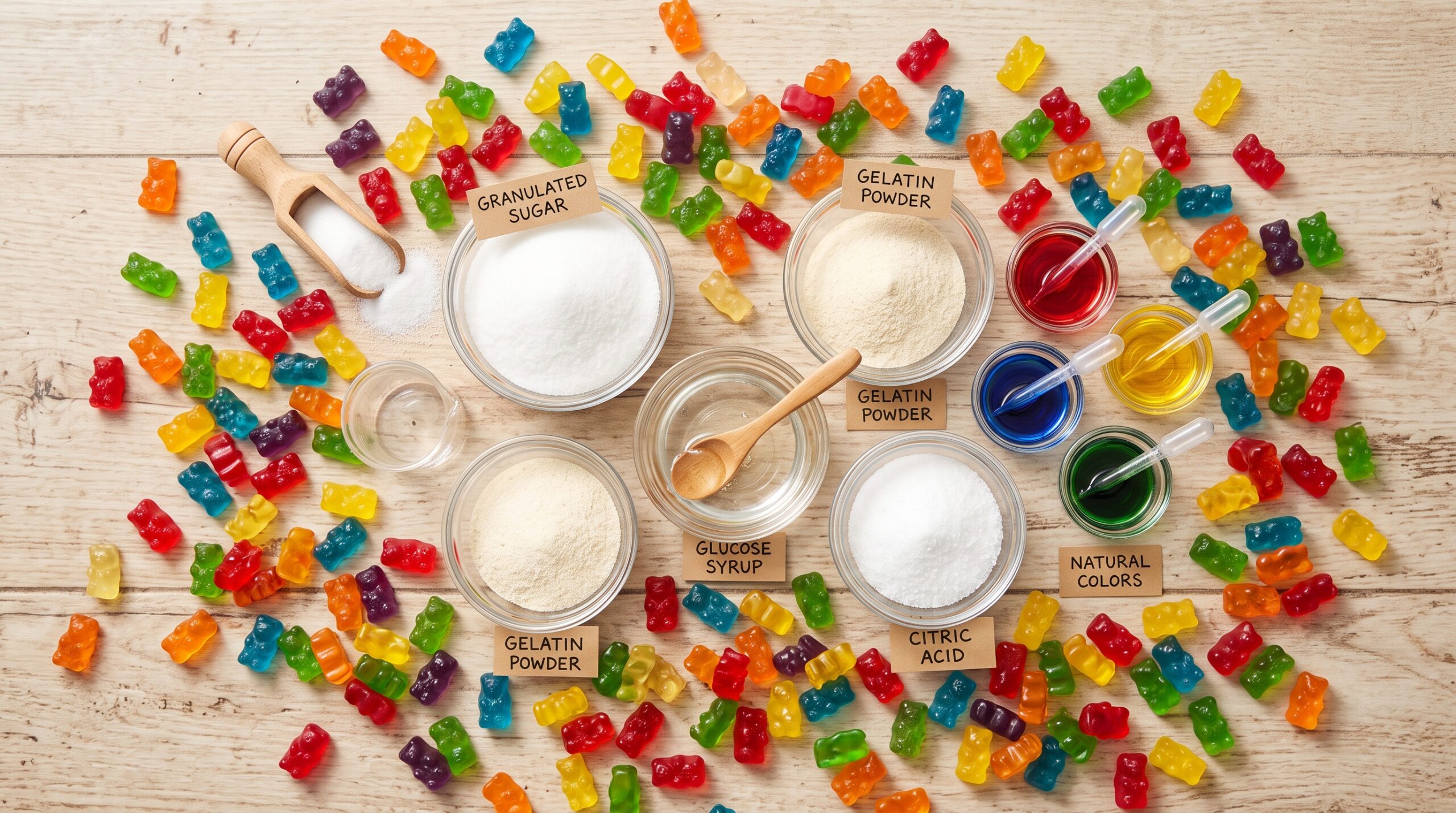
During cooking, the gelatin-sugar-glucose syrup mixture is heated to 220–240°F (104–115°C). At these temperatures, volatile flavor compounds begin to degrade. This is why most manufacturers add flavoring after the cook cycle, during a cooling phase before depositing. Adding raspberry concentrate to a 220°F slurry destroys the top-notes that give the flavor its brightness.
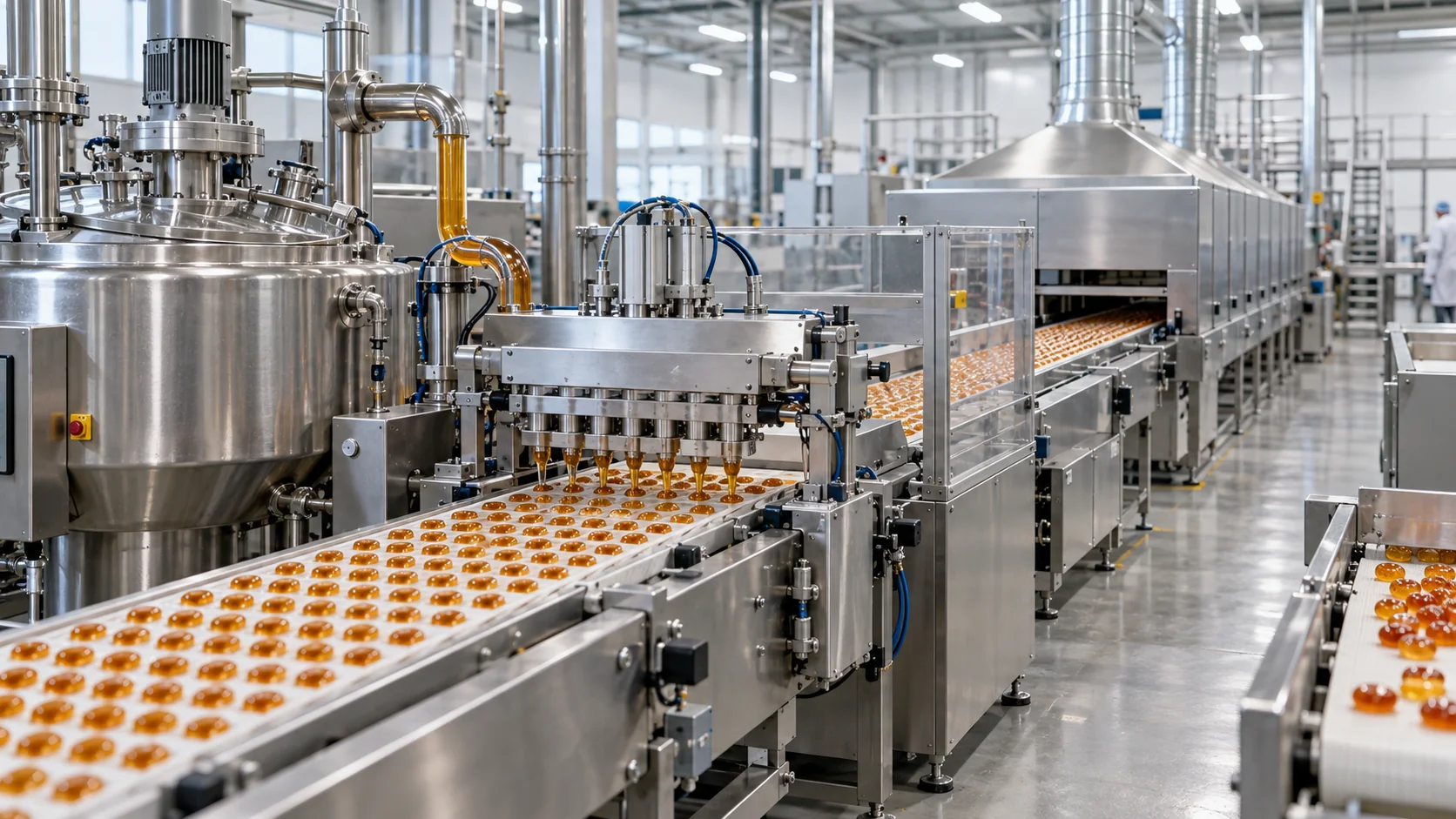
The depositing phase — where molten gummy mass is injected into starch molds at high speed — requires the mass to maintain a precise viscosity. Certain flavors, particularly acidic ones like citrus and sour variants, can affect gelatin gel strength, requiring formulators to adjust gelatin concentration or use acid buffers.
The equipment used for high-volume gummy bear production must handle multiple flavor streams simultaneously, maintain temperature uniformity, and facilitate rapid changeover between flavor variants. Modern confectionery depositing equipment can switch flavor batches in 20–30 minutes — a critical capability for any production line running 6+ flavor SKUs.
Citric Acid: The Unsung Flavor Enhancer
Every gummy bear formulation uses citric acid, not just sour variants. Citric acid serves three functions: preservative (lowers water activity to resist microbial growth), texture modifier (affects gelatin gel strength at certain concentrations), and flavor enhancer (sharpens and brightens fruit flavor notes).
The concentration varies by flavor target. Lemon and raspberry gummies typically run 0.8–1.2% citric acid by weight. Pineapple and mango run lower, around 0.4–0.6%, to preserve the sweet tropical profile without introducing unwanted tartness. Sour coated varieties add a second dose of citric acid in the final tumbling stage, applied as a dry powder in a rotating drum.
New and Trending Gummy Bear Flavors for 2026
The gummy bear market is not standing still. Several flavor trends are reshaping the category heading into 2026.
Exotic Fruit Expansion
Brands are moving beyond the standard Western fruit palette. Mango was the first to cross over into mainstream. Now passion fruit, lychee, guava, and dragon fruit are appearing in premium and Asian-market gummy lines. This expansion mirrors broader consumer interest in global flavors. According to Statista’s confectionery market data, tropical and exotic fruit flavors are among the fastest-growing segments in premium candy.
The challenge for manufacturers is flavor stability. Tropical fruit compounds, particularly lychee and passion fruit, contain volatile esters that degrade quickly under heat and UV exposure. Encapsulation technology — coating flavor compounds in a protective shell before incorporation — is increasingly used to extend flavor shelf life in these variants.
Functional Gummy Bears
Vitamin C, elderberry, melatonin, and collagen gummies have exploded as a category. The flavor challenge is masking off-notes. Vitamin C (ascorbic acid) is intensely sour and metallic at functional doses. Collagen has a mild but noticeable animal protein note. Melatonin can add a slightly bitter finish.
Functional gummy formulators typically increase sweetener concentration, use masking agents (certain maltodextrin types are effective), and favor strong flavors like berry and citrus that can overwhelm off-notes. The berry and grape flavor dominance in supplement gummies isn’t accidental — they’re the best masks.
Sour and Extreme Acid Profiles
The sour candy segment continues to grow, particularly among younger consumers. Brands are pushing toward extreme acid levels that standard formulations can’t achieve without affecting gelatin integrity. New solutions include acid-stable pectin systems and starch-gelatin blends that maintain chew texture at lower pH levels.
| Trend | Flavor Examples | Key Manufacturing Challenge |
|---|---|---|
| Exotic fruits | Lychee, passion fruit, dragon fruit | Volatile compound stability |
| Functional gummies | Berry, grape, citrus (masking vitamins) | Off-note masking |
| Extreme sour | Sour apple, sour cherry, sour lemon | Gelatin stability at low pH |
| Botanical/floral | Rose, lavender, hibiscus | Low consumer familiarity |
| Spicy-sweet | Mango-chili, watermelon-tajin | Capsaicin emulsification |
How to Choose Gummy Bear Flavors for Production
Whether you’re a confectionery startup selecting flavors for a new product line or a buyer specifying requirements for a private-label gummy program, several factors should drive your flavor decisions.
Start with Your Target Market’s Flavor Familiarity
Flavor selection should map to consumer expectation in your specific geography. US consumers expect raspberry, strawberry, orange, and lemon as a baseline — deviating from these without a clear premium story creates confusion. Japanese market gummy bears lean toward peach, muscat grape, and ramune. European markets run closer to the Haribo template.
If you’re launching a gummy product for export, matching flavor profiles to regional palates is not optional — it’s the difference between a product that sells and one that doesn’t clear customs inventory.
Consider the Production Line Implications
Every new flavor variant you add to a production line adds:
- A new flavor compound SKU to manage
- A changeover event between production runs
- A quality control reference standard to maintain
- Potential cross-contamination risk between adjacent flavors
The industry standard recommendation for small- to mid-scale producers: start with 4–6 core flavors and validate them before expanding. The marginal return on each additional flavor SKU decreases after about 8 variants — consumer preference data shows most buyers simply eat their favorites from the mix regardless of total variety.
Align Flavors with Your Brand Story
Flavor is a brand signal. Haribo’s five-flavor simplicity signals heritage and authenticity. Albanese’s 12 flavors signal generosity and fun. Black Forest’s real-juice formulations signal naturalness. Before locking a flavor count, define what your brand’s flavor strategy communicates to your buyer.
For private-label manufacturers, this conversation typically happens with the retail buyer — they have strong views on what resonates with their customer base, and the best confectionery equipment decisions align with those insights.
FAQ
What are the 5 flavors of Haribo gummy bears?
Haribo Gold-Bears come in five flavors: raspberry (red), orange (orange), strawberry (green), pineapple (clear/white), and lemon (yellow). The green bear’s strawberry flavor surprises most American consumers, who expect green to mean apple or lime.
What flavors are in gummy bears generally?
Most standard gummy bear packs include some combination of raspberry, strawberry, orange, lemon, and pineapple. Brands with larger assortments add cherry, lime, grape, watermelon, mango, blue raspberry, and peach. The exact lineup varies significantly by brand and market.
What are the 5 natural flavors of gummi bears?
In the original Haribo formulation, the five flavors derived from natural fruit concentrates were raspberry, strawberry, orange, lemon, and pineapple. Modern formulations blend natural concentrates with nature-identical compounds for cost and consistency reasons.
What flavor is the green gummy bear?
It depends on the brand. Haribo green = strawberry. Albanese green = lime. Trolli green = green apple. Black Forest green = grape. Always check the brand’s specific flavor chart — color is not a universal flavor standard.
What flavor is the white or clear gummy bear?
In Haribo’s lineup, the clear/white bear is pineapple. Albanese uses yellow for pineapple and doesn’t typically include a white/clear variant in their standard assortment. White or clear gummy bears from other brands may be different flavors entirely.
How many gummy bear flavors does Albanese make?
Albanese makes 12 gummy bear flavors in their standard assortment: cherry, orange, lime, pineapple, lemon, grape, watermelon, grapefruit, mango, blue raspberry, strawberry, and peach. They also offer sour-coated versions of many of these same flavors.
Can gummy bear flavors be customized for private-label production?
Yes — custom flavor development is standard in confectionery contract manufacturing. Manufacturers typically offer bespoke flavor profiles for orders above a minimum quantity threshold, using flavor compound suppliers or in-house R&D. Lead times for custom flavor approval run 8–16 weeks including stability testing.
Conclusion
Gummy bear flavors are a surprisingly deep category. What looks like a simple candy choice — grab a handful from the bag — rests on decades of flavor science, manufacturing chemistry, and brand strategy. The classic five of Haribo (raspberry, orange, strawberry, pineapple, lemon) remain the industry baseline. Albanese’s 12-flavor assortment represents the current breadth frontier. Black Forest’s real-juice approach stakes out the naturalness position. And a new generation of exotic, functional, and extreme-sour variants is actively expanding what a gummy bear can be.
For manufacturers and buyers, the key takeaway is that gummy bear flavor selection is a strategic decision — not just a taste preference. It shapes your production line complexity, your brand positioning, and your target market fit. Start with the flavors your consumers already trust, understand the manufacturing implications of each variant, and expand deliberately. The best gummy bear lineup isn’t the longest one — it’s the one your customers reach for first.
Related Articles
- What types of sweeteners can be used in a gummy bear machine, and how are they incorporated?
- Halloween Gummies: Types, Flavors, and How They’re Made
- Gummy Bear: What Is It Made Of? Full Ingredient & Manufacturing Guide
- Best Gummy Bears: A Complete Guide to Brands, Flavors, Ingredients, and What Actually Makes One Worth Eating
- Gummy Candy Production Line
- Starch-Free Gummy Depositing Machine
- Are Skittles Gluten Free? Complete Guide 2026