Strawberry Boba Tea: The Complete Guide to Making, Customizing & Scaling
Strawberry boba tea is a sweet, fruity bubble tea made with a strawberry base, milk (or dairy-free alternative), and chewy tapioca pearls — ready in under 20 minutes at home.
Imagine pulling a fat straw through a frosty pink drink and biting into a soft, chewy pearl that bursts with sweetness. That’s strawberry boba tea — part beverage, part experience. It’s the kind of drink that stops people mid-sip to say, “I need to make this at home.”
Whether you’re a home enthusiast perfecting your weekend ritual or a café owner evaluating equipment to serve hundreds of cups a day, this guide covers everything: the origin story, all the variations, a step-by-step recipe, commercial production considerations, and what the boba industry’s explosive growth means for 2026 and beyond.
What Is Strawberry Boba Tea?
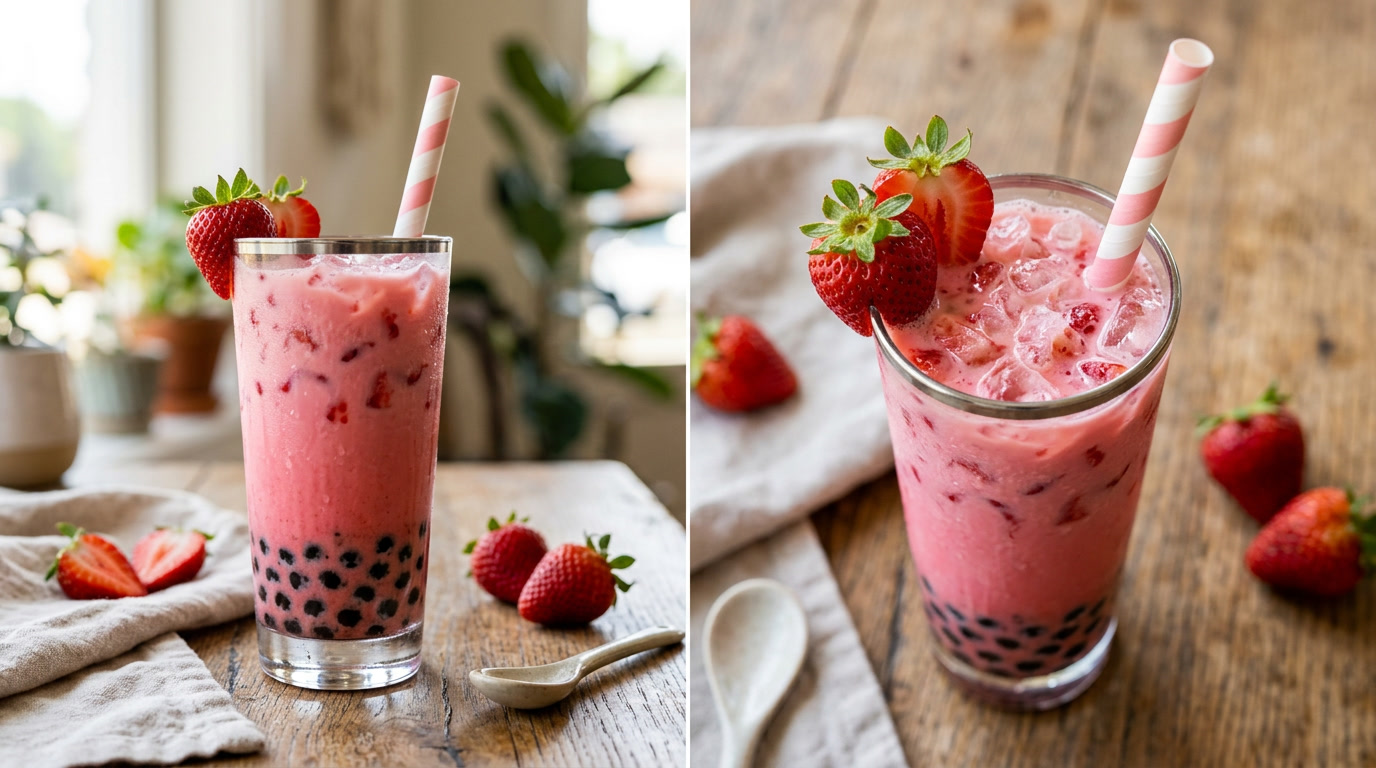
Strawberry boba tea is a variant of bubble tea — the Taiwanese iced drink phenomenon — built around a strawberry flavor profile. At its core, every cup contains four elements: a tea or fruit base, a sweetener, milk or a non-dairy alternative, and tapioca pearls (boba).
The strawberry version became one of the most searched fruit boba flavors globally because strawberries are universally loved, visually striking in a cup, and pair naturally with the mild, slightly chewy texture of tapioca pearls.
Origin and the Rise of Bubble Tea
Bubble tea was invented in Taiwan in the early 1980s. The most cited origin story credits Liu Han-Chieh of the Chun Shui Tang teahouse in Taichung, who began serving cold tea in the mid-1980s. The “bubble” in the name originally referred to the foam created by shaking the tea — not the pearls. Tapioca pearls were added later, and the combination proved irresistible.
According to Wikipedia’s history of bubble tea, the drink spread from Taiwan to Hong Kong, Southeast Asia, and then globally through the 1990s and 2000s. The fruit-flavored variants — strawberry, mango, passion fruit — came as the market expanded beyond Asia into Western markets hungry for something novel.
Today, strawberry boba tea is a staple on virtually every boba shop menu worldwide. It’s the gateway flavor: approachable, bright, and immediately photogenic.
What Makes Strawberry Boba Tea Special
Three things make strawberry boba distinct from other bubble tea variants:
- Color contrast — The vivid pink or red hue against white or black pearls creates an instantly shareable drink for social media.
- Flavor flexibility — Strawberry pairs with green tea, black tea, matcha, taro, and even plain milk, making it one of the most versatile base flavors.
- Year-round appeal — Fresh strawberries are seasonal, but freeze-dried powder and strawberry puree make the flavor available 12 months a year without quality sacrifice.
| Feature | Strawberry Boba Tea | Classic Milk Tea | Taro Boba | Matcha Latte Boba |
|---|---|---|---|---|
| Flavor profile | Sweet, fruity | Creamy, earthy | Nutty, sweet | Earthy, slightly bitter |
| Color | Pink / red | Caramel / tan | Purple | Green |
| Caffeine level | Low–medium | Medium–high | Low | Medium |
| Dairy-free ease | Easy | Easy | Easy | Easy |
| Visual appeal | Very high | Medium | High | High |
| Complexity to make | Low | Low | Medium | Medium |
Types of Strawberry Boba Tea
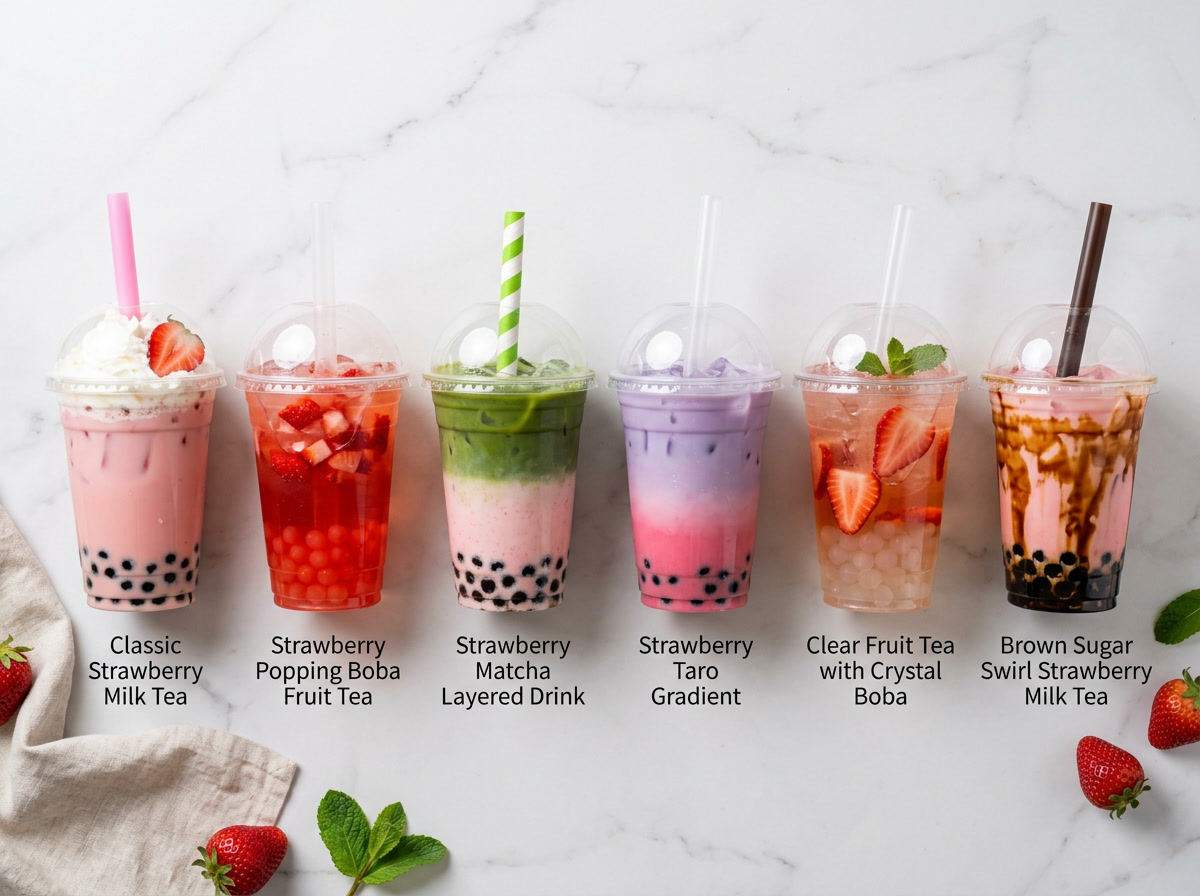
Strawberry boba tea comes in at least six major variations, each with a different base, texture, and flavor intensity — so there’s a version for every preference.
1. Strawberry Milk Tea (Classic)
The classic: black or green tea brewed strong, cooled, mixed with fresh or powdered strawberry, a splash of whole milk or half-and-half, sweetened with simple syrup or condensed milk, and served over ice with black tapioca pearls. This is the version you’ll find in 90% of boba shops.
In practice, this style works best with Assam or Ceylon black tea — the bold tannins balance the strawberry’s sweetness without the drink tasting flat. We’ve found that green tea produces a lighter, more delicate flavor that some drinkers prefer as a lower-caffeine option.
2. Strawberry Popping Boba Tea
Instead of chewy tapioca pearls, this version uses popping boba — thin-skinned gelatin spheres filled with strawberry juice that burst on contact with your tongue. The experience is entirely different: less chew, more burst. Popping boba also keeps refrigerated for much longer than cooked tapioca (weeks vs. hours), making it practical for high-volume commercial use.
This variation is especially popular with younger consumers and works well in fruit-tea bases (no milk required), producing a lighter, cleaner drink.
3. Strawberry Matcha Boba
One of the fastest-growing combinations: a matcha latte base layered under strawberry puree or strawberry milk. The visual contrast — green below, pink above — is striking. The flavor contrast (earthy, slightly bitter matcha + sweet strawberry) is complex enough that customers come back specifically for it.
The spec that makes or breaks this drink: matcha quality. Ceremonial-grade matcha costs more but delivers a clean, non-bitter green flavor. Culinary-grade matcha can taste harsh. In a commercial setting, the cost difference per drink is less than $0.15 — worth it for customer retention.
4. Strawberry Taro Boba
Taro’s nutty, creamy flavor acts as a neutral canvas. When layered with strawberry, you get a purple-pink gradient that’s catnip for Instagram. Flavor-wise, taro softens the strawberry’s sharpness, creating a mellower drink suited for customers who find plain strawberry milk tea too sweet.
5. Strawberry Fruit Tea (No Milk)
A refreshing, lighter option: fruit tea base (hibiscus, passion fruit, or peach tea) with strawberry puree, no milk, served with popping boba or crystal boba. Naturally dairy-free. Lower calorie count than milk-based versions. This category has surged with health-conscious consumers who still want the boba experience.
6. Strawberry Brown Sugar Boba
The brown sugar boba trend swept social media in the early 2020s. The strawberry version adds fresh strawberry or strawberry jam to the caramelized brown sugar syrup drizzled down the cup’s interior, then fills with milk and pearls. The swirled aesthetic and deep flavor complexity make it a premium menu item justifying a $1–2 price premium.
| Variation | Base | Pearl Type | Dairy | Complexity | Best For |
|---|---|---|---|---|---|
| Classic Strawberry Milk Tea | Black/green tea | Tapioca | Optional | Low | Everyday orders |
| Popping Boba Tea | Fruit tea | Popping boba | No | Low | High-volume cafés |
| Strawberry Matcha | Matcha latte | Tapioca | Optional | Medium | Premium/specialty |
| Strawberry Taro | Taro milk | Tapioca | Optional | Medium | Visual impact |
| Fruit Tea (no milk) | Hibiscus/peach | Crystal/popping | No | Low | Health-focused |
| Brown Sugar | Brown sugar milk | Tapioca | Yes | Medium | Premium menu |
Key Ingredients and Equipment
The quality of each ingredient determines the ceiling of your strawberry boba tea — and for commercial operators, the right equipment determines whether you serve 30 cups or 300 cups a day.
Core Ingredients
Strawberry component (choose one):
- Fresh strawberries — Best flavor, highest cost, labor-intensive, seasonal. Ideal for premium single-serving recipes.
- Freeze-dried strawberry powder — Shelf-stable, concentrated, consistent. The commercial standard. Use 1–2 tablespoons per 16 oz serving.
- Strawberry puree — Pre-made from frozen strawberries, good middle ground. Works well in larger batches.
- Strawberry syrup / flavoring — Convenient but often contains artificial flavors; read ingredient labels carefully.
Tea base:
- Black tea (Assam, Ceylon): Bold, stands up to dairy.
- Green tea (Jasmine, Sencha): Lighter, lower caffeine.
- Herbal/fruit tea: Caffeine-free, pairs with popping boba.
Milk or dairy alternative:
- Whole milk: Classic richness.
- Oat milk: Best non-dairy for creamy texture and neutral flavor.
- Almond milk: Lighter, slightly nutty.
- Condensed milk: Traditional Asian boba sweetener + creamer in one.
Sweetener:
- Simple syrup (1:1 sugar:water)
- Brown sugar syrup (deeper flavor)
- Honey (adds floral notes)
Tapioca pearls: Commercial-grade quick-cook pearls (5–8 min boil) vs. traditional pearls (45–60 min). For high-volume operations, batch-cooking tapioca every 2–4 hours is standard practice.
Home Equipment Checklist
| Item | Why It Matters |
|---|---|
| High-speed blender | Smooth strawberry puree without seeds |
| Cocktail shaker | The essential shake creates the signature frothy texture |
| Wide straw (12mm) | Standard boba straw; narrower straws won’t pass pearls |
| Saucepan | Cooking tapioca pearls and making syrup |
| Fine mesh strainer | Removing strawberry seeds |
| Measuring cups | Consistent ratio = consistent flavor |
Commercial Equipment for Boba Shops
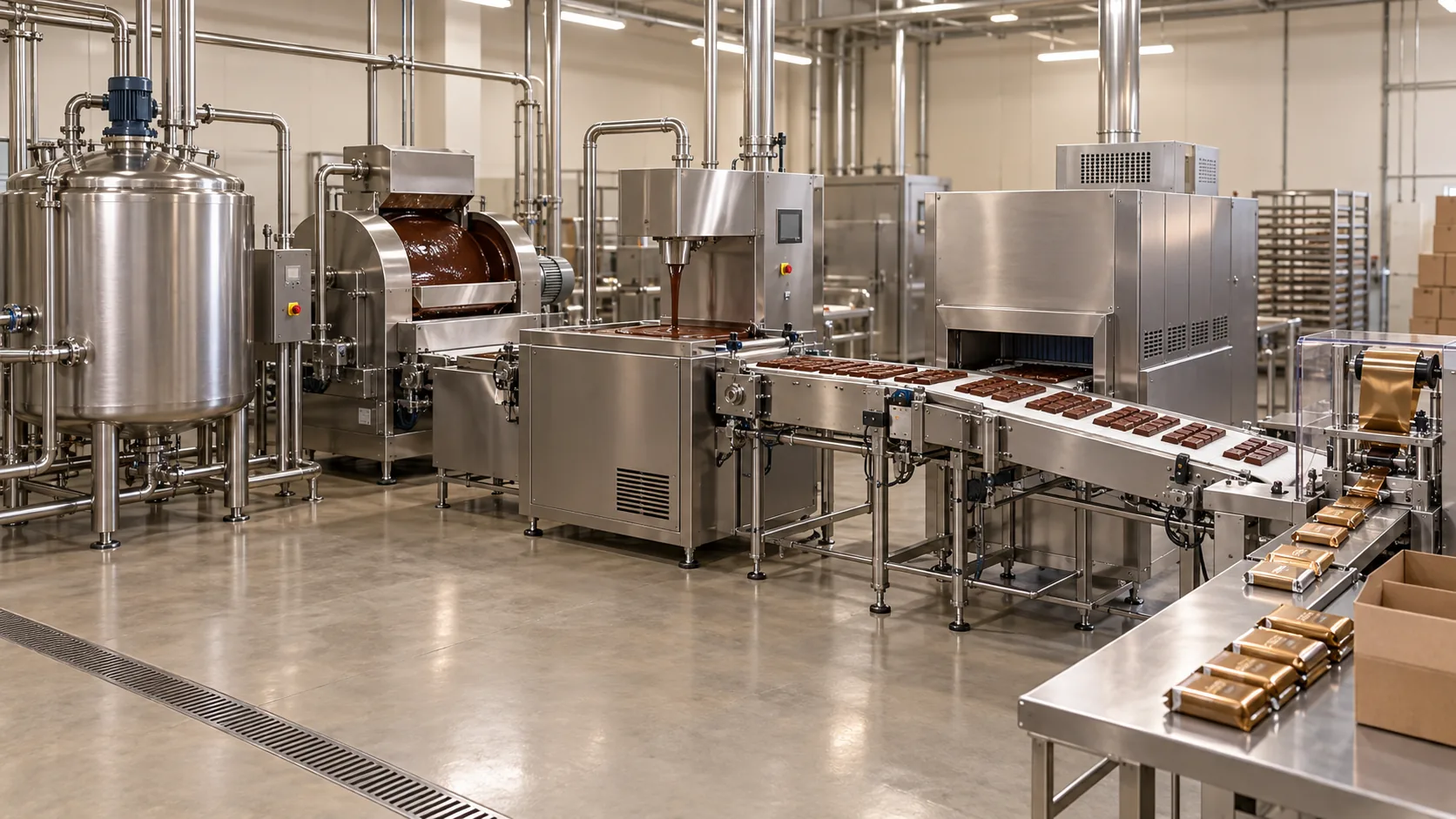
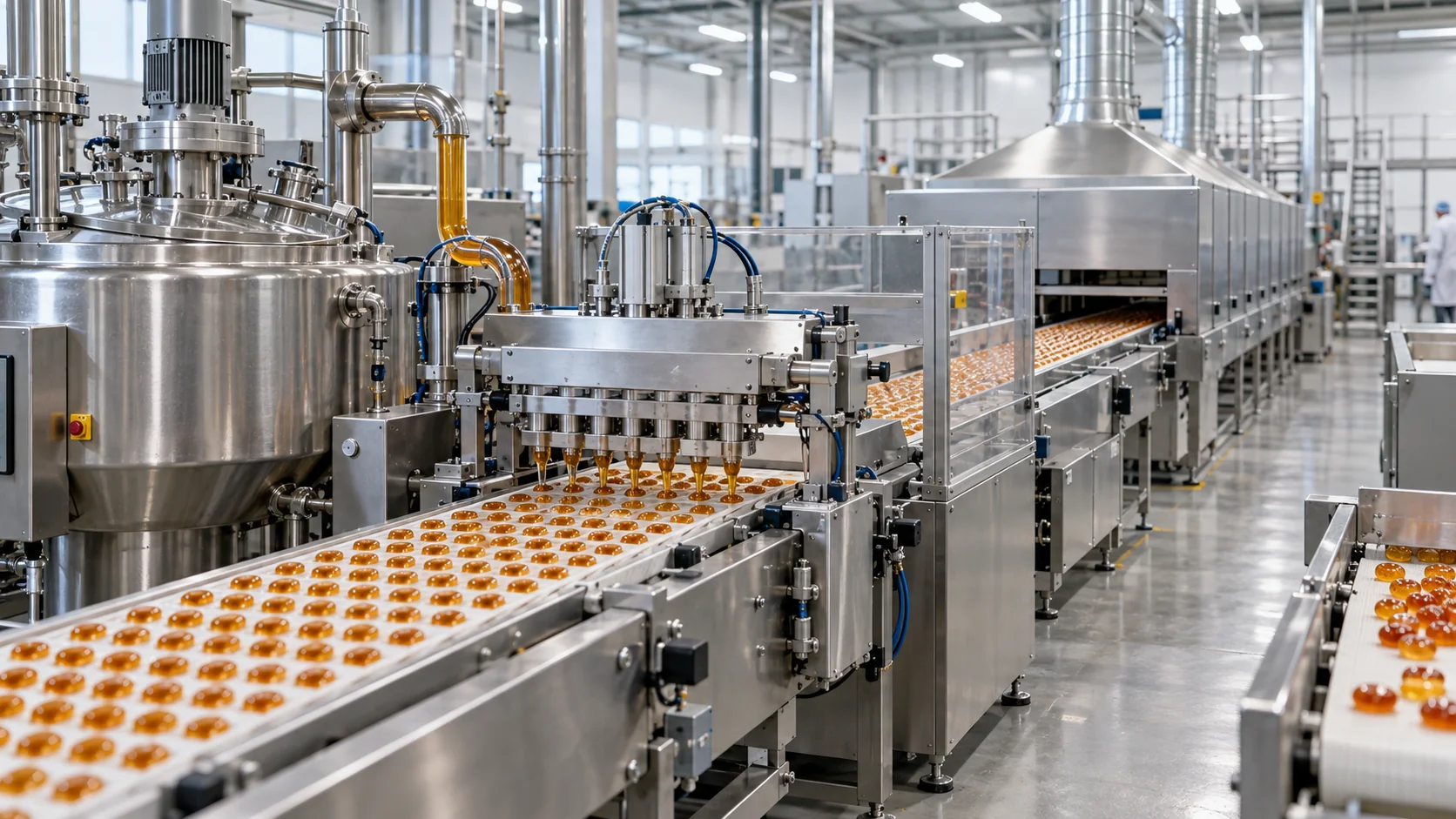
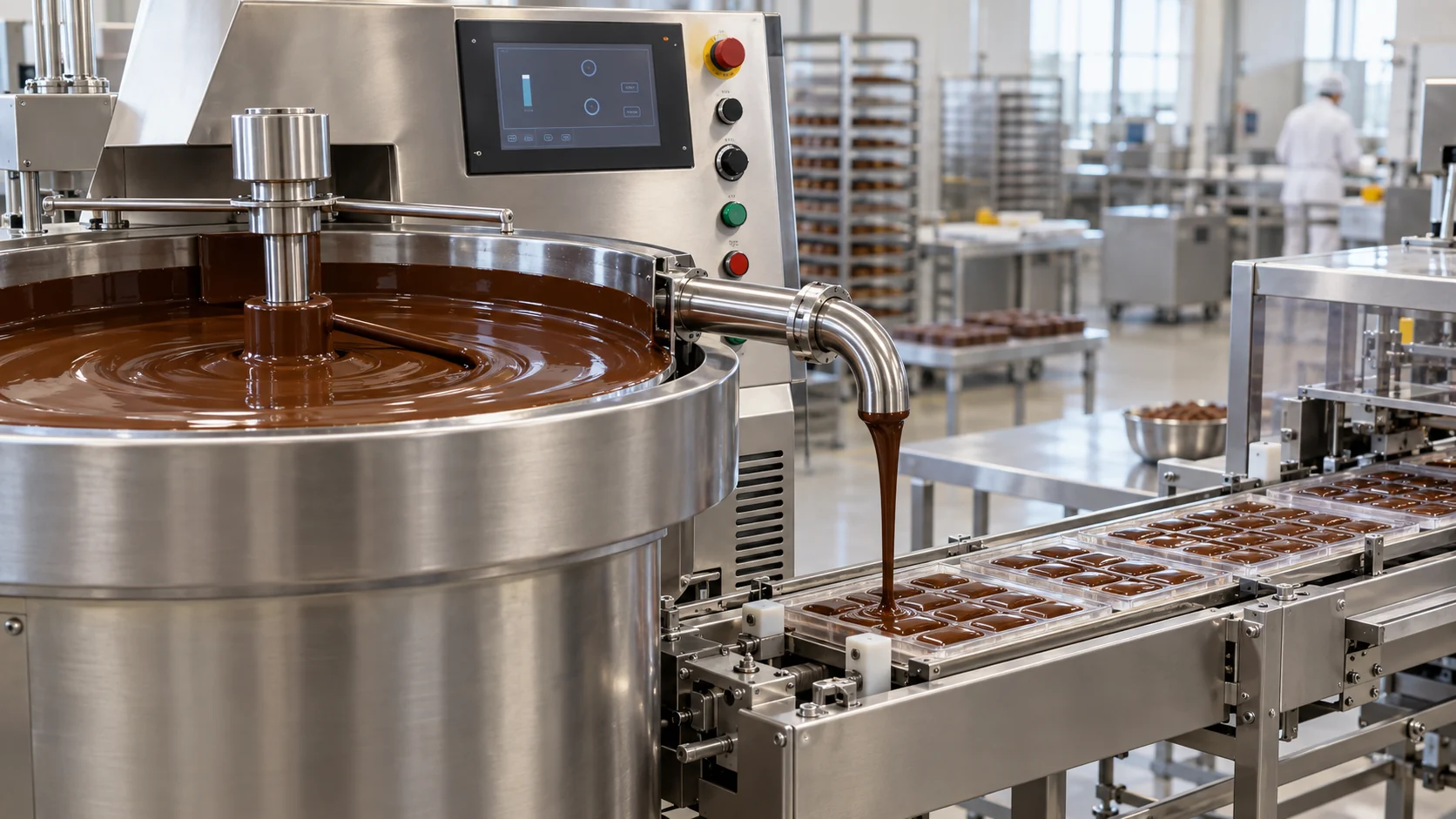
Scaling from home kitchen to commercial production requires dedicated equipment. A mid-volume boba café (100–300 cups/day) typically needs:
- Automatic tapioca pearl cooker — maintains consistent temperature to prevent under- or over-cooked pearls; some models hold warm for 4–6 hours
- Commercial blender — handles frozen strawberry puree at volume without overheating
- Cup sealing machine — essential for takeaway; properly sealed cups prevent spills and maintain carbonation in popping-boba drinks
- Refrigerated display units — for toppings and pre-made mixtures
- Precision liquid dispenser — for consistent sweetness levels across every cup
For operators looking at boba equipment, jymachinetech.com manufactures commercial-grade boba production machines, including tapioca cookers and cup sealing machines designed for high-throughput cafés.
How to Make Strawberry Boba Tea at Home
The basic recipe takes 15–20 minutes and yields 2 large servings — once you’ve made it twice, it’s faster than driving to a boba shop.
Step-by-Step Home Recipe
Ingredients (2 servings):
- 4 black tea bags (or 2 tsp loose leaf Assam)
- 1.5 cups hot water
- 1 cup fresh strawberries, hulled (or 2 tbsp freeze-dried strawberry powder)
- 1.5 cups whole milk (or oat milk)
- 3 tablespoons simple syrup (adjust to taste)
- ½ cup quick-cook tapioca pearls (dry weight)
- Ice
Step 1 — Brew the tea. Steep tea bags in hot water for 5 minutes. Remove bags, do not squeeze them (it introduces bitterness). Refrigerate to cool completely — at least 20 minutes, or use an ice bath to speed this up.
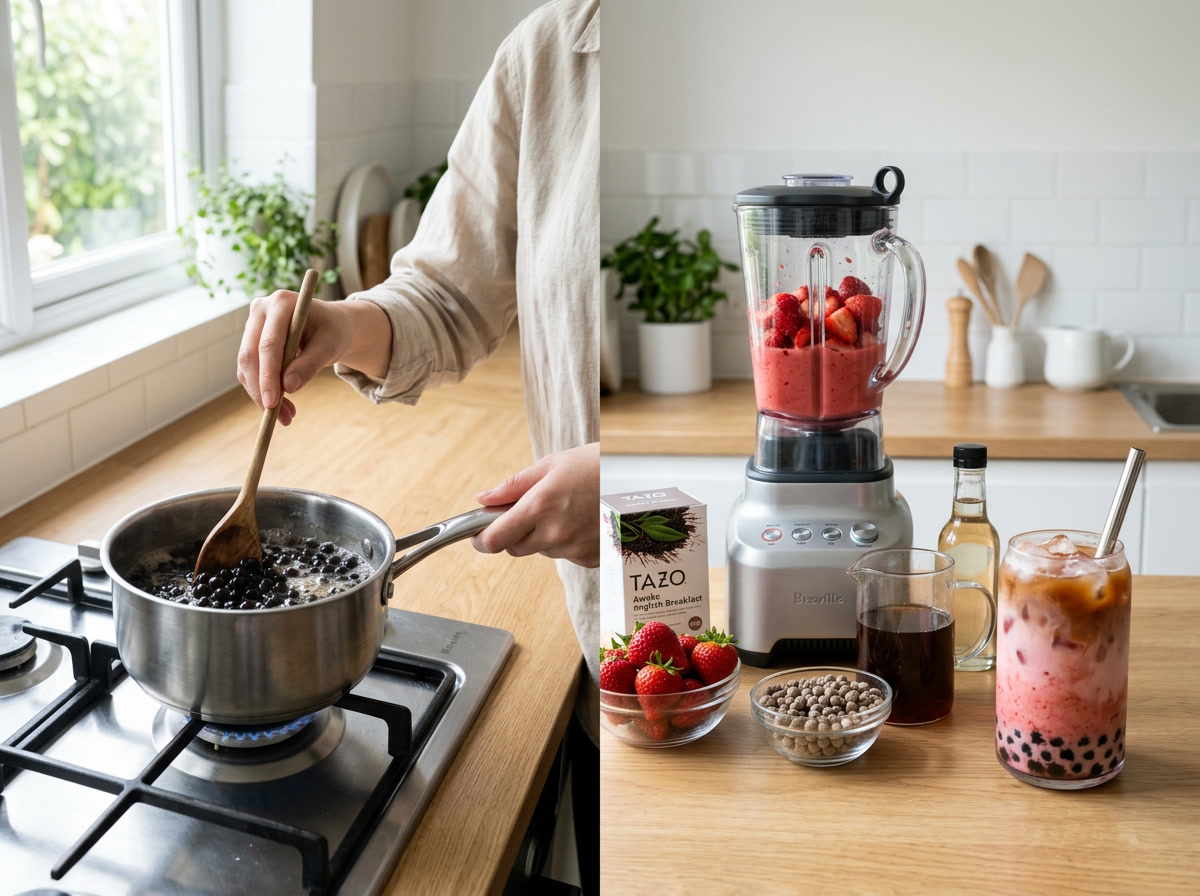
Step 2 — Cook the tapioca pearls. Bring 4 cups water to a rolling boil. Add dry tapioca pearls. Cook per package instructions (typically 5–8 minutes for quick-cook pearls). The pearls are done when they float and have a consistent dark color with a soft, chewy center. Drain, rinse under cold water, then immediately coat with a tablespoon of simple syrup to prevent clumping.
**Pro tip:** Cooked tapioca pearls are best within 2–4 hours. After that, they harden in the refrigerator. Never refrigerate uncoated pearls — they’ll turn into solid little rocks.
Step 3 — Make the strawberry base. Blend fresh strawberries with 2 tablespoons of simple syrup until completely smooth. If using freeze-dried powder, whisk it into the milk directly. For a cleaner texture, strain the fresh puree through a fine mesh sieve.
Step 4 — Assemble. Add ¼ cup cooked pearls to each glass. Fill with ice. Pour the cooled tea over the ice (about ½ cup per glass). Add ½ cup strawberry milk (mix the strawberry puree or powder into your milk of choice beforehand). Pour gently to create a layered effect, or shake in a cocktail shaker for a uniform blend.
Step 5 — Adjust and serve. Taste. Add more simple syrup if needed. Seal with a large boba lid or use plastic wrap secured with a rubber band (the classic DIY hack). Insert a wide boba straw. Shake before drinking.
Scaling for Commercial Production
A single barista can produce roughly 25–40 cups per hour manually. At 100+ cups per day, efficiency breaks down without systems:
| Batch Size | Pearl Quantity (dry) | Water (for cooking) | Cook Time | Holds (at temp) |
|---|---|---|---|---|
| Small (20 servings) | 500g | 8 cups | 8 min | 2 hrs |
| Medium (60 servings) | 1.5 kg | 24 cups | 10 min | 3 hrs |
| Large (120 servings) | 3 kg | 48 cups | 12 min | 4 hrs |
Commercial boba operations standardize everything: pre-measured syrup portions in squeeze bottles, pre-blended strawberry concentrate kept in a refrigerated dispenser, and tapioca pearls batch-cooked every 2 hours to maintain texture. The sealing machine becomes non-negotiable above 50 cups/day — hand-applied lids introduce inconsistency and slow throughput.
According to the USDA FoodData Central database, one cup of fresh strawberries provides 49 calories, 3g fiber, 98mg vitamin C (109% DV), and 12g total carbohydrates. When you add tapioca pearls, milk, and sweetener, a 16-oz strawberry boba tea typically ranges from 250–400 calories depending on sweetness level and milk fat — a figure worth noting on menus for calorie-conscious customers.
Nutritional Profile and Customization for Health-Conscious Consumers
A standard 16-oz strawberry boba tea contains approximately 300–380 calories, but the drink is highly customizable to fit different dietary needs.
Calorie Breakdown
| Ingredient | Calories (per 16-oz serving) |
|---|---|
| Tapioca pearls (¼ cup cooked) | 135 |
| Whole milk (½ cup) | 75 |
| Strawberry puree (2 tbsp) | 15 |
| Simple syrup (2 tbsp) | 80 |
| Brewed tea | 2 |
| **Total (standard)** | **~307** |
Lower-calorie modifications:
- Swap whole milk for oat milk: saves ~20 calories, maintains creaminess.
- Reduce simple syrup to 50% sweetness: cuts ~40 calories.
- Use popping boba instead of tapioca pearls: saves ~80 calories (popping boba is much lighter).
- Skip pearls entirely and add fresh strawberry slices as garnish: saves 135 calories.
Higher-protein modifications:
- Add 1 scoop vanilla protein powder to the milk base.
- Use Greek yogurt thinned with milk (adds ~10g protein per serving).
Vegan / dairy-free: Oat milk or coconut milk, simple syrup or agave as sweetener. The rest of the recipe is naturally vegan when using plant-based milk.
Common Allergens
Tapioca pearls are naturally gluten-free — they’re made from cassava starch. However, cross-contamination in commercial facilities is possible. Customers with celiac disease should verify with their supplier. The drink contains no tree nuts or soy in its base form unless a non-dairy milk introduces them.
Strawberry Boba Tea Market Trends (2026+)
The global bubble tea market is on a steep growth trajectory — and strawberry remains one of its anchor flavors.
Market Size and Growth Data
The global bubble tea market was valued at approximately $2.46 billion in 2023 and is projected to grow at a compound annual growth rate (CAGR) of 8.9% through 2030, according to industry analysis from Grand View Research. North America has become one of the fastest-growing markets, driven by Gen Z’s appetite for experiential beverages and the influence of Asian food culture through social media platforms like TikTok.
Fruit-flavored boba teas — with strawberry, mango, and passion fruit leading the category — now account for over 40% of new menu launches at boba chains, according to data from Datassential’s Boba/Bubble Tea category reports. The shift toward fruit flavors reflects both consumer health consciousness (lower caffeine, lighter) and the visual-first nature of social-media-driven food culture.
Innovation Trends Shaping Strawberry Boba
1. Functional ingredients: Brands are adding collagen, probiotics, and adaptogens (ashwagandha, lion’s mane) to premium boba drinks. Strawberry’s bright flavor masks functional additives better than neutral tea bases.
2. Transparent layered presentation: The “dirty boba” and gradient drink aesthetic — where layers of ingredients are visible through the cup — commands $1–3 price premiums. Strawberry’s vivid pigmentation makes it ideal for this format.
3. Specialty boba formats: Beyond black tapioca and popping boba, cafés now offer crystal boba (clear, jelly-like), tiger pearls (black tapioca with brown sugar center), and cheese foam boba (savory-sweet topping). Strawberry cheese foam has become a top seller at premium chains.
4. Automated boba machines: As labor costs rise globally, automated boba production machines are gaining traction. These systems can produce consistent drinks faster, with built-in portion control — reducing human error on high-volume lines. The technology is moving from large chains to mid-size operators as prices decline.
5. Sustainability focus: Paper straws, PLA-based biodegradable cups, and locally sourced strawberries are increasingly expected by younger consumers. Operators who highlight sustainable sourcing see measurable improvements in customer loyalty metrics.
FAQ: Your Strawberry Boba Tea Questions Answered
Q1: Does boba lower cholesterol?
Boba (tapioca pearls) does not lower cholesterol. Tapioca is primarily starch with negligible fiber and fat content. However, a strawberry boba tea made with oat milk naturally provides beta-glucan from the oat milk, which has documented cholesterol-lowering effects at sufficient quantities. If cholesterol management is the goal, the oat milk choice matters; the tapioca pearls themselves are neutral.
Q2: How many calories are in a strawberry boba tea?
A standard 16-oz strawberry boba tea with whole milk and full sweetness contains approximately 300–380 calories. Reduce sweetness to 50% and swap to oat milk to bring it down to roughly 220–250 calories. Skipping the tapioca pearls drops another 130+ calories.
Q3: Can I make strawberry boba tea without a blender?
Yes. Use freeze-dried strawberry powder stirred directly into your milk, or use store-bought strawberry syrup. Both dissolve without blending. Fresh strawberries require a blender or very vigorous mashing (and straining) for a smooth result.
Q4: How long do cooked tapioca pearls last?
Cooked tapioca pearls are best consumed within 4 hours at room temperature, coated in simple syrup. Refrigerating them causes them to harden significantly. Do not pre-cook pearls the night before. For commercial operations, cooking every 2–3 hours in batches is the industry standard.
Q5: What’s the difference between popping boba and tapioca pearls?
Tapioca pearls are made from cassava starch — dense, chewy, and cooked. Popping boba are thin-skinned gelatin spheres filled with flavored juice that burst when bitten. Tapioca = chew; popping boba = burst. Popping boba requires no cooking, has a much longer shelf life refrigerated (weeks vs. hours), and is lighter in calories.
Q6: Can I use frozen strawberries for strawberry boba tea?
Absolutely. Frozen strawberries produce excellent puree — sometimes better than out-of-season fresh strawberries because they’re frozen at peak ripeness. Thaw completely, drain excess liquid, then blend. The flavor is consistent year-round and the cost is lower than fresh.
Q7: What tea base is best for strawberry boba tea?
For a classic strawberry milk tea: Assam black tea (bold, pairs well with dairy). For a lighter drink: Jasmine green tea (floral, delicate). For no-caffeine: hibiscus tea (the color naturally complements strawberry and adds tart complexity). Avoid Earl Grey — the bergamot clashes with strawberry.
Conclusion
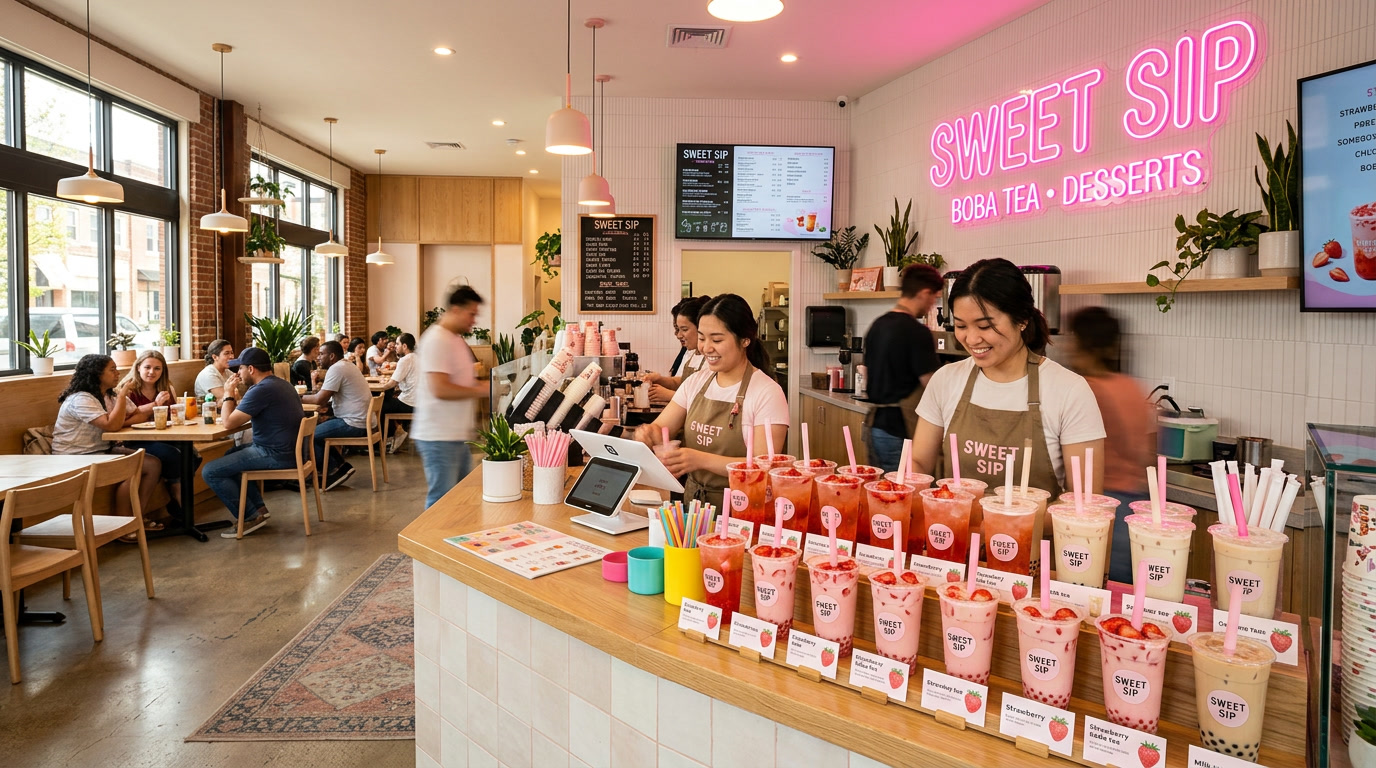
Strawberry boba tea has earned its place as one of the world’s most beloved bubble tea flavors — not by accident, but because it delivers on every dimension: flavor, visuals, versatility, and accessibility. Whether you’re making two cups on a Saturday afternoon or running a commercial boba operation serving hundreds of customers daily, the fundamentals are the same: quality ingredients, consistent preparation, and attention to the details that elevate a drink from ordinary to memorable.
For home brewers, the recipe is straightforward and endlessly customizable — play with the tea base, swap the dairy, try popping boba instead of tapioca, or build a brown sugar swirl version for a weekend project. For operators and entrepreneurs, the rapidly growing global boba market — on track to exceed $4 billion by 2030 — represents a genuine business opportunity, particularly as commercial equipment makes consistent, high-volume production more accessible than ever.
Start with the classic recipe above. Once you’ve mastered the base, every variation is just a substitution away. Your next cup of strawberry boba tea is 20 minutes from now.
Related Articles
- Strawberry Milk Tea: The Ultimate Recipe Guide (Boba, No-Boba & Café Secrets)
- How Many Calories in Boba Tea? Cup Size, Sugar, and Toppings
- Strawberry Bubble Tea: Complete Guide to Ingredients, Recipes & Commercial Production
- Crystal Boba vs Tapioca Pearls: Which Bubble Tea Topping Is Better?
- Popping Boba Production Line
- Konjac Pearl Making Machine
- How Are Skittles Made? The Full Factory Process