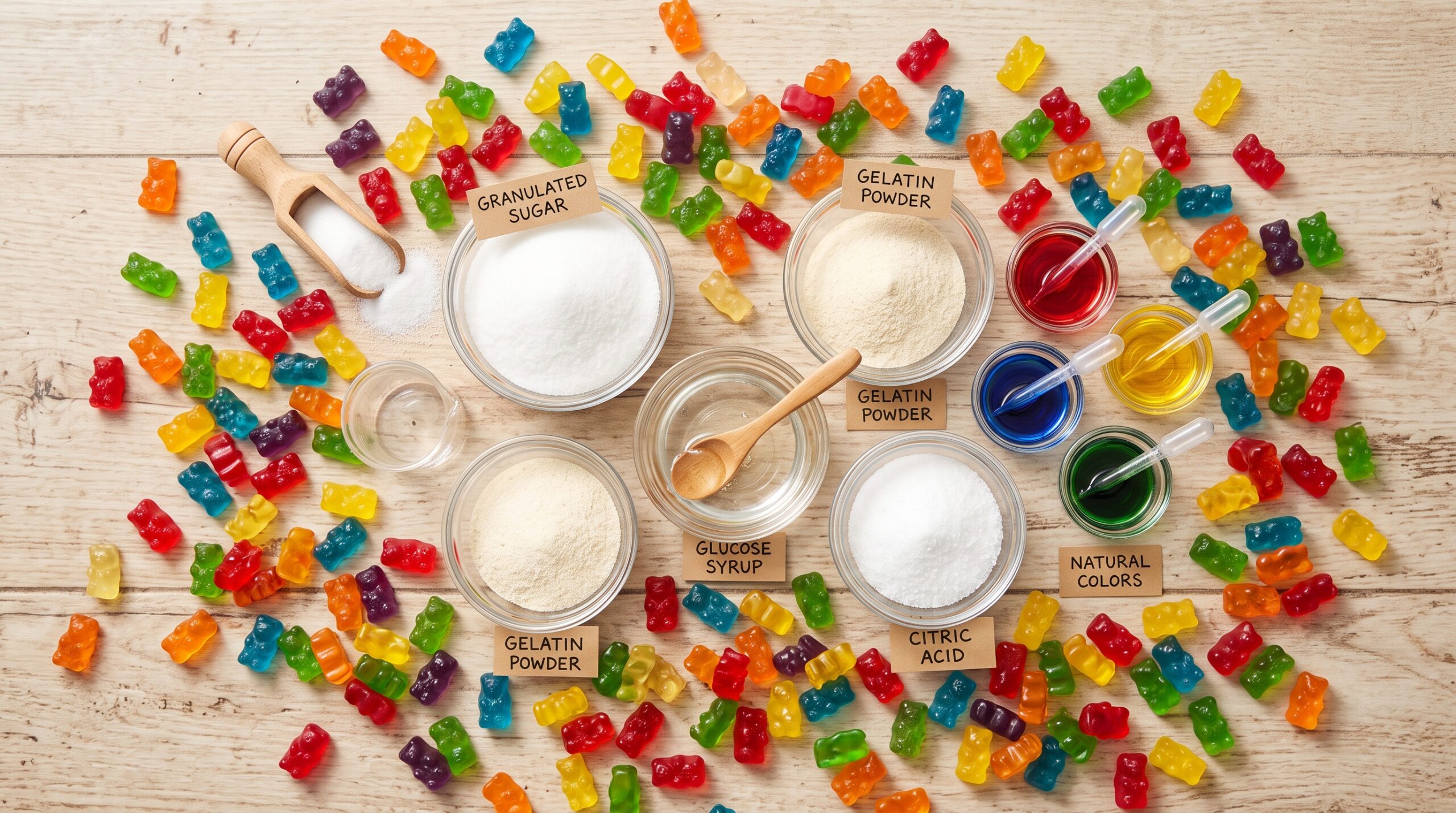
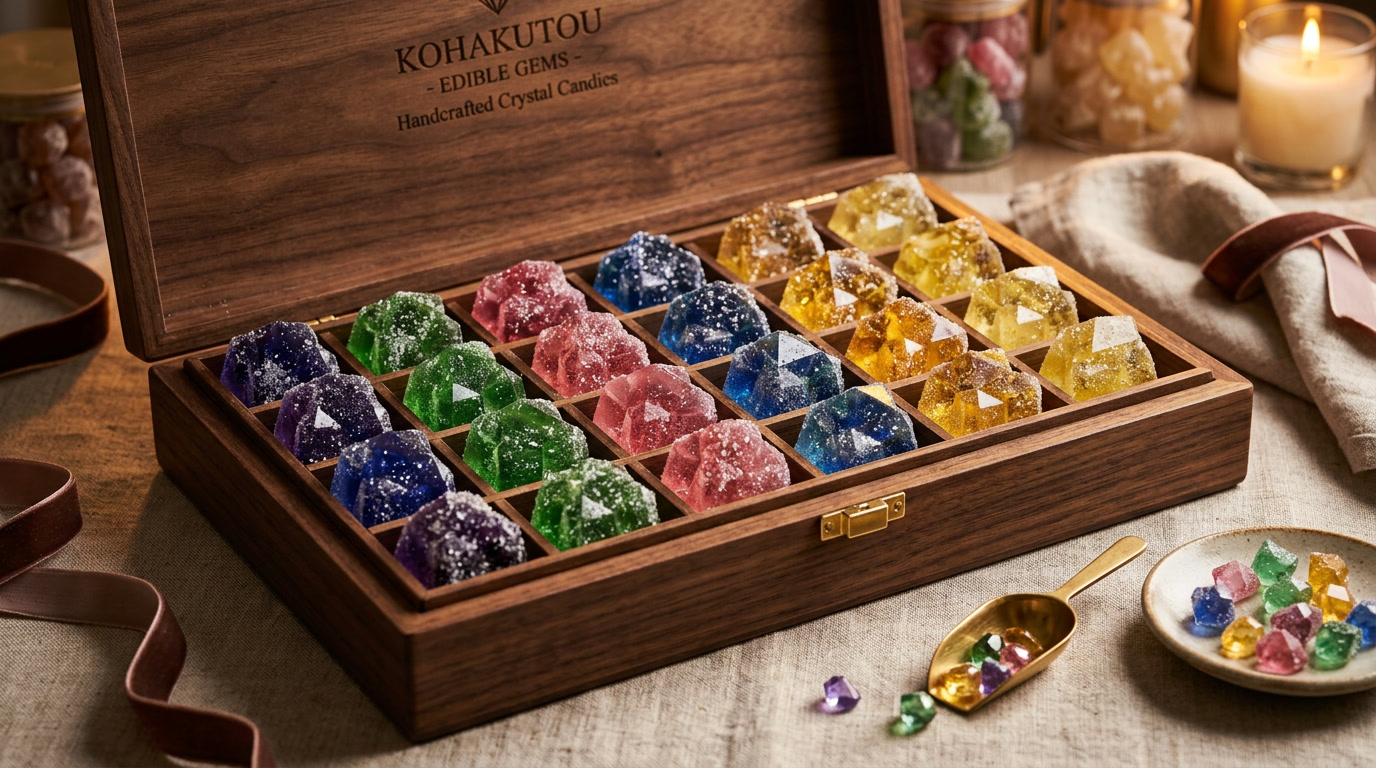
Kohakutou is a Japanese crystal candy made from agar agar and sugar, forming a sparkling crunchy shell around a soft, chewy jewel-like center.
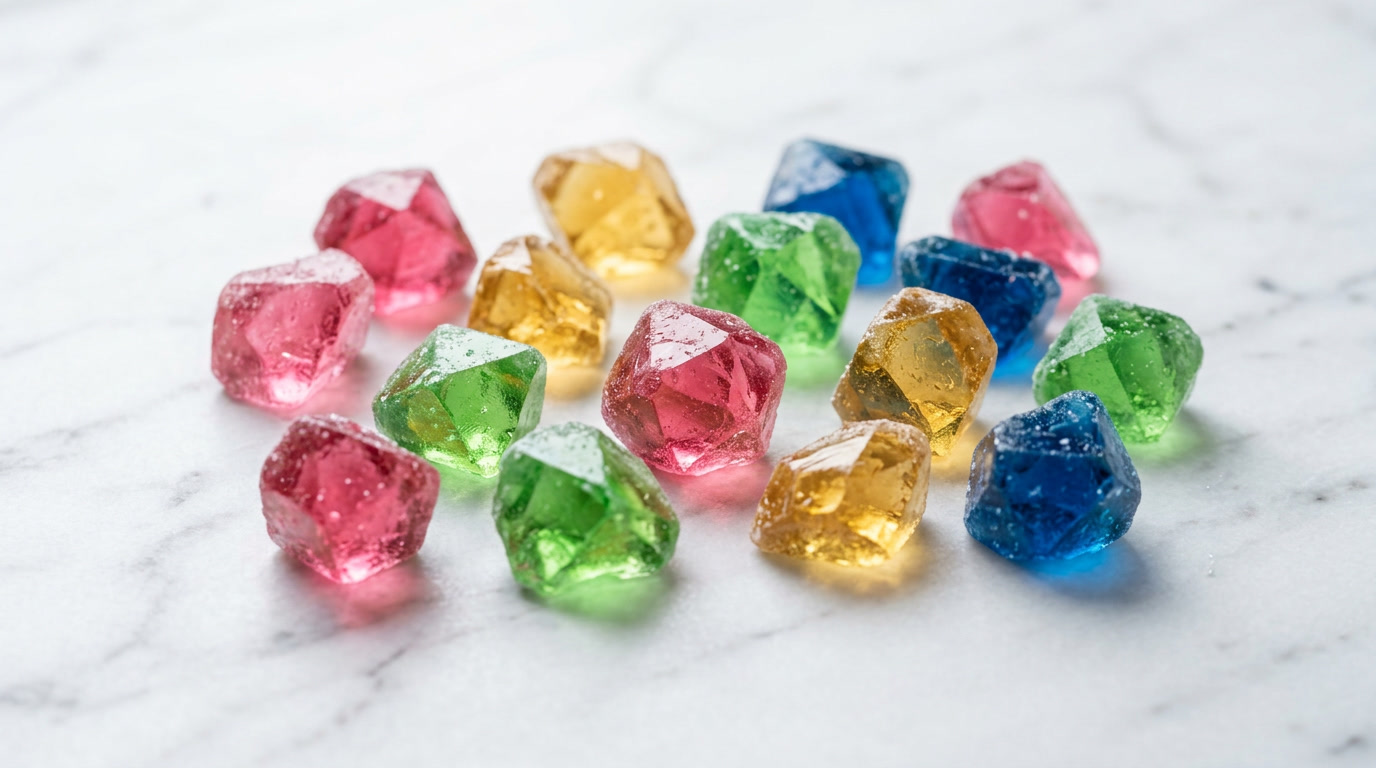
Walk into any high-end Japanese confectionery shop, scroll through dessert posts on social media, or browse a specialty candy store, and you’re likely to stumble across them: translucent, gem-like candy pieces that look almost too beautiful to eat. That’s kohakutou candy — and once you understand what makes them so special, it’s hard to look at a regular piece of hard candy the same way again.
This guide covers everything from what kohakutou is made of, to the different types you’ll encounter, to how they’re produced at commercial scale — and why confectionery manufacturers worldwide are now investing in specialized kohakutou candy production machinery to meet surging demand.
What Is Kohakutou Candy?
Kohakutou (琥珀糖) literally translates to “amber sugar” in Japanese — a fitting name for a candy that resembles polished gemstones or mineral crystals. The word kohaku (琥珀) means amber, and tou (糖) means sugar.
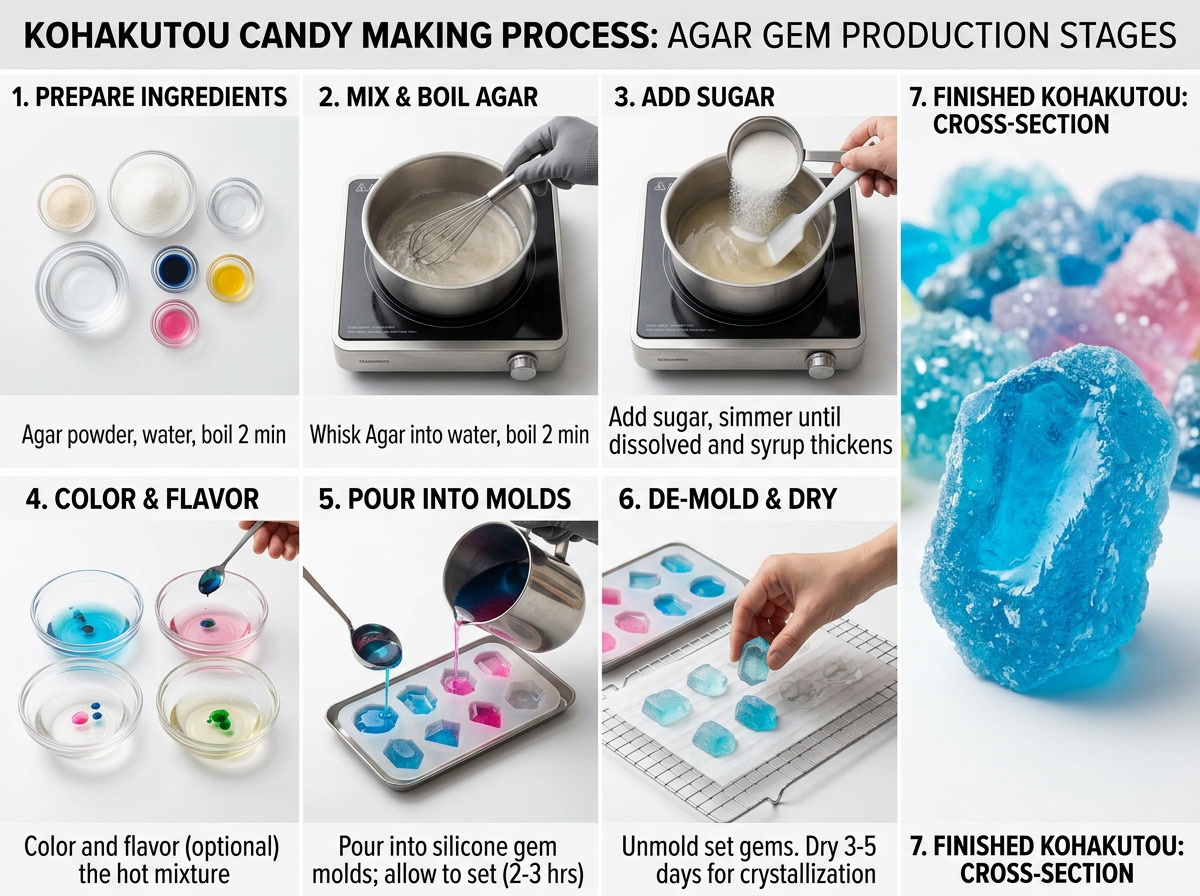
Unlike Western hard candies that are boiled from pure sugar syrup, kohakutou candy starts with agar agar — a plant-based gelling agent derived from red algae. The agar is dissolved with sugar and water, flavored and colored, then poured into molds or shaped by hand. Over the next 3–7 days, the candy undergoes a two-stage transformation: the outer surface slowly dehydrates and crystallizes into a glass-like crunchy crust, while the interior retains a soft, gummy, almost jelly-like texture.
The result is a candy with a dual-texture experience that no other confection can quite replicate — you bite through a crisp, sugar-crystal shell to reveal a yielding, flavorful center. That textural contrast is precisely why kohakutou candy has attracted such passionate fans worldwide.
Origins in Japanese Wagashi Culture
Wagashi are traditional Japanese sweets — meticulous, seasonal, and deeply tied to aesthetics. Kohakutou candy sits within this tradition, originally served at tea ceremonies alongside matcha. Each piece was hand-crafted to represent natural elements: autumn leaves, spring blossoms, mountain crystals.
That artisanal heritage is still very much alive. But commercially produced kohakutou candy now brings this experience to mass markets, from subscription boxes to bulk wholesale candy operations shipping worldwide.
Why It’s Trending Globally
According to YouTube’s trending candy tutorials, kohakutou videos routinely rack up millions of views. The visual appeal — translucent jewel-tone colors, prismatic light refraction, crystal-dusted surfaces — makes it tailor-made for content creation. That viral visual quality has turned a niche Japanese wagashi into a global confectionery phenomenon.
What Is Kohakutou Made Of?
The ingredient list for kohakutou candy is deceptively simple. Most of the magic happens in the process, not in exotic components.
Core Ingredients
| Ingredient | Role | Notes |
|---|---|---|
| Agar agar powder | Gelling agent, forms the base texture | Derived from red algae; vegan |
| Granulated sugar | Sweetener + crystallization medium | Higher sugar ratios = crunchier crust |
| Water | Solvent | Filtered water preferred |
| Food coloring | Visual effect | Gel or liquid; natural or synthetic |
| Flavoring | Taste | Extracts, fruit juices, matcha powder, etc. |
Agar agar is the non-negotiable core ingredient that distinguishes kohakutou from all other crystal candies. It sets firmer and dries more completely than gelatin, which is why the outer crust forms properly. Gelatin substitutes don’t produce the same crystallization — a lesson many home bakers learn the hard way.
The typical ratio is approximately 4g agar powder per 200ml water, combined with 200–300g sugar, though commercial formulations vary considerably based on target texture profile and shelf-life requirements.
Optional Additions
- Citric acid — adds tartness and slightly speeds up surface crystallization
- Corn syrup or glucose syrup — reduces crystallization on the inside, keeping the center softer longer
- Natural fruit purees — intensify color and flavor while maintaining clarity
- Edible glitter or luster dust — applied to the surface after drying for extra visual impact
What Kohakutou Is NOT Made Of
- No gelatin (fully vegan with standard formulations)
- No preservatives required (sugar acts as a natural preservative)
- No artificial thickeners beyond agar
- No coating waxes (unlike many mass-market hard candies)
This clean-label profile has been a significant driver of kohakutou’s appeal among health-conscious consumers and premium candy buyers.
Types of Kohakutou Crystal Candy
Not all kohakutou candy is the same. The category has diversified significantly as demand has grown, and knowing the types is essential for both buyers and producers.
1. Traditional Hand-Shaped Kohakutou (Wagashi Style)
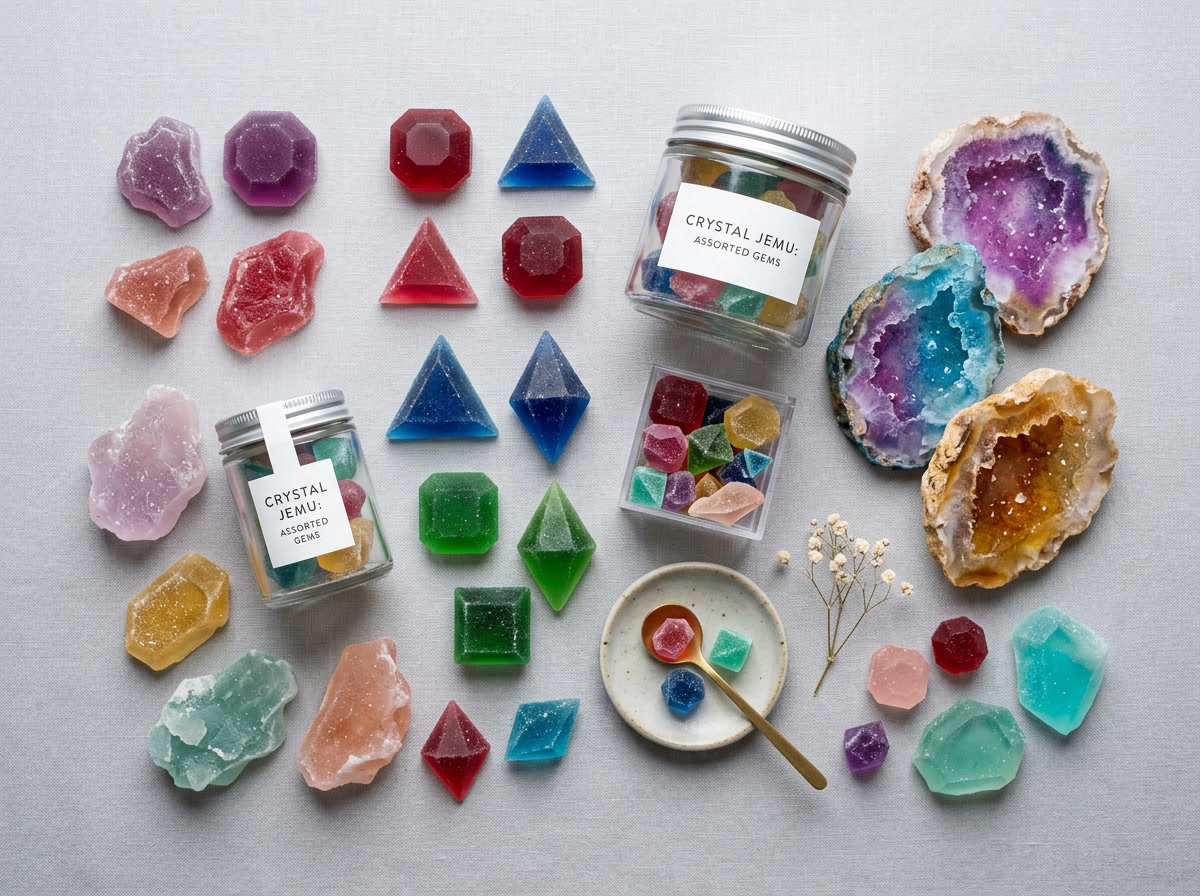
The original form. Artisan confectioners pour the agar mixture into shallow trays, let it set, then cut and shape each piece by hand — sculpting them into organic forms that resemble mineral specimens, natural crystals, or seasonal motifs. These pieces are typically large (3–6 cm), irregular in shape, and feature deep, jewel-tone colors.
Best for: Gift boxes, tea ceremony settings, premium retail. Drying time: 5–7 days at room temperature, with pieces turned daily.
2. Mold-Cast Kohakutou (Commercial / Semi-Artisan)
Agar is poured into silicone or polycarbonate molds — gem facets, star shapes, hexagons, teardrops — then released after setting and dried. The mold gives each piece a uniform, repeatable shape while still producing the distinctive crunchy-chewy texture.
Best for: Subscription box brands, bulk wholesale, gift assortments. This is the format most commercially produced kohakutou candy takes, and it’s where candy production machines become essential.
3. Geode-Style Kohakutou (Showpiece / Novelty)
A larger format piece — sometimes 8–15 cm across — designed to resemble a geode slice or amethyst crystal cluster. Multiple colors are layered or swirled into a single piece. These are primarily for display, photo shoots, and special occasions.
4. Flavored Variety Packs
Modern mass-market kohakutou candy is produced in assorted flavor packs: lychee, yuzu, matcha, strawberry, ume plum, mango. Each flavor has a distinct color, and the pack is designed for visual variety.
| Type | Shape | Drying Time | Target Market |
|---|---|---|---|
| Traditional Wagashi | Organic / hand-cut | 5–7 days | Premium retail, gift |
| Mold-Cast | Geometric, uniform | 3–5 days | Bulk, subscription |
| Geode / Showpiece | Large, display-grade | 7–10 days | Events, food media |
| Flavored Variety Pack | Small uniform cuts | 3–4 days | Mass market, international |
5. Sugar-Free / Reduced-Sugar Variants
An emerging category: kohakutou made with erythritol or monk fruit sweetener in place of sugar. The crystallization behavior changes, so manufacturers typically blend them with small amounts of sucrose or use modified drying protocols to approximate the traditional crunch.
Industry Applications and Commercial Opportunity
Kohakutou candy is no longer purely a cottage confectionery item. It has entered the mainstream commercial candy market, opening significant opportunities for candy manufacturers who invest in the right production infrastructure.
Subscription Box and Direct-to-Consumer Brands
The Japanese snack subscription box boom has created consistent, predictable B2B demand for kohakutou candy in quantities measured in thousands of pieces per month. These brands need reliable, food-safe, visually consistent product at scale.
Specialty Retail and Gift Market
Kohakutou sells at premium price points: $8–25 USD per 100g in US specialty retail. That margin structure supports the economics of artisanal production, while also attracting commercial producers who can deliver at $2–4 cost-of-goods — making the gap extremely profitable.
Industrial Scale: Where Candy Machinery Enters
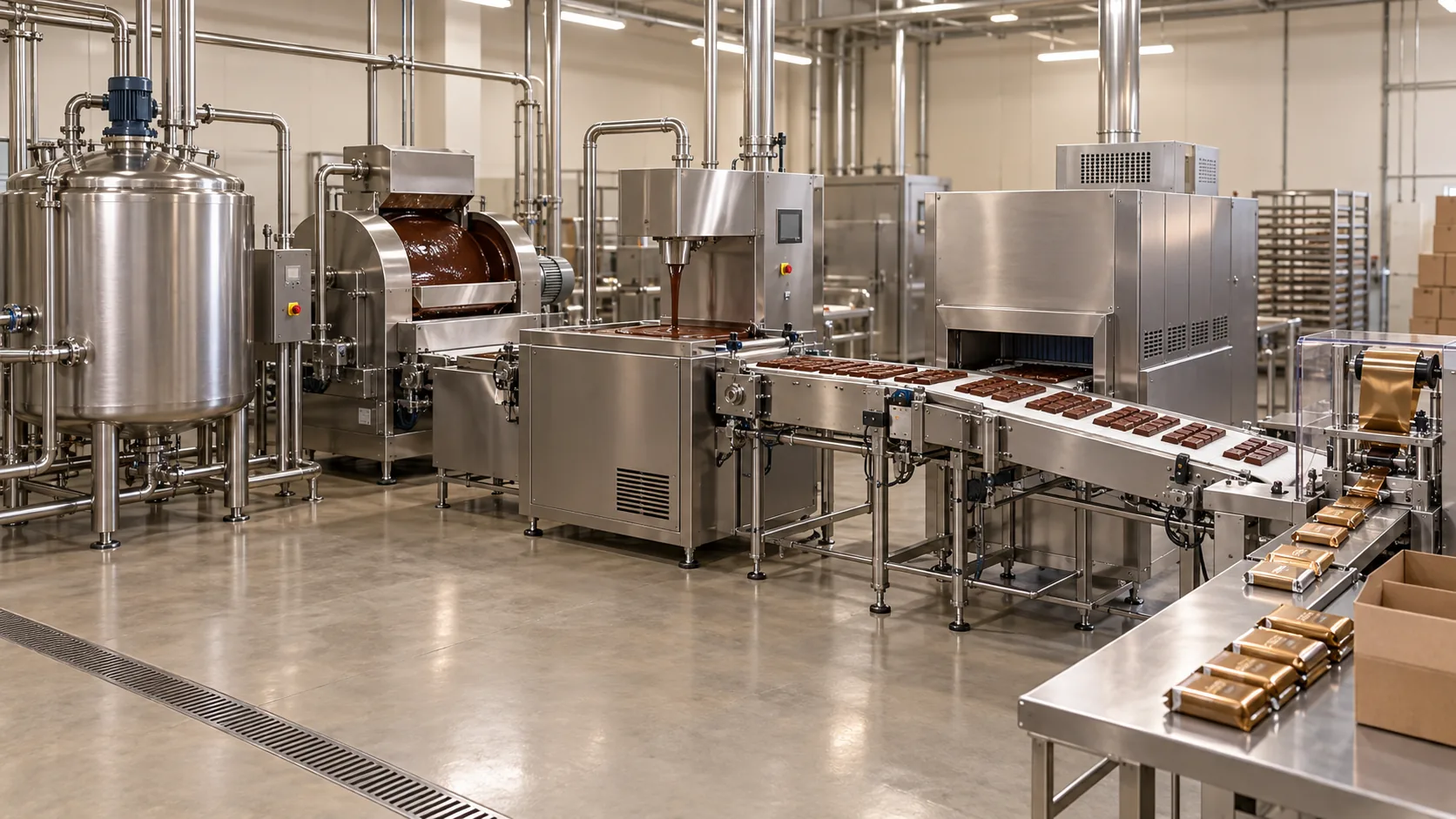
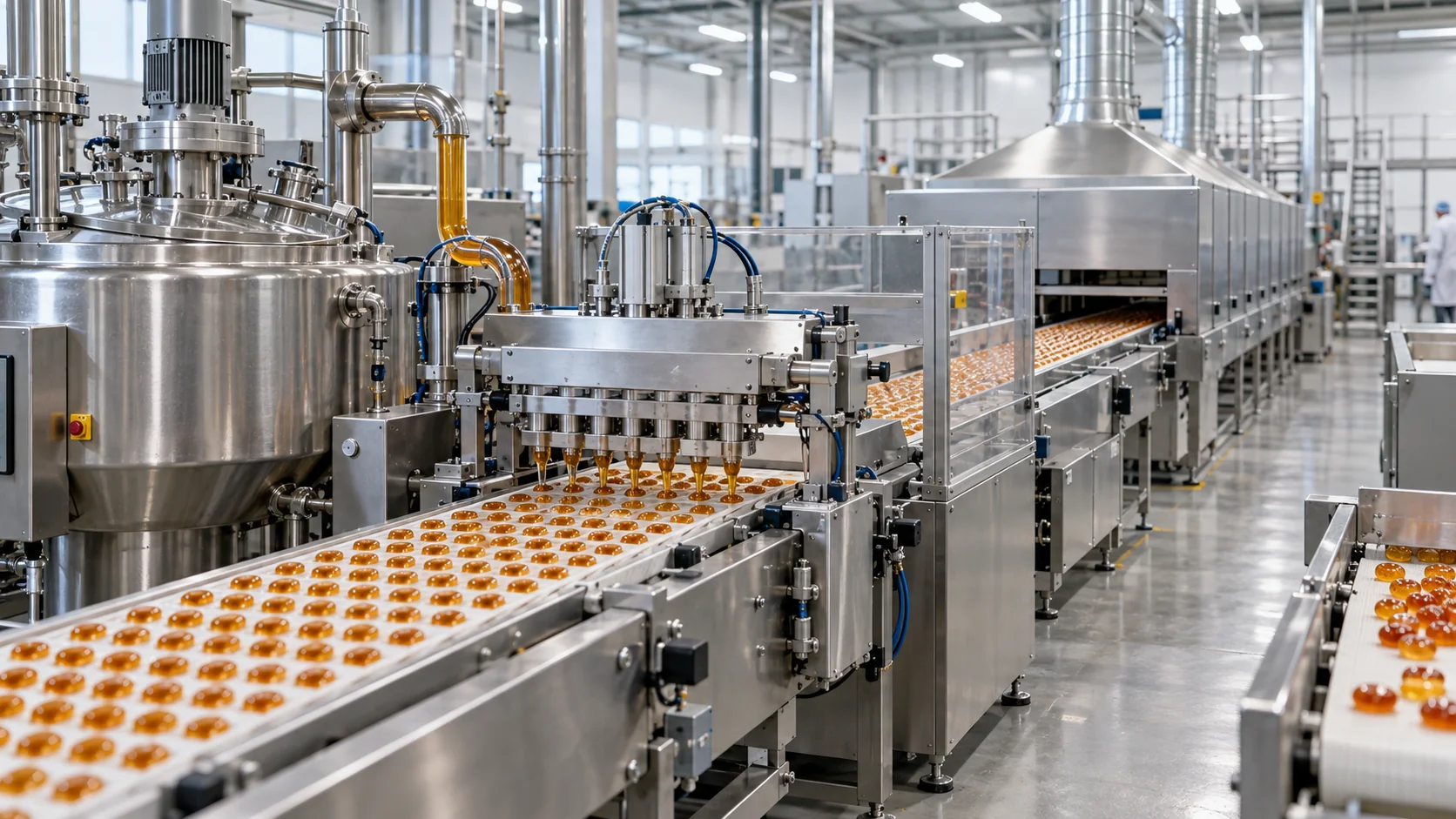
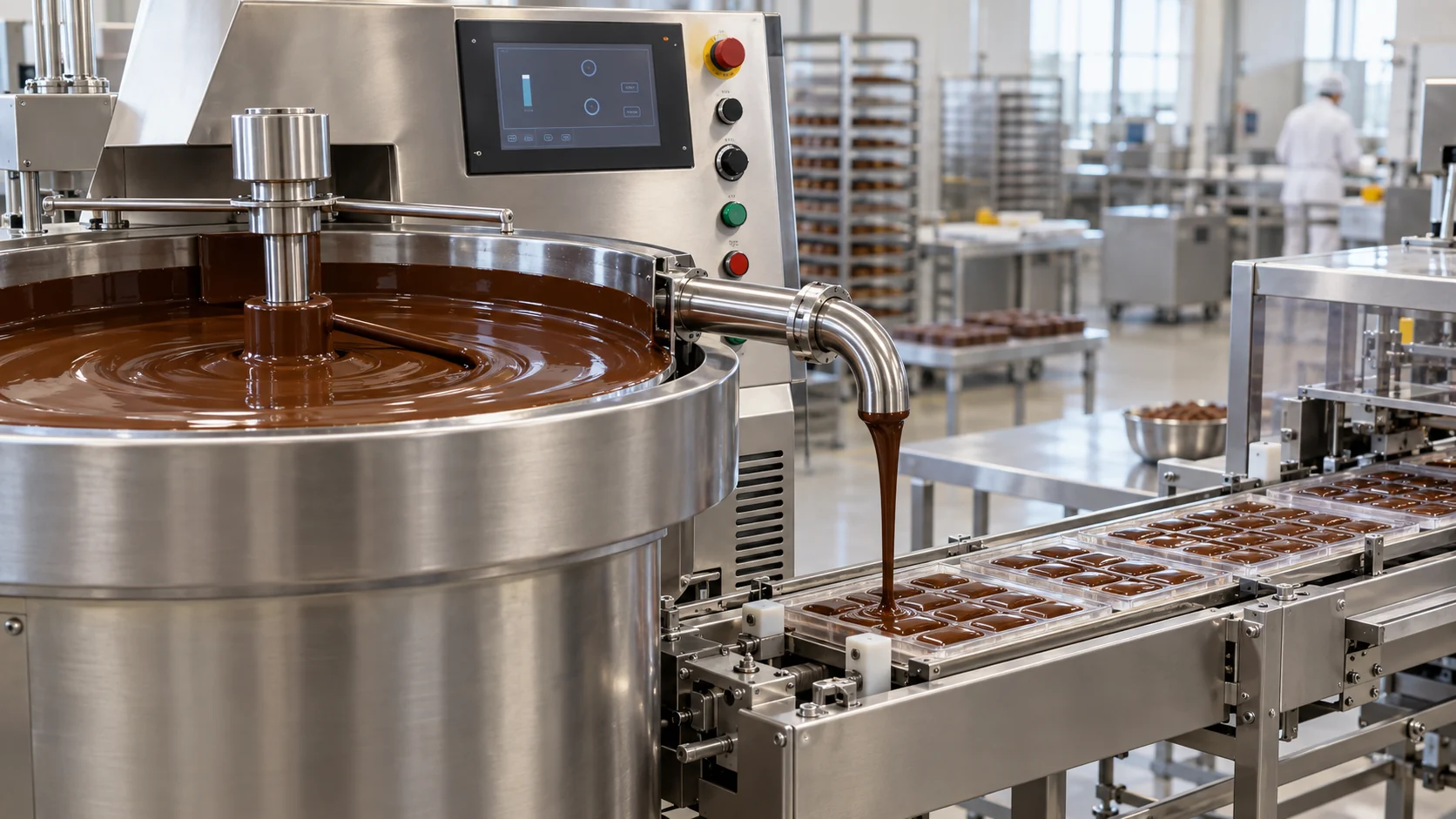
At commercial volumes, the manual steps in kohakutou production become bottlenecks. According to confectionery community discussions, even experienced home makers struggle to achieve consistent crystallization without environmental controls. Industrial candy production lines solve these challenges with purpose-built equipment:
- Jacketed cooking kettles with programmable temperature profiles
- Continuous depositing machines calibrated for agar viscosity
- Multi-zone tunnel dryers with adjustable humidity and airflow
- Optical color inspection systems for quality control
- Weighing and packaging automation
For confectionery manufacturers considering adding kohakutou candy to their product range, the investment in specialized agar candy machinery is justified by the premium pricing and growing global demand.
How to Choose Kohakutou Candy: Buyer’s Guide
Whether purchasing for personal enjoyment, gifting, or evaluating suppliers for commercial purposes, knowing what separates great kohakutou candy from mediocre product is essential.
Visual Quality Indicators
Clarity and translucency — premium kohakutou should be glass-clear or only lightly opaque. Cloudiness usually indicates incomplete agar dissolution, water impurities, or poorly mixed colorants. Hold a piece to the light: you should see light pass through and refract.
Crystal surface — the dried exterior should show visible micro-crystallization: a matte-to-slightly-sparkly finish. An excessively glossy or wet-looking surface means it hasn’t dried properly. A completely matte, powdery white coating means it’s over-dried.
Texture Quality Indicators
The hallmark two-texture experience — crunch then chew — is the defining quality marker for kohakutou candy.
- Crust thickness: 1–2mm of crystallized surface is ideal
- Interior consistency: Should be firm but yielding, not liquid, not rubbery
- No graininess in the interior — grainy texture typically means sugar wasn’t fully dissolved during cooking
Flavor Profile Assessment
| Flavor | Color Convention | Key Notes |
|---|---|---|
| Yuzu | Pale yellow | Citrusy, slightly floral; most iconic for wagashi |
| Matcha | Pale to deep green | Earthy, slightly bitter; quality varies enormously |
| Lychee | Pale pink/rose | Floral, sweet; very popular in mass market |
| Ume plum | Deep red/purple | Tart, savory-sweet; more acquired taste |
| Strawberry | Bright red | Most broadly accessible; best with real fruit juice |
Freshness and Storage
Kohakutou candy has a shelf life of 3–4 weeks at room temperature when stored in a cool, dry environment. High humidity is the enemy — it reverses the crystallization process. For commercial buyers, nitrogen-flush packaging extends shelf life to 8–12 weeks.
Future Trends in Kohakutou Candy (2026 and Beyond)
The kohakutou candy market is evolving rapidly. Here’s what manufacturers, retailers, and serious enthusiasts should watch.
1. Health-Forward Formulations
The “better-for-you candy” trend is arriving in the kohakutou category. Manufacturers are working on sugar-reduced variants (30–50% less sugar with polyol blends) that maintain crystallization behavior, as well as natural-only colorants using beet, butterfly pea flower, spirulina, and turmeric.
2. Regional Flavor Innovation
The global candy market is hybridizing. Expect to see Southeast Asian flavor profiles (pandan, durian, calamansi), Latin American fusion (tamarind, hibiscus, guava), and Middle Eastern notes (rose water, saffron, pistachio). Each new flavor creates a distinct SKU — kohakutou’s color-flavor association makes it ideal for regional customization at commercial scale.
3. Automation-Driven Scale
Manual kohakutou production is being replaced by semi-automated and fully automated production lines. Key technology developments include programmable depositing heads that switch mold patterns without retooling, AI-assisted clarity inspection systems, and climate-controlled continuous dryers that reduce drying time from 5–7 days to 18–36 hours. These advances lower the per-unit cost of high-quality kohakutou candy production significantly.
4. Private Label and White Label Opportunities
Major retailers are commissioning private-label kohakutou candy lines. For manufacturers with HACCP, ISO 22000, and BRC certifications, this represents a significant revenue opportunity with long-term contract potential.
5. Collectible Candy Experiences
Several brands are experimenting with kohakutou candy as a physical collectible — each batch representing a “season” or “collection” with limited-edition colors and shapes. This framing drives repeat purchase and justifies premium pricing.
FAQ: Kohakutou Candy Questions Answered
What is kohakutou made of?
Kohakutou is made from agar agar, sugar, water, and food coloring. Agar agar — a plant-based gelling agent derived from red seaweed — gives it the distinctive crunchy-exterior, chewy-interior texture. No gelatin, no artificial thickeners.
Does kohakutou taste good?
Yes — most people find kohakutou candy pleasant and interesting. The flavor is mild and sweet, similar to a lightly flavored gummy, but the main appeal is the dual texture experience combined with striking visual presentation. Flavor intensity varies by producer and flavoring quality.
What is a kohakutou food?
Kohakutou is classified as a wagashi — traditional Japanese confectionery. In Western terms, it sits between a gummy candy and a hard candy. It’s eaten as a snack, served alongside tea, or given as a gift. Modern commercial versions are available in supermarkets, specialty food stores, and online.
How long does kohakutou candy last?
Stored in a cool, dry place, kohakutou candy keeps well for 3–4 weeks. Commercial products in sealed packaging with desiccant can last 6–12 weeks. Humidity is the main enemy — it softens and dissolves the crystallized crust.
Is kohakutou candy vegan?
Yes — traditional kohakutou uses agar agar (from algae), sugar, and water. It contains no gelatin, dairy, or animal products, making it fully vegan. Always verify labels on commercial products, as some manufacturers add honey or other animal-derived ingredients.
Why does kohakutou have a crunchy exterior?
The crunchy crust forms through dehydration crystallization. As the agar jelly dries over several days, the sugar molecules at the surface recrystallize into a microcrystalline layer, creating the dual-texture contrast that defines kohakutou.
Can kohakutou candy be produced at commercial scale?
Absolutely. Kohakutou candy can be manufactured at industrial scale using agar candy production lines with automated depositing, controlled-environment dryers, and optical inspection systems. Several machinery manufacturers now offer purpose-built kohakutou production equipment for confectionery factories.
Kohakutou candy represents one of confectionery’s most compelling intersections: centuries-old Japanese artisan tradition meeting 21st-century global demand. From its origins as a wagashi served at tea ceremonies to its current status as a viral-worthy premium candy shipped worldwide, kohakutou has proven that when texture, visual beauty, and flavor align — the market responds.
For consumers, the appeal is immediate: few candies look and feel as distinctive. For confectionery manufacturers, the story is equally compelling. The combination of premium pricing, clean-label ingredients, and strong visual differentiability makes kohakutou candy a serious commercial opportunity — one that rewards investment in the right production technology and quality controls. Whether you’re exploring kohakutou for personal enjoyment, evaluating it as a product line addition, or sourcing commercial production equipment, authentic kohakutou candy starts with quality agar, precise temperature control, and patience during crystallization.
Related Articles
- Kohakutou: The Complete Guide to Japanese Crystal Candy (What It Is, How to Make It, and Why It Keeps Trending)
- Japanese Gummies: The Complete Guide to Japan’s World-Famous Chewy Candy
- Japanese Gummy Candy: Varieties, Manufacturing & Industry Guide
- What Makes Sour Candy Sour? The Acids, Chemistry, and Production Secrets
- Gummy Candy Production Line
- Biscuit Production Line
- Are Skittles Gluten Free? Complete Guide 2026