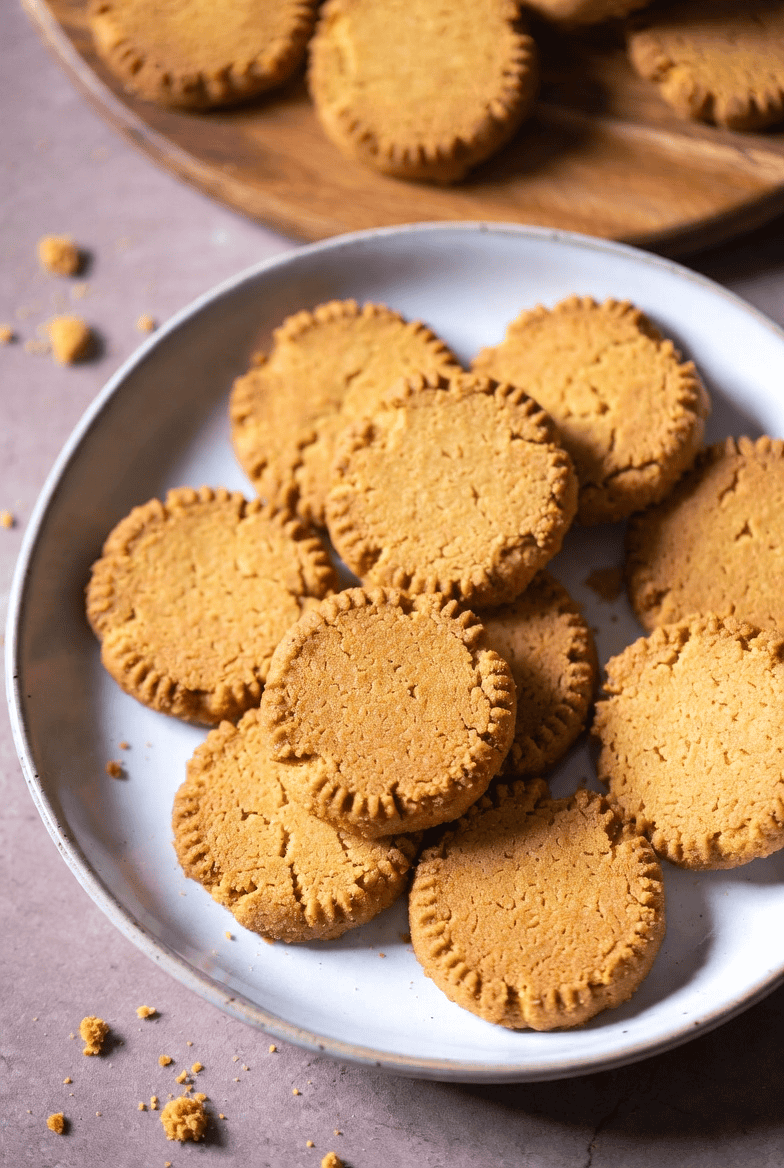
The Designing of a Flawless Cookie: A Detailed Study of Cookie Maker Technology
This isn’t a product review. Instead, we’ll dig deeper than basic baking tips to break down how a cookies maker actually works from a technical perspective. We are talking about the meeting place of mechanical engineering, food science, and industrial automation.
The article delineates the technology stepwise. We shall first examine the basic mechanical laws and thermal science involved in cookie production from dough.
Next, we will delve into the sophisticated control systems and automation that make contemporary, high-precision cookie production attainable.
Main Functional Principles
Every cookies maker operates similarly, whether it is a tiny lab model or a huge industrial production line. They all have the same three systems: preparation of dough, forming and shaping, and thermal processing.
To fully grasp the working of the machine, you need to break it down into individual systems and understand each of them first. Every phase has separate engineering obstacles. Besides, each of them plays a direct role in the quality of the final cookie.
Mixing and Dough Prep
The mixing system has one main job: create a uniform mixture with the right flow properties. Rheology, the term that scientists use for this, is a substance’s ability to flow. This is the stage where the process starts.
Different designs work for different needs. For batch production, planetary mixers are good. For continuous production lines, horizontal mixers are better. The main engineering problem is to manage the dough’s stress and to regulate temperature that rises due to friction.
The mixing speed and time are crucial parameters. If you over mix, you will develop too much gluten in wheat-based doughs. That will make cookies tough and chewy when you want them to be tender.
-
Ingredient Incorporation: The proper distribution of fats, sugars, flour, and other ingredients is done as this step ensures the even mixing of any ingredient. Without this step, your cookies will be inconsistent.
-
Aeration: The addition of air to the dough is a feature of mixing. This is the controlling mechanism for the final dough’s density, cookie spread, and the type of texture it has when baking.
-
Temperature Regulation: A number of industrial mixers are fitted with jacketed bowls. They remove heat from friction through a circulating coolant (like chilled glycol) which keeps the right temperature of the dough.


Forming and Shaping
This system is responsible for the shaping of the cookies. It takes bulk dough from the mixer and transforms it into individual pieces that have uniform shape and weight.
The main technologies are depositing, extruding, and rotary molding. Each method is designed for specific dough types and final product needs.
Thermal Processing Units
This is where the magic happens. Raw dough becomes a finished cookie through precise heat application. It’s much more complex than just “heating.”
The aim is to achieve controlled rising, setting the cookie’s structure, developing the color through chemical reactions, and reducing moisture, so the cookie’s texture and shelf life are as desired.
The Science of Heat Transfer
To really understand a cookies maker, you need to analyze the physics of its oven. How energy transfers to the dough determines the final texture, color, and structure of a cookie. There are three ways heat transfers: convection, conduction, and radiation. All three are used.
Different types of ovens center on one or more of these principles to obtain particular results. The right choice of heating technology is a critical engineering decision for every baking system.
Convection Ovens
Convection ovens use forced hot air to bake. A fan or turbine system moves heated air throughout the baking chamber. This creates uniform temperature throughout.
This method is excellent at creating even browning across the top surface of cookies. It ensures consistent baking from edge to center. The engineering focus is on airflow patterns, fan design, and humidity control.
Typical air speeds in industrial convection ovens are between 1 to 3 meters per second. Higher speeds increase the heat transfer and moisture removal rates. You can adjust this to achieve the final cookie’s desired crispness.

Conduction Ovens
Conduction is the transfer of heat through direct contact. In a cookies maker, this occurs where the dough is placed on the hot surface of the baking equipment. Usually, this is either a steel conveyor band or a pan.
cURL Too many subrequests.
-
cURL Too many subrequests. cURL Too many subrequests. cURL Too many subrequests. cURL Too many subrequests. cURL Too many subrequests. cURL Too many subrequests.
-
cURL Too many subrequests. cURL Too many subrequests. cURL Too many subrequests. cURL Too many subrequests. cURL Too many subrequests.
cURL Too many subrequests.
cURL Too many subrequests.
cURL Too many subrequests.
|
cURL Too many subrequests.
|
Primary Mechanism
|
cURL Too many subrequests.
|
cURL Too many subrequests.
|
|
Convection
|
cURL Too many subrequests.
|
cURL Too many subrequests.
|
Moderate
|
|
Conduction
|
cURL Too many subrequests.
|
cURL Too many subrequests.
|
cURL Too many subrequests.
|
|
cURL Too many subrequests.
|
cURL Too many subrequests.
|
cURL Too many subrequests.
|
Hoog
|
cURL Too many subrequests.
cURL Too many subrequests.
cURL Too many subrequests.
cURL Too many subrequests.
cURL Too many subrequests.
cURL Too many subrequests.
cURL Too many subrequests.
cURL Too many subrequests.
cURL Too many subrequests.
cURL Too many subrequests.
-
cURL Too many subrequests.
-
cURL Too many subrequests.
-
cURL Too many subrequests.
-
cURL Too many subrequests. cURL Too many subrequests. cURL Too many subrequests.
cURL Too many subrequests.
cURL Too many subrequests.
cURL Too many subrequests.
Co-extrusion is a more complex case. Two different materials get extruded simultaneously. A frequent example is a bar filled with fig, where outer dough gets extruded as a tube while filling gets pumped through the center.
The engineering challenge in co-extrusion is massive. It’s necessary to control the flow rates and pressures of two different materials accurately in order to get the right fill ratios.
De Breinen van de Operatie
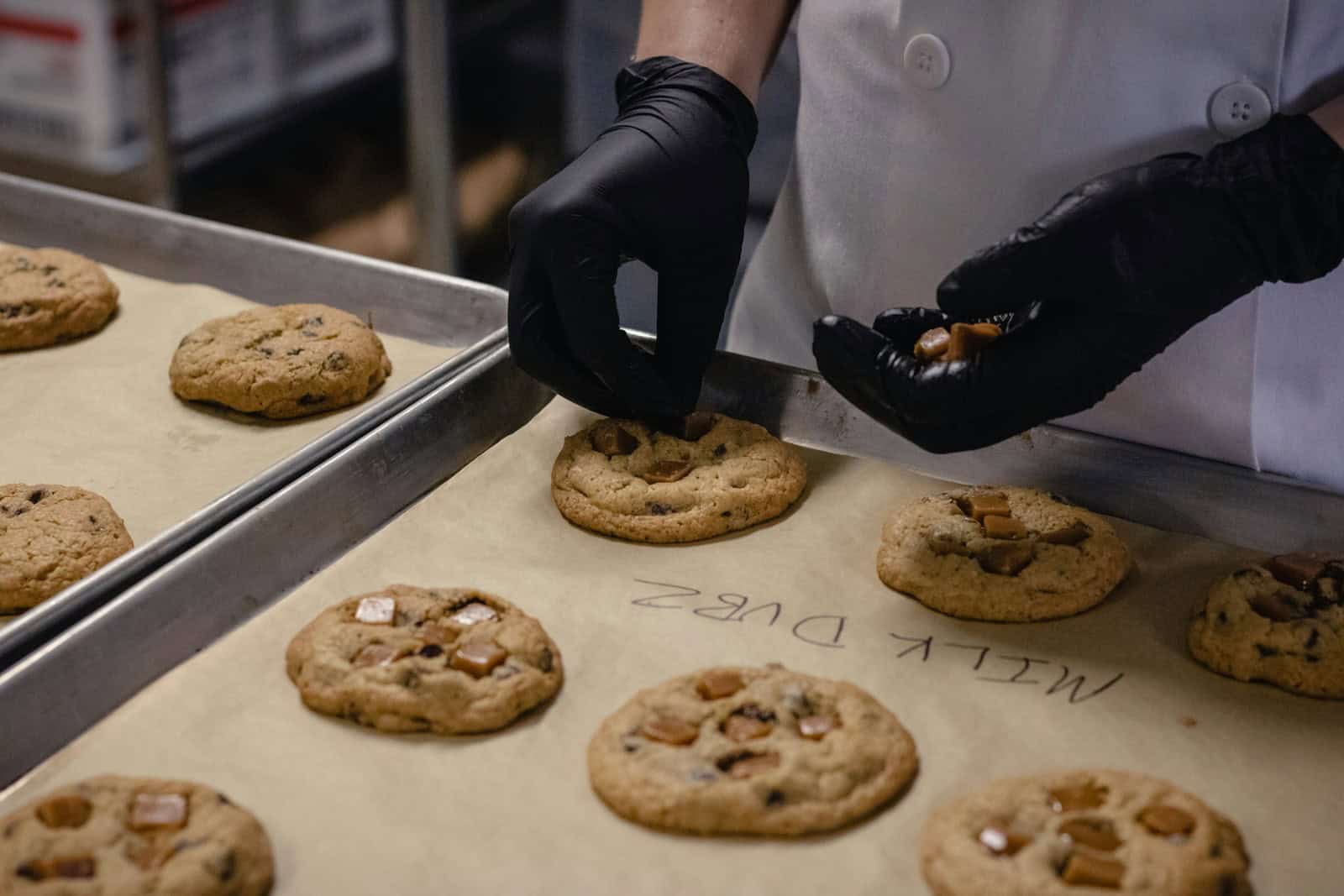
A contemporary cookies maker is more than just mechanical components. It’s a complex electromechanical system that is controlled by advanced automation.
These frameworks have evolved from simple manual dials and timers to fully integrated, software-driven platforms. They ensure consistency, safety, and operational efficiency.
PLCs and HMIs
At the center of any automated cookies maker is a PLC (Programmable Logic Controller). This is the industrial computer, or the “brain,” that runs the programmed logic for the whole process.
The operator interacts with the PLC through an HMI (Human-Machine Interface). This is typically a ruggedized touchscreen display. From the HMI, an operator can select recipes, adjust motor speeds, set oven temperatures, and view diagnostic alarms.
Sensors: The Machine’s Senses
The PLC is dependent on a network of sensors that keep track of every aspect of the production line in real-time. These sensors are the eyes and ears of the machine.
-
Temperature Sensors (Thermocouples/RTDs): These are distributed throughout the oven zones and at times in the mixer to provide crucial temperature data.
-
Optical Sensors/Vision Systems: Cookies are analyzed post-baking using high-speed cameras for size, color, height, and surface defects. Non-compliant products are automatically ejected.
-
Proximity Sensors: These ones are safety-critical devices which know when a guard door is open. They then stop the machine immediately to prevent injury.
-
Load Cells: These electronic scales are placed under mixing vessels or hoppers and measure weight to achieve precise and repeatable batching.
Feedback Loops and Control
The true power of automation is seen in feedback loops. The system uses sensor data to make automatic adjustments.
For example, if a vision system notices that cookies are getting too dark, it will send a signal to the PLC. The PLC will then reduce the temperature in the final oven zone by a few degrees or increase the conveyor belt speed slightly.
These real-time adjustments occur within seconds. They fix slight variations in the dough’s temperature or room humidity. The system is, therefore, able to maintain product quality standards of over 99.5% that cannot be achieved through manual control.
Conclusion: Science and Steel
We have traveled from the mixing and forming basics to the advanced heat transfer physics and modern automation intelligence.
A high-performance cookies maker is a demonstration of the complexity and the smooth running of multiple disciplines. Mechanical engineering gives form. Thermal science manages the transformation. Control systems ensure the precision.
The outcome is a system that is highly efficient and optimization strategy. It is produced through incredible creativity to make sure that everything is just as they ought to be: a perfect cookie.
Referentielinks:
- https://www.sciencedirect.com/journal/journal-of-food-engineering
- https://www.foodengineeringmag.com/
- https://link.springer.com/
- https://ifst.onlinelibrary.wiley.com/journal/13652621
- https://www.sciencedirect.com/journal/innovative-food-science-and-emerging-technologies
- https://www.sciencedirect.com/journal/trends-in-food-science-and-technology
- https://www.degruyterbrill.com/journal/key/ijfe/html
- https://ift.onlinelibrary.wiley.com/
- https://advantechbake.com/
- https://www.bakersauthority.com/