The Designing of a Flawless Cookie: A Detailed Study of Cookie Maker Technology
This isn’t a product review. Instead, we’ll dig deeper than basic baking tips to break down how a cookies maker actually works from a technical perspective. We are talking about the meeting place of mechanical engineering, food science, and industrial automation.
The article delineates the technology stepwise. We shall first examine the basic mechanical laws and thermal science involved in cookie production from dough.
Next, we will delve into the sophisticated control systems and automation that make contemporary, high-precision cookie production attainable.
Main Functional Principles
Every cookies maker operates similarly, whether it is a tiny lab model or a huge industrial production line. They all have the same three systems: preparation of dough, forming and shaping, and thermal processing.
To fully grasp the working of the machine, you need to break it down into individual systems and understand each of them first. Every phase has separate engineering obstacles. Besides, each of them plays a direct role in the quality of the final cookie.
Mixing and Dough Prep
The mixing system has one main job: create a uniform mixture with the right flow properties. Rheology, the term that scientists use for this, is a substance’s ability to flow. This is the stage where the process starts.
Different designs work for different needs. For batch production, planetary mixers are good. For continuous production lines, horizontal mixers are better. The main engineering problem is to manage the dough’s stress and to regulate temperature that rises due to friction.
The mixing speed and time are crucial parameters. If you over mix, you will develop too much gluten in wheat-based doughs. That will make cookies tough and chewy when you want them to be tender.
-
Ingredient Incorporation: The proper distribution of fats, sugars, flour, and other ingredients is done as this step ensures the even mixing of any ingredient. Without this step, your cookies will be inconsistent.
-
Aeration: The addition of air to the dough is a feature of mixing. This is the controlling mechanism for the final dough’s density, cookie spread, and the type of texture it has when baking.
-
Temperature Regulation: A number of industrial mixers are fitted with jacketed bowls. They remove heat from friction through a circulating coolant (like chilled glycol) which keeps the right temperature of the dough.


Forming and Shaping
This system is responsible for the shaping of the cookies. It takes bulk dough from the mixer and transforms it into individual pieces that have uniform shape and weight.
The main technologies are depositing, extruding, and rotary molding. Each method is designed for specific dough types and final product needs.
Thermal Processing Units
This is where the magic happens. Raw dough becomes a finished cookie through precise heat application. It’s much more complex than just “heating.”
The aim is to achieve controlled rising, setting the cookie’s structure, developing the color through chemical reactions, and reducing moisture, so the cookie’s texture and shelf life are as desired.
The Science of Heat Transfer
To really understand a cookies maker, you need to analyze the physics of its oven. How energy transfers to the dough determines the final texture, color, and structure of a cookie. There are three ways heat transfers: convection, conduction, and radiation. All three are used.
Different types of ovens center on one or more of these principles to obtain particular results. The right choice of heating technology is a critical engineering decision for every baking system.
Convection Ovens
Convection ovens use forced hot air to bake. A fan or turbine system moves heated air throughout the baking chamber. This creates uniform temperature throughout.
This method is excellent at creating even browning across the top surface of cookies. It ensures consistent baking from edge to center. The engineering focus is on airflow patterns, fan design, and humidity control.
Typical air speeds in industrial convection ovens are between 1 to 3 meters per second. Higher speeds increase the heat transfer and moisture removal rates. You can adjust this to achieve the final cookie’s desired crispness.

Conduction Ovens
Conduction is the transfer of heat through direct contact. In a cookies maker, this occurs where the dough is placed on the hot surface of the baking equipment. Usually, this is either a steel conveyor band or a pan.
This method makes a cookie’s bottom crisp and browned. However, the thermal properties of the baking surface become a major designing issue.
-
cURL Too many subrequests. 밴드: 장점: 효율적인 열 전달과 좋은 베이킹을 위한 뛰어난 열 전도성. 단점: 녹슬 수 있으며 세심한 관리가 필요합니다.
-
스테인리스 스틸 밴드: 장점: 매우 내구성이 강하고 녹에 강하며 식품 안전에 좋습니다. 단점: 열 전도성이 좋지 않아 베이킹 설정을 조정해야 할 수 있습니다.
적외선 및 복사 가열
복사 가열은 주로 적외선 범위의 전자기파를 통해 에너지를 전달합니다. 이 에너지는 공기를 매개체로 사용하지 않고 가열 요소에서 반죽 표면으로 직접 이동합니다.
이 방법은 매우 효율적이며 빠른 표면 가열을 제공합니다. 특히 색상과 완성된 크러스트를 개발하는 데 좋습니다. 갈변 및 캐러멜화를 생성하는 화학 반응을 가속화합니다.
|
가열 방식
|
주요 메커니즘
|
쿠키에 미치는 영향
|
에너지 효율
|
|
대류
|
뜨거운 공기 순환
|
균일한 갈변, 균일한 식감
|
보통
|
|
전도
|
직접 표면 접촉
|
바삭한 바닥, 하단 갈변
|
높음 (접촉 지점)
|
|
적외선
|
전자기 복사
|
cURL Too many subrequests.
|
높음
|
cURL Too many subrequests.
cURL Too many subrequests.
cURL Too many subrequests.
cURL Too many subrequests.
cURL Too many subrequests.
cURL Too many subrequests.
cURL Too many subrequests.
cURL Too many subrequests.
cURL Too many subrequests.
cURL Too many subrequests.
-
cURL Too many subrequests.
-
cURL Too many subrequests.
-
cURL Too many subrequests.
-
cURL Too many subrequests. cURL Too many subrequests. cURL Too many subrequests.
cURL Too many subrequests.
cURL Too many subrequests.
cURL Too many subrequests.
공압출은 더 복잡한 경우입니다. 두 가지 다른 재료가 동시에 압출됩니다. 흔한 예로는 무화과가 채워진 바가 있는데, 이때 외부 반죽은 튜브 형태로 압출되고 충전물은 중앙을 통해 펌핑됩니다.
공압출의 공학적 과제는 엄청납니다. 올바른 충전 비율을 얻기 위해서는 두 가지 다른 재료의 유량과 압력을 정확하게 제어해야 합니다.
작동의 두뇌
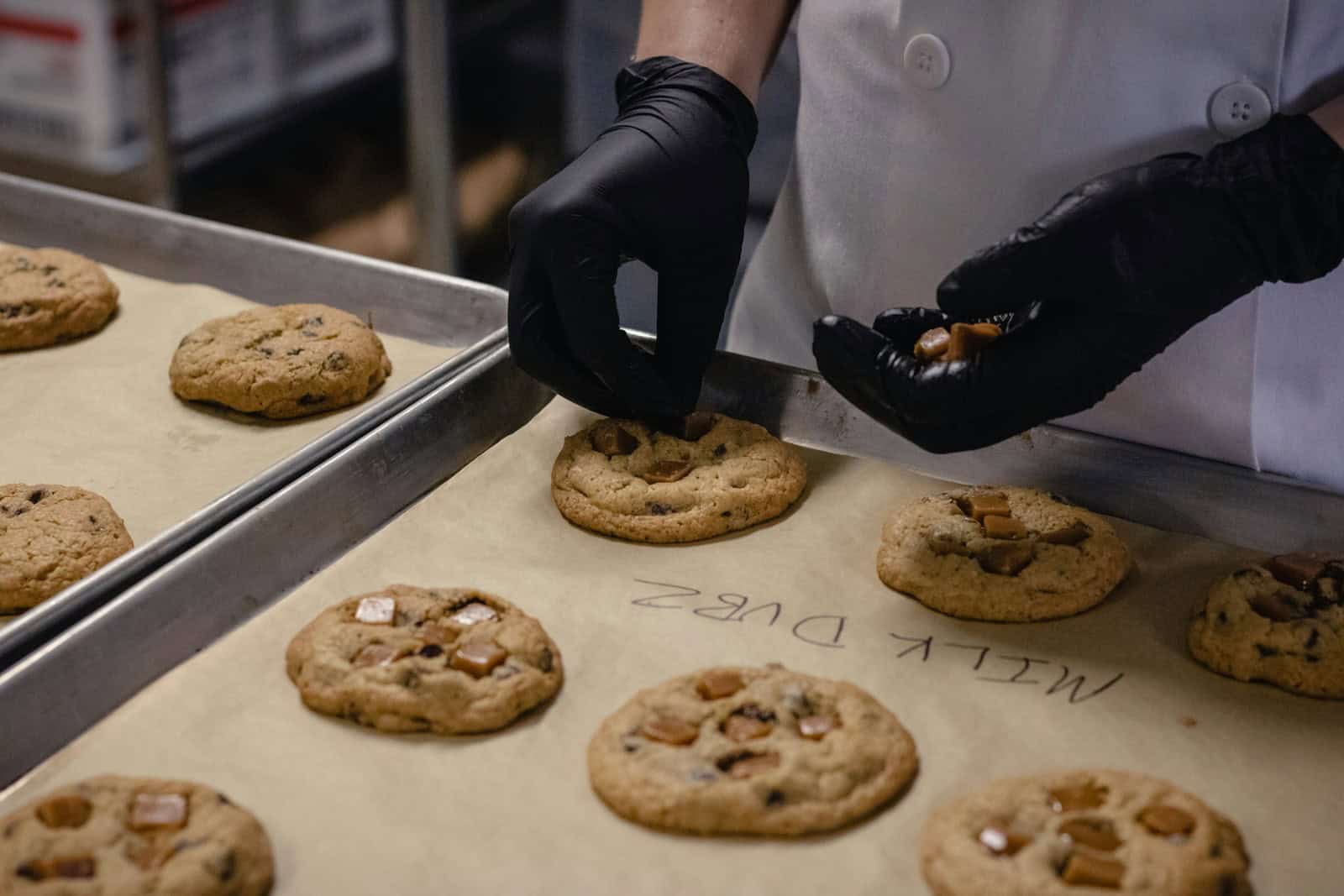
현대의 쿠키 제조기는 단순히 기계 부품 이상입니다. 이는 첨단 자동화로 제어되는 복잡한 전기 기계 시스템입니다.
이러한 프레임워크는 단순한 수동 다이얼과 타이머에서 완전히 통합된 소프트웨어 기반 플랫폼으로 발전했습니다. 이는 일관성, 안전성 및 운영 효율성을 보장합니다.
PLC 및 HMI
모든 자동화된 쿠키 제조기의 중심에는 PLC(Programmable Logic Controller)가 있습니다. 이것은 전체 공정을 위한 프로그래밍된 로직을 실행하는 산업용 컴퓨터, 즉 '두뇌'입니다.
작업자는 HMI(Human-Machine Interface)를 통해 PLC와 상호 작용합니다. 이는 일반적으로 견고한 터치스크린 디스플레이입니다. HMI에서 작업자는 레시피를 선택하고, 모터 속도를 조절하고, 오븐 온도를 설정하고, 진단 알람을 볼 수 있습니다.
센서: 기계의 감각
PLC는 생산 라인의 모든 측면을 실시간으로 추적하는 센서 네트워크에 의존합니다. 이 센서들은 기계의 눈과 귀입니다.
-
온도 센서(열전대/RTD): 이것들은 오븐 구역 전체와 때로는 믹서에 분산되어 중요한 온도 데이터를 제공합니다.
-
광학 센서/비전 시스템: 쿠키는 고속 카메라를 사용하여 베이킹 후 크기, 색상, 높이 및 표면 결함을 분석합니다. 규격에 맞지 않는 제품은 자동으로 배출됩니다.
-
근접 센서: 이것들은 안전에 중요한 장치로, 보호문이 열렸을 때를 감지합니다. 그런 다음 부상을 방지하기 위해 즉시 기계를 멈춥니다.
-
로드셀: 이 전자 저울은 혼합 용기 또는 호퍼 아래에 배치되어 무게를 측정하여 정밀하고 반복 가능한 배치 작업을 수행합니다.
피드백 루프 및 제어
자동화의 진정한 힘은 피드백 루프에서 나타납니다. 시스템은 센서 데이터를 사용하여 자동 조정을 수행합니다.
예를 들어, 비전 시스템이 쿠키가 너무 어두워지고 있음을 감지하면 PLC에 신호를 보냅니다. 그러면 PLC는 최종 오븐 구역의 온도를 몇 도 낮추거나 컨베이어 벨트 속도를 약간 높입니다.
이러한 실시간 조정은 몇 초 안에 이루어집니다. 이는 반죽의 온도나 실내 습도의 미세한 변화를 수정합니다. 따라서 이 시스템은 수동 제어로는 달성할 수 없는 99.5% 이상의 제품 품질 기준을 유지할 수 있습니다.
결론: 과학과 강철
우리는 혼합 및 성형의 기본부터 고급 열전달 물리학 및 현대 자동화 지능에 이르기까지 나아왔습니다.
고성능 쿠키 제조기는 여러 분야의 복잡성과 원활한 작동을 보여줍니다. 기계 공학은 형태를 부여합니다. 열 과학은 변형을 관리합니다. 제어 시스템은 정밀도를 보장합니다.
그 결과는 고효율 및 최적화 전략을 갖춘 시스템입니다. 모든 것이 완벽한 쿠키처럼 되어야 한다는 것을 보장하기 위한 놀라운 창의력을 통해 생산됩니다.
참고 링크:
- https://www.sciencedirect.com/journal/journal-of-food-engineering
- https://www.foodengineeringmag.com/
- https://link.springer.com/
- https://ifst.onlinelibrary.wiley.com/journal/13652621
- https://www.sciencedirect.com/journal/innovative-food-science-and-emerging-technologies
- https://www.sciencedirect.com/journal/trends-in-food-science-and-technology
- https://www.degruyterbrill.com/journal/key/ijfe/html
- https://ift.onlinelibrary.wiley.com/
- https://advantechbake.com/
- https://www.bakersauthority.com/