
The Glendale City Council recently unanimously approved a development agreement to waive $750,000 in development fees for a new facility for Red Bull, Rauch Fruit Juices and Ball Corp. The 700,000-square-foot facility will be located in the Woolf Logistics Industrial Campus, near Peoria Avenue and Reems Road. Read on to learn more about the new facility. And, while you’re here, take a moment to learn about the various processes involved in the production of fruit juice balls.
알긴산 나트륨
Sodium alginate is an ingredient found in many fruit juices. It is a polymer that contains water and can be used to teach students about hydrocolloids and diffusion. It can also be used as an ingredient in fruit juice balls. The solids content of alginate is around 8%, which is sufficient for the production of sodium alginate. The process of making these balls involves mixing the alginate with water to form a 50:50 mixture.
Sodium alginate is derived from brown algae. It is a thickening agent and forms heat-stabilized gels in the presence of calcium. It also has spherifying properties. Alginate has been used in the food industry for decades. It contains long strands of carbohydrate units and is an effective thickening agent even at low concentrations.
Tapioca pearls
When you look at a fruit juice ball, you will notice it is sweet. This is mainly due to the tapioca starch in the pearls. In addition to the sugar, tapioca pearls also contain carbohydrates, making them high in calories. Tapioca pearls are available in many Asian groceries. You can also make them at home using tapioca starch.
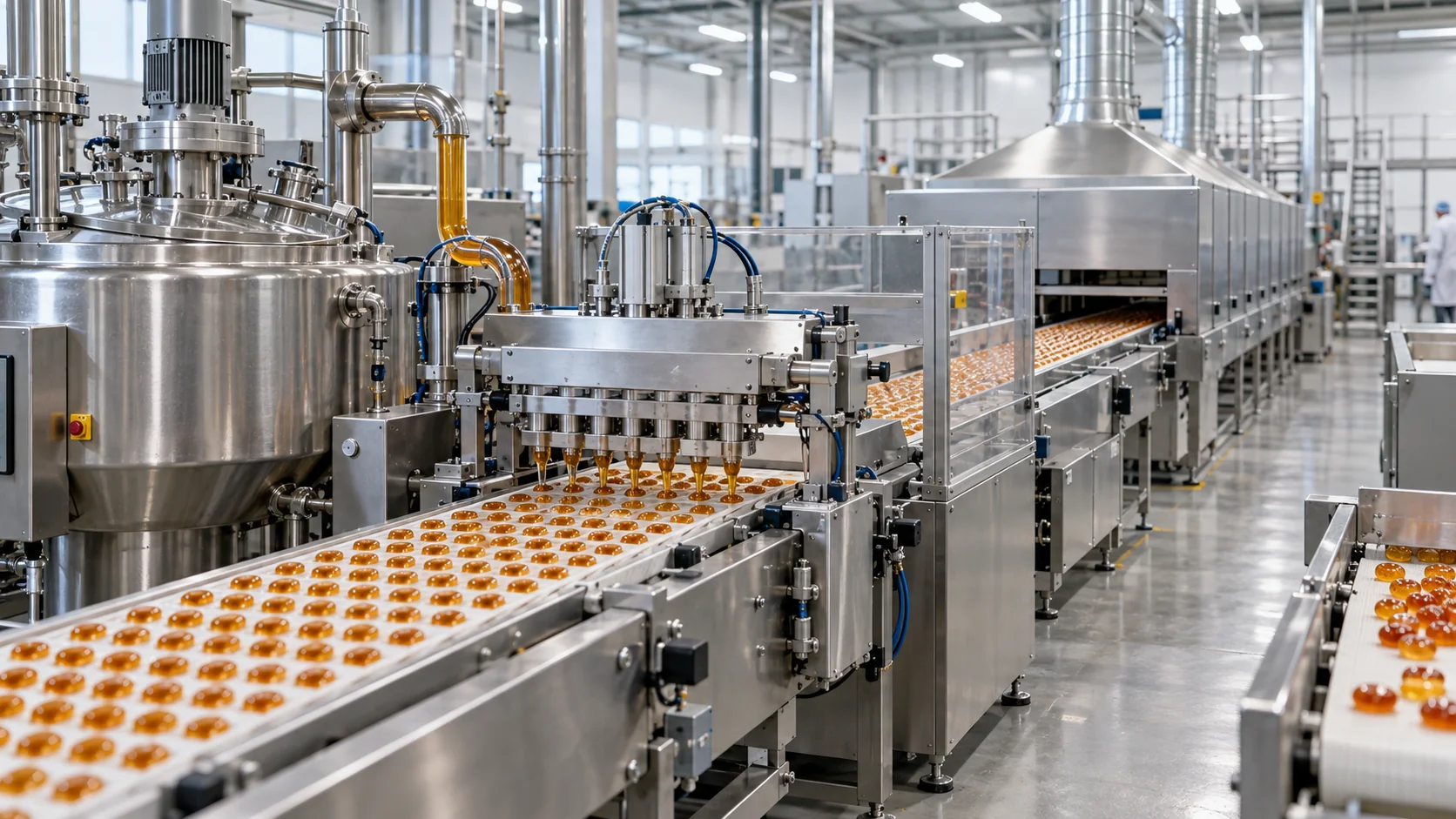
To make the balls, you can mix tapioca flour or starch with boiling water to form a dough. Once the mixture has cooled, you can knead it into a smooth spherical shape. The gangsor method is one way to achieve this shape. The worker who works with the mixture will use a jerking motion to toss the starch lumps back and forth, until it becomes a spherical shape. Once it is smooth and spherical, the process is repeated until the product is the desired size. The final product will be sorted by size.
Multi-effect vacuum evaporators
Vacuum evaporators can be divided into multiple effects. In the first effect, steam is used to heat the juice while in the following stages, the vapor is heated by the evaporation process from the previous stage. The vapor is mostly water but contains a small proportion of volatile materials from the juice. By removing part of the vapor from the heating effect, the juice is converted into sugar crystals.
The advantages of multi-effect evaporators include their versatility and energy-efficient operation. These devices can handle a large volume of wastewater without excessively increasing energy costs. While the investment costs are higher, they are less energy-intensive and more suitable for high-flow applications. In addition, they can be extended from one to two or three stages, increasing production without adding extra heat.
Calandrias
Using a technology called ultrafiltration (UF), the fruits are separated from solid matter by a filter. The process produces juice with a lower J value than water. The difference may be due to the polarization boundary layer or the concentration of rejected solutes at the membrane surface. Fouling occurs when the pore is blocked and some of the process is reversible. A filter has to be clean to remove impurities.
The evaporator is a short tube vertical evaporator. The machine heats the product to a specific temperature, holds it for a certain time, and then cools it down to filling temperature. The temperature can be adjusted anywhere from 50degC to 150degC. The evaporator itself is simple to maintain and can be incorporated into a single building.
Storage conditions for “boba” balls
The present study investigated the sensory changes of fruit juice “boba” balls stored under different storage temperatures. The sensory attributes included colour, aroma, stratification, and breakage rate. The Arrhenius equation was used to estimate shelf-life. At different storage temperatures, “boba” balls lost sensory quality after a certain time and reached below the shelf-life limit. Therefore, the optimal storage conditions must be determined by considering the sensory characteristics of the product.
If you’d like to store fruit juice “boba” balls for a longer period of time, consider making a sugar syrup. The sugar will keep the boba soft for a few days, but if you leave it in simple syrup for too long, it will become crunchy in the middle. For a quick fix, simply boil the boba in the syrup for five to ten minutes, and keep it in the fridge.
생산 비용
The cost of setting up a fruit juice factory can range from five lakhs to fifty lakhs, depending on the type of machine and location. A manual or semi-automatic machine will cost less than three lakhs. A 자동 기계는 can cost up to twenty lakhs. A bottling line will cost about a million rupees. This cost depends on the amount of money you are willing to invest in your business.
This process involves the extraction of the AP1 component from the juice. The extraction phase is the most important from an economic standpoint, as the more water is added, the more energy will be consumed in the subsequent steps, such as drying. Once AP1 is extracted, it is further refined through a distillation and concentration process. In addition, the cost of fruit juice balls can increase drastically. For this reason, the amount of apple pomace that needs to be processed should be as low as possible.