
The Engineer’s Guide to Candy Cutting Machines: A Deep Technical Analysis
Introduction: Core Slicing Technology
Candy factories need three things: precision, consistency, and speed. The cutting stage is where these needs come together. It’s the final step that determines how good your product looks, how much it weighs, and whether customers will buy it again.
This guide goes beyond the basics. We’ll break down the mechanical, electronic, and material science principles that make modern candy cutting machines work.
The Engineering Challenge
Cutting candy isn’t simple. The material changes constantly. You’re dealing with sticky surfaces, temperature swings, and hard pieces like nuts or sugar crystals that can damage your equipment.
To build a good cutting system, you need to understand how these properties work together. You need to know what happens when mechanical forces meet different blade materials at high speeds.
Article Roadmap: Technical Aspects
-
Fundamental Mechanical Principles
-
A Comparative Analysis of Cutting Technologies
-
Material Science for Blades and Contact Parts
-
Automation, Sensors, and Control Systems
-
Operational and Maintenance Considerations
Fundamental Mechanical Principles
Before you can evaluate any candy cutting machine, you need to understand the physics. When a blade meets candy, it’s a complex dance of force, temperature, and material properties.
Shear Stress and Deformation
Cutting is controlled breaking. A blade puts concentrated force on a small area. This creates shear stress that’s stronger than the candy’s ability to hold together.
How the candy responds depends on what it’s made of. Hard candies break cleanly when you overcome their strength. Soft products like taffy stretch and deform before they separate. It’s more like controlled tearing.
Know whether your product is brittle or stretchy. This knowledge helps you pick the right cutting method and settings.
The Role of Heat
When blade meets candy, friction creates heat. This heat can ruin everything. It causes smearing, melting, or sticky surfaces that mess up your product quality and gum up your equipment.
The glass transition temperature matters here. For hard candies, you must cut well below this temperature to get clean breaks. For products like nougat, you need controlled heat. The sweet spot is often 40-50°C, where the product is firm but not brittle.
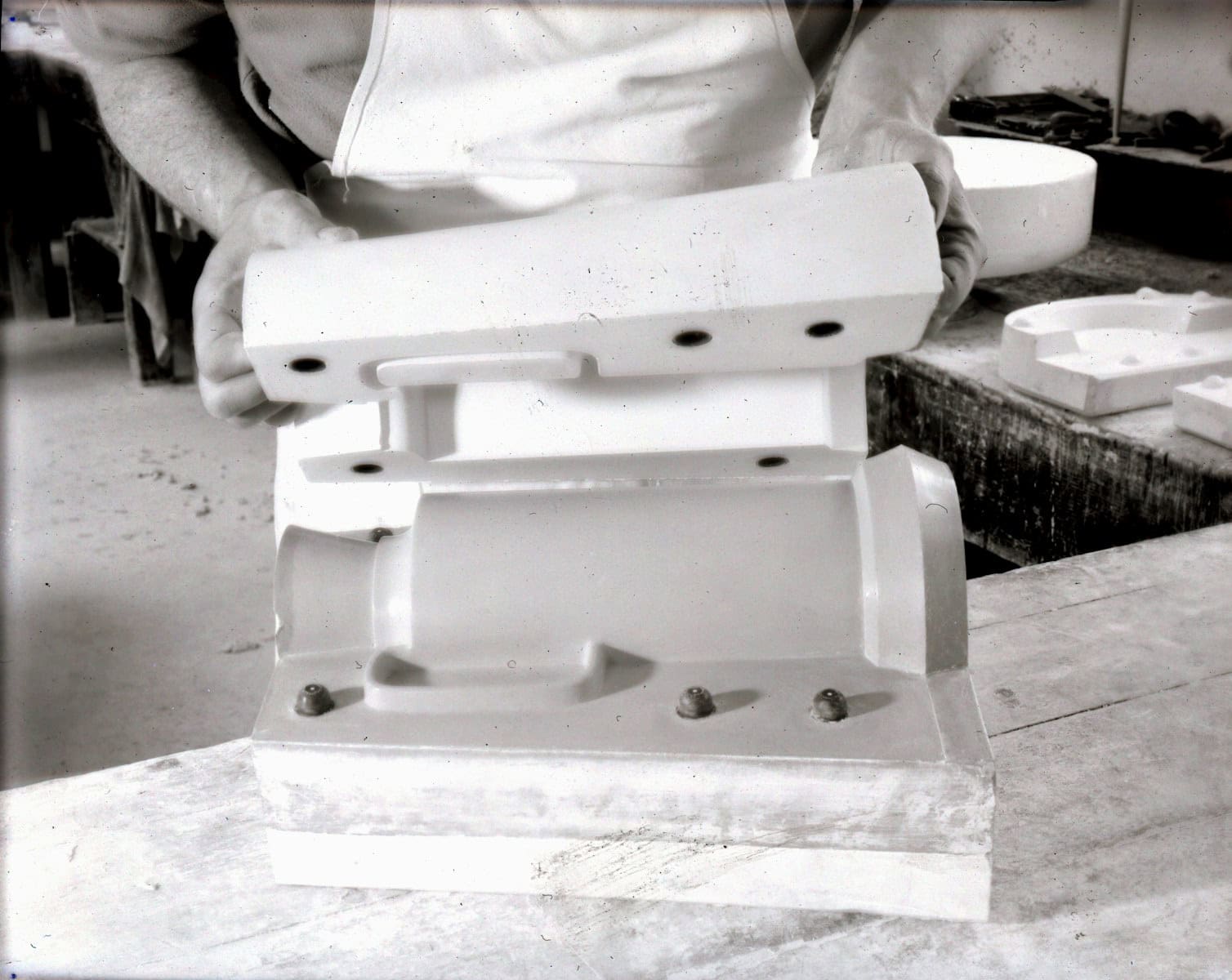
A Technical Deep Dive into Cutting Mechanisms
The cutting mechanism is the heart of your machine. The technology you choose determines speed, precision, and what types of candy you can handle. Let’s look at the most common systems.
Guillotine and Reciprocating Cutters
These work with straight-line cutting force. A single blade moves up and down or side to side through the product. The candy sits still on an anvil. You can power this with air cylinders for simple, high-force jobs, or servo motors for precise control.
Key parts include the blade holder, the power source, and the anvil. The blade holder must be rigid. It keeps the blade straight as it cuts through the product.
These systems work great for cutting bars, slabs, and rope-shaped products like nougat or brittle. They’re not fast, though. And if you don’t match the blade speed to the material, you’ll get deformation or smearing.
Rotary and Wheel Cutters
Rotary cutters keep moving for high-speed production. One or more cutting wheels spin on a rotating head. They slice through continuous candy ropes or sheets as the product moves underneath.
The main parts are cutting wheels, drive motors, and sync electronics for advanced systems. The challenge is matching the blade edge speed to the product flow speed. If they don’t match, you get dragging or squashing. This leads to uneven pieces and deformed candy.
This technology excels at making lots of small, uniform pieces. Think caramels, toffees, or soft candies from continuous ropes.
Ultrasonic Cutting Systems
Ultrasonic cutting is a major step forward, especially for difficult products. The system uses a power generator to create high-frequency electrical signals, typically 20-40 kHz.
cURL Too many subrequests.
cURL Too many subrequests.
cURL Too many subrequests.
cURL Too many subrequests.
cURL Too many subrequests.
cURL Too many subrequests. cURL Too many subrequests.cURL Too many subrequests.
cURL Too many subrequests.
cURL Too many subrequests.
|
cURL Too many subrequests.
|
Principio
|
cURL Too many subrequests.
|
cURL Too many subrequests.
|
Precisione
|
cURL Too many subrequests.
|
cURL Too many subrequests.
|
|
cURL Too many subrequests.
|
cURL Too many subrequests.
|
cURL Too many subrequests.
|
Basso-Medio
|
cURL Too many subrequests.
|
cURL Too many subrequests.
|
cURL Too many subrequests.
|
|
cURL Too many subrequests.
|
cURL Too many subrequests.
|
cURL Too many subrequests.
|
Alto
|
cURL Too many subrequests.
|
cURL Too many subrequests.
|
cURL Too many subrequests.
|
|
cURL Too many subrequests.
|
cURL Too many subrequests.
|
cURL Too many subrequests.
|
Medio-Alto
|
Eccellente
|
cURL Too many subrequests.
|
cURL Too many subrequests.
|
|
cURL Too many subrequests.
|
cURL Too many subrequests.
|
cURL Too many subrequests.
|
Basso-Medio
|
Moderato
|
cURL Too many subrequests.
|
cURL Too many subrequests.
|
cURL Too many subrequests.
cURL Too many subrequests.
cURL Too many subrequests.
cURL Too many subrequests.
cURL Too many subrequests.
cURL Too many subrequests.
cURL Too many subrequests.
PTFE (Teflon) is common and offers excellent non-stick properties. But it’s soft and wears quickly. For longer-lasting solutions, physical vapor deposition (PVD) coatings work better.
Titanium Nitride (TiN) is a hard, gold-colored ceramic coating. It improves wear resistance and offers moderate non-stick properties. Diamond-Like Carbon (DLC) is more advanced. It provides extreme hardness with very low friction. This makes it excellent for both abrasive and sticky applications, though it costs more.
Material for Contact Parts
Surfaces that touch the candy, like anvils and conveyor belts, also need careful material selection. Ultra-High-Molecular-Weight Polyethylene (UHMW-PE) is often used for cutting anvils and guide rails. It’s durable, impact-resistant, has low friction, and won’t damage the blade edge when contacted.
Candy and Blade Compatibility
The best combination of blade material and coating depends on your candy’s characteristics. This table guides you in matching materials to common cutting challenges.
|
Candy Characteristic
|
Primary Challenge
|
Recommended Blade Material
|
Recommended Coating
|
Rationale
|
|
High Stickiness (e.g., Taffy)
|
Product Buildup
|
Stainless Steel (316)
|
PTFE or Ultrasonic Blade
|
Low coefficient of friction is key.
|
|
Abrasive Inclusions (e.g., Nuts)
|
Blade Edge Wear
|
Tool Steel (D2) / Carbide
|
TiN or DLC
|
High hardness resists abrasion.
|
|
Acidic (e.g., Sour Gummies)
|
Corrosion
|
High-Grade Stainless (316L)
|
None or TiN
|
Resists chemical attack.
|
|
Hard/Brittle (e.g., Hard Candy)
|
Chipping/Fracturing
|
Hardened Stainless (440C)
|
Nessuno
|
Edge retention and strength are vital.
|
|
Temperature Sensitive (e.g., Caramel)
|
Smearing / Melting
|
Titanium (for Ultrasonic)
|
N/A
|
Low heat transfer and non-stick surface.
|
Automation and Control Systems
A modern candy cutting machine is a sophisticated system. The “brains” are the automation and control components that deliver precision, speed, and integration capabilities.
The Central Nervous System
The Programmable Logic Controller (PLC) is the industrial computer that serves as the machine’s brain. It runs the stored program, reading sensor inputs and sending commands to motors and actuators in real-time.
cURL Too many subrequests.
cURL Too many subrequests.
cURL Too many subrequests.
cURL Too many subrequests.
cURL Too many subrequests.
cURL Too many subrequests.
cURL Too many subrequests.
cURL Too many subrequests.
cURL Too many subrequests.
cURL Too many subrequests.
cURL Too many subrequests. cURL Too many subrequests.cURL Too many subrequests.
cURL Too many subrequests.
cURL Too many subrequests.
cURL Too many subrequests.
cURL Too many subrequests.
cURL Too many subrequests.
cURL Too many subrequests.
cURL Too many subrequests.
cURL Too many subrequests.
cURL Too many subrequests.
cURL Too many subrequests.
cURL Too many subrequests.
|
cURL Too many subrequests.
|
cURL Too many subrequests.
|
cURL Too many subrequests.
|
cURL Too many subrequests.
|
|
cURL Too many subrequests.
|
cURL Too many subrequests.
|
cURL Too many subrequests.
|
cURL Too many subrequests.
|
|
cURL Too many subrequests.
|
cURL Too many subrequests.
|
cURL Too many subrequests.
|
cURL Too many subrequests.
|
|
cURL Too many subrequests.
|
cURL Too many subrequests.
|
cURL Too many subrequests.
|
cURL Too many subrequests.
|
|
cURL Too many subrequests.
|
cURL Too many subrequests.
|
cURL Too many subrequests.
|
cURL Too many subrequests.
|
|
Monthly
|
Inspect Pneumatic Lines/Fittings
|
Prevent air leaks and pressure loss
|
Listen for hissing, check pressure gauges.
|
|
Quarterly
|
Calibrate Servo Motors/Encoders
|
Maintain cutting accuracy
|
Run diagnostic routine via HMI.
|
Conclusion: Future of Cutting
Choosing the right candy cutting machine requires a complete, engineering-led approach. It’s not about one feature. It’s about how systems work together.
A Synthesis of Systems
A superior candy cutting machine integrates mechanical design for rigidity and speed, material science for longevity and clean cuts, and control systems for intelligence and precision. The machine must execute the task flawlessly, cycle after cycle. Each element must work in harmony with the others and with your specific confectionery product’s unique properties.
Future Trends: Industry 4.0
The future of confectionery cutting lies in greater intelligence and data integration. We’re moving toward Industry 4.0 concepts. AI-powered vision systems will not only check cut quality but also provide feedback to the PLC for self-correction of parameters. Predictive maintenance algorithms will analyze sensor data from motors and load cells to forecast failures and schedule maintenance before breakdowns occur. This ushers in a new era of efficiency and reliability.
- Advanced Cutting Techniques for Solid Food | Comprehensive Reviews in Food Science – Wiley https://ift.onlinelibrary.wiley.com/doi/abs/10.1111/1541-4337.12896
- Food Slicing in Industrial Applications | ScienceDirect https://www.sciencedirect.com/science/article/abs/pii/S0260877419303796
- Fundamentals of Confectionery Science and Technology | University of Wisconsin https://interpro.wisc.edu/courses/fundamentals-of-confectionery-science-and-technology-module-1-sugar-confections/
- Food Engineering | Wikipedia https://en.wikipedia.org/wiki/Food_engineering
- Confectionery Processing Technology | IFT.org https://www.ift.org/news-and-publications/food-technology-magazine/issues/1999/december/columns/processing
- Ultrasonic Cutting Overview | ScienceDirect Topics https://www.sciencedirect.com/topics/engineering/ultrasonic-cutting
- Advanced Food Manufacturing | USDA NIFA https://www.nifa.usda.gov/topics/advanced-food-manufacturing
- PLC Controllers for Manufacturing | Rockwell Automation https://www.rockwellautomation.com/en-us/products/hardware/allen-bradley/programmable-controllers.html
- Servo Motors in Factory Automation | Mitsubishi Electric https://mitsubishisolutions.com/what-does-a-servo-do-in-factory-automation/
- Understanding Servo Motors for Automation | Control Design https://www.controldesign.com/podcasts/article/33015867/applications-of-the-servo-motors-power-and-precision