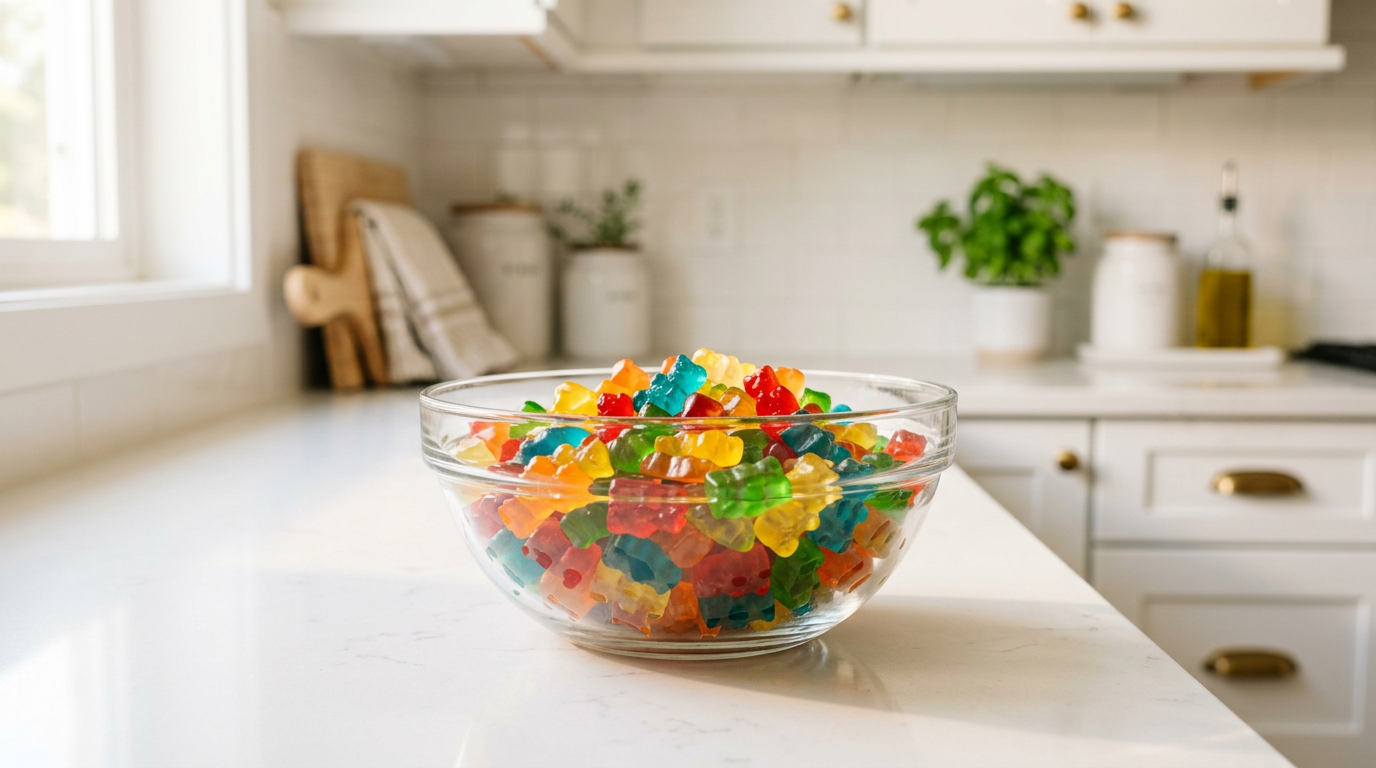
Risposta breve (meno di 30 parole): No — i cani non dovrebbero mangiare orsetti gommosi. Il contenuto di zucchero provoca gravi problemi di salute, e lo xilitolo, presente nelle varianti senza zucchero, può essere fatale anche in piccole quantità.
Cosa c'è davvero dentro un orsetto gommoso?
Prima di parlare di cosa fanno gli orsetti gommosi al tuo cane, è utile capire cosa stai effettivamente dando loro. La maggior parte delle persone presume che siano “semplice caramella” — morbidi, gommosi, innocui. Ma la lista degli ingredienti racconta una storia diversa.[1]
| Ingrediente | Presente in | Rischio per i cani |
| Zucchero raffinato | Tutti gli orsetti gommosi | Obesità, carie dentale, diabete |
| Xilitolo | Varietà senza zucchero | Ipoglicemia, insufficienza epatica, morte |
| Coloranti e aromi artificiali | La maggior parte dei marchi | Disturbi digestivi, potenziali allergie |
| Gelatina | Tutti gli orsetti gommosi | Generalmente non dannoso, ma senza valore nutrizionale |
| THC/CBD | Edibili a base di cannabis | Sintomi neurologici, tossicità |
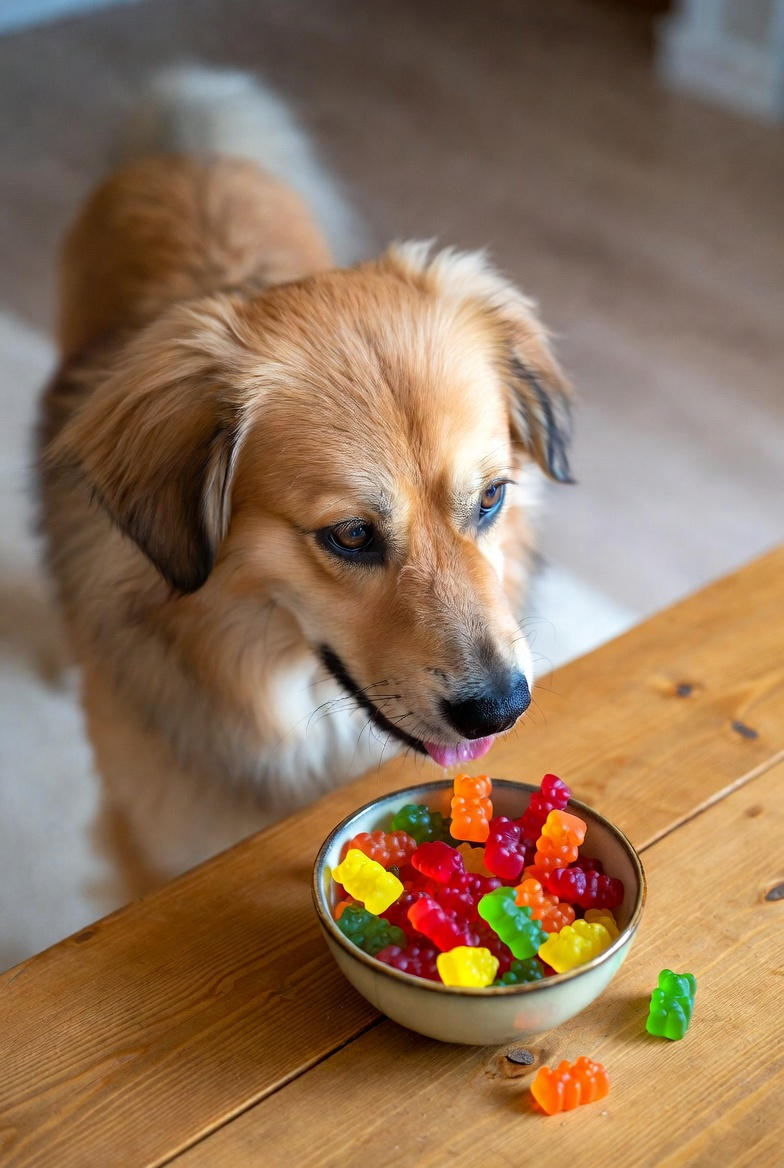
Le caramelle gommose regolari — quelle che prenderesti dal reparto dolciumi — sono fatte quasi interamente di zucchero raffinato, sciroppo di glucosio e gelatina. Non offrono alcun valore nutrizionale per i cani e possono contribuire all'aumento di peso, all'usura dentale e, nel tempo, a disturbi metabolici. Ma il prodotto veramente pericoloso è la versione senza zucchero, ed è qui che questa conversazione diventa urgente.
Il problema dello Xilitolo: perché le caramelle gommose senza zucchero sono la vera minaccia
Ecco cosa molti proprietari di animali non si rendono conto fino a quando non è troppo tardi: lo xilitolo, un alcool zuccherino usato come dolcificante a basso contenuto calorico nelle caramelle 'adatte a diete', è perfettamente sicuro per gli esseri umani e completamente tossico per i cani.
Quando un cane consuma xilitolo, il composto provoca un rilascio rapido e incontrollato di insulina dal pancreas. Il livello di zucchero nel sangue del cane (glucosemia) poi crolla — a volte entro 30 minuti fino a 2 ore dal consumo — causando una condizione chiamata ipoglicemia. Dosi più elevate vanno oltre: lo xilitolo può causare un aumento degli enzimi epatici entro 12-48 ore e scatenare un'insufficienza epatica completa entro 24-48 ore.
Secondo il bollettino ufficiale di sicurezza dei consumatori della FDA, anche prodotti come la gomma senza zucchero — che molti proprietari non esitano a dare — contengono abbastanza xilitolo da causare effetti devastanti nei cani. Il Centro di Controllo delle Intossicazioni Animali dell'ASPCA conferma questo, avvertendo che i cani che sviluppano ipoglicemia da xilitolo di solito richiedono 12-24 ore di trattamento con dextrosio endovenoso in un ospedale veterinario.
Per i cani di piccola taglia, il margine di sicurezza è ancora più sottile. Una o due caramelle gommose senza zucchero potrebbero essere fatali, a seconda del peso corporeo.
Cosa succede se il tuo cane mangia caramelle gommose: cronologia dei sintomi
Non tutte le situazioni sono ugualmente urgenti. Ecco come si sviluppa tipicamente il pericolo a seconda del tipo di caramella gommosa mangiata:
Se le caramelle gommose contenevano xilitolo:
- Entro 30–60 minuti: Vomito, debolezza, perdita di coordinazione
- Entro 1–2 ore: Sintomi di ipoglicemia — disorientamento, tremori, collasso
- Entro 12–48 ore: Enzimi epatici elevati, potenziale insufficienza epatica
- Caso peggiore: Convulsioni, coma, morte
Se gli orsetti gommosi fossero varietà normali (zuccherate):
- Disagio gastrico lieve, feci molli o vomito possono comparire entro poche ore
- Una dieta blanda approvata dal veterinario (pollo bollito senza ossa e riso semplice) può aiutare a calmare lo stomaco
- La preoccupazione a lungo termine è l'esposizione ripetuta: obesità, malattie dentali e, infine, diabete
Se gli orsetti gommosi fossero edibili alla cannabis (gomme THC/CBD):
- I sintomi includono incoordination, tremori, eccessiva salivazione, ipotermia e disorientamento
- La tossicità da THC nei cani sta aumentando man mano che gli edibili alla cannabis diventano più disponibili — i veterinari segnalano più casi ogni anno
I cani possono mangiare orsetti gommosi senza xilitolo? Ancora no
Questa domanda si presenta costantemente, e la risposta sorprende alcuni proprietari. Anche gli orsetti gommosi senza xilitolo non sono adatti ai cani.
Ecco perché: gli orsetti gommosi — anche quelli “normali” — sono ricchi di zucchero raffinato e coloranti artificiali che il sistema digestivo dei cani semplicemente non è progettato per elaborare bene. Un'assunzione costante di zucchero nei cani porta a:
- Decadimento dentale — i cani raramente “si lavano i denti” dopo le leccornie zuccherate, il che significa che lo zucchero rimane sull’email e favorisce la crescita batterica
- Obesità — le calorie in eccesso provenienti dallo zucchero si trasformano rapidamente in grasso, specialmente in razze più piccole o meno attive
- Pancreatite — alimenti ad alto contenuto di zucchero e grassi sono noti come fattori scatenanti
- Diabete — un consumo eccessivo di zucchero nel tempo può disturbare la regolazione dell’insulina
C’è anche il rischio di soffocamento. I cani tendono a inghiottire piuttosto che masticare, e gli orsetti gommosi — insieme alla loro confezione o involucro — possono rimanere bloccati in gola o causare un’ostruzione gastrointestinale, che rappresenta un’emergenza chirurgica.
Cosa fare se il tuo cane ha già mangiato delle caramelle gommose
Non entrare nel panico — ma agisci rapidamente. I passaggi qui sotto sono importanti, e anche l’ordine è fondamentale.
- Controlla immediatamente l’etichetta. Trova il pacchetto e cerca “xilitolo”, “alcol zuccherino”, “sorbitolo” o “zucchero di betulla”. Sono tutte forme di xilitolo o dolcificanti simili.
- Annota la quantità consumata. Quante caramelle gommose, circa? Queste informazioni sono essenziali per il veterinario per valutare il livello di rischio.
- Chiama subito il veterinario o una clinica di emergenza se è presente xilitolo — o se semplicemente non puoi confermarne l’assenza. Non aspettare che compaiano i sintomi; quando l’ipoglicemia è visibile, il tempo per intervenire si è ridotto.
- Se non è presente xilitolo e il tuo cane ha mangiato solo alcune caramelle gommose normali, monitora attentamente per vomito o diarrea. Passa a una dieta leggera per 24 ore. Chiama il veterinario se i sintomi peggiorano.
- Non cercare di indurre il vomito a casa senza istruzioni veterinarie. Farlo in modo errato può causare ulteriori danni.
Contatti di emergenza da salvare:
- Il veterinario locale
- Centro di Controllo delle Intossicazioni Animali ASPCA: (888) 426-4435
- Una clinica veterinaria di emergenza 24 ore nella tua zona
Vitamine Gommose per Cani: Sono Diverse?

Un numero crescente di proprietari di animali ha iniziato a dare ai propri cani vitamine gommose, supponendo che, essendo “vitamine”, siano sicure. La realtà è più complicata.
| cURL Too many subrequests. | Sicuro per i Cani? | Rischio chiave |
| Vitamine gommose umane | No | Contengono vitamina D, zinco, ferro a dosi tossiche per i cani |
| Gommette per animali senza zucchero | Controlla attentamente | Può contenere xilitolo o sorbitolo |
| Integratori in forma di gummy per cani formulati dal veterinario | Sì (con approvazione del veterinario) | Dose e formula progettate per i cani |
Le vitamine gommose per umani spesso contengono vitamina D, zinco e ferro in concentrazioni perfettamente salutari per un adulto di 150 libbre, ma pericolose per un cane di 15 libbre. La dose fa il veleno. Consulta sempre il veterinario prima di introdurre qualsiasi integratore — anche uno commercializzato come “naturale”.
Alternative sicure e soddisfacenti ai gummy bears
I cani adorano le leccornie. Non è qualcosa che devi togliere — devi solo reindirizzare. Ci sono opzioni davvero valide che danno al tuo cane qualcosa da masticare senza rischi per la salute:
- Mirtilli freschi — ricchi di antiossidanti, a basso contenuto di zucchero, i cani tendono ad amarli
- Fette di mela (senza semi o torsolo) — croccanti, dolci, naturalmente ricche di fibra
- Morsi di anguria (senza semi, senza scorza) — alto contenuto di acqua, ottimi per le giornate calde
- Bastoncini di carota — eccellenti per la salute dentale, a basso contenuto calorico
- Masticativi dentali approvati dal veterinario — progettati per pulire i denti mentre soddisfano l'impulso di masticare
- Integratori in forma di gummy specifici per cani — formulato con ingredienti sicuri e dosaggi corretti
La distinzione chiave è sempre questa: è stato fatto per i cani, da persone che comprendono la fisiologia canina? Se la risposta è sì, sei su un terreno solido. Se si tratta di uno snack umano “probabilmente va bene in piccole quantità” — è lì che le cose vanno storte.
Perché i proprietari di cani continuano a fare questo errore
Vale la pena affrontarlo onestamente, perché la vergogna non aiuta nessuno. La maggior parte dei proprietari che danno ai loro cani orsetti gommosi non sono negligenti — operano sulla base dell’assunto che “un po’ di qualcosa di dolce non può essere così male”.
Questa logica funziona bene per molti alimenti. crolla completamente quando si tratta di xilitolo, perché la soglia di tossicità per i cani è sorprendentemente bassa — e lo xilitolo è sempre più comune negli alimenti commercializzati come “sani” o “senza zucchero”. Il problema si aggrava perché lo xilitolo si presenta con molti nomi sulle etichette degli ingredienti: zucchero di betulla, E967, poliolo, alcol zuccherino.
L’altro problema è che i sintomi non sempre si manifestano immediatamente. Un cane che sembra stare bene 20 minuti dopo aver mangiato xilitolo può crollare ore dopo. I proprietari che non vedono una reazione immediata a volte concludono che le leccornie erano innocue — e quella supposizione può costare una vita.
Una parola rapida su le gomme alla CBD e THC
Man mano che i prodotti a base di cannabis vengono legalizzati e normalizzati, le gomme alla CBD e THC stanno entrando in più case. I cani sono animali curiosi. Non distinguono tra un sacchetto di caramelle normali e un sacchetto di edibili alla cannabis.
I veterinari stanno documentando un chiaro aumento dei casi di tossicità da THC nei cani, molti dei quali coinvolgono ingestione accidentale di edibili. Il THC non è letale nei cani come lo è lo xilitolo, ma i sintomi — tremori, disorientamento estremo, bassa temperatura corporea, incapacità di camminare — sono gravi e spaventosi, e richiedono cure veterinarie
Conserva tutti i prodotti a base di cannabis in contenitori chiusi a chiave, a prova di cani. Come faresti con i farmaci, lontano dai bambini.
Come leggere l’etichetta di una gomma alla frutta (Per la sicurezza del tuo cane)
| Cosa vedi sull’etichetta | Cosa significa per il tuo cane |
| “Senza zucchero” | Alta probabilità di xilitolo — evita completamente |
| “Xilitolo”, “zucchero di betulla”, “E967” | Tossicità confermata — situazione di emergenza se ingerito |
| “Aromi naturali” | Generalmente basso rischio ma nessun valore nutrizionale |
| “Gelatina” | Non dannosa, ma anche non benefica |
| “Vitamina D” o “zinco” | Le dosi umane possono essere tossiche per i cani |
| Nessuna lista di ingredienti visibile | Non darla al tuo cane |
Leggere le etichette è davvero l'abitudine più importante che un proprietario di cani può sviluppare. Richiede 30 secondi e può prevenire una visita di emergenza dal veterinario da $1.500 — o peggio.

cURL Too many subrequests.
D: I cani possono mangiare orsetti gommosi normali (non senza zucchero)?
No. Sebbene gli orsetti gommosi normali senza xilitolo non siano immediatamente pericolosi per la vita, contengono alti livelli di zucchero che causano obesità, malattie dentali e problemi metabolici a lungo termine nei cani. Nessuna quantità di orsetti gommosi è sicura o benefica per il tuo cane.
D: Quanto xilitolo è pericoloso per i cani?
Molto poco. Anche solo 0,1 grammo per chilogrammo di peso corporeo può causare ipoglicemia. Per un cane di 4,5 kg, potrebbe essere anche solo uno o due orsetti gommosi senza zucchero. Dosi più elevate causano insufficienza epatica, che può essere fatale entro 48 ore.
D: Il mio cane ha mangiato alcuni orsetti gommosi e sembra stare bene. Devo comunque chiamare un veterinario?
Sì — se non puoi confermare che gli orsetti gommosi fossero senza xilitolo, chiama immediatamente il veterinario. I sintomi di ipoglicemia possono essere ritardati di ore, e quando il tuo cane mostra segni visibili, la situazione potrebbe essere già grave.
D: Sono disponibili vitamine gommose sicure per i cani?
Sì. Esistono integratori gommosi per cani formulati dal veterinario e sono sicuri quando usati come indicato. Utilizzano dosaggi appropriati per i cani e nessuno degli edulcoranti tossici per i canini. Consulta sempre il veterinario prima di aggiungere qualsiasi integratore alla routine del tuo cane.
D: Cosa devo fare se il mio cane ha mangiato una gomma di cannabis?
Chiama immediatamente il veterinario o una clinica veterinaria di emergenza. Le gomme con THC possono causare tremori, disorientamento e bassa temperatura corporea nei cani. Sebbene raramente fatali, i sintomi richiedono monitoraggio professionale.
Per ulteriori informazioni sulla nutrizione e sicurezza degli animali domestici, consigliamo queste fonti autorevoli:
- Tossicità da xilitolo nei cani – VCA Animal Hospitals
- Paws Off Xylitol – Amministrazione Alimentare e dei Medicinali Italiana
- Aiuto! Il mio cane ha mangiato alcune caramelle gommose – ASPCA
- Alimenti domestici tossici per cani e gatti – Frontiers in Veterinary Science
- Aggiornamento sull'avviso di sicurezza dello xilitolo – ASPCA Animal Poison Control
Articoli Correlati
- Possono i cani mangiare orsetti gommosi? La guida completa sulla sicurezza per i proprietari di animali domestici
- Caramelle gommose Haribo senza zucchero: ingredienti, effetti e cosa è realmente accaduto
- Come si fanno le caramelle gommose? Dalla cucina di casa alla produzione commerciale
- Ingredienti degli Orsetti Gommosi Haribo: Analisi completa e guida alla produzione
- Linea di Produzione di Caramelle Gommose
- Macchina depositrice di gummy senza amido
- Skittles sono senza glutine? Guida completa 2026