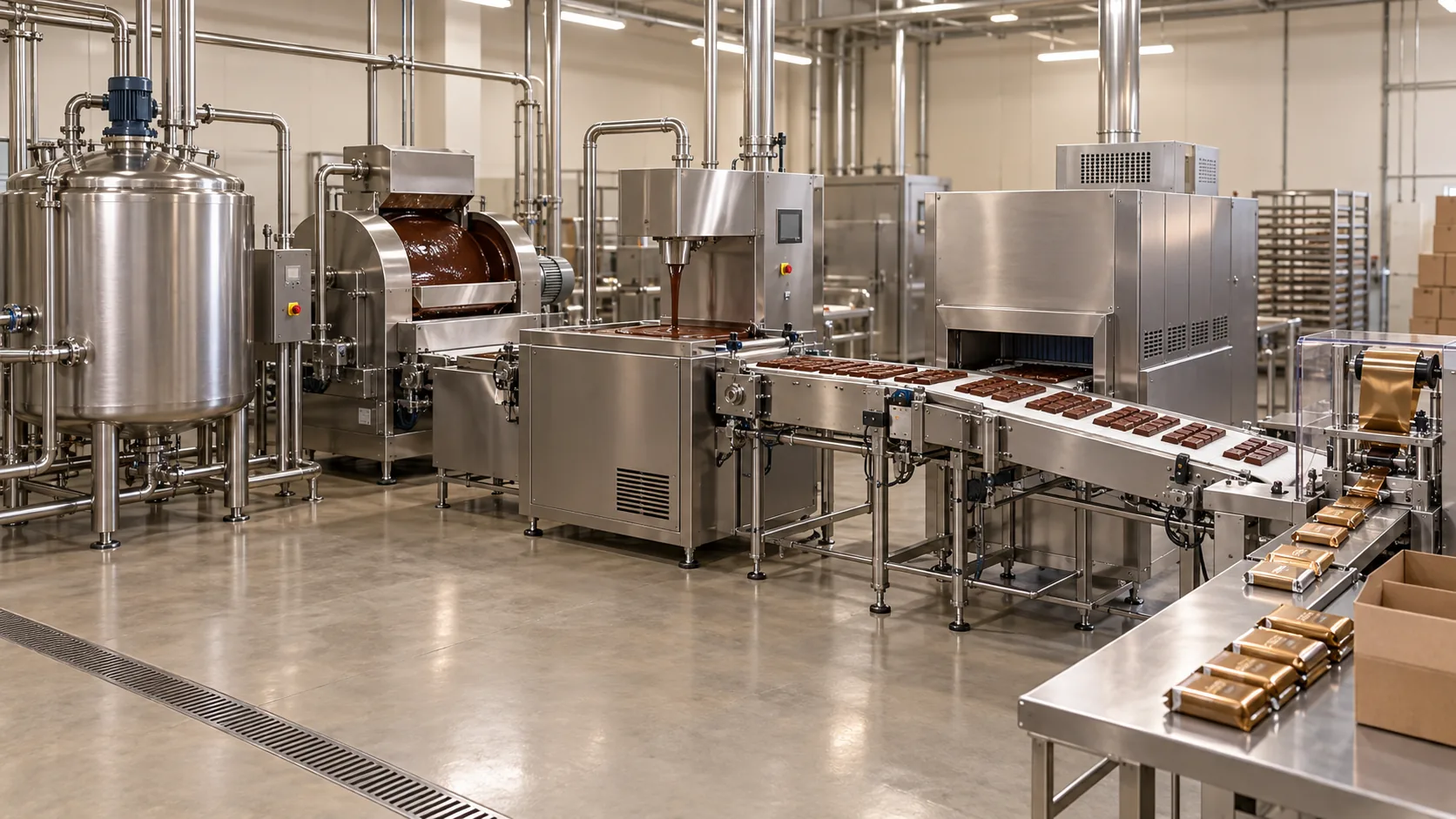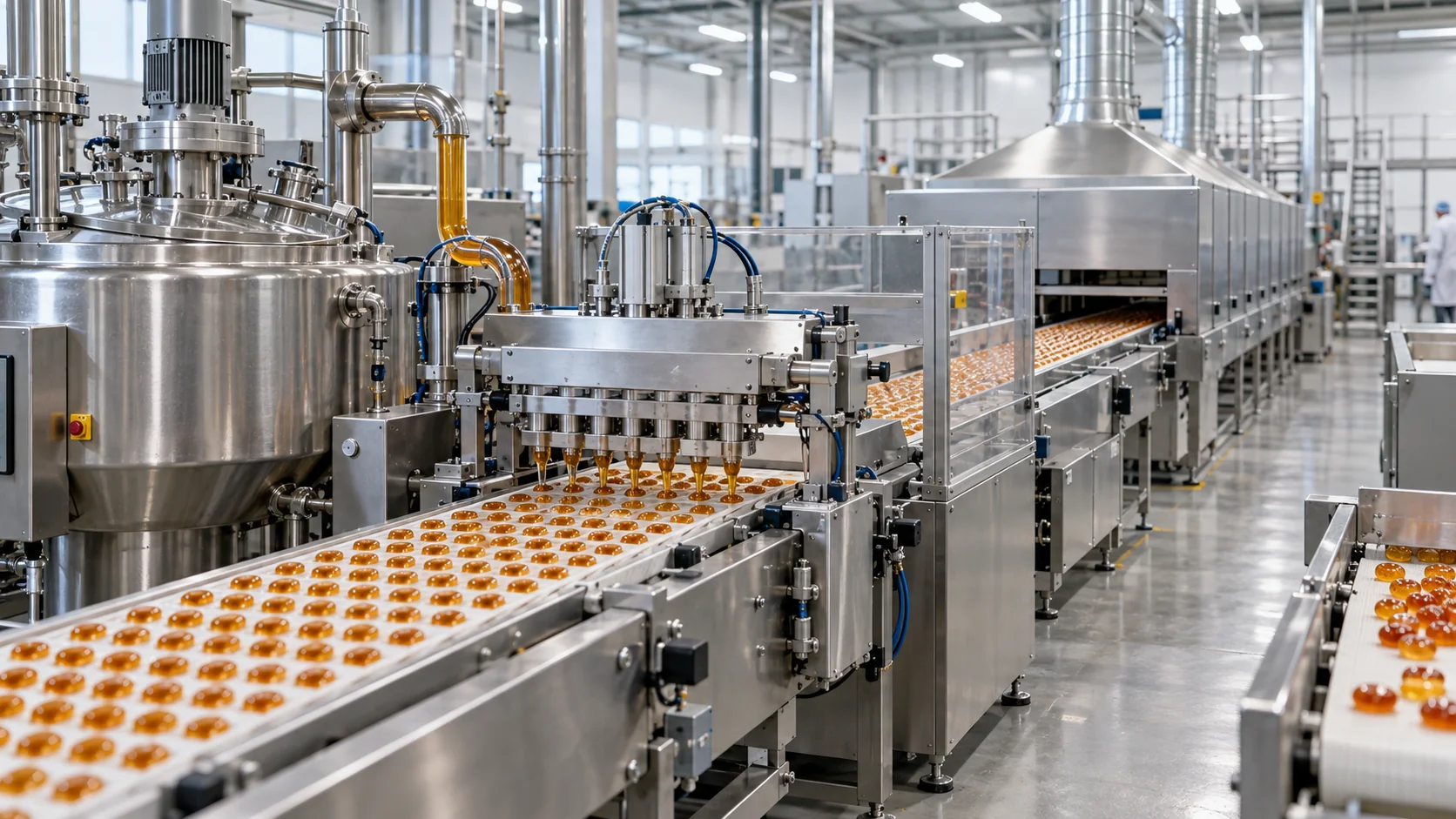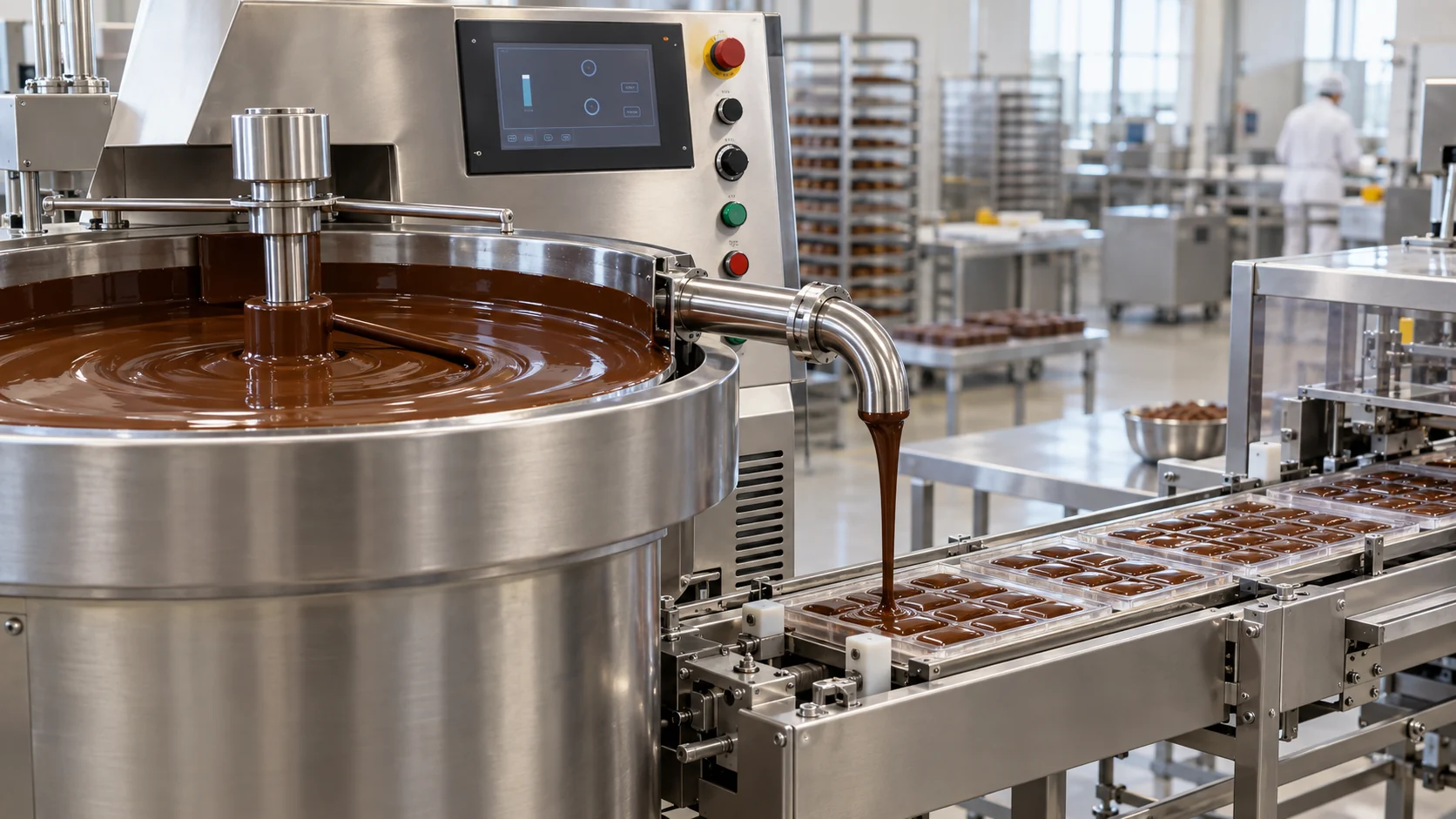
Contamination Detection in Candy Production Lines: Essential Guide for Food Safety Contamination detection
Why Contamination Detection Matters in Candy Manufacturing
In a candy production line, even the smallest contamination—whether it’s a piece of metal, glass, plastic, or microbial growth—can damage consumer safety and brand trust. Unlike general manufacturing, candy factories handle ingredients like sugar, gelatin, flavorings, and coatings, all of which are sensitive to contamination risks.
Effective contamination detection is therefore one of the most important elements of food safety in candy processing.
Types of Contaminants in Candy Production

Different contaminants require different detection strategies. In मिठाई उत्पादन लाइनें, common risks include:
1. Physical Contaminants
Metal fragments from broken machinery parts
Glass from jars or lighting
Dense plastic or rubber from gaskets and belts
Stones or bone fragments (in raw agricultural inputs like gelatin)
2. Chemical Contaminants
Cleaning agent residues
Lubricants from equipment
Undeclared additives or allergens in flavorings
3. Biological Contaminants
Bacteria (E. coli, Salmonella)
Mold growth during storage
Viruses and other spoilage organisms
Key Performance Indicators for Candy Line Detection Systems
When implementing detection systems in a कैंडी उत्पादन लाइन, four main KPIs guide performance:
संवेदनशीलता: Ability to detect the smallest contaminant (e.g., <0.5 mm metal).
Specificity: Avoiding false alarms caused by product density (important in sugar and chocolate).
प्रवाह क्षमता: High-speed detection to match continuous candy flow.
विश्वसनीयता: Stable operation under humid, sticky, or high-temperature environments.
Core Detection Technologies in Candy Production
1. Metal Detectors (Electromagnetic Induction)
Widely used in candy packaging lines.
Can detect ferrous, non-ferrous, and stainless steel fragments.
cURL Too many subrequests. कैंडी cURL Too many subrequests.
cURL Too many subrequests.
cURL Too many subrequests. cURL Too many subrequests..
cURL Too many subrequests.
cURL Too many subrequests. cURL Too many subrequests. और cURL Too many subrequests. cURL Too many subrequests.
cURL Too many subrequests.
cURL Too many subrequests.
cURL Too many subrequests. cURL Too many subrequests. cURL Too many subrequests.
cURL Too many subrequests.
cURL Too many subrequests.
cURL Too many subrequests.
cURL Too many subrequests.
cURL Too many subrequests.
cURL Too many subrequests.cURL Too many subrequests. चीनी cURL Too many subrequests.
समाधानcURL Too many subrequests.
cURL Too many subrequests.
cURL Too many subrequests.cURL Too many subrequests.
समाधानcURL Too many subrequests.
cURL Too many subrequests.
cURL Too many subrequests.cURL Too many subrequests.
समाधानcURL Too many subrequests.
cURL Too many subrequests.
cURL Too many subrequests. cURL Too many subrequests.
cURL Too many subrequests.cURL Too many subrequests.
cURL Too many subrequests. cURL Too many subrequests.
निष्कर्ष
cURL Too many subrequests. cURL Too many subrequests..
संयोजन करके cURL Too many subrequests.cURL Too many subrequests.
cURL Too many subrequests. product type, packaging, and contamination risk profile. When properly implemented, these systems protect both consumers and brand integrity.
- एफडीए – भारत खाद्य एवं औषधि प्रशासन https://www.fda.gov/
- ISO – अंतरराष्ट्रीय मानकीकरण संगठन https://www.iso.org/
- ASTM International – Detection & Testing Standards https://www.astm.org/
- USDA – भारत कृषि विभाग https://www.usda.gov/
- AOAC इंटरनेशनल – आधिकारिक विश्लेषण रसायनों का संघ https://www.aoac.org/
- पैकेजिंग मशीनप्रोडक्ट मैन्युफैक्चरर्स इंस्टीट्यूट (PMMI) https://www.pmmi.org/
- इंस्टीट्यूट ऑफ फूड टेक्नोलॉजिस्ट्स (IFT) https://www.ift.org/
- NIST - राष्ट्रीय मानक और प्रौद्योगिकी संस्थान https://www.nist.gov/
- कोडेक्स एलिमेंटेरियस (WHO/FAO) https://www.fao.org/fao-who-codexalimentarius/
- ANSI – अमेरिकन नेशनल स्टैंडर्ड्स इंस्टीट्यूट https://www.ansi.org/
संबंधित लेख
- 2025 आवश्यक खाद्य परीक्षण गाइड: कुकी उत्पादन में संदूषण से रोकथाम
- बीप के परे: मेटल डिटेक्शन टेक्नोलॉजी वास्तव में कैसे काम करती है
- रंग निरीक्षण प्रणाली 2025: मुख्य सिद्धांतों के लिए इंजीनियर की मार्गदर्शिका
- नमी का पता लगाना: विज्ञान और प्रौद्योगिकी गाइड इंजीनियरों के लिए 2025
- गमी कैंडी उत्पादन लाइन
- खाद्य पैकेजिंग मशीन
- स्किटल्स निर्माण प्रक्रिया: फैक्ट्री के अंदर