The world’s leading gummy candy brands—Haribo, Trolli, Albanese, Black Forest, and Sour Patch Kids—have built loyal global markets through distinct textures, flavors, and manufacturing innovations dating back to the 1920s.
Walk into any convenience store, supermarket, or specialty candy shop in 2025, and you’ll find an entire wall dedicated to gummy candy brands. The category has exploded from a single German innovation into a multi-billion-dollar global industry spanning every flavor profile, texture, dietary requirement, and age demographic imaginable. For confectionery entrepreneurs, equipment buyers, and brand managers, understanding which gummy candy brands lead the market—and why—is the difference between riding a trend and missing it entirely.
This guide cuts through the noise. We’ll cover the world’s top gummy candy brands, what separates industry leaders from also-rans, the manufacturing realities behind premium texture and flavor, and the trends reshaping the category through 2026 and beyond.
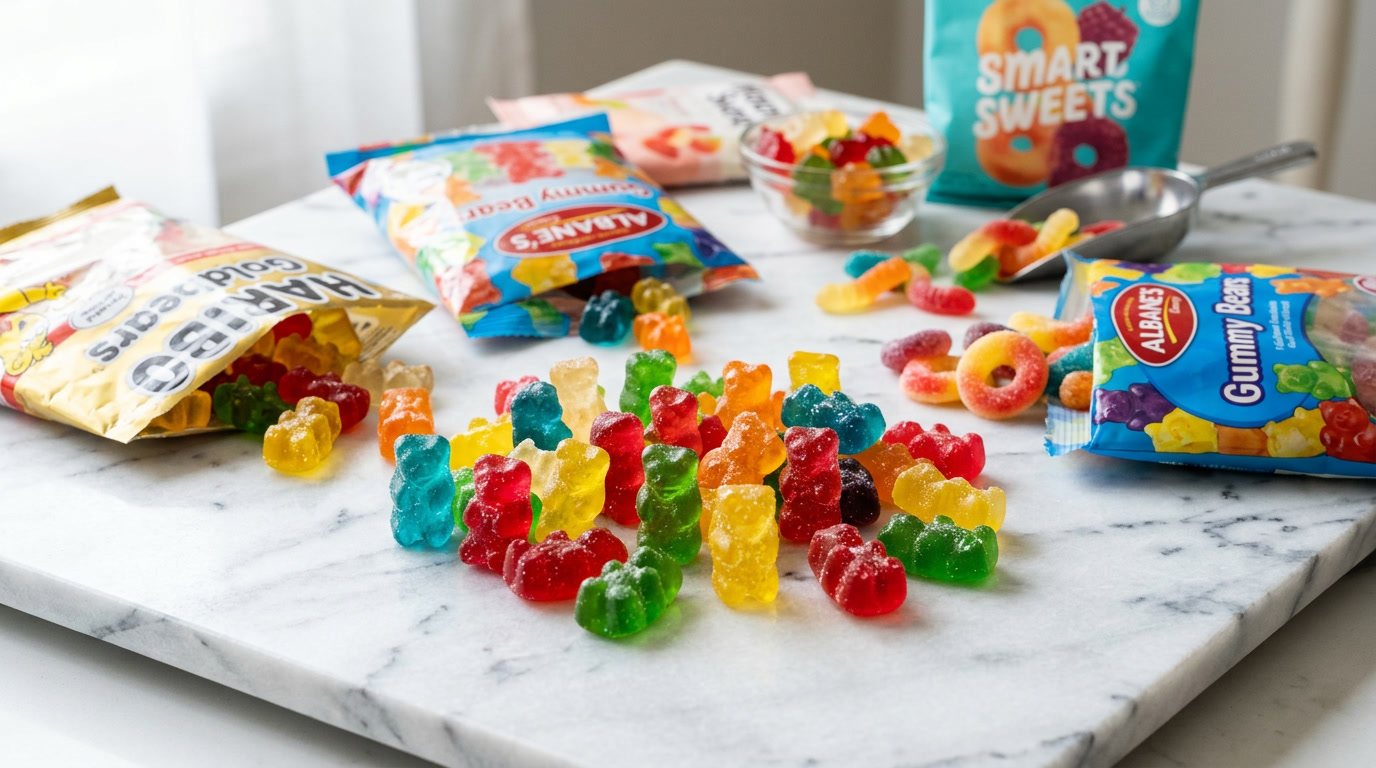
What Are Gummy Candy Brands?
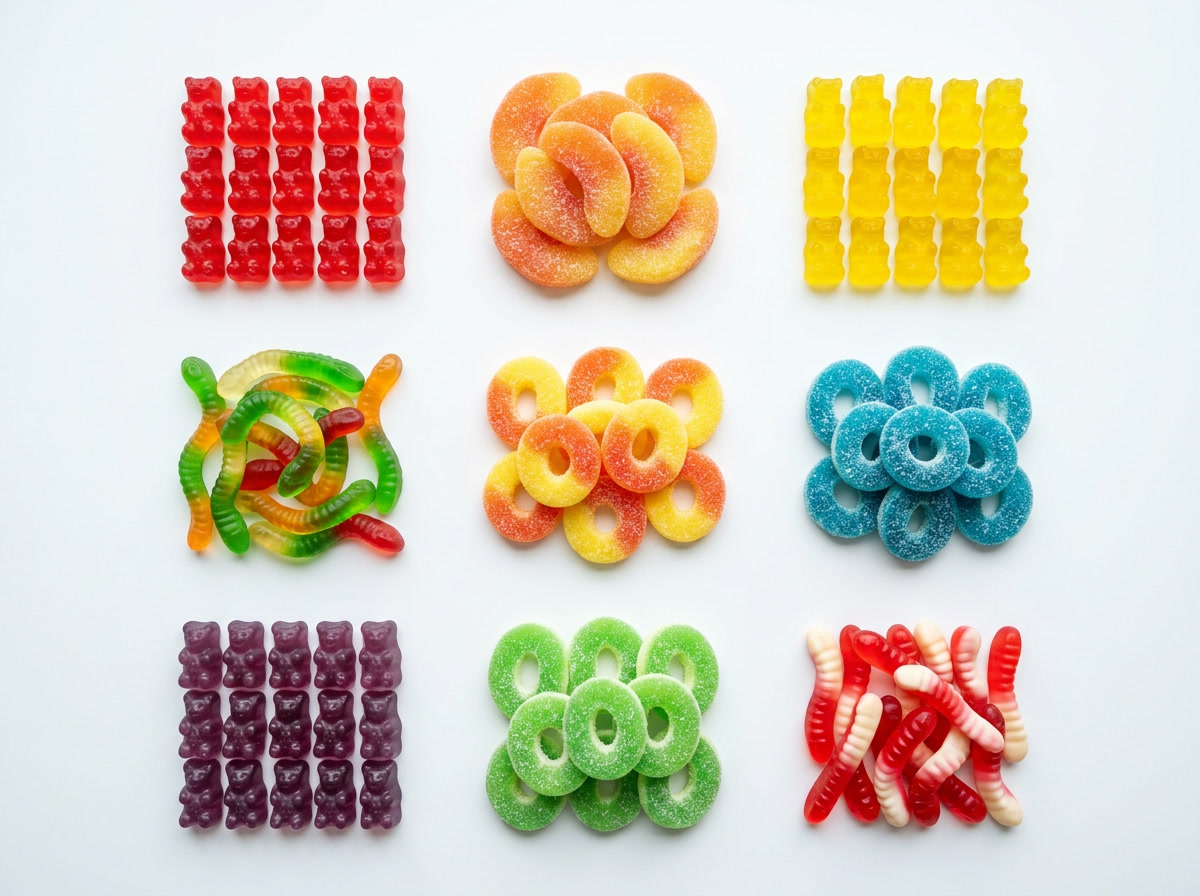
Gummy candy is a gelatin- or pectin-based confection that holds a chewy, elastic texture at room temperature. The category includes bears, worms, rings, fish, peach slices, and hundreds of custom shapes produced by specialized molding equipment.
A Brief History of Gummy Candy
The story of modern gummy candy brands begins in 1920s Germany. Hans Riegel Sr. founded Haribo in Bonn in 1920 and introduced the Gummibär (gummy bear) in 1922—a small, fruit-flavored gelatin candy shaped like a dancing bear that would become the archetype for an entire confectionery segment. As Wikipedia’s entry on gummy candy notes, the format spread globally after World War II, with U.S. and Asian manufacturers adapting the formula for local palates.
By the 1980s, American gummy candy brands had localized the recipe: higher sugar content, brighter artificial colors, and larger portion sizes. European brands maintained more restrained sweetness and natural colorings. That bifurcation still drives brand identity today.
The Global Gummy Candy Market in 2025
The gummy candy market is not a niche. Research firm Grand View Research valued the global gummy candy market at over $22 billion USD in 2024, with a projected compound annual growth rate (CAGR) of approximately 6.3% through 2030. The United States, Germany, and China lead in consumption volume; Brazil and Southeast Asia are the fastest-growing regional markets.
| Metric | Value (2024–2025) |
|---|---|
| Global market size | ~$22 billion USD |
| CAGR (2024–2030) | ~6.3% |
| Largest single market | United States |
| Fastest-growing regions | Brazil, Southeast Asia |
| Top product format | Gummy bears / gummy worms |
| Vegan gummy segment growth | ~9.1% CAGR |
This growth is not driven by legacy brands alone. New entrants—particularly in functional, vegan, and sugar-free segments—are capturing shelf space and online sales at the expense of traditional formulations.
The World’s Top Gummy Candy Brands
The top global gummy candy brands are Haribo, Trolli, Albanese, Black Forest, Sour Patch Kids, Maynards Bassetts, Yupi, Jelly Belly, Candypeople, and Ferrara Candy. Each occupies a distinct position based on formulation, regional strength, and target demographic.
Haribo — The Original Gummy Giant
Haribo is the single most recognized name in gummy candy brands worldwide. Founded in Germany, the brand now operates in over 100 countries and generates an estimated €3+ billion in annual revenue. The Goldbears remain the flagship product, but Haribo’s catalog spans hundreds of SKUs: Cola Bottles, Starmix, Happy Cola, and the notoriously polarizing Salty Licorice.
What makes Haribo technically superior is its proprietary gelatin blend. Haribo gummies have a firmer texture than most American counterparts—the bite-through resistance (“chew profile”) is engineered deliberately. The firmness comes from a higher gelatin concentration, longer setting times in starch mogul trays, and precisely controlled humidity in the drying tunnels. In practice, this means a Haribo bear can sit on a store shelf for months without significant texture degradation.
As Haribo’s Wikipedia page documents, the company maintains dedicated manufacturing plants in Germany, France, Spain, Denmark, Turkey, Brazil, and the United States, allowing regional flavor customization while preserving global texture standards.
Trolli — Bold Shapes and Sour Flavors
Trolli entered the gummy candy market in 1975 under German parent company Mederer GmbH (later acquired by Ferrara Candy). The brand’s signature contribution: the sour sugar coating that transformed gummy texture from purely chewy to multi-sensory. Trolli Sour Brite Crawlers became a North American cult product precisely because the sour coating creates an immediate flavor contrast before the sweetness of the gelatin body kicks in.
Trolli’s manufacturing approach prioritizes extrusion-molded formats—worms, octopus shapes, and twisted straws—rather than the starch-mogul process Haribo favors. Extrusion allows more complex cross-section shapes and faster production throughput, though it limits certain texture characteristics achievable only through mogul casting.
Albanese — America’s Softest Gummies
Albanese Confectionery, based in Merrillville, Indiana, markets itself explicitly on texture softness. Their 12-flavor gummy bears are noticeably softer than Haribo equivalents—the result of a lower gelatin concentration, a higher ratio of corn syrup to sugar, and shorter drying cycles. The trade-off: a shorter shelf life and greater sensitivity to temperature. Albanese gummies left in a warm car will fuse together in ways Haribo bears typically do not.
For B2B buyers—particularly those supplying bulk candy for events, hotels, or corporate gifting—Albanese’s softness is a selling point because it signals freshness to consumers. The brand has capitalized on Amazon and warehouse club distribution, where bulk packaging is the primary format.
Black Forest — Natural Ingredients Focus
Black Forest Organic (owned by Ferrara Candy) targets health-conscious consumers with USDA-certified organic gummies made with real fruit juice and no artificial colors or flavors. The brand was instrumental in proving that clean-label gummies could compete on mainstream shelves—a market thesis now replicated by dozens of private-label manufacturers.
The ingredient swap—beet juice for red coloring, spirulina for blue/green, turmeric for yellow—creates meaningful production challenges. Natural colorings are heat-sensitive and pH-sensitive, requiring more controlled cooking temperatures and faster processing times to prevent color degradation. Any confectionery manufacturer reformulating toward natural colorings will face a steeper learning curve in process control.
Sour Patch Kids — The Sour-Then-Sweet Phenomenon
Technically a Swedish fish relative (both owned by Mondelēz International), Sour Patch Kids introduced a sequential texture experience: a tartaric acid and sugar outer coating dissolves first, delivering sour intensity, followed by the sweeter gelatin body. The tagline “Sour. Sweet. Gone.” describes the eating experience precisely.
Sour Patch Kids dominate the sour gummy candy subcategory in North America and have successfully expanded into line extensions (Tropical, Watermelon, Big Kids) and non-candy products (cereal, ice cream, beverages). Their brand awareness among the 12–24 age demographic rivals Haribo’s among all age groups.
Maynards Bassetts — Europe’s Heritage Brand
The merger of Maynards and Bassett’s under Mondelēz created a dominant UK/European gummy and soft candy brand. Wine Gums, Jelly Babies, and Bassett’s Allsorts each occupy distinct texture zones. Wine Gums in particular—a firmer, less-sweet gummy without actual wine content—demonstrate that the “gummy” category extends beyond fruit-flavored bears, and that texture variation is a viable brand differentiator even within a single company.
Yupi — Asia’s Rising Star
Yupi (PT Yupi Indo Jelly Gum), based in Indonesia, is the dominant gummy candy brand across Southeast Asia and has significant market share in South America and the Middle East. Yupi gummies are notably softer and sweeter than European counterparts, calibrated specifically for tropical market preferences. The brand offers hamburger-shaped gummies, pizza gummies, and other novelty formats that outperform traditional bears in novelty-driven retail environments.
Other Notable Gummy Candy Brands
| Brand | Origin | Specialty | Primary Market |
|---|---|---|---|
| Jelly Belly | USA | Gourmet jelly bean / gummy hybrids | USA, premium global |
| Candypeople | Sweden | Craft, high natural-ingredient content | Scandinavia, UK |
| Vidal | Spain | Sour formats, fizzy gummies | Europe, Latin America |
| Fini | Spain/Brazil | Confectionery breadth, novelty shapes | Latin America, Europe |
| Surf Sweets | USA | Organic / allergy-friendly | USA natural/health retail |
| Bebeto | Turkey | Value-price mainstream gummies | Middle East, Europe |
What Makes a Gummy Candy Brand Successful?
Successful gummy candy brands consistently deliver on three variables: texture consistency, flavor accuracy, and manufacturing reliability. Consumer taste preferences shift; the brands that hold category leadership are those whose production processes hit the same sensory targets batch after batch, year after year.
Texture and Gelatin Formulation
Texture is the single most technically complex variable in gummy candy production. Consumers often cannot articulate why they prefer one brand over another in blind taste tests—but texture accounts for a disproportionate share of preference scores. The key variables:
- Gelatin concentration: Higher percentage = firmer, more elastic chew. Lower = softer, more yielding texture. Pork gelatin (most common) and beef gelatin produce slightly different mouthfeel; fish gelatin, used in some kosher and halal products, creates a distinct texture profile.
- Sugar-to-corn-syrup ratio: More corn syrup creates a chewier, more flexible matrix. More sucrose creates a stiffer, slightly grainier texture over time.
- Bloom strength: A gelatin’s “bloom” value (typically 200–280 for candy applications) measures gel strength. Premium gummy candy brands typically specify bloom strength tightly; commodity manufacturers accept wider variation.
- Drying time and humidity: Under-dried gummies are sticky and prone to clumping. Over-dried gummies become hard and lose the elasticity that defines the category.
Industry insight: In our experience reviewing confectionery production lines, brands that struggle with batch-to-batch texture inconsistency almost always have humidity control problems in their drying tunnels—not issues with the gelatin formulation itself. Temperature and humidity variation of even 5–8% relative humidity can shift the final moisture content of gummies by 1–2 percentage points, which is enough for consumers to notice.
Flavor Accuracy and Coating Technology
Top gummy candy brands invest heavily in flavor matching—the process of aligning the perceived flavor of a gummy (always a blend of aroma, sweetness, acidity, and texture) with consumer expectations for that fruit. Strawberry is one of the most technically difficult flavors to reproduce credibly; most commercial strawberry gummies rely on methyl anthranilate and ethyl caproate combinations that read as “candy strawberry” rather than real fruit.
Sour coating technology—the tartaric acid, citric acid, or malic acid blend that creates the initial sour sensation—has become a differentiator as the sour candy subcategory has grown. The coating must adhere uniformly, dissolve at a controlled rate, and not absorb excess moisture (which turns the sour coating sticky). Some brands now use a two-stage coating: a base layer of acid + sugar, followed by a crystallized sugar topcoat that creates a slight crunch before the sour hit.
Consistent Manufacturing Quality
The brands that dominate long-term are not necessarily the ones with the best original recipe—they’re the ones that have industrialized their process sufficiently to deliver consistent output. This means:
- Depositing accuracy: Starch mogul depositing systems need to fill molds within tight weight tolerances (±2–3% per piece) to ensure consistent texture and portion size.
- Temperature control: Gelatin cooking temperatures, depositing temperatures, and drying temperatures must all be maintained within narrow ranges.
- Batch traceability: Leading gummy candy brands operate with full batch traceability, enabling rapid recall if a contamination or formulation error occurs.
How Top Gummy Candy Brands Are Manufactured
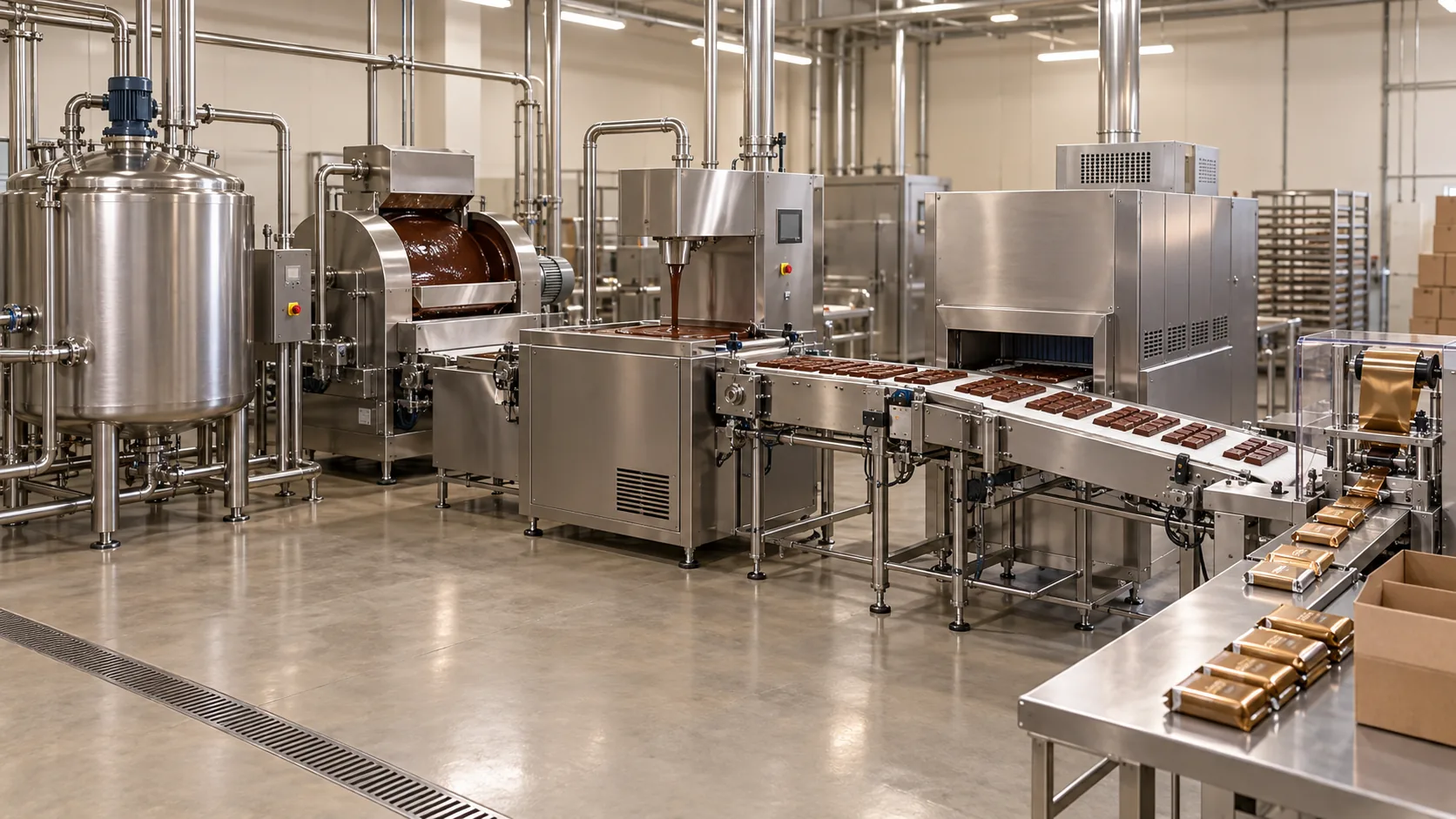
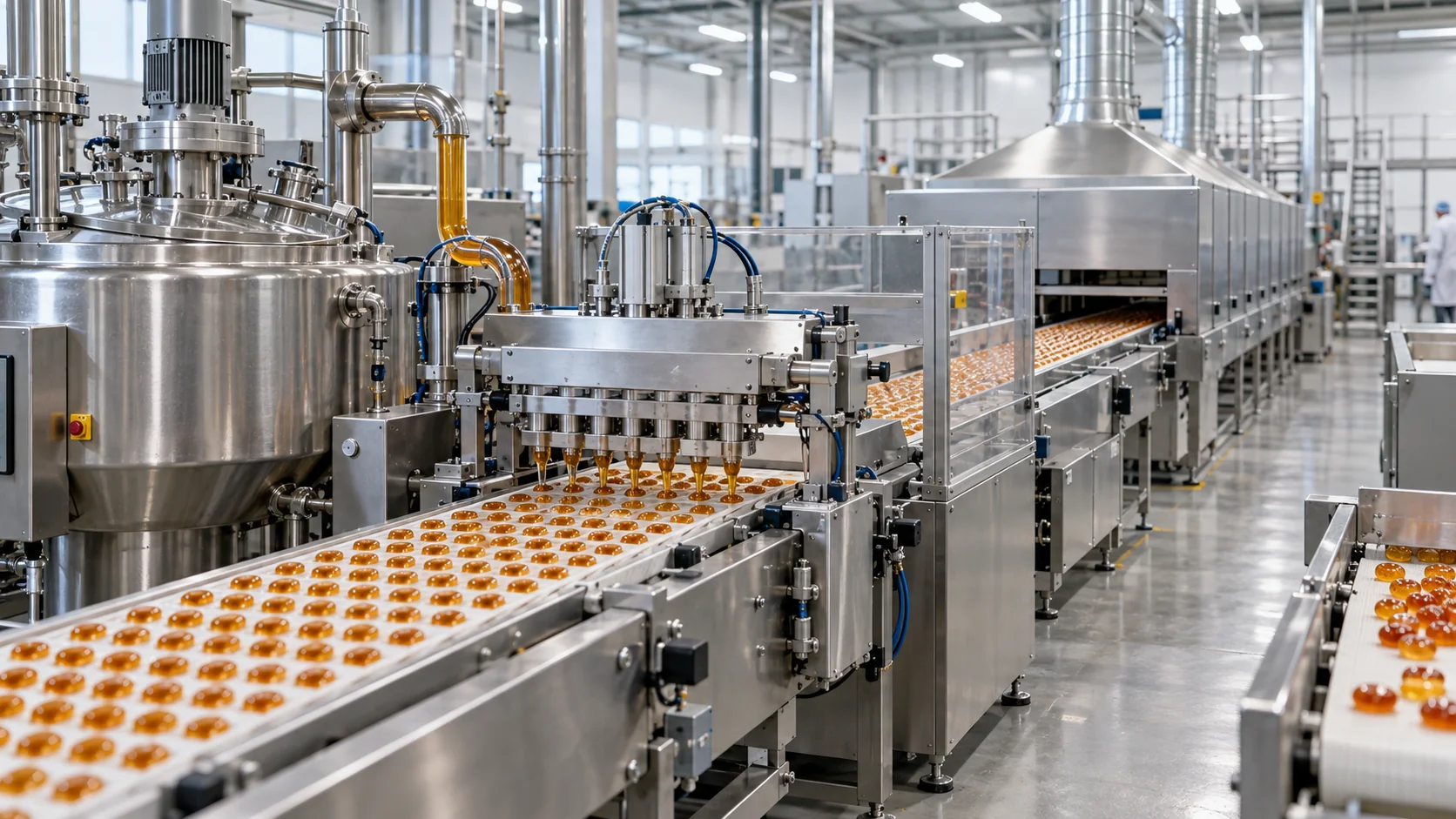
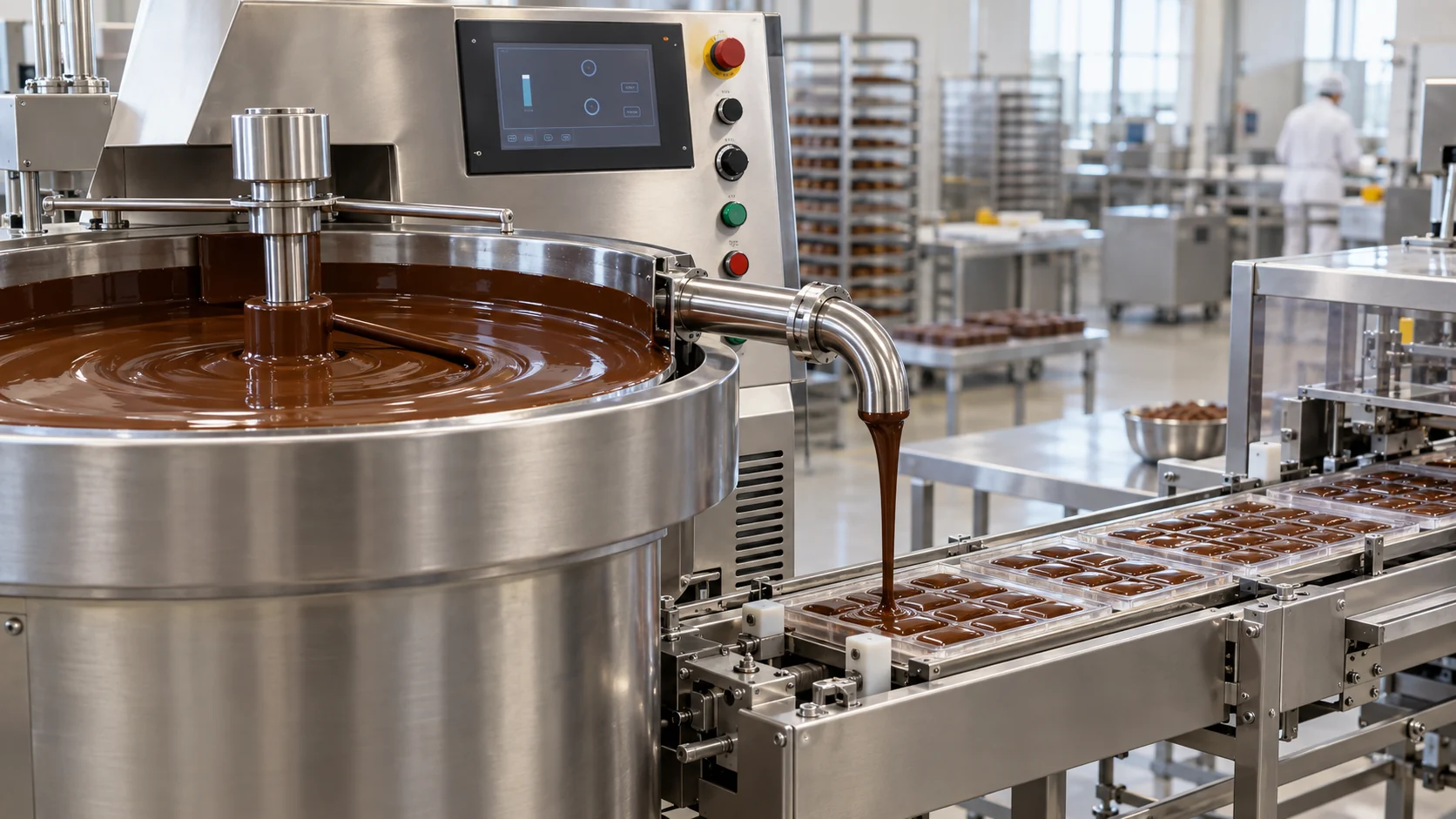
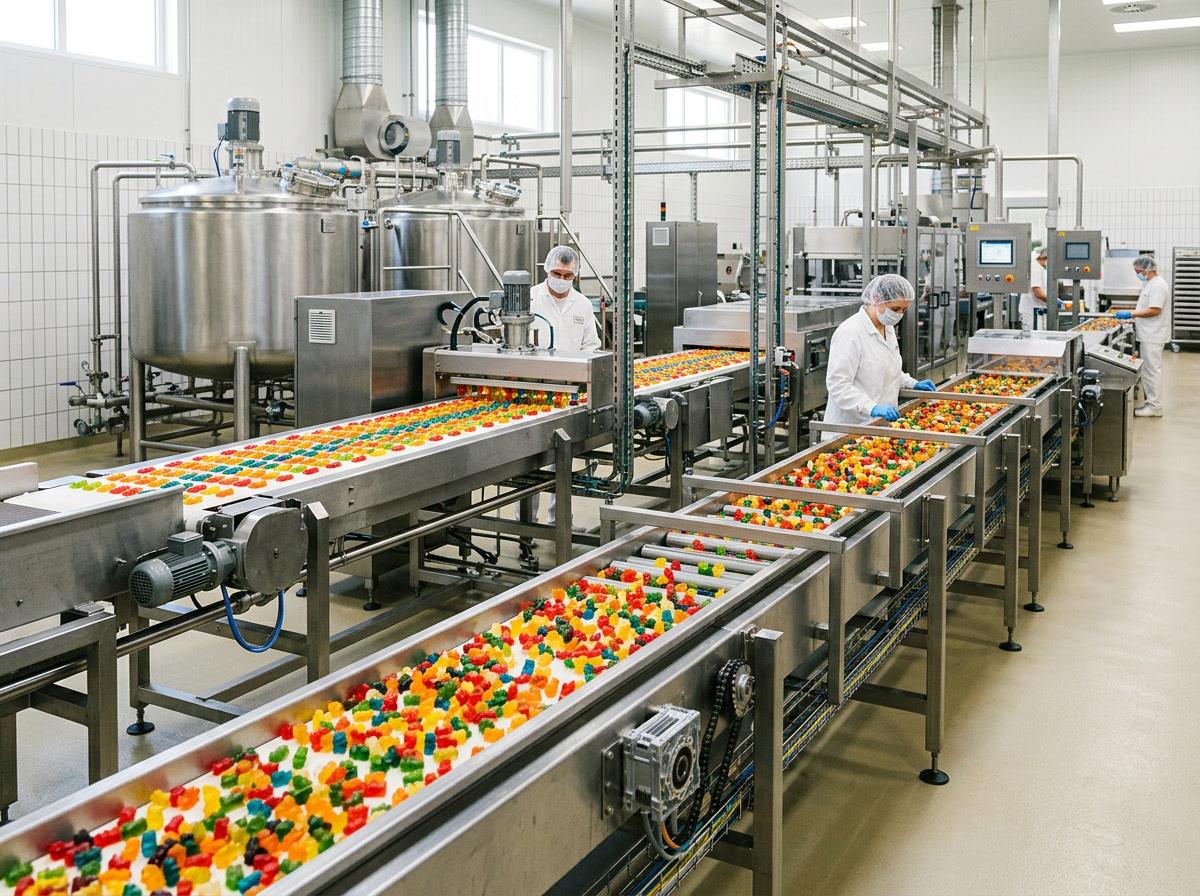
Professional gummy candy production follows a six-stage process: cooking, depositing, setting, demolding, oiling or coating, and packaging. Understanding this process is essential for anyone sourcing equipment to enter or scale in the gummy candy market.
Key Production Steps
1. Ingredient preparation and cooking
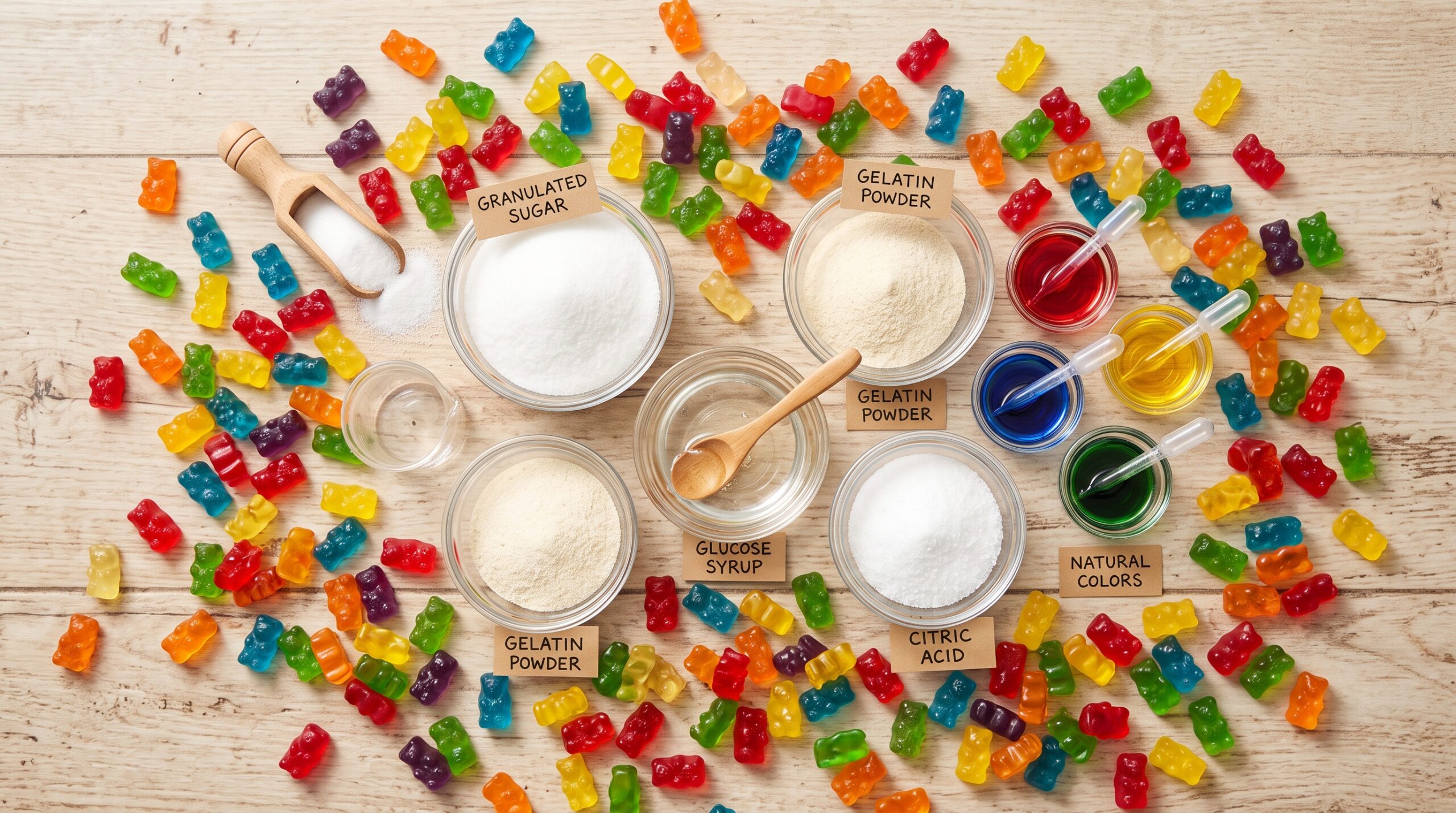
The gelatin or pectin is hydrated in warm water, then combined with the sugar-corn syrup base in a heated cooking vessel. The mixture is brought to a precise temperature (typically 107–115°C for standard gummies) to drive off excess water. Flavors, colors, and acids are added after cooking to preserve their integrity.
2. Depositing into starch molds (mogul process)
The cooked mass is deposited into starch trays pre-impressed with the candy shape. The starch absorbs moisture from the gummy surface during setting, facilitating demolding. Most high-volume gummy candy brands use continuous mogul depositing lines capable of producing thousands of kilograms per hour.
3. Setting (conditioning)
Filled trays move through a temperature- and humidity-controlled conditioning room for 12–48 hours. This is where gelatin crystallization occurs and final texture is determined. Pectin gummies set faster (2–6 hours) but require more precise pH management.
4. Demolding and finishing
Gummies are mechanically separated from the starch and passed through a starch removal system. They then receive a finishing treatment: either an oil polish (vegetable oil spray to prevent sticking and add sheen), a sugar sand coating (for sanded gummies), or a sour acid coating.
5. Quality inspection and packaging
Finished gummies pass through metal detection, weight-check systems, and visual inspection before packaging. Modern lines include automatic weight rejection and optical color sorting to remove off-spec pieces.
Equipment Used in Professional Gummy Manufacturing
The equipment investments required to produce gummy candy at a professional scale are substantial. Here is a representative equipment overview for a mid-scale production line (500–2000 kg/hour output):
| Equipment Category | Function | Key Specification |
|---|---|---|
| Cooking kettle / continuous cooker | Cook gelatin-sugar mass | Jacketed, 150–500L; continuous models preferred |
| Mogul depositing line | Fill starch molds with cooked mass | Inline depositing heads; throughput 500–3000 kg/hr |
| Conditioning / drying tunnel | Set gummies under controlled temp/humidity | 18–48 hr cycle; RH 30–50% |
| Starch separating / brushing | Remove gummies from molds, clean starch | Mechanical drum or vibration conveyor |
| Oil drum / coating pan | Apply finishing coat | Rotating drum; mineral or vegetable oil |
| Metal detector | Food safety | HACCP-required inline |
| Packaging line | Fill bags, pouches, boxes | Multi-head weigher + VFFS or flow-wrap |
Manufacturers scaling up from artisan to industrial production frequently underinvest in the conditioning room and starch management system—two areas where the major gummy candy brands have made their most significant quality improvements over the past decade.
Future Trends in Gummy Candy Brands (2026+)
The gummy candy category is being reshaped by three forces: plant-based reformulation, functional ingredient integration, and premium/artisan positioning. Brands that adapt their manufacturing processes to these trends will capture the next growth wave.
Vegan and Plant-Based Gummies
The replacement of animal gelatin with plant-derived alternatives—primarily pectin (from citrus peel or apple pomace) and carrageenan (from seaweed)—is the most technically demanding trend reshaping gummy candy brands. According to Wikipedia’s overview of gummy candy formulation, pectin-based gummies have been commercially available for decades, but achieving a texture profile comparable to gelatin gummies at industrial scale has remained challenging.
Pectin gummies set differently: they gel at higher temperatures, require precise pH control (typically pH 3.0–3.5 for optimal gel strength), and produce a slightly less elastic, more brittle texture than gelatin equivalents. Brands like Surf Sweets and YumEarth have built substantial businesses on this formulation, while major players including Haribo have introduced dedicated vegan lines in European markets.
For equipment buyers, pectin production requires modifications to cooking temperature profiles, more precise pH monitoring inline, and sometimes different depositing viscosities compared to gelatin formulations. These are manageable adaptations, but they are not trivial.
Functional and Nutraceutical Gummies
The boundary between candy and dietary supplement is blurring rapidly. Vitamin gummies—led by brands like SmartyPants, Olly, and Garden of Life—have demonstrated that consumers will pay a 3–5× premium over standard gummy candy prices for products positioned as health-supporting. Collagen gummies, CBD-infused gummies (where legally permitted), and probiotic gummies have followed.
Functional gummies present a distinct manufacturing challenge: active ingredients (vitamins, botanical extracts, probiotics) are often heat-sensitive, meaning they must be added at the lowest possible temperature in the process without compromising dissolution or mixing uniformity. Probiotic gummies require the most careful handling—certain strains cannot survive even brief exposure to temperatures above 40°C, necessitating post-set spraying or encapsulation techniques rather than in-line addition.
The functional gummy segment grew at an estimated 9–11% CAGR between 2020 and 2024, outpacing the broader gummy candy market by a significant margin. For confectionery manufacturers, it represents both an opportunity and a barrier: the regulatory requirements (GMP certification, stability testing, label claims compliance) are substantially higher than for standard candy production.
FAQ: Gummy Candy Brands
What is the most popular gummy candy brand in the world?
Haribo is the world’s most recognized gummy candy brand by revenue and geographic reach. The company operates in over 100 countries and has maintained category leadership since introducing the Goldbear in 1922. In the United States specifically, Haribo and Trolli (both under the Ferrara Candy umbrella for U.S. distribution) share the top market positions.
What is the difference between gummy candy brands’ textures?
Texture differences between gummy candy brands come down to gelatin concentration, bloom strength, and drying time. Haribo gummies are firmer due to higher gelatin concentration and longer setting. Albanese gummies are softer due to lower gelatin and more corn syrup. Vegan brands using pectin tend to be more gel-like and slightly less elastic. Bottom line: if you want firm, long-shelf-life gummies, look at European-style formulations; if you want soft, fresh-texture gummies, American-style brands like Albanese are the benchmark.
Are gummy candy brands using natural ingredients now?
Many leading gummy candy brands have introduced natural-ingredient lines in response to consumer demand. Black Forest Organic uses real fruit juice and no artificial colors. Haribo has introduced natural-color variants in European markets. Trolli and Sour Patch Kids still rely primarily on artificial colors in their mainstream U.S. products. Bottom line: natural-ingredient gummies represent a growing segment, not yet the majority, but the trajectory is firmly upward.
What equipment do gummy candy brands use to produce their products?
Large-scale gummy candy brands use mogul depositing lines (the starch-mold casting process), continuous cooking systems, conditioning tunnels, and rotating coating drums. Smaller artisan gummy brands sometimes use silicone mold depositors or smaller-batch mogul systems. Bottom line: the starch mogul system is the industry standard for high-volume production; artisan producers typically start with silicone molds before scaling to mogul lines.
What makes a gummy candy brand’s product taste different from competitors?
Flavor differences come from three main sources: the specific flavor compounds used, the sugar-to-acid balance, and the gelatin-to-sweetener ratio (which affects how flavor is released during chewing). German brands typically use more restrained, realistic fruit profiles; American brands use bolder, more candy-sweet profiles. Bottom line: flavor is a function of both the formulation and the texture—the same flavor compound tastes different in a firm Haribo gummy versus a soft Albanese gummy because the rate of flavor release changes with chew texture.
Can a new brand compete with established gummy candy brands?
Yes, but differentiation is essential. The commodity gummy candy space is cost-competitive and distribution-driven—new entrants cannot out-price Haribo or Trolli. Successful new gummy candy brands have entered through niche positioning: vegan formulations, functional ingredients, specific dietary certifications (kosher, halal, allergy-free), or premium novelty shapes. Bottom line: target a segment the major brands underserve rather than competing head-to-head on price and distribution.
What is the shelf life of gummy candy from major brands?
Standard gelatin gummies from major gummy candy brands have a shelf life of 12–24 months when stored in cool, dry conditions. Vegan/pectin gummies typically run 6–18 months due to different moisture-migration characteristics. Products with sour coatings may have slightly shorter shelf lives as the acid coating can absorb humidity over time. Bottom line: Haribo’s firm texture is partly a shelf-life engineering decision—a firmer gummy is more resistant to clumping and texture change during distribution.
Conclusion
The gummy candy brands that lead the market in 2025—Haribo, Trolli, Albanese, Black Forest, Sour Patch Kids—did not get there by accident. Each built category leadership through differentiated texture and flavor engineering, consistent manufacturing processes, and brand positioning that resonates with a specific consumer base. The emerging wave of vegan, functional, and premium gummy candy brands is following the same playbook: start with a clear point of differentiation, engineer a manufacturing process that delivers it reliably, and scale from there.
For confectionery entrepreneurs and equipment buyers, the practical takeaway is straightforward: the quality ceiling for gummy candy is set by the production line, not the recipe. A great formula executed on inconsistent equipment produces inconsistent products. The brands at the top of this category have invested as heavily in their starch mogul lines, conditioning rooms, and quality control systems as they have in their flavor development. That investment in production infrastructure is what separates the world’s leading gummy candy brands from the rest of the market.
Related Articles
- Peelable Gummy Candy: Types, Ingredients, and Production Guide
- Sour Spaghetti Candy: The Complete Guide to This Tangy Gummy Treat
- Shoe Gummi: The Complete Guide to Shoe-Shaped Gummy Candy & How It’s Made
- Japanese Gummy Candy: Varieties, Manufacturing & Industry Guide
- Gummy Candy Production Line
- Starch-Free Gummy Depositing Machine
- Are Skittles Gluten Free? Complete Guide 2026